
Different
Types of
Rigging
Equipment
Roma Enterprises LLC
Introduction
Rigging equipment is used in various industries such as construction, maritime,
entertainment, and transportation. The type of rigging equipment needed will
depend on the specific application, but here are some common types:
Rigging
Hooks
01
Rigging Hooks
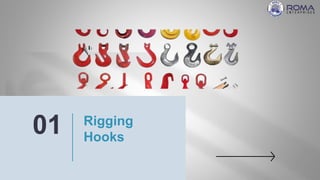
When big things need to be moved, rigging hooks are used. These hooks are
made to keep things from slipping off. They are usually made of steel. Different
types and sizes of rigging hooks can be used to lift different types of loads.
They are put into different groups based on the size of the opening of the hook,
also called the throat. This hole can be anywhere from 5/8 of an inch to 1 17/32
inches. Sorting, clevis grab, eye, and choker hooks are some of the different
kinds of gear hooks.
Pulleys and
Blocks
02
Pulleys and Blocks
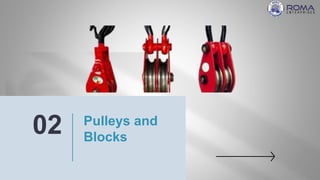
When very heavy things need to be moved, pulleys and pulling blocks are
used. These tools make it easier to lift and move big things by reducing how
much force is needed. Lifting blocks come in a few different styles, such as
snatch blocks, swivel blocks, square blocks, and tilt-up blocks.
Lifting blocks come in different sizes and can carry up to 30 tones of weight.
There are both single and double pulley systems. They are used to lift heavy
items by wrapping rigging ropes around the pulley and then hooking them to
the heavy object. Different pulleys have different sizes of frame, rope, and
sheaves. Wire rope is often used with pulling blocks, while synthetic rope is
usually used with pulleys. This is because lifting blocks usually carry higher
loads than pulleys, and wire rope is better at handling these heavier loads.
Shackles
03
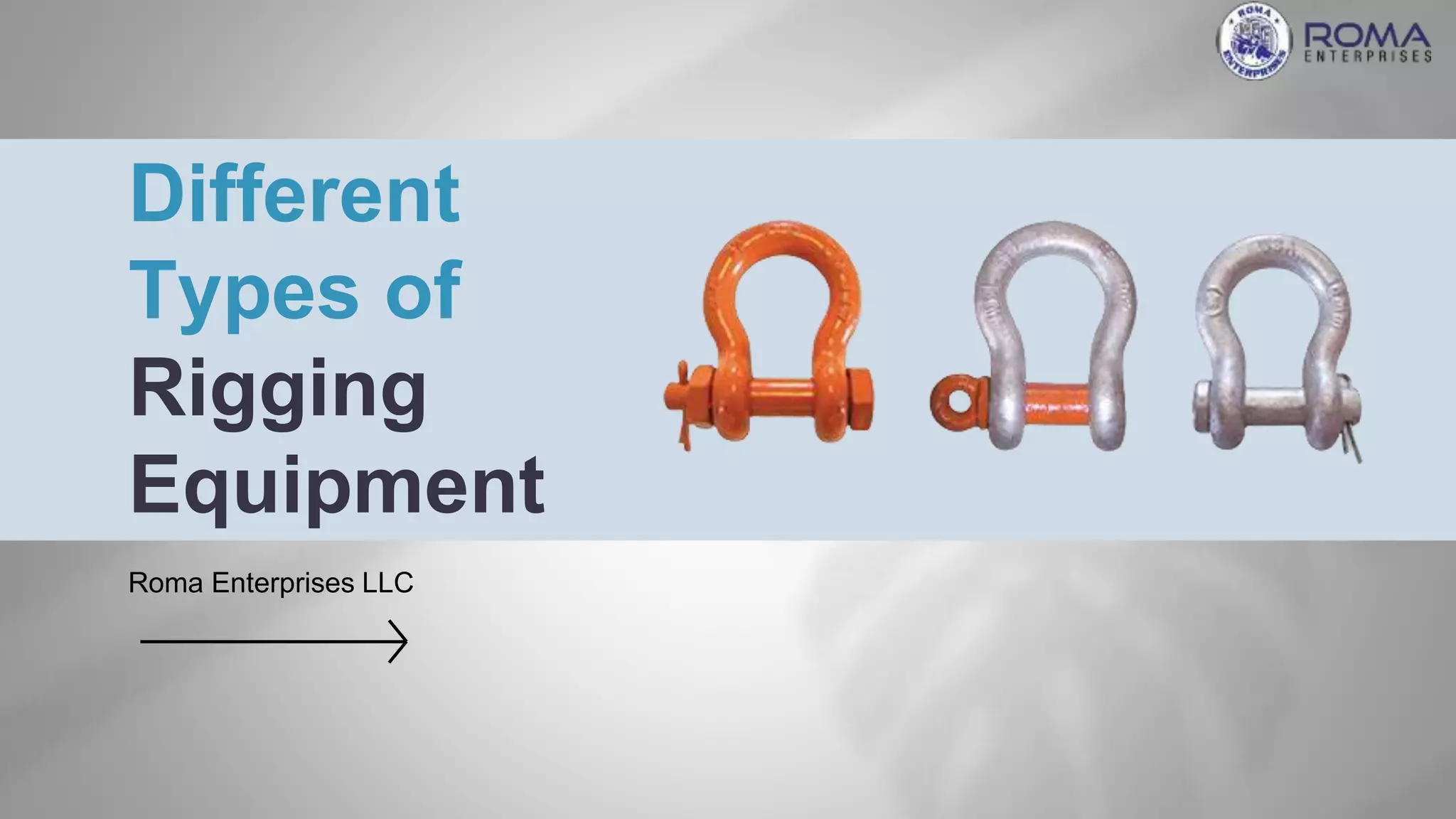
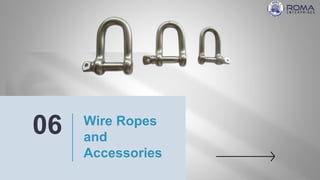
Shackles
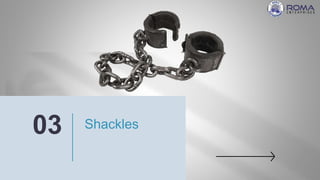
Shackles are links that let different kinds of rigging tools quickly connect to and
separate from each other. Most of the time, they are used to move loads that
weigh more than 6,000 pounds, but they can carry as much as 11,000 pounds.
Anchor and chain shackles are the two main types of shackles, but both of
these types can also be broken down into screw pin, safety, and round pin
types. Shackles are usually made of a loop of steel that is closed with a pin.
This makes it possible to connect two pieces of heavy equipment securely
while moving them. Shackles come in many different sizes, from 3/16 inch to 2
1/2 inches.
Eye Bolts
04
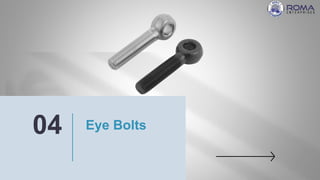
Eye Bolts
Eye bolts are used to loop wires or ropes together and serve as anchor points
in rigging. They can be made of many different types of materials and come in
a wide range of sizes to fit different types and sizes of loads. Most of the time,
people use straight eye bolts or shoulder eye bolts. Shoulder eye bolts are
used for connections that are not in a straight line, while straight eye bolts are
used for straight line connections. U-bolts, screw eye bolts, and lag eye screw
bolts are other kinds of eye bolts.
Steel Nuts
05
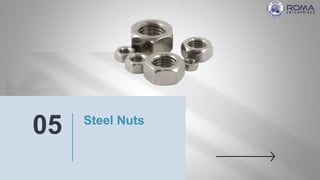
Steel Nuts
Stainless steel nuts are used along with eye bolts. The size that should be
used depends on the weight of the load as well as its shape. Some of the most
frequently used nuts in rigging are hex nuts, dome nuts, lifting eye nuts, ball
ends, and wing nuts. This type of rigging equipment is usually made of type
316 stainless steel, and these nuts can typically be found in both RH and LH
thread.
Wire Ropes
and
Accessories
06
Wire Ropes and Accessories
Wire ropes can be used to set up and move big things. They are often made
stronger by wrapping them with several pieces of carbon steel wire or, more
often, stainless steel wire, usually in a helix shape. Wire ropes can be kept safe
from the weather by being protected or galvanized. They can be different sizes
and have different specs. Most people use 6×19, 6×36, 6×26, 7×7, and 7×19
wire bands. Some of the things that go with wire bands are thimbles, clips,
sleeves, and stops. These extra pieces of rigging equipment make the wire
rope more useful for rigging jobs.
Synthetic Lifting
Slings
07
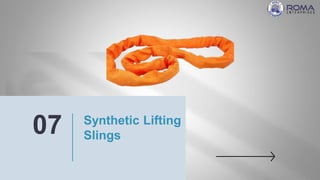
Synthetic Lifting Slings
This kind of rigging gear is made from man-made materials. Wire ropes and
synthetic slings are used to move heavy tools. There are two kinds: eye-and-
eye slings and slings with no end. Endless slings are just loops of synthetic
material, while eye-and-eye slings have metal or synthetic ends that are
triangular, flat, or curved. These slings help keep rigging jobs balanced and
give heavy loads more power.
Thanks!
DO YOU HAVE ANY QUESTIONS?
romaent@eim.ae
+97142236724​
https://www.romaent.com/​
Shop Number 4 Old Baghluf Bldg, Al Burj St, Nasir Square Deira, Dubai, United Arab Emirates​

Different Types of Rigging Equipment.pptx

  • 1.
  • 2.
    Introduction Rigging equipment isused in various industries such as construction, maritime, entertainment, and transportation. The type of rigging equipment needed will depend on the specific application, but here are some common types:
  • 3.
  • 4.
    Rigging Hooks When bigthings need to be moved, rigging hooks are used. These hooks are made to keep things from slipping off. They are usually made of steel. Different types and sizes of rigging hooks can be used to lift different types of loads. They are put into different groups based on the size of the opening of the hook, also called the throat. This hole can be anywhere from 5/8 of an inch to 1 17/32 inches. Sorting, clevis grab, eye, and choker hooks are some of the different kinds of gear hooks.
  • 5.
  • 6.
    Pulleys and Blocks Whenvery heavy things need to be moved, pulleys and pulling blocks are used. These tools make it easier to lift and move big things by reducing how much force is needed. Lifting blocks come in a few different styles, such as snatch blocks, swivel blocks, square blocks, and tilt-up blocks. Lifting blocks come in different sizes and can carry up to 30 tones of weight. There are both single and double pulley systems. They are used to lift heavy items by wrapping rigging ropes around the pulley and then hooking them to the heavy object. Different pulleys have different sizes of frame, rope, and sheaves. Wire rope is often used with pulling blocks, while synthetic rope is usually used with pulleys. This is because lifting blocks usually carry higher loads than pulleys, and wire rope is better at handling these heavier loads.
  • 7.
  • 8.
    Shackles Shackles are linksthat let different kinds of rigging tools quickly connect to and separate from each other. Most of the time, they are used to move loads that weigh more than 6,000 pounds, but they can carry as much as 11,000 pounds. Anchor and chain shackles are the two main types of shackles, but both of these types can also be broken down into screw pin, safety, and round pin types. Shackles are usually made of a loop of steel that is closed with a pin. This makes it possible to connect two pieces of heavy equipment securely while moving them. Shackles come in many different sizes, from 3/16 inch to 2 1/2 inches.
  • 9.
  • 10.
    Eye Bolts Eye boltsare used to loop wires or ropes together and serve as anchor points in rigging. They can be made of many different types of materials and come in a wide range of sizes to fit different types and sizes of loads. Most of the time, people use straight eye bolts or shoulder eye bolts. Shoulder eye bolts are used for connections that are not in a straight line, while straight eye bolts are used for straight line connections. U-bolts, screw eye bolts, and lag eye screw bolts are other kinds of eye bolts.
  • 11.
  • 12.
    Steel Nuts Stainless steelnuts are used along with eye bolts. The size that should be used depends on the weight of the load as well as its shape. Some of the most frequently used nuts in rigging are hex nuts, dome nuts, lifting eye nuts, ball ends, and wing nuts. This type of rigging equipment is usually made of type 316 stainless steel, and these nuts can typically be found in both RH and LH thread.
  • 13.
  • 14.
    Wire Ropes andAccessories Wire ropes can be used to set up and move big things. They are often made stronger by wrapping them with several pieces of carbon steel wire or, more often, stainless steel wire, usually in a helix shape. Wire ropes can be kept safe from the weather by being protected or galvanized. They can be different sizes and have different specs. Most people use 6×19, 6×36, 6×26, 7×7, and 7×19 wire bands. Some of the things that go with wire bands are thimbles, clips, sleeves, and stops. These extra pieces of rigging equipment make the wire rope more useful for rigging jobs.
  • 15.
  • 16.
    Synthetic Lifting Slings Thiskind of rigging gear is made from man-made materials. Wire ropes and synthetic slings are used to move heavy tools. There are two kinds: eye-and- eye slings and slings with no end. Endless slings are just loops of synthetic material, while eye-and-eye slings have metal or synthetic ends that are triangular, flat, or curved. These slings help keep rigging jobs balanced and give heavy loads more power.
  • 17.
    Thanks! DO YOU HAVEANY QUESTIONS? romaent@eim.ae +97142236724​ https://www.romaent.com/​ Shop Number 4 Old Baghluf Bldg, Al Burj St, Nasir Square Deira, Dubai, United Arab Emirates​