Different types of
Methods used in
Integrated Plant Disease
Management
Submitted to DR. Tariq Manzoor
Submitted by Shahzaib Anwar
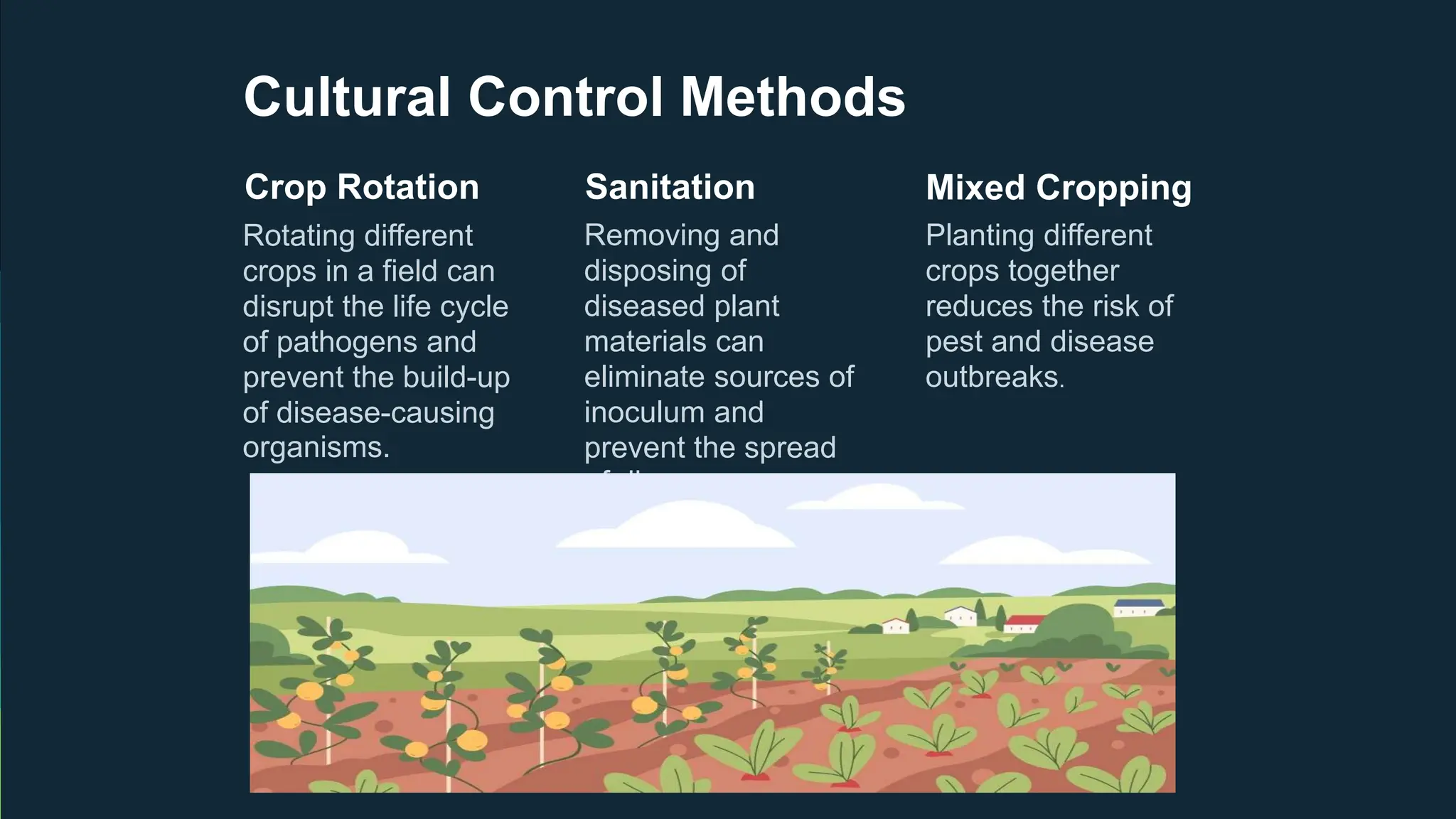
Cultural Control Methods
Crop Rotation
Rotating different
crops in a field can
disrupt the life cycle
of pathogens and
prevent the build-up
of disease-causing
organisms.
Sanitation
Removing and
disposing of
diseased plant
materials can
eliminate sources of
inoculum and
prevent the spread
of diseases.
Mixed Cropping
Planting different
crops together
reduces the risk of
pest and disease
outbreaks.
Physical Control Methods
1 Soil Solarization
Covering soil with clear plastic sheets to trap solar heat
and kill soil-borne pathogens and pests.
2 Hand Picking
Physically removing and destroying infected plant parts
or weeds by hand pulling, can limit the spread of
diseases.
3 Traps and Barriers
Using physical means, such as trap or nets, to prevent
the entry of disease-carrying insects or pathogens.
Biological Control Methods
1 Beneficial
Microorganisms
Introducing natural
antagonists, such as fungi
or bacteria, that compete
with or parasitize plant
pathogens.
2 Predatory Insects
Encouraging the presence
of beneficial insects that
prey on disease-causing
pests and prevent their
population growth.
3 Botanical Extracts
Using plant-derived compounds with natural antimicrobial or
insecticidal properties to manage diseases.
Chemical Control Methods
Synthetic Pesticides
Using chemical products to target and eliminate
specific pathogens or pests, but with potential
environmental and health concerns.
Pheromones
These are attractive chemicals used to disrupt
pest mating patterns.
Growth Regulators
Using chemicals that interfere with the growth and
development of insect pests or boost the immunity
of plants.
Regulatory Control Measures
Quarantines
Restricting the
movement of plants
or plant materials to
prevent the
introduction and
spread of new
diseases.
Certification
Programs
Implementing
standards and
certifications to
ensure the health
and quality of plant
materials traded or
transported.
Inspection and
Monitoring
Conducting regular
inspections and
surveillance to detect
and respond to
emerging disease
threats.
Integrated Approach to Plant
Disease Management
Preventive Measures
Implementing cultural and physical control methods to
create an environment that is less favorable for disease
development.
Monitoring and Early Detection
Regularly inspecting plants and promptly identifying any
signs of disease to enable timely interventions.
Targeted Interventions
Applying biological, chemical, or regulatory control
methods in a strategic and targeted manner to address
specific disease threats.
Conclusion and Key Takeaways
Integrated plant disease management is a holistic approach that
combines various control methods to maintain plant health and minimize
the reliance on harmful chemicals. By adopting this comprehensive
strategy, growers can effectively manage plant diseases while
promoting a more sustainable and environmentally-friendly agricultural
system.

Different Methods used in Integrated-Plant-Disease-Management.pptx

  • 1.
    Different types of Methodsused in Integrated Plant Disease Management Submitted to DR. Tariq Manzoor Submitted by Shahzaib Anwar
  • 2.
    Cultural Control Methods CropRotation Rotating different crops in a field can disrupt the life cycle of pathogens and prevent the build-up of disease-causing organisms. Sanitation Removing and disposing of diseased plant materials can eliminate sources of inoculum and prevent the spread of diseases. Mixed Cropping Planting different crops together reduces the risk of pest and disease outbreaks.
  • 3.
    Physical Control Methods 1Soil Solarization Covering soil with clear plastic sheets to trap solar heat and kill soil-borne pathogens and pests. 2 Hand Picking Physically removing and destroying infected plant parts or weeds by hand pulling, can limit the spread of diseases. 3 Traps and Barriers Using physical means, such as trap or nets, to prevent the entry of disease-carrying insects or pathogens.
  • 4.
    Biological Control Methods 1Beneficial Microorganisms Introducing natural antagonists, such as fungi or bacteria, that compete with or parasitize plant pathogens. 2 Predatory Insects Encouraging the presence of beneficial insects that prey on disease-causing pests and prevent their population growth. 3 Botanical Extracts Using plant-derived compounds with natural antimicrobial or insecticidal properties to manage diseases.
  • 5.
    Chemical Control Methods SyntheticPesticides Using chemical products to target and eliminate specific pathogens or pests, but with potential environmental and health concerns. Pheromones These are attractive chemicals used to disrupt pest mating patterns. Growth Regulators Using chemicals that interfere with the growth and development of insect pests or boost the immunity of plants.
  • 6.
    Regulatory Control Measures Quarantines Restrictingthe movement of plants or plant materials to prevent the introduction and spread of new diseases. Certification Programs Implementing standards and certifications to ensure the health and quality of plant materials traded or transported. Inspection and Monitoring Conducting regular inspections and surveillance to detect and respond to emerging disease threats.
  • 7.
    Integrated Approach toPlant Disease Management Preventive Measures Implementing cultural and physical control methods to create an environment that is less favorable for disease development. Monitoring and Early Detection Regularly inspecting plants and promptly identifying any signs of disease to enable timely interventions. Targeted Interventions Applying biological, chemical, or regulatory control methods in a strategic and targeted manner to address specific disease threats.
  • 8.
    Conclusion and KeyTakeaways Integrated plant disease management is a holistic approach that combines various control methods to maintain plant health and minimize the reliance on harmful chemicals. By adopting this comprehensive strategy, growers can effectively manage plant diseases while promoting a more sustainable and environmentally-friendly agricultural system.