A bandor bundle of fibrous tissue in a human or animal body that has the
ability to contract, producing movement in or maintaining the position of
parts of the body.
or
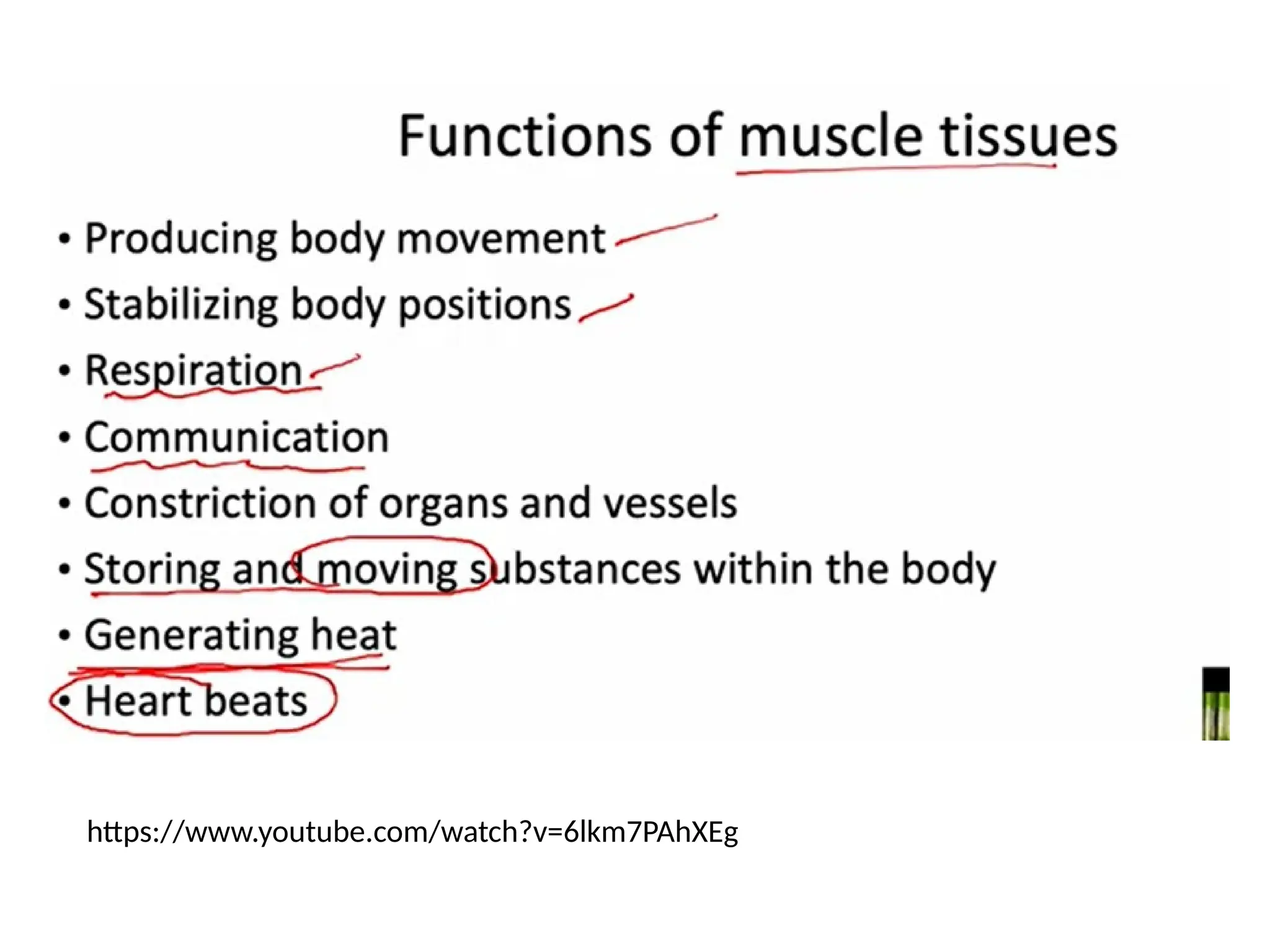
Muscles are pieces of soft tissue throughout your body. They help you do
everything from holding your body still to running a marathon. Muscles also
move and support your organs. Your heart is a hard-working muscle that
beats thousands of times a day to keep you alive.
Muscular System
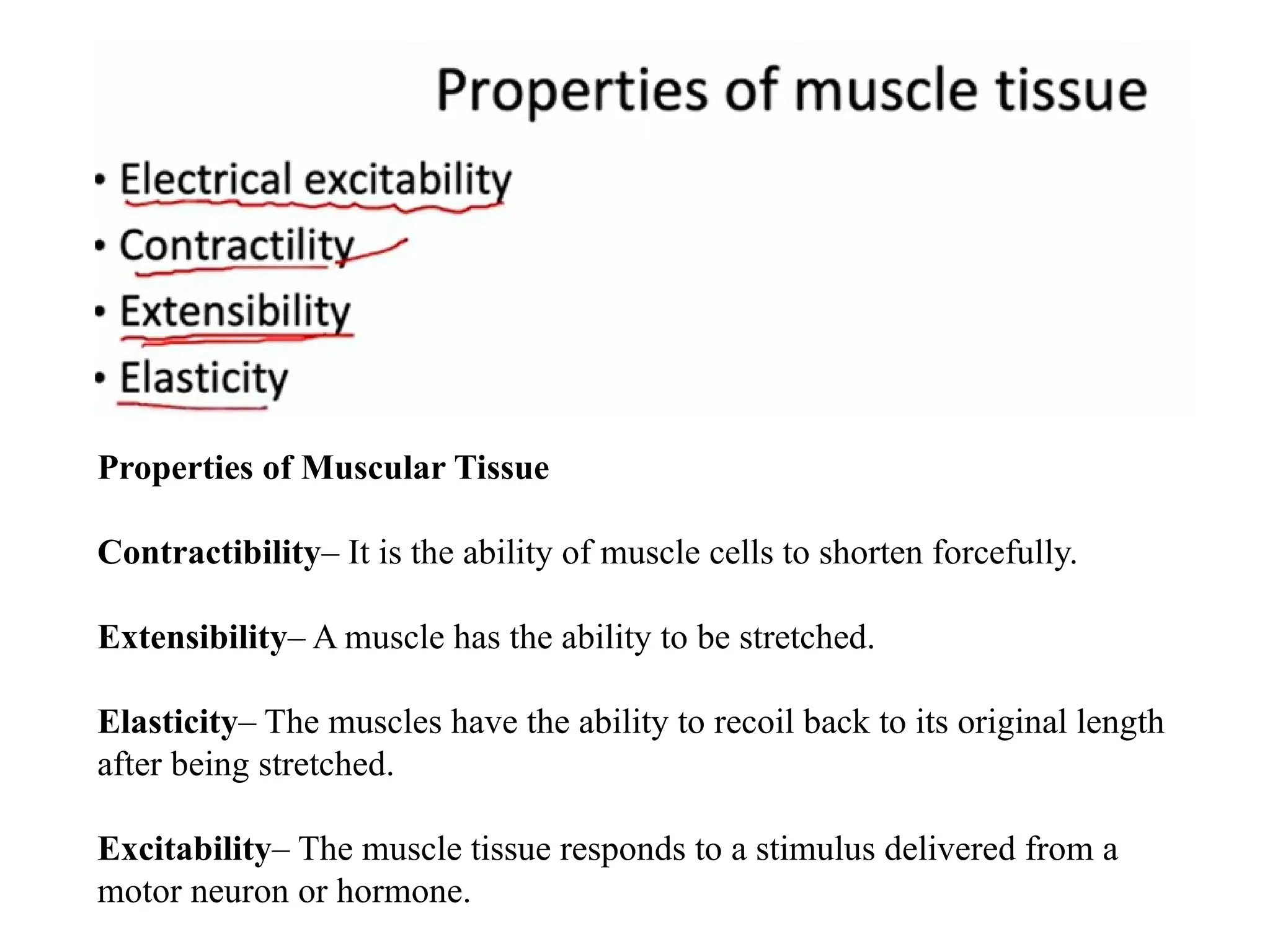
Properties of MuscularTissue
Contractibility– It is the ability of muscle cells to shorten forcefully.
Extensibility– A muscle has the ability to be stretched.
Elasticity– The muscles have the ability to recoil back to its original length
after being stretched.
Excitability– The muscle tissue responds to a stimulus delivered from a
motor neuron or hormone.
Muscle composition
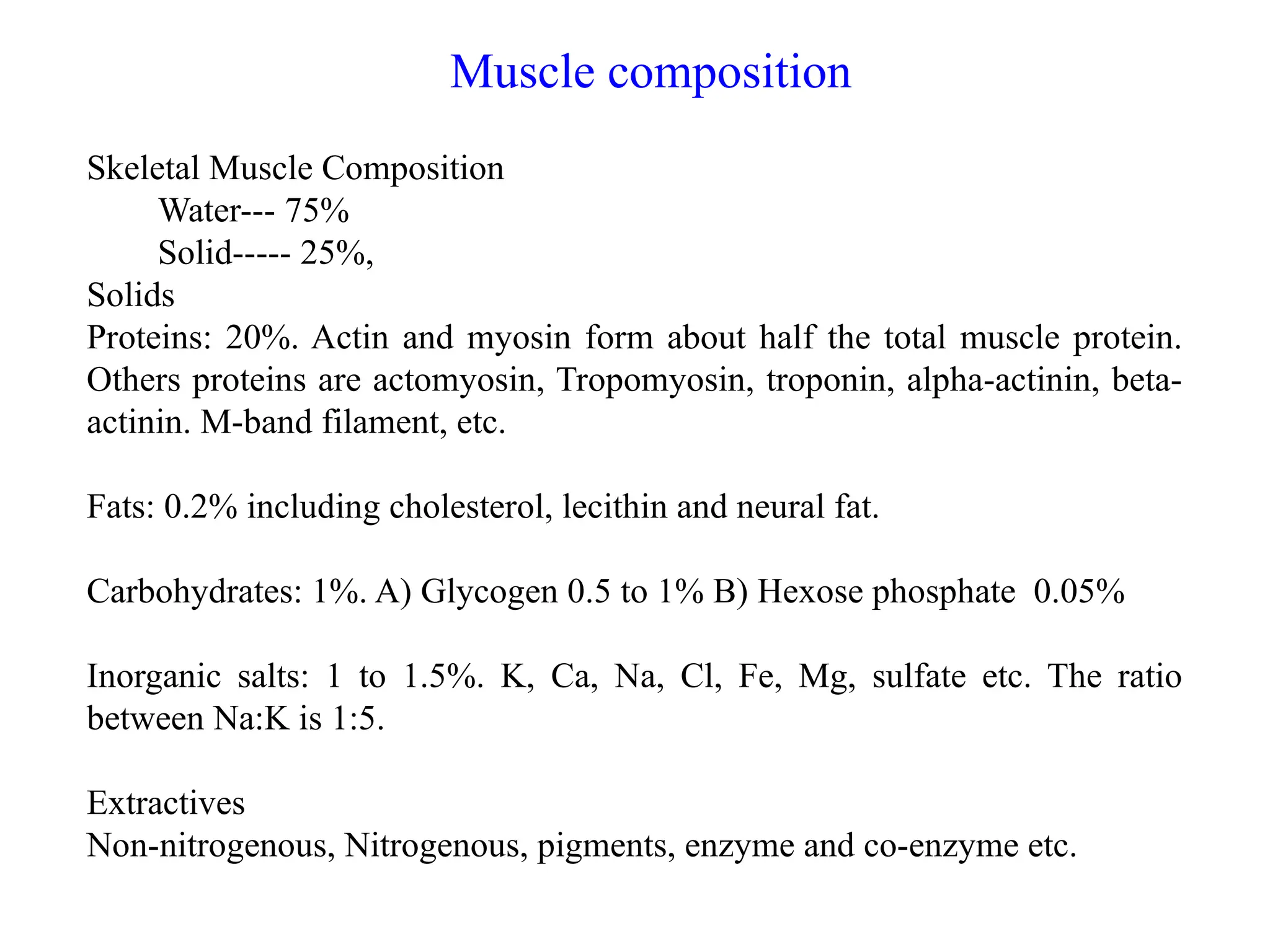
Skeletal MuscleComposition
Water--- 75%
Solid----- 25%,
Solids
Proteins: 20%. Actin and myosin form about half the total muscle protein.
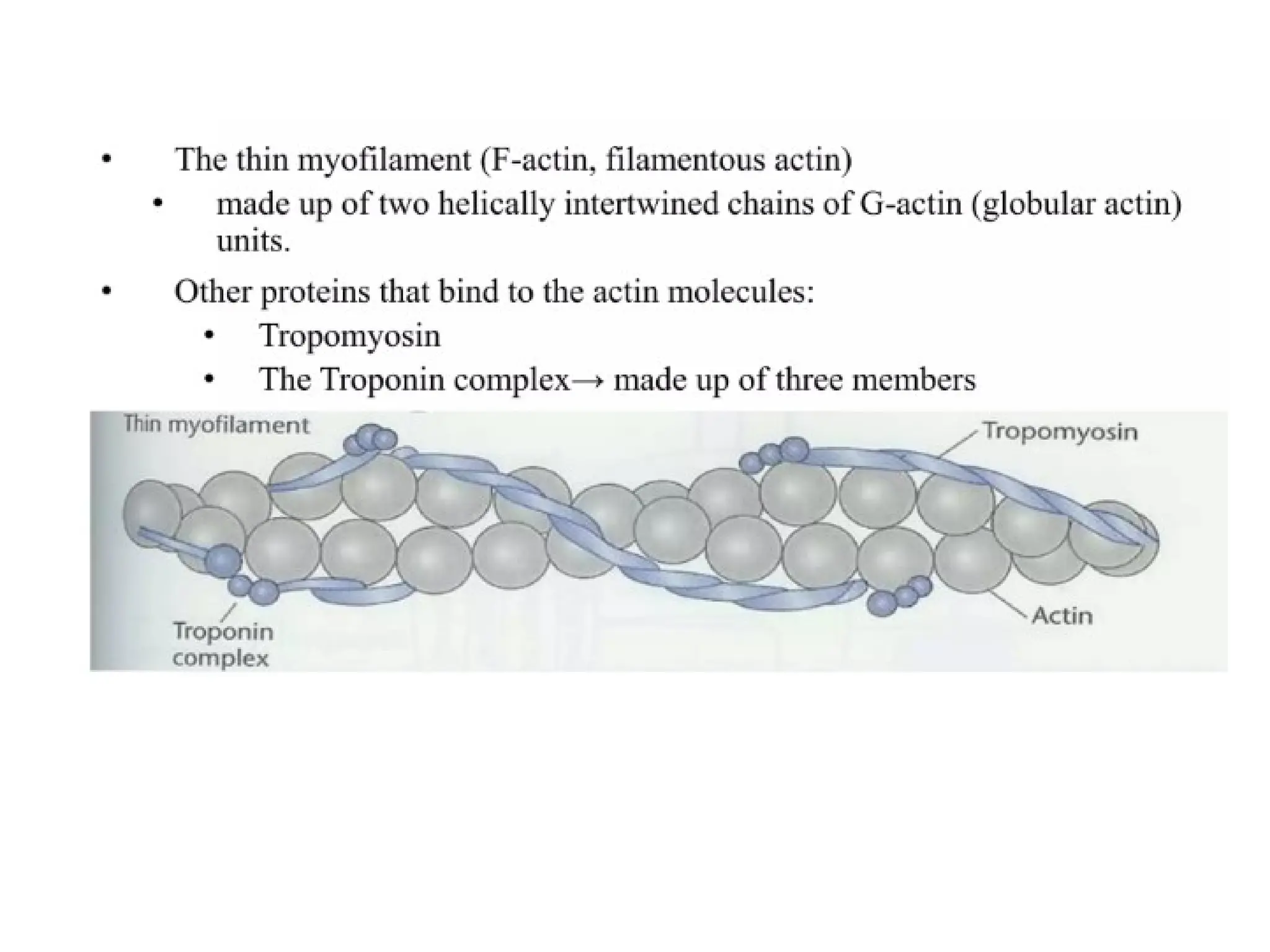
Others proteins are actomyosin, Tropomyosin, troponin, alpha-actinin, beta-
actinin. M-band filament, etc.
Fats: 0.2% including cholesterol, lecithin and neural fat.
Carbohydrates: 1%. A) Glycogen 0.5 to 1% B) Hexose phosphate 0.05%
Inorganic salts: 1 to 1.5%. K, Ca, Na, Cl, Fe, Mg, sulfate etc. The ratio
between Na:K is 1:5.
Extractives
Non-nitrogenous, Nitrogenous, pigments, enzyme and co-enzyme etc.
23.
Composition of plainand cardiac muscle
Their composition differs from that of the skeletal muscle in the following
respects. Both contain (a) less proteins (b) less ATP, phosphagen and other
phosphates, (c) less carnosine, (d) less glycogen. But both contain more (a) Na
(Na:K = 1:2) and (b) nucleoprotein.
Cardiac muscle contains more phospholipids and cholesterol than either plain
and skeletal muscle.
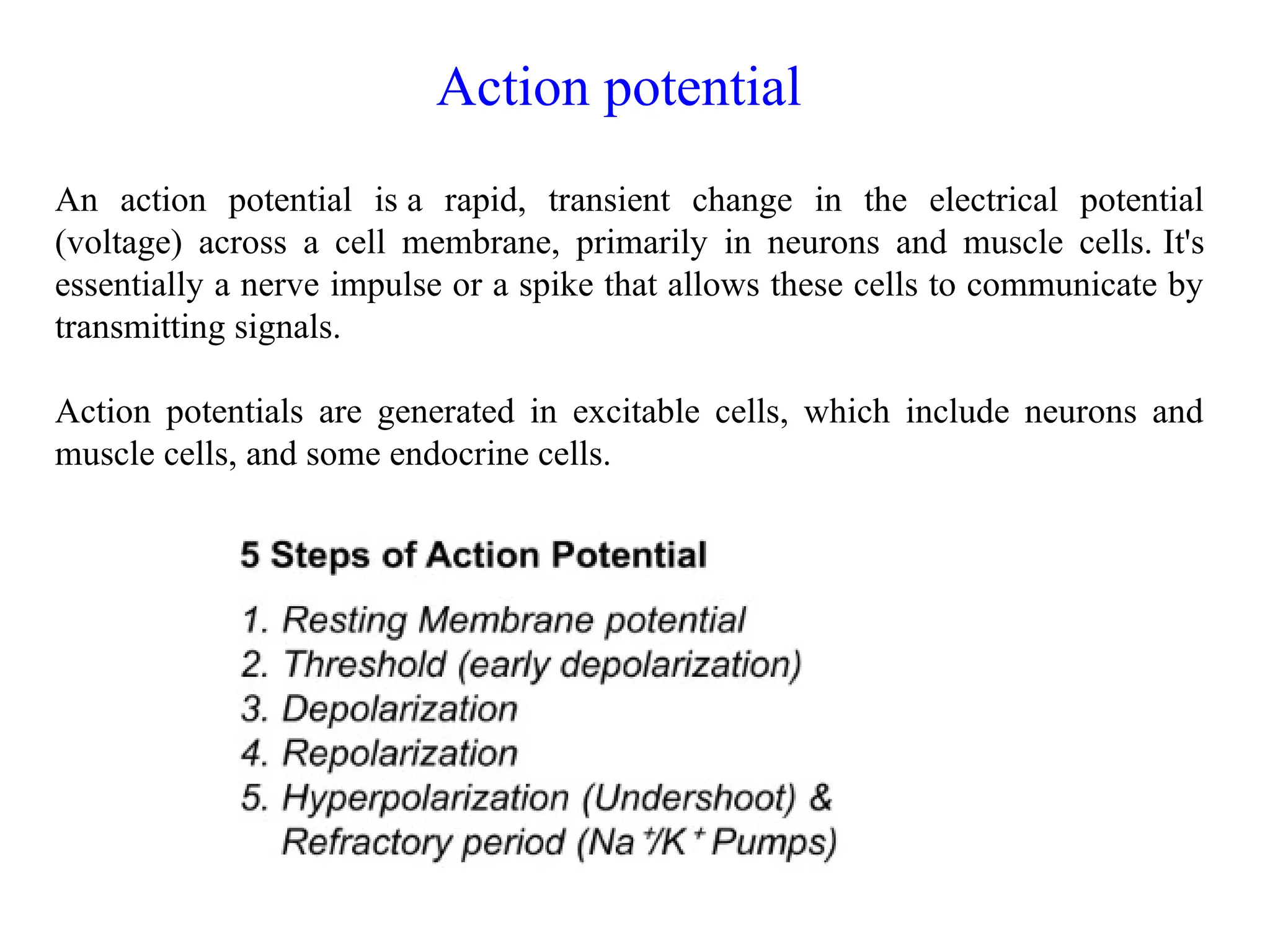
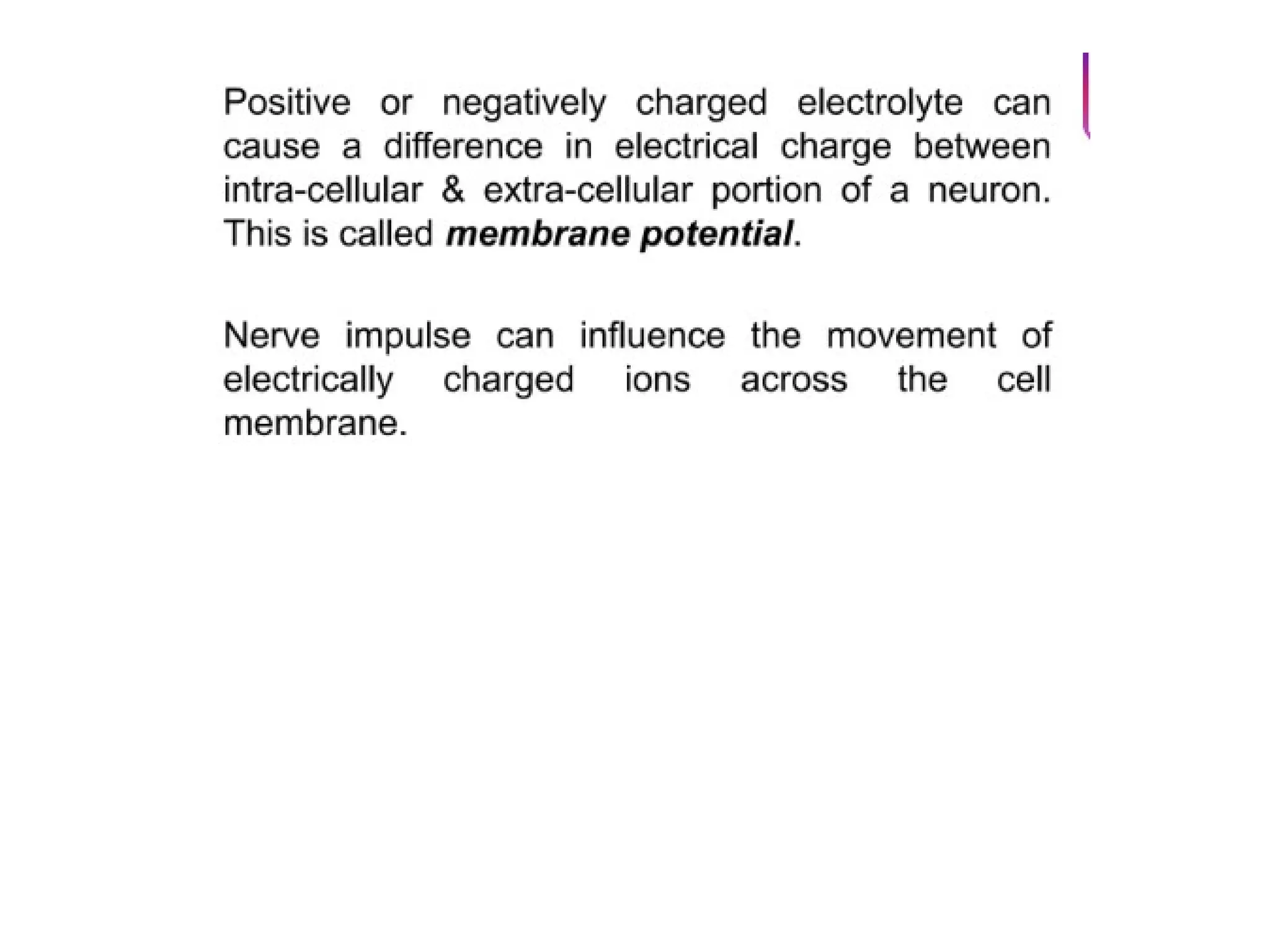
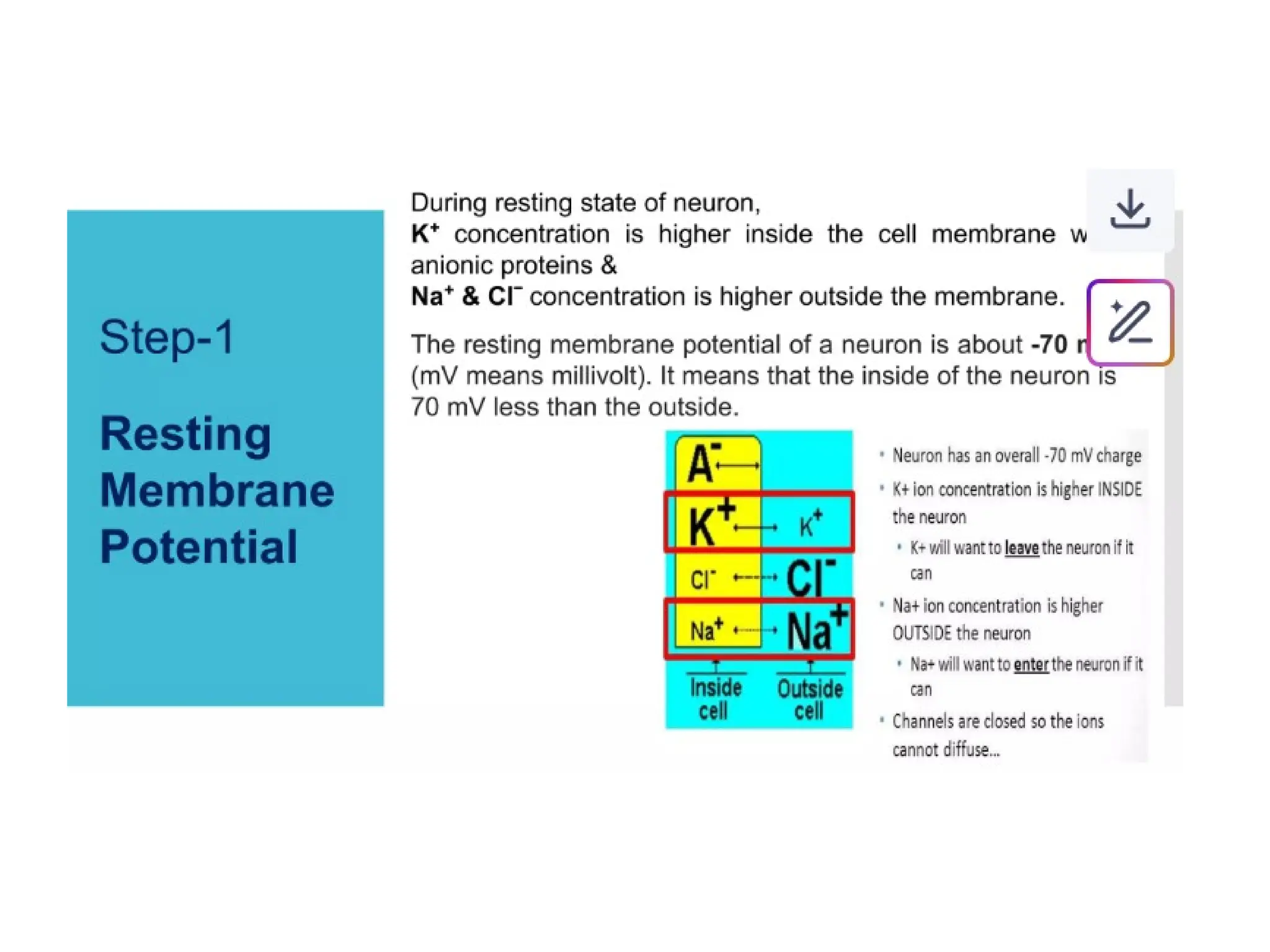
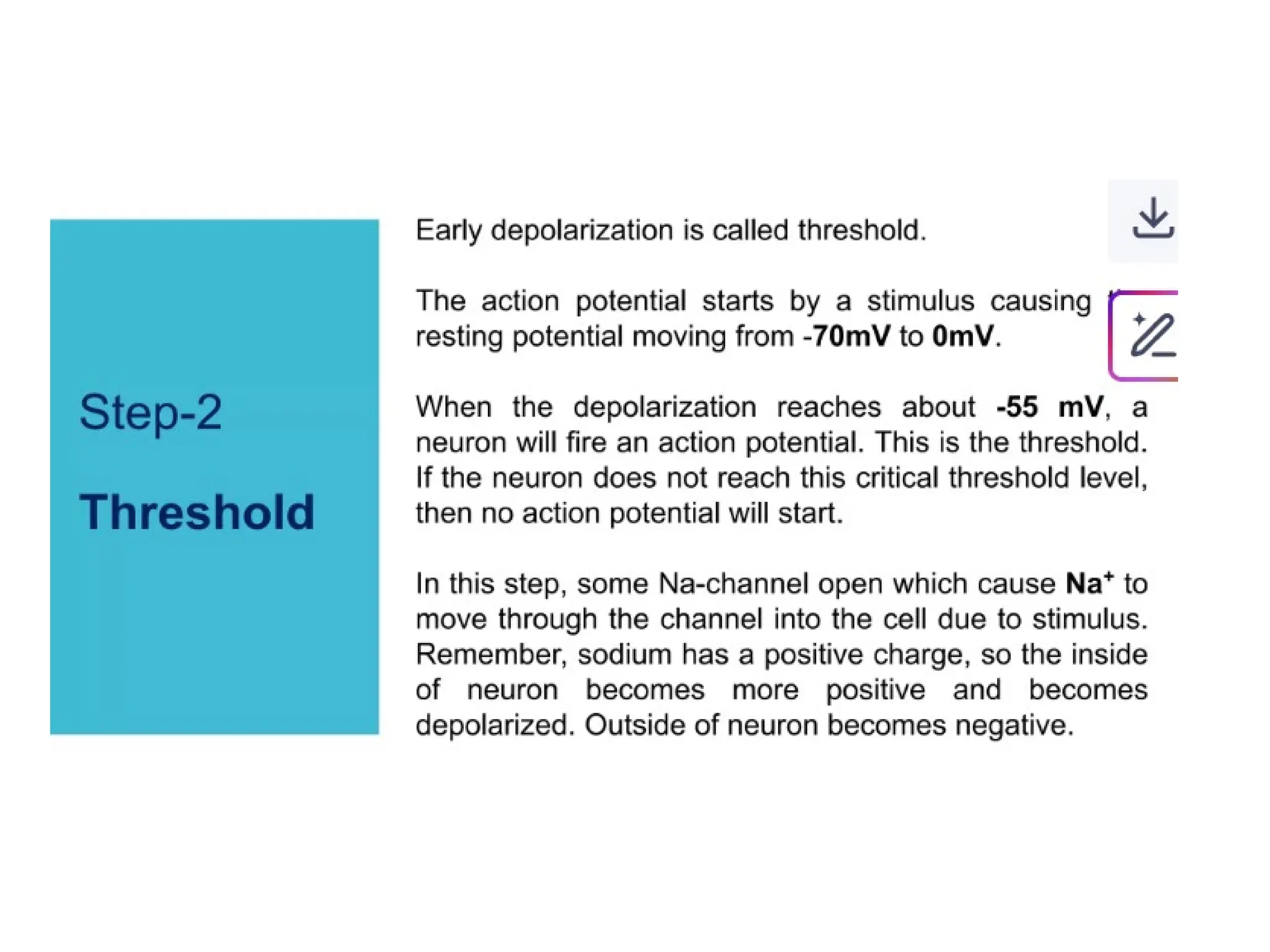
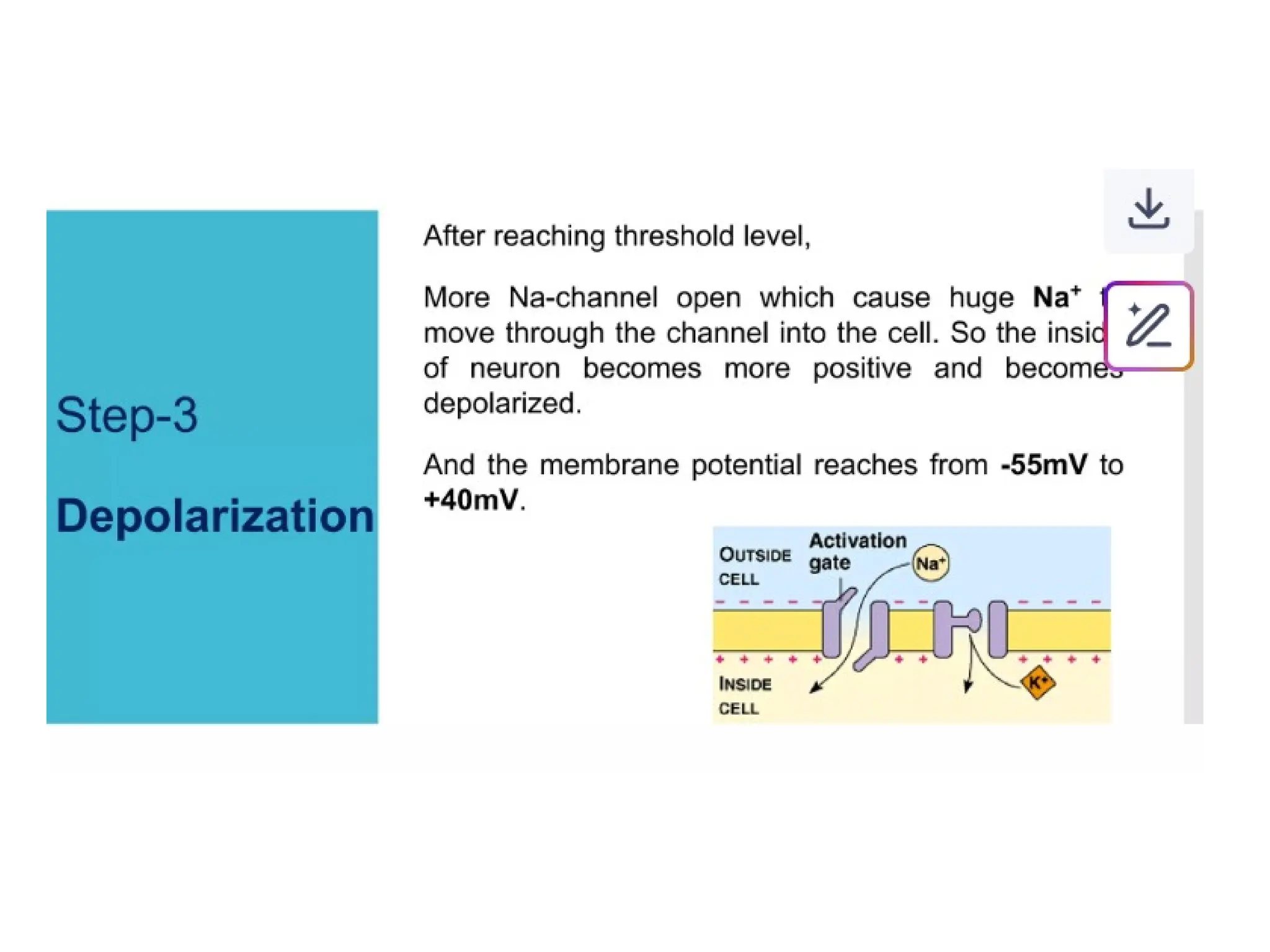
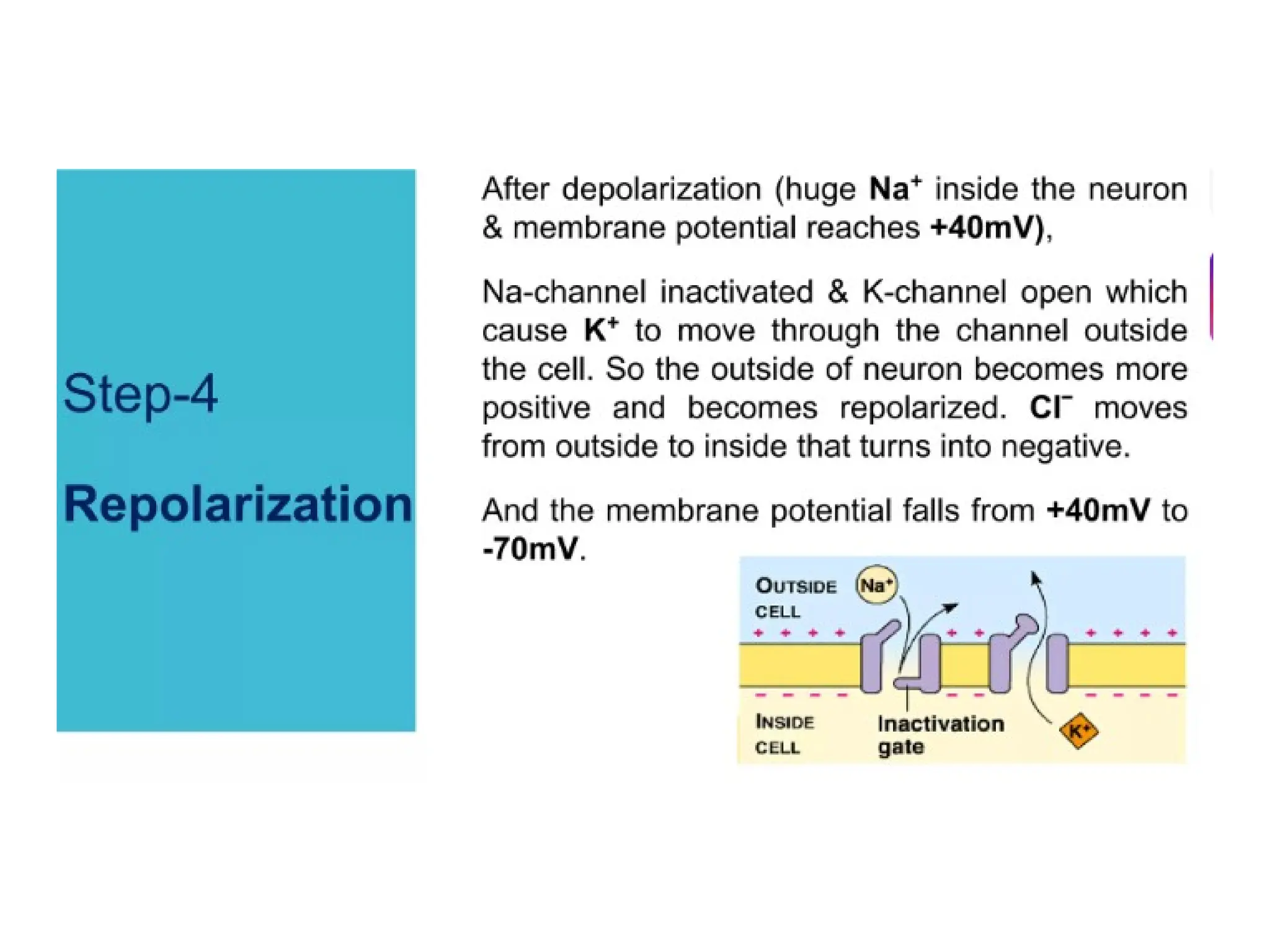
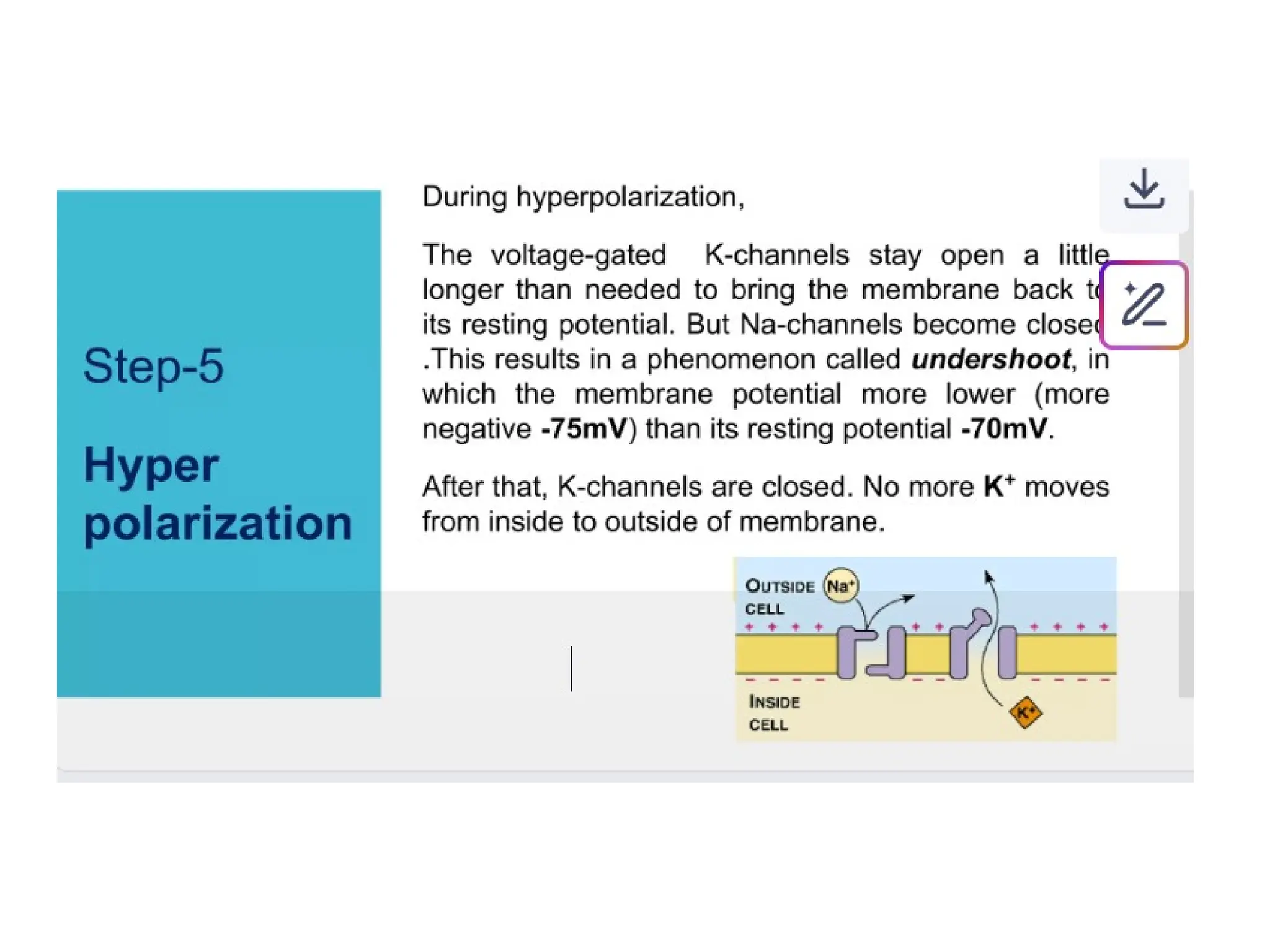
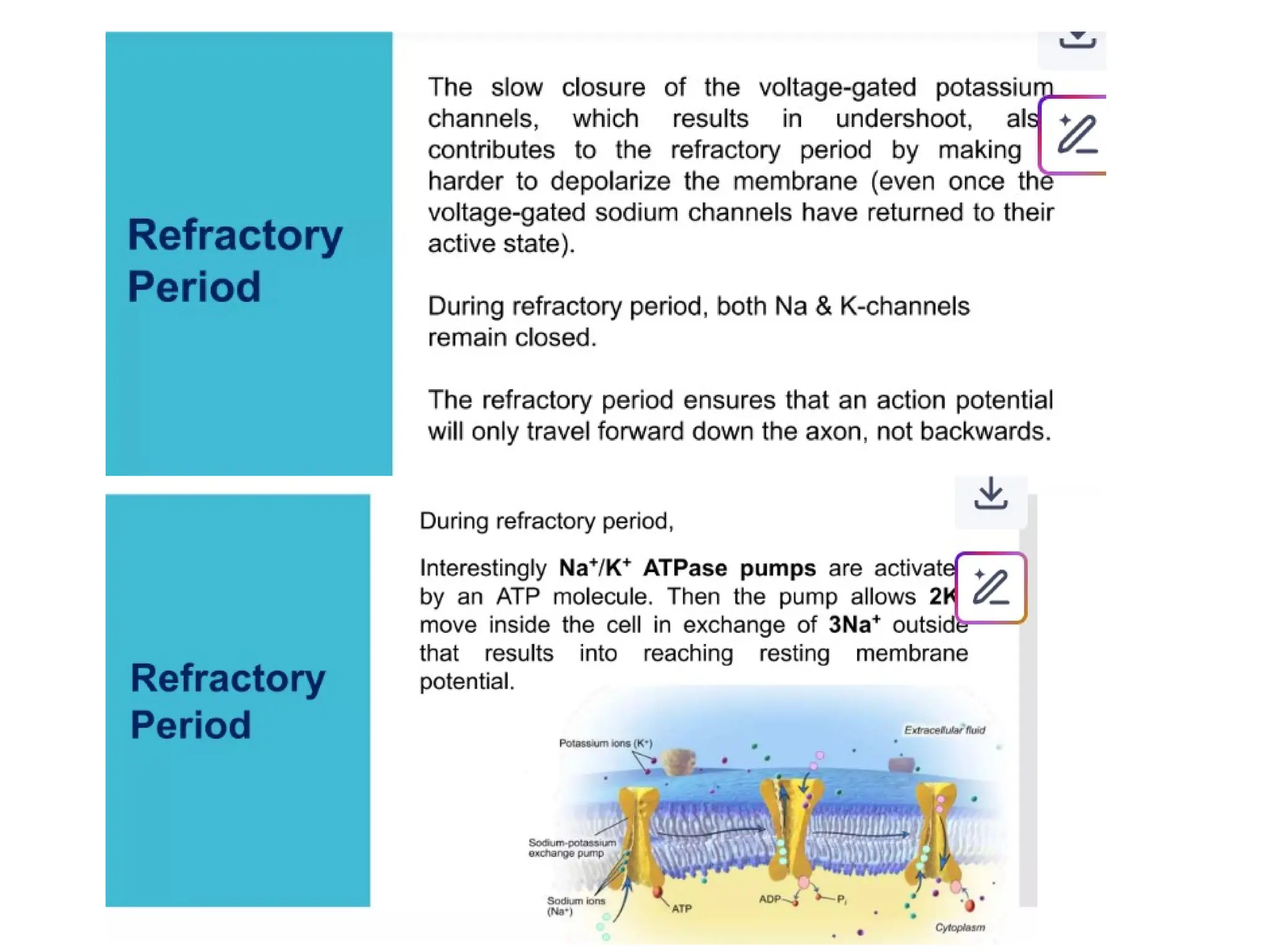
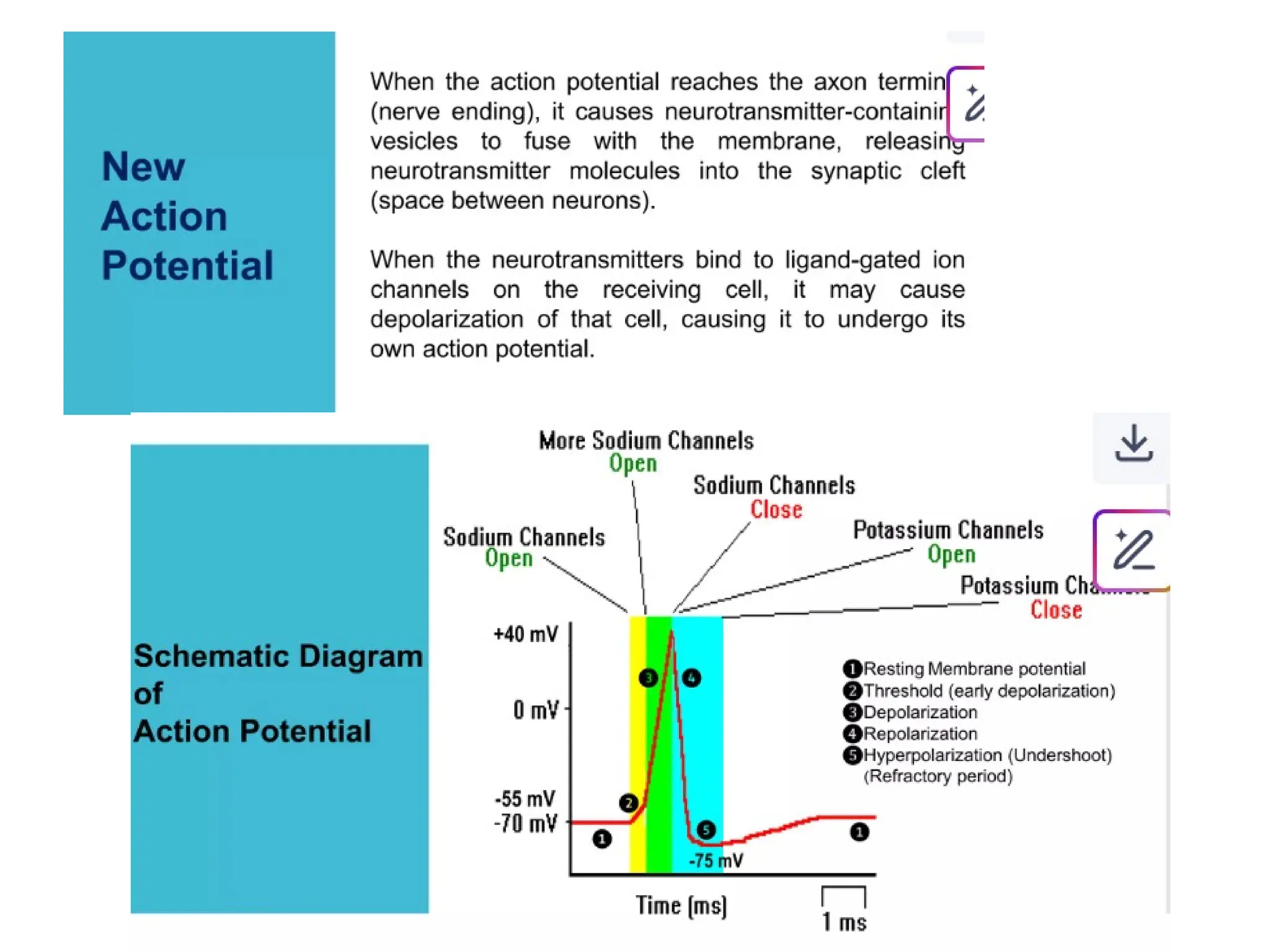
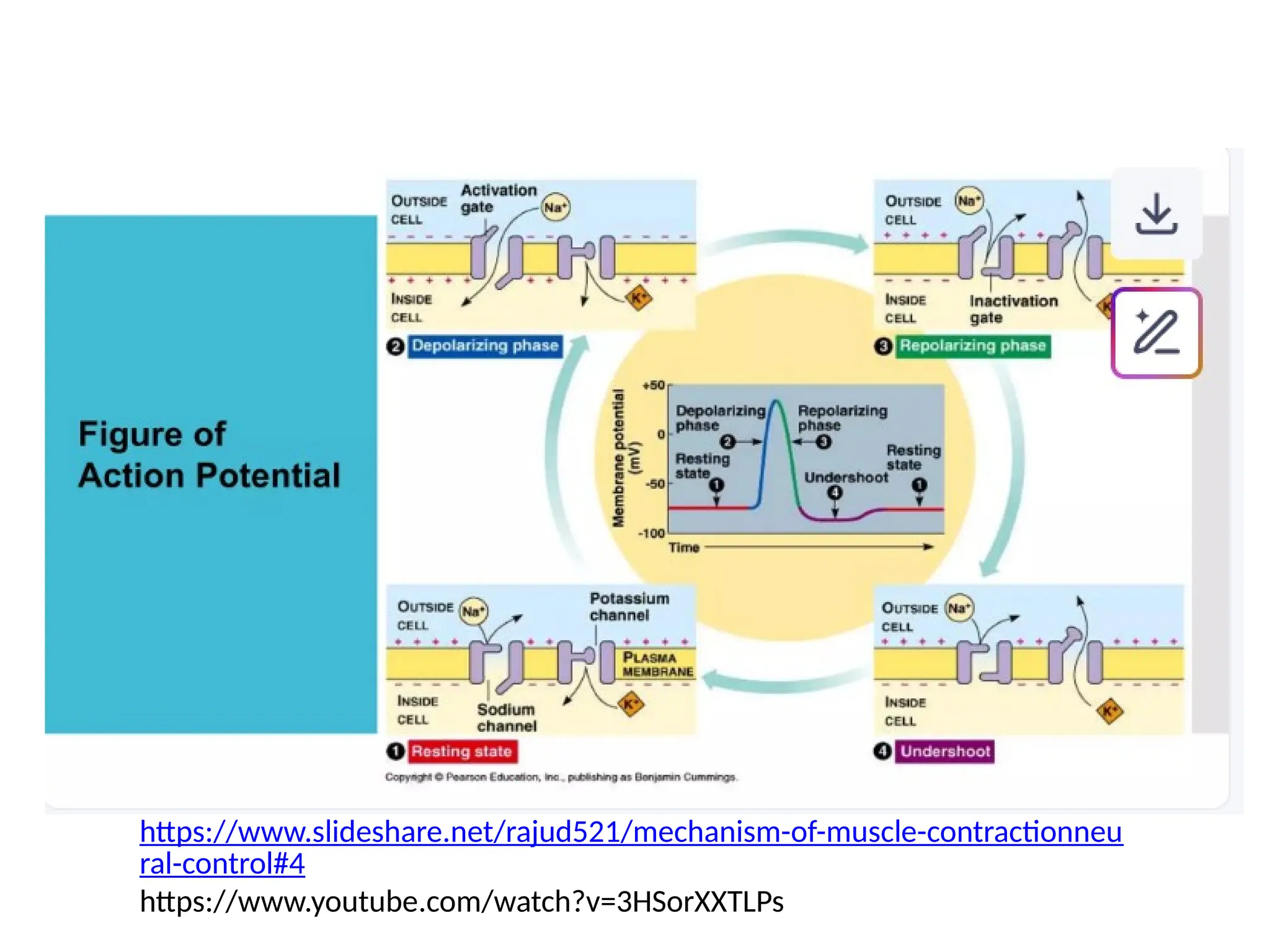
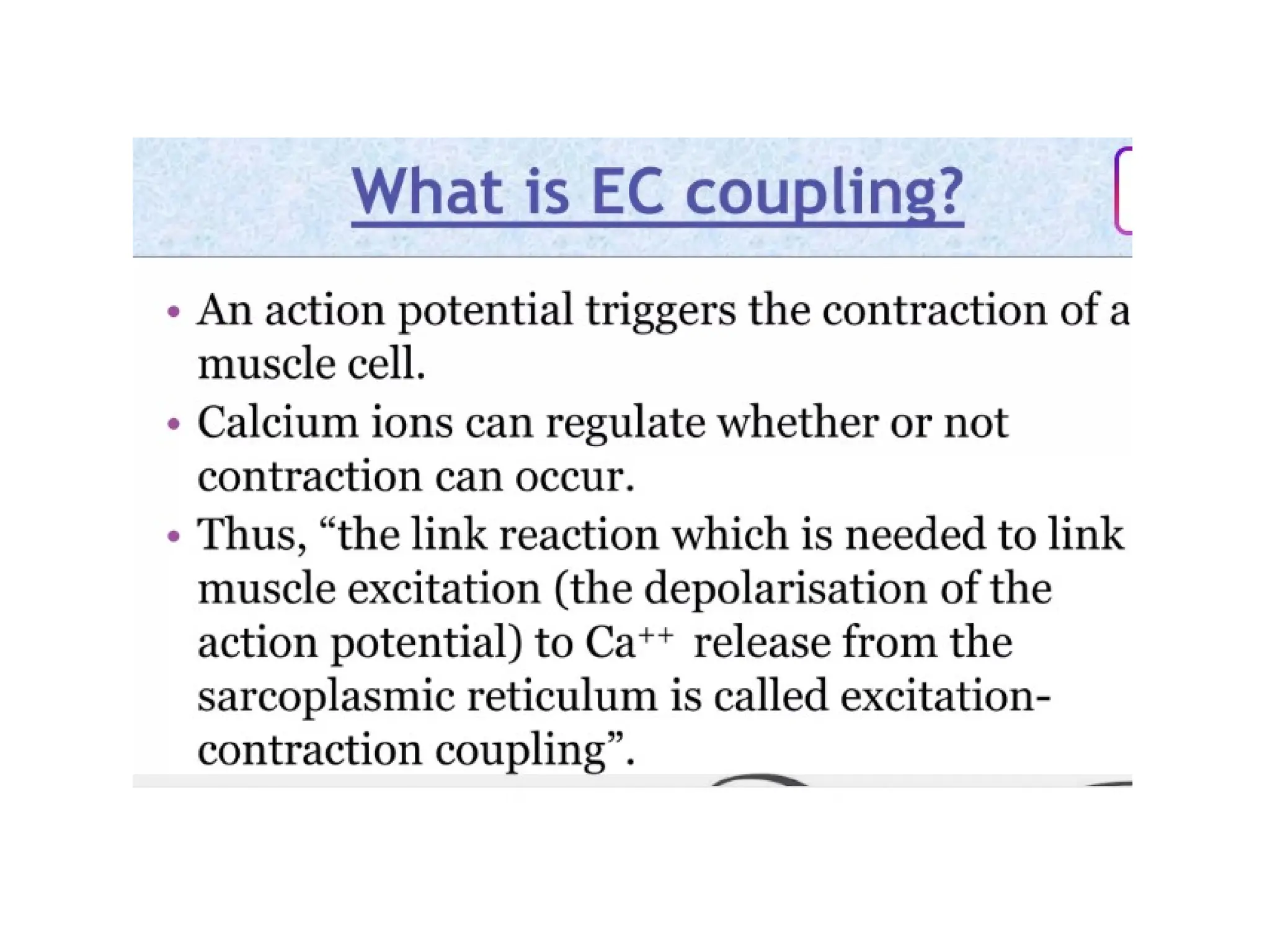
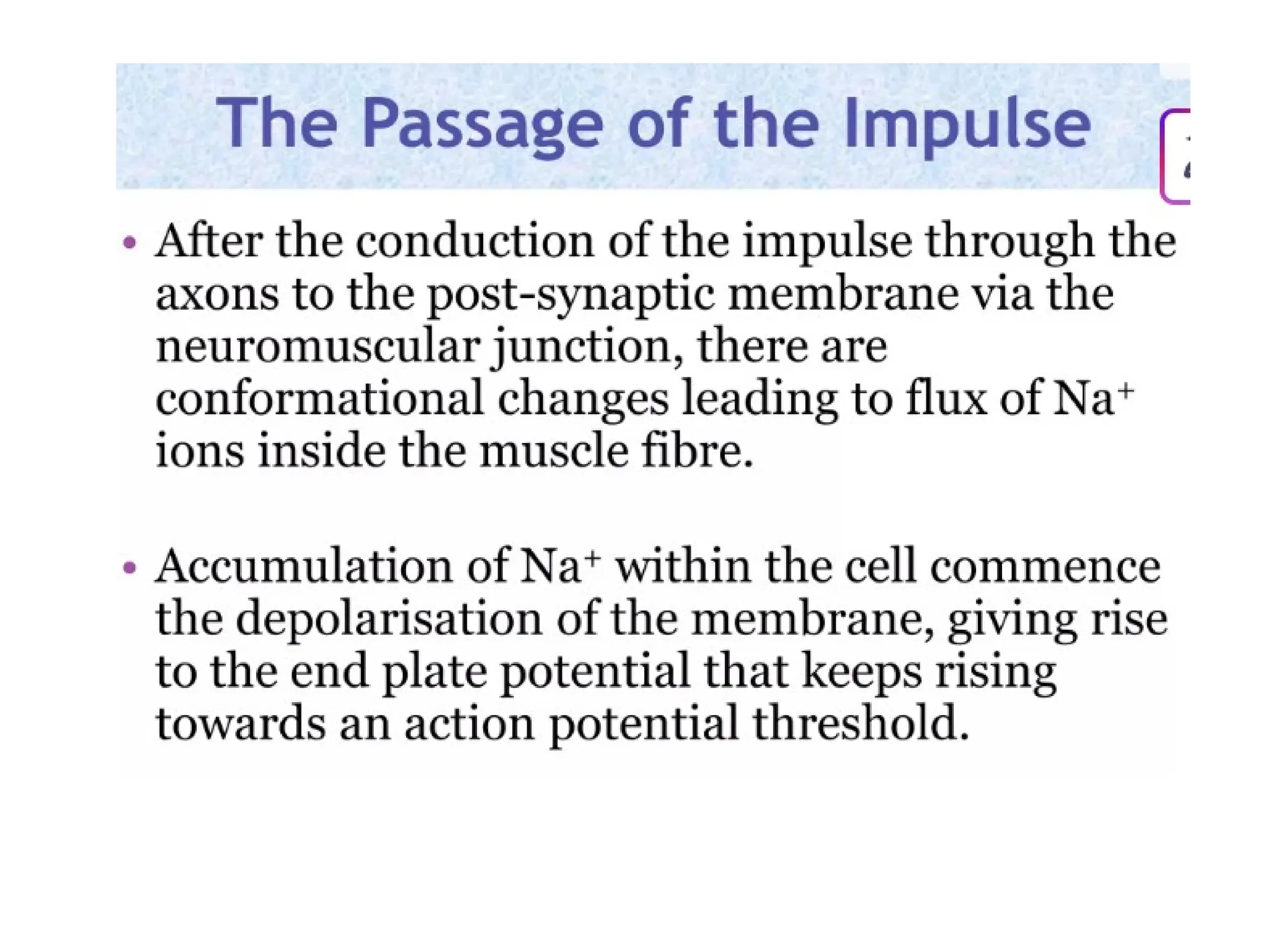
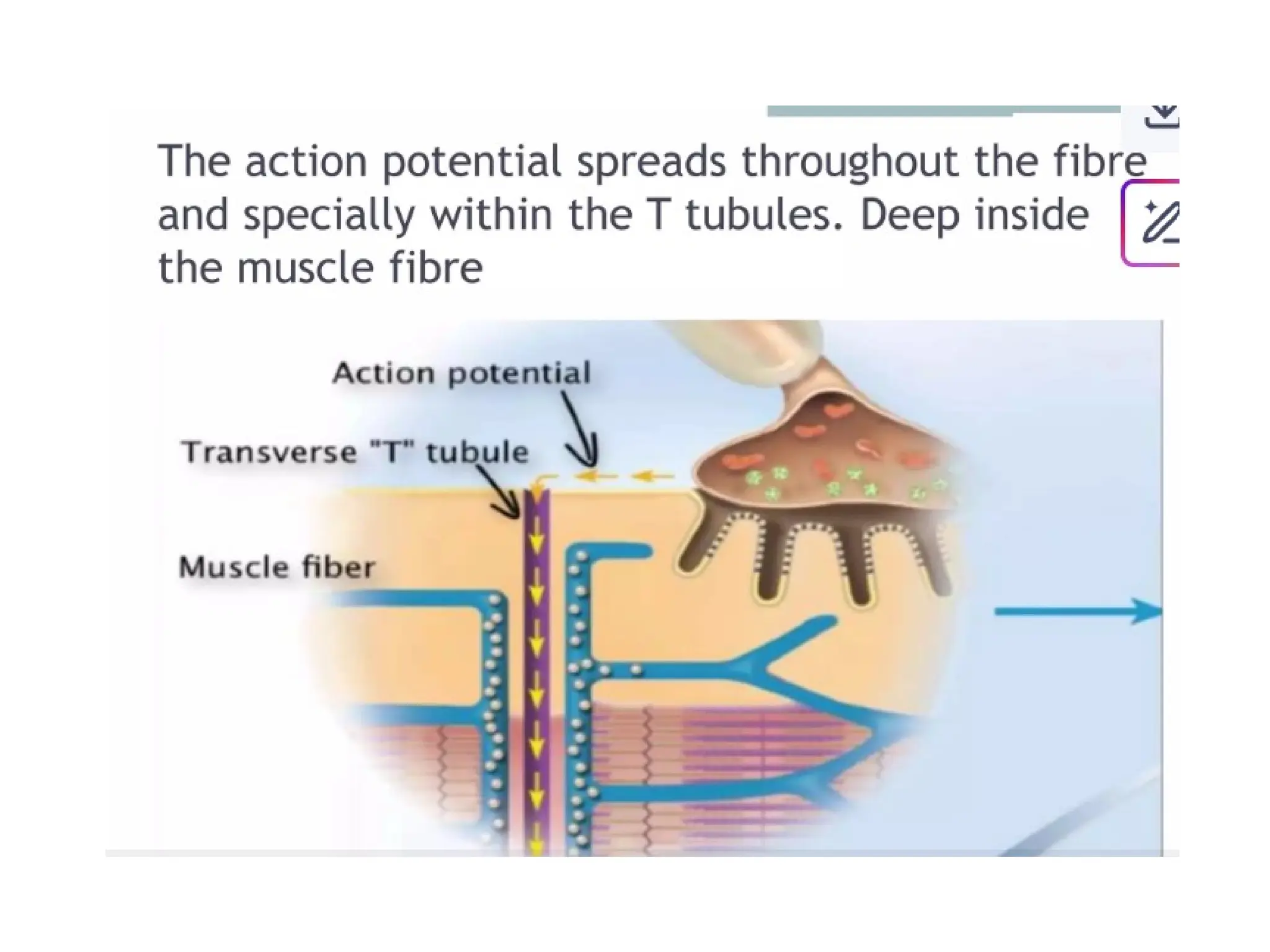
An action potentialis a rapid, transient change in the electrical potential
(voltage) across a cell membrane, primarily in neurons and muscle cells. It's
essentially a nerve impulse or a spike that allows these cells to communicate by
transmitting signals.
Action potentials are generated in excitable cells, which include neurons and
muscle cells, and some endocrine cells.
Action potential