Difference Between Other Audit and Forensic Audit
Other audits focus on ensuring compliance with standards and
identifying potential improvements, while forensic audits
investigate suspicions of fraud, misappropriation of assets, or other
financial crimes. Forensic audits require a more in-depth,
investigative approach.
Dr W Saranya
Associate Professor,
Department of commerce
Sri Ramakrishna College of Arts and Science
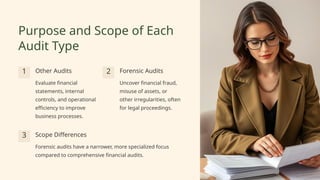
Purpose and Scope of Each
Audit Type
1 Other Audits
Evaluate financial
statements, internal
controls, and operational
efficiency to improve
business processes.
2 Forensic Audits
Uncover financial fraud,
misuse of assets, or
other irregularities, often
for legal proceedings.
3 Scope Differences
Forensic audits have a narrower, more specialized focus
compared to comprehensive financial audits.
Investigative Techniques in Forensic Audit
Data Analysis
Applying advanced data mining
and anomaly detection to identify
suspicious transactions or patterns.
Interviews
Conducting in-depth interviews
with relevant parties to uncover
hidden information or
contradictions.
Physical Inspection
Verifying asset existence,
condition, and usage through on-
site examinations and
observations.
Burden of Proof in Forensic
Audit
Higher Standard
Forensic audits must meet a
higher burden of proof, as
the findings may be used in
legal proceedings.
Comprehensive
Evidence
Forensic auditors must
gather substantial,
irrefutable evidence to
substantiate any allegations
of wrongdoing.
Objectivity
Maintaining impartiality and avoiding bias is crucial for the
credibility of forensic audit findings.
Key Outcomes and Reporting
1 Detailed Findings
Forensic audits provide a comprehensive analysis of
identified issues and irregularities.
2 Evidence Documentation
Careful documentation of all evidence collected is essential
for potential legal action.
3 Recommendations
Forensic audit reports often include recommendations for
remedial actions and internal control improvements.

Difference-Between-Other-Audit-and-Forensic-Audit (1).pptx

  • 1.
    Difference Between OtherAudit and Forensic Audit Other audits focus on ensuring compliance with standards and identifying potential improvements, while forensic audits investigate suspicions of fraud, misappropriation of assets, or other financial crimes. Forensic audits require a more in-depth, investigative approach. Dr W Saranya Associate Professor, Department of commerce Sri Ramakrishna College of Arts and Science
  • 2.
    Purpose and Scopeof Each Audit Type 1 Other Audits Evaluate financial statements, internal controls, and operational efficiency to improve business processes. 2 Forensic Audits Uncover financial fraud, misuse of assets, or other irregularities, often for legal proceedings. 3 Scope Differences Forensic audits have a narrower, more specialized focus compared to comprehensive financial audits.
  • 3.
    Investigative Techniques inForensic Audit Data Analysis Applying advanced data mining and anomaly detection to identify suspicious transactions or patterns. Interviews Conducting in-depth interviews with relevant parties to uncover hidden information or contradictions. Physical Inspection Verifying asset existence, condition, and usage through on- site examinations and observations.
  • 4.
    Burden of Proofin Forensic Audit Higher Standard Forensic audits must meet a higher burden of proof, as the findings may be used in legal proceedings. Comprehensive Evidence Forensic auditors must gather substantial, irrefutable evidence to substantiate any allegations of wrongdoing. Objectivity Maintaining impartiality and avoiding bias is crucial for the credibility of forensic audit findings.
  • 5.
    Key Outcomes andReporting 1 Detailed Findings Forensic audits provide a comprehensive analysis of identified issues and irregularities. 2 Evidence Documentation Careful documentation of all evidence collected is essential for potential legal action. 3 Recommendations Forensic audit reports often include recommendations for remedial actions and internal control improvements.