What is Forensic
Accounting and How
Does It Work?
Forensic accounting is a specialized field that combines
accounting, auditing, and investigative skills to examine
financial records and transactions. This discipline plays a
critical role in uncovering fraud, embezzlement, and
other financial crimes. As financial fraud continues to
rise, the demand for skilled forensic accountants is
higher than ever. In this blog, we will explore what
forensic accounting is and how it works, focusing on key
techniques and functions that can transform your data
analysis process.
Defining
Forensic
Accounting
Forensic accounting is the practice of using
accounting, auditing, and investigative
techniques to examine financial statements
and records. It aims to detect and prevent
financial fraud, provide litigation support,
and assist in resolving disputes. Forensic
accountants analyze financial data, identify
discrepancies, and gather evidence that can
be used in legal proceedings. They work
closely with law enforcement agencies, legal
professionals, and businesses to uncover
financial misconduct.
The forensic accounting process involves several steps to ensure a
thorough investigation:
1.Initial Assessment: The forensic accountant begins by understanding the
scope of the investigation and identifying key areas of concern.
2.Data Collection: Gathering relevant financial documents, records, and
electronic data is crucial. This includes bank statements, invoices, emails,
and transaction logs.
3.Data Analysis: The forensic accountant analyzes the collected data to
identify patterns, discrepancies, and anomalies. Advanced software tools
and techniques, such as data mining and digital forensics, are often used.
4.Interviews: Conducting interviews with relevant parties helps gather
additional information and insights. This may include employees,
management, and external parties.
5.Reporting: The forensic accountant prepares a detailed report outlining
the findings, including evidence of any fraudulent activity. This report may
be used in court or for internal decision-making.
6.Testimony: If the case goes to trial, the forensic accountant may be
required to testify as an expert witness, presenting their findings and
supporting evidence.
How Forensic Accounting Works
Applications of
Forensic Accounting
Forensic accounting is used in various scenarios, including:
•Fraud Detection and Prevention: Identifying and preventing
financial fraud within organizations.
•Litigation Support: Assisting in legal disputes by providing financial
analysis and expert testimony.
•Insurance Claims: Investigating insurance claims for accuracy and
potential fraud.
•Bankruptcy Cases: Analyzing financial records to uncover hidden
assets or fraudulent activities.
•Corporate Investigations: Examining financial transactions to
detect embezzlement or misconduct.
Skills and
Qualifications for
Forensic
Accountants
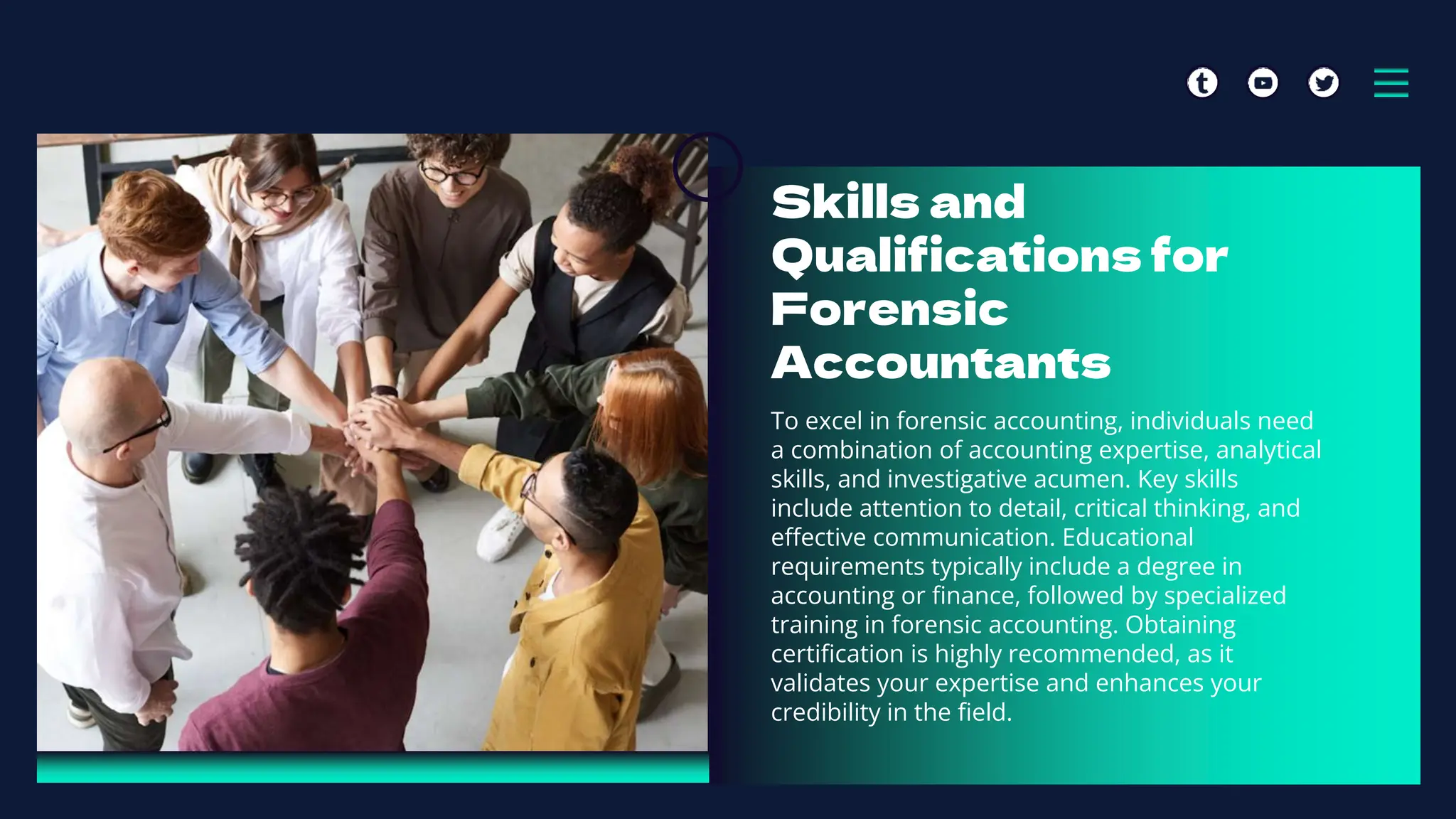
To excel in forensic accounting, individuals need
a combination of accounting expertise, analytical
skills, and investigative acumen. Key skills
include attention to detail, critical thinking, and
effective communication. Educational
requirements typically include a degree in
accounting or finance, followed by specialized
training in forensic accounting. Obtaining
certification is highly recommended, as it
validates your expertise and enhances your
credibility in the field.
The Importance of
Certification in Forensic
Accounting
Certification in forensic accounting offers numerous benefits:
•Enhanced Knowledge: Gain in-depth knowledge of forensic
accounting principles and techniques.
•Career Advancement: Improve your job prospects and qualify for
higher-level positions.
•Professional Recognition: Demonstrate your commitment to the
field and earn recognition from peers and employers.
•Skill Development: Acquire practical skills through hands-on
training and real-world case studies.
Certification programs, such as those offered by the Association of
Certified Fraud Examiners (ACFE) or the American Institute of Certified
Public Accountants (AICPA), provide comprehensive training and
certification for aspiring forensic accountants.
Challenges
in Forensic
Accounting
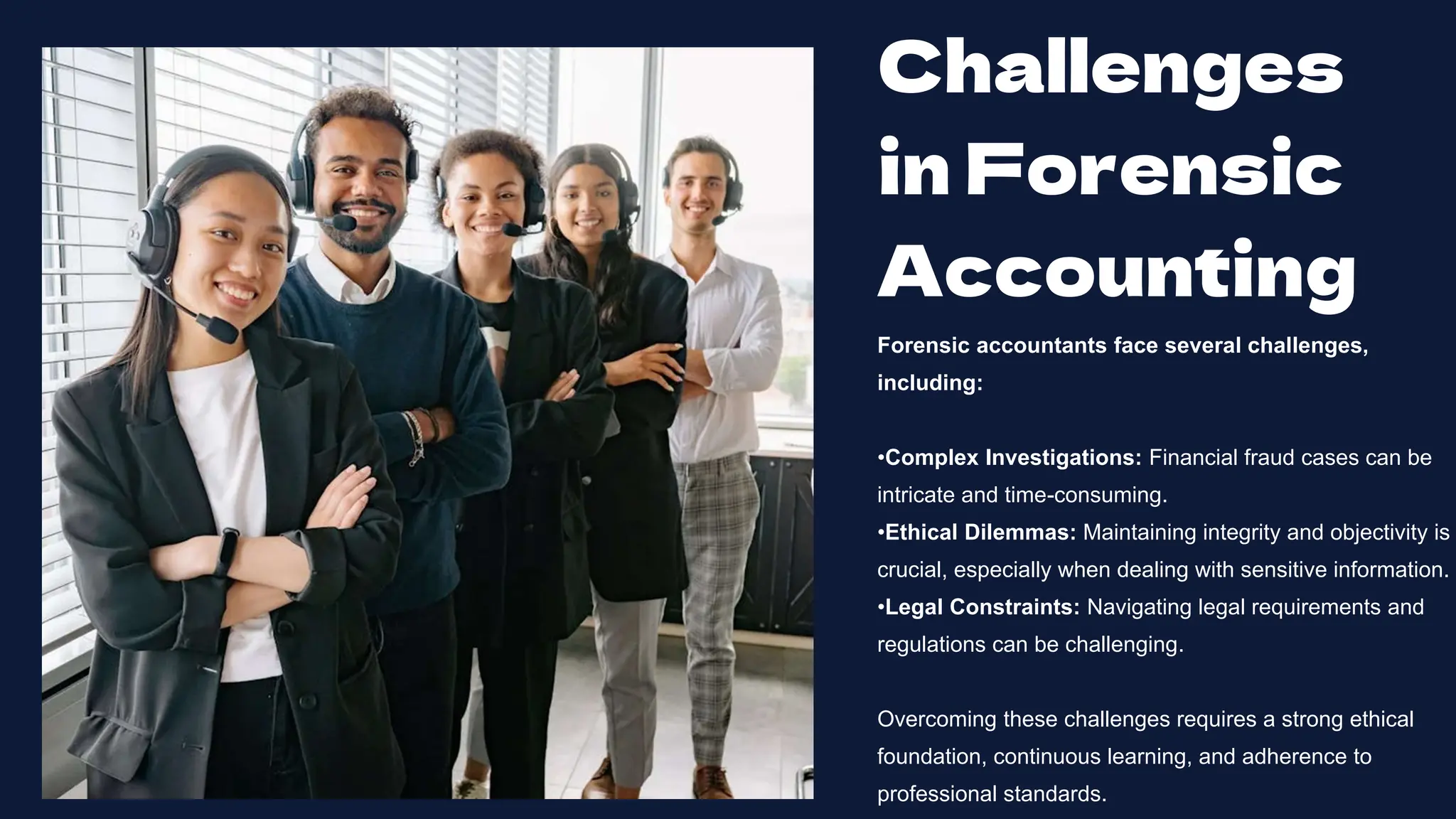
Forensic accountants face several challenges,
including:
•Complex Investigations: Financial fraud cases can be
intricate and time-consuming.
•Ethical Dilemmas: Maintaining integrity and objectivity is
crucial, especially when dealing with sensitive information.
•Legal Constraints: Navigating legal requirements and
regulations can be challenging.
Overcoming these challenges requires a strong ethical
foundation, continuous learning, and adherence to
professional standards.
Future of Forensic
Accounting
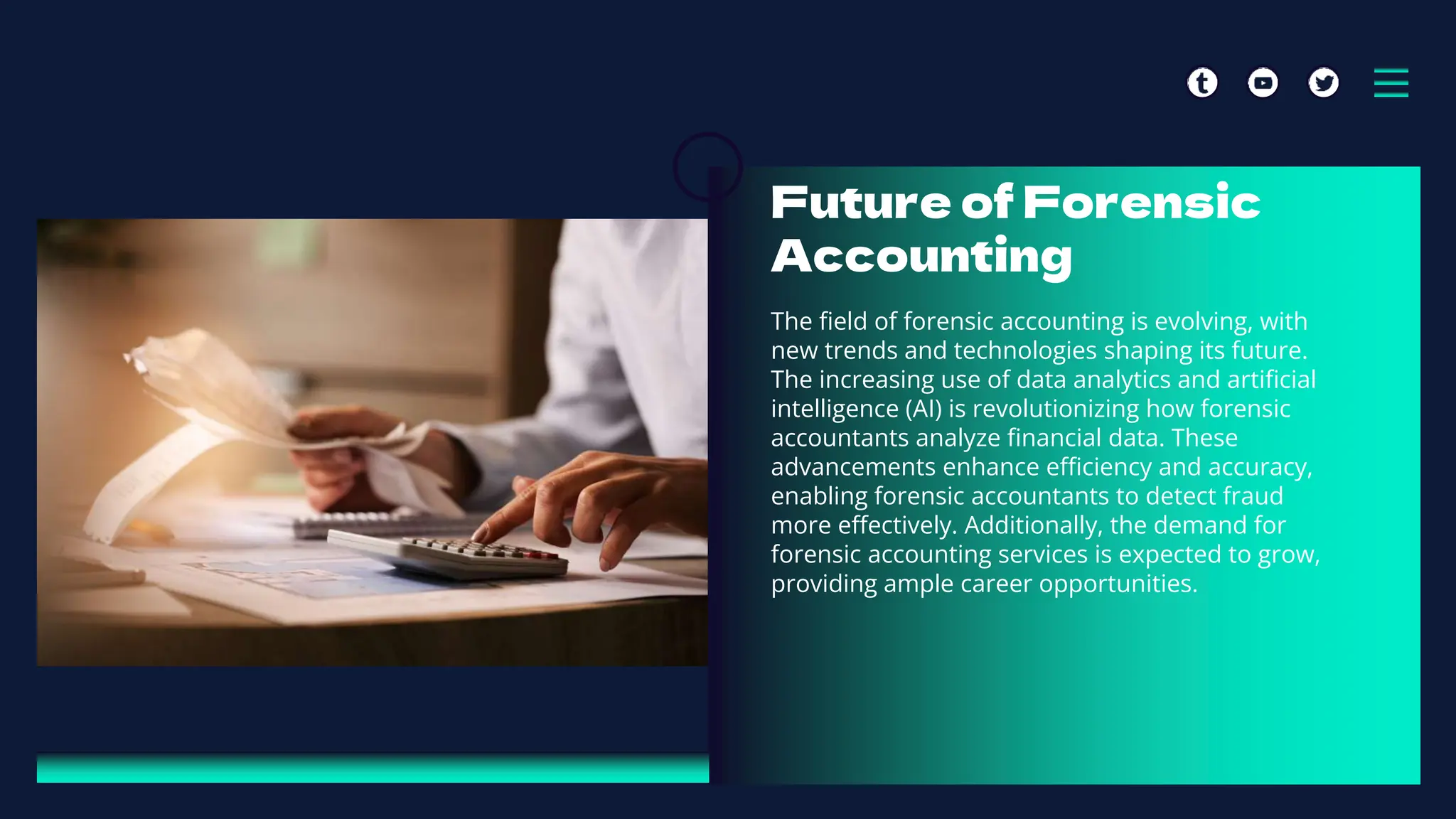
The field of forensic accounting is evolving, with
new trends and technologies shaping its future.
The increasing use of data analytics and artificial
intelligence (AI) is revolutionizing how forensic
accountants analyze financial data. These
advancements enhance efficiency and accuracy,
enabling forensic accountants to detect fraud
more effectively. Additionally, the demand for
forensic accounting services is expected to grow,
providing ample career opportunities.
Conclusion
Forensic accounting is a vital field that
combines financial expertise with
investigative skills to uncover financial
crimes and ensure justice. By obtaining a
Forensic Accounting Course Certificate,
you can enhance your knowledge, advance
your career, and contribute to maintaining
financial integrity. Start your journey today
and become a key player in the fight against
financial fraud.

What is Forensic Accounting and How Does It Work?

  • 1.
    What is Forensic Accountingand How Does It Work?
  • 2.
    Forensic accounting isa specialized field that combines accounting, auditing, and investigative skills to examine financial records and transactions. This discipline plays a critical role in uncovering fraud, embezzlement, and other financial crimes. As financial fraud continues to rise, the demand for skilled forensic accountants is higher than ever. In this blog, we will explore what forensic accounting is and how it works, focusing on key techniques and functions that can transform your data analysis process.
  • 3.
    Defining Forensic Accounting Forensic accounting isthe practice of using accounting, auditing, and investigative techniques to examine financial statements and records. It aims to detect and prevent financial fraud, provide litigation support, and assist in resolving disputes. Forensic accountants analyze financial data, identify discrepancies, and gather evidence that can be used in legal proceedings. They work closely with law enforcement agencies, legal professionals, and businesses to uncover financial misconduct.
  • 4.
    The forensic accountingprocess involves several steps to ensure a thorough investigation: 1.Initial Assessment: The forensic accountant begins by understanding the scope of the investigation and identifying key areas of concern. 2.Data Collection: Gathering relevant financial documents, records, and electronic data is crucial. This includes bank statements, invoices, emails, and transaction logs. 3.Data Analysis: The forensic accountant analyzes the collected data to identify patterns, discrepancies, and anomalies. Advanced software tools and techniques, such as data mining and digital forensics, are often used. 4.Interviews: Conducting interviews with relevant parties helps gather additional information and insights. This may include employees, management, and external parties. 5.Reporting: The forensic accountant prepares a detailed report outlining the findings, including evidence of any fraudulent activity. This report may be used in court or for internal decision-making. 6.Testimony: If the case goes to trial, the forensic accountant may be required to testify as an expert witness, presenting their findings and supporting evidence. How Forensic Accounting Works
  • 5.
    Applications of Forensic Accounting Forensicaccounting is used in various scenarios, including: •Fraud Detection and Prevention: Identifying and preventing financial fraud within organizations. •Litigation Support: Assisting in legal disputes by providing financial analysis and expert testimony. •Insurance Claims: Investigating insurance claims for accuracy and potential fraud. •Bankruptcy Cases: Analyzing financial records to uncover hidden assets or fraudulent activities. •Corporate Investigations: Examining financial transactions to detect embezzlement or misconduct.
  • 6.
    Skills and Qualifications for Forensic Accountants Toexcel in forensic accounting, individuals need a combination of accounting expertise, analytical skills, and investigative acumen. Key skills include attention to detail, critical thinking, and effective communication. Educational requirements typically include a degree in accounting or finance, followed by specialized training in forensic accounting. Obtaining certification is highly recommended, as it validates your expertise and enhances your credibility in the field.
  • 7.
    The Importance of Certificationin Forensic Accounting Certification in forensic accounting offers numerous benefits: •Enhanced Knowledge: Gain in-depth knowledge of forensic accounting principles and techniques. •Career Advancement: Improve your job prospects and qualify for higher-level positions. •Professional Recognition: Demonstrate your commitment to the field and earn recognition from peers and employers. •Skill Development: Acquire practical skills through hands-on training and real-world case studies. Certification programs, such as those offered by the Association of Certified Fraud Examiners (ACFE) or the American Institute of Certified Public Accountants (AICPA), provide comprehensive training and certification for aspiring forensic accountants.
  • 8.
    Challenges in Forensic Accounting Forensic accountantsface several challenges, including: •Complex Investigations: Financial fraud cases can be intricate and time-consuming. •Ethical Dilemmas: Maintaining integrity and objectivity is crucial, especially when dealing with sensitive information. •Legal Constraints: Navigating legal requirements and regulations can be challenging. Overcoming these challenges requires a strong ethical foundation, continuous learning, and adherence to professional standards.
  • 9.
    Future of Forensic Accounting Thefield of forensic accounting is evolving, with new trends and technologies shaping its future. The increasing use of data analytics and artificial intelligence (AI) is revolutionizing how forensic accountants analyze financial data. These advancements enhance efficiency and accuracy, enabling forensic accountants to detect fraud more effectively. Additionally, the demand for forensic accounting services is expected to grow, providing ample career opportunities.
  • 10.
    Conclusion Forensic accounting isa vital field that combines financial expertise with investigative skills to uncover financial crimes and ensure justice. By obtaining a Forensic Accounting Course Certificate, you can enhance your knowledge, advance your career, and contribute to maintaining financial integrity. Start your journey today and become a key player in the fight against financial fraud.