DIABETES
BY: SABRINA DUGAN
CLASS: HEALTH, SAFETY, AND
NUTRITION FOR YOUNG
CHILDREN
EEC 4731
DATE: 1.30.2012
What is Diabetes?
    Diabetes is a lifelong, incurable disease. Diabetics
     have high levels of sugar (hyperglycemia) in their
     blood and their pancreas either produces little or
     no insulin (a hormone) at all.
    Diabetes has three Types:
1.    Type 1: most common in children.
2.    Type 2: most common in adults.
3.    Gestinational Diabetes: diabetes that develops
      during pregnancy.
     Genetics can play a factor that leads to diabetes.
Type 1 Diabetes
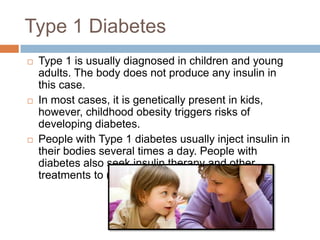
   Type 1 is usually diagnosed in children and young
    adults. The body does not produce any insulin in
    this case.
   In most cases, it is genetically present in kids,
    however, childhood obesity triggers risks of
    developing diabetes.
   People with Type 1 diabetes usually inject insulin in
    their bodies several times a day. People with
    diabetes also seek insulin therapy and other
    treatments to manage their condition.
Type 2
   The most common type of diabetes is type 2
    diabetes. It is more common in the aged
    population and certain races such as African
    Americans, Latin Americans, and Asian
    Americans, etc.

   In Type 2 diabetes, the body does not produce
    adequate insulin. Type 2 diabetics
Symptoms of Type 1 and Type
2
    Diabetes often is undiagnosed because of the
     harmless symptoms such as:
1.    Frequent urination.
2.    Rapid weight loss.
3.    Extreme hunger and thirst.
4.    Fatigue and irritability.
     Type 2 diabetics usually suffer from blurred
      vision and tingling and numbness, etc.
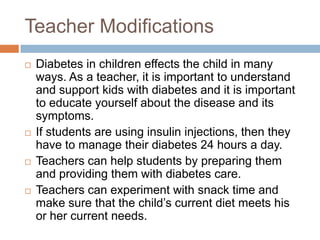
Effective Treatment
   Because Type 1 and Type 2 diabetes is
    incurable, it should be controlled to develop
    future complications.
   Some treatments include:
•   Insulin therapy
•   Insulin Injections
•   Dietary changes
•   Daily exercise
•   Monitor blood sugar.
Teacher Modifications
   Diabetes in children effects the child in many
    ways. As a teacher, it is important to understand
    and support kids with diabetes and it is important
    to educate yourself about the disease and its
    symptoms.
   If students are using insulin injections, then they
    have to manage their diabetes 24 hours a day.
   Teachers can help students by preparing them
    and providing them with diabetes care.
   Teachers can experiment with snack time and
    make sure that the child‟s current diet meets his
    or her current needs.
Teacher Modifications cont‟d
   Teachers can make kids feel more confident in
    school and not exclude kids from activities.
   Teachers can educate themselves about
    insulin injections and how to administer it.
   Teachers can incorporate more physical
    activity in the classrooms and give students
    sugar free snacks.
   Teachers can create more awareness about
    the seriousness of diabetes.
How would I address the issue?
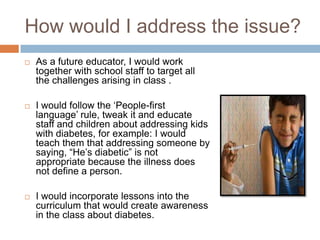
   As a future educator, I would work
    together with school staff to target all
    the challenges arising in class .

   I would follow the „People-first
    language‟ rule, tweak it and educate
    staff and children about addressing kids
    with diabetes, for example: I would
    teach them that addressing someone by
    saying, “He‟s diabetic” is not
    appropriate because the illness does
    not define a person.

   I would incorporate lessons into the
    curriculum that would create awareness
    in the class about diabetes.
How would I address the issue?
Cont‟d
   I would inform parents about the chronic
    disease and ask them to bring sugar-free
    snacks to school.
   I would not make the student feel excluded in
    the classroom, instead I would build his or her
    confidence and treat him or her equally.
   I would attend seminars and workshops that
    deal with working with kids with diabetes.
   I would educate myself about all the available
    resources and treatments out there.
References
   Marotz, L.R., Cross, M.Z., & Rush, J.M. (7th
    Edition) “Health, Safety & Nutrition for the Young
    Child.” Albany, NY: Delmar. Print.
   "Symptoms - American Diabetes Association."
    American Diabetes Association Home Page -
    American Diabetes Association. Web. 29 Jan.
    2012. <http://www.diabetes.org/diabetes-
    basics/symptoms/?__utma=1.220873443.132788
    4791.1327884791.1327884791.1>.
   "What Is Diabetes? What Causes Diabetes?"
    Medical News Today: Health News. Web. 29 Jan.
    2012.
    <http://www.medicalnewstoday.com/info/diabetes/
    >.

Diabetes sabrina.dugan

  • 1.
    DIABETES BY: SABRINA DUGAN CLASS:HEALTH, SAFETY, AND NUTRITION FOR YOUNG CHILDREN EEC 4731 DATE: 1.30.2012
  • 2.
    What is Diabetes?  Diabetes is a lifelong, incurable disease. Diabetics have high levels of sugar (hyperglycemia) in their blood and their pancreas either produces little or no insulin (a hormone) at all.  Diabetes has three Types: 1. Type 1: most common in children. 2. Type 2: most common in adults. 3. Gestinational Diabetes: diabetes that develops during pregnancy.  Genetics can play a factor that leads to diabetes.
  • 3.
    Type 1 Diabetes  Type 1 is usually diagnosed in children and young adults. The body does not produce any insulin in this case.  In most cases, it is genetically present in kids, however, childhood obesity triggers risks of developing diabetes.  People with Type 1 diabetes usually inject insulin in their bodies several times a day. People with diabetes also seek insulin therapy and other treatments to manage their condition.
  • 4.
    Type 2  The most common type of diabetes is type 2 diabetes. It is more common in the aged population and certain races such as African Americans, Latin Americans, and Asian Americans, etc.  In Type 2 diabetes, the body does not produce adequate insulin. Type 2 diabetics
  • 5.
    Symptoms of Type1 and Type 2  Diabetes often is undiagnosed because of the harmless symptoms such as: 1. Frequent urination. 2. Rapid weight loss. 3. Extreme hunger and thirst. 4. Fatigue and irritability.  Type 2 diabetics usually suffer from blurred vision and tingling and numbness, etc.
  • 6.
    Effective Treatment  Because Type 1 and Type 2 diabetes is incurable, it should be controlled to develop future complications.  Some treatments include: • Insulin therapy • Insulin Injections • Dietary changes • Daily exercise • Monitor blood sugar.
  • 7.
    Teacher Modifications  Diabetes in children effects the child in many ways. As a teacher, it is important to understand and support kids with diabetes and it is important to educate yourself about the disease and its symptoms.  If students are using insulin injections, then they have to manage their diabetes 24 hours a day.  Teachers can help students by preparing them and providing them with diabetes care.  Teachers can experiment with snack time and make sure that the child‟s current diet meets his or her current needs.
  • 8.
    Teacher Modifications cont‟d  Teachers can make kids feel more confident in school and not exclude kids from activities.  Teachers can educate themselves about insulin injections and how to administer it.  Teachers can incorporate more physical activity in the classrooms and give students sugar free snacks.  Teachers can create more awareness about the seriousness of diabetes.
  • 9.
    How would Iaddress the issue?  As a future educator, I would work together with school staff to target all the challenges arising in class .  I would follow the „People-first language‟ rule, tweak it and educate staff and children about addressing kids with diabetes, for example: I would teach them that addressing someone by saying, “He‟s diabetic” is not appropriate because the illness does not define a person.  I would incorporate lessons into the curriculum that would create awareness in the class about diabetes.
  • 10.
    How would Iaddress the issue? Cont‟d  I would inform parents about the chronic disease and ask them to bring sugar-free snacks to school.  I would not make the student feel excluded in the classroom, instead I would build his or her confidence and treat him or her equally.  I would attend seminars and workshops that deal with working with kids with diabetes.  I would educate myself about all the available resources and treatments out there.
  • 11.
    References  Marotz, L.R., Cross, M.Z., & Rush, J.M. (7th Edition) “Health, Safety & Nutrition for the Young Child.” Albany, NY: Delmar. Print.  "Symptoms - American Diabetes Association." American Diabetes Association Home Page - American Diabetes Association. Web. 29 Jan. 2012. <http://www.diabetes.org/diabetes- basics/symptoms/?__utma=1.220873443.132788 4791.1327884791.1327884791.1>.  "What Is Diabetes? What Causes Diabetes?" Medical News Today: Health News. Web. 29 Jan. 2012. <http://www.medicalnewstoday.com/info/diabetes/ >.