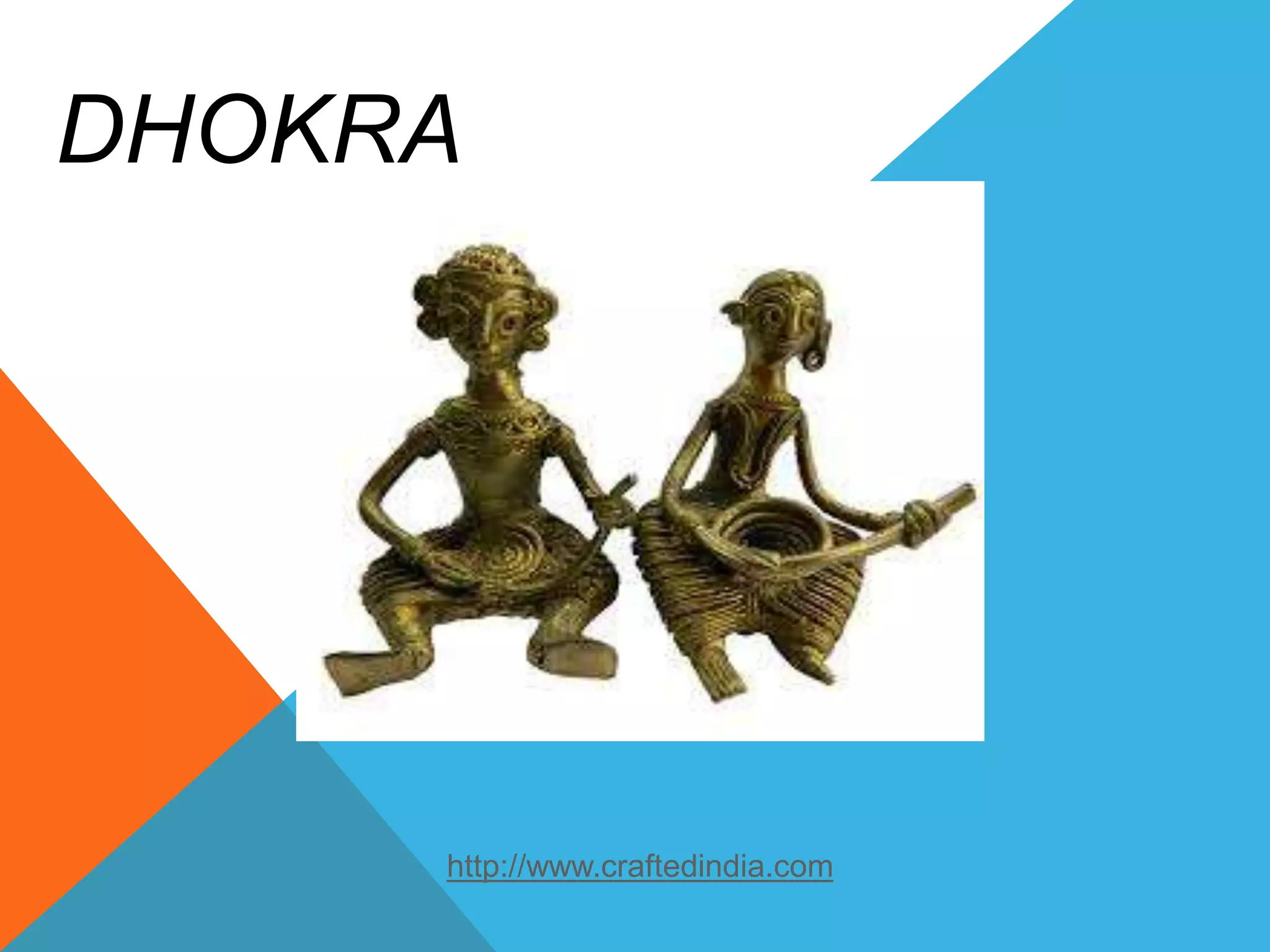
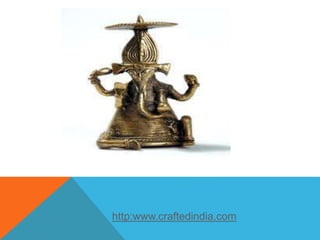
DHOKRA
http://www.craftedindia.com
DHOKRA:
India is a country rich in its cultural heritage. It is home to one
of the oldest civilizations of all time –The Indus Valley
Civilization, which dates back to around 6000 BCE. Since then,
many art forms which produce best handicraft and its evolved,
most of which started to fade away with time. ‘Dhokra Art’ is
one such art form which was almost lost in oblivion, but came
back to life in India during the past decade. Dhokra is derived
from the "Dhokra Damar" Tribe. One of the earliest examples of
this technique is the famous Dancing Girl figurine excavated
from Mohenjodaro.
http://www.craftedindia.com
DHOKRA IS NON–FERROUS METAL CASTING USING
THE LOST-WAX CASTING TECHNIQUE. THIS SORT OF METAL
CASTING HAS BEEN USED IN INDIA FOR OVER 4,000 YEARS
AND IS STILL USED. THERE ARE TWO MAIN PROCESSES OF
LOST WAX CASTING: SOLID CASTING AND HOLLOW
CASTING. WHILE THE FORMER IS PREDOMINANT IN THE
SOUTH OF INDIA THE LATTER IS MORE COMMON IN
CENTRAL AND EASTERN INDIA. SOLID CASTING DOES NOT
USE A CLAY CORE BUT INSTEAD A SOLID PIECE OF WAX TO
CREATE THE MOULD; HOLLOW CASTING IS THE MORE
TRADITIONAL METHOD AND USES THE CLAY CORE.
http://www.craftedindia.com
The first task in the lost wax hollow casting
process consists of developing a clay core
which is roughly the shape of the final cast
image. Next, the clay core is covered by a layer
of wax composed of pure bee’s wax, resin from
the tree Damara orientalis, and nut oil. The wax
is then shaped and carved in all its finer details
of design and decorations. It is then covered
with layers of clay, which takes the negative
form of the wax on the inside, thus becoming a
mould for the metal that will be poured inside it.
http://www.craftedindia.com
Drain ducts are left for the wax, which melts away
when the clay is cooked. The wax is then replaced
by the molten metal, often using brass scrap as
basic raw material. The liquid metal poured in
hardens between the core and the inner surface of
the mould. The metal fills the mould and takes the
same shape as the wax. The outer layer of clay is
then chipped off and the metal icon is polished
and finished as desired.
http://www.craftedindia.com
The creative piece has no joints and comes in one
piece, as a whole. Since, Dhokra Art is
handcrafted, the shapes are not perfect and the
symmetries are not mirrored, contrary to the ones
produced with the help of machines.
These creative pieces of Dhokra Art are alluring,
unique and graceful. However, making them is a
tedious task. One consignment of a new line of
product takes about 6 to 8 months to complete.
http://www.craftedindia.com
Dhokra is non–ferrous metal casting using
the Lost-Wax Casting technique. This sort of
metal casting has been used in India for over
4,000 years and is still used. process consists of
developing a clay core which is roughly the shape
of the final cast image. The clay core is covered
by a layer of wax composed of pure bee’s wax,
resin from the tree Damara orientalis, and nut oil.
Each product is unique as the mould can be used
only once.
http://www.craftedindia.com
http:www.craftedindia.com
For More Further Information
About Dhokra Products:
http://www.craftedindia.com

Dhokra power point presentation

  • 1.
  • 2.
    DHOKRA: India is acountry rich in its cultural heritage. It is home to one of the oldest civilizations of all time –The Indus Valley Civilization, which dates back to around 6000 BCE. Since then, many art forms which produce best handicraft and its evolved, most of which started to fade away with time. ‘Dhokra Art’ is one such art form which was almost lost in oblivion, but came back to life in India during the past decade. Dhokra is derived from the "Dhokra Damar" Tribe. One of the earliest examples of this technique is the famous Dancing Girl figurine excavated from Mohenjodaro. http://www.craftedindia.com
  • 3.
  • 4.
    DHOKRA IS NON–FERROUSMETAL CASTING USING THE LOST-WAX CASTING TECHNIQUE. THIS SORT OF METAL CASTING HAS BEEN USED IN INDIA FOR OVER 4,000 YEARS AND IS STILL USED. THERE ARE TWO MAIN PROCESSES OF LOST WAX CASTING: SOLID CASTING AND HOLLOW CASTING. WHILE THE FORMER IS PREDOMINANT IN THE SOUTH OF INDIA THE LATTER IS MORE COMMON IN CENTRAL AND EASTERN INDIA. SOLID CASTING DOES NOT USE A CLAY CORE BUT INSTEAD A SOLID PIECE OF WAX TO CREATE THE MOULD; HOLLOW CASTING IS THE MORE TRADITIONAL METHOD AND USES THE CLAY CORE. http://www.craftedindia.com
  • 5.
    The first taskin the lost wax hollow casting process consists of developing a clay core which is roughly the shape of the final cast image. Next, the clay core is covered by a layer of wax composed of pure bee’s wax, resin from the tree Damara orientalis, and nut oil. The wax is then shaped and carved in all its finer details of design and decorations. It is then covered with layers of clay, which takes the negative form of the wax on the inside, thus becoming a mould for the metal that will be poured inside it. http://www.craftedindia.com
  • 6.
    Drain ducts areleft for the wax, which melts away when the clay is cooked. The wax is then replaced by the molten metal, often using brass scrap as basic raw material. The liquid metal poured in hardens between the core and the inner surface of the mould. The metal fills the mould and takes the same shape as the wax. The outer layer of clay is then chipped off and the metal icon is polished and finished as desired. http://www.craftedindia.com
  • 7.
    The creative piecehas no joints and comes in one piece, as a whole. Since, Dhokra Art is handcrafted, the shapes are not perfect and the symmetries are not mirrored, contrary to the ones produced with the help of machines. These creative pieces of Dhokra Art are alluring, unique and graceful. However, making them is a tedious task. One consignment of a new line of product takes about 6 to 8 months to complete. http://www.craftedindia.com
  • 8.
    Dhokra is non–ferrousmetal casting using the Lost-Wax Casting technique. This sort of metal casting has been used in India for over 4,000 years and is still used. process consists of developing a clay core which is roughly the shape of the final cast image. The clay core is covered by a layer of wax composed of pure bee’s wax, resin from the tree Damara orientalis, and nut oil. Each product is unique as the mould can be used only once. http://www.craftedindia.com
  • 9.
  • 10.
    For More FurtherInformation About Dhokra Products: http://www.craftedindia.com