DEVELOPING
IMPACT FOR
#REF2021
PROFESSOR ANDY MIAH
HOW REF DEFINES IMPACT
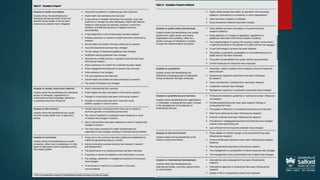
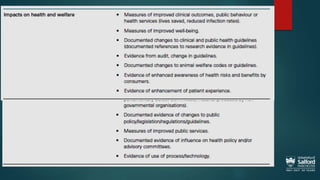
 “Impact…may take many forms and occur in a wide range
of [overlapping] spheres. These may include (but are not
restricted to): creativity, culture and society; the
economy, commerce or organisations; the
environment; health and welfare; practitioners and
professional services; public policy, law and services.”
TIMETABLE
 June 2016 – Stern Review
 Higher Education and Research Bill
 December 2016 – HEFCE REF Technical Consultation
 June 2017 – REF Guidance Published
 November 2020 – REF Submission
HEADLINES FROM STERN REVIEW
 “Impact is clearly one of the success stories of REF2014,”
 “contributed to an evolving culture of wider engagement”
 “relax the tight coupling between the number of staff
submitted to a Unit of Assessment and the number of case
studies required,”
 “greater which may cross the boundaries of differentflexibility
to submit case studies units
HEADLINES FROM STERN REVIEW
 all institutions submitting to the REF should be required to
submit some ‘institutional’ level impact case studies which
arise from multi- and interdisciplinary and collaborative work
 “Recommendation 5: Institutions should be given more
flexibility to showcase their interdisciplinary and
collaborative impacts by submitting ‘institutional’ level
impact case studies, part of a new institutional level
assessment.
HEADLINES FROM STERN REVIEW
 Recommendation 6: Impact should be based on research of
demonstrable quality. However, case studies could be linked
to a research activity and a body of work as well as to a broad
range of research outputs.
 Recommendation 7: Guidance on the REF should make it
clear that impact case studies should not be narrowly
interpreted, need not solely focus on socioeconomic impacts
but should also include impact on government policy, on
public engagement and understanding, on cultural life, on
academic impacts outside the field, and impacts on teaching
ENVIRONMENT & IMPACT
 ‘Recommendation 8: A new, institutional level Environment assessment
should include an account of the institution’s future research
environment strategy, a statement of how it supports high quality
research and research-related activities, including its support for
interdisciplinary and cross-institutional initiatives and impact. It should
form part of the institutional assessment and should be assessed by a
specialist, cross-disciplinary panel.
 'widening and deepening the notion of impact to include influence on
public engagement, culture and teaching as well as policy and
applications more generally’
ENVIRONMENT & IMPACT
 Recommendation 9: That individual Unit of Assessment
environment statements are condensed, made complementary
to the institutional level environment statement and include
those key metrics on research intensity specific to the Unit of
Assessment.
 the total weighting for impact does not comprise less than
20% in the next exercise.
HEADLINES FROM CHRIS HEWSON
 individual sub-panels…are allowed freer rein to define what
impact is ‘for them’
 reassertion of the value of impacts on cultural life, via public
engagement, and through pedagogy
 The area of most considerable interest is Stern’s recognition of
the oft-touted suggestion to merge the environment and
impact templates.
HEADLINES FROM CHRIS HEWSON
 actively fulfilling the need expressed by RCUK to move
knowledge exchange out of the periphery, “embedding
throughout the research base a culture in which excellent
research departments consistently engage with business, the
public sector and civil society organisations, and are
committed to carrying new ideas through to beneficial
outcomes”.
Case study eligibility
 August 2013 July 2020 – ‘Impact period’
 Links to ‘research’ undertaken at HEI
 Linked to FTE count (?)
 Tallies with research strategy
 Not mapped to UoA at this stage
 Links to ICZs
GROUP ACTIVITY
 In pairs, describe what you see as the impact of your research.
Map it out on paper
 Your partner to feedback to the group (3 min)
 CONSIDER: evidence chain for impact
 Looking for ideas, including the very smallest
 Move towards a consideration of how pieces fit
 Full mapping / planning process can only begin when guidance is
released
 Potential for greater flexibility than REF2014
Developing Impact for REF2021

Developing Impact for REF2021

  • 1.
  • 2.
    HOW REF DEFINESIMPACT  “Impact…may take many forms and occur in a wide range of [overlapping] spheres. These may include (but are not restricted to): creativity, culture and society; the economy, commerce or organisations; the environment; health and welfare; practitioners and professional services; public policy, law and services.”
  • 3.
    TIMETABLE  June 2016– Stern Review  Higher Education and Research Bill  December 2016 – HEFCE REF Technical Consultation  June 2017 – REF Guidance Published  November 2020 – REF Submission
  • 4.
    HEADLINES FROM STERNREVIEW  “Impact is clearly one of the success stories of REF2014,”  “contributed to an evolving culture of wider engagement”  “relax the tight coupling between the number of staff submitted to a Unit of Assessment and the number of case studies required,”  “greater which may cross the boundaries of differentflexibility to submit case studies units
  • 5.
    HEADLINES FROM STERNREVIEW  all institutions submitting to the REF should be required to submit some ‘institutional’ level impact case studies which arise from multi- and interdisciplinary and collaborative work  “Recommendation 5: Institutions should be given more flexibility to showcase their interdisciplinary and collaborative impacts by submitting ‘institutional’ level impact case studies, part of a new institutional level assessment.
  • 6.
    HEADLINES FROM STERNREVIEW  Recommendation 6: Impact should be based on research of demonstrable quality. However, case studies could be linked to a research activity and a body of work as well as to a broad range of research outputs.  Recommendation 7: Guidance on the REF should make it clear that impact case studies should not be narrowly interpreted, need not solely focus on socioeconomic impacts but should also include impact on government policy, on public engagement and understanding, on cultural life, on academic impacts outside the field, and impacts on teaching
  • 7.
    ENVIRONMENT & IMPACT ‘Recommendation 8: A new, institutional level Environment assessment should include an account of the institution’s future research environment strategy, a statement of how it supports high quality research and research-related activities, including its support for interdisciplinary and cross-institutional initiatives and impact. It should form part of the institutional assessment and should be assessed by a specialist, cross-disciplinary panel.  'widening and deepening the notion of impact to include influence on public engagement, culture and teaching as well as policy and applications more generally’
  • 8.
    ENVIRONMENT & IMPACT Recommendation 9: That individual Unit of Assessment environment statements are condensed, made complementary to the institutional level environment statement and include those key metrics on research intensity specific to the Unit of Assessment.  the total weighting for impact does not comprise less than 20% in the next exercise.
  • 9.
    HEADLINES FROM CHRISHEWSON  individual sub-panels…are allowed freer rein to define what impact is ‘for them’  reassertion of the value of impacts on cultural life, via public engagement, and through pedagogy  The area of most considerable interest is Stern’s recognition of the oft-touted suggestion to merge the environment and impact templates.
  • 10.
    HEADLINES FROM CHRISHEWSON  actively fulfilling the need expressed by RCUK to move knowledge exchange out of the periphery, “embedding throughout the research base a culture in which excellent research departments consistently engage with business, the public sector and civil society organisations, and are committed to carrying new ideas through to beneficial outcomes”.
  • 11.
    Case study eligibility August 2013 July 2020 – ‘Impact period’  Links to ‘research’ undertaken at HEI  Linked to FTE count (?)  Tallies with research strategy  Not mapped to UoA at this stage  Links to ICZs
  • 12.
    GROUP ACTIVITY  Inpairs, describe what you see as the impact of your research. Map it out on paper  Your partner to feedback to the group (3 min)  CONSIDER: evidence chain for impact  Looking for ideas, including the very smallest  Move towards a consideration of how pieces fit  Full mapping / planning process can only begin when guidance is released  Potential for greater flexibility than REF2014