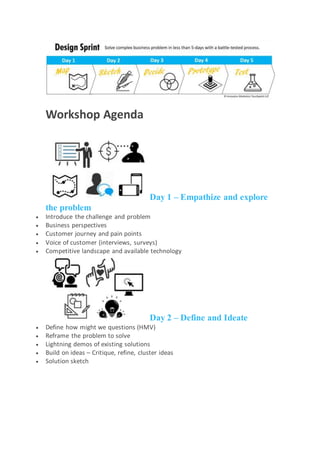
Workshop Agenda
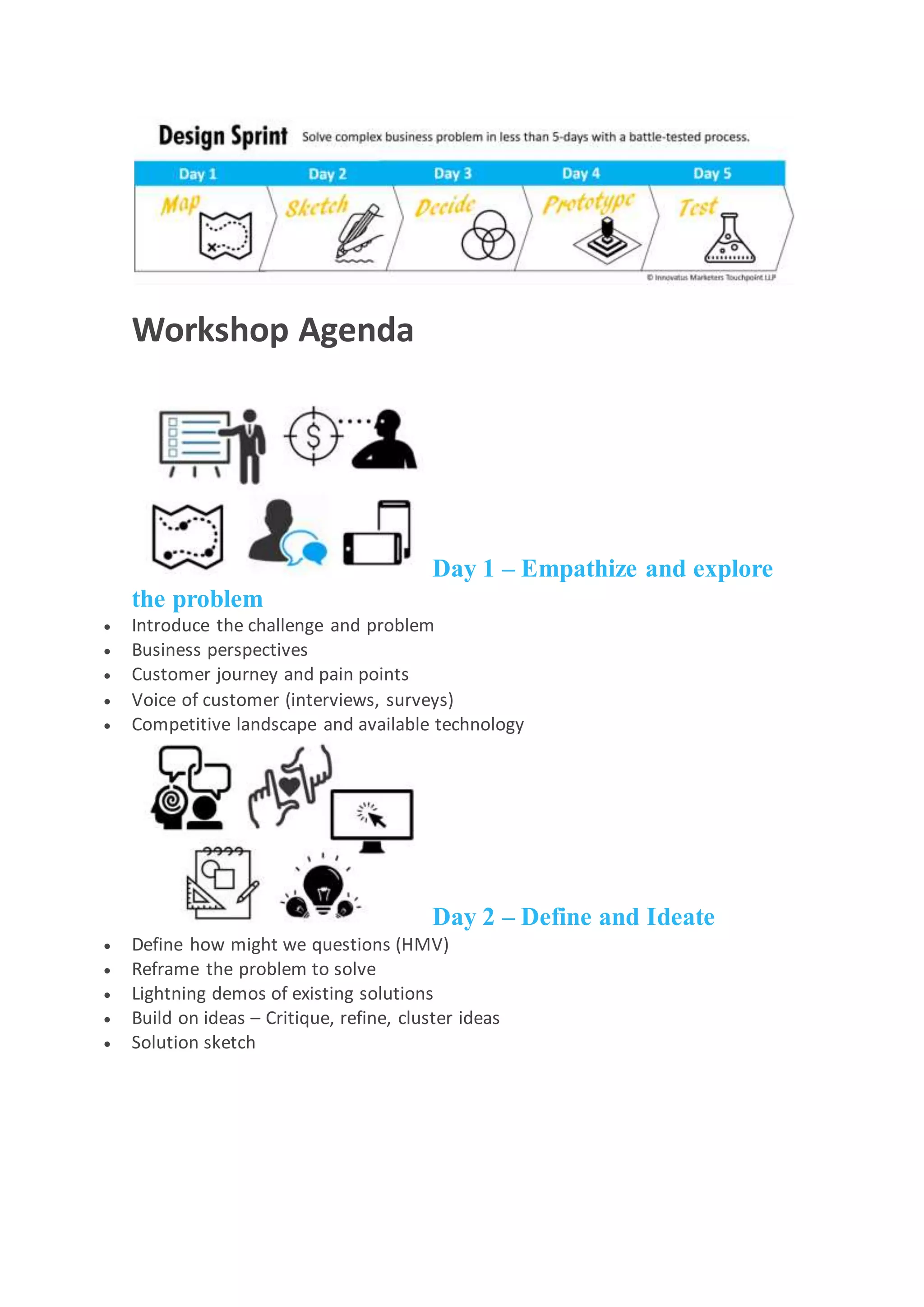
Day 1 – Empathize and explore
the problem
 Introduce the challenge and problem
 Business perspectives
 Customer journey and pain points
 Voice of customer (interviews, surveys)
 Competitive landscape and available technology
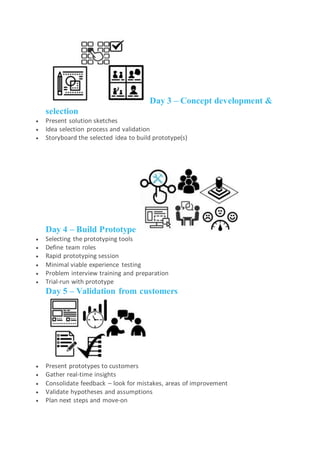
Day 2 – Define and Ideate
 Define how might we questions (HMV)
 Reframe the problem to solve
 Lightning demos of existing solutions
 Build on ideas – Critique, refine, cluster ideas
 Solution sketch
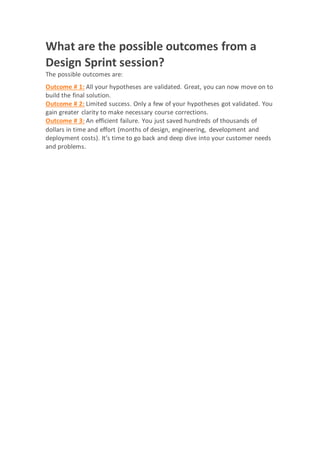
Day 3 – Concept development &
selection
 Present solution sketches
 Idea selection process and validation
 Storyboard the selected idea to build prototype(s)
Day 4 – Build Prototype
 Selecting the prototyping tools
 Define team roles
 Rapid prototyping session
 Minimal viable experience testing
 Problem interview training and preparation
 Trial-run with prototype
Day 5 – Validation from customers
 Present prototypes to customers
 Gather real-time insights
 Consolidate feedback – look for mistakes, areas of improvement
 Validate hypotheses and assumptions
 Plan next steps and move-on
What are the possible outcomes from a
Design Sprint session?
The possible outcomes are:
Outcome # 1: All your hypotheses are validated. Great, you can now move on to
build the final solution.
Outcome # 2: Limited success. Only a few of your hypotheses got validated. You
gain greater clarity to make necessary course corrections.
Outcome # 3: An efficient failure. You just saved hundreds of thousands of
dollars in time and effort (months of design, engineering, development and
deployment costs). It’s time to go back and deep dive into your customer needs
and problems.

Designsprint

  • 1.
    Workshop Agenda Day 1– Empathize and explore the problem  Introduce the challenge and problem  Business perspectives  Customer journey and pain points  Voice of customer (interviews, surveys)  Competitive landscape and available technology Day 2 – Define and Ideate  Define how might we questions (HMV)  Reframe the problem to solve  Lightning demos of existing solutions  Build on ideas – Critique, refine, cluster ideas  Solution sketch
  • 2.
    Day 3 –Concept development & selection  Present solution sketches  Idea selection process and validation  Storyboard the selected idea to build prototype(s) Day 4 – Build Prototype  Selecting the prototyping tools  Define team roles  Rapid prototyping session  Minimal viable experience testing  Problem interview training and preparation  Trial-run with prototype Day 5 – Validation from customers  Present prototypes to customers  Gather real-time insights  Consolidate feedback – look for mistakes, areas of improvement  Validate hypotheses and assumptions  Plan next steps and move-on
  • 3.
    What are thepossible outcomes from a Design Sprint session? The possible outcomes are: Outcome # 1: All your hypotheses are validated. Great, you can now move on to build the final solution. Outcome # 2: Limited success. Only a few of your hypotheses got validated. You gain greater clarity to make necessary course corrections. Outcome # 3: An efficient failure. You just saved hundreds of thousands of dollars in time and effort (months of design, engineering, development and deployment costs). It’s time to go back and deep dive into your customer needs and problems.