In Teens
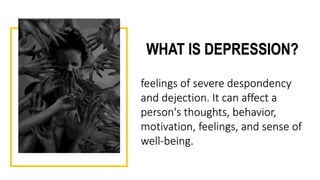
WHAT IS DEPRESSION?
feelings of severe despondency
and dejection. It can affect a
person's thoughts, behavior,
motivation, feelings, and sense of
well-being.
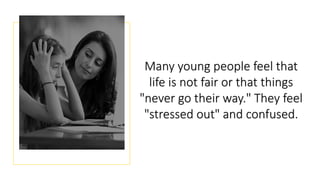
Many young people feel that
life is not fair or that things
"never go their way." They feel
"stressed out" and confused.
Today’s teens are more
expose on television, at
school, in magazines and on
the Internet that forced them
learn about the threat of
AIDS, even if they are not
sexually active or using drugs.
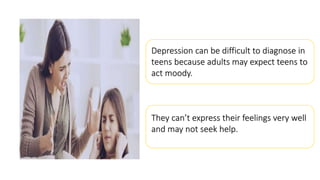
Depression can be difficult to diagnose in
teens because adults may expect teens to
act moody.
They can’t express their feelings very well
and may not seek help.
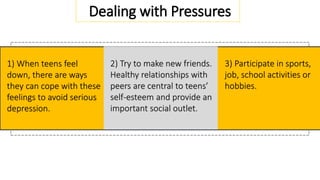
Dealing with Pressures
1) When teens feel
down, there are ways
they can cope with these
feelings to avoid serious
depression.
2) Try to make new friends.
Healthy relationships with
peers are central to teens’
self-esteem and provide an
important social outlet.
3) Participate in sports,
job, school activities or
hobbies.
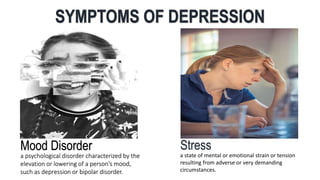
Mood Disorder
a psychological disorder characterized by the
elevation or lowering of a person's mood,
such as depression or bipolar disorder.
Stress
a state of mental or emotional strain or tension
resulting from adverse or very demanding
circumstances.
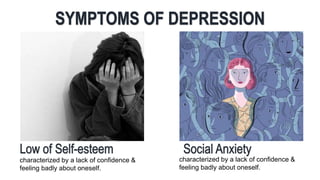
characterized by a lack of confidence &
feeling badly about oneself.
characterized by a lack of confidence &
feeling badly about oneself.
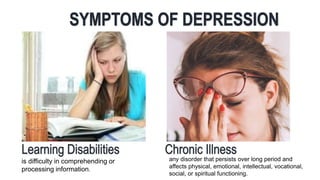
is difficulty in comprehending or
processing information.
any disorder that persists over long period and
affects physical, emotional, intellectual, vocational,
social, or spiritual functioning.
Effective Ways to Treat Depression
in Adolescents
carefully monitor your teen's
use of medications.
Antidepressants need to be
taken consistently at the
prescribed dose.
Managing medications
Psychotherapy
treating depression by
talking about depression
and related issues with a
mental health professional.
Hospitalization
psychiatric treatment at a
hospital can help keep your
teen calm and safe until
symptoms are better
managed.

Depression

  • 1.
  • 2.
    WHAT IS DEPRESSION? feelingsof severe despondency and dejection. It can affect a person's thoughts, behavior, motivation, feelings, and sense of well-being.
  • 3.
    Many young peoplefeel that life is not fair or that things "never go their way." They feel "stressed out" and confused.
  • 4.
    Today’s teens aremore expose on television, at school, in magazines and on the Internet that forced them learn about the threat of AIDS, even if they are not sexually active or using drugs.
  • 5.
    Depression can bedifficult to diagnose in teens because adults may expect teens to act moody. They can’t express their feelings very well and may not seek help.
  • 6.
    Dealing with Pressures 1)When teens feel down, there are ways they can cope with these feelings to avoid serious depression. 2) Try to make new friends. Healthy relationships with peers are central to teens’ self-esteem and provide an important social outlet. 3) Participate in sports, job, school activities or hobbies.
  • 7.
    Mood Disorder a psychologicaldisorder characterized by the elevation or lowering of a person's mood, such as depression or bipolar disorder. Stress a state of mental or emotional strain or tension resulting from adverse or very demanding circumstances.
  • 8.
    characterized by alack of confidence & feeling badly about oneself. characterized by a lack of confidence & feeling badly about oneself.
  • 9.
    is difficulty incomprehending or processing information. any disorder that persists over long period and affects physical, emotional, intellectual, vocational, social, or spiritual functioning.
  • 10.
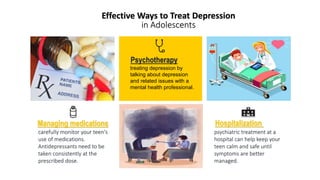
    Effective Ways toTreat Depression in Adolescents carefully monitor your teen's use of medications. Antidepressants need to be taken consistently at the prescribed dose. Managing medications Psychotherapy treating depression by talking about depression and related issues with a mental health professional. Hospitalization psychiatric treatment at a hospital can help keep your teen calm and safe until symptoms are better managed.