 Dengue fever is a disease caused by
 a family of viruses that are
 transmitted by mosquitoes. It is an
 acute illness of sudden onset that
 usually follows a benign course with
 symptoms such as
 headache, fever, exhaustion, severe
 muscle and joint pain, swollen
 glands (lymphadenopathy), and
 rash.
 Dengue (pronounced DENG-
gay) can affect anyone but
tends to be more severe in
people with compromised
immune systems. Because it is
caused by one of four
serotypes of virus, it is possible
to get dengue fever multiple
times.
Dengue goes by other names,
including "breakbone" or
"dandy fever." Victims of
dengue often have contortions
due to the intense joint and
muscle pain, hence the name
breakbone fever.
 Dengue hemorrhagic fever is a more severe
 form of the viral illness. Symptoms include
 headache, fever, rash, and evidence of
 hemorrhage in the body. Petechiae (small
 red or purple splotches or blisters under
 the skin), bleeding in the nose or
 gums, black stools, or easy bruising are all
 possible signs of hemorrhage. This form of
 dengue fever can be life-threatening and
 can progress to the most severe form of
 the illness, dengue shock syndrome.
Dengue fever facts:

 Dengue fever is a disease caused by a family
  of viruses that are transmitted by
  mosquitoes.
 Symptoms such as
  headache, fever, exhaustion, severe joint and
  muscle pain, swollen glands
  (lymphadenopathy), and rash. The presence
  (the "dengue triad") of fever, rash, and
  headache (and other pains) is particularly
  characteristic of dengue fever.
 Because dengue fever is caused by a virus, there
  is no specific medicine or antibiotic to treat it. For
  typical dengue fever, the treatment is purely
  concerned with relief of the symptoms
  (symptomatic).
 Dengue hemorrhagic fever (DHF) is a specific
  syndrome that tends to affect children under 10
  years of age. It causes abdominal
  pain, hemorrhage (bleeding), and circulatory
  collapse (shock).
 The prevention of dengue fever requires control or
  eradication of the mosquitoes carrying the virus
  that causes dengue.
 Dengue is prevalent throughout the
 tropics and subtropics. Outbreaks
 have occurred recently in the
 Caribbean, including Puerto
 Rico, the U.S. Virgin
 Islands, Cuba, and Central
 America.
 In 2011, Bolivia, Brazil, Columbia, Costa
  Rica, El
  Salvador, Honduras, Mexico, Peru, Puerto
  Rico, and Venezuela reported a large
  number of dengue cases. Paraguay
  reported a dengue fever outbreak in
  2011, the worst since 2007.
 The U.S. Centers for Disease Control and
  Prevention (CDC) reports that from 1946 to
  1980, no cases of dengue acquired in the
  continental United States were reported..
 A 2009 outbreak of dengue fever in Key
 West, Fla., showed that three patients
 who did not travel outside of the U.S.
 contracted the virus. Subsequent
 testing of the population of Key West
 has shown that up to 55 of the people
 living in the area have antibodies to
 dengue. In total, 28 people were
 diagnosed with dengue fever in this
 outbreak.
Dengue fever is common, in
at least 100 countries in
Asia, the Pacific, the
Americas, Africa, and the
Caribbean.
Thailand, Vietnam, Singapor
e, and Malaysia have all
reported an increase in
cases.
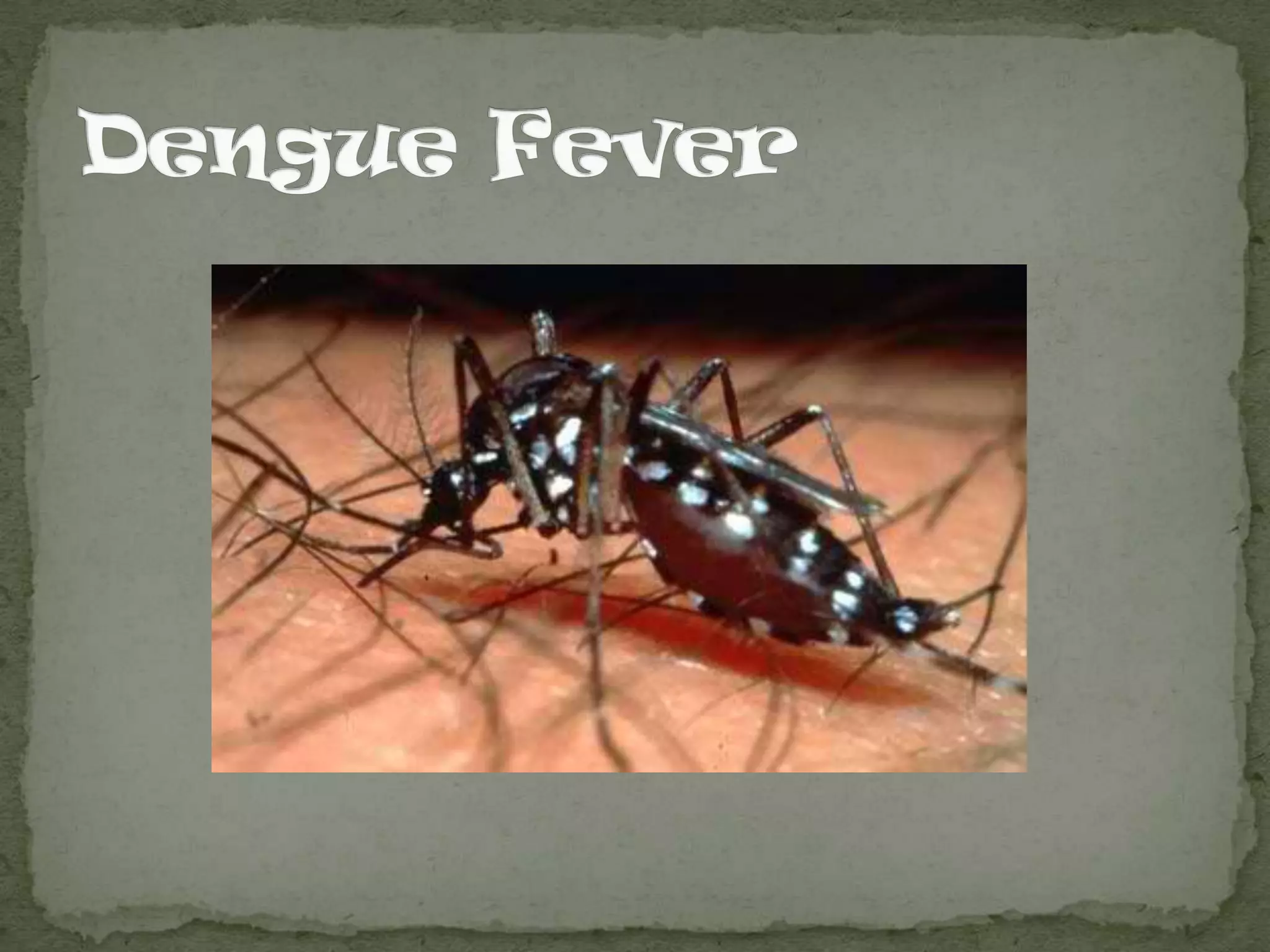
 The virus is contracted from the bite of
 a striped Aedes aegypti mosquito that
 has previously bitten an infected
 person. The mosquito flourishes during
 rainy seasons but can breed in water-
 filled flower pots, plastic bags, and
 cans year-round. One mosquito bite can
 cause the disease.
 After being bitten by a mosquito
 carrying the virus, the incubation period
 ranges from three to 15 (usually five to
 eight) days before the signs and
 symptoms of dengue appear in stages.
 Dengue starts with chills, headache,
 pain upon moving the eyes, and low
 backache
 .
      Painful aching in the legs and joints
      occurs during the first hours of illness.
      The temperature rises quickly as high as
      104 F (40 C), with relatively low heart rate
      (bradycardia) and low blood pressure
      (hypotension). The eyes become
      reddened. A flushing or pale pink rash
      comes over the face and then
      disappears.
 The diagnosis of dengue fever is usually
 made when a patient exhibits the typical
 clinical symptoms of headache, fever, eye
 pain, severe muscle aches and petechial rash
 and has a history of being in an area where
 dengue fever is endemic. Dengue fever can
 be difficult to diagnose because its
 symptoms overlap with those of many other
 viral illnesses, such as West Nile virus and
 chikungunya fever.

Dengue fever slide

  • 2.
     Dengue feveris a disease caused by a family of viruses that are transmitted by mosquitoes. It is an acute illness of sudden onset that usually follows a benign course with symptoms such as headache, fever, exhaustion, severe muscle and joint pain, swollen glands (lymphadenopathy), and rash.
  • 3.
     Dengue (pronouncedDENG- gay) can affect anyone but tends to be more severe in people with compromised immune systems. Because it is caused by one of four serotypes of virus, it is possible to get dengue fever multiple times.
  • 4.
    Dengue goes byother names, including "breakbone" or "dandy fever." Victims of dengue often have contortions due to the intense joint and muscle pain, hence the name breakbone fever.
  • 5.
     Dengue hemorrhagicfever is a more severe form of the viral illness. Symptoms include headache, fever, rash, and evidence of hemorrhage in the body. Petechiae (small red or purple splotches or blisters under the skin), bleeding in the nose or gums, black stools, or easy bruising are all possible signs of hemorrhage. This form of dengue fever can be life-threatening and can progress to the most severe form of the illness, dengue shock syndrome.
  • 6.
    Dengue fever facts: Dengue fever is a disease caused by a family of viruses that are transmitted by mosquitoes.  Symptoms such as headache, fever, exhaustion, severe joint and muscle pain, swollen glands (lymphadenopathy), and rash. The presence (the "dengue triad") of fever, rash, and headache (and other pains) is particularly characteristic of dengue fever.
  • 7.
     Because denguefever is caused by a virus, there is no specific medicine or antibiotic to treat it. For typical dengue fever, the treatment is purely concerned with relief of the symptoms (symptomatic).  Dengue hemorrhagic fever (DHF) is a specific syndrome that tends to affect children under 10 years of age. It causes abdominal pain, hemorrhage (bleeding), and circulatory collapse (shock).  The prevention of dengue fever requires control or eradication of the mosquitoes carrying the virus that causes dengue.
  • 8.
     Dengue isprevalent throughout the tropics and subtropics. Outbreaks have occurred recently in the Caribbean, including Puerto Rico, the U.S. Virgin Islands, Cuba, and Central America.
  • 9.
     In 2011,Bolivia, Brazil, Columbia, Costa Rica, El Salvador, Honduras, Mexico, Peru, Puerto Rico, and Venezuela reported a large number of dengue cases. Paraguay reported a dengue fever outbreak in 2011, the worst since 2007.  The U.S. Centers for Disease Control and Prevention (CDC) reports that from 1946 to 1980, no cases of dengue acquired in the continental United States were reported..
  • 10.
     A 2009outbreak of dengue fever in Key West, Fla., showed that three patients who did not travel outside of the U.S. contracted the virus. Subsequent testing of the population of Key West has shown that up to 55 of the people living in the area have antibodies to dengue. In total, 28 people were diagnosed with dengue fever in this outbreak.
  • 11.
    Dengue fever iscommon, in at least 100 countries in Asia, the Pacific, the Americas, Africa, and the Caribbean. Thailand, Vietnam, Singapor e, and Malaysia have all reported an increase in cases.
  • 12.
     The virusis contracted from the bite of a striped Aedes aegypti mosquito that has previously bitten an infected person. The mosquito flourishes during rainy seasons but can breed in water- filled flower pots, plastic bags, and cans year-round. One mosquito bite can cause the disease.
  • 13.
     After beingbitten by a mosquito carrying the virus, the incubation period ranges from three to 15 (usually five to eight) days before the signs and symptoms of dengue appear in stages. Dengue starts with chills, headache, pain upon moving the eyes, and low backache
  • 14.
     . Painful aching in the legs and joints occurs during the first hours of illness. The temperature rises quickly as high as 104 F (40 C), with relatively low heart rate (bradycardia) and low blood pressure (hypotension). The eyes become reddened. A flushing or pale pink rash comes over the face and then disappears.
  • 15.
     The diagnosisof dengue fever is usually made when a patient exhibits the typical clinical symptoms of headache, fever, eye pain, severe muscle aches and petechial rash and has a history of being in an area where dengue fever is endemic. Dengue fever can be difficult to diagnose because its symptoms overlap with those of many other viral illnesses, such as West Nile virus and chikungunya fever.