By Ninad Jadhav & Kajal Pingale
 Deloitte is one of the “Big four” accounting firms
and the largest professional services network in
the world by revenue and number of
professionals.
 Deloitte provides Audit, Tax, Consulting,
Enterprise risk and Financial advisory services
with more than 244,400 professionals globally.
 “ A code of conduct is a set of rules outlining the
social norms and religious rules and
responsibilities of, or proper practices for, an
individual, party or organization.
 In 2007, International Good Practice Guidance, “
Defining and Developing an effective code of
conduct for organizations” the International
Federation of Accountants provided the following
definition:
“ Principles, values, standards, or rules of behaviour
that guide the decisions, procedures and systems of
an organization in a way that (a) contributes to the
welfare of its key stakeholders, and (b) respects the
rights of all constituents affected by its operations.”
 Honesty & Integrity
 Professional behaviour
 Competence
 Objectivity
 Confidentiality
 Fair business practices
 Responsibility to society
 Respect and fair treatment
 Accountability and decision making
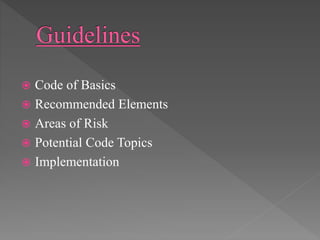
 Code of Basics
 Recommended Elements
 Areas of Risk
 Potential Code Topics
 Implementation
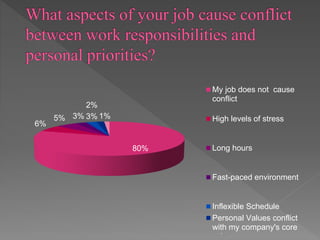
80%
6%
5% 3% 3%
2%
1%
My job does not cause
conflict
High levels of stress
Long hours
Fast-paced environment
Inflexible Schedule
Personal Values conflict
with my company's core
value
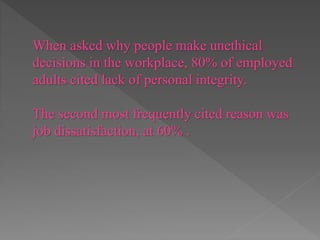
When asked why people make unethical
decisions in the workplace, 80% of employed
adults cited lack of personal integrity.
The second most frequently cited reason was
job dissatisfaction, at 60% .
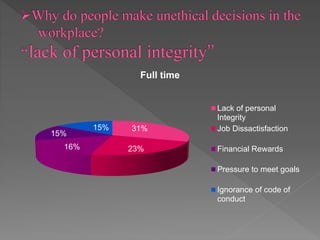
31%
23%16%
15%
15%
Full time
Lack of personal
Integrity
Job Dissactisfaction
Financial Rewards
Pressure to meet goals
Ignorance of code of
conduct
When asked why people make unethical
decisions in the workplace, 80% of employed
adults cited lack of personal integrity.
The second most frequently cited reason was
job dissatisfaction, at 60% .
 The Code Language should be simple, concise,
and readily understood by all employees.
 The code should not be Legalistic
 The Code should apply to all employees and be
global in scope.
 The company’s mission statement, vision, values
and guiding principles that reflect the company’s
commitment to ethics, integrity, and quality.
 An ethical decision framework to assist
employees in making choices.
 Enforcement and implementation mechanisms
that address the notion of accountability and
dicipline for unethical behaviour
 It is important that a code cover relevant and
important issues or risk areas.
 Code content and depth of coverage on a specific
topic may vary by industry corporate objectives,
or past corporate history, i.e., a company
operating under a corporate integrity agreement
or with a history of ethical violations or
infractions.
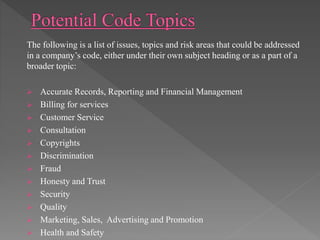
The following is a list of issues, topics and risk areas that could be addressed
in a company’s code, either under their own subject heading or as a part of a
broader topic:
 Accurate Records, Reporting and Financial Management
 Billing for services
 Customer Service
 Consultation
 Copyrights
 Discrimination
 Fraud
 Honesty and Trust
 Security
 Quality
 Marketing, Sales, Advertising and Promotion
 Health and Safety
 Assign a core team, reporting to the Chief Ethics
and Compliance officer, the task of drafting the
code. There are some steps for the code of
development or enhancement which required for
the successful completion.
 Good company culture
 Creating agreed way of behaving and operating
for entire company
 Good communication with employees
 Having set of values
 Improved company performance
Deloitte

Deloitte

  • 1.
    By Ninad Jadhav& Kajal Pingale
  • 2.
     Deloitte isone of the “Big four” accounting firms and the largest professional services network in the world by revenue and number of professionals.  Deloitte provides Audit, Tax, Consulting, Enterprise risk and Financial advisory services with more than 244,400 professionals globally.
  • 3.
     “ Acode of conduct is a set of rules outlining the social norms and religious rules and responsibilities of, or proper practices for, an individual, party or organization.
  • 4.
     In 2007,International Good Practice Guidance, “ Defining and Developing an effective code of conduct for organizations” the International Federation of Accountants provided the following definition: “ Principles, values, standards, or rules of behaviour that guide the decisions, procedures and systems of an organization in a way that (a) contributes to the welfare of its key stakeholders, and (b) respects the rights of all constituents affected by its operations.”
  • 5.
     Honesty &Integrity  Professional behaviour  Competence  Objectivity  Confidentiality  Fair business practices  Responsibility to society  Respect and fair treatment  Accountability and decision making
  • 6.
     Code ofBasics  Recommended Elements  Areas of Risk  Potential Code Topics  Implementation
  • 7.
    80% 6% 5% 3% 3% 2% 1% Myjob does not cause conflict High levels of stress Long hours Fast-paced environment Inflexible Schedule Personal Values conflict with my company's core value
  • 8.
    When asked whypeople make unethical decisions in the workplace, 80% of employed adults cited lack of personal integrity. The second most frequently cited reason was job dissatisfaction, at 60% .
  • 9.
    31% 23%16% 15% 15% Full time Lack ofpersonal Integrity Job Dissactisfaction Financial Rewards Pressure to meet goals Ignorance of code of conduct
  • 10.
    When asked whypeople make unethical decisions in the workplace, 80% of employed adults cited lack of personal integrity. The second most frequently cited reason was job dissatisfaction, at 60% .
  • 11.
     The CodeLanguage should be simple, concise, and readily understood by all employees.  The code should not be Legalistic  The Code should apply to all employees and be global in scope.
  • 12.
     The company’smission statement, vision, values and guiding principles that reflect the company’s commitment to ethics, integrity, and quality.  An ethical decision framework to assist employees in making choices.  Enforcement and implementation mechanisms that address the notion of accountability and dicipline for unethical behaviour
  • 13.
     It isimportant that a code cover relevant and important issues or risk areas.  Code content and depth of coverage on a specific topic may vary by industry corporate objectives, or past corporate history, i.e., a company operating under a corporate integrity agreement or with a history of ethical violations or infractions.
  • 14.
    The following isa list of issues, topics and risk areas that could be addressed in a company’s code, either under their own subject heading or as a part of a broader topic:  Accurate Records, Reporting and Financial Management  Billing for services  Customer Service  Consultation  Copyrights  Discrimination  Fraud  Honesty and Trust  Security  Quality  Marketing, Sales, Advertising and Promotion  Health and Safety
  • 15.
     Assign acore team, reporting to the Chief Ethics and Compliance officer, the task of drafting the code. There are some steps for the code of development or enhancement which required for the successful completion.
  • 16.
     Good companyculture  Creating agreed way of behaving and operating for entire company  Good communication with employees  Having set of values  Improved company performance