DEFORMITY IN RA
-DR.JAYA MAKHIJA
MPT-ORTHOPAEDICS
Boutonniere deformity- extension of MCP and DIP joints and flexion of PIP joint.
occurs due to rupture of extensor
tendon.
Seen in Rheumatoid arthritis patients.
Also called as buttonhole deformity
Stages : 1-passively correctable deformity
Stage 2:fixed contracture
Stage 3; fixed contracture with fibrosis
Stage 4: stage 3+ PIP arthritis
Jersey finger
• Opposite of mallet finger
• Pt is unable to flex distal IP joint
• Jersey finger (rugby finger) is an
avulsion of the flexor digitorum
profundus tendon (FDP) from its
distal insertion on the distal
phalanx (zone I).
Claw hand
• Appears like claw of animal.
• Occurs due to injury to ulnar nerve.
• Involves lumbricals of hand.
• Hyperextension at MCP and flexion at IP
joint resembles claw hand.
• Seen in leprosy and RA
• Wasting of muscles can be seen.
• Can be treated conservative or surgical.
• Difficulty in grips and grasps.
Swan neck deformity
• PIP joint hyper extension and DIP joint
flexion.
• Occurs due to damage to extensor
tendon and results in loss of ROM.
• Seen in RA.
• Treated by splint, surgical procedures.
• PT- waxbath, flexibility ex
• Fig of 8 ring splint/anti swan neck
orthosis
Mallet finger
• Injury to tendon that extends DIP joint.
• Occurs due to injury such as hit by ball.
• Also called as hammer finger.
• Can cause avulsion fracture.
• Treated by splint or surgical procedures.
• Might limit ROM.
• Also called as baseball finger or drop
finger
Classification of mallet finger-doyle
classification
• Type 1- closed injury with or without avulsion fracture
• Type 2- open injury(only lacerations)
• Type 3- open injury( deep, involving skin and tendon)
• Type 4- mallet fracture
Zig zag deformity of thumb
• Occurs due to loss of
stabilizing muscle and
rupture of ligaments.
• Seen in RA
Ulnar drift
• Occurs due to MCP joint synovitis and loosening of collateral
ligaments
• Interosseous muscle contracture occurs
• Can be mild,moderate,severe
Opera glass hand
• Shortening of fingers due to destruction of phalanges
• Excess skin gets folded
Hammer toe
• A hammer toe is a deformity of the second,
third, or fourth toes. In this condition, the
toe is bent at the middle joint, so that it
resembles a hammer. Initially, hammer toes
are flexible and can be corrected with
simple measures; however, if left untreated,
they can become fixed and require surgery.
Hallux valgus or bunions
• A bony bump that forms on the joint at the base
of the big toe.
• A bunion is formed when the big toe pushes
against the next toe and becomes red and
painful. Tight shoes, foot stress, and arthritis are
the causes.
• The main symptoms are bone deformity, pain
and stiffness.
• Treatments include changing shoes, padding the
foot and pain medication. Painful bunions can
be removed surgically.
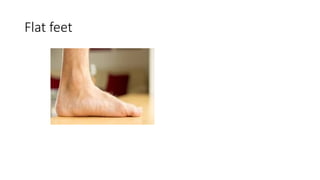
Flat feet
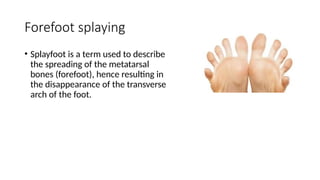
Forefoot splaying
• Splayfoot is a term used to describe
the spreading of the metatarsal
bones (forefoot), hence resulting in
the disappearance of the transverse
arch of the foot.

DEFORMITY IN RA upperlimb anmd lowerlimb

  • 1.
    DEFORMITY IN RA -DR.JAYAMAKHIJA MPT-ORTHOPAEDICS
  • 2.
    Boutonniere deformity- extensionof MCP and DIP joints and flexion of PIP joint. occurs due to rupture of extensor tendon. Seen in Rheumatoid arthritis patients. Also called as buttonhole deformity Stages : 1-passively correctable deformity Stage 2:fixed contracture Stage 3; fixed contracture with fibrosis Stage 4: stage 3+ PIP arthritis
  • 3.
    Jersey finger • Oppositeof mallet finger • Pt is unable to flex distal IP joint • Jersey finger (rugby finger) is an avulsion of the flexor digitorum profundus tendon (FDP) from its distal insertion on the distal phalanx (zone I).
  • 4.
    Claw hand • Appearslike claw of animal. • Occurs due to injury to ulnar nerve. • Involves lumbricals of hand. • Hyperextension at MCP and flexion at IP joint resembles claw hand. • Seen in leprosy and RA • Wasting of muscles can be seen. • Can be treated conservative or surgical. • Difficulty in grips and grasps.
  • 5.
    Swan neck deformity •PIP joint hyper extension and DIP joint flexion. • Occurs due to damage to extensor tendon and results in loss of ROM. • Seen in RA. • Treated by splint, surgical procedures. • PT- waxbath, flexibility ex • Fig of 8 ring splint/anti swan neck orthosis
  • 6.
    Mallet finger • Injuryto tendon that extends DIP joint. • Occurs due to injury such as hit by ball. • Also called as hammer finger. • Can cause avulsion fracture. • Treated by splint or surgical procedures. • Might limit ROM. • Also called as baseball finger or drop finger
  • 7.
    Classification of malletfinger-doyle classification • Type 1- closed injury with or without avulsion fracture • Type 2- open injury(only lacerations) • Type 3- open injury( deep, involving skin and tendon) • Type 4- mallet fracture
  • 8.
    Zig zag deformityof thumb • Occurs due to loss of stabilizing muscle and rupture of ligaments. • Seen in RA
  • 9.
    Ulnar drift • Occursdue to MCP joint synovitis and loosening of collateral ligaments • Interosseous muscle contracture occurs • Can be mild,moderate,severe
  • 10.
    Opera glass hand •Shortening of fingers due to destruction of phalanges • Excess skin gets folded
  • 11.
    Hammer toe • Ahammer toe is a deformity of the second, third, or fourth toes. In this condition, the toe is bent at the middle joint, so that it resembles a hammer. Initially, hammer toes are flexible and can be corrected with simple measures; however, if left untreated, they can become fixed and require surgery.
  • 12.
    Hallux valgus orbunions • A bony bump that forms on the joint at the base of the big toe. • A bunion is formed when the big toe pushes against the next toe and becomes red and painful. Tight shoes, foot stress, and arthritis are the causes. • The main symptoms are bone deformity, pain and stiffness. • Treatments include changing shoes, padding the foot and pain medication. Painful bunions can be removed surgically.
  • 13.
  • 14.
    Forefoot splaying • Splayfootis a term used to describe the spreading of the metatarsal bones (forefoot), hence resulting in the disappearance of the transverse arch of the foot.