Defining a Concept
Paper
A concept paper outlines a research project, theoretical
framework, or innovative idea. It aims to clearly and concisely
define the concept and its significance.
by Maria Christina Sereno
Purpose and Objectives of a
Concept Paper
1 Clarify the Concept
Define the scope and
boundaries of the
concept, ensuring a clear
understanding.
2 Justify Research
Establish the need for
further exploration,
research, or development
of the concept.
3 Gain Support
Convince stakeholders or funding agencies of the value and
feasibility of the proposed concept.
Key Components of a
Concept Paper
Introduction
A brief overview of the
concept, capturing the
reader's attention and
outlining the paper's scope.
Background
A concise review of existing
knowledge, outlining
relevant theories, studies,
and previous work.
Proposed Concept
A clear and detailed
explanation of the concept,
its rationale, and its key
features.
Methodology
An outline of the approach
to be used in further
research or development of
the concept.
Techniques for Introducing the
Concept
Hook
Start with a compelling question, anecdote, or surprising fact.
Definition
Provide a clear and concise definition of the concept.
Background
Briefly introduce the historical context or current state of the
concept.
Strategies for Explaining the Concept
Analogy
Compare the concept to something
familiar, making it easier to
understand.
Visual Aids
Use diagrams, illustrations, or
charts to clarify complex ideas.
Examples
Provide real-world examples to
demonstrate the application of the
concept.
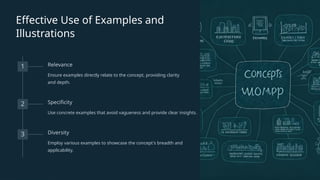
Effective Use of Examples and
Illustrations
1 Relevance
Ensure examples directly relate to the concept, providing clarity
and depth.
2 Specificity
Use concrete examples that avoid vagueness and provide clear insights.
3 Diversity
Employ various examples to showcase the concept's breadth and
applicability.
Organizing and Structuring the Concept Paper
Logical Flow Organize ideas in a clear and logical sequence.
Subheadings Use subheadings to divide sections and guide the reader.
Transitions Use transition words and phrases to connect ideas and
ensure smooth flow.
Conclusion and Takeaways
Summary
Restate the concept's significance and key findings.
Future Directions
Outline potential future research or applications of the concept.
Call to Action
Encourage the reader to engage with the concept and consider its implications.

Defining-a-Concept-Paper aaaaaaaaaaaaaa

  • 1.
    Defining a Concept Paper Aconcept paper outlines a research project, theoretical framework, or innovative idea. It aims to clearly and concisely define the concept and its significance. by Maria Christina Sereno
  • 2.
    Purpose and Objectivesof a Concept Paper 1 Clarify the Concept Define the scope and boundaries of the concept, ensuring a clear understanding. 2 Justify Research Establish the need for further exploration, research, or development of the concept. 3 Gain Support Convince stakeholders or funding agencies of the value and feasibility of the proposed concept.
  • 3.
    Key Components ofa Concept Paper Introduction A brief overview of the concept, capturing the reader's attention and outlining the paper's scope. Background A concise review of existing knowledge, outlining relevant theories, studies, and previous work. Proposed Concept A clear and detailed explanation of the concept, its rationale, and its key features. Methodology An outline of the approach to be used in further research or development of the concept.
  • 4.
    Techniques for Introducingthe Concept Hook Start with a compelling question, anecdote, or surprising fact. Definition Provide a clear and concise definition of the concept. Background Briefly introduce the historical context or current state of the concept.
  • 5.
    Strategies for Explainingthe Concept Analogy Compare the concept to something familiar, making it easier to understand. Visual Aids Use diagrams, illustrations, or charts to clarify complex ideas. Examples Provide real-world examples to demonstrate the application of the concept.
  • 6.
    Effective Use ofExamples and Illustrations 1 Relevance Ensure examples directly relate to the concept, providing clarity and depth. 2 Specificity Use concrete examples that avoid vagueness and provide clear insights. 3 Diversity Employ various examples to showcase the concept's breadth and applicability.
  • 7.
    Organizing and Structuringthe Concept Paper Logical Flow Organize ideas in a clear and logical sequence. Subheadings Use subheadings to divide sections and guide the reader. Transitions Use transition words and phrases to connect ideas and ensure smooth flow.
  • 8.
    Conclusion and Takeaways Summary Restatethe concept's significance and key findings. Future Directions Outline potential future research or applications of the concept. Call to Action Encourage the reader to engage with the concept and consider its implications.