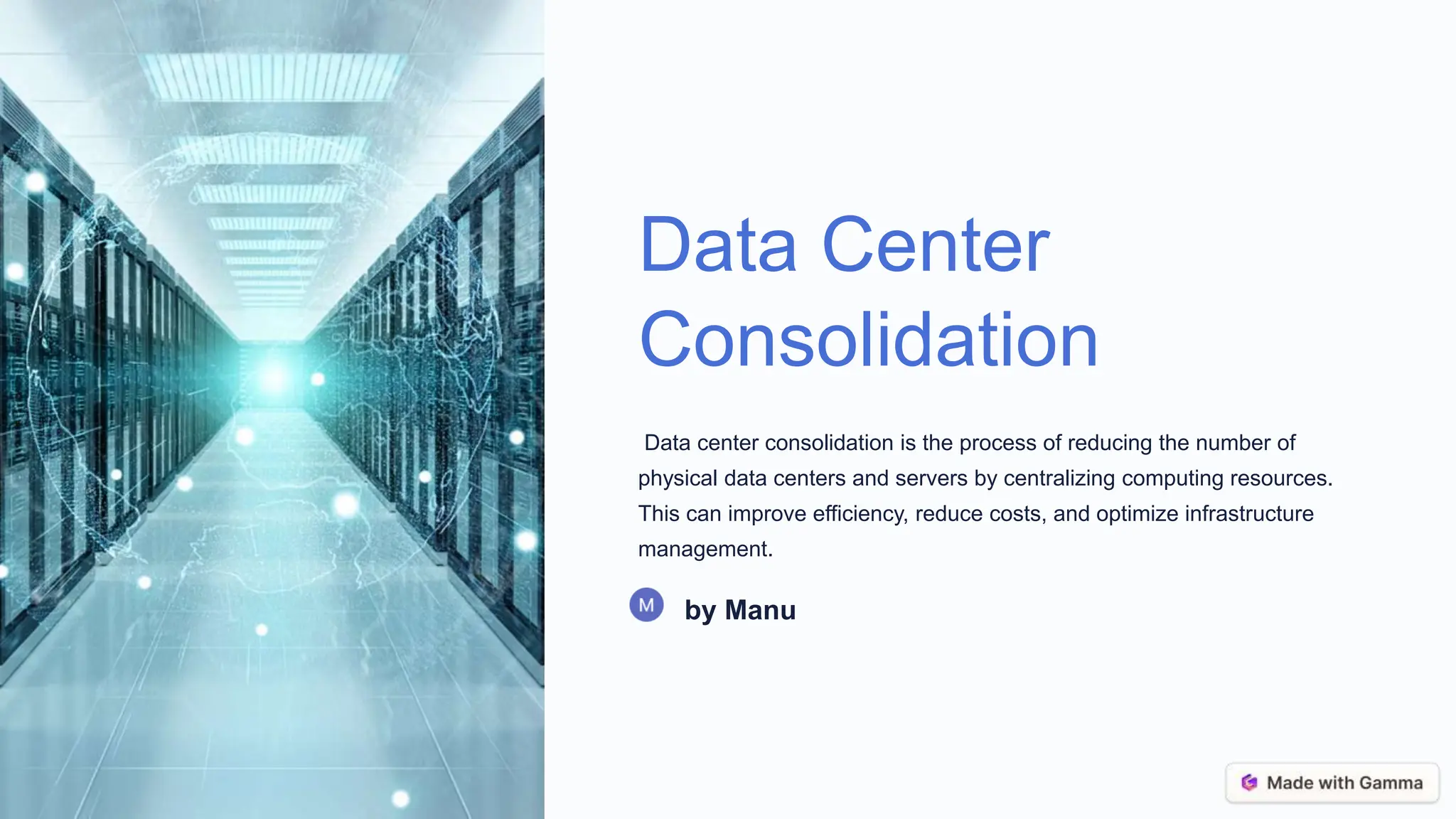
Data Center
Consolidation
Data center consolidation is the process of reducing the number of
physical data centers and servers by centralizing computing resources.
This can improve efficiency, reduce costs, and optimize infrastructure
management.
by Manu
Challenges of Decentralized IT
Infrastructure
Operational Complexity
Maintaining multiple, disparate data centers
requires significant IT resources and
coordination.
Higher Costs
Decentralized infrastructure often leads to
redundant hardware, software, and
management expenses.
Security Risks
Distributed data centers can be more
vulnerable to cyber threats and physical
security breaches.
Scalability Challenges
Expanding or upgrading a decentralized
infrastructure can be difficult and time-
consuming.
Benefits of Data Center Consolidation
Improved Efficiency
Consolidation allows for
better utilization of computing
resources and reduces
operational overhead.
Cost Savings
Consolidated data centers
require fewer facilities, staff,
and infrastructure, leading to
significant cost reductions.
Enhanced Security
Centralized security controls
and policies can better protect
against cyber threats and
physical breaches.
Identifying Consolidation Opportunities
1 Underutilized Servers
Consolidate low-utilization servers to
improve resource efficiency.
2 Aging Infrastructure
Replace outdated hardware and software
as part of the consolidation process.
3 Duplicate Services
Identify and eliminate redundant
applications and services across the
organization.
4 Geographic Proximity
Consider consolidating data centers that
are located in close proximity to each
other.
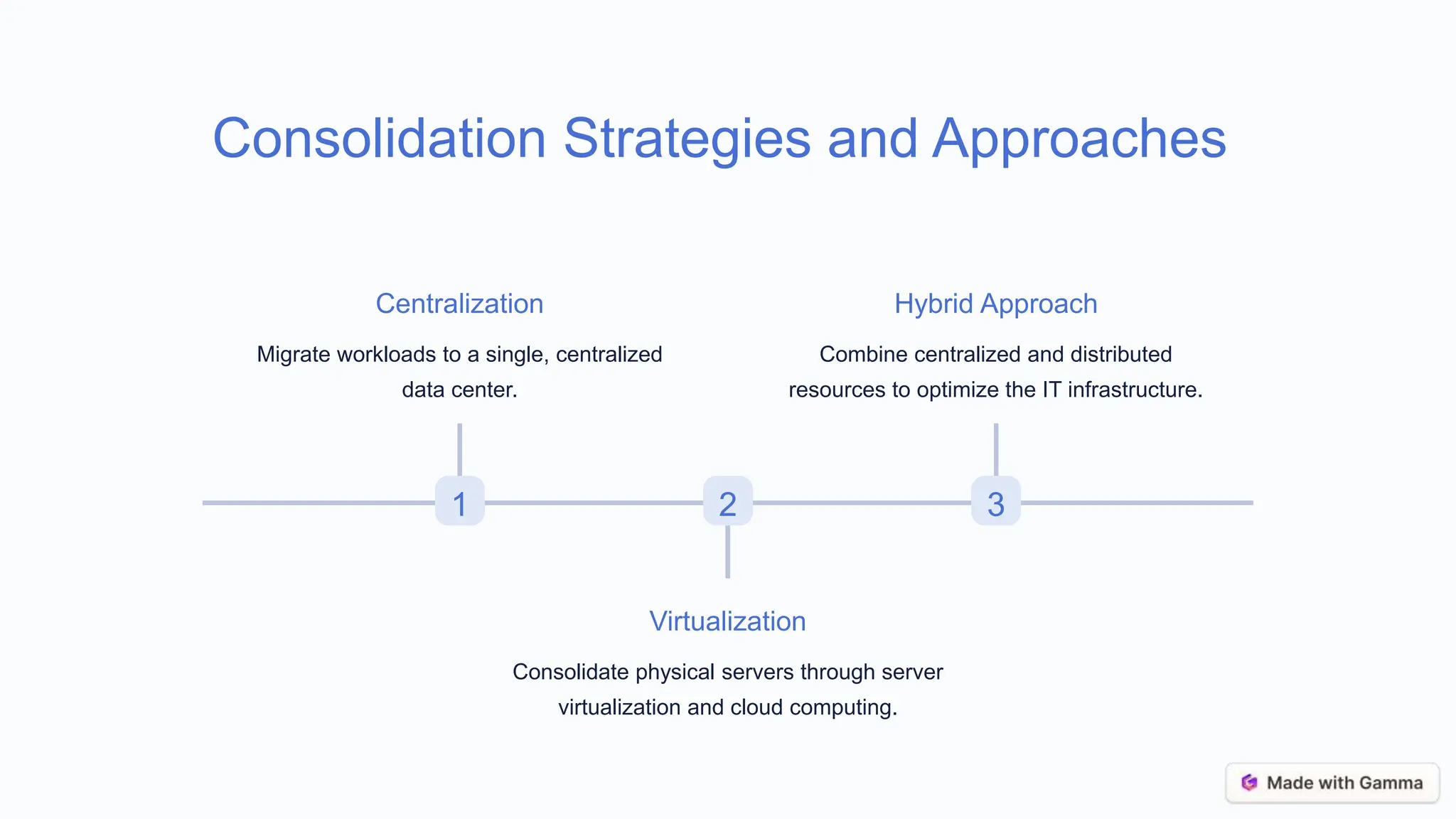
Consolidation Strategies and Approaches
1
Centralization
Migrate workloads to a single, centralized
data center.
2
Virtualization
Consolidate physical servers through server
virtualization and cloud computing.
3
Hybrid Approach
Combine centralized and distributed
resources to optimize the IT infrastructure.
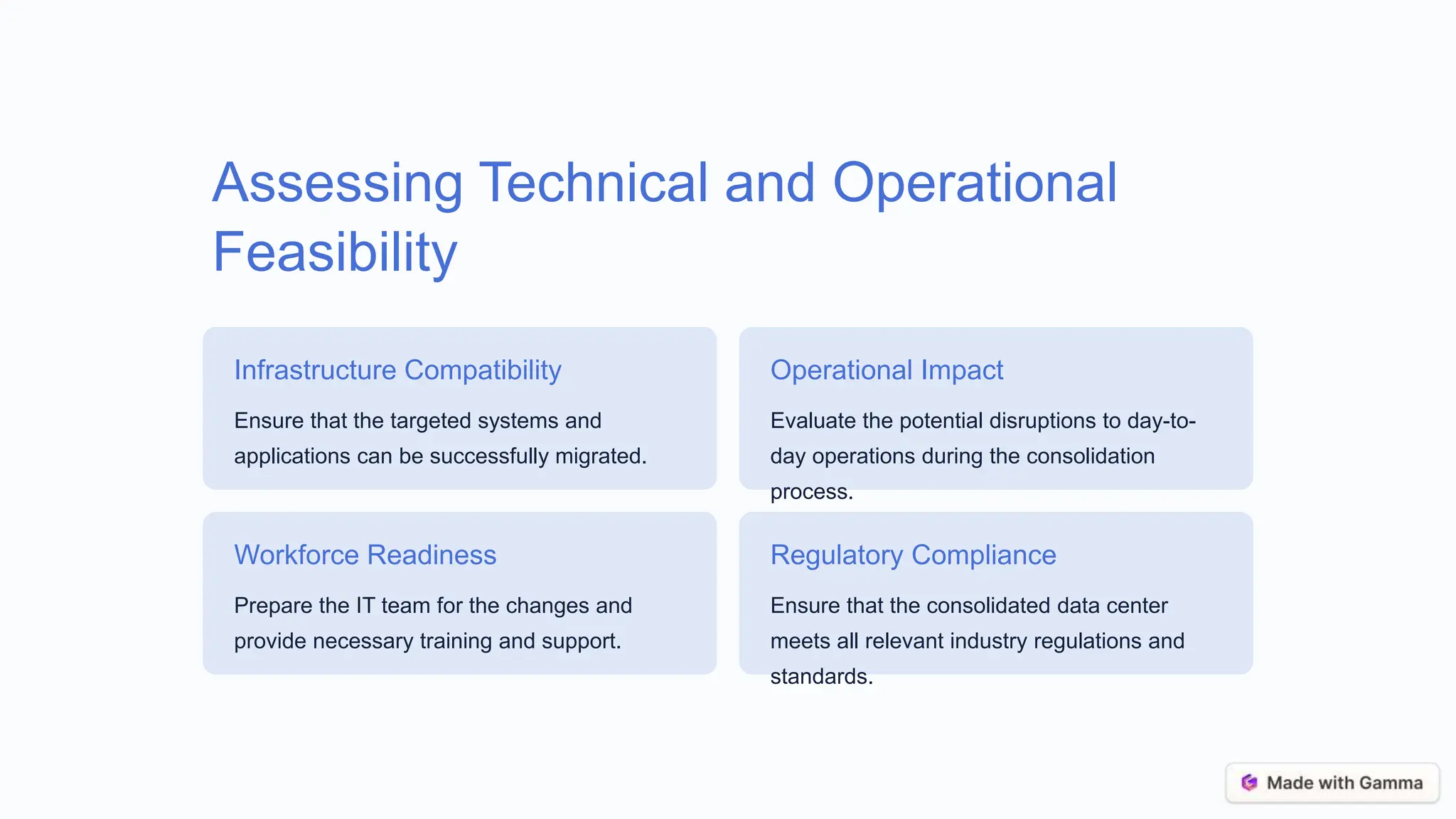
Assessing Technical and Operational
Feasibility
Infrastructure Compatibility
Ensure that the targeted systems and
applications can be successfully migrated.
Operational Impact
Evaluate the potential disruptions to day-to-
day operations during the consolidation
process.
Workforce Readiness
Prepare the IT team for the changes and
provide necessary training and support.
Regulatory Compliance
Ensure that the consolidated data center
meets all relevant industry regulations and
standards.
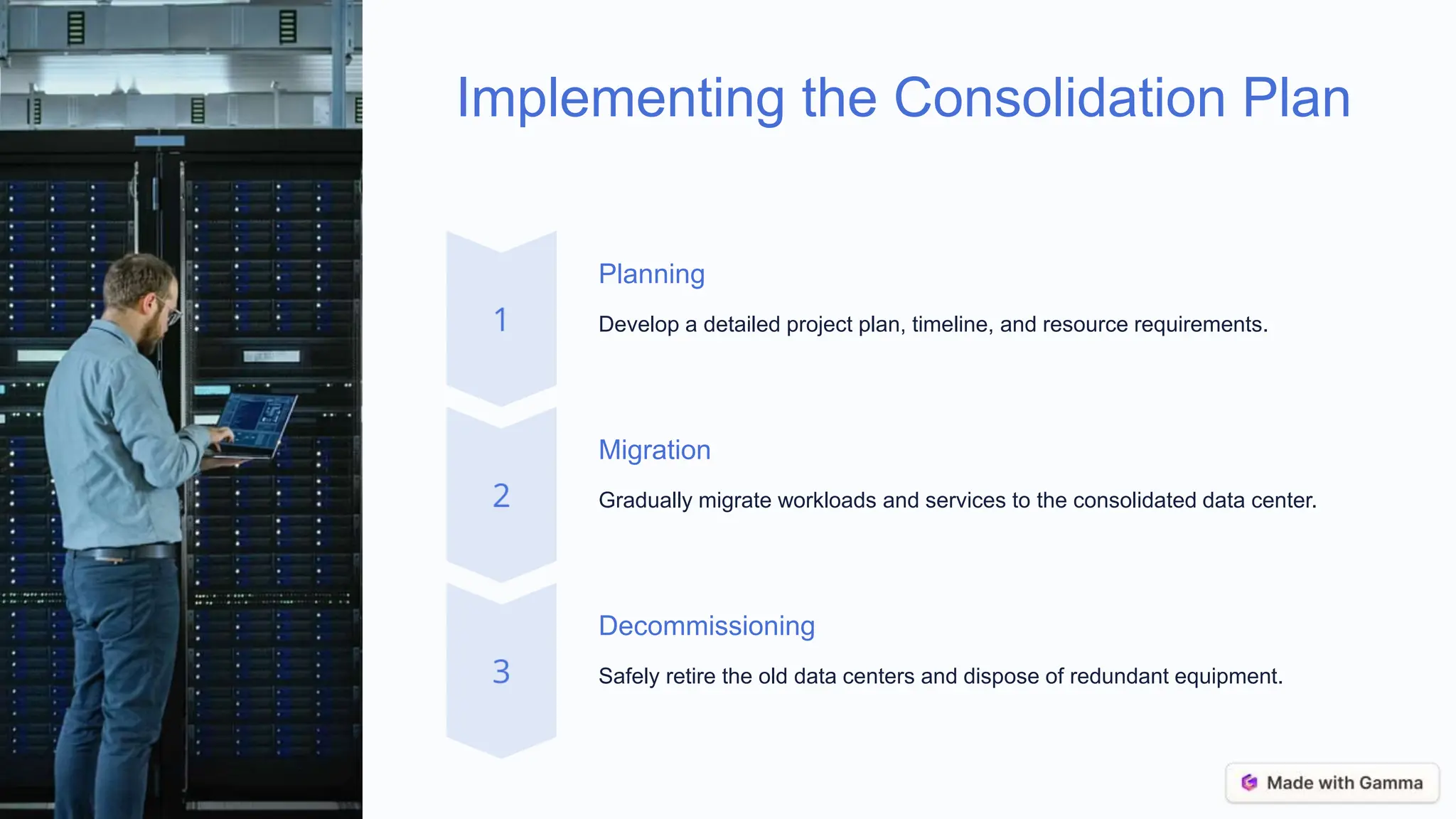
Implementing the Consolidation Plan
Planning
Develop a detailed project plan, timeline, and resource requirements.
Migration
Gradually migrate workloads and services to the consolidated data center.
Decommissioning
Safely retire the old data centers and dispose of redundant equipment.
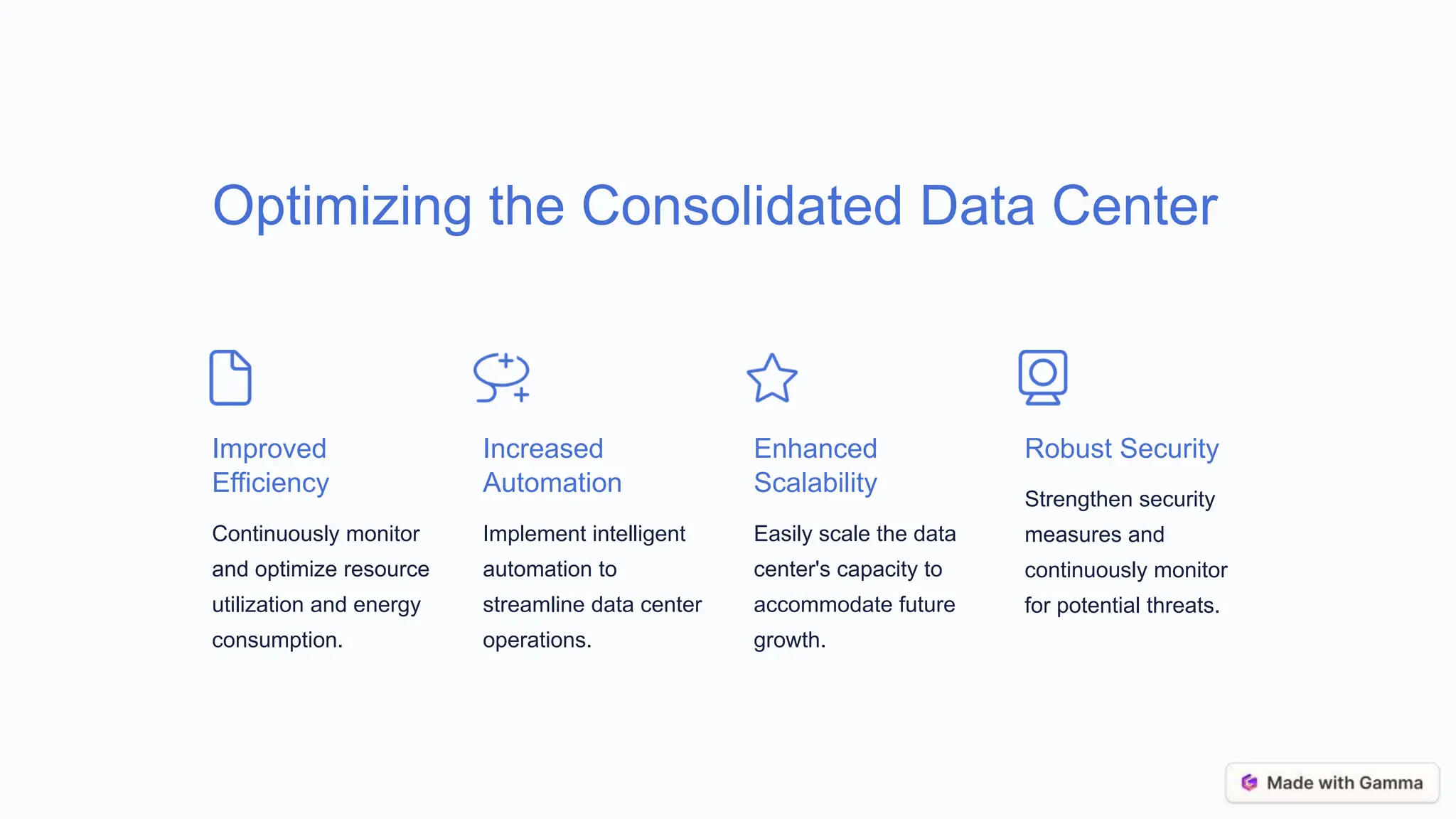
Optimizing the Consolidated Data Center
Improved
Efficiency
Continuously monitor
and optimize resource
utilization and energy
consumption.
Increased
Automation
Implement intelligent
automation to
streamline data center
operations.
Enhanced
Scalability
Easily scale the data
center's capacity to
accommodate future
growth.
Robust Security
Strengthen security
measures and
continuously monitor
for potential threats.

Dc consolidation project guideline power point

  • 1.
    Data Center Consolidation Data centerconsolidation is the process of reducing the number of physical data centers and servers by centralizing computing resources. This can improve efficiency, reduce costs, and optimize infrastructure management. by Manu
  • 2.
    Challenges of DecentralizedIT Infrastructure Operational Complexity Maintaining multiple, disparate data centers requires significant IT resources and coordination. Higher Costs Decentralized infrastructure often leads to redundant hardware, software, and management expenses. Security Risks Distributed data centers can be more vulnerable to cyber threats and physical security breaches. Scalability Challenges Expanding or upgrading a decentralized infrastructure can be difficult and time- consuming.
  • 3.
    Benefits of DataCenter Consolidation Improved Efficiency Consolidation allows for better utilization of computing resources and reduces operational overhead. Cost Savings Consolidated data centers require fewer facilities, staff, and infrastructure, leading to significant cost reductions. Enhanced Security Centralized security controls and policies can better protect against cyber threats and physical breaches.
  • 4.
    Identifying Consolidation Opportunities 1Underutilized Servers Consolidate low-utilization servers to improve resource efficiency. 2 Aging Infrastructure Replace outdated hardware and software as part of the consolidation process. 3 Duplicate Services Identify and eliminate redundant applications and services across the organization. 4 Geographic Proximity Consider consolidating data centers that are located in close proximity to each other.
  • 5.
    Consolidation Strategies andApproaches 1 Centralization Migrate workloads to a single, centralized data center. 2 Virtualization Consolidate physical servers through server virtualization and cloud computing. 3 Hybrid Approach Combine centralized and distributed resources to optimize the IT infrastructure.
  • 6.
    Assessing Technical andOperational Feasibility Infrastructure Compatibility Ensure that the targeted systems and applications can be successfully migrated. Operational Impact Evaluate the potential disruptions to day-to- day operations during the consolidation process. Workforce Readiness Prepare the IT team for the changes and provide necessary training and support. Regulatory Compliance Ensure that the consolidated data center meets all relevant industry regulations and standards.
  • 7.
    Implementing the ConsolidationPlan Planning Develop a detailed project plan, timeline, and resource requirements. Migration Gradually migrate workloads and services to the consolidated data center. Decommissioning Safely retire the old data centers and dispose of redundant equipment.
  • 8.
    Optimizing the ConsolidatedData Center Improved Efficiency Continuously monitor and optimize resource utilization and energy consumption. Increased Automation Implement intelligent automation to streamline data center operations. Enhanced Scalability Easily scale the data center's capacity to accommodate future growth. Robust Security Strengthen security measures and continuously monitor for potential threats.