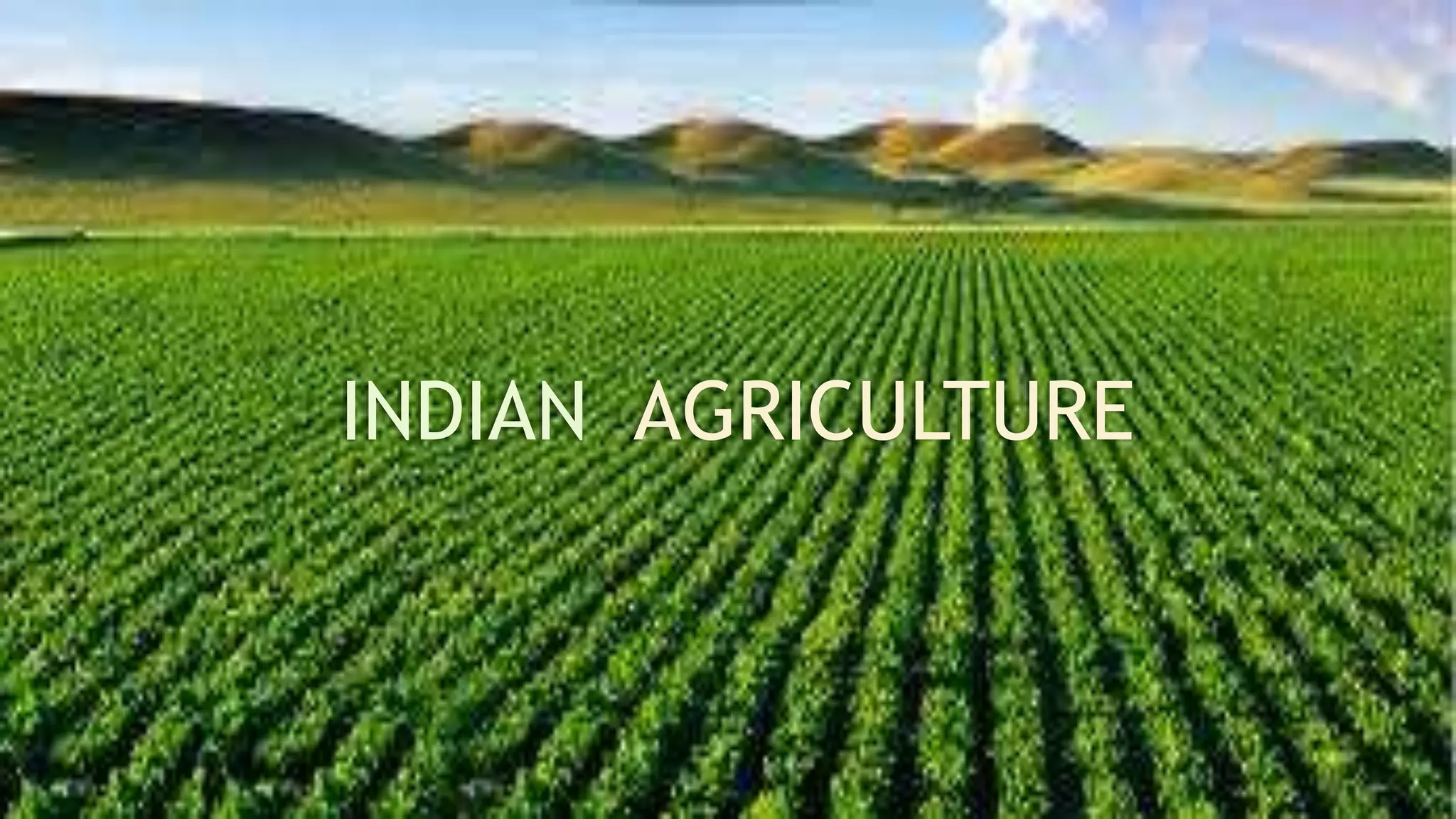
INDIAN AGRICULTURE
ORIGIN :
 The history of Agriculture in India dates back to Indus Valley
Civilization Era.
 Agri is from Latin ager ("a field"), and culture is from
Latin cultura, meaning "cultivation" in the strict sense of
"tillage of the soil."
 India's agriculture is composed of many crops, with the
foremost food staples being rice and wheat.
 The agriculture accounts for as much as a quarter of the Indian
economy and employs an estimated 60 percent of the labor
force.
AGRICULTURE TYPES:
 In recent history, agriculture has been the main source of
the food we consume on a daily basis.
 Agriculture is the term used to describe the act of growing
crops and raising livestock for human consumption and
use.
 Currently, agriculture is divided into two different types
 Industrialized agriculture
 Subsistence agriculture.
INDUSTRIALIZED AGRICULTURE:
 Industrialized agriculture is the type of agriculture where
large quantities of crops and livestock are produced through
industrialized techniques for the purpose of sale.
 The goal of industrialized agriculture is to increase crop yield.
SUBSISTENCE ARICULTURE:
 Subsistence agriculture is when a farmer lives on a small
amount of land and produces enough food to feed his or her
household and have a small cash crop.
 The goal of subsistence agriculture is to produce enough food
to ensure the survival of the individual family.
 Farming Systems in India are strategically utilized, according to the
locations where they are most suitable.
 The farming systems that significantly contribute to the domestic
GDP of India are subsistence farming, organic farming,
and industrial farming.
 Regions throughout India differ in types of farming they use; some
are based on horticulture, ley farming, agroforestry, and many
more.
 Due to India's geographical location, certain parts experience different
climates, thus affecting each region's agricultural productivity
differently.
 India is very dependent on its monsoon cycle for large crop yields.
FARMING SYSTEM IN INDIA:
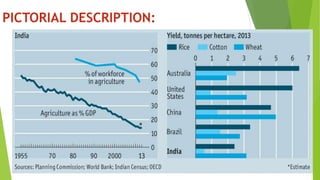
PICTORIAL DESCRIPTION:
PRODUCTION METHODS:
Organic farming can be explained as an agricultural method wherein the following
techniques are used:
 Crop Rotation: A technique to grow various kinds of crops in the same area,
according to different seasons, in a sequential manner
 Green Manure: Refers to the dying plants that are uprooted and stuffed into the
soil in order to make them act as a nutrient for the soil to increase its quality
 Biological Pest Control: A method in which living organisms are used to
control pests, without or with limited use of chemicals
 Compost: Highly rich in nutrients, this is a recycled organic matter used as a
fertilizer in the agricultural farms
AGRICULRTURE PRODUCTION:
 India's food grain production increased marginally to 252.23 million tones in the
2015-16 crop year, as per the third advance estimates, despite setback due to
deficient rainfall and shortage of water in reservoirs.
 Production of rice, coarse cereals, pulses, oilseeds, sugarcane ,cotton and jute was
lower due to erratic rainfall during the 2015 monsoon season.
 As per the 3 rd advance estimates for 2015-16 total food grains production in the
country has been higher than that in the last year.
 Rice production during 2015-16 is estimated at 103.36 million tones, which is
lower by 2.12 million tones than its production of 105.48 million tones during
2014-15.
Salient Features of Agriculture:
There are certain salient features of agriculture in India. Some of these
are:
 Subsistence Agriculture
 Pressure of Population on Agriculture
 Mechanization of Farming
 Dependency upon Monsoon
 Importance of Animals
 Variety of Crops
 Predominance of Food Crops
 Seasonal Patterns
Problems Faced by the Agriculture Sector:
There are certain problems and challenges faced by the agriculture sector
in India. Some such problems are:
Stagnation in Production of Major Crops
Soil Exhaustion
Decrease in Fresh Ground Water
Agricultural Marketing
Lack of Storage Facilities
Costly Farm Inputs
Affect of Global Climate Change
 Farmer Suicides
THANK YOU

DB6977

  • 1.
  • 2.
    ORIGIN :  Thehistory of Agriculture in India dates back to Indus Valley Civilization Era.  Agri is from Latin ager ("a field"), and culture is from Latin cultura, meaning "cultivation" in the strict sense of "tillage of the soil."  India's agriculture is composed of many crops, with the foremost food staples being rice and wheat.  The agriculture accounts for as much as a quarter of the Indian economy and employs an estimated 60 percent of the labor force.
  • 3.
    AGRICULTURE TYPES:  Inrecent history, agriculture has been the main source of the food we consume on a daily basis.  Agriculture is the term used to describe the act of growing crops and raising livestock for human consumption and use.  Currently, agriculture is divided into two different types  Industrialized agriculture  Subsistence agriculture.
  • 4.
    INDUSTRIALIZED AGRICULTURE:  Industrializedagriculture is the type of agriculture where large quantities of crops and livestock are produced through industrialized techniques for the purpose of sale.  The goal of industrialized agriculture is to increase crop yield. SUBSISTENCE ARICULTURE:  Subsistence agriculture is when a farmer lives on a small amount of land and produces enough food to feed his or her household and have a small cash crop.  The goal of subsistence agriculture is to produce enough food to ensure the survival of the individual family.
  • 5.
     Farming Systemsin India are strategically utilized, according to the locations where they are most suitable.  The farming systems that significantly contribute to the domestic GDP of India are subsistence farming, organic farming, and industrial farming.  Regions throughout India differ in types of farming they use; some are based on horticulture, ley farming, agroforestry, and many more.  Due to India's geographical location, certain parts experience different climates, thus affecting each region's agricultural productivity differently.  India is very dependent on its monsoon cycle for large crop yields. FARMING SYSTEM IN INDIA:
  • 6.
  • 7.
    PRODUCTION METHODS: Organic farmingcan be explained as an agricultural method wherein the following techniques are used:  Crop Rotation: A technique to grow various kinds of crops in the same area, according to different seasons, in a sequential manner  Green Manure: Refers to the dying plants that are uprooted and stuffed into the soil in order to make them act as a nutrient for the soil to increase its quality  Biological Pest Control: A method in which living organisms are used to control pests, without or with limited use of chemicals  Compost: Highly rich in nutrients, this is a recycled organic matter used as a fertilizer in the agricultural farms
  • 8.
    AGRICULRTURE PRODUCTION:  India'sfood grain production increased marginally to 252.23 million tones in the 2015-16 crop year, as per the third advance estimates, despite setback due to deficient rainfall and shortage of water in reservoirs.  Production of rice, coarse cereals, pulses, oilseeds, sugarcane ,cotton and jute was lower due to erratic rainfall during the 2015 monsoon season.  As per the 3 rd advance estimates for 2015-16 total food grains production in the country has been higher than that in the last year.  Rice production during 2015-16 is estimated at 103.36 million tones, which is lower by 2.12 million tones than its production of 105.48 million tones during 2014-15.
  • 9.
    Salient Features ofAgriculture: There are certain salient features of agriculture in India. Some of these are:  Subsistence Agriculture  Pressure of Population on Agriculture  Mechanization of Farming  Dependency upon Monsoon  Importance of Animals  Variety of Crops  Predominance of Food Crops  Seasonal Patterns
  • 10.
    Problems Faced bythe Agriculture Sector: There are certain problems and challenges faced by the agriculture sector in India. Some such problems are: Stagnation in Production of Major Crops Soil Exhaustion Decrease in Fresh Ground Water Agricultural Marketing Lack of Storage Facilities Costly Farm Inputs Affect of Global Climate Change  Farmer Suicides
  • 11.