The Board View
What EPM Looks Like from the Board-Level
Dave Kellogg
Blogger, Independent Director, Consultant, Angel Investor, and closet FP&A Person
May 22, 2019
Revision 2.0
Alternative Title: Boards Just Wanna Have Fun
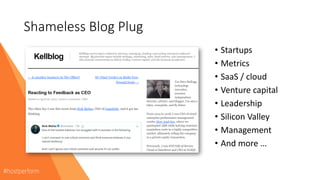
Shameless Blog Plug
• Startups
• Metrics
• SaaS / cloud
• Venture capital
• Leadership
• Silicon Valley
• Management
• And more …
What boards want
How boards think about …
How to give it to them
Agenda
Our Focus Today: One Question
How does everything we do look from the Board-level?
( A chance to step back and get above the trees)
What Do Boards Care About?
What Boards Really Care About
• Compliance
• Trust in the numbers
• Shareholder value creation
• Growth
• Profitability
Compliance and Trust
• The Foundation
• Reporting the right numbers to the right parties at the right time
• Having faith that the numbers in those reports are correct
• Audit is for financial reporting, not management reporting
• But certainly provides an indicator on how tight a ship is being run
• Board meeting slides and monthly board reports are the basic tests
• Getting stuff done on time is a huge tell-tale
• Late numbers = suspect numbers
• Late numbers = not really in control
• Establish and hit realistic expectations for when things wills be delivered
The Impact of One Bad Number
• Makes everything else suspect
• Rule 1: There is always at least one savant on every board
• Will find a bad number before CEO can finish saying
“Good Morning”
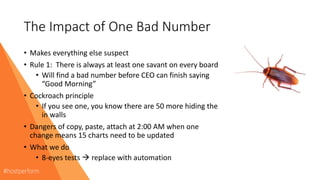
• Cockroach principle
• If you see one, you know there are 50 more hiding the
in walls
• Dangers of copy, paste, attach at 2:00 AM when one
change means 15 charts need to be updated
• What we do
• 8-eyes tests → replace with automation
A Private Equity Perspective
• Bad numbers are career-limiting for the CFO
• First strike: we all get concerned
• Second strike: we probably start a search
• Third strike: you’re out
• (Note: some don’t even believe in three strikes.)
More Subtle Type of “Bad Numbers”
• They don’t match the story = cognitive dissonance
• The words need to go with the music
• You say
• We are beating lead generation targets
• We had sufficient pipeline coverage at the start of the quarter
• That we have strong win and close rates
• That our sales cycle length has not increased
• Yet many deals slipped and few reps seem to be handling their opportunity capacity
• So why did we miss plan again and was week 3 forecast accuracy 68%?
• Is weak pipeline a cause or a symptom of the problem
• If we recognized pipeline was weak at the start, could we have done something
about it?
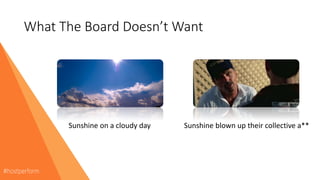
What The Board Doesn’t Want
Sunshine on a cloudy day Sunshine blown up their collective a**
Shareholder Value Creation
• A long-term financial model that creates value for shareholders
• Usually a combination of growth and profitability
• But some are more profit-focused than others – “I Love EBITDA”
• If they’re smart, a model that wins markets at the same
• It’s easy to go out of business beating expectations if expectations are to grow
at 50% of the market
• The fundamental tension: “make a plan that you can beat”
• Aggressive enough to create value and win markets
• Conservative enough that you can beat it 9 out of 10 quarters
Growth and Profitability
Growth
• Should be about market share and
winning markets
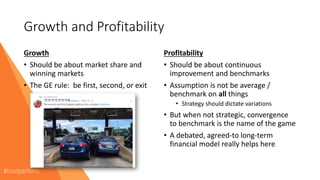
• The GE rule: be first, second, or exit
Profitability
• Should be about continuous
improvement and benchmarks
• Assumption is not be average /
benchmark on all things
• Strategy should dictate variations
• But when not strategic, convergence
to benchmark is the name of the game
• A debated, agreed-to long-term
financial model really helps here
What The Board Wants
Reality and what to do about it
• Realistic recognition of company strengths and challenges
• Logical, data-driven explanations that are consistent with numbers
• The story needs to hold together (i.e., lyrics and music)
• A sense of transparency and openness
• A sense of accountability – can’t have the same problems too many
consecutive quarters
• A positive tone that recognizes problems but focuses on solutions
What boards want
How boards think about …
How to give it to them
Agenda
Consolidation
• Frankly, unless they’re audit committee chair they probably don’t
worry about it that much
Forecasting
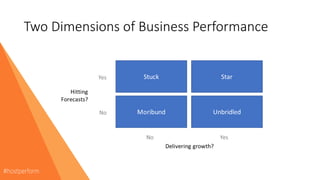
Are you in control of the business?
• Not be confused with are you growing the business?
• Or are you running the business efficiently?
• But, simply, are you in control of the business?
• Do you know where you are going to land and managing to it?
Two Dimensions of Business Performance
Planning
Can you accurately plan one year out?
• While converging to a long-term, benchmark-based financial model?
• Says nothing about market share gain or loss
• Determines a lot about executive and company compensation = top use
• If public, can you consistently beat-and-raise?
• Do you have smart system for rolling and revising the plan?
• Are you constantly increasing or decreasing the plan at mid-year?
• Does your plan hit financial goals by “forgetting” about next year?
• Is your plan strategy-driven, trended, or top-down spread?
Reporting
Can you tell us what’s going on?
• And, if you can’t, how are you flying the plane yourselves?
• Do you have the basics in place? Definitions, historical comparability,
meaningful presentation, …
• Have you chosen “everything” or a key set of the right metrics?
• Are those metrics key to the strategy and/or top operational challenges?
• Finance should keep handy way more metrics than they show
• Are you constantly changing your systems and definitions?
• If so, is it poor decision-making or deliberate continual obfuscation?
• Aside: I’ve never met a board member who’s afraid of a table of numbers
• (And I’ve met many who dislike complex visualizations.)
AI and Machine Learning
A little afraid of it, but want you experimenting
• Generally don’t understand the technology
• Generally dislike black boxes
• But want the company to leverage big data and data science, typically
via an expert team
• Want to see results of working with models, not explanations of them
• Don’t want to see the math
• (“I’ve never seen a board slide with an exponent before”)
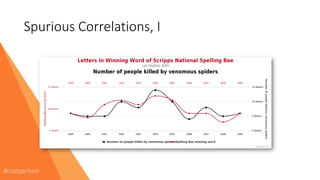
• Worried about over-fitting and correlation/causation errors
Spurious Correlations, I
Spurious Correlations, II
Spurious Correlations, III
• For more, see https://en.wikipedia.org/wiki/Correlation_does_not_imply_causation
• Or https://www.tylervigen.com/spurious-correlations
What boards want
How boards think about …
How to give it to them
Agenda
How To Give It To Them, #1
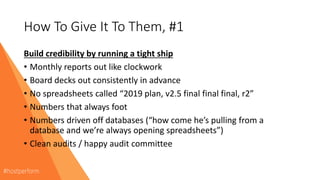
Build credibility by running a tight ship
• Monthly reports out like clockwork
• Board decks out consistently in advance
• No spreadsheets called “2019 plan, v2.5 final final final, r2”
• Numbers that always foot
• Numbers driven off databases (“how come he’s pulling from a
database and we’re always opening spreadsheets”)
• Clean audits / happy audit committee
How To Give It To Them, #2
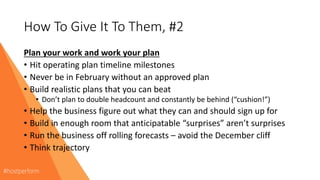
Plan your work and work your plan
• Hit operating plan timeline milestones
• Never be in February without an approved plan
• Build realistic plans that you can beat
• Don’t plan to double headcount and constantly be behind (“cushion!”)
• Help the business figure out what they can and should sign up for
• Build in enough room that anticipatable “surprises” aren’t surprises
• Run the business off rolling forecasts – avoid the December cliff
• Think trajectory
How To Give It To Them, #3
Be a great partner to the business
• Most boards prefer finance-as-partner to finance-as-police
• Want to see collaboration across the team
• Forecasts and plans are more accurate where there is such collaboration
• Don’t be “Doctor No,” instead be “Doctor How”
• Offer your opinions, but respect their accountability
• Goes from the CFO/CEO relationship on down throughout the organization
How To Give It To Them, #4
Bring insights beyond just bringing data
• If you spend every minute simply producing the data, you have no
time to analyze it
• The CEO/CFO shouldn’t be “sight reading” slides in board meetings
• Make time to review what you’ve created from analytical perspective
• Empower the CFO with those insights for review meetings and
rehearsals
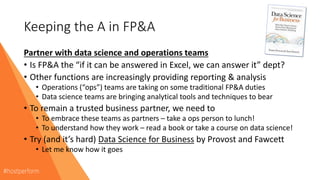
Keeping the A in FP&A
Partner with data science and operations teams
• Is FP&A the “if it can be answered in Excel, we can answer it” dept?
• Other functions are increasingly providing reporting & analysis
• Operations (“ops”) teams are taking on some traditional FP&A duties
• Data science teams are bringing analytical tools and techniques to bear
• To remain a trusted business partner, we need to
• To embrace these teams as partners – take a ops person to lunch!
• To understand how they work – read a book or take a course on data science!
• Try (and it’s hard) Data Science for Business by Provost and Fawcett
• Let me know how it goes
Conclusions
• Boards love numbers
• Never let anyone tell you otherwise
• Boards see the work of FP&A indirectly
• Boards draw conclusions from the basic quality and timeliness of that work
• Boards demand absolute confidence in the numbers
• You are your metrics
• Boards can tell if you’re focused based on the metrics you track
• Boards can tell what you care about by the metrics you track
• Boards know it’s the teams’ job to run the company
• And the board’s job to determine who runs the team

Dave Kellogg "The Board View" from Host Analytics Perform 2019

  • 1.
    The Board View WhatEPM Looks Like from the Board-Level Dave Kellogg Blogger, Independent Director, Consultant, Angel Investor, and closet FP&A Person May 22, 2019 Revision 2.0
  • 2.
    Alternative Title: BoardsJust Wanna Have Fun
  • 3.
    Shameless Blog Plug •Startups • Metrics • SaaS / cloud • Venture capital • Leadership • Silicon Valley • Management • And more …
  • 4.
    What boards want Howboards think about … How to give it to them Agenda
  • 5.
    Our Focus Today:One Question How does everything we do look from the Board-level? ( A chance to step back and get above the trees)
  • 6.
    What Do BoardsCare About?
  • 7.
    What Boards ReallyCare About • Compliance • Trust in the numbers • Shareholder value creation • Growth • Profitability
  • 8.
    Compliance and Trust •The Foundation • Reporting the right numbers to the right parties at the right time • Having faith that the numbers in those reports are correct • Audit is for financial reporting, not management reporting • But certainly provides an indicator on how tight a ship is being run • Board meeting slides and monthly board reports are the basic tests • Getting stuff done on time is a huge tell-tale • Late numbers = suspect numbers • Late numbers = not really in control • Establish and hit realistic expectations for when things wills be delivered
  • 9.
    The Impact ofOne Bad Number • Makes everything else suspect • Rule 1: There is always at least one savant on every board • Will find a bad number before CEO can finish saying “Good Morning” • Cockroach principle • If you see one, you know there are 50 more hiding the in walls • Dangers of copy, paste, attach at 2:00 AM when one change means 15 charts need to be updated • What we do • 8-eyes tests → replace with automation
  • 10.
    A Private EquityPerspective • Bad numbers are career-limiting for the CFO • First strike: we all get concerned • Second strike: we probably start a search • Third strike: you’re out • (Note: some don’t even believe in three strikes.)
  • 11.
    More Subtle Typeof “Bad Numbers” • They don’t match the story = cognitive dissonance • The words need to go with the music • You say • We are beating lead generation targets • We had sufficient pipeline coverage at the start of the quarter • That we have strong win and close rates • That our sales cycle length has not increased • Yet many deals slipped and few reps seem to be handling their opportunity capacity • So why did we miss plan again and was week 3 forecast accuracy 68%? • Is weak pipeline a cause or a symptom of the problem • If we recognized pipeline was weak at the start, could we have done something about it?
  • 12.
    What The BoardDoesn’t Want Sunshine on a cloudy day Sunshine blown up their collective a**
  • 13.
    Shareholder Value Creation •A long-term financial model that creates value for shareholders • Usually a combination of growth and profitability • But some are more profit-focused than others – “I Love EBITDA” • If they’re smart, a model that wins markets at the same • It’s easy to go out of business beating expectations if expectations are to grow at 50% of the market • The fundamental tension: “make a plan that you can beat” • Aggressive enough to create value and win markets • Conservative enough that you can beat it 9 out of 10 quarters
  • 14.
    Growth and Profitability Growth •Should be about market share and winning markets • The GE rule: be first, second, or exit Profitability • Should be about continuous improvement and benchmarks • Assumption is not be average / benchmark on all things • Strategy should dictate variations • But when not strategic, convergence to benchmark is the name of the game • A debated, agreed-to long-term financial model really helps here
  • 15.
    What The BoardWants Reality and what to do about it • Realistic recognition of company strengths and challenges • Logical, data-driven explanations that are consistent with numbers • The story needs to hold together (i.e., lyrics and music) • A sense of transparency and openness • A sense of accountability – can’t have the same problems too many consecutive quarters • A positive tone that recognizes problems but focuses on solutions
  • 16.
    What boards want Howboards think about … How to give it to them Agenda
  • 17.
    Consolidation • Frankly, unlessthey’re audit committee chair they probably don’t worry about it that much
  • 18.
    Forecasting Are you incontrol of the business? • Not be confused with are you growing the business? • Or are you running the business efficiently? • But, simply, are you in control of the business? • Do you know where you are going to land and managing to it?
  • 19.
    Two Dimensions ofBusiness Performance
  • 20.
    Planning Can you accuratelyplan one year out? • While converging to a long-term, benchmark-based financial model? • Says nothing about market share gain or loss • Determines a lot about executive and company compensation = top use • If public, can you consistently beat-and-raise? • Do you have smart system for rolling and revising the plan? • Are you constantly increasing or decreasing the plan at mid-year? • Does your plan hit financial goals by “forgetting” about next year? • Is your plan strategy-driven, trended, or top-down spread?
  • 21.
    Reporting Can you tellus what’s going on? • And, if you can’t, how are you flying the plane yourselves? • Do you have the basics in place? Definitions, historical comparability, meaningful presentation, … • Have you chosen “everything” or a key set of the right metrics? • Are those metrics key to the strategy and/or top operational challenges? • Finance should keep handy way more metrics than they show • Are you constantly changing your systems and definitions? • If so, is it poor decision-making or deliberate continual obfuscation? • Aside: I’ve never met a board member who’s afraid of a table of numbers • (And I’ve met many who dislike complex visualizations.)
  • 22.
    AI and MachineLearning A little afraid of it, but want you experimenting • Generally don’t understand the technology • Generally dislike black boxes • But want the company to leverage big data and data science, typically via an expert team • Want to see results of working with models, not explanations of them • Don’t want to see the math • (“I’ve never seen a board slide with an exponent before”) • Worried about over-fitting and correlation/causation errors
  • 23.
  • 24.
  • 25.
    Spurious Correlations, III •For more, see https://en.wikipedia.org/wiki/Correlation_does_not_imply_causation • Or https://www.tylervigen.com/spurious-correlations
  • 26.
    What boards want Howboards think about … How to give it to them Agenda
  • 27.
    How To GiveIt To Them, #1 Build credibility by running a tight ship • Monthly reports out like clockwork • Board decks out consistently in advance • No spreadsheets called “2019 plan, v2.5 final final final, r2” • Numbers that always foot • Numbers driven off databases (“how come he’s pulling from a database and we’re always opening spreadsheets”) • Clean audits / happy audit committee
  • 28.
    How To GiveIt To Them, #2 Plan your work and work your plan • Hit operating plan timeline milestones • Never be in February without an approved plan • Build realistic plans that you can beat • Don’t plan to double headcount and constantly be behind (“cushion!”) • Help the business figure out what they can and should sign up for • Build in enough room that anticipatable “surprises” aren’t surprises • Run the business off rolling forecasts – avoid the December cliff • Think trajectory
  • 29.
    How To GiveIt To Them, #3 Be a great partner to the business • Most boards prefer finance-as-partner to finance-as-police • Want to see collaboration across the team • Forecasts and plans are more accurate where there is such collaboration • Don’t be “Doctor No,” instead be “Doctor How” • Offer your opinions, but respect their accountability • Goes from the CFO/CEO relationship on down throughout the organization
  • 30.
    How To GiveIt To Them, #4 Bring insights beyond just bringing data • If you spend every minute simply producing the data, you have no time to analyze it • The CEO/CFO shouldn’t be “sight reading” slides in board meetings • Make time to review what you’ve created from analytical perspective • Empower the CFO with those insights for review meetings and rehearsals
  • 31.
    Keeping the Ain FP&A Partner with data science and operations teams • Is FP&A the “if it can be answered in Excel, we can answer it” dept? • Other functions are increasingly providing reporting & analysis • Operations (“ops”) teams are taking on some traditional FP&A duties • Data science teams are bringing analytical tools and techniques to bear • To remain a trusted business partner, we need to • To embrace these teams as partners – take a ops person to lunch! • To understand how they work – read a book or take a course on data science! • Try (and it’s hard) Data Science for Business by Provost and Fawcett • Let me know how it goes
  • 32.
    Conclusions • Boards lovenumbers • Never let anyone tell you otherwise • Boards see the work of FP&A indirectly • Boards draw conclusions from the basic quality and timeliness of that work • Boards demand absolute confidence in the numbers • You are your metrics • Boards can tell if you’re focused based on the metrics you track • Boards can tell what you care about by the metrics you track • Boards know it’s the teams’ job to run the company • And the board’s job to determine who runs the team