DATA COLLECTION
OBJECTIVES:
2
Identify practical considerations
in data collection.
Recognize the reliability of
different data sources.
Learn effective data
management and organization
techniques.
DATA COLLECTION
3
is the systematic process of gathering information or
data from various sources, such as surveys,
interviews, observations, or existing databases. It
involves planning, selecting appropriate methods, and
ensuring the reliability of collected data.
DATA COLLECTION
4
• DATA: refers to information, facts, or statistics
collected for analysis, decision-making, or reference.
It can be numerical or qualitative and is fundamental
for research, insights, and informed decision-making
processes.
• RAW DATA: are unprocessed bits of information
about some topic or event.
CLASSIFICATION
DATA
5
• Quantitative data: can be counted or measured e.g.
age, income, years, farm size, inflation rate etc.
• Qualitative data: cannot be counted or measured but
can only be explained, male or female, scale of
operation, opinion of group of people etc.
CLASSIFICATION
DATA
6
• Discrete data: have distinct value with no
intermediate points
• Continuous data: can take any value
PRACTICAL
CONSIDERATION
S IN DATA
COLLECTION
8
Define the purpose of your data collection
Resource Availability
Develop a plan for how you will collect the data
Methods
Instruments/Tools
 Decide who will be responsible for collecting the data
Ethical Consideration
Cultural Sensitivity
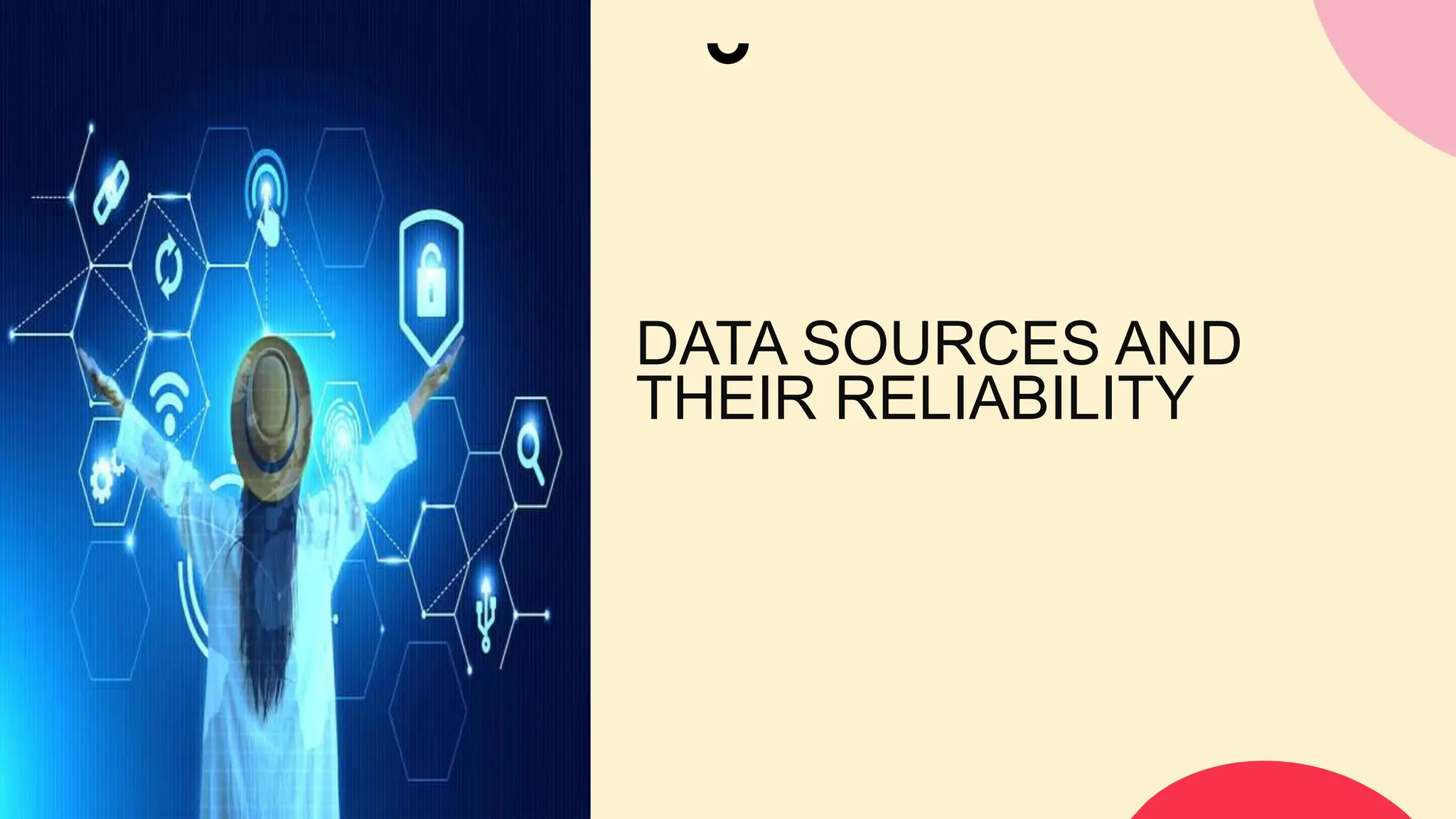
DATA SOURCES AND
THEIR RELIABILITY
10
For data to be considered valid and reliable,
data collection should occur consistently
and systematically throughout the course of
the research project.
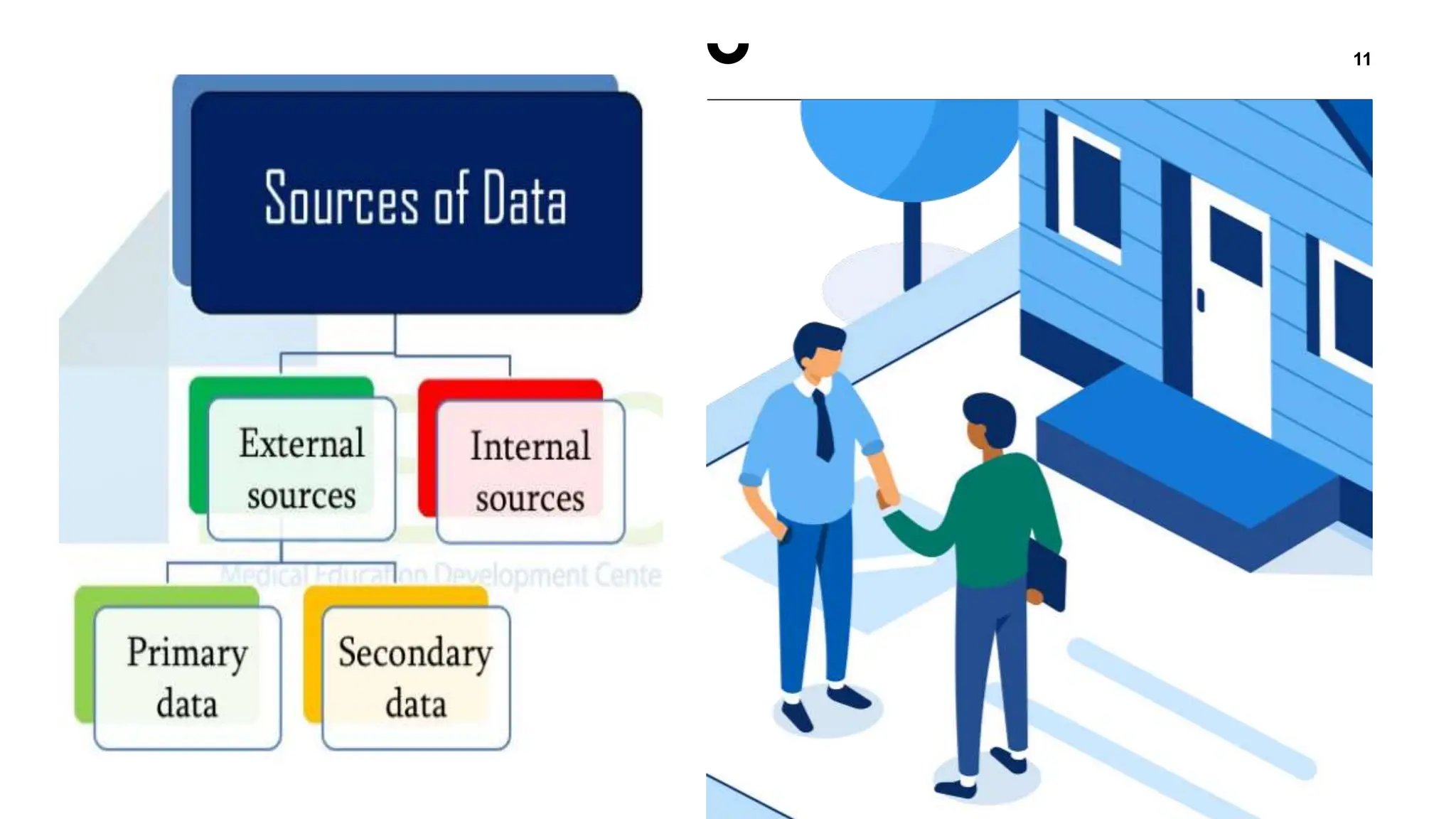
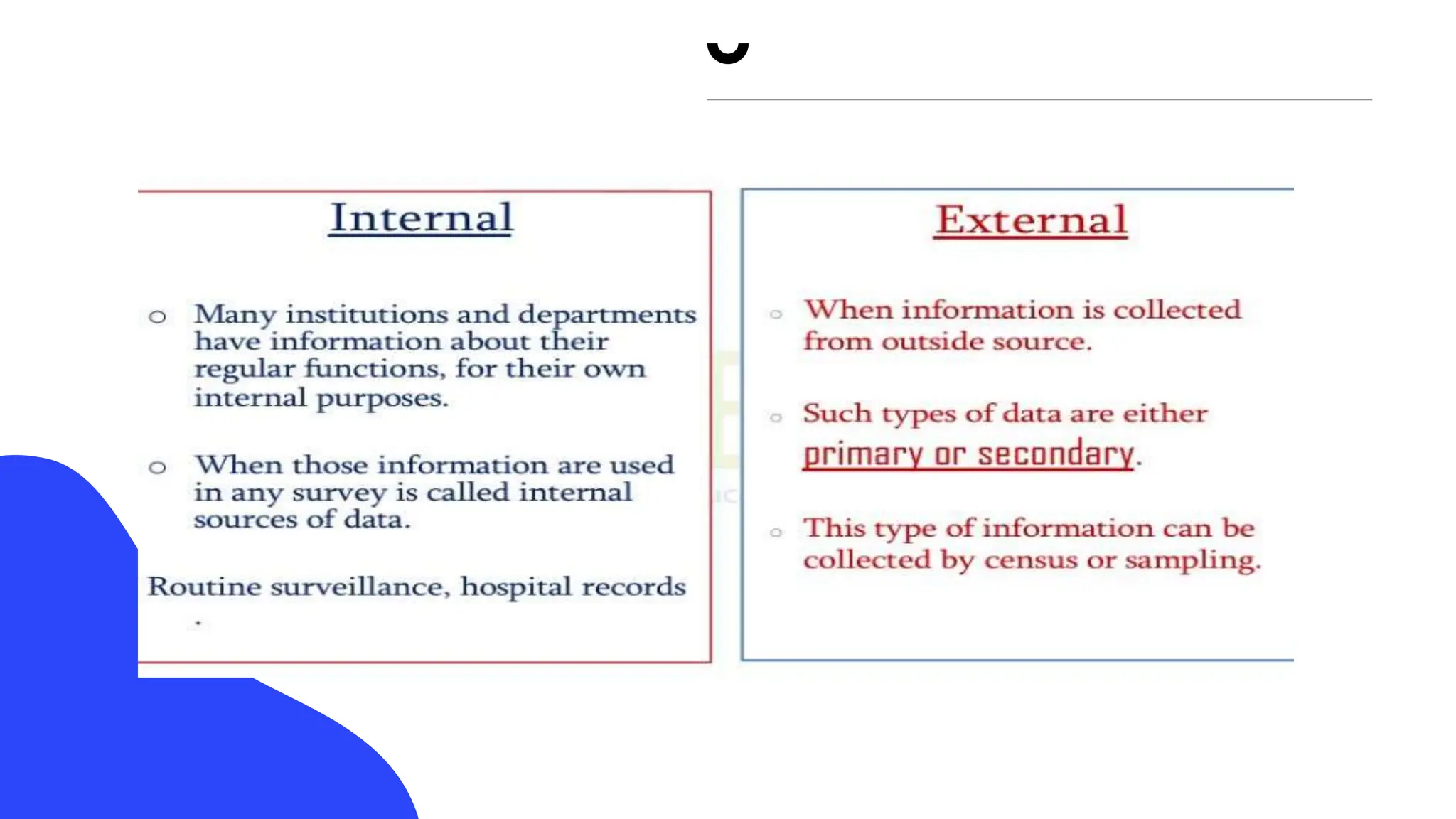
Data sources and their
reliability
11
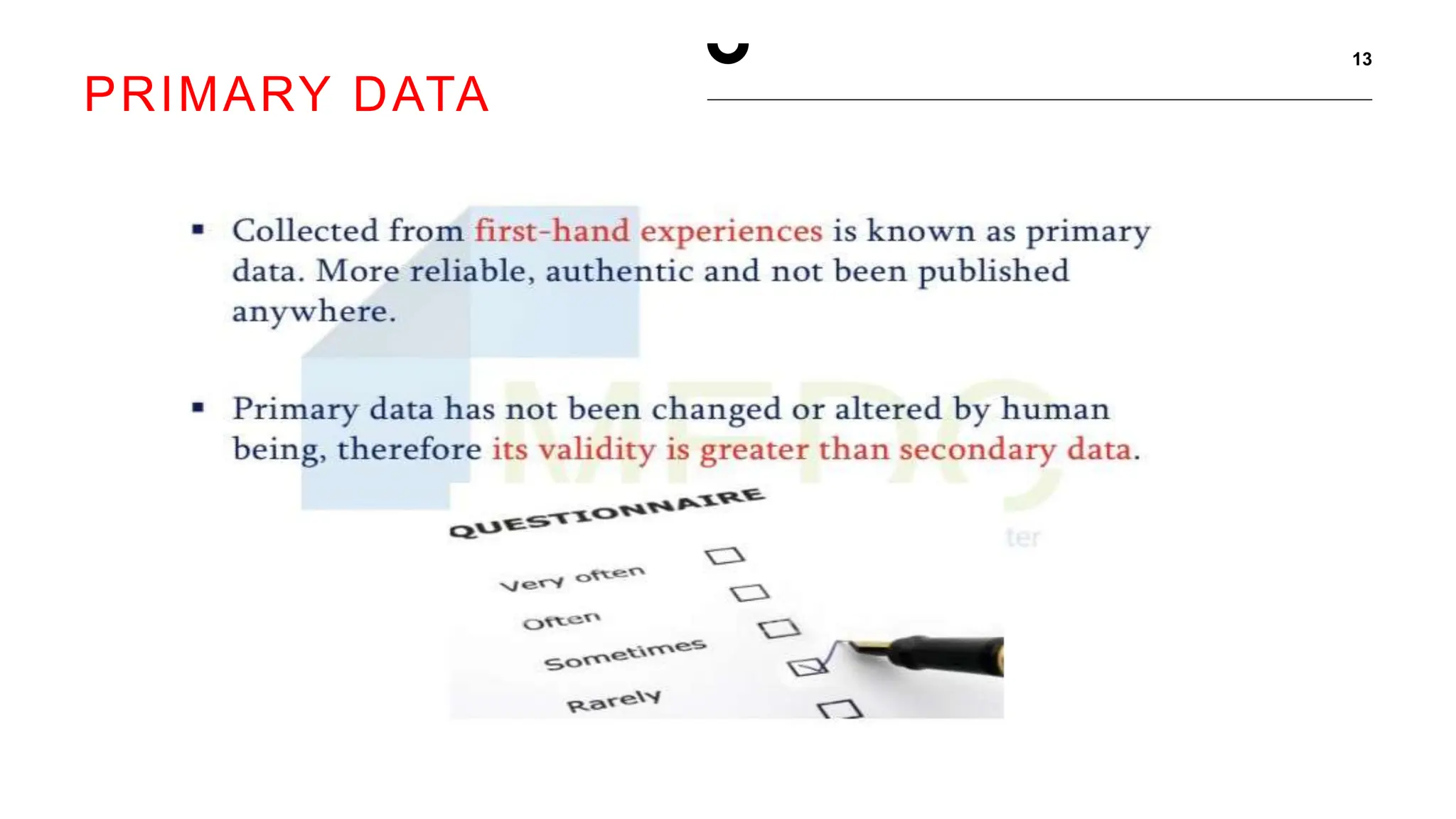
13
PRIMARY DATA
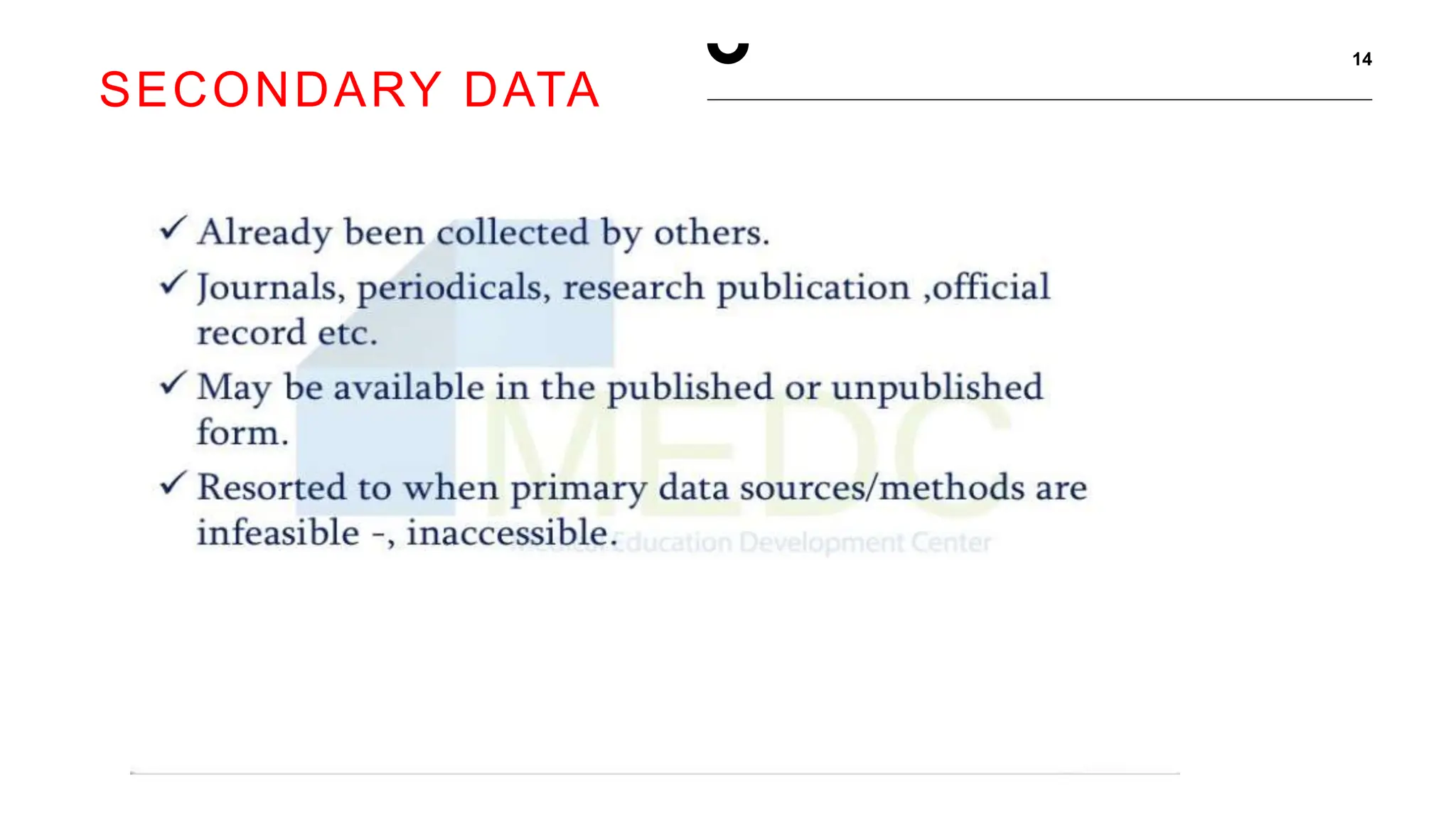
14
SECONDARY DATA
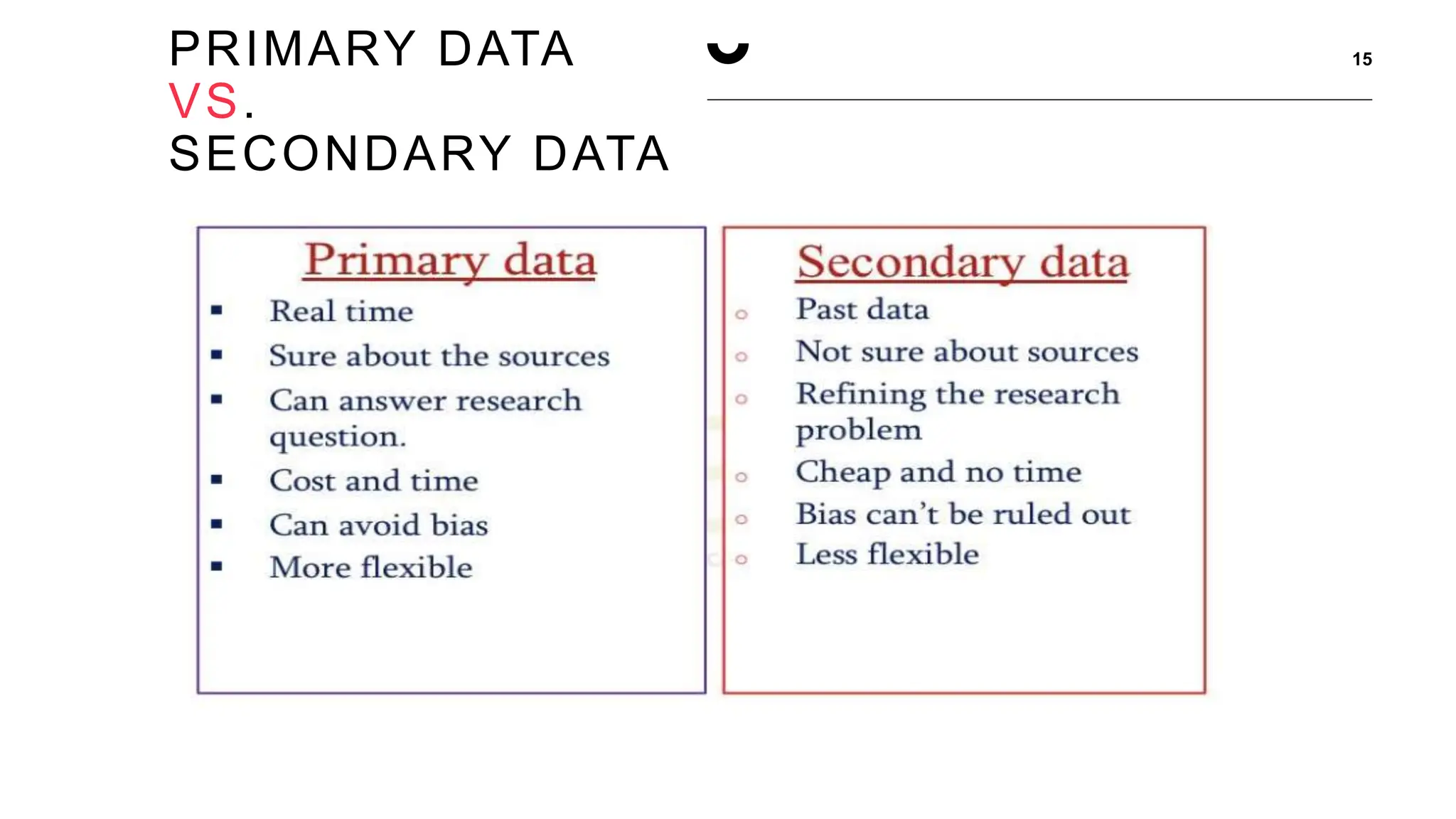
PRIMARY DATA
VS.
SECONDARY DATA
15
DATA MANAGEMENT
AND ORGANIZATION
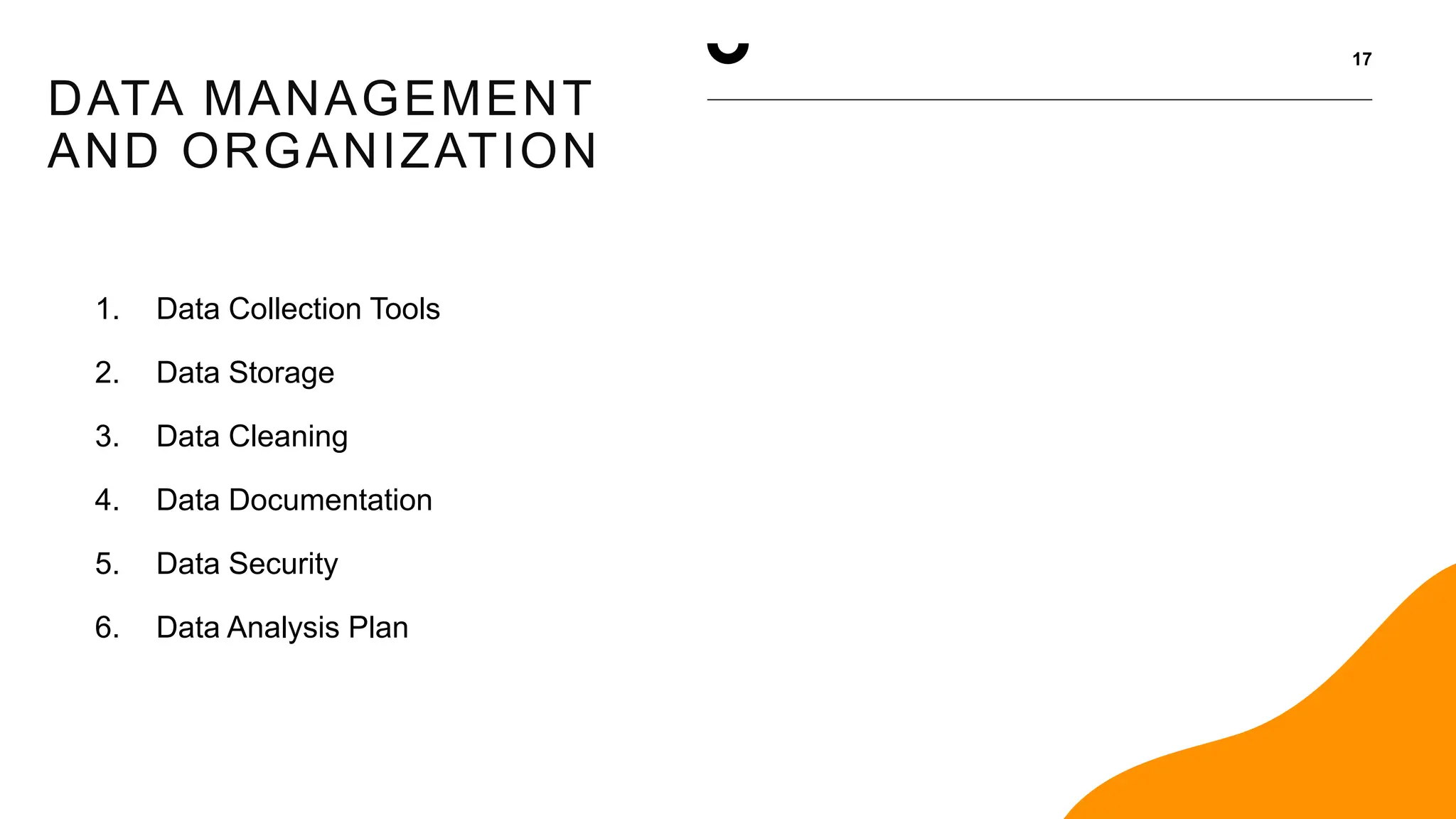
DATA MANAGEMENT
AND ORGANIZATION
17
1. Data Collection Tools
2. Data Storage
3. Data Cleaning
4. Data Documentation
5. Data Security
6. Data Analysis Plan
THANK
YOU
Jeremie Privaldo
Michelle Rejano
Moreno Charlene Kaye
Jimboy Rubio
REFERENCES
19
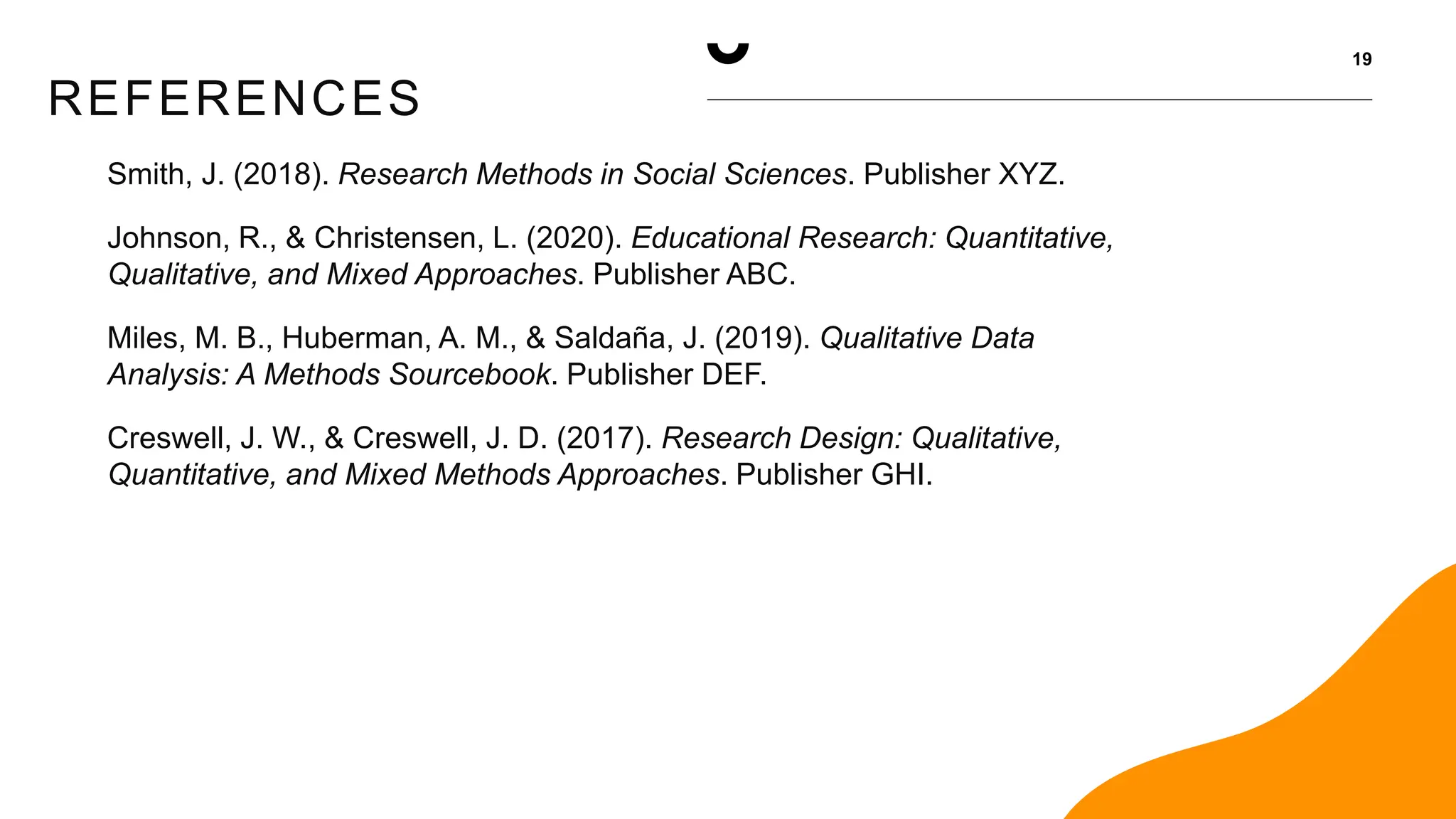
Smith, J. (2018). Research Methods in Social Sciences. Publisher XYZ.
Johnson, R., & Christensen, L. (2020). Educational Research: Quantitative,
Qualitative, and Mixed Approaches. Publisher ABC.
Miles, M. B., Huberman, A. M., & Saldaña, J. (2019). Qualitative Data
Analysis: A Methods Sourcebook. Publisher DEF.
Creswell, J. W., & Creswell, J. D. (2017). Research Design: Qualitative,
Quantitative, and Mixed Methods Approaches. Publisher GHI.

DATACOLLECTION-REPORT.( practical Consideration, sources of data ,