Need to protect (above all else) ….
1
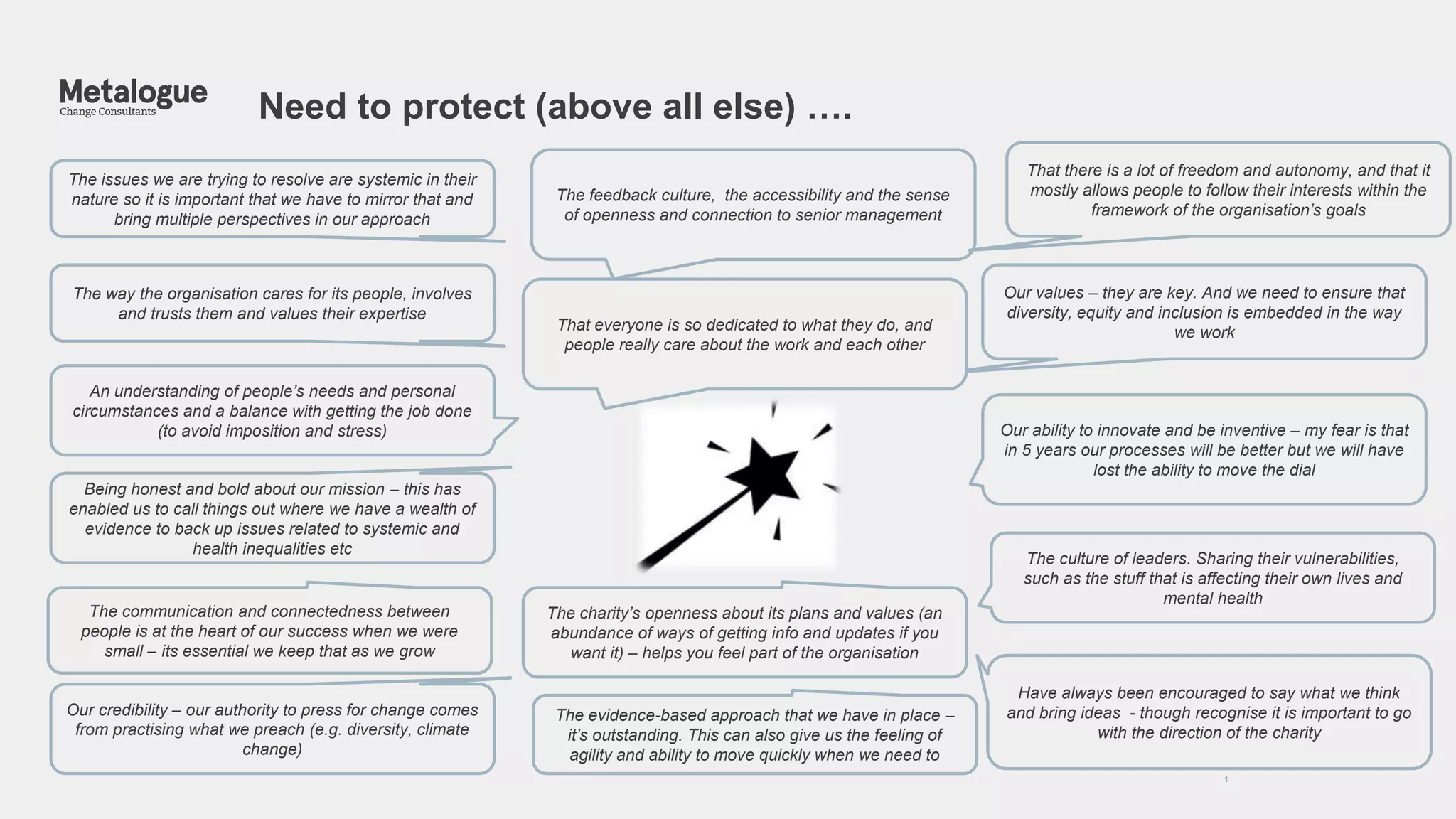
Our values – they are key. And we need to ensure that
diversity, equity and inclusion is embedded in the way
we work
The issues we are trying to resolve are systemic in their
nature so it is important that we have to mirror that and
bring multiple perspectives in our approach
Have always been encouraged to say what we think
and bring ideas - though recognise it is important to go
with the direction of the charity
Our ability to innovate and be inventive – my fear is that
in 5 years our processes will be better but we will have
lost the ability to move the dial
That everyone is so dedicated to what they do, and
people really care about the work and each other
Being honest and bold about our mission – this has
enabled us to call things out where we have a wealth of
evidence to back up issues related to systemic and
health inequalities etc
The charity’s openness about its plans and values (an
abundance of ways of getting info and updates if you
want it) – helps you feel part of the organisation
An understanding of people’s needs and personal
circumstances and a balance with getting the job done
(to avoid imposition and stress)
Our credibility – our authority to press for change comes
from practising what we preach (e.g. diversity, climate
change)
The culture of leaders. Sharing their vulnerabilities,
such as the stuff that is affecting their own lives and
mental health
The evidence-based approach that we have in place –
it’s outstanding. This can also give us the feeling of
agility and ability to move quickly when we need to
The way the organisation cares for its people, involves
and trusts them and values their expertise
The feedback culture, the accessibility and the sense
of openness and connection to senior management
That there is a lot of freedom and autonomy, and that it
mostly allows people to follow their interests within the
framework of the organisation’s goals
The communication and connectedness between
people is at the heart of our success when we were
small – its essential we keep that as we grow
Some sound bites - 1
2
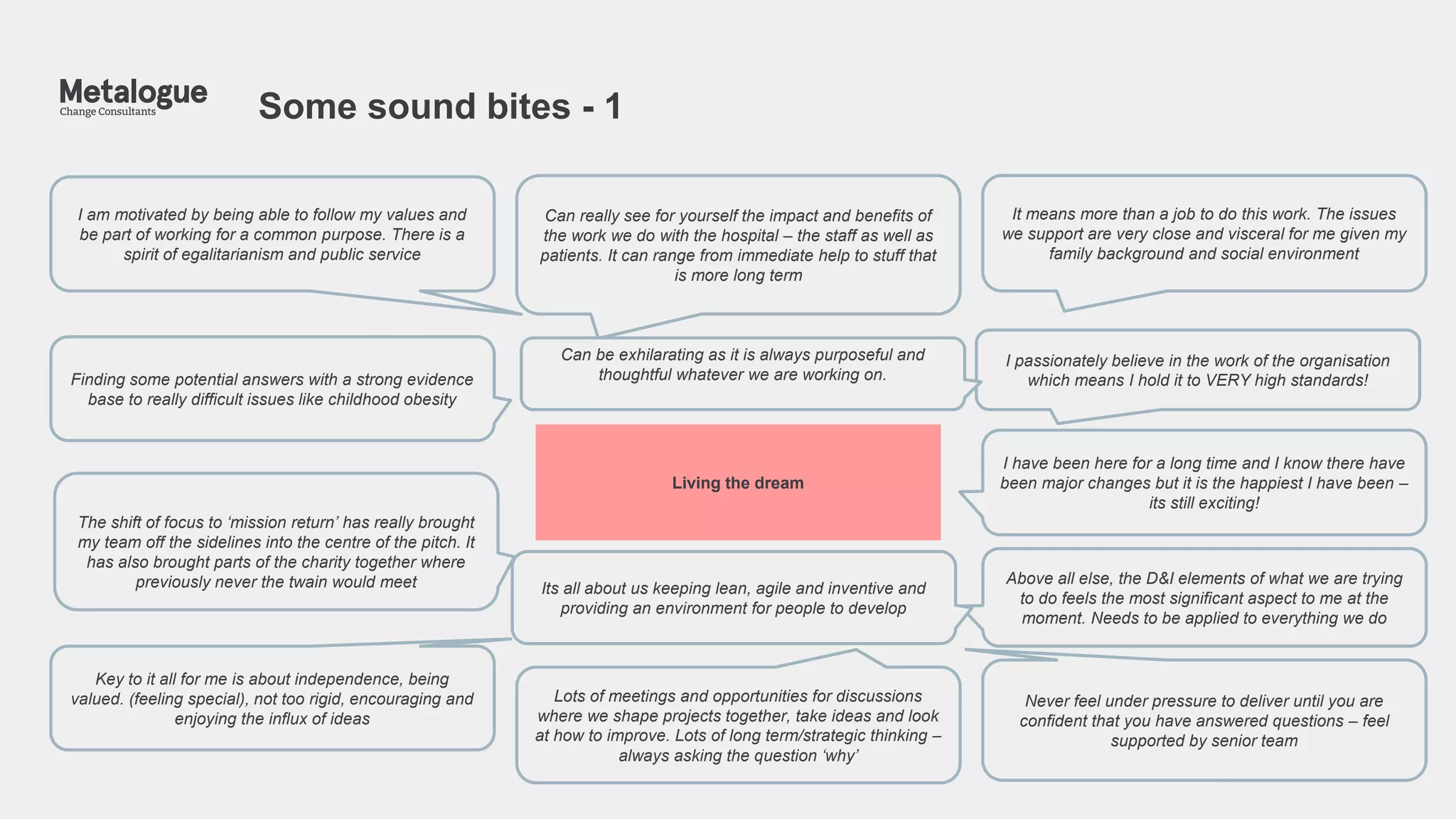
I am motivated by being able to follow my values and
be part of working for a common purpose. There is a
spirit of egalitarianism and public service
Finding some potential answers with a strong evidence
base to really difficult issues like childhood obesity
I have been here for a long time and I know there have
been major changes but it is the happiest I have been –
its still exciting!
It means more than a job to do this work. The issues
we support are very close and visceral for me given my
family background and social environment
Can really see for yourself the impact and benefits of
the work we do with the hospital – the staff as well as
patients. It can range from immediate help to stuff that
is more long term
Key to it all for me is about independence, being
valued. (feeling special), not too rigid, encouraging and
enjoying the influx of ideas
Never feel under pressure to deliver until you are
confident that you have answered questions – feel
supported by senior team
Lots of meetings and opportunities for discussions
where we shape projects together, take ideas and look
at how to improve. Lots of long term/strategic thinking –
always asking the question ‘why’
Living the dream
I passionately believe in the work of the organisation
which means I hold it to VERY high standards!
Can be exhilarating as it is always purposeful and
thoughtful whatever we are working on.
Above all else, the D&I elements of what we are trying
to do feels the most significant aspect to me at the
moment. Needs to be applied to everything we do
The shift of focus to ‘mission return’ has really brought
my team off the sidelines into the centre of the pitch. It
has also brought parts of the charity together where
previously never the twain would meet Its all about us keeping lean, agile and inventive and
providing an environment for people to develop
Some sound bites - 2
3
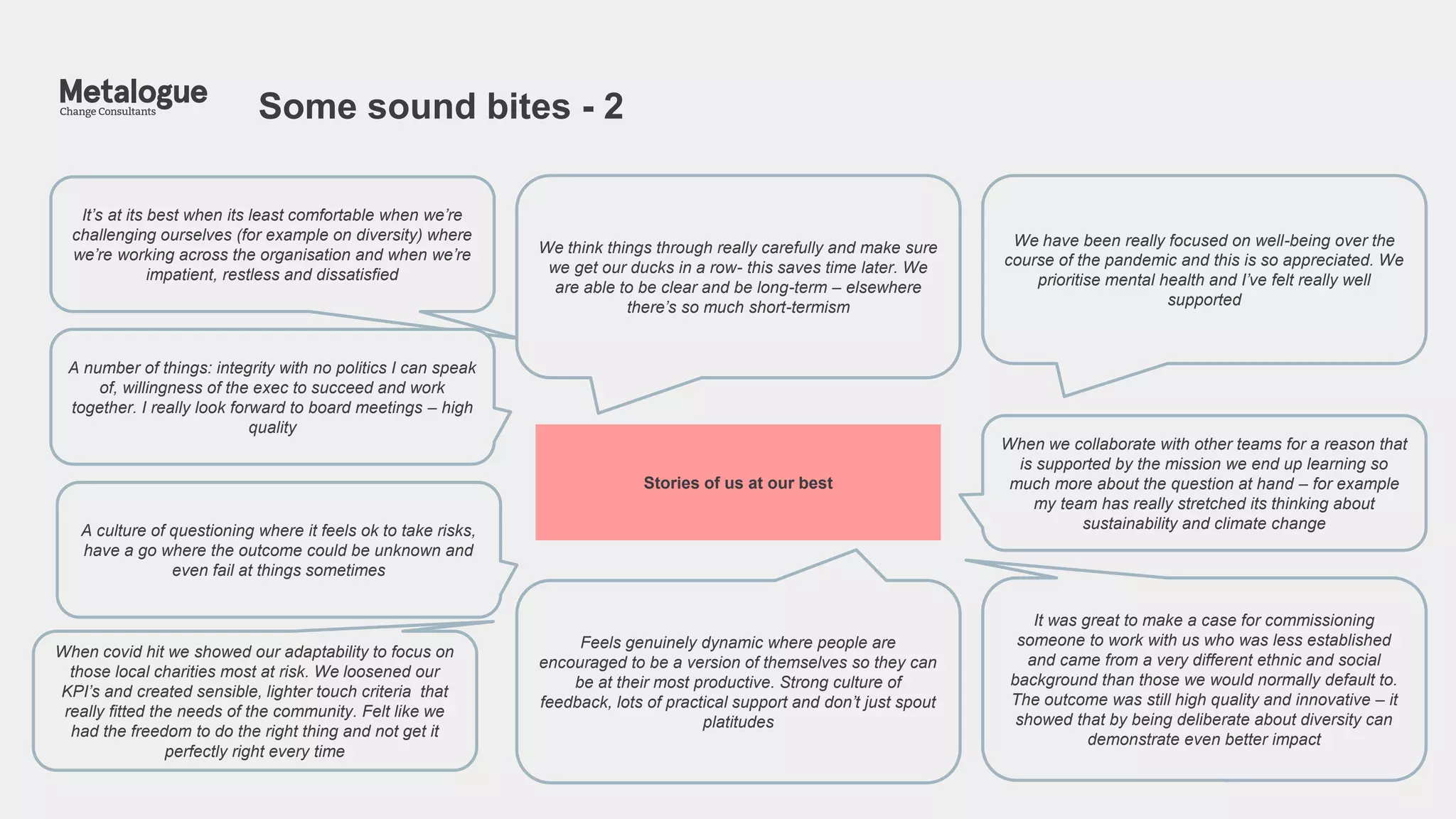
It’s at its best when its least comfortable when we’re
challenging ourselves (for example on diversity) where
we’re working across the organisation and when we’re
impatient, restless and dissatisfied
A number of things: integrity with no politics I can speak
of, willingness of the exec to succeed and work
together. I really look forward to board meetings – high
quality
When we collaborate with other teams for a reason that
is supported by the mission we end up learning so
much more about the question at hand – for example
my team has really stretched its thinking about
sustainability and climate change
We have been really focused on well-being over the
course of the pandemic and this is so appreciated. We
prioritise mental health and I’ve felt really well
supported
We think things through really carefully and make sure
we get our ducks in a row- this saves time later. We
are able to be clear and be long-term – elsewhere
there’s so much short-termism
When covid hit we showed our adaptability to focus on
those local charities most at risk. We loosened our
KPI’s and created sensible, lighter touch criteria that
really fitted the needs of the community. Felt like we
had the freedom to do the right thing and not get it
perfectly right every time
It was great to make a case for commissioning
someone to work with us who was less established
and came from a very different ethnic and social
background than those we would normally default to.
The outcome was still high quality and innovative – it
showed that by being deliberate about diversity can
demonstrate even better impact
Feels genuinely dynamic where people are
encouraged to be a version of themselves so they can
be at their most productive. Strong culture of
feedback, lots of practical support and don’t just spout
platitudes
Stories of us at our best
A culture of questioning where it feels ok to take risks,
have a go where the outcome could be unknown and
even fail at things sometimes
Some sound bites - 3
4
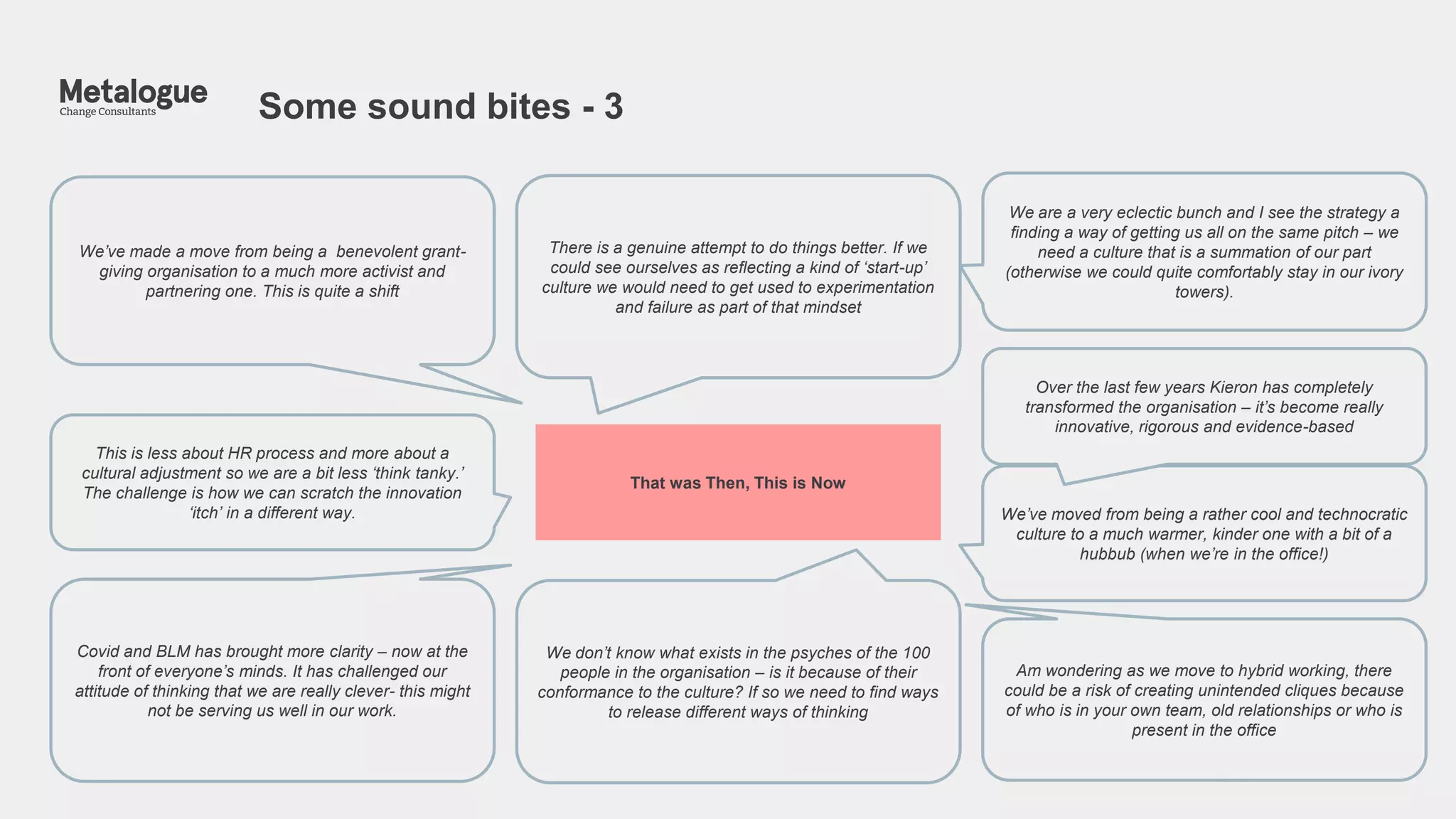
We’ve made a move from being a benevolent grant-
giving organisation to a much more activist and
partnering one. This is quite a shift
This is less about HR process and more about a
cultural adjustment so we are a bit less ‘think tanky.’
The challenge is how we can scratch the innovation
‘itch’ in a different way. We’ve moved from being a rather cool and technocratic
culture to a much warmer, kinder one with a bit of a
hubbub (when we’re in the office!)
Over the last few years Kieron has completely
transformed the organisation – it’s become really
innovative, rigorous and evidence-based
There is a genuine attempt to do things better. If we
could see ourselves as reflecting a kind of ‘start-up’
culture we would need to get used to experimentation
and failure as part of that mindset
Covid and BLM has brought more clarity – now at the
front of everyone’s minds. It has challenged our
attitude of thinking that we are really clever- this might
not be serving us well in our work.
Am wondering as we move to hybrid working, there
could be a risk of creating unintended cliques because
of who is in your own team, old relationships or who is
present in the office
We don’t know what exists in the psyches of the 100
people in the organisation – is it because of their
conformance to the culture? If so we need to find ways
to release different ways of thinking
That was Then, This is Now
We are a very eclectic bunch and I see the strategy a
finding a way of getting us all on the same pitch – we
need a culture that is a summation of our part
(otherwise we could quite comfortably stay in our ivory
towers).
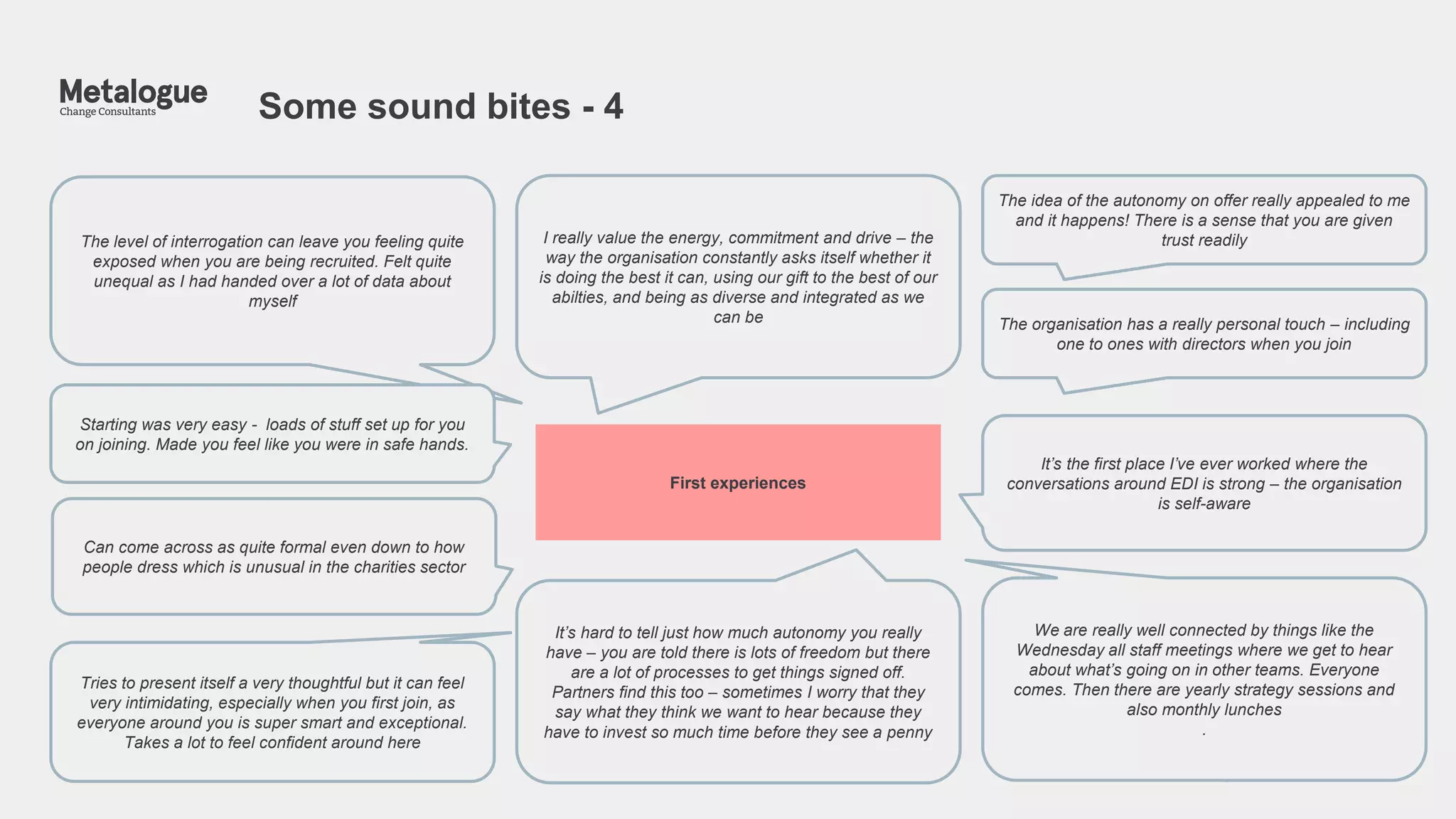
Some sound bites - 4
5
The level of interrogation can leave you feeling quite
exposed when you are being recruited. Felt quite
unequal as I had handed over a lot of data about
myself
Can come across as quite formal even down to how
people dress which is unusual in the charities sector
It’s the first place I’ve ever worked where the
conversations around EDI is strong – the organisation
is self-aware
The idea of the autonomy on offer really appealed to me
and it happens! There is a sense that you are given
trust readily
I really value the energy, commitment and drive – the
way the organisation constantly asks itself whether it
is doing the best it can, using our gift to the best of our
abilties, and being as diverse and integrated as we
can be
Tries to present itself a very thoughtful but it can feel
very intimidating, especially when you first join, as
everyone around you is super smart and exceptional.
Takes a lot to feel confident around here
We are really well connected by things like the
Wednesday all staff meetings where we get to hear
about what’s going on in other teams. Everyone
comes. Then there are yearly strategy sessions and
also monthly lunches
.
It’s hard to tell just how much autonomy you really
have – you are told there is lots of freedom but there
are a lot of processes to get things signed off.
Partners find this too – sometimes I worry that they
say what they think we want to hear because they
have to invest so much time before they see a penny
First experiences
The organisation has a really personal touch – including
one to ones with directors when you join
Starting was very easy - loads of stuff set up for you
on joining. Made you feel like you were in safe hands.
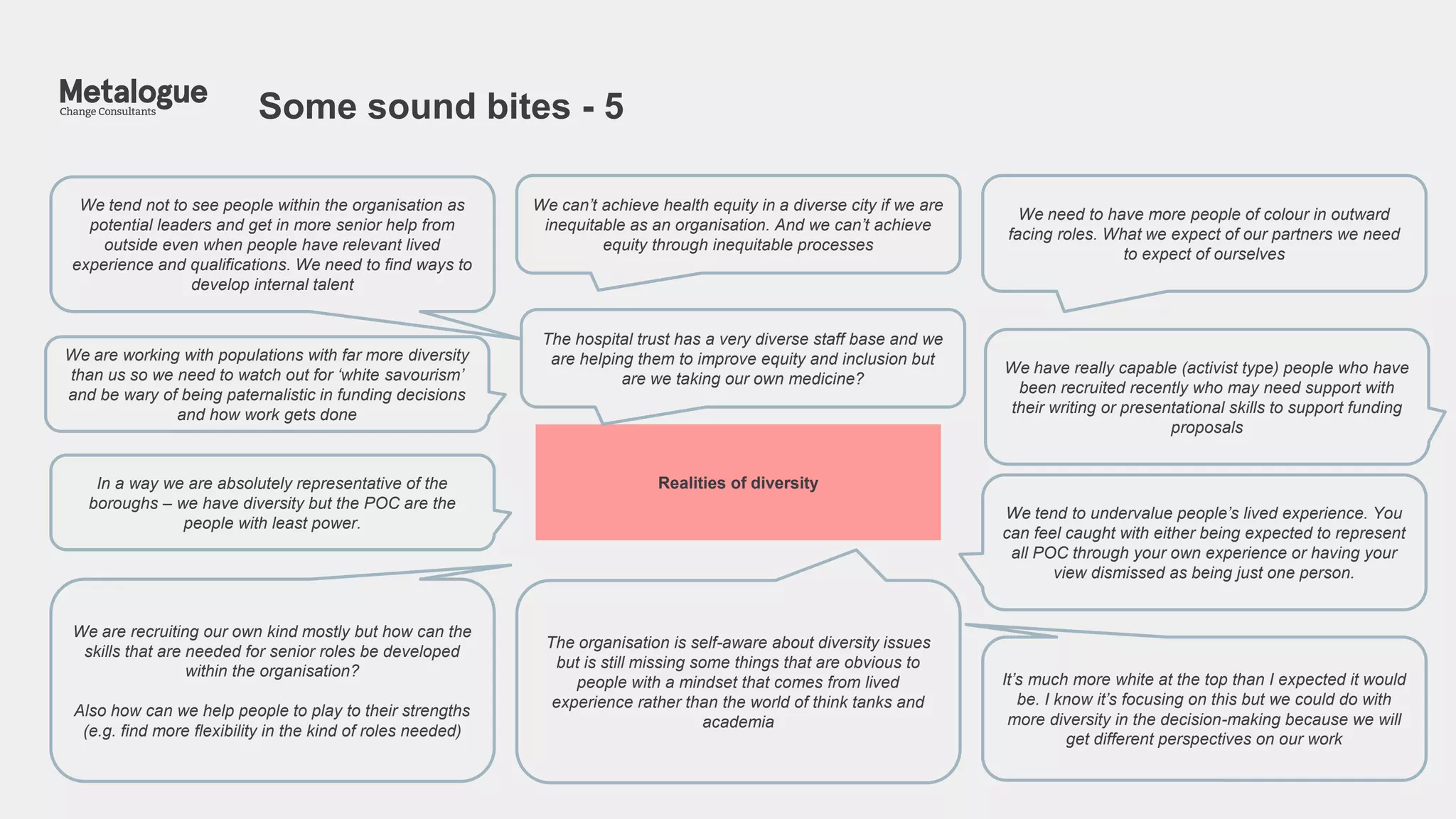
Some sound bites - 5
6
We tend not to see people within the organisation as
potential leaders and get in more senior help from
outside even when people have relevant lived
experience and qualifications. We need to find ways to
develop internal talent
In a way we are absolutely representative of the
boroughs – we have diversity but the POC are the
people with least power.
We tend to undervalue people’s lived experience. You
can feel caught with either being expected to represent
all POC through your own experience or having your
view dismissed as being just one person.
We need to have more people of colour in outward
facing roles. What we expect of our partners we need
to expect of ourselves
We can’t achieve health equity in a diverse city if we are
inequitable as an organisation. And we can’t achieve
equity through inequitable processes
We are recruiting our own kind mostly but how can the
skills that are needed for senior roles be developed
within the organisation?
Also how can we help people to play to their strengths
(e.g. find more flexibility in the kind of roles needed)
It’s much more white at the top than I expected it would
be. I know it’s focusing on this but we could do with
more diversity in the decision-making because we will
get different perspectives on our work
The organisation is self-aware about diversity issues
but is still missing some things that are obvious to
people with a mindset that comes from lived
experience rather than the world of think tanks and
academia
Realities of diversity
We have really capable (activist type) people who have
been recruited recently who may need support with
their writing or presentational skills to support funding
proposals
We are working with populations with far more diversity
than us so we need to watch out for ‘white savourism’
and be wary of being paternalistic in funding decisions
and how work gets done
The hospital trust has a very diverse staff base and we
are helping them to improve equity and inclusion but
are we taking our own medicine?
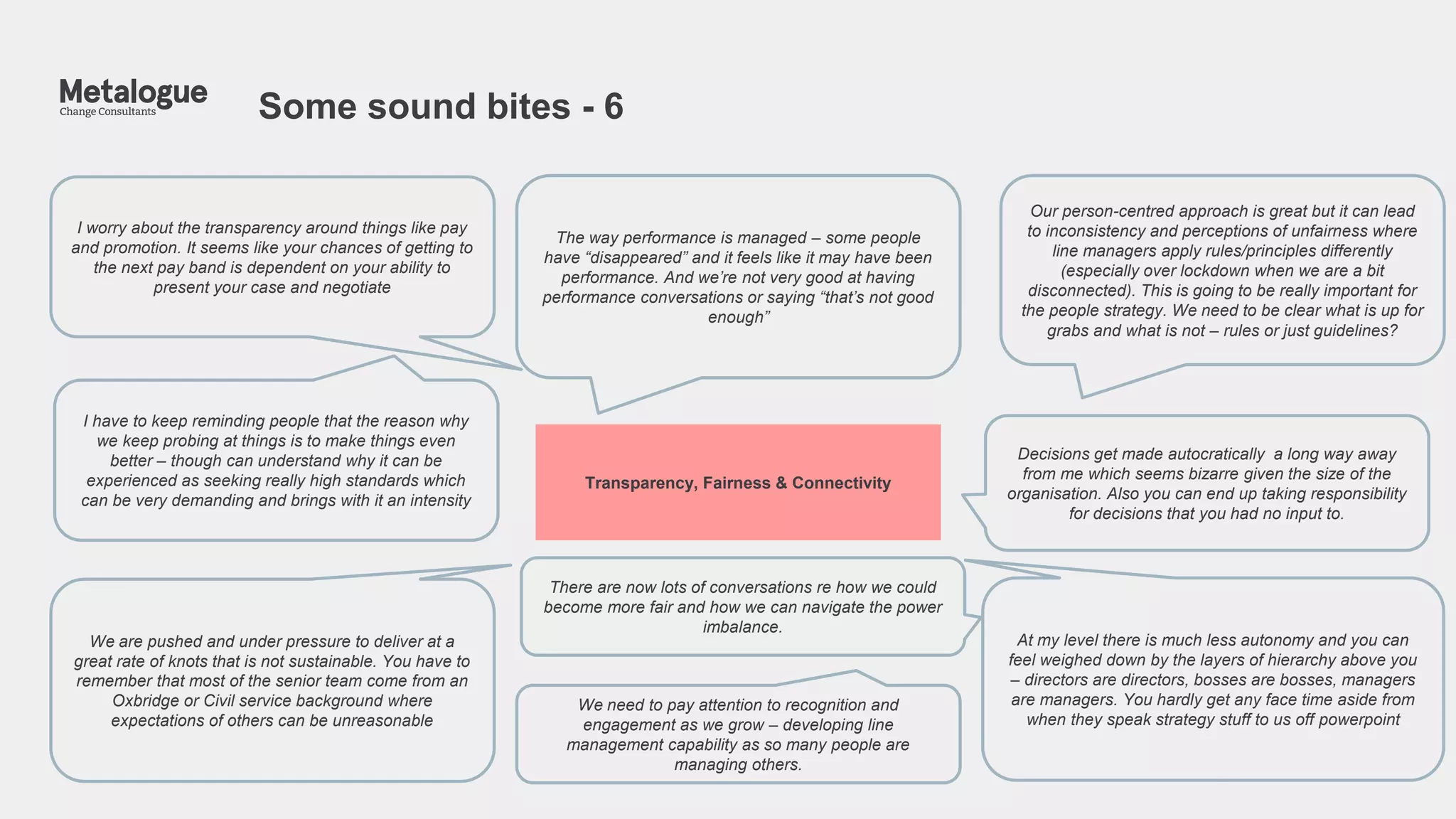
Some sound bites - 6
7
I worry about the transparency around things like pay
and promotion. It seems like your chances of getting to
the next pay band is dependent on your ability to
present your case and negotiate
There are now lots of conversations re how we could
become more fair and how we can navigate the power
imbalance.
Decisions get made autocratically a long way away
from me which seems bizarre given the size of the
organisation. Also you can end up taking responsibility
for decisions that you had no input to.
The way performance is managed – some people
have “disappeared” and it feels like it may have been
performance. And we’re not very good at having
performance conversations or saying “that’s not good
enough”
We are pushed and under pressure to deliver at a
great rate of knots that is not sustainable. You have to
remember that most of the senior team come from an
Oxbridge or Civil service background where
expectations of others can be unreasonable
At my level there is much less autonomy and you can
feel weighed down by the layers of hierarchy above you
– directors are directors, bosses are bosses, managers
are managers. You hardly get any face time aside from
when they speak strategy stuff to us off powerpoint
We need to pay attention to recognition and
engagement as we grow – developing line
management capability as so many people are
managing others.
Transparency, Fairness & Connectivity
Our person-centred approach is great but it can lead
to inconsistency and perceptions of unfairness where
line managers apply rules/principles differently
(especially over lockdown when we are a bit
disconnected). This is going to be really important for
the people strategy. We need to be clear what is up for
grabs and what is not – rules or just guidelines?
I have to keep reminding people that the reason why
we keep probing at things is to make things even
better – though can understand why it can be
experienced as seeking really high standards which
can be very demanding and brings with it an intensity
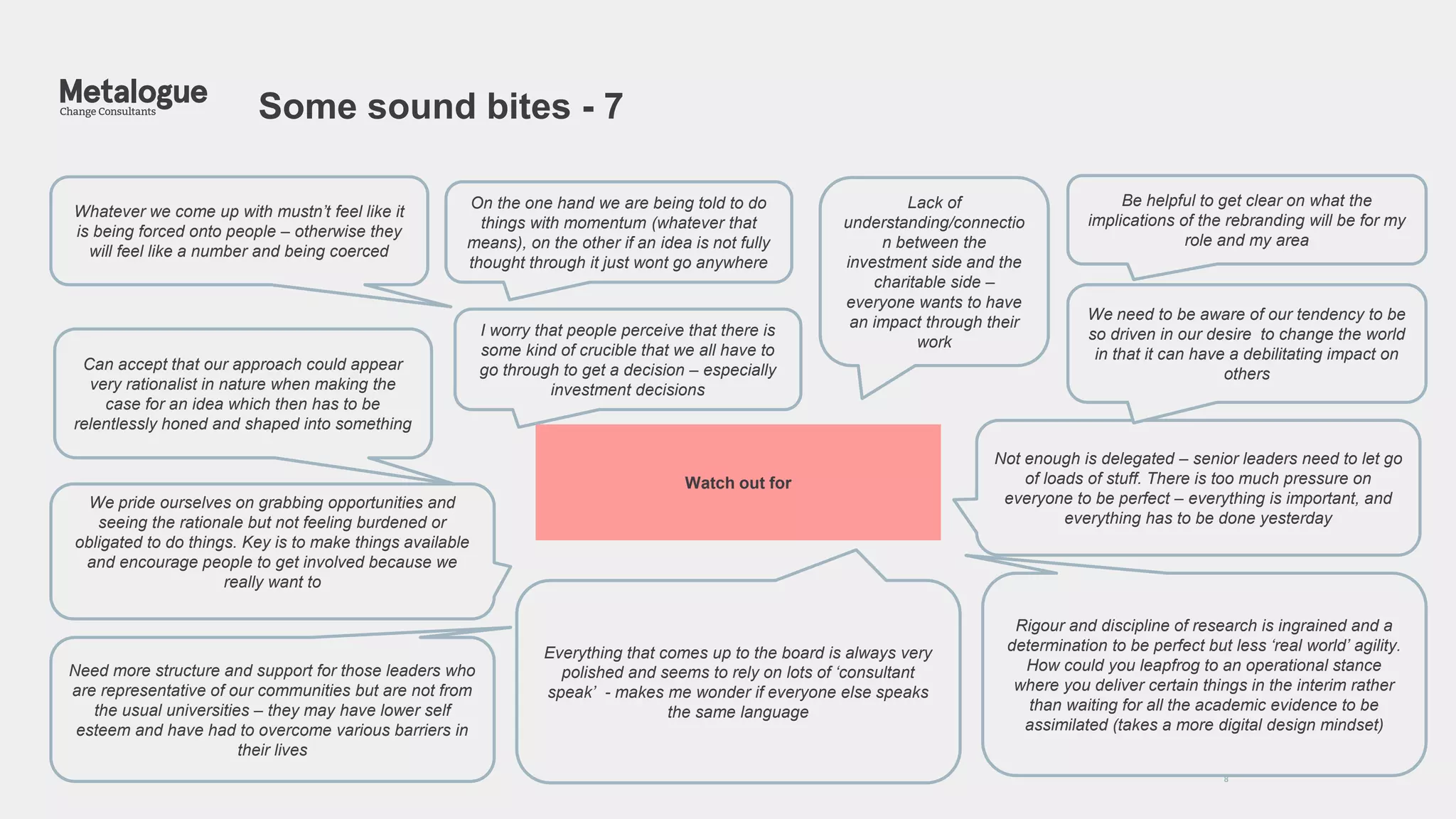
Some sound bites - 7
8
Whatever we come up with mustn’t feel like it
is being forced onto people – otherwise they
will feel like a number and being coerced
We pride ourselves on grabbing opportunities and
seeing the rationale but not feeling burdened or
obligated to do things. Key is to make things available
and encourage people to get involved because we
really want to
Not enough is delegated – senior leaders need to let go
of loads of stuff. There is too much pressure on
everyone to be perfect – everything is important, and
everything has to be done yesterday
Be helpful to get clear on what the
implications of the rebranding will be for my
role and my area
On the one hand we are being told to do
things with momentum (whatever that
means), on the other if an idea is not fully
thought through it just wont go anywhere
Need more structure and support for those leaders who
are representative of our communities but are not from
the usual universities – they may have lower self
esteem and have had to overcome various barriers in
their lives
Rigour and discipline of research is ingrained and a
determination to be perfect but less ‘real world’ agility.
How could you leapfrog to an operational stance
where you deliver certain things in the interim rather
than waiting for all the academic evidence to be
assimilated (takes a more digital design mindset)
Everything that comes up to the board is always very
polished and seems to rely on lots of ‘consultant
speak’ - makes me wonder if everyone else speaks
the same language
Watch out for
Lack of
understanding/connectio
n between the
investment side and the
charitable side –
everyone wants to have
an impact through their
work
I worry that people perceive that there is
some kind of crucible that we all have to
go through to get a decision – especially
investment decisions
We need to be aware of our tendency to be
so driven in our desire to change the world
in that it can have a debilitating impact on
others
Can accept that our approach could appear
very rationalist in nature when making the
case for an idea which then has to be
relentlessly honed and shaped into something

data pack

  • 1.
    Need to protect(above all else) …. 1 Our values – they are key. And we need to ensure that diversity, equity and inclusion is embedded in the way we work The issues we are trying to resolve are systemic in their nature so it is important that we have to mirror that and bring multiple perspectives in our approach Have always been encouraged to say what we think and bring ideas - though recognise it is important to go with the direction of the charity Our ability to innovate and be inventive – my fear is that in 5 years our processes will be better but we will have lost the ability to move the dial That everyone is so dedicated to what they do, and people really care about the work and each other Being honest and bold about our mission – this has enabled us to call things out where we have a wealth of evidence to back up issues related to systemic and health inequalities etc The charity’s openness about its plans and values (an abundance of ways of getting info and updates if you want it) – helps you feel part of the organisation An understanding of people’s needs and personal circumstances and a balance with getting the job done (to avoid imposition and stress) Our credibility – our authority to press for change comes from practising what we preach (e.g. diversity, climate change) The culture of leaders. Sharing their vulnerabilities, such as the stuff that is affecting their own lives and mental health The evidence-based approach that we have in place – it’s outstanding. This can also give us the feeling of agility and ability to move quickly when we need to The way the organisation cares for its people, involves and trusts them and values their expertise The feedback culture, the accessibility and the sense of openness and connection to senior management That there is a lot of freedom and autonomy, and that it mostly allows people to follow their interests within the framework of the organisation’s goals The communication and connectedness between people is at the heart of our success when we were small – its essential we keep that as we grow
  • 2.
    Some sound bites- 1 2 I am motivated by being able to follow my values and be part of working for a common purpose. There is a spirit of egalitarianism and public service Finding some potential answers with a strong evidence base to really difficult issues like childhood obesity I have been here for a long time and I know there have been major changes but it is the happiest I have been – its still exciting! It means more than a job to do this work. The issues we support are very close and visceral for me given my family background and social environment Can really see for yourself the impact and benefits of the work we do with the hospital – the staff as well as patients. It can range from immediate help to stuff that is more long term Key to it all for me is about independence, being valued. (feeling special), not too rigid, encouraging and enjoying the influx of ideas Never feel under pressure to deliver until you are confident that you have answered questions – feel supported by senior team Lots of meetings and opportunities for discussions where we shape projects together, take ideas and look at how to improve. Lots of long term/strategic thinking – always asking the question ‘why’ Living the dream I passionately believe in the work of the organisation which means I hold it to VERY high standards! Can be exhilarating as it is always purposeful and thoughtful whatever we are working on. Above all else, the D&I elements of what we are trying to do feels the most significant aspect to me at the moment. Needs to be applied to everything we do The shift of focus to ‘mission return’ has really brought my team off the sidelines into the centre of the pitch. It has also brought parts of the charity together where previously never the twain would meet Its all about us keeping lean, agile and inventive and providing an environment for people to develop
  • 3.
    Some sound bites- 2 3 It’s at its best when its least comfortable when we’re challenging ourselves (for example on diversity) where we’re working across the organisation and when we’re impatient, restless and dissatisfied A number of things: integrity with no politics I can speak of, willingness of the exec to succeed and work together. I really look forward to board meetings – high quality When we collaborate with other teams for a reason that is supported by the mission we end up learning so much more about the question at hand – for example my team has really stretched its thinking about sustainability and climate change We have been really focused on well-being over the course of the pandemic and this is so appreciated. We prioritise mental health and I’ve felt really well supported We think things through really carefully and make sure we get our ducks in a row- this saves time later. We are able to be clear and be long-term – elsewhere there’s so much short-termism When covid hit we showed our adaptability to focus on those local charities most at risk. We loosened our KPI’s and created sensible, lighter touch criteria that really fitted the needs of the community. Felt like we had the freedom to do the right thing and not get it perfectly right every time It was great to make a case for commissioning someone to work with us who was less established and came from a very different ethnic and social background than those we would normally default to. The outcome was still high quality and innovative – it showed that by being deliberate about diversity can demonstrate even better impact Feels genuinely dynamic where people are encouraged to be a version of themselves so they can be at their most productive. Strong culture of feedback, lots of practical support and don’t just spout platitudes Stories of us at our best A culture of questioning where it feels ok to take risks, have a go where the outcome could be unknown and even fail at things sometimes
  • 4.
    Some sound bites- 3 4 We’ve made a move from being a benevolent grant- giving organisation to a much more activist and partnering one. This is quite a shift This is less about HR process and more about a cultural adjustment so we are a bit less ‘think tanky.’ The challenge is how we can scratch the innovation ‘itch’ in a different way. We’ve moved from being a rather cool and technocratic culture to a much warmer, kinder one with a bit of a hubbub (when we’re in the office!) Over the last few years Kieron has completely transformed the organisation – it’s become really innovative, rigorous and evidence-based There is a genuine attempt to do things better. If we could see ourselves as reflecting a kind of ‘start-up’ culture we would need to get used to experimentation and failure as part of that mindset Covid and BLM has brought more clarity – now at the front of everyone’s minds. It has challenged our attitude of thinking that we are really clever- this might not be serving us well in our work. Am wondering as we move to hybrid working, there could be a risk of creating unintended cliques because of who is in your own team, old relationships or who is present in the office We don’t know what exists in the psyches of the 100 people in the organisation – is it because of their conformance to the culture? If so we need to find ways to release different ways of thinking That was Then, This is Now We are a very eclectic bunch and I see the strategy a finding a way of getting us all on the same pitch – we need a culture that is a summation of our part (otherwise we could quite comfortably stay in our ivory towers).
  • 5.
    Some sound bites- 4 5 The level of interrogation can leave you feeling quite exposed when you are being recruited. Felt quite unequal as I had handed over a lot of data about myself Can come across as quite formal even down to how people dress which is unusual in the charities sector It’s the first place I’ve ever worked where the conversations around EDI is strong – the organisation is self-aware The idea of the autonomy on offer really appealed to me and it happens! There is a sense that you are given trust readily I really value the energy, commitment and drive – the way the organisation constantly asks itself whether it is doing the best it can, using our gift to the best of our abilties, and being as diverse and integrated as we can be Tries to present itself a very thoughtful but it can feel very intimidating, especially when you first join, as everyone around you is super smart and exceptional. Takes a lot to feel confident around here We are really well connected by things like the Wednesday all staff meetings where we get to hear about what’s going on in other teams. Everyone comes. Then there are yearly strategy sessions and also monthly lunches . It’s hard to tell just how much autonomy you really have – you are told there is lots of freedom but there are a lot of processes to get things signed off. Partners find this too – sometimes I worry that they say what they think we want to hear because they have to invest so much time before they see a penny First experiences The organisation has a really personal touch – including one to ones with directors when you join Starting was very easy - loads of stuff set up for you on joining. Made you feel like you were in safe hands.
  • 6.
    Some sound bites- 5 6 We tend not to see people within the organisation as potential leaders and get in more senior help from outside even when people have relevant lived experience and qualifications. We need to find ways to develop internal talent In a way we are absolutely representative of the boroughs – we have diversity but the POC are the people with least power. We tend to undervalue people’s lived experience. You can feel caught with either being expected to represent all POC through your own experience or having your view dismissed as being just one person. We need to have more people of colour in outward facing roles. What we expect of our partners we need to expect of ourselves We can’t achieve health equity in a diverse city if we are inequitable as an organisation. And we can’t achieve equity through inequitable processes We are recruiting our own kind mostly but how can the skills that are needed for senior roles be developed within the organisation? Also how can we help people to play to their strengths (e.g. find more flexibility in the kind of roles needed) It’s much more white at the top than I expected it would be. I know it’s focusing on this but we could do with more diversity in the decision-making because we will get different perspectives on our work The organisation is self-aware about diversity issues but is still missing some things that are obvious to people with a mindset that comes from lived experience rather than the world of think tanks and academia Realities of diversity We have really capable (activist type) people who have been recruited recently who may need support with their writing or presentational skills to support funding proposals We are working with populations with far more diversity than us so we need to watch out for ‘white savourism’ and be wary of being paternalistic in funding decisions and how work gets done The hospital trust has a very diverse staff base and we are helping them to improve equity and inclusion but are we taking our own medicine?
  • 7.
    Some sound bites- 6 7 I worry about the transparency around things like pay and promotion. It seems like your chances of getting to the next pay band is dependent on your ability to present your case and negotiate There are now lots of conversations re how we could become more fair and how we can navigate the power imbalance. Decisions get made autocratically a long way away from me which seems bizarre given the size of the organisation. Also you can end up taking responsibility for decisions that you had no input to. The way performance is managed – some people have “disappeared” and it feels like it may have been performance. And we’re not very good at having performance conversations or saying “that’s not good enough” We are pushed and under pressure to deliver at a great rate of knots that is not sustainable. You have to remember that most of the senior team come from an Oxbridge or Civil service background where expectations of others can be unreasonable At my level there is much less autonomy and you can feel weighed down by the layers of hierarchy above you – directors are directors, bosses are bosses, managers are managers. You hardly get any face time aside from when they speak strategy stuff to us off powerpoint We need to pay attention to recognition and engagement as we grow – developing line management capability as so many people are managing others. Transparency, Fairness & Connectivity Our person-centred approach is great but it can lead to inconsistency and perceptions of unfairness where line managers apply rules/principles differently (especially over lockdown when we are a bit disconnected). This is going to be really important for the people strategy. We need to be clear what is up for grabs and what is not – rules or just guidelines? I have to keep reminding people that the reason why we keep probing at things is to make things even better – though can understand why it can be experienced as seeking really high standards which can be very demanding and brings with it an intensity
  • 8.
    Some sound bites- 7 8 Whatever we come up with mustn’t feel like it is being forced onto people – otherwise they will feel like a number and being coerced We pride ourselves on grabbing opportunities and seeing the rationale but not feeling burdened or obligated to do things. Key is to make things available and encourage people to get involved because we really want to Not enough is delegated – senior leaders need to let go of loads of stuff. There is too much pressure on everyone to be perfect – everything is important, and everything has to be done yesterday Be helpful to get clear on what the implications of the rebranding will be for my role and my area On the one hand we are being told to do things with momentum (whatever that means), on the other if an idea is not fully thought through it just wont go anywhere Need more structure and support for those leaders who are representative of our communities but are not from the usual universities – they may have lower self esteem and have had to overcome various barriers in their lives Rigour and discipline of research is ingrained and a determination to be perfect but less ‘real world’ agility. How could you leapfrog to an operational stance where you deliver certain things in the interim rather than waiting for all the academic evidence to be assimilated (takes a more digital design mindset) Everything that comes up to the board is always very polished and seems to rely on lots of ‘consultant speak’ - makes me wonder if everyone else speaks the same language Watch out for Lack of understanding/connectio n between the investment side and the charitable side – everyone wants to have an impact through their work I worry that people perceive that there is some kind of crucible that we all have to go through to get a decision – especially investment decisions We need to be aware of our tendency to be so driven in our desire to change the world in that it can have a debilitating impact on others Can accept that our approach could appear very rationalist in nature when making the case for an idea which then has to be relentlessly honed and shaped into something