Data Mining
Specialist:
Advanced
Techniques for Data
Analysis
This presentation delves into the world of data mining, exploring its advanced
techniques and applications for data analysis. From preprocessing to
advanced modeling, we'll cover key aspects of becoming a data mining
specialist.
Introduction to Data Mining
1 Data Mining: Uncovering Insights
Data mining is the process of extracting meaningful patterns and knowledge from
large datasets.
2 Applications Across Industries
Data mining is used in various industries, including finance, healthcare, marketing,
and e-commerce.
3 Types of Data Mining Tasks
Common tasks include classification, clustering, association rule mining, and
anomaly detection.
4 The Power of Data
Data mining provides valuable insights that can drive informed decision-making and
improve business outcomes.
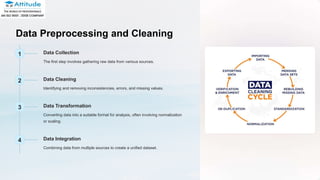
Data Preprocessing and Cleaning
1 Data Collection
The first step involves gathering raw data from various sources.
2 Data Cleaning
Identifying and removing inconsistencies, errors, and missing values.
3 Data Transformation
Converting data into a suitable format for analysis, often involving normalization
or scaling.
4 Data Integration
Combining data from multiple sources to create a unified dataset.
Exploratory Data Analysis
Understanding Data
Patterns
Visualizing data using charts,
graphs, and other methods to
identify trends, outliers, and
relationships.
Statistical Summaries
Calculating descriptive statistics
like mean, median, standard
deviation, and correlation
coefficients.
Hypothesis Testing
Formulating hypotheses and
testing them using statistical
methods to validate findings.
Advanced Techniques in Data Mining
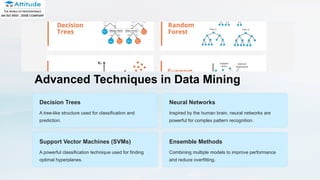
Decision Trees
A tree-like structure used for classification and
prediction.
Neural Networks
Inspired by the human brain, neural networks are
powerful for complex pattern recognition.
Support Vector Machines (SVMs)
A powerful classification technique used for finding
optimal hyperplanes.
Ensemble Methods
Combining multiple models to improve performance
and reduce overfitting.
Predictive Modeling and Machine Learning
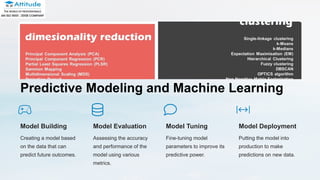
Model Building
Creating a model based
on the data that can
predict future outcomes.
Model Evaluation
Assessing the accuracy
and performance of the
model using various
metrics.
Model Tuning
Fine-tuning model
parameters to improve its
predictive power.
Model Deployment
Putting the model into
production to make
predictions on new data.
Visualization and
Interpretation of Results
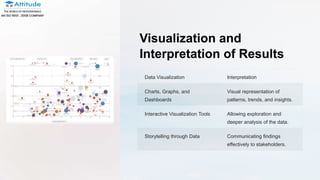
Data Visualization Interpretation
Charts, Graphs, and
Dashboards
Visual representation of
patterns, trends, and insights.
Interactive Visualization Tools Allowing exploration and
deeper analysis of the data.
Storytelling through Data Communicating findings
effectively to stakeholders.
Ethical Considerations in Data
Mining
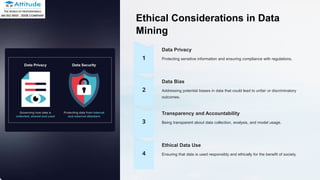
Data Privacy
Protecting sensitive information and ensuring compliance with regulations.
Data Bias
Addressing potential biases in data that could lead to unfair or discriminatory
outcomes.
Transparency and Accountability
Being transparent about data collection, analysis, and model usage.
Ethical Data Use
Ensuring that data is used responsibly and ethically for the benefit of society.
Conclusion and Key
Takeaways
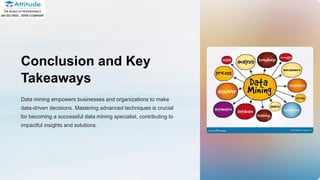
Data mining empowers businesses and organizations to make
data-driven decisions. Mastering advanced techniques is crucial
for becoming a successful data mining specialist, contributing to
impactful insights and solutions.

Data-Mining-Specialist-Advanced-Techniques-for-Data-Analysisppt.pptx

  • 1.
    Data Mining Specialist: Advanced Techniques forData Analysis This presentation delves into the world of data mining, exploring its advanced techniques and applications for data analysis. From preprocessing to advanced modeling, we'll cover key aspects of becoming a data mining specialist.
  • 2.
    Introduction to DataMining 1 Data Mining: Uncovering Insights Data mining is the process of extracting meaningful patterns and knowledge from large datasets. 2 Applications Across Industries Data mining is used in various industries, including finance, healthcare, marketing, and e-commerce. 3 Types of Data Mining Tasks Common tasks include classification, clustering, association rule mining, and anomaly detection. 4 The Power of Data Data mining provides valuable insights that can drive informed decision-making and improve business outcomes.
  • 3.
    Data Preprocessing andCleaning 1 Data Collection The first step involves gathering raw data from various sources. 2 Data Cleaning Identifying and removing inconsistencies, errors, and missing values. 3 Data Transformation Converting data into a suitable format for analysis, often involving normalization or scaling. 4 Data Integration Combining data from multiple sources to create a unified dataset.
  • 4.
    Exploratory Data Analysis UnderstandingData Patterns Visualizing data using charts, graphs, and other methods to identify trends, outliers, and relationships. Statistical Summaries Calculating descriptive statistics like mean, median, standard deviation, and correlation coefficients. Hypothesis Testing Formulating hypotheses and testing them using statistical methods to validate findings.
  • 5.
    Advanced Techniques inData Mining Decision Trees A tree-like structure used for classification and prediction. Neural Networks Inspired by the human brain, neural networks are powerful for complex pattern recognition. Support Vector Machines (SVMs) A powerful classification technique used for finding optimal hyperplanes. Ensemble Methods Combining multiple models to improve performance and reduce overfitting.
  • 6.
    Predictive Modeling andMachine Learning Model Building Creating a model based on the data that can predict future outcomes. Model Evaluation Assessing the accuracy and performance of the model using various metrics. Model Tuning Fine-tuning model parameters to improve its predictive power. Model Deployment Putting the model into production to make predictions on new data.
  • 7.
    Visualization and Interpretation ofResults Data Visualization Interpretation Charts, Graphs, and Dashboards Visual representation of patterns, trends, and insights. Interactive Visualization Tools Allowing exploration and deeper analysis of the data. Storytelling through Data Communicating findings effectively to stakeholders.
  • 8.
    Ethical Considerations inData Mining Data Privacy Protecting sensitive information and ensuring compliance with regulations. Data Bias Addressing potential biases in data that could lead to unfair or discriminatory outcomes. Transparency and Accountability Being transparent about data collection, analysis, and model usage. Ethical Data Use Ensuring that data is used responsibly and ethically for the benefit of society.
  • 9.
    Conclusion and Key Takeaways Datamining empowers businesses and organizations to make data-driven decisions. Mastering advanced techniques is crucial for becoming a successful data mining specialist, contributing to impactful insights and solutions.