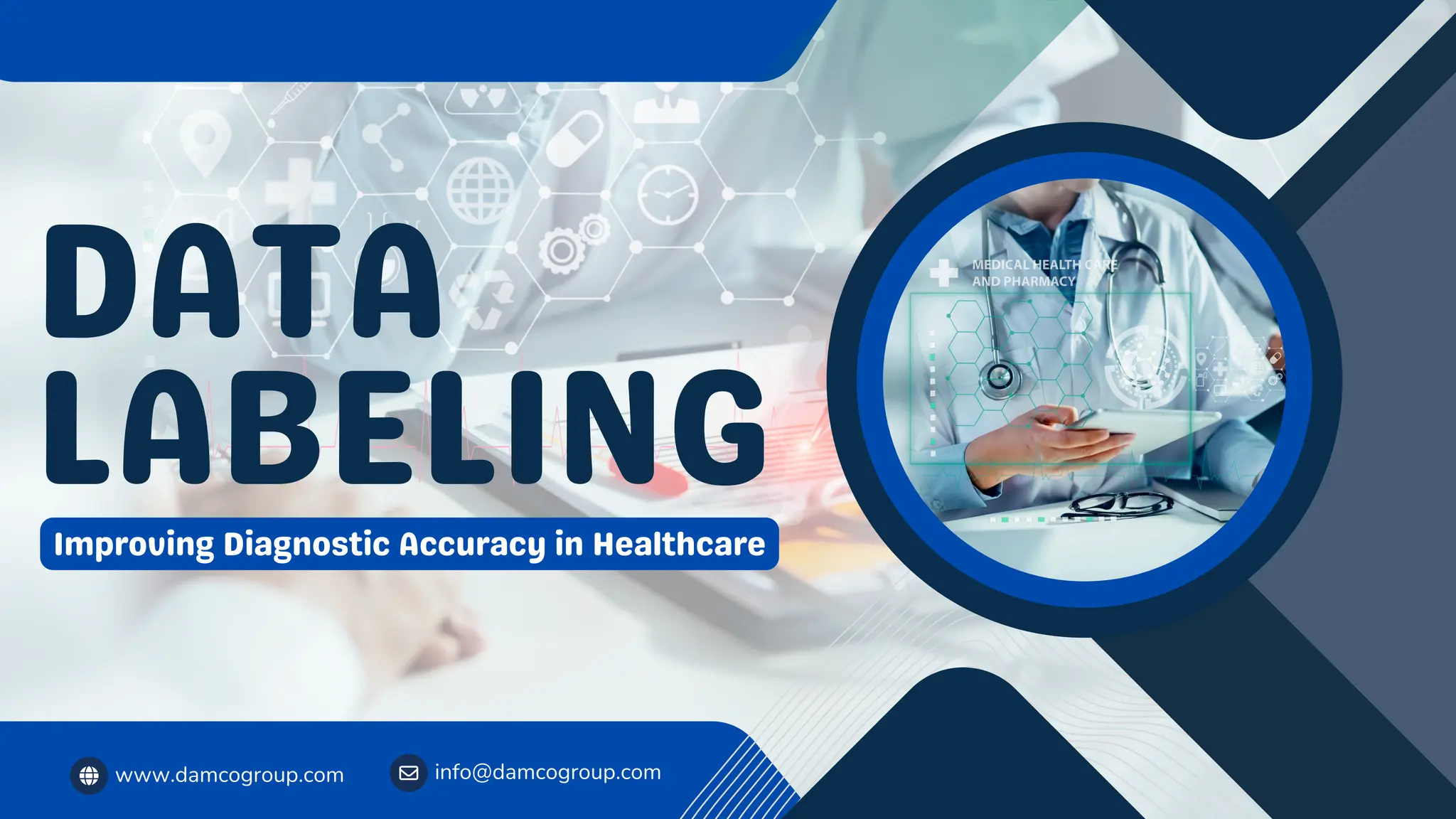
Improving Diagnostic Accuracy in Healthcare
DATA
LABELING
info@damcogroup.com
www.damcogroup.com
Data labeling helps AI understand medical data,
making healthcare tools smarter, faster, and more
accurate in diagnosis.
INTRODUCTION
IMPORTANCE IN
HEALTHCARE
Enhances diagnostic tools
Speeds up medical image analysis
Reduces human error in early disease detection
Supports development of predictive healthcare
models
TYPES OF MEDICAL
DATA LABELED
Medical Imaging: MRI, CT scans, X-rays
Pathology Slides: Tissue and cell images
Clinical Notes: Doctor’s comments and prescriptions
EHR Data: Electronic Health Records
Audio/Transcripts: Doctor-patient interactions
APPLICATIONS IN
DIAGNOSTICS
Detecting tumors in radiology images
Identifying cancerous cells in pathology reports
Monitoring heart diseases from ECG data
Diagnosing retinal disorders via annotated eye
scans
BENEFITS OF LABELED
DATA IN DIAGNOSTICS
Higher diagnostic accuracy and speed
Improved patient outcomes
Real-time clinical decision support
Enables personalized treatments
CHALLENGES IN HEALTH
CARE DATA LABELING
Need for domain expertise (doctors, radiologists)
Data privacy and HIPAA compliance
Time-consuming and costly process
Variability in data quality and formats
SOLUTIONS AND
BEST PRACTICES
Use of specialized medical annotation tools
Collaboration with certified medical professionals
Ensuring compliance with healthcare regulations
Implementing quality control and audits
FUTURE OUTLOOK
Rise of automated labeling tools
Integration with Real-time diagnostic systems
Greater use of synthetic and augmented datasets
Broader adoption in remote diagnostics and
telemedicine
CONCLUSION
Data labeling boosts AI-driven diagnostics, enabling
faster, accurate, and personalized care for improved
patient outcomes.
Plainsboro, New Jersey,
United States
CONTACT US
www.damcogroup.com info@damcogroup.com
+1 609 632 0350
Ready to leverage data labeling for better diagnostics?

Data Labeling in Healthcare Improving Diagnostic Accuracy

  • 1.
    Improving Diagnostic Accuracyin Healthcare DATA LABELING info@damcogroup.com www.damcogroup.com
  • 2.
    Data labeling helpsAI understand medical data, making healthcare tools smarter, faster, and more accurate in diagnosis. INTRODUCTION
  • 3.
    IMPORTANCE IN HEALTHCARE Enhances diagnostictools Speeds up medical image analysis Reduces human error in early disease detection Supports development of predictive healthcare models
  • 4.
    TYPES OF MEDICAL DATALABELED Medical Imaging: MRI, CT scans, X-rays Pathology Slides: Tissue and cell images Clinical Notes: Doctor’s comments and prescriptions EHR Data: Electronic Health Records Audio/Transcripts: Doctor-patient interactions
  • 5.
    APPLICATIONS IN DIAGNOSTICS Detecting tumorsin radiology images Identifying cancerous cells in pathology reports Monitoring heart diseases from ECG data Diagnosing retinal disorders via annotated eye scans
  • 6.
    BENEFITS OF LABELED DATAIN DIAGNOSTICS Higher diagnostic accuracy and speed Improved patient outcomes Real-time clinical decision support Enables personalized treatments
  • 7.
    CHALLENGES IN HEALTH CAREDATA LABELING Need for domain expertise (doctors, radiologists) Data privacy and HIPAA compliance Time-consuming and costly process Variability in data quality and formats
  • 8.
    SOLUTIONS AND BEST PRACTICES Useof specialized medical annotation tools Collaboration with certified medical professionals Ensuring compliance with healthcare regulations Implementing quality control and audits
  • 9.
    FUTURE OUTLOOK Rise ofautomated labeling tools Integration with Real-time diagnostic systems Greater use of synthetic and augmented datasets Broader adoption in remote diagnostics and telemedicine
  • 10.
    CONCLUSION Data labeling boostsAI-driven diagnostics, enabling faster, accurate, and personalized care for improved patient outcomes.
  • 11.
    Plainsboro, New Jersey, UnitedStates CONTACT US www.damcogroup.com info@damcogroup.com +1 609 632 0350 Ready to leverage data labeling for better diagnostics?