Data is boring.
                  Stories are not.
Modus Operandi


    The “How?”
  Must Come From
    The “Why?”

Purpose ----> Method
Stories Become Data Becomes Stories Become Visuals

• A large number of real stories get aggregated

• Aggregated stories are abstracted into data

• Data is then analyzed and revitalized as stories

• “A picture is worth...”

   Data lets us look at1,000,000 stories at once
                   (and sort them)
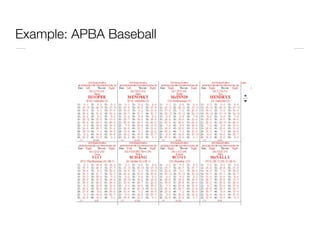
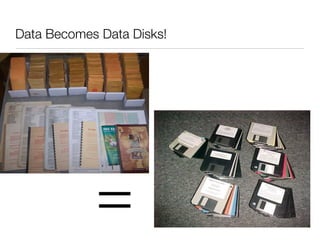
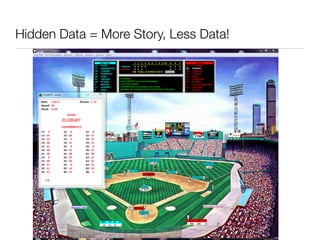
Example: APBA Baseball
Data Becomes Data Disks!


            =
Hidden Data = More Story, Less Data!
“Abstraction”

   • Each level assumes the previous so we can have
    greater capacity: Gain Power, Lose The Details


 {endorphins + fresh air + (“Can I grow this at home? = “True”) = “motivation”;
vitamins+(pancreas - sugar)+(“Are Doritos a vegetable?” = False) = “nutrition”;
           chard + turnips + ladybugs + dirt = “gardens”;
         (sasha + tobias + samwell + charleston) = “youth”;
        [(youth + gardens) = (nutrition + motivation)]}
                              =
                        “grant pitch”
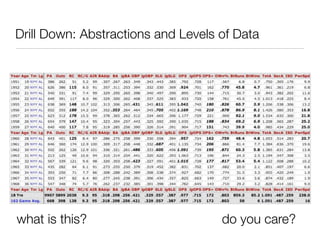
Drill Down: Abstractions and Levels of Data


what is this?                       do you care?
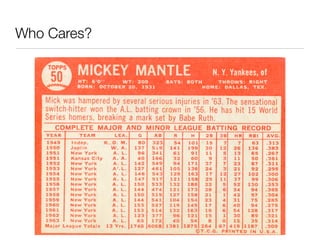
Who Cares?
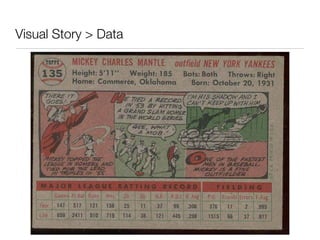
Visual Story > Data
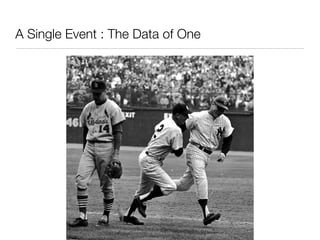
A Single Event : The Data of One
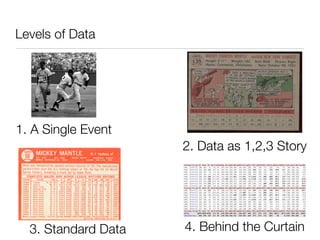
Levels of Data


1. A Single Event
                     2. Data as 1,2,3 Story


  3. Standard Data   4. Behind the Curtain
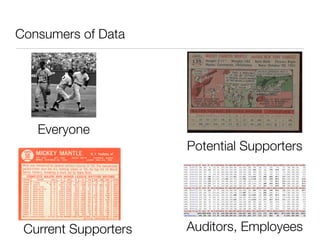
Consumers of Data


   Everyone
                      Potential Supporters


 Current Supporters   Auditors, Employees
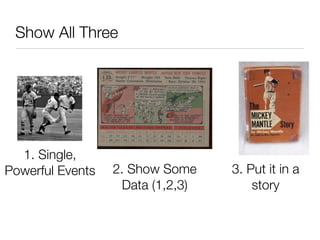
Show All Three	


  1. Single,
Powerful Events   2. Show Some    3. Put it in a
                   Data (1,2,3)       story
Non-Profit Data Becomes a Story


  The Plot

                   history.

                   struggle.

                  your work.
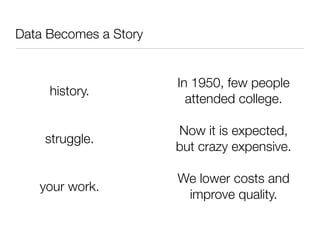
Data Becomes a Story


                       In 1950, few people
     history.
                         attended college.

                       Now it is expected,
    struggle.
                       but crazy expensive.

                       We lower costs and
   your work.
                        improve quality.
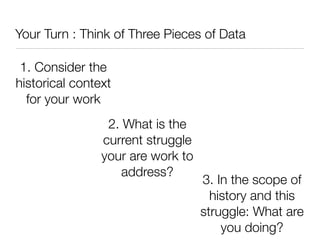
Your Turn : Think of Three Pieces of Data

 1. Consider the
historical context
  for your work
                 2. What is the
                current struggle
                your are work to
                    address?
                                   3. In the scope of
                                     history and this
                                   struggle: What are
                                       you doing?
Visualization = Another Abstraction


   Gaining power! ...but Losing Detail.

   Seize the power, but give a nod to all levels:
    - Single Events
      ---> Data
        ---> Data-Stories
          ---> Visualizations
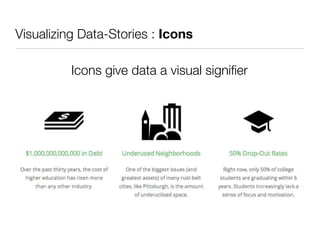
Visualizing Data-Stories : Icons

          Icons give data a visual signifier
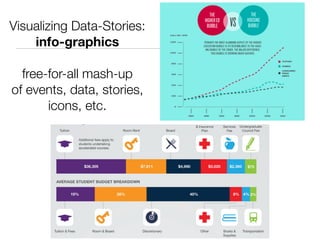
Visualizing Data-Stories:
    info-graphics

  free-for-all mash-up
of events, data, stories,
       icons, etc.
There are not enough good info-graphics
	 	 	 	 There are a lot of bad info-graphics


                   Make one.
Data-Stories are
  best told...
On Video.
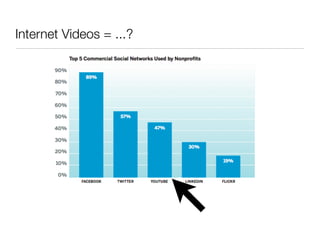
Internet Videos = ...?
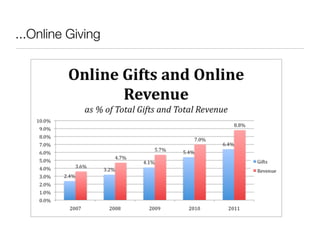
...Online Giving
There are not enough good non-profit videos
	 	 	 	 There are a lot of bad non-profit videos


               Make a great one.

                    It’s easy.

               Every organization
                should have one.
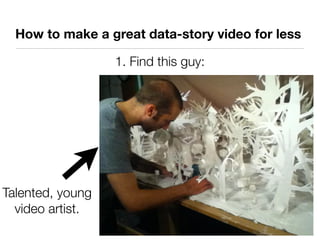
How to make a great data-story video for less

                  1. Find this guy:


Talented, young
  video artist.
How to make a great data-story video for less


   2. Get your most creative person and your
    best data person to team up and write an
              epic script; find $1000.
How to make a great data-story video for less


            3. Animate and Share.
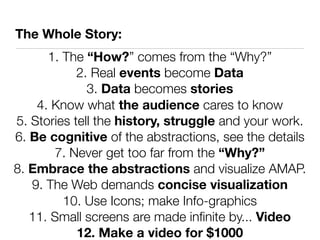
The Whole Story:
      1. The “How?” comes from the “Why?”
            2. Real events become Data
              3. Data becomes stories
    4. Know what the audience cares to know
5. Stories tell the history, struggle and your work.
6. Be cognitive of the abstractions, see the details
       7. Never get too far from the “Why?”
8. Embrace the abstractions and visualize AMAP.
   9. The Web demands concise visualization
         10. Use Icons; make Info-graphics
   11. Small screens are made infinite by... Video
            12. Make a video for $1000
saxifrage school chalkboard video


           http://vimeo.com/34760137

Data is boring. Stories are not.

  • 1.
    Data is boring. Stories are not.
  • 2.
    Modus Operandi The “How?” Must Come From The “Why?” Purpose ----> Method
  • 3.
    Stories Become DataBecomes Stories Become Visuals • A large number of real stories get aggregated • Aggregated stories are abstracted into data • Data is then analyzed and revitalized as stories • “A picture is worth...” Data lets us look at1,000,000 stories at once (and sort them)
  • 4.
  • 6.
  • 7.
    Hidden Data =More Story, Less Data!
  • 8.
    “Abstraction” • Each level assumes the previous so we can have greater capacity: Gain Power, Lose The Details {endorphins + fresh air + (“Can I grow this at home? = “True”) = “motivation”; vitamins+(pancreas - sugar)+(“Are Doritos a vegetable?” = False) = “nutrition”; chard + turnips + ladybugs + dirt = “gardens”; (sasha + tobias + samwell + charleston) = “youth”; [(youth + gardens) = (nutrition + motivation)]} = “grant pitch”
  • 9.
    Drill Down: Abstractionsand Levels of Data what is this? do you care?
  • 10.
  • 11.
  • 12.
    A Single Event: The Data of One
  • 13.
    Levels of Data 1.A Single Event 2. Data as 1,2,3 Story 3. Standard Data 4. Behind the Curtain
  • 14.
    Consumers of Data Everyone Potential Supporters Current Supporters Auditors, Employees
  • 15.
    Show All Three 1. Single, Powerful Events 2. Show Some 3. Put it in a Data (1,2,3) story
  • 16.
    Non-Profit Data Becomesa Story The Plot history. struggle. your work.
  • 17.
    Data Becomes aStory In 1950, few people history. attended college. Now it is expected, struggle. but crazy expensive. We lower costs and your work. improve quality.
  • 18.
    Your Turn :Think of Three Pieces of Data 1. Consider the historical context for your work 2. What is the current struggle your are work to address? 3. In the scope of history and this struggle: What are you doing?
  • 19.
    Visualization = AnotherAbstraction Gaining power! ...but Losing Detail. Seize the power, but give a nod to all levels: - Single Events ---> Data ---> Data-Stories ---> Visualizations
  • 20.
    Visualizing Data-Stories :Icons Icons give data a visual signifier
  • 21.
    Visualizing Data-Stories: info-graphics free-for-all mash-up of events, data, stories, icons, etc.
  • 22.
    There are notenough good info-graphics There are a lot of bad info-graphics Make one.
  • 23.
    Data-Stories are best told...
  • 24.
  • 25.
  • 26.
  • 27.
    There are notenough good non-profit videos There are a lot of bad non-profit videos Make a great one. It’s easy. Every organization should have one.
  • 28.
    How to makea great data-story video for less 1. Find this guy: Talented, young video artist.
  • 29.
    How to makea great data-story video for less 2. Get your most creative person and your best data person to team up and write an epic script; find $1000.
  • 30.
    How to makea great data-story video for less 3. Animate and Share.
  • 31.
    The Whole Story: 1. The “How?” comes from the “Why?” 2. Real events become Data 3. Data becomes stories 4. Know what the audience cares to know 5. Stories tell the history, struggle and your work. 6. Be cognitive of the abstractions, see the details 7. Never get too far from the “Why?” 8. Embrace the abstractions and visualize AMAP. 9. The Web demands concise visualization 10. Use Icons; make Info-graphics 11. Small screens are made infinite by... Video 12. Make a video for $1000
  • 32.
    saxifrage school chalkboardvideo http://vimeo.com/34760137