Data Formats: An
Introduction for AIML
Welcome to this exploration of data formats in the context of Artificial
Intelligence and Machine Learning (AIML). This presentation provides a
foundation for understanding how structured and unstructured data
shapes the field of AIML.
by Aryaa Sam
The Internet: A Data-Driven World
Global Reach
As of January 2018, there were over 4.021 billion Internet
users worldwide.
Diverse Data Sources
Data is generated by humans and non-human sources,
including sensors, automated systems, and devices.
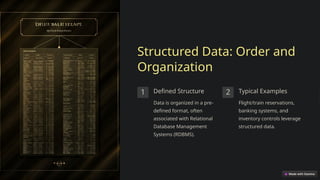
Structured Data: Order and
Organization
1 Defined Structure
Data is organized in a pre-
defined format, often
associated with Relational
Database Management
Systems (RDBMS).
2 Typical Examples
Flight/train reservations,
banking systems, and
inventory controls leverage
structured data.
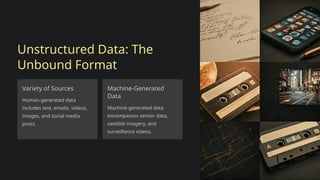
Unstructured Data: The
Unbound Format
Variety of Sources
Human-generated data
includes text, emails, videos,
images, and social media
posts.
Machine-Generated
Data
Machine-generated data
encompasses sensor data,
satellite imagery, and
surveillance videos.
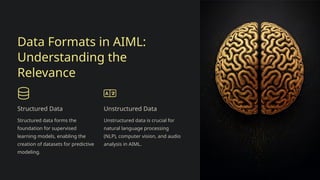
Data Formats in AIML:
Understanding the
Relevance
Structured Data
Structured data forms the
foundation for supervised
learning models, enabling the
creation of datasets for predictive
modeling.
Unstructured Data
Unstructured data is crucial for
natural language processing
(NLP), computer vision, and audio
analysis in AIML.
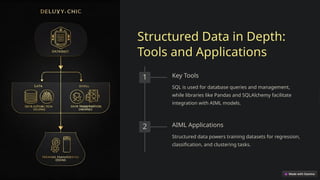
Structured Data in Depth:
Tools and Applications
1 Key Tools
SQL is used for database queries and management,
while libraries like Pandas and SQLAlchemy facilitate
integration with AIML models.
2 AIML Applications
Structured data powers training datasets for regression,
classification, and clustering tasks.
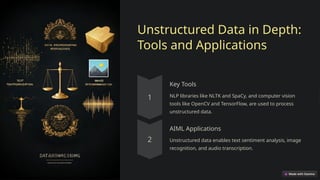
Unstructured Data in Depth:
Tools and Applications
Key Tools
NLP libraries like NLTK and SpaCy, and computer vision
tools like OpenCV and TensorFlow, are used to process
unstructured data.
AIML Applications
Unstructured data enables text sentiment analysis, image
recognition, and audio transcription.
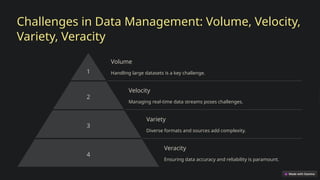
Challenges in Data Management: Volume, Velocity,
Variety, Veracity
1
Volume
Handling large datasets is a key challenge.
2
Velocity
Managing real-time data streams poses challenges.
3
Variety
Diverse formats and sources add complexity.
4
Veracity
Ensuring data accuracy and reliability is paramount.
Future Trends in Data Utilization: Growth,
Innovation, and Opportunity
1
Growth of IoT
The rise of the Internet of Things (IoT) significantly increases data generation.
2
AIML Advancements
New tools are being developed to effectively process unstructured data.
3
Real-Time Processing
Algorithms are evolving to handle real-time data streams
efficiently.
Conclusion: Harnessing
Data for Impact
1
Data Diversity
The Internet contains both
structured and unstructured data.
2
AIML Applications
Leverage structured data for
traditional tasks and unstructured
data for innovation.

Data-Formats-An-Introduction-for-AIML.pptx

  • 1.
    Data Formats: An Introductionfor AIML Welcome to this exploration of data formats in the context of Artificial Intelligence and Machine Learning (AIML). This presentation provides a foundation for understanding how structured and unstructured data shapes the field of AIML. by Aryaa Sam
  • 2.
    The Internet: AData-Driven World Global Reach As of January 2018, there were over 4.021 billion Internet users worldwide. Diverse Data Sources Data is generated by humans and non-human sources, including sensors, automated systems, and devices.
  • 3.
    Structured Data: Orderand Organization 1 Defined Structure Data is organized in a pre- defined format, often associated with Relational Database Management Systems (RDBMS). 2 Typical Examples Flight/train reservations, banking systems, and inventory controls leverage structured data.
  • 4.
    Unstructured Data: The UnboundFormat Variety of Sources Human-generated data includes text, emails, videos, images, and social media posts. Machine-Generated Data Machine-generated data encompasses sensor data, satellite imagery, and surveillance videos.
  • 5.
    Data Formats inAIML: Understanding the Relevance Structured Data Structured data forms the foundation for supervised learning models, enabling the creation of datasets for predictive modeling. Unstructured Data Unstructured data is crucial for natural language processing (NLP), computer vision, and audio analysis in AIML.
  • 6.
    Structured Data inDepth: Tools and Applications 1 Key Tools SQL is used for database queries and management, while libraries like Pandas and SQLAlchemy facilitate integration with AIML models. 2 AIML Applications Structured data powers training datasets for regression, classification, and clustering tasks.
  • 7.
    Unstructured Data inDepth: Tools and Applications Key Tools NLP libraries like NLTK and SpaCy, and computer vision tools like OpenCV and TensorFlow, are used to process unstructured data. AIML Applications Unstructured data enables text sentiment analysis, image recognition, and audio transcription.
  • 8.
    Challenges in DataManagement: Volume, Velocity, Variety, Veracity 1 Volume Handling large datasets is a key challenge. 2 Velocity Managing real-time data streams poses challenges. 3 Variety Diverse formats and sources add complexity. 4 Veracity Ensuring data accuracy and reliability is paramount.
  • 9.
    Future Trends inData Utilization: Growth, Innovation, and Opportunity 1 Growth of IoT The rise of the Internet of Things (IoT) significantly increases data generation. 2 AIML Advancements New tools are being developed to effectively process unstructured data. 3 Real-Time Processing Algorithms are evolving to handle real-time data streams efficiently.
  • 10.
    Conclusion: Harnessing Data forImpact 1 Data Diversity The Internet contains both structured and unstructured data. 2 AIML Applications Leverage structured data for traditional tasks and unstructured data for innovation.