DATA ENCRYPTION STANDARD
(DES)
Outline
• History
• Encryption
• Key Generation
• Decryption
• Strength of DES
• Ultimate
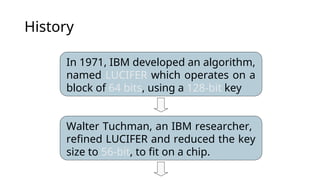
History
In 1971, IBM developed an algorithm,
named LUCIFER which operates on a
block of 64 bits, using a 128-bit key
Walter Tuchman, an IBM researcher,
refined LUCIFER and reduced the key
size to 56-bit, to fit on a chip.
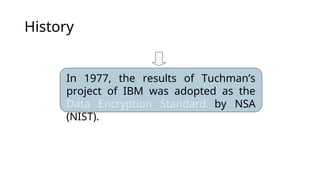
History
In 1977, the results of Tuchman’s
project of IBM was adopted as the
Data Encryption Standard by NSA
(NIST).
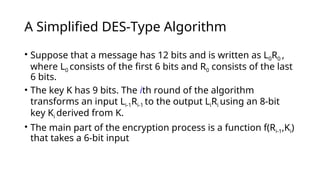
A Simplified DES-Type Algorithm
• Suppose that a message has 12 bits and is written as L0R0 ,
where L0 consists of the first 6 bits and R0 consists of the last
6 bits.
• The key K has 9 bits. The ith round of the algorithm
transforms an input Li-1Ri-1 to the output LiRi using an 8-bit
key Ki derived from K.
• The main part of the encryption process is a function f(Ri-1,Ki)
that takes a 6-bit input
Ri-1 and an 8-bit input Ki and produces a 6-bit
output which will be described later.
The output of the ith round is defined as:
Li = Ri-1 and Ri = Li-1 XOR f(Ri-1,Ki)
The decryption is the reverse of encryption.
[Ln] [Rn XOR f(Ln, Kn)] = … =[Rn-1] [Ln-1]
The Operations of f Function
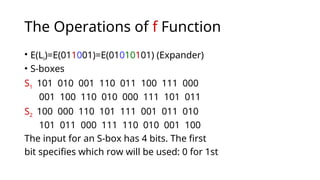
• E(Li)=E(011001)=E(01010101) (Expander)
• S-boxes
S1 101 010 001 110 011 100 111 000
001 100 110 010 000 111 101 011
S2 100 000 110 101 111 001 011 010
101 011 000 111 110 010 001 100
The input for an S-box has 4 bits. The first
bit specifies which row will be used: 0 for 1st
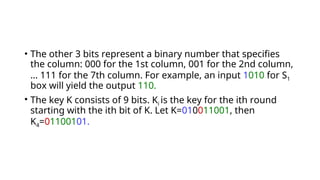
• The other 3 bits represent a binary number that specifies
the column: 000 for the 1st column, 001 for the 2nd column,
… 111 for the 7th column. For example, an input 1010 for S1
box will yield the output 110.
• The key K consists of 9 bits. Ki is the key for the ith round
starting with the ith bit of K. Let K=010011001, then
K4=01100101.
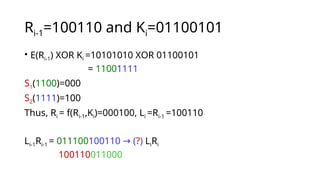
Ri-1=100110 and Ki=01100101
• E(Ri-1) XOR Ki =10101010 XOR 01100101
= 11001111
S1(1100)=000
S2(1111)=100
Thus, Ri = f(Ri-1,Ki)=000100, Li =Ri-1 =100110
Li-1Ri-1 = 011100100110 (
→ ?) LiRi
100110011000
Encryption
[
1
]
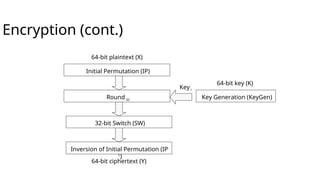
Encryption (cont.)
Inversion of Initial Permutation (IP-
1
)
Key i
64-bit plaintext (X)
32-bit Switch (SW)
Initial Permutation (IP)
Round (i)
64-bit ciphertext (Y)
Key Generation (KeyGen)
64-bit key (K)
Encryption (cont.)
1
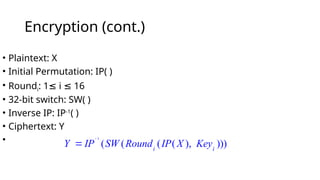
( ( ( ( ), )))
i i
Y IP SW Round IP X Key


• Plaintext: X
• Initial Permutation: IP( )
• Roundi: 1 i 16
≤ ≤
• 32-bit switch: SW( )
• Inverse IP: IP-1
( )
• Ciphertext: Y
•
Encryption (IP, IP-1
)
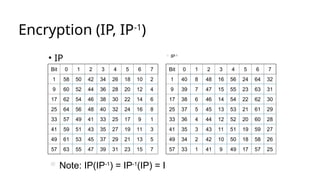
Bit 0 1 2 3 4 5 6 7
1 58 50 42 34 26 18 10 2
9 60 52 44 36 28 20 12 4
17 62 54 46 38 30 22 14 6
25 64 56 48 40 32 24 16 8
33 57 49 41 33 25 17 9 1
41 59 51 43 35 27 19 11 3
49 61 53 45 37 29 21 13 5
57 63 55 47 39 31 23 15 7
• IP
Bit 0 1 2 3 4 5 6 7
1 40 8 48 16 56 24 64 32
9 39 7 47 15 55 23 63 31
17 38 6 46 14 54 22 62 30
25 37 5 45 13 53 21 61 29
33 36 4 44 12 52 20 60 28
41 35 3 43 11 51 19 59 27
49 34 2 42 10 50 18 58 26
57 33 1 41 9 49 17 57 25
 IP-1
 Note: IP(IP-1
) = IP-1
(IP) = I
Encryption (Round)
[
1
(Key
Generation)
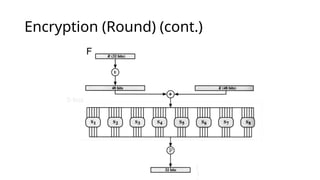
Encryption (Round) (cont.)
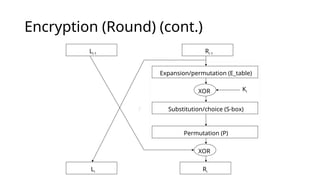
Li
Permutation (P)
Expansion/permutation (E_table)
Substitution/choice (S-box)
XOR
Ri
Li-1 Ri-1
XOR Ki
F
Encryption (Round) (cont.)
F
S-box
[
1
Encryption (Round) (cont.)
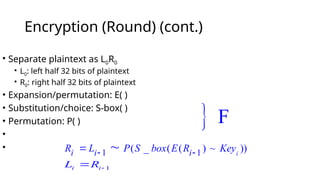
 F
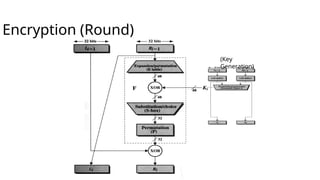
• Separate plaintext as L0R0
• L0: left half 32 bits of plaintext
• R0: right half 32 bits of plaintext
• Expansion/permutation: E( )
• Substitution/choice: S-box( )
• Permutation: P( )
•
•
1 1
( _ ( ( ) ~ ))
~ i
i i i
R L P S box E R Key
 

1
i i
L R 

Encryption (Round) (cont.)
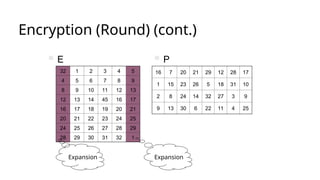
32 1 2 3 4 5
4 5 6 7 8 9
8 9 10 11 12 13
12 13 14 45 16 17
16 17 18 19 20 21
20 21 22 23 24 25
24 25 26 27 28 29
28 29 30 31 32 1
16 7 20 21 29 12 28 17
1 15 23 26 5 18 31 10
2 8 24 14 32 27 3 9
9 13 30 6 22 11 4 25
 E  P
Expansion
Expansion
Encryption (Round) (cont.)
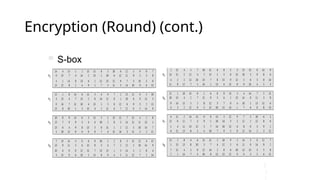
 S-box
[
1
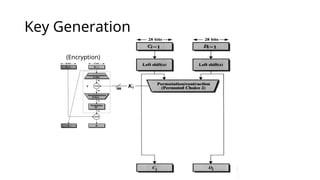
Key Generation
[
1
(Encryption)
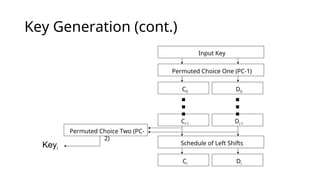
Key Generation (cont.)
D0
C0
Input Key
Permuted Choice One (PC-1)
Permuted Choice Two (PC-
2)
Schedule of Left Shifts
Di-1
Ci-1
Di
Ci
▪
▪
▪
▪
▪
▪
Keyi
Key Generation (cont.)
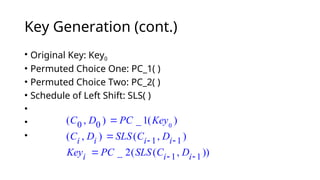
• Original Key: Key0
• Permuted Choice One: PC_1( )
• Permuted Choice Two: PC_2( )
• Schedule of Left Shift: SLS( )
•
•
•
0
0 0
( , ) _ 1( )
C D PC Key

1 1
( , ) ( , )
i i i i
C D SLS C D
 

1 1
_ 2( ( , ))
i i i
Key PC SLS C D
 

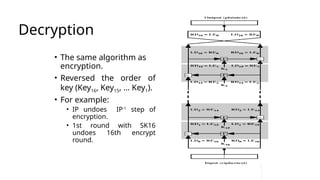
Decryption
• The same algorithm as
encryption.
• Reversed the order of
key (Key16, Key15, … Key1).
• For example:
• IP undoes IP-1
step of
encryption.
• 1st round with SK16
undoes 16th encrypt
round.
[
1
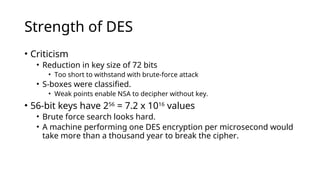
Strength of DES
• Criticism
• Reduction in key size of 72 bits
• Too short to withstand with brute-force attack
• S-boxes were classified.
• Weak points enable NSA to decipher without key.
• 56-bit keys have 256
= 7.2 x 10¹⁶
values
• Brute force search looks hard.
• A machine performing one DES encryption per microsecond would
take more than a thousand year to break the cipher.
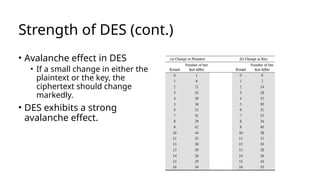
Strength of DES (cont.)
• Avalanche effect in DES
• If a small change in either the
plaintext or the key, the
ciphertext should change
markedly.
• DES exhibits a strong
avalanche effect.
Ultimate
• DES was proved insecure
• In 1997 on Internet in a few months
• in 1998 on dedicated h/w (EFF) in a few days
• In 1999 above combined in 22hrs!
References
• [1] William Stallings, Cryptography and
Network Security, 1999.

DATA ENCRYPTION STANDARD (DES) / lucifer

  • 1.
  • 2.
    Outline • History • Encryption •Key Generation • Decryption • Strength of DES • Ultimate
  • 3.
    History In 1971, IBMdeveloped an algorithm, named LUCIFER which operates on a block of 64 bits, using a 128-bit key Walter Tuchman, an IBM researcher, refined LUCIFER and reduced the key size to 56-bit, to fit on a chip.
  • 4.
    History In 1977, theresults of Tuchman’s project of IBM was adopted as the Data Encryption Standard by NSA (NIST).
  • 5.
    A Simplified DES-TypeAlgorithm • Suppose that a message has 12 bits and is written as L0R0 , where L0 consists of the first 6 bits and R0 consists of the last 6 bits. • The key K has 9 bits. The ith round of the algorithm transforms an input Li-1Ri-1 to the output LiRi using an 8-bit key Ki derived from K. • The main part of the encryption process is a function f(Ri-1,Ki) that takes a 6-bit input
  • 6.
    Ri-1 and an8-bit input Ki and produces a 6-bit output which will be described later. The output of the ith round is defined as: Li = Ri-1 and Ri = Li-1 XOR f(Ri-1,Ki) The decryption is the reverse of encryption. [Ln] [Rn XOR f(Ln, Kn)] = … =[Rn-1] [Ln-1]
  • 7.
    The Operations off Function • E(Li)=E(011001)=E(01010101) (Expander) • S-boxes S1 101 010 001 110 011 100 111 000 001 100 110 010 000 111 101 011 S2 100 000 110 101 111 001 011 010 101 011 000 111 110 010 001 100 The input for an S-box has 4 bits. The first bit specifies which row will be used: 0 for 1st
  • 8.
    • The other3 bits represent a binary number that specifies the column: 000 for the 1st column, 001 for the 2nd column, … 111 for the 7th column. For example, an input 1010 for S1 box will yield the output 110. • The key K consists of 9 bits. Ki is the key for the ith round starting with the ith bit of K. Let K=010011001, then K4=01100101.
  • 9.
    Ri-1=100110 and Ki=01100101 •E(Ri-1) XOR Ki =10101010 XOR 01100101 = 11001111 S1(1100)=000 S2(1111)=100 Thus, Ri = f(Ri-1,Ki)=000100, Li =Ri-1 =100110 Li-1Ri-1 = 011100100110 ( → ?) LiRi 100110011000
  • 10.
  • 11.
    Encryption (cont.) Inversion ofInitial Permutation (IP- 1 ) Key i 64-bit plaintext (X) 32-bit Switch (SW) Initial Permutation (IP) Round (i) 64-bit ciphertext (Y) Key Generation (KeyGen) 64-bit key (K)
  • 12.
    Encryption (cont.) 1 ( (( ( ), ))) i i Y IP SW Round IP X Key   • Plaintext: X • Initial Permutation: IP( ) • Roundi: 1 i 16 ≤ ≤ • 32-bit switch: SW( ) • Inverse IP: IP-1 ( ) • Ciphertext: Y •
  • 13.
    Encryption (IP, IP-1 ) Bit0 1 2 3 4 5 6 7 1 58 50 42 34 26 18 10 2 9 60 52 44 36 28 20 12 4 17 62 54 46 38 30 22 14 6 25 64 56 48 40 32 24 16 8 33 57 49 41 33 25 17 9 1 41 59 51 43 35 27 19 11 3 49 61 53 45 37 29 21 13 5 57 63 55 47 39 31 23 15 7 • IP Bit 0 1 2 3 4 5 6 7 1 40 8 48 16 56 24 64 32 9 39 7 47 15 55 23 63 31 17 38 6 46 14 54 22 62 30 25 37 5 45 13 53 21 61 29 33 36 4 44 12 52 20 60 28 41 35 3 43 11 51 19 59 27 49 34 2 42 10 50 18 58 26 57 33 1 41 9 49 17 57 25  IP-1  Note: IP(IP-1 ) = IP-1 (IP) = I
  • 14.
  • 15.
    Encryption (Round) (cont.) Li Permutation(P) Expansion/permutation (E_table) Substitution/choice (S-box) XOR Ri Li-1 Ri-1 XOR Ki F
  • 16.
  • 17.
    Encryption (Round) (cont.) F • Separate plaintext as L0R0 • L0: left half 32 bits of plaintext • R0: right half 32 bits of plaintext • Expansion/permutation: E( ) • Substitution/choice: S-box( ) • Permutation: P( ) • • 1 1 ( _ ( ( ) ~ )) ~ i i i i R L P S box E R Key    1 i i L R  
  • 18.
    Encryption (Round) (cont.) 321 2 3 4 5 4 5 6 7 8 9 8 9 10 11 12 13 12 13 14 45 16 17 16 17 18 19 20 21 20 21 22 23 24 25 24 25 26 27 28 29 28 29 30 31 32 1 16 7 20 21 29 12 28 17 1 15 23 26 5 18 31 10 2 8 24 14 32 27 3 9 9 13 30 6 22 11 4 25  E  P Expansion Expansion
  • 19.
  • 20.
  • 21.
    Key Generation (cont.) D0 C0 InputKey Permuted Choice One (PC-1) Permuted Choice Two (PC- 2) Schedule of Left Shifts Di-1 Ci-1 Di Ci ▪ ▪ ▪ ▪ ▪ ▪ Keyi
  • 22.
    Key Generation (cont.) •Original Key: Key0 • Permuted Choice One: PC_1( ) • Permuted Choice Two: PC_2( ) • Schedule of Left Shift: SLS( ) • • • 0 0 0 ( , ) _ 1( ) C D PC Key  1 1 ( , ) ( , ) i i i i C D SLS C D    1 1 _ 2( ( , )) i i i Key PC SLS C D   
  • 23.
    Decryption • The samealgorithm as encryption. • Reversed the order of key (Key16, Key15, … Key1). • For example: • IP undoes IP-1 step of encryption. • 1st round with SK16 undoes 16th encrypt round. [ 1
  • 24.
    Strength of DES •Criticism • Reduction in key size of 72 bits • Too short to withstand with brute-force attack • S-boxes were classified. • Weak points enable NSA to decipher without key. • 56-bit keys have 256 = 7.2 x 10¹⁶ values • Brute force search looks hard. • A machine performing one DES encryption per microsecond would take more than a thousand year to break the cipher.
  • 25.
    Strength of DES(cont.) • Avalanche effect in DES • If a small change in either the plaintext or the key, the ciphertext should change markedly. • DES exhibits a strong avalanche effect.
  • 26.
    Ultimate • DES wasproved insecure • In 1997 on Internet in a few months • in 1998 on dedicated h/w (EFF) in a few days • In 1999 above combined in 22hrs!
  • 27.
    References • [1] WilliamStallings, Cryptography and Network Security, 1999.