Data Classification: Definition,
Examples, and More
What is Data Classification?
Data classi๏ฌcation is de๏ฌned as the process by which structured and unstructured data
from various documents is segregated into categories de๏ฌned on the basis of ๏ฌle size,
type, source, location, content, and more.
Data classi๏ฌcation enables organizations to segregate their existing database into
multiple subsections making it easier to view the data and improve searchability, much
like the windows group by action.
4 types of data classification
Public Access Data: As the name suggests, low-sensitivity information is freely
available to anyone.
Internal Data: has restricted access and can be used only by that granted access, like
employees of a company.
Confidential Data: is moderately sensitive information, restricted to additional
authorization, and is accessible to specific members of staff and authorized third
parties. Misuse of this data can severely harm the company or individuals.
Data with Restricted Access: is susceptible and is used only with express clearance.
If compromised, such data can cause the company or individuals, or assets damage
beyond repair.
Types of data classi๏ฌcation based on data reliability
There are three broad standard types of Data Classification based on data
reliability and confidentiality.
Content: where data is read, decoded, and sorted according to sensitivity.
Context: wherein the location, creation, metadata, or application of the information
reveals its sensitivity
User: where the user applies the knowledge of the sensitivity of the data to classify
information at the time of creation, review, editing, or broadcasting
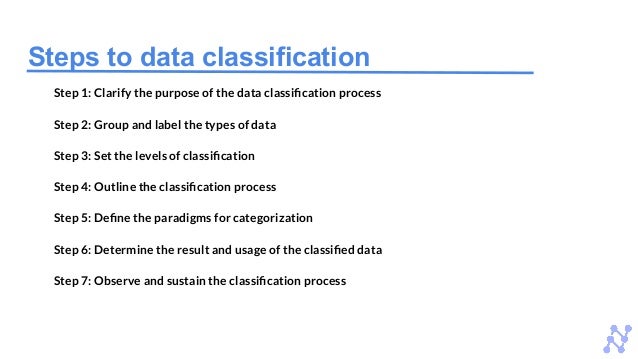
Steps to data classification
Step 1: Clarify the purpose of the data classi๏ฌcation process
Step 2: Group and label the types of data
Step 3: Set the levels of classi๏ฌcation
Step 4: Outline the classi๏ฌcation process
Step 5: De๏ฌne the paradigms for categorization
Step 6: Determine the result and usage of the classi๏ฌed data
Step 7: Observe and sustain the classi๏ฌcation process
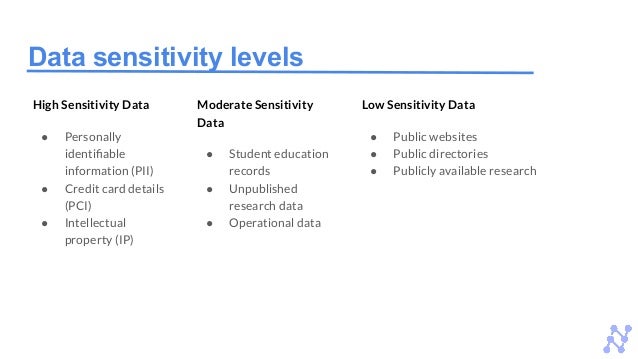
Data sensitivity levels
High Sensitivity Data
โ— Personally
identi๏ฌable
information (PII)
โ— Credit card details
(PCI)
โ— Intellectual
property (IP)
Moderate Sensitivity
Data
โ— Student education
records
โ— Unpublished
research data
โ— Operational data
Low Sensitivity Data
โ— Public websites
โ— Public directories
โ— Publicly available research
Data Classification is an essential aspect of a companyโ€™s data security protocol. It
helps you identify sensitive data and who has access to it so that you can protect it.
โ— Knowledge of the privacy laws and compliance regulations applicable to your
business, will help you chart the best data classification strategy
โ— Beginning with a reasonable scope and clearly defined models
โ— Employing automated tools to process large amounts of data in the shortest
time
โ— Renewing and adjusting classification rules when the need arises
Best practices in data classification
What makes an effective Data Classi๏ฌcation Tool?
While selecting your data classification tools, keep the following pointers in mind.
Files Supported by the tool: If the scope of the data classification tool is small
and it cannot support a file type, some data may be unprotected, and you may lose
it.
Cloud Storage: Ensure that your data classification tool has multiple online and
offline storage units to ensure you're online 24x7.
Speed and Accuracy requirements: If you opt for high accuracy classification,
you will lose speed. On the other hand, if the data is processed quickly, it will lack
accuracy.
Learn more about Data Classi๏ฌcation
https://nanonets.com/blog/data-classi๏ฌcation/

Data Classification Guide | Nanonets Blog.pdf

  • 1.
  • 2.
    What is DataClassification? Data classi๏ฌcation is de๏ฌned as the process by which structured and unstructured data from various documents is segregated into categories de๏ฌned on the basis of ๏ฌle size, type, source, location, content, and more. Data classi๏ฌcation enables organizations to segregate their existing database into multiple subsections making it easier to view the data and improve searchability, much like the windows group by action.
  • 3.
    4 types ofdata classification Public Access Data: As the name suggests, low-sensitivity information is freely available to anyone. Internal Data: has restricted access and can be used only by that granted access, like employees of a company. Confidential Data: is moderately sensitive information, restricted to additional authorization, and is accessible to specific members of staff and authorized third parties. Misuse of this data can severely harm the company or individuals. Data with Restricted Access: is susceptible and is used only with express clearance. If compromised, such data can cause the company or individuals, or assets damage beyond repair.
  • 4.
    Types of dataclassi๏ฌcation based on data reliability There are three broad standard types of Data Classification based on data reliability and confidentiality. Content: where data is read, decoded, and sorted according to sensitivity. Context: wherein the location, creation, metadata, or application of the information reveals its sensitivity User: where the user applies the knowledge of the sensitivity of the data to classify information at the time of creation, review, editing, or broadcasting
  • 5.
    Steps to dataclassification Step 1: Clarify the purpose of the data classi๏ฌcation process Step 2: Group and label the types of data Step 3: Set the levels of classi๏ฌcation Step 4: Outline the classi๏ฌcation process Step 5: De๏ฌne the paradigms for categorization Step 6: Determine the result and usage of the classi๏ฌed data Step 7: Observe and sustain the classi๏ฌcation process
  • 6.
    Data sensitivity levels HighSensitivity Data โ— Personally identi๏ฌable information (PII) โ— Credit card details (PCI) โ— Intellectual property (IP) Moderate Sensitivity Data โ— Student education records โ— Unpublished research data โ— Operational data Low Sensitivity Data โ— Public websites โ— Public directories โ— Publicly available research
  • 7.
    Data Classification isan essential aspect of a companyโ€™s data security protocol. It helps you identify sensitive data and who has access to it so that you can protect it. โ— Knowledge of the privacy laws and compliance regulations applicable to your business, will help you chart the best data classification strategy โ— Beginning with a reasonable scope and clearly defined models โ— Employing automated tools to process large amounts of data in the shortest time โ— Renewing and adjusting classification rules when the need arises Best practices in data classification
  • 8.
    What makes aneffective Data Classi๏ฌcation Tool? While selecting your data classification tools, keep the following pointers in mind. Files Supported by the tool: If the scope of the data classification tool is small and it cannot support a file type, some data may be unprotected, and you may lose it. Cloud Storage: Ensure that your data classification tool has multiple online and offline storage units to ensure you're online 24x7. Speed and Accuracy requirements: If you opt for high accuracy classification, you will lose speed. On the other hand, if the data is processed quickly, it will lack accuracy.
  • 9.
    Learn more aboutData Classi๏ฌcation https://nanonets.com/blog/data-classi๏ฌcation/