Performance Budgeting : Lessons and Challenges from Korea 
Jangro LEE 
Ministry of Strategy and Finance 
2014. 11. 24.
1. Overview of Performance Budgeting in Korea 
2. Lessons and Challenges from Korea 
T able of contents 
1) Structure 
2) History 
3) Background 
1) Lessons 
2) Challenges
A dual-track approach to performance management frameworks : 
Government Performance Assessment and Performance Budgeting 
Gov’t Performance Assessment vs. Performance Budgeting 
Gov’t Performance Evaluation 
Performance Budgeting 
Legal Framework 
Gov’t Performance Evaluation Act 
National Finance Act 
Entity in Charge 
Prime Minister’s Office 
Ministry of Strategy and Finance 
Target Programs 
Policy initiatives of 44 central administrative agencies 
Budgetary programs of 52 central gov’tagencies 
(Legislative, Judiciary and Executive) 
Use and purpose 
▪Applies results to the evaluation of 
organization and personnel performance 
▪ Evaluates budgetary programs and feeds results into budget allocations 
Relations with the National Assembly 
Reporting to related committees 
Obligation to submit 
annual performance plan and report 
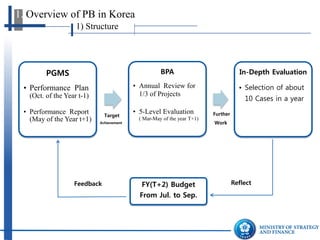
1) Structure 
1. Overview of PB in Korea
Target 
Achievement 
Further 
Work 
PGMS 
•Performance Plan (Oct. of the Year t-1) 
•Performance Report (May of the Year t+1) 
BPA 
•Annual Review for 1/3 of Projects 
•5-Level Evaluation ( Mar-May of the year T+1) 
In-Depth Evaluation 
•Selection of about 10 Cases in a year 
FY(T+2) Budget 
From Jul. to Sep. 
Feedback 
Reflect 
1) Structure 
1. Overview of PB in Korea
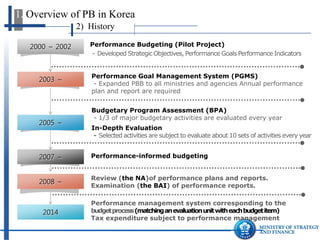
2000 ~ 2002 
2003 ~ 
2005 ~ 
2007 ~ 
Performance Budgeting (Pilot Project) 
- Developed Strategic Objectives, Performance Goals Performance Indicators 
Performance Goal Management System (PGMS) 
- Expanded PBB to all ministries and agencies Annual performance plan and report are required 
Budgetary Program Assessment (BPA) 
- 1/3 of major budgetary activities are evaluated every year 
In-Depth Evaluation 
- Selected activities are subject to evaluate about 10 sets of activities every year 
2014 
Enhaced compatibility by matching performance management and budgeting, and adding tax expenditure to the performance management pool 
2) History 
1. Overview of PB in Korea 
2008 ~ 
Application of performance information to budgeting 
Obligation to submit performance plans and reports to the NA 
Review and Examination of performance plans and reports by the National Assembly and Board of Audit and Inspection
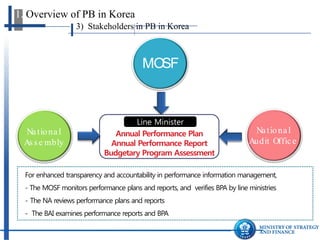
3) Stakeholders in PB in Korea 
1. Overview of PB in Korea 
For enhanced transparency and accountability in performance information management 
- The MOSF monitors performance plans and reports, and verifies BPA by line ministries 
- 
The NA reviews performance plans and reports 
- The BAI examines performance reports , plans and BPA 
Annual Performance Plan 
Annual Performance Report 
Budgetary Program Assessment 
MOSF 
National Assembly 
Board of Audit and Inspection 
Line Ministries
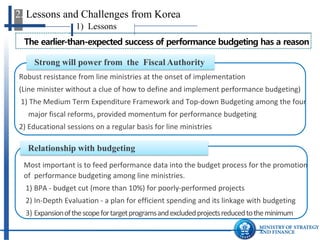
Most important is to feed performance data into the budget process for the promotion of performance budgeting among line ministries. 
1) BPA - budget cut (more than 10%) for poorly-performed projects 
2) In-Depth Evaluation - a plan for efficient spending and its linkage with budgeting 
Robust resistance from line ministries at the onset of implementation 
(Line minister without a clue of how to define and implement performance budgeting) 
1) The Medium Term Expenditure Framework and Top-down Budgeting among the four 
major fiscal reforms, provided momentum for performance budgeting 
2) Educational sessions on a regular basis for line ministries 
Strong will power from the Fiscal Authority 
1) Lessons 
2. Lessons and Challenges from Korea 
The earlier-than-expected success of performance budgeting has a reason 
Linkage with budgeting
2) Challenges 
2. Lessons and Challenges from Korea 
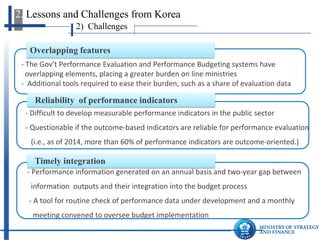
- A time lag between performance output and budget formulation 
- A tool for routine- check of performance data under development 
Timely integration 
- The Gov’t Performance Evaluation and Performance Budgeting systems have 
overlapping elements, placing a greater burden on line ministries 
- Additional tools required to ease their burden, such as a share of evaluation data 
Overlapping features 
- 
Difficult to develop measurable performance indicators in the public sector 
- Questionable if the outcome-based indicators are reliable for performance evaluation 
(i.e., as of 2014, more than 60% of performance indicators are outcome-oriented.) 
Reliability of performance indicators
Thank You

Performance Budgeting: Lessons and Challenges from Korea by Jangro Lee

  • 1.
    Performance Budgeting :Lessons and Challenges from Korea Jangro LEE Ministry of Strategy and Finance 2014. 11. 24.
  • 2.
    1. Overview ofPerformance Budgeting in Korea 2. Lessons and Challenges from Korea T able of contents 1) Structure 2) History 3) Background 1) Lessons 2) Challenges
  • 3.
    A dual-track approachto performance management frameworks : Government Performance Assessment and Performance Budgeting Gov’t Performance Assessment vs. Performance Budgeting Gov’t Performance Evaluation Performance Budgeting Legal Framework Gov’t Performance Evaluation Act National Finance Act Entity in Charge Prime Minister’s Office Ministry of Strategy and Finance Target Programs Policy initiatives of 44 central administrative agencies Budgetary programs of 52 central gov’tagencies (Legislative, Judiciary and Executive) Use and purpose ▪Applies results to the evaluation of organization and personnel performance ▪ Evaluates budgetary programs and feeds results into budget allocations Relations with the National Assembly Reporting to related committees Obligation to submit annual performance plan and report 1) Structure 1. Overview of PB in Korea
  • 4.
    Target Achievement Further Work PGMS •Performance Plan (Oct. of the Year t-1) •Performance Report (May of the Year t+1) BPA •Annual Review for 1/3 of Projects •5-Level Evaluation ( Mar-May of the year T+1) In-Depth Evaluation •Selection of about 10 Cases in a year FY(T+2) Budget From Jul. to Sep. Feedback Reflect 1) Structure 1. Overview of PB in Korea
  • 5.
    2000 ~ 2002 2003 ~ 2005 ~ 2007 ~ Performance Budgeting (Pilot Project) - Developed Strategic Objectives, Performance Goals Performance Indicators Performance Goal Management System (PGMS) - Expanded PBB to all ministries and agencies Annual performance plan and report are required Budgetary Program Assessment (BPA) - 1/3 of major budgetary activities are evaluated every year In-Depth Evaluation - Selected activities are subject to evaluate about 10 sets of activities every year 2014 Enhaced compatibility by matching performance management and budgeting, and adding tax expenditure to the performance management pool 2) History 1. Overview of PB in Korea 2008 ~ Application of performance information to budgeting Obligation to submit performance plans and reports to the NA Review and Examination of performance plans and reports by the National Assembly and Board of Audit and Inspection
  • 6.
    3) Stakeholders inPB in Korea 1. Overview of PB in Korea For enhanced transparency and accountability in performance information management - The MOSF monitors performance plans and reports, and verifies BPA by line ministries - The NA reviews performance plans and reports - The BAI examines performance reports , plans and BPA Annual Performance Plan Annual Performance Report Budgetary Program Assessment MOSF National Assembly Board of Audit and Inspection Line Ministries
  • 7.
    Most important isto feed performance data into the budget process for the promotion of performance budgeting among line ministries. 1) BPA - budget cut (more than 10%) for poorly-performed projects 2) In-Depth Evaluation - a plan for efficient spending and its linkage with budgeting Robust resistance from line ministries at the onset of implementation (Line minister without a clue of how to define and implement performance budgeting) 1) The Medium Term Expenditure Framework and Top-down Budgeting among the four major fiscal reforms, provided momentum for performance budgeting 2) Educational sessions on a regular basis for line ministries Strong will power from the Fiscal Authority 1) Lessons 2. Lessons and Challenges from Korea The earlier-than-expected success of performance budgeting has a reason Linkage with budgeting
  • 8.
    2) Challenges 2.Lessons and Challenges from Korea - A time lag between performance output and budget formulation - A tool for routine- check of performance data under development Timely integration - The Gov’t Performance Evaluation and Performance Budgeting systems have overlapping elements, placing a greater burden on line ministries - Additional tools required to ease their burden, such as a share of evaluation data Overlapping features - Difficult to develop measurable performance indicators in the public sector - Questionable if the outcome-based indicators are reliable for performance evaluation (i.e., as of 2014, more than 60% of performance indicators are outcome-oriented.) Reliability of performance indicators
  • 9.