29 South Harrison Street
Sullivan, Indiana 47882
(812) 691-0652
ceichner@sycamore.indstate.edu
Professional Portfolio
• Introduction
• Education
• Related Courses
• Extra Courses
• Software Skills
• Personal Skills
• Work Experience
• Project Showcase
• References
• Conclusion
Introduction:
I have created this portfolio to provide a more extensive and detailed definition of my skills and
abilities. The detailed documents and informational pages show my experiences in the
Electronic/Computers Technology field accomplished through my academic pursuits. Please,
feel free to review the information contained in this portfolio. If you have any questions,
concerns, or comments I can be reached at (812) 691-0652.
My association with Electronic/Computers Technology and Graphic Design studies has been
obtained through academic studies at Indiana State University and Ivy Tech Community College
and related work experience.
My academic and professional experience at this time include but are not limited to:
•CAD Fundamentals (AutoCAD) •Intro to Solid Modeling (Pro-E)
•Manufacturing and Materials Processes •Industrial Automation and Robotics
•Electronic Fundamentals
I have provided information that demonstrates my knowledge and abilities through educational
and professional experiences, and references.
Education:
B.S. in Electronics/Computers Technology
Indiana State University - College of Technology
Graduate: May 2016
Minor: Advanced Manufacturing Management
GPA 3.75/4.00
Clubs & Organizations
Females in Technology (FIT)
Contact FIT: indstate.fit@gmail.com
A.S. in Electronics/Computers Technology
Ivy Tech Community College – Terre Haute, IN
Graduate: May 2008
Minor: Graphic Design Manufacturing
GPA 3.74/4.00
Related Courses:
ECT 321 A.C. circuit analysis using both time and phasor domains. General
methods of analysis covering nodal voltages and mesh currents. Network
theorems comprising: superposition, Norton's, Thevenin's, Millman's, reciprocity,
and maximum power transfer. Power factor correction in addition to delta to/from
wye transformations.
ECT 324 This course is designed to increase students understanding of transistors,
transistor-based circuits, and applications of transistors as amplifiers. D.C. biasing
of transistors, various transistor-based circuit configurations, and amplification of
A.C. signals will be covered. Students will analyze, design, and build single-stage
and multi-stage transistor-based circuits. Circuit modeling will be used to assist in
the analysis, design, and construction of circuits.
ECT 325 Theory and application of monolithic analog integrated precision circuits
used in performance measurements and programmable-gain amplifiers. The
circuitry is adaptable to D.C. and A.C. performance of operational amplifiers used
as bridges, active and passive filters, choppers, phase-error reduction, and A/D
interfacing.
Related Courses:
ECT 343 Semiconductor pulse circuits and special adaptations found in electronic
circuits. Pulse and switching theory, network theorems, and semiconductor theory
in the operation and analysis of practical working circuits.
ECT 403 Introduces the Hardware Description Language (HDL) for developing,
verifying, and synthesizing designs of digital circuits. CAE tools are used to design
circuits for Application Specific Integrated Circuits (ASICs) and/or Field
Programmable Gate Array (FPGA) implementation.
ECT 421 Applications of derivatives and antiderivatives of polynomial, logarithmic,
exponential, and trigonometric functions to the analysis of electronic circuits
subjected to time varying currents.
Related Courses:
ECT 437 Evaluation of control computers in an industrial environment; the direct
and indirect cost trade-off of implementing a hardwired vs. a programmed
controller. The effect of management decisions on industrial computer applications.
Economics of open and closed systems, software vs. hardware, in-house vs. contract
maintenance, and multi-vendor vs. single vendor systems.
ECT 444 Industrial programmable logic controllers (PLCs), relays, contractors, switches,
time delays, sequencers, timers, ladder diagrams, codes and standards
(NEC, NEMA, etc.)
ECT 448 Industrial electronic circuits and systems, single and three-phase rectification,
current control by SCRs, TRIACs, thyratrons, and magnetic amplifiers. Phase shift,
frequency control, protection circuitry, and heat sinking are developed and integrated
into the systems. Further investigation is included in motors, standards, and control
utilizing programmable logic controllers.
Related Courses:
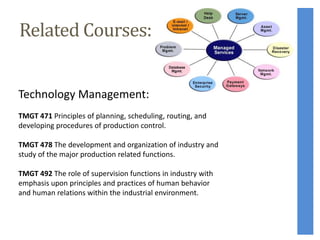
Technology Management:
TMGT 471 Principles of planning, scheduling, routing, and
developing procedures of production control.
TMGT 478 The development and organization of industry and
study of the major production related functions.
TMGT 492 The role of supervision functions in industry with
emphasis upon principles and practices of human behavior
and human relations within the industrial environment.
Extra Courses:
MET 299 – CAD Fundamentals
This course provides an understanding of the practical aspects of a variety of PC CAD software
packages. Emphasis is placed on applying of the software to the student's area of study.
MET203 – Introduction to Solid Modeling
Utilizing Commercial CAD software, the concepts of 3-D graphics are introduced. These
concepts include wire frame transformations and Boolean operations. .
MET 403 – Advanced Computer-Aided Design (CAD) Concepts
In this course, subject matter relevant to CAD in today's industry will be identified. The student
will gain the knowledge necessary to conceptualize the system-user relationship. The
completion of the required learning tasks will ensure the student's comprehension of each
concept. These tasks are arranged in a hierarchy that will build the student's ability to apply the
concepts presented. Students will progress from two-dimensional drafting system to three-
dimensional modeling system.
Software Skills:
AutoCAD
Versions 2008 through 2013
Pro-Engineer 3-D
Version Wildfire 5.0
Microsoft Office Suite Version 2013
Word
Excel
Power Point
Access
Publisher
Personal Skills:
 Internet literate; proficient in Microsoft computer software
applications
 Assertive, self-motivated, goal-oriented, organized, and efficient, with strong work
ethic
 A flexible, cooperative, hard worker, team player and reliable
 A good morale builder with strong verbal communication skills
 Detail oriented
Work Experience:
Current Technology Inc. and Crompton Instruments Franklin Park IL
Supervisor of Direct Current Department January 1984 ~ January 1992
•Electrical assembly with power tools
•Read blueprints and schematic drawings
•Read wiring list
Eagle Test Systems Elk Grove Village IL
Assembler March 1996 ~ March 1997
•Assembler circuit boards from blue prints
•Read schematics and wiring lists
•Worked closely with electrical engineers
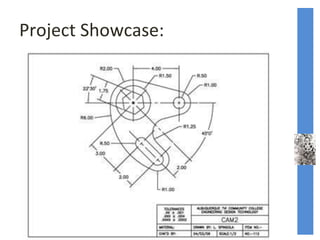
Project Showcase:
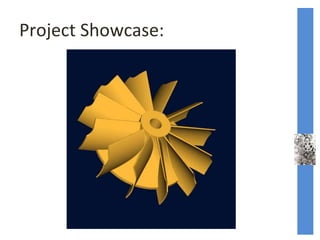
Project Showcase:
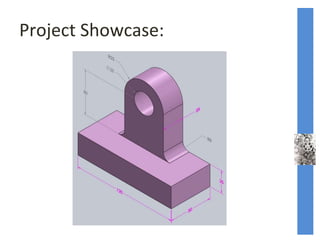
Project Showcase:
References:
Professional Personal
Malcolm Harmless
(812) 298-2336
8000 S. Education Dr.
Terre Haute, IN 47802
Ginger Campbell
(217) 246-6266
940 N County Rd. 1525 E.
Camargo, IL 61919
Jerry Southern
(812) 878-1022
201 N 6th Street
Terre Haute, IN 47809
Cynthia Pepin
(773) 930-2659
1244 W. Newport
Chicago, IL 60657
Donna Downey
(812) 691-2680
29 W. Broadway St.
Shelburn, IN 47879
Susie Johnston
(812) 607-0458
112 W. Griffith St.
Shelburn, IN 47879
Conclusion:
Thank you for reviewing my portfolio and taking the time to review my information.
My skills, education and previous work history were described. I anticipate the
opportunity to talk with you in more detail regarding employment.
I look forward to hearing from you.
Cynthia L Eichner
(812) 691-0652
ceichner@sycamore.indstate.edu

Cynthia Professional Prortfolio

  • 1.
    29 South HarrisonStreet Sullivan, Indiana 47882 (812) 691-0652 ceichner@sycamore.indstate.edu Professional Portfolio
  • 2.
    • Introduction • Education •Related Courses • Extra Courses • Software Skills • Personal Skills • Work Experience • Project Showcase • References • Conclusion
  • 3.
    Introduction: I have createdthis portfolio to provide a more extensive and detailed definition of my skills and abilities. The detailed documents and informational pages show my experiences in the Electronic/Computers Technology field accomplished through my academic pursuits. Please, feel free to review the information contained in this portfolio. If you have any questions, concerns, or comments I can be reached at (812) 691-0652. My association with Electronic/Computers Technology and Graphic Design studies has been obtained through academic studies at Indiana State University and Ivy Tech Community College and related work experience. My academic and professional experience at this time include but are not limited to: •CAD Fundamentals (AutoCAD) •Intro to Solid Modeling (Pro-E) •Manufacturing and Materials Processes •Industrial Automation and Robotics •Electronic Fundamentals I have provided information that demonstrates my knowledge and abilities through educational and professional experiences, and references.
  • 4.
    Education: B.S. in Electronics/ComputersTechnology Indiana State University - College of Technology Graduate: May 2016 Minor: Advanced Manufacturing Management GPA 3.75/4.00 Clubs & Organizations Females in Technology (FIT) Contact FIT: indstate.fit@gmail.com A.S. in Electronics/Computers Technology Ivy Tech Community College – Terre Haute, IN Graduate: May 2008 Minor: Graphic Design Manufacturing GPA 3.74/4.00
  • 5.
    Related Courses: ECT 321A.C. circuit analysis using both time and phasor domains. General methods of analysis covering nodal voltages and mesh currents. Network theorems comprising: superposition, Norton's, Thevenin's, Millman's, reciprocity, and maximum power transfer. Power factor correction in addition to delta to/from wye transformations. ECT 324 This course is designed to increase students understanding of transistors, transistor-based circuits, and applications of transistors as amplifiers. D.C. biasing of transistors, various transistor-based circuit configurations, and amplification of A.C. signals will be covered. Students will analyze, design, and build single-stage and multi-stage transistor-based circuits. Circuit modeling will be used to assist in the analysis, design, and construction of circuits. ECT 325 Theory and application of monolithic analog integrated precision circuits used in performance measurements and programmable-gain amplifiers. The circuitry is adaptable to D.C. and A.C. performance of operational amplifiers used as bridges, active and passive filters, choppers, phase-error reduction, and A/D interfacing.
  • 6.
    Related Courses: ECT 343Semiconductor pulse circuits and special adaptations found in electronic circuits. Pulse and switching theory, network theorems, and semiconductor theory in the operation and analysis of practical working circuits. ECT 403 Introduces the Hardware Description Language (HDL) for developing, verifying, and synthesizing designs of digital circuits. CAE tools are used to design circuits for Application Specific Integrated Circuits (ASICs) and/or Field Programmable Gate Array (FPGA) implementation. ECT 421 Applications of derivatives and antiderivatives of polynomial, logarithmic, exponential, and trigonometric functions to the analysis of electronic circuits subjected to time varying currents.
  • 7.
    Related Courses: ECT 437Evaluation of control computers in an industrial environment; the direct and indirect cost trade-off of implementing a hardwired vs. a programmed controller. The effect of management decisions on industrial computer applications. Economics of open and closed systems, software vs. hardware, in-house vs. contract maintenance, and multi-vendor vs. single vendor systems. ECT 444 Industrial programmable logic controllers (PLCs), relays, contractors, switches, time delays, sequencers, timers, ladder diagrams, codes and standards (NEC, NEMA, etc.) ECT 448 Industrial electronic circuits and systems, single and three-phase rectification, current control by SCRs, TRIACs, thyratrons, and magnetic amplifiers. Phase shift, frequency control, protection circuitry, and heat sinking are developed and integrated into the systems. Further investigation is included in motors, standards, and control utilizing programmable logic controllers.
  • 8.
    Related Courses: Technology Management: TMGT471 Principles of planning, scheduling, routing, and developing procedures of production control. TMGT 478 The development and organization of industry and study of the major production related functions. TMGT 492 The role of supervision functions in industry with emphasis upon principles and practices of human behavior and human relations within the industrial environment.
  • 9.
    Extra Courses: MET 299– CAD Fundamentals This course provides an understanding of the practical aspects of a variety of PC CAD software packages. Emphasis is placed on applying of the software to the student's area of study. MET203 – Introduction to Solid Modeling Utilizing Commercial CAD software, the concepts of 3-D graphics are introduced. These concepts include wire frame transformations and Boolean operations. . MET 403 – Advanced Computer-Aided Design (CAD) Concepts In this course, subject matter relevant to CAD in today's industry will be identified. The student will gain the knowledge necessary to conceptualize the system-user relationship. The completion of the required learning tasks will ensure the student's comprehension of each concept. These tasks are arranged in a hierarchy that will build the student's ability to apply the concepts presented. Students will progress from two-dimensional drafting system to three- dimensional modeling system.
  • 10.
    Software Skills: AutoCAD Versions 2008through 2013 Pro-Engineer 3-D Version Wildfire 5.0 Microsoft Office Suite Version 2013 Word Excel Power Point Access Publisher
  • 11.
    Personal Skills:  Internetliterate; proficient in Microsoft computer software applications  Assertive, self-motivated, goal-oriented, organized, and efficient, with strong work ethic  A flexible, cooperative, hard worker, team player and reliable  A good morale builder with strong verbal communication skills  Detail oriented
  • 12.
    Work Experience: Current TechnologyInc. and Crompton Instruments Franklin Park IL Supervisor of Direct Current Department January 1984 ~ January 1992 •Electrical assembly with power tools •Read blueprints and schematic drawings •Read wiring list Eagle Test Systems Elk Grove Village IL Assembler March 1996 ~ March 1997 •Assembler circuit boards from blue prints •Read schematics and wiring lists •Worked closely with electrical engineers
  • 13.
  • 14.
  • 15.
  • 16.
    References: Professional Personal Malcolm Harmless (812)298-2336 8000 S. Education Dr. Terre Haute, IN 47802 Ginger Campbell (217) 246-6266 940 N County Rd. 1525 E. Camargo, IL 61919 Jerry Southern (812) 878-1022 201 N 6th Street Terre Haute, IN 47809 Cynthia Pepin (773) 930-2659 1244 W. Newport Chicago, IL 60657 Donna Downey (812) 691-2680 29 W. Broadway St. Shelburn, IN 47879 Susie Johnston (812) 607-0458 112 W. Griffith St. Shelburn, IN 47879
  • 17.
    Conclusion: Thank you forreviewing my portfolio and taking the time to review my information. My skills, education and previous work history were described. I anticipate the opportunity to talk with you in more detail regarding employment. I look forward to hearing from you. Cynthia L Eichner (812) 691-0652 ceichner@sycamore.indstate.edu