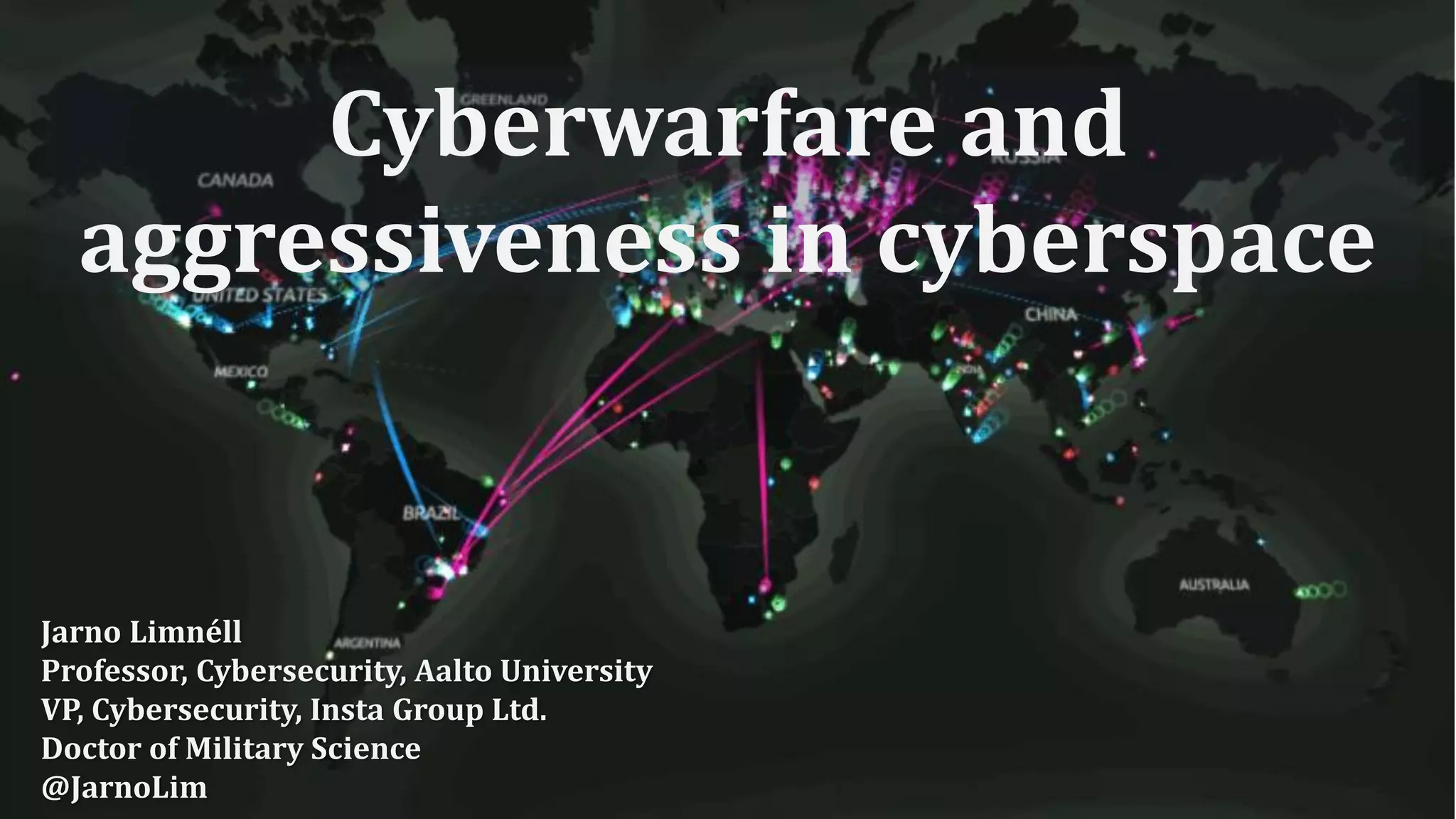

Cyberwarfare and
aggressiveness in cyberspace
Jarno Limnéll
Professor, Cybersecurity, Aalto University
VP, Cybersecurity, Insta Group Ltd.
Doctor of Military Science
@JarnoLim
New Normal in Security:
Speed of Change
Unpredictable Instability
Digital-Physical Complexity
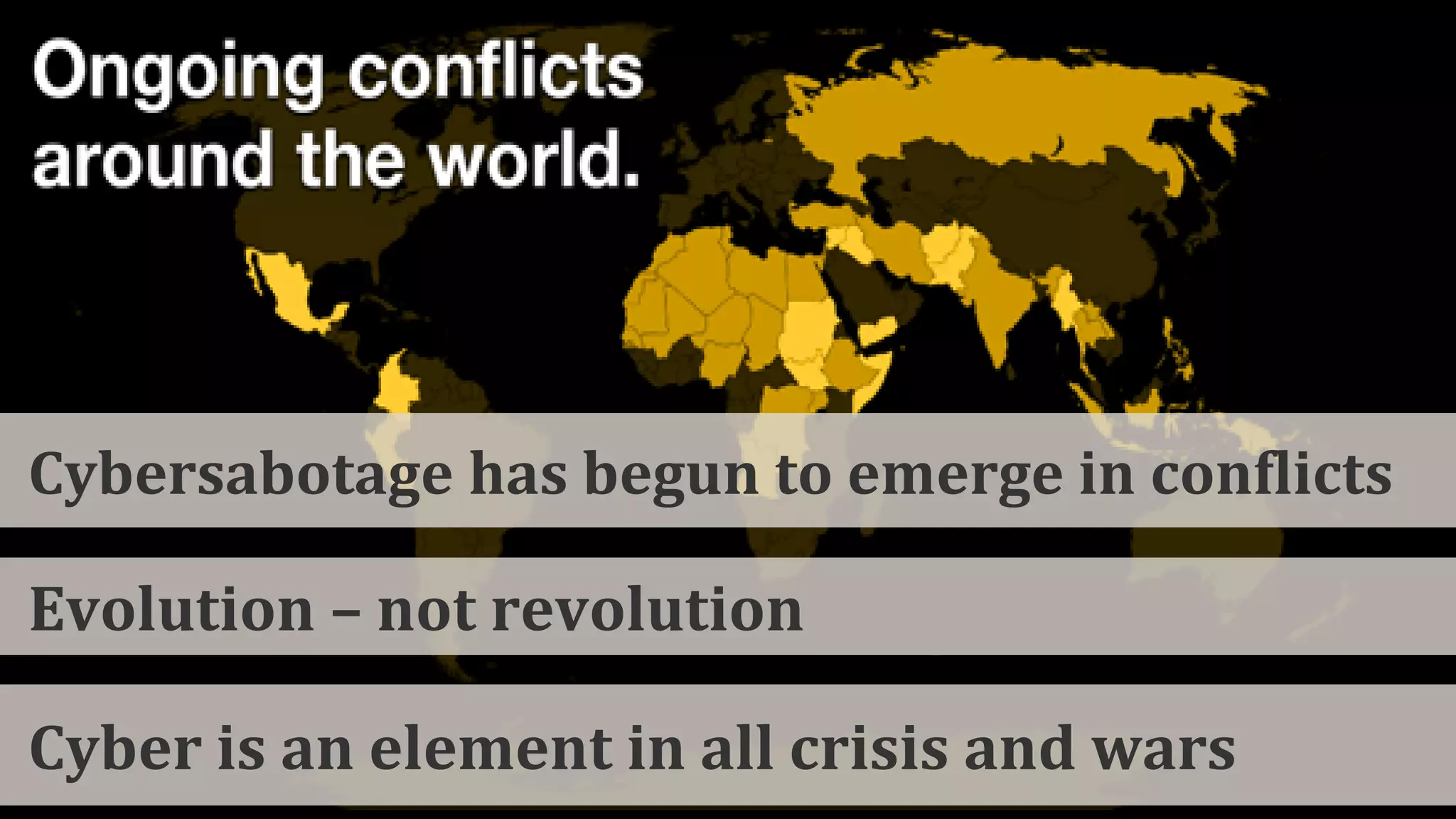
Cyber is an element in all crisis and wars
Evolution – not revolution
Cybersabotage has begun to emerge in conflicts
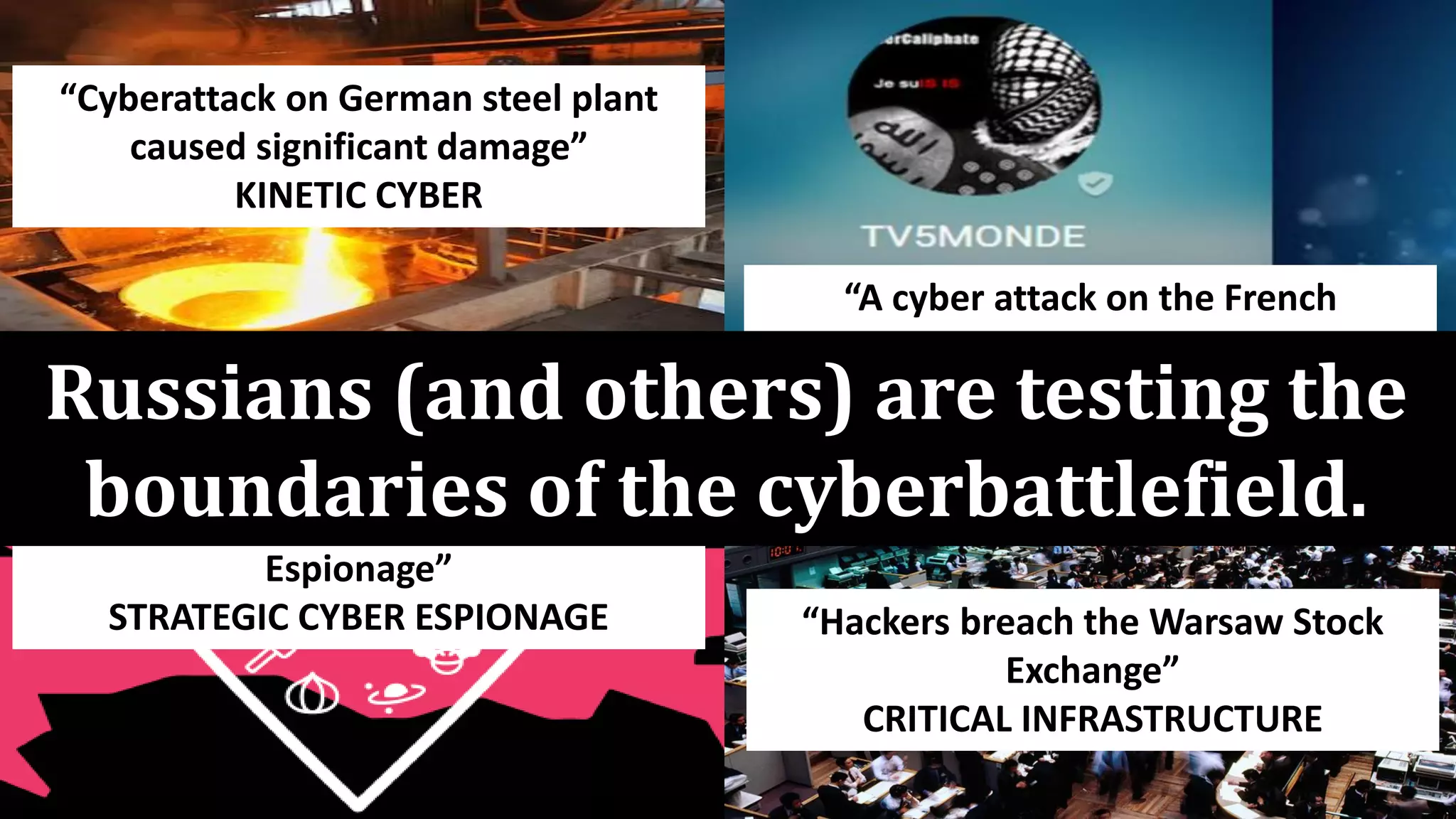
“Cyberattack on German steel plant
caused significant damage”
KINETIC CYBER
“A cyber attack on the French
television network TV5 Monde”
FALSE FLAG ATTACKS
“The Dukes: 7 Years of Russian Cyber-
Espionage”
STRATEGIC CYBER ESPIONAGE “Hackers breach the Warsaw Stock
Exchange”
CRITICAL INFRASTRUCTURE
Russians (and others) are testing the
boundaries of the cyberbattlefield.
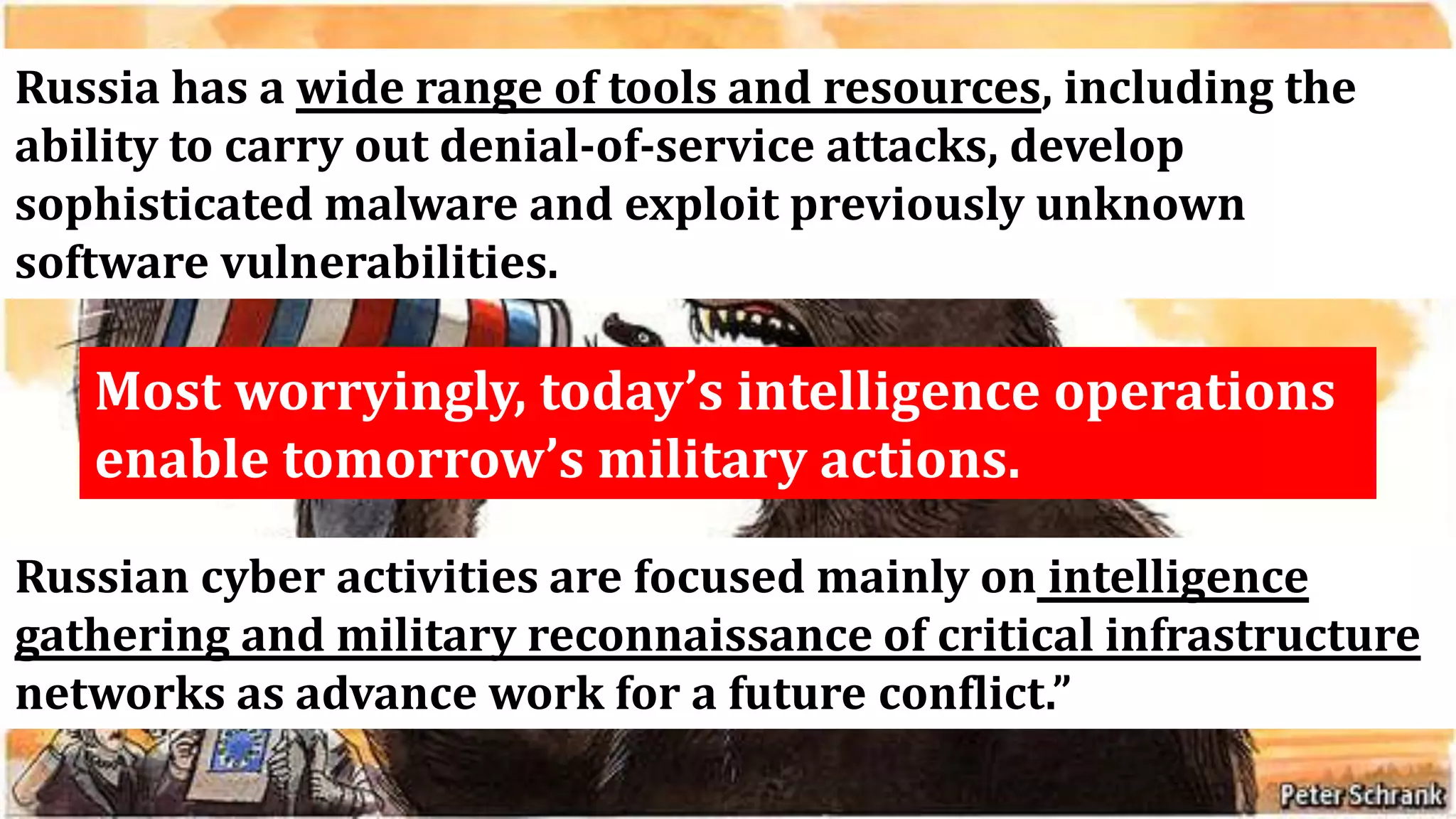
Russia has a wide range of tools and resources, including the
ability to carry out denial-of-service attacks, develop
sophisticated malware and exploit previously unknown
software vulnerabilities.
Russian cyber activities are focused mainly on intelligence
gathering and military reconnaissance of critical infrastructure
networks as advance work for a future conflict.”
Most worryingly, today’s intelligence operations
enable tomorrow’s military actions.
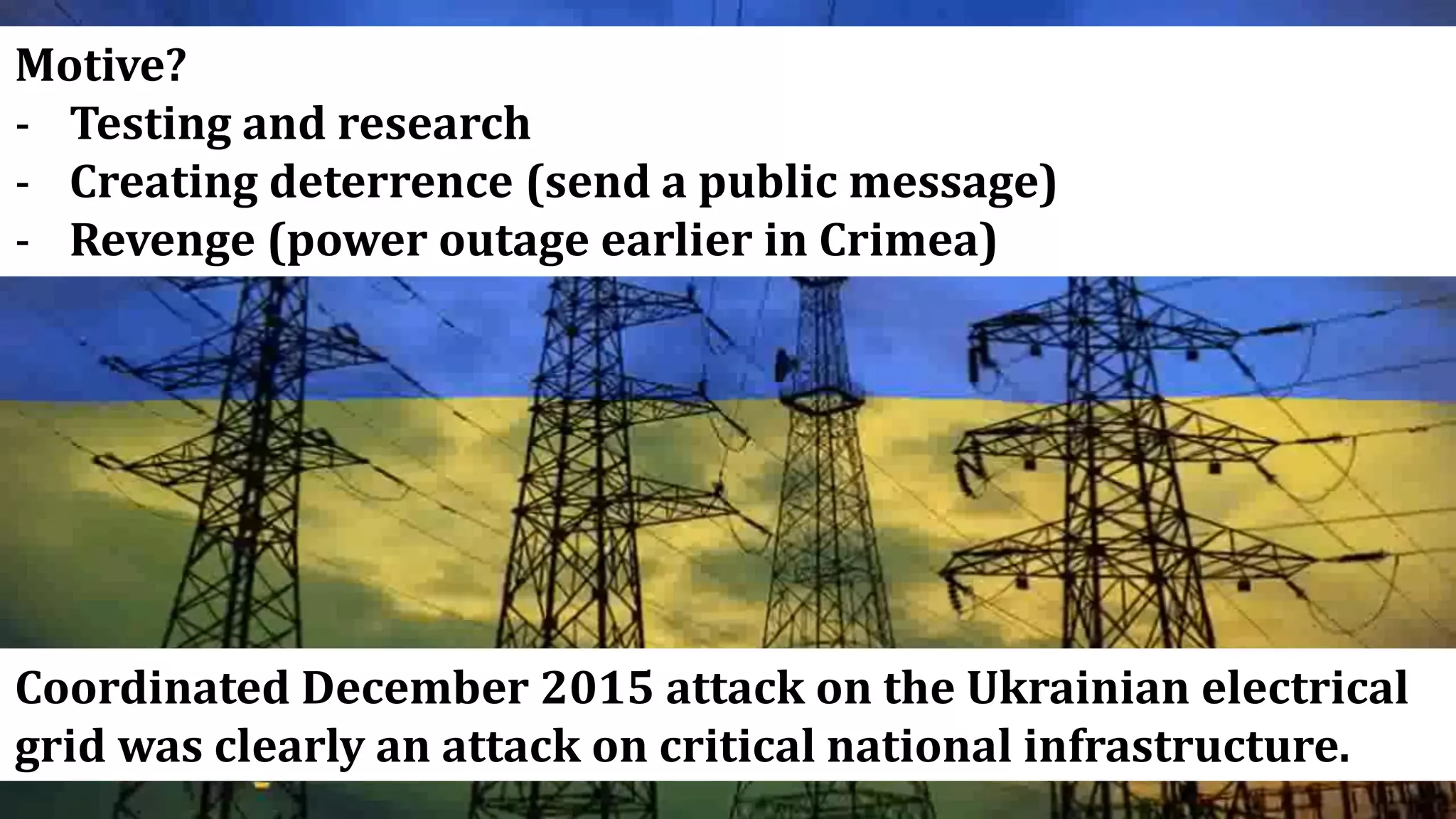
Coordinated December 2015 attack on the Ukrainian electrical
grid was clearly an attack on critical national infrastructure.
Motive?
- Testing and research
- Creating deterrence (send a public message)
- Revenge (power outage earlier in Crimea)
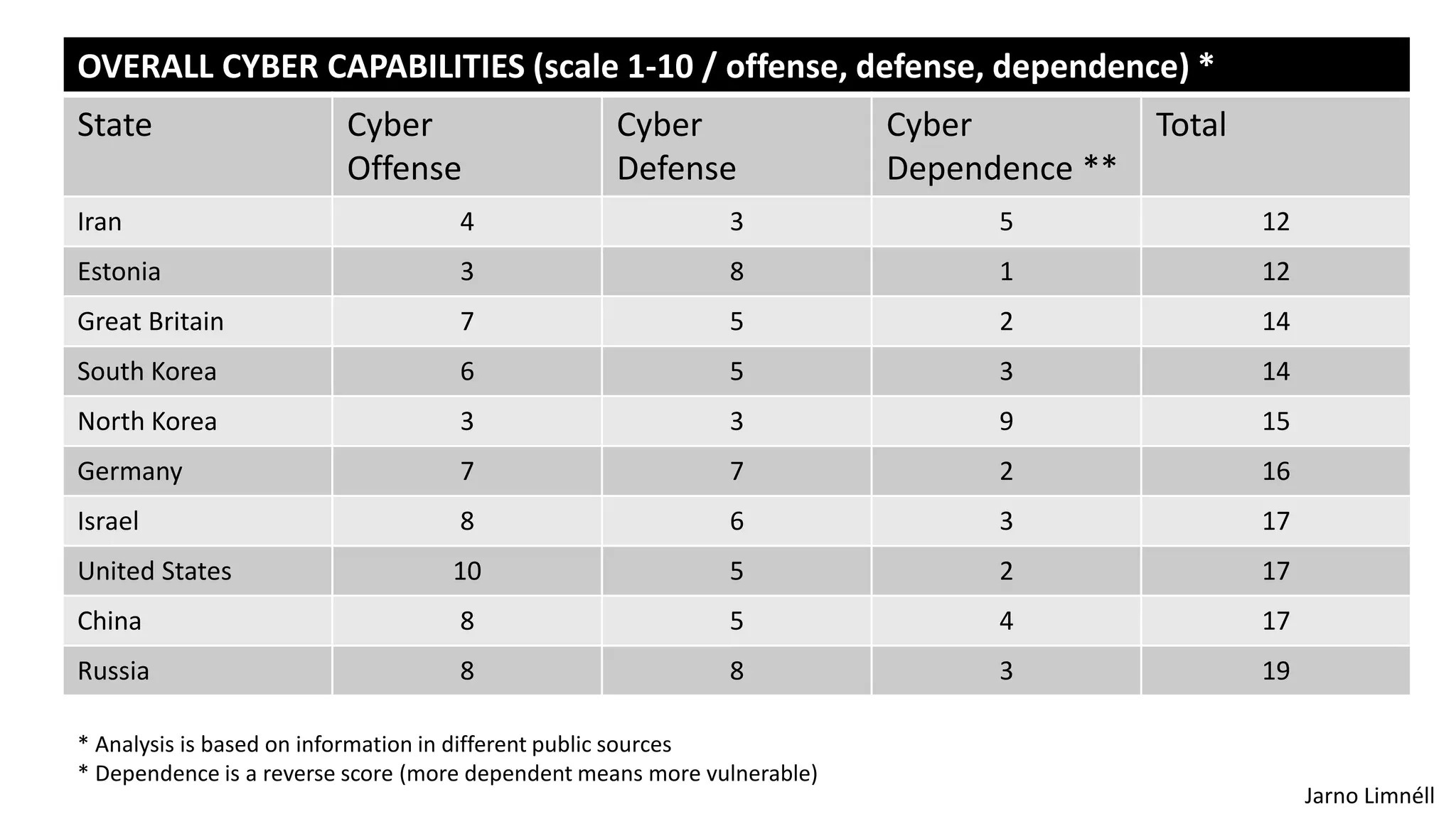
OVERALL CYBER CAPABILITIES (scale 1-10 / offense, defense, dependence) *
State Cyber
Offense
Cyber
Defense
Cyber
Dependence **
Total
Iran 4 3 5 12
Estonia 3 8 1 12
Great Britain 7 5 2 14
South Korea 6 5 3 14
North Korea 3 3 9 15
Germany 7 7 2 16
Israel 8 6 3 17
United States 10 5 2 17
China 8 5 4 17
Russia 8 8 3 19
* Analysis is based on information in different public sources
* Dependence is a reverse score (more dependent means more vulnerable)
Jarno Limnéll
Kyberturvallisuuden kokonaisuus
9
Digital security integral part of today´s security:
Dependence increases and
More sophisticated capabilities being developed.
The speed of cyber attacks and their
sophistication has changed dramatically.
Cybersecurity =
Protecting our societies, our
businesses and our way of life
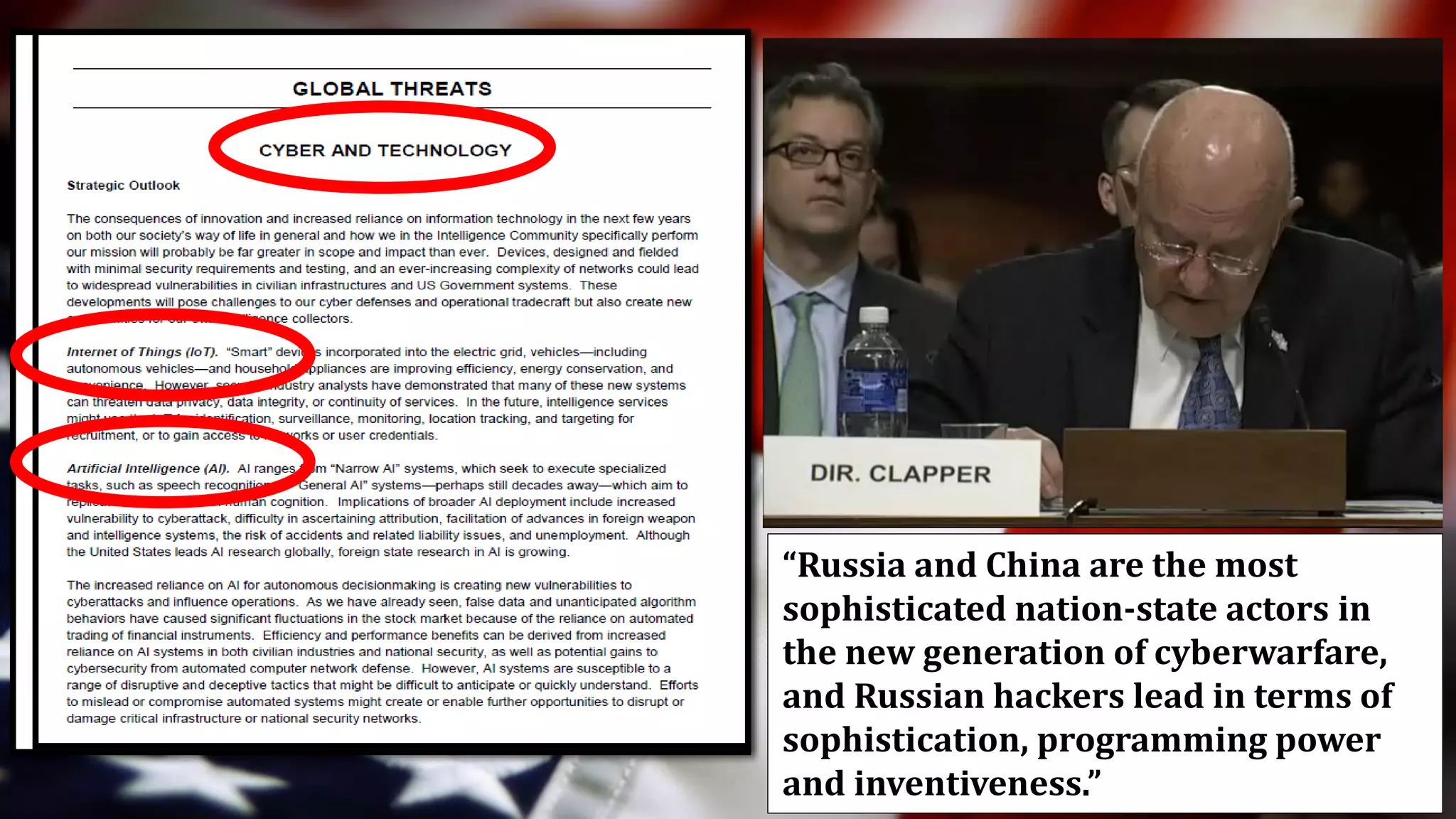
“Russia and China are the most
sophisticated nation-state actors in
the new generation of cyberwarfare,
and Russian hackers lead in terms of
sophistication, programming power
and inventiveness.”
Digital-Physical
Interaction
States consider cyber capabilities as an integral part of
operational military capability and are not afraid to
employ them.
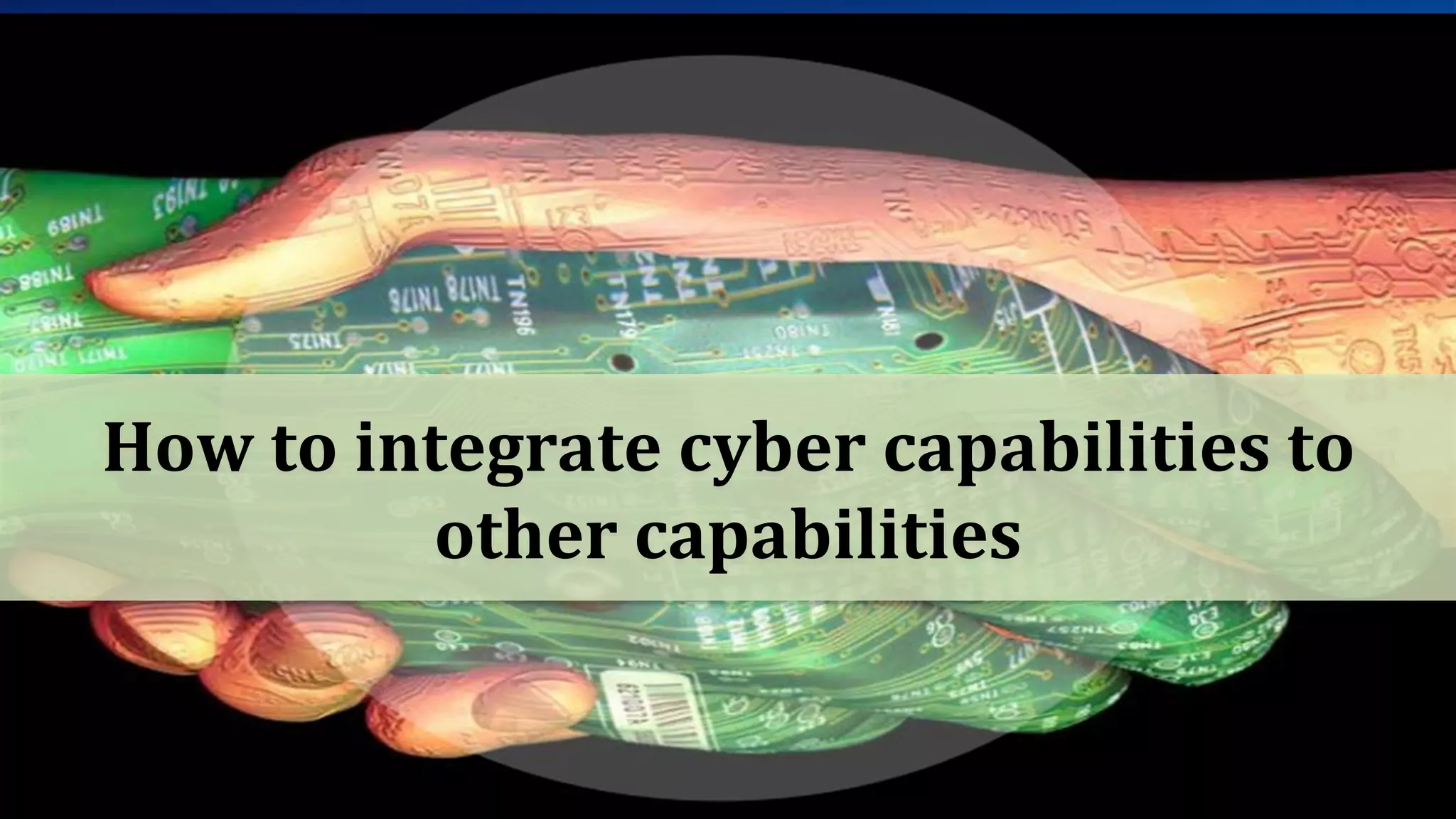
How to integrate cyber capabilities to
other capabilities
Innovation and people
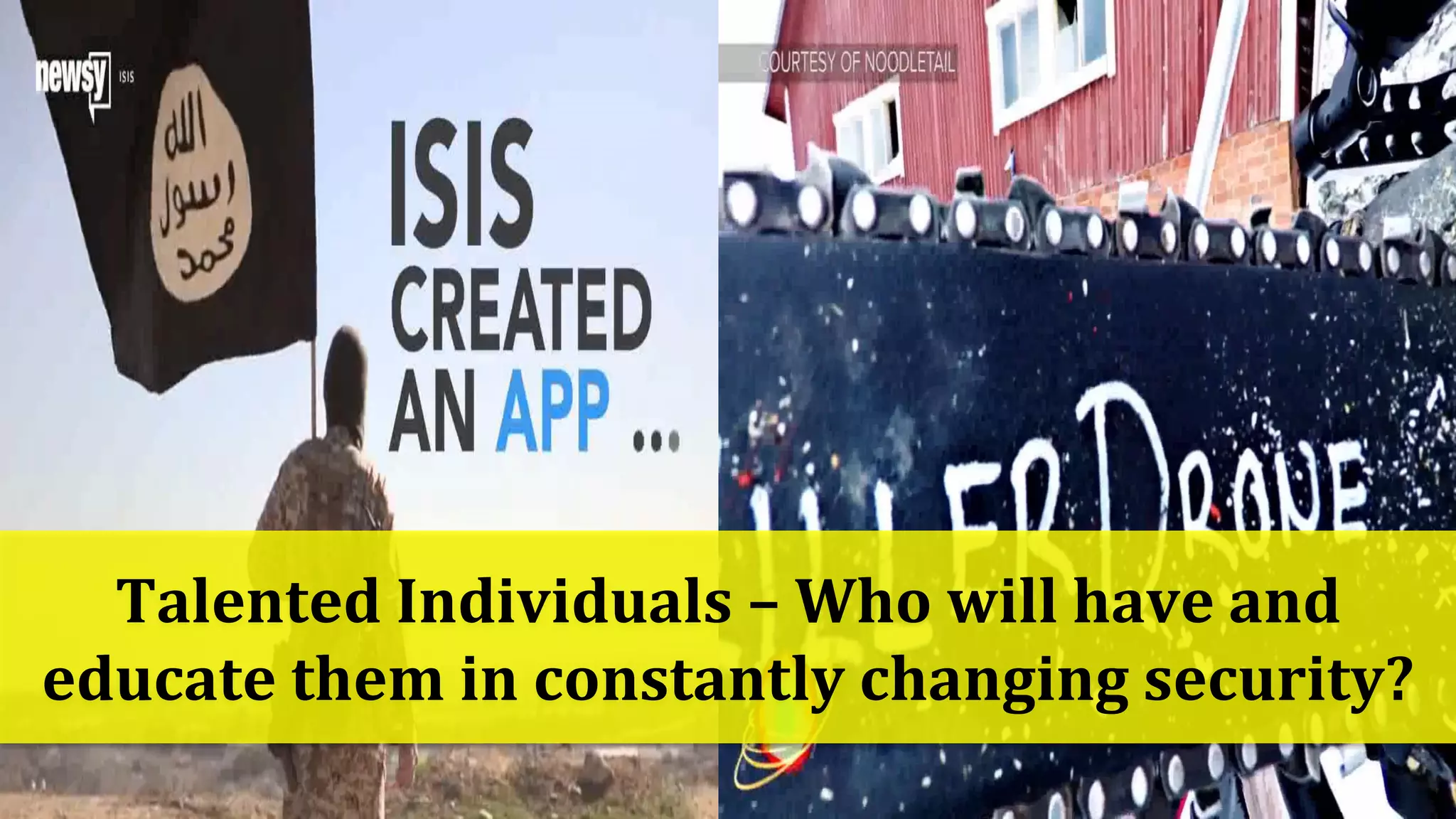
Talented Individuals – Who will have and
educate them in constantly changing security?
Most valuable skills for
cybersecurity career in next
years might not be a focus in
specific technology, but ability
to understand big picture.
From Technology- and
Control-centric to
Humancentric Cybersecurity
Future cyberwarfare is less hacking power
grids and more "hacking minds" by
shaping environment in which political
reality takes place.
Cyberpolitics
Trend:
The world is moving towards a
greater strategic use of cyber
capabilities
to persuade adversaries to
change their behavior.
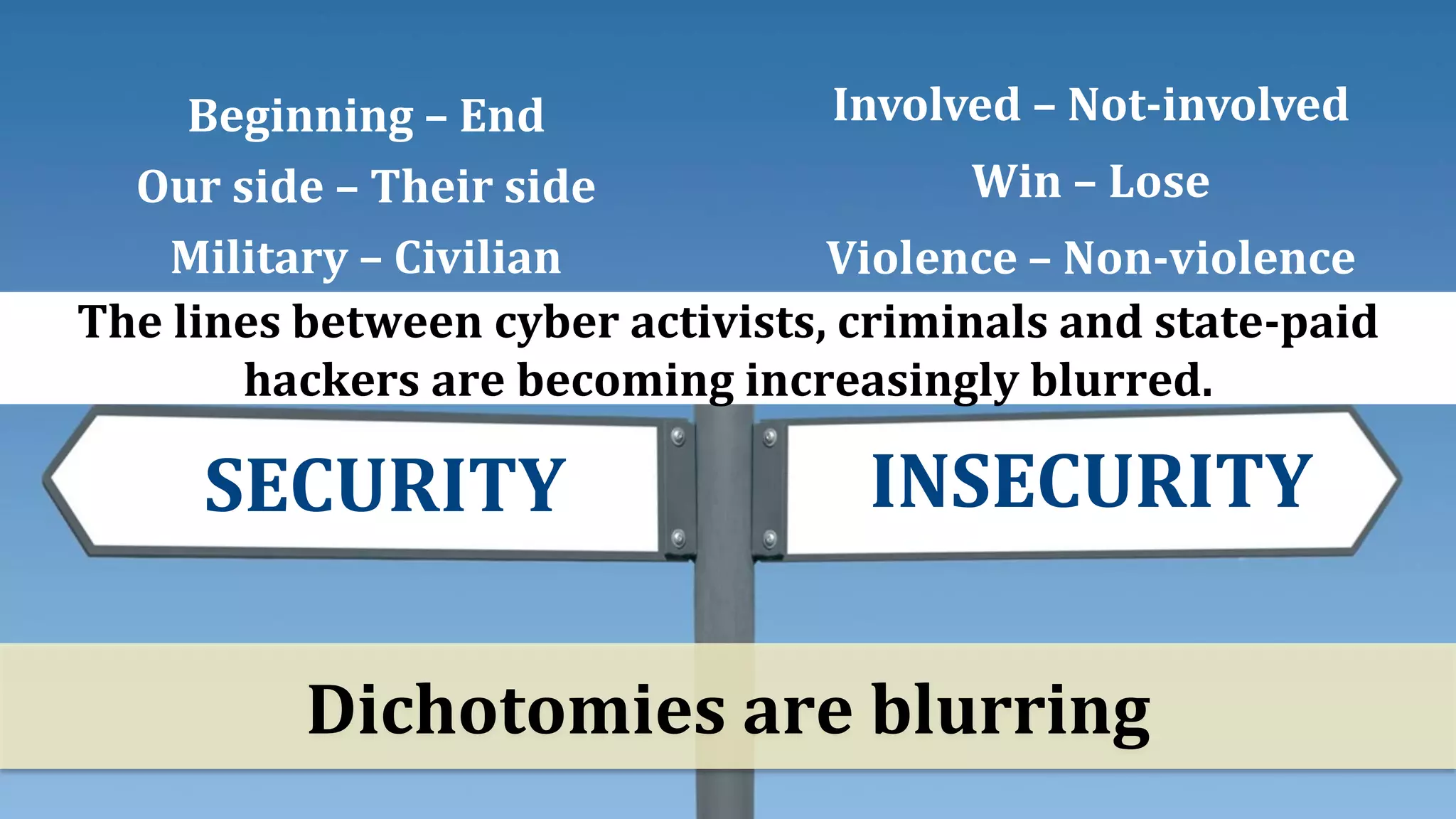
Beginning – End
Our side – Their side
Military – Civilian
Involved – Not-involved
Win – Lose
Violence – Non-violence
Dichotomies are blurring
SECURITY INSECURITY
The lines between cyber activists, criminals and state-paid
hackers are becoming increasingly blurred.
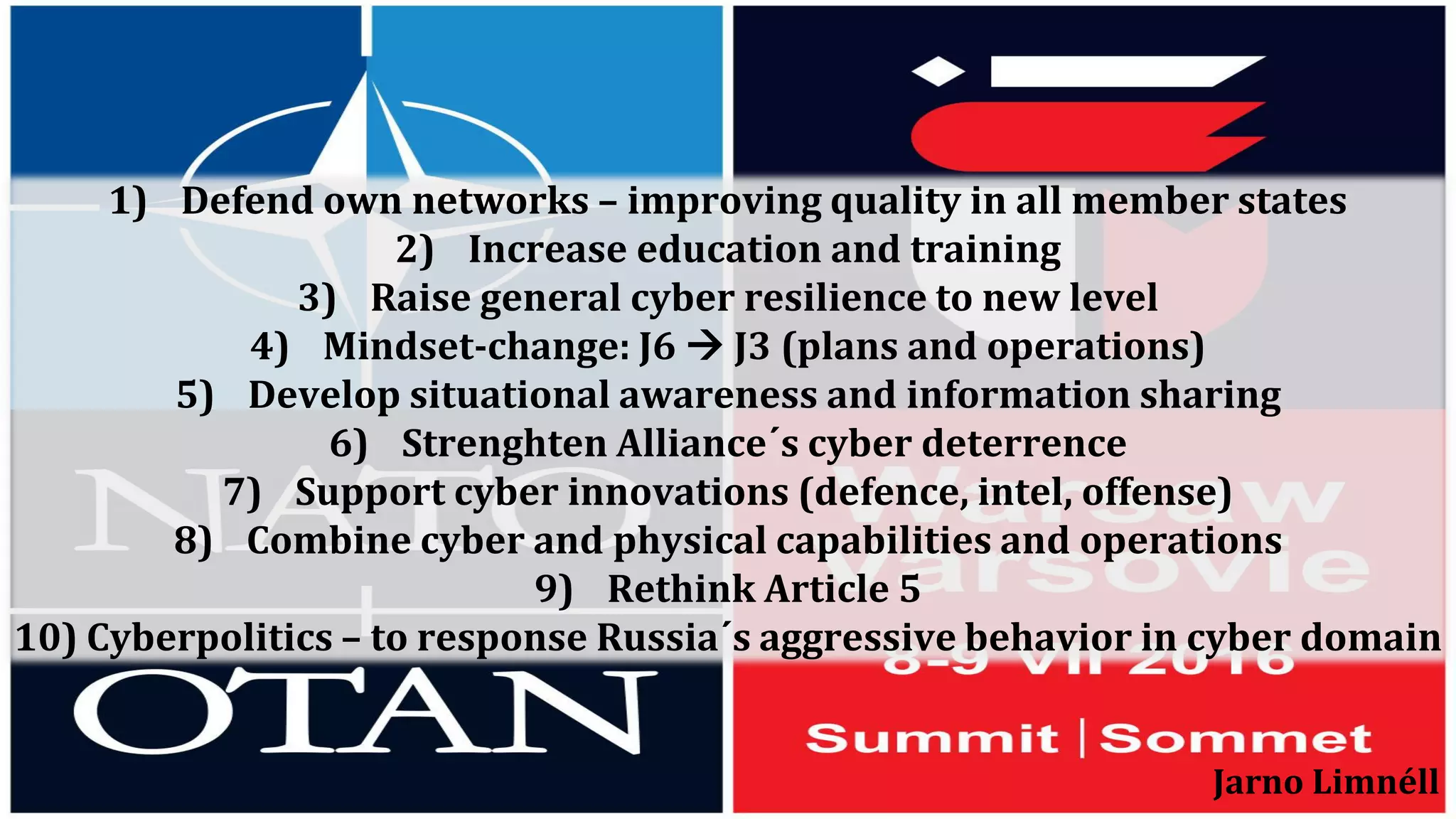
1) Defend own networks – improving quality in all member states
2) Increase education and training
3) Raise general cyber resilience to new level
4) Mindset-change: J6  J3 (plans and operations)
5) Develop situational awareness and information sharing
6) Strenghten Alliance´s cyber deterrence
7) Support cyber innovations (defence, intel, offense)
8) Combine cyber and physical capabilities and operations
9) Rethink Article 5
10) Cyberpolitics – to response Russia´s aggressive behavior in cyber domain
Jarno Limnéll
Thank you
“It is not the strongest species that survive, nor the
most intelligent, but the ones responsive to change.”
- Charles Darwin

Cyberwarfare and Aggressiveness in Cyberspace

  • 1.
    Cyberwarfare and aggressiveness incyberspace Jarno Limnéll Professor, Cybersecurity, Aalto University VP, Cybersecurity, Insta Group Ltd. Doctor of Military Science @JarnoLim
  • 2.
    New Normal inSecurity: Speed of Change Unpredictable Instability Digital-Physical Complexity
  • 3.
    Cyber is anelement in all crisis and wars Evolution – not revolution Cybersabotage has begun to emerge in conflicts
  • 4.
    “Cyberattack on Germansteel plant caused significant damage” KINETIC CYBER “A cyber attack on the French television network TV5 Monde” FALSE FLAG ATTACKS “The Dukes: 7 Years of Russian Cyber- Espionage” STRATEGIC CYBER ESPIONAGE “Hackers breach the Warsaw Stock Exchange” CRITICAL INFRASTRUCTURE Russians (and others) are testing the boundaries of the cyberbattlefield.
  • 6.
    Russia has awide range of tools and resources, including the ability to carry out denial-of-service attacks, develop sophisticated malware and exploit previously unknown software vulnerabilities. Russian cyber activities are focused mainly on intelligence gathering and military reconnaissance of critical infrastructure networks as advance work for a future conflict.” Most worryingly, today’s intelligence operations enable tomorrow’s military actions.
  • 7.
    Coordinated December 2015attack on the Ukrainian electrical grid was clearly an attack on critical national infrastructure. Motive? - Testing and research - Creating deterrence (send a public message) - Revenge (power outage earlier in Crimea)
  • 8.
    OVERALL CYBER CAPABILITIES(scale 1-10 / offense, defense, dependence) * State Cyber Offense Cyber Defense Cyber Dependence ** Total Iran 4 3 5 12 Estonia 3 8 1 12 Great Britain 7 5 2 14 South Korea 6 5 3 14 North Korea 3 3 9 15 Germany 7 7 2 16 Israel 8 6 3 17 United States 10 5 2 17 China 8 5 4 17 Russia 8 8 3 19 * Analysis is based on information in different public sources * Dependence is a reverse score (more dependent means more vulnerable) Jarno Limnéll
  • 9.
    Kyberturvallisuuden kokonaisuus 9 Digital securityintegral part of today´s security: Dependence increases and More sophisticated capabilities being developed. The speed of cyber attacks and their sophistication has changed dramatically.
  • 10.
    Cybersecurity = Protecting oursocieties, our businesses and our way of life
  • 11.
    “Russia and Chinaare the most sophisticated nation-state actors in the new generation of cyberwarfare, and Russian hackers lead in terms of sophistication, programming power and inventiveness.”
  • 13.
  • 14.
    States consider cybercapabilities as an integral part of operational military capability and are not afraid to employ them. How to integrate cyber capabilities to other capabilities
  • 15.
  • 16.
    Talented Individuals –Who will have and educate them in constantly changing security?
  • 17.
    Most valuable skillsfor cybersecurity career in next years might not be a focus in specific technology, but ability to understand big picture.
  • 18.
    From Technology- and Control-centricto Humancentric Cybersecurity Future cyberwarfare is less hacking power grids and more "hacking minds" by shaping environment in which political reality takes place.
  • 19.
  • 20.
    Trend: The world ismoving towards a greater strategic use of cyber capabilities to persuade adversaries to change their behavior.
  • 21.
    Beginning – End Ourside – Their side Military – Civilian Involved – Not-involved Win – Lose Violence – Non-violence Dichotomies are blurring SECURITY INSECURITY The lines between cyber activists, criminals and state-paid hackers are becoming increasingly blurred.
  • 23.
    1) Defend ownnetworks – improving quality in all member states 2) Increase education and training 3) Raise general cyber resilience to new level 4) Mindset-change: J6  J3 (plans and operations) 5) Develop situational awareness and information sharing 6) Strenghten Alliance´s cyber deterrence 7) Support cyber innovations (defence, intel, offense) 8) Combine cyber and physical capabilities and operations 9) Rethink Article 5 10) Cyberpolitics – to response Russia´s aggressive behavior in cyber domain Jarno Limnéll
  • 24.
    Thank you “It isnot the strongest species that survive, nor the most intelligent, but the ones responsive to change.” - Charles Darwin