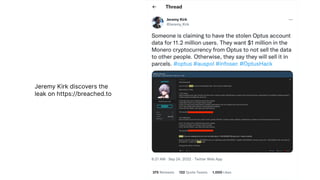
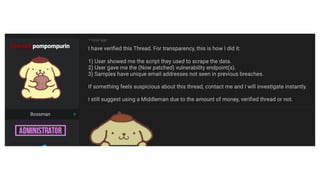
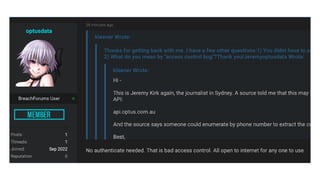
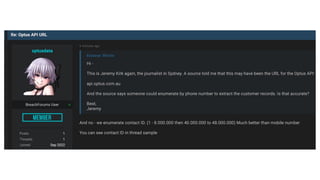
Jeremy Kirk discovers the

leak on https://breached.to
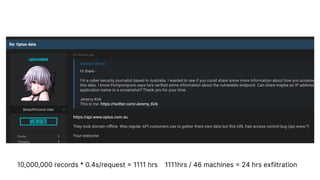
10,000,000 records * 0.4s/request = 1111 hrs 1111hrs / 46 machines = 24 hrs exfiltration
The unauthenticated API endpoint

https://api.www.optus.com.au
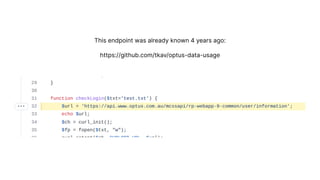
This endpoint was already known 4 years ago:


https://github.com/tkav/optus-data-usage
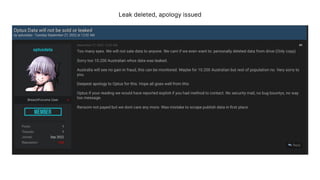
Leak deleted, apology issued
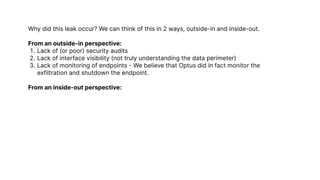
Why did this leak occur? We can think of this in 2 ways, outside-in and inside-out.


From an outside-in perspective:


From an inside-out perspective:
Why did this leak occur? We can think of this in 2 ways, outside-in and inside-out.


From an outside-in perspective
Lack of (or poor) security audit
Lack of interface visibility (not truly understanding the data perimeter
Lack of monitoring of endpoints - We believe that Optus did in fact monitor the
exfiltration and shutdown the endpoint.


From an inside-out perspective:
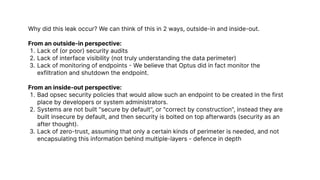
Why did this leak occur? We can think of this in 2 ways, outside-in and inside-out.


From an outside-in perspective
Lack of (or poor) security audit
Lack of interface visibility (not truly understanding the data perimeter
Lack of monitoring of endpoints - We believe that Optus did in fact monitor the
exfiltration and shutdown the endpoint.


From an inside-out perspective
Bad opsec security policies that would allow such an endpoint to be created in the first
place by developers or system administrators
Systems are not built "secure by default", or "correct by construction", instead they are
built insecure by default, and then security is bolted on top afterwards (security as an
after thought)
Lack of zero-trust, assuming that only a certain kinds of perimeter is needed, and not
encapsulating this information behind multiple-layers - defence in depth
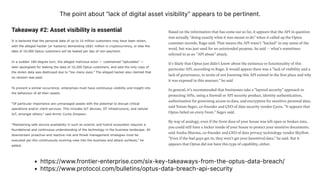
https://www.frontier-enterprise.com/six-key-takeaways-from-the-optus-data-breach
https://www.protocol.com/bulletins/optus-data-breach-api-security
The point about “lack of digital asset visibility” appears to be pertinent.
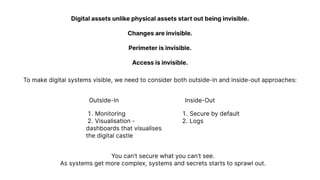
Digital assets unlike physical assets start out being invisible.


Changes are invisible.


Perimeter is invisible.


Access is invisible.
To make digital systems visible, we need to consider both outside-in and inside-out approaches:
You can’t secure what you can’t see.

As systems get more complex, systems and secrets starts to sprawl out.
Outside-In Inside-Out
Monitorin
Visualisation -

dashboards that visualises

the digital castle
Secure by defaul
Logs
Future Risks and Future Developments
Zero Trust Architectur
Software Supply Chai
Secret Spraw
Centralised vs Decentralise
What is Trust?
What is trust? That’s a philosophical question to be explored in a different presentation!
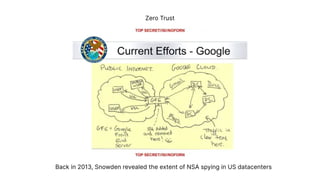
Zero Trust
Back in 2013, Snowden revealed the extent of NSA spying in US datacenters
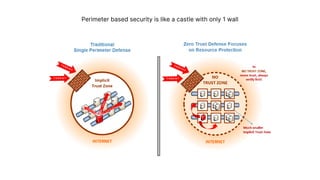
Perimeter based security is like a castle with only 1 wall
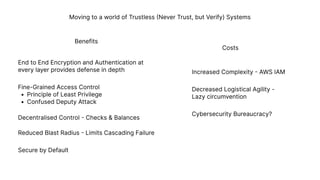
Moving to a world of Trustless (Never Trust, but Verify) Systems
End to End Encryption and Authentication at 

every layer provides defense in depth
Fine-Grained Access Contro
Principle of Least Privileg
Confused Deputy Attack
Decentralised Control - Checks & Balances
Reduced Blast Radius - Limits Cascading Failure
Secure by Default
Increased Complexity - AWS IAM
Decreased Logistical Agility - 

Lazy circumvention
Cybersecurity Bureaucracy?
Benefits
Costs
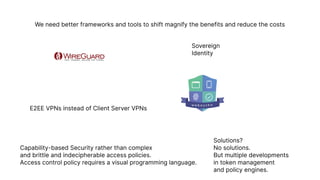
We need better frameworks and tools to shift magnify the benefits and reduce the costs
Sovereign

Identity
E2EE VPNs instead of Client Server VPNs
Capability-based Security rather than complex

and brittle and indecipherable access policies.

Access control policy requires a visual programming language.
Solutions?

No solutions.

But multiple developments

in token management

and policy engines.
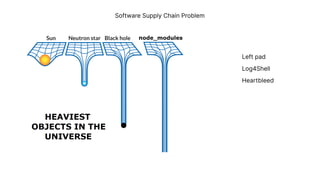
Software Supply Chain Problem
Log4Shell
Left pad
Heartbleed
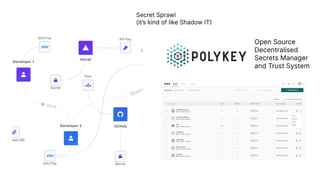
Secret Sprawl

(it’s kind of like Shadow IT)
Open Source

Decentralised

Secrets Manager

and Trust System
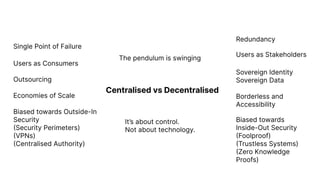
Centralised vs Decentralised
It’s about control.

Not about technology.
Single Point of Failure
Redundancy
Users as Stakeholders
Users as Consumers
Sovereign Identity

Sovereign Data
Outsourcing
Economies of Scale
Biased towards Outside-In
Security

(Security Perimeters)

(VPNs)

(Centralised Authority)
Biased towards

Inside-Out Security

(Foolproof)

(Trustless Systems)

(Zero Knowledge
Proofs)
Borderless and
Accessibility
The pendulum is swinging

CyberSecurity - Future Risks, Zero Trust and the Optus Data Leak.pdf

  • 10.
    Jeremy Kirk discoversthe leak on https://breached.to
  • 13.
    10,000,000 records *0.4s/request = 1111 hrs 1111hrs / 46 machines = 24 hrs exfiltration
  • 15.
    The unauthenticated APIendpoint https://api.www.optus.com.au
  • 16.
    This endpoint wasalready known 4 years ago: https://github.com/tkav/optus-data-usage
  • 17.
  • 18.
    Why did thisleak occur? We can think of this in 2 ways, outside-in and inside-out. From an outside-in perspective: From an inside-out perspective:
  • 19.
    Why did thisleak occur? We can think of this in 2 ways, outside-in and inside-out. From an outside-in perspective Lack of (or poor) security audit Lack of interface visibility (not truly understanding the data perimeter Lack of monitoring of endpoints - We believe that Optus did in fact monitor the exfiltration and shutdown the endpoint. From an inside-out perspective:
  • 20.
    Why did thisleak occur? We can think of this in 2 ways, outside-in and inside-out. From an outside-in perspective Lack of (or poor) security audit Lack of interface visibility (not truly understanding the data perimeter Lack of monitoring of endpoints - We believe that Optus did in fact monitor the exfiltration and shutdown the endpoint. From an inside-out perspective Bad opsec security policies that would allow such an endpoint to be created in the first place by developers or system administrators Systems are not built "secure by default", or "correct by construction", instead they are built insecure by default, and then security is bolted on top afterwards (security as an after thought) Lack of zero-trust, assuming that only a certain kinds of perimeter is needed, and not encapsulating this information behind multiple-layers - defence in depth
  • 21.
  • 22.
    Digital assets unlikephysical assets start out being invisible. Changes are invisible. Perimeter is invisible. Access is invisible. To make digital systems visible, we need to consider both outside-in and inside-out approaches: You can’t secure what you can’t see. As systems get more complex, systems and secrets starts to sprawl out. Outside-In Inside-Out Monitorin Visualisation - dashboards that visualises the digital castle Secure by defaul Logs
  • 23.
    Future Risks andFuture Developments Zero Trust Architectur Software Supply Chai Secret Spraw Centralised vs Decentralise What is Trust? What is trust? That’s a philosophical question to be explored in a different presentation!
  • 24.
    Zero Trust Back in2013, Snowden revealed the extent of NSA spying in US datacenters
  • 25.
    Perimeter based securityis like a castle with only 1 wall
  • 26.
    Moving to aworld of Trustless (Never Trust, but Verify) Systems End to End Encryption and Authentication at every layer provides defense in depth Fine-Grained Access Contro Principle of Least Privileg Confused Deputy Attack Decentralised Control - Checks & Balances Reduced Blast Radius - Limits Cascading Failure Secure by Default Increased Complexity - AWS IAM Decreased Logistical Agility - Lazy circumvention Cybersecurity Bureaucracy? Benefits Costs
  • 27.
    We need betterframeworks and tools to shift magnify the benefits and reduce the costs Sovereign Identity E2EE VPNs instead of Client Server VPNs Capability-based Security rather than complex and brittle and indecipherable access policies. Access control policy requires a visual programming language. Solutions? No solutions. But multiple developments in token management and policy engines.
  • 28.
    Software Supply ChainProblem Log4Shell Left pad Heartbleed
  • 29.
    Secret Sprawl (it’s kindof like Shadow IT) Open Source Decentralised Secrets Manager and Trust System
  • 30.
    Centralised vs Decentralised It’sabout control. Not about technology. Single Point of Failure Redundancy Users as Stakeholders Users as Consumers Sovereign Identity Sovereign Data Outsourcing Economies of Scale Biased towards Outside-In Security (Security Perimeters) (VPNs) (Centralised Authority) Biased towards Inside-Out Security (Foolproof) (Trustless Systems) (Zero Knowledge Proofs) Borderless and Accessibility The pendulum is swinging