
Chapter 14:
Cyber Warfare an Architecture of
Deterrence
Bikrant Gautam, Ang Sherpa,
Savanth Chintoju
Saint Cloud State University
IA612-MSIA-Fall
Objective of cyber deterrence
● Prevent an enemy from conducting future attacks.
● Deny enemies “freedom of action in cyberspace”
● Use the internet space for counter-attack.
Cyber Deterrence and
Cyber warfare
“The goal of Cyber deterrence is to deny enemies
“freedom of action in cyberspace”.“
- Alexander, 2007
“Cyberwarfare has been defined as "actions by a nation-
state to penetrate another nation's computers or
networks for the purposes of causing damage or
disruption”
- Wiki, 2015
Cyber Deterrence Challenges
● Assigning attribution
● Unpredictability of cyber attack
impacts
● Potential damage due to counter
retaliation
● No legal framework exists
Cyber Deterrence
Strategy
● Useful to understand how cyber deterrence
strategies and policies would operate in practice
● Libicki developed policy and strategy analysis
under the sponsorship of USAF, which were
influential
● A key goal of cyber deterrence is changing the
potential attackers mindset, forcing them to
reconsider the benefits and consequences of
conducting an attack.
There are several steps in Libicki’s concept
● Situational Awareness (Surveillance)
● Identify if it is a real attack
● Analyse if the attack motive is connected to state actor
● Determine the level of public awareness
● Assess state or non-state attribution
● Strength of the case for public attribution is assessed
● Methods of retaliation are considered
● Explicit Deterrence
Counter attack policy is disclosed to attacker,
possibly by public announcement
● Implicit Deterrence
No public or direct disclosure to the attacker
about
counter attack
● ‘Risky’ factor has both implicit and explicit values to
signify the risk of counterattack.
● Libicki suggests Implicit deterrence is best option.
“We need to develop an early-warning system to
monitor cyberspace, identify intrusions, and locate the
source of attacks with a trail of evidence that can
support diplomatic, military and legal options – and we
must be able to do this in milliseconds.” (McConnell,
2010)
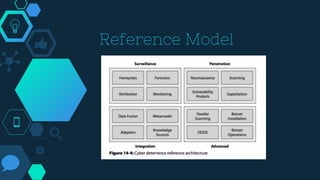
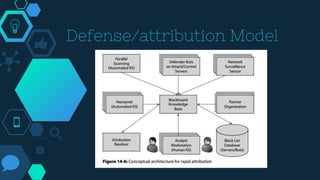
Reference Model
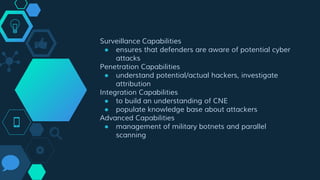
Surveillance Capabilities
● ensures that defenders are aware of potential cyber
attacks
Penetration Capabilities
● understand potential/actual hackers, investigate
attribution
Integration Capabilities
● to build an understanding of CNE
● populate knowledge base about attackers
Advanced Capabilities
● management of military botnets and parallel
scanning
Solution Architecture
● What is the solution for cyber deterrence?
● BOTNETs!!!
● Military botnets developed with bot script deployed
in each government computer.
● Effective as large number of computers controlled
by single organization.
● Useful on mass hacking or distributed scanning
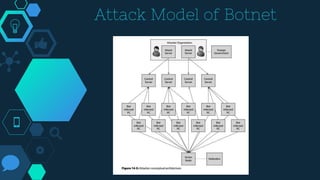
Attack Model of Botnet
Defense/attribution Model
Architectural Prototypes
● Prototypes for multithreaded and botnet-like distributed
scanning.
● Botnet performance benchmarking
Threaded Scanning
● Serial scanning in linux
● Then implemented as multi threaded scanning.
● Performance increased.
● Practically feasible for pen testing.
Botnet for Distributed
Scanning
● Distributed botnet for parallel scans.
● Performed ping sweeps and nmap scans.
● contained the bot-command server architect with different
controlling scripts.
● First the script on target machine was run.
● Then this script connected with the machine running
command script.
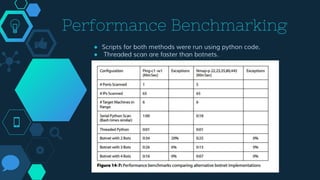
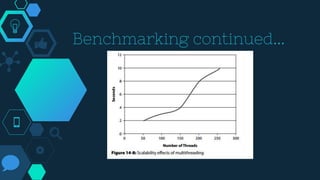
Performance Benchmarking
● Scripts for both methods were run using python code.
● Threaded scan are faster than botnets.
Benchmarking continued...
Deterministic Models of
Performance
● Serial Scan
● Parallel (Threaded) Scan
● Distributed serial Scan
● Distributed Parallel (Threaded) Scan
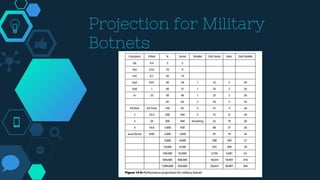
Projection for Military
Botnets
Thanks,
Any Questions?

Cyber warfare an architecture for deterrence

  • 1.
    Chapter 14: Cyber Warfarean Architecture of Deterrence Bikrant Gautam, Ang Sherpa, Savanth Chintoju Saint Cloud State University IA612-MSIA-Fall
  • 2.
    Objective of cyberdeterrence ● Prevent an enemy from conducting future attacks. ● Deny enemies “freedom of action in cyberspace” ● Use the internet space for counter-attack.
  • 3.
    Cyber Deterrence and Cyberwarfare “The goal of Cyber deterrence is to deny enemies “freedom of action in cyberspace”.“ - Alexander, 2007 “Cyberwarfare has been defined as "actions by a nation- state to penetrate another nation's computers or networks for the purposes of causing damage or disruption” - Wiki, 2015
  • 4.
    Cyber Deterrence Challenges ●Assigning attribution ● Unpredictability of cyber attack impacts ● Potential damage due to counter retaliation ● No legal framework exists
  • 5.
    Cyber Deterrence Strategy ● Usefulto understand how cyber deterrence strategies and policies would operate in practice ● Libicki developed policy and strategy analysis under the sponsorship of USAF, which were influential ● A key goal of cyber deterrence is changing the potential attackers mindset, forcing them to reconsider the benefits and consequences of conducting an attack.
  • 6.
    There are severalsteps in Libicki’s concept ● Situational Awareness (Surveillance) ● Identify if it is a real attack ● Analyse if the attack motive is connected to state actor ● Determine the level of public awareness ● Assess state or non-state attribution ● Strength of the case for public attribution is assessed ● Methods of retaliation are considered
  • 7.
    ● Explicit Deterrence Counterattack policy is disclosed to attacker, possibly by public announcement ● Implicit Deterrence No public or direct disclosure to the attacker about counter attack ● ‘Risky’ factor has both implicit and explicit values to signify the risk of counterattack. ● Libicki suggests Implicit deterrence is best option.
  • 8.
    “We need todevelop an early-warning system to monitor cyberspace, identify intrusions, and locate the source of attacks with a trail of evidence that can support diplomatic, military and legal options – and we must be able to do this in milliseconds.” (McConnell, 2010)
  • 9.
  • 10.
    Surveillance Capabilities ● ensuresthat defenders are aware of potential cyber attacks Penetration Capabilities ● understand potential/actual hackers, investigate attribution Integration Capabilities ● to build an understanding of CNE ● populate knowledge base about attackers Advanced Capabilities ● management of military botnets and parallel scanning
  • 11.
    Solution Architecture ● Whatis the solution for cyber deterrence? ● BOTNETs!!! ● Military botnets developed with bot script deployed in each government computer. ● Effective as large number of computers controlled by single organization. ● Useful on mass hacking or distributed scanning
  • 12.
  • 13.
  • 14.
    Architectural Prototypes ● Prototypesfor multithreaded and botnet-like distributed scanning. ● Botnet performance benchmarking
  • 15.
    Threaded Scanning ● Serialscanning in linux ● Then implemented as multi threaded scanning. ● Performance increased. ● Practically feasible for pen testing. Botnet for Distributed Scanning ● Distributed botnet for parallel scans. ● Performed ping sweeps and nmap scans. ● contained the bot-command server architect with different controlling scripts. ● First the script on target machine was run. ● Then this script connected with the machine running command script.
  • 16.
    Performance Benchmarking ● Scriptsfor both methods were run using python code. ● Threaded scan are faster than botnets.
  • 17.
  • 18.
    Deterministic Models of Performance ●Serial Scan ● Parallel (Threaded) Scan ● Distributed serial Scan ● Distributed Parallel (Threaded) Scan
  • 19.
  • 20.