Customer journey mapping Jury’s Inn 29 April 2010
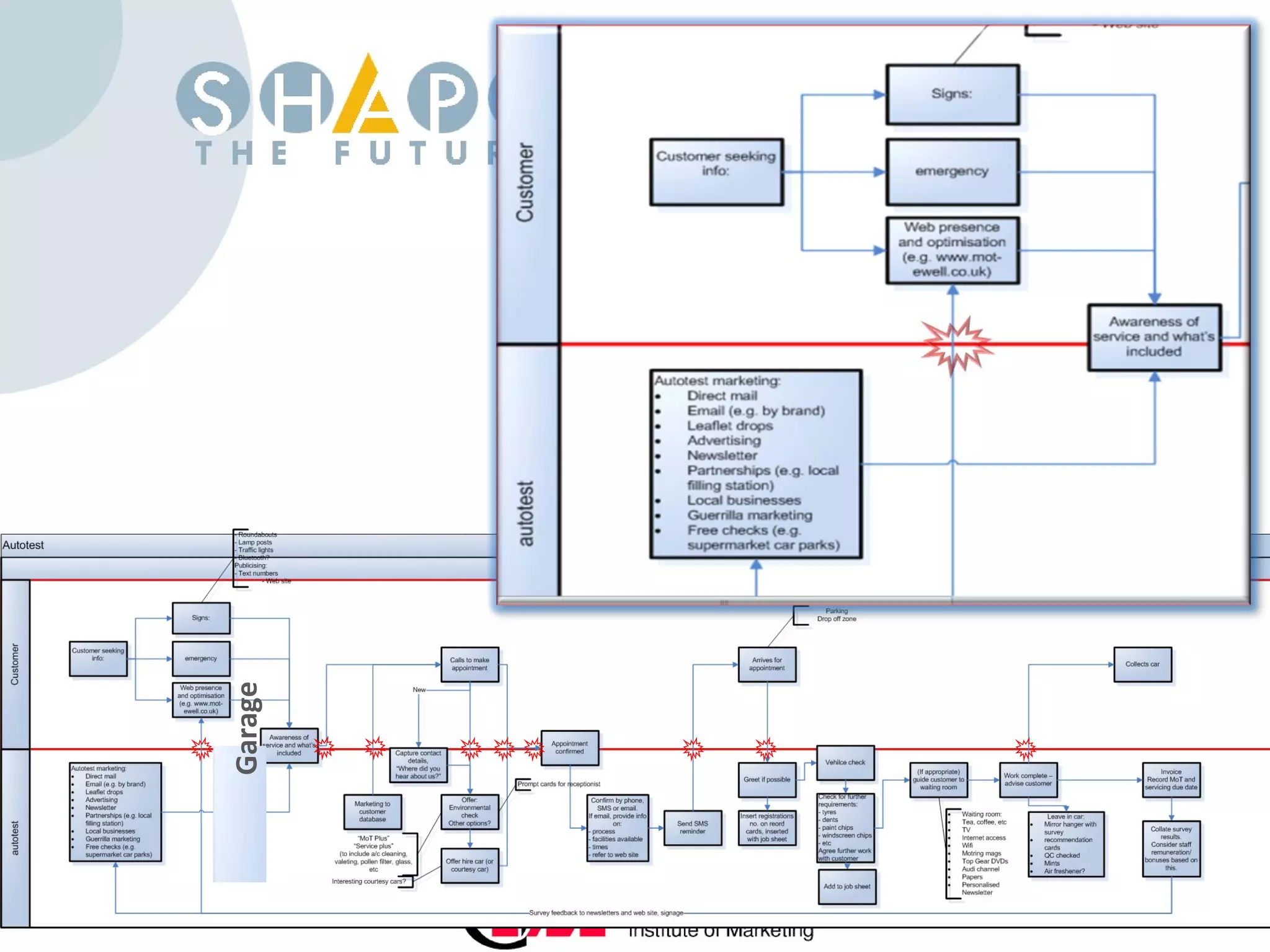
Garage
Why bother? Maximise customer satisfaction Reduce effort Optimise marketing spend Minimise waste Deliver the best possible customer experience for the least cost Perpetuate good practice and eradicate bad practice
Why bother? – 2 Because interesting things happen…
End result Happy customer: Buys more Costs less To acquire To keep To satisfy Buys more often Your best promotional medium
How to get there Understand: what the customer wants – at every stage how they’d find out about it where they’d go for more information how they want to buy it how they want it delivered how much support they need when where over what time scale
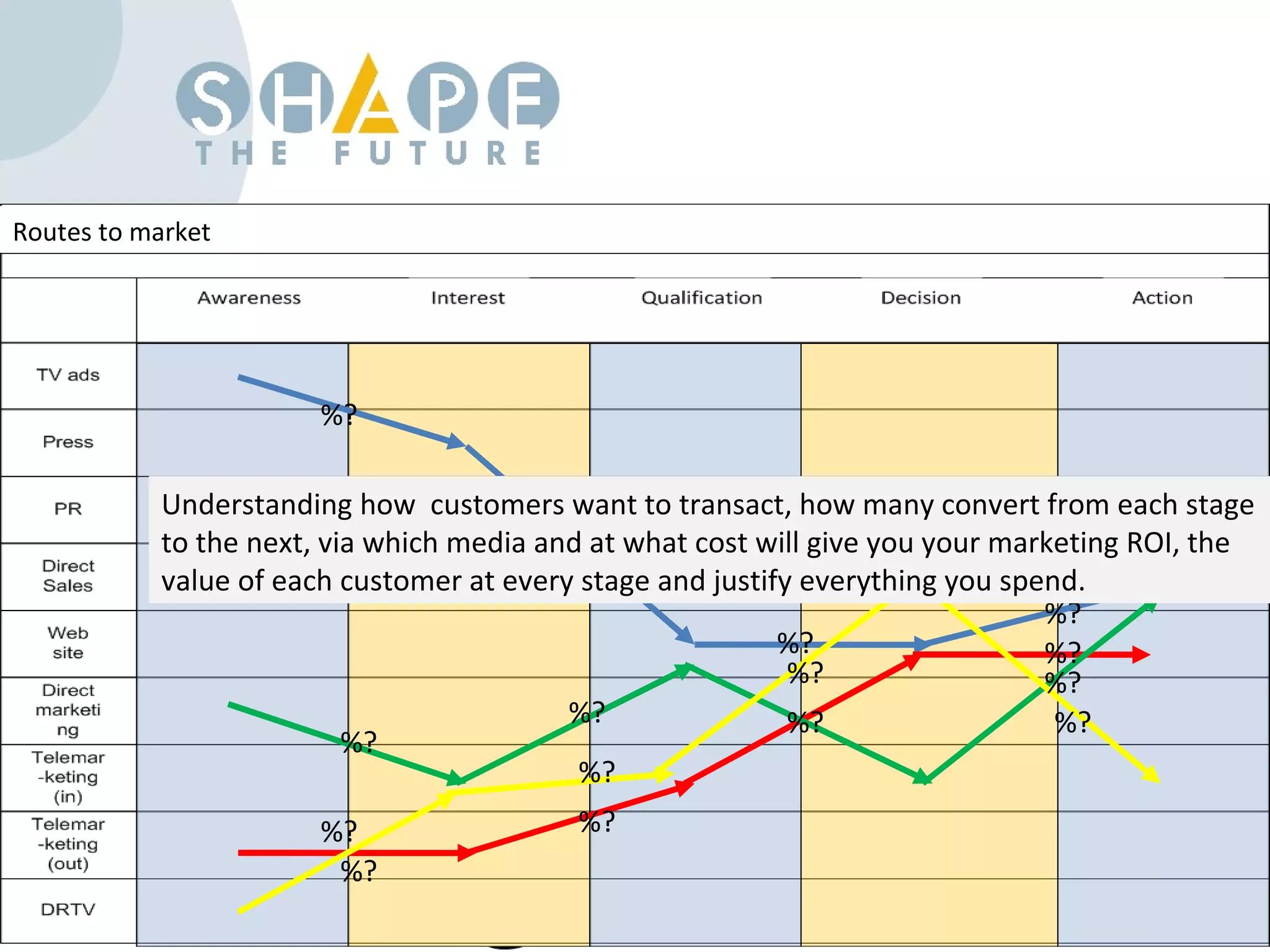
Understanding how  customers want to transact, how many convert from each stage to the next, via which media and at what cost will give you your marketing ROI, the value of each customer at every stage and justify everything you spend. Routes to market %? %? %? %? %? %? %? %? %? %? %? %? %? %? %?
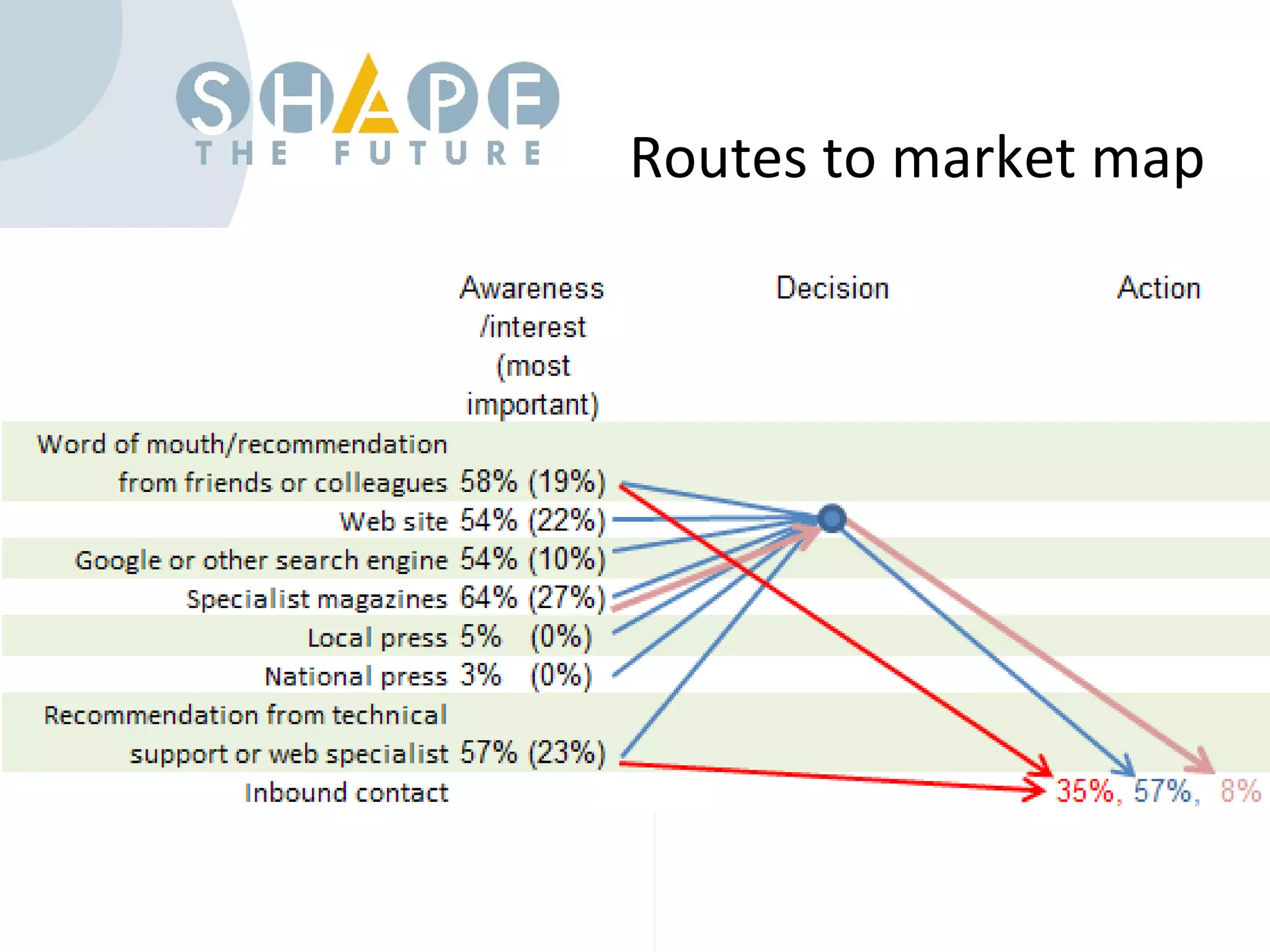
Routes to market map
Importance of Process Every customer goes through a process on every transaction Different customer segments will want difference experiences of the process, depending on: likes and dislikes personal characteristics buying context level of experience So the process may need to be different for different segments
Moments of truth Understand all the touch points - not too many or too few Plan them in minute detail Plan for things going wrong
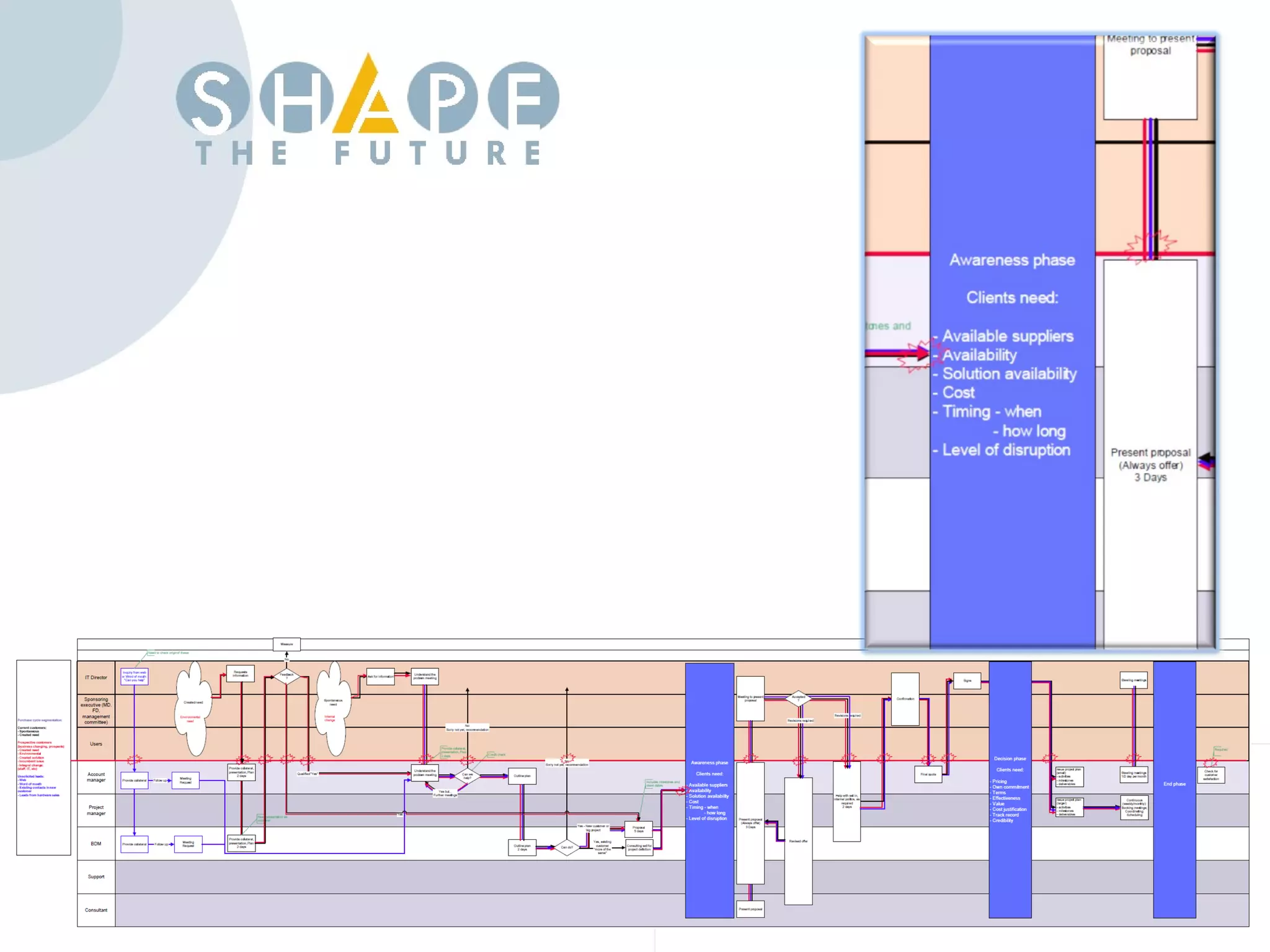
How to do it Divide the journey into stages Define what the customer needs at the end of each stage, and how long it should take
 
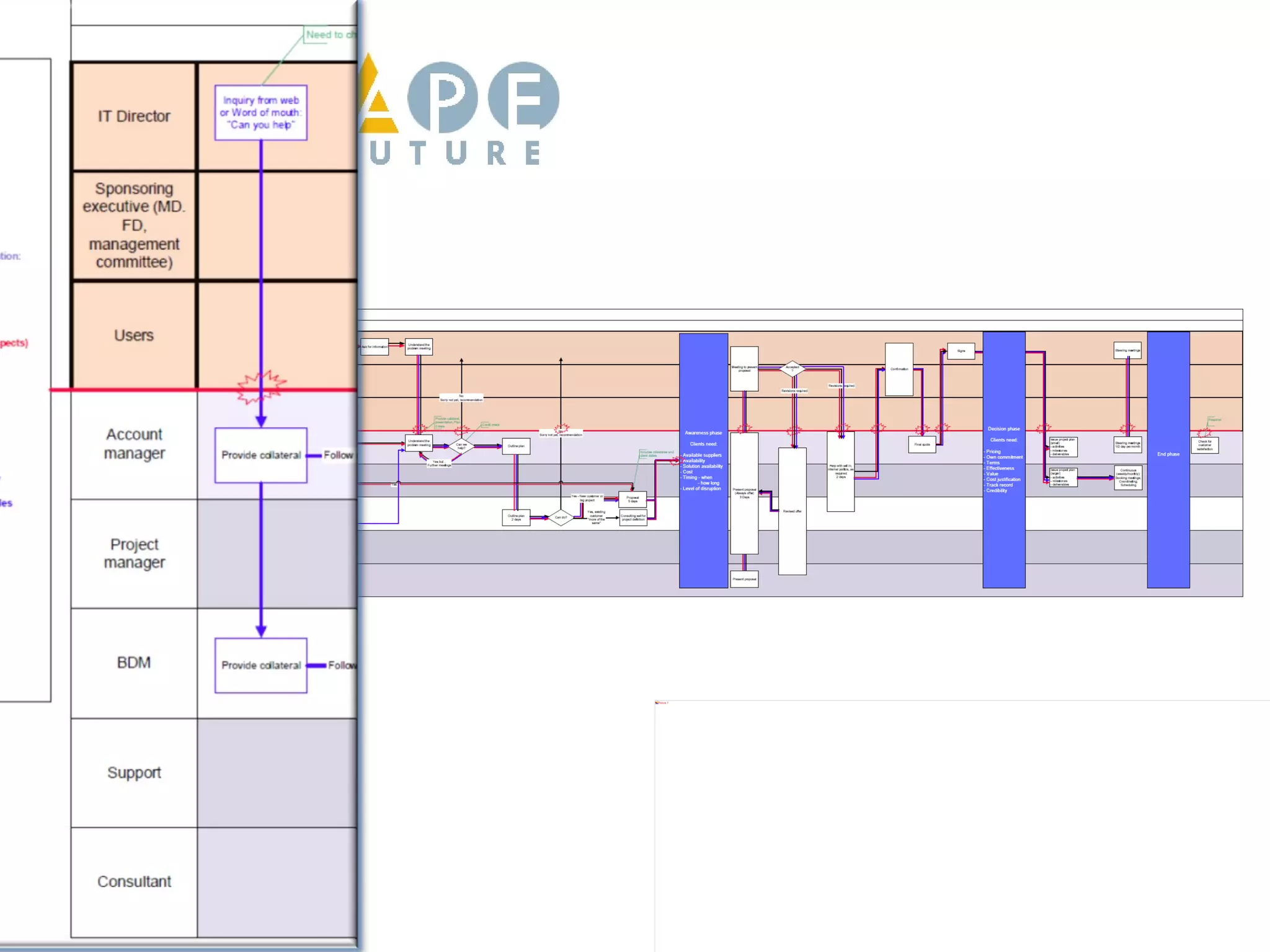
How to do it Divide the journey into stages Define what the customer needs at the end of each stage, and how long it should take Define who is involved - departments, channels, individuals
 
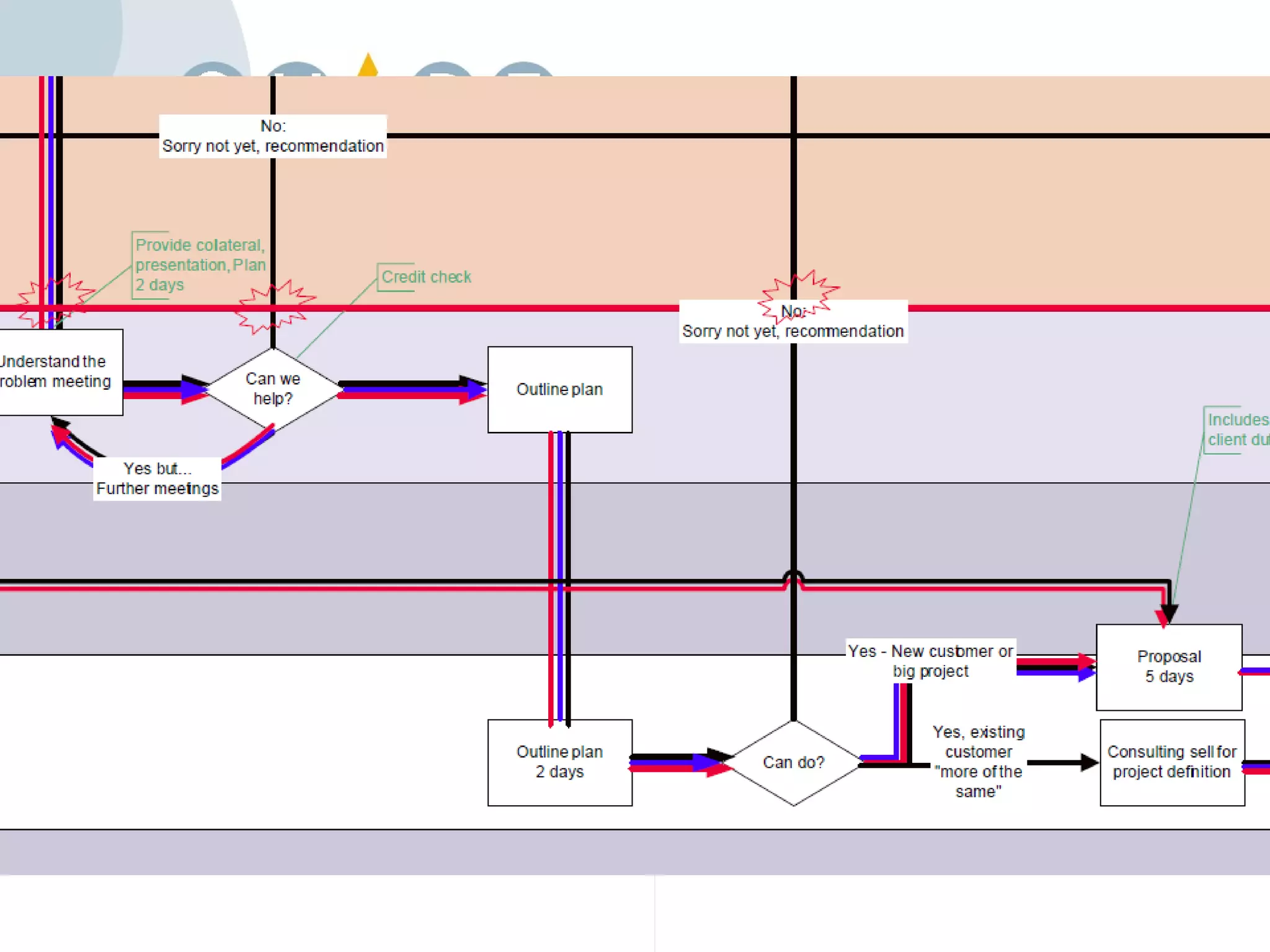
How to do it Divide the journey into stages Define what the customer needs at the end of each stage, and how long it should take Define who is involved - departments, channels, individuals, etc Plan the journey, using the routes that the customer (by segment) wants to use
 
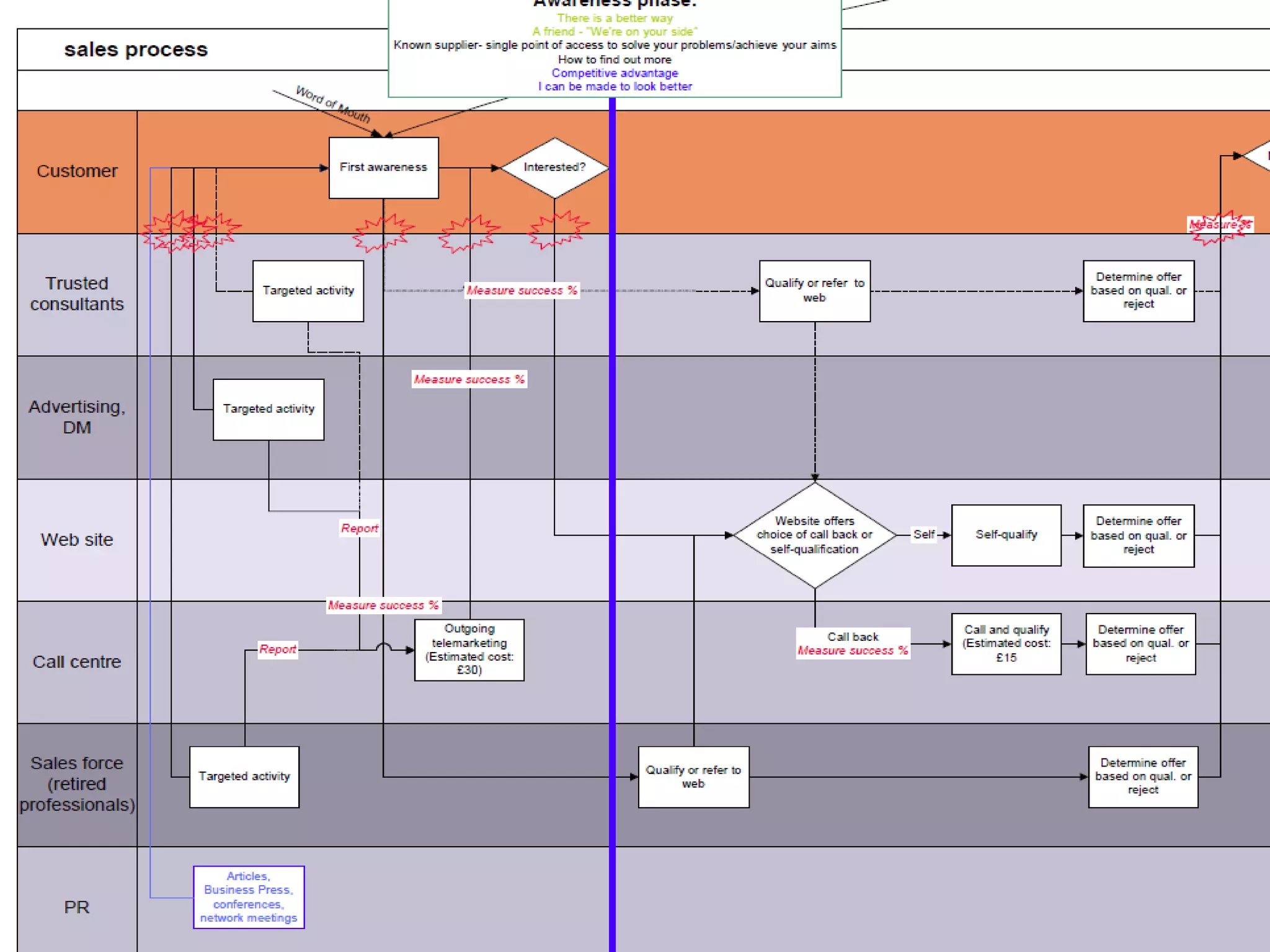
How to do it Divide the journey into stages Define what the customer needs at the end of each stage, and how long it should take Define who is involved - departments, channels, individuals, etc Plan the journey, using the routes that the customer (by segment) wants to use Plan the activities necessary to provide the customer with what he wants, when he wants it, where he wants it: What messages through which media at which stages Who does what and when
 
How to do it Divide the journey into stages Define what the customer needs at the end of each stage, and how long it should take Define who is involved - departments, channels, individuals, etc Plan the journey, using the routes that the customer (by segment) wants to use Plan the activities necessary to provide the customer with what he wants, when he wants it, where he wants it: What messages through which media at which stages Who does what and when Plan for things going wrong – assess where fail points are and how to correct them
How to do it Divide the journey into stages Define what the customer needs at the end of each stage, and how long it should take Define who is involved - departments, channels, individuals, etc Plan the journey, using the routes that the customer (by segment) wants to use Plan the activities necessary to provide the customer with what he wants, when he wants it, where he wants it: What messages through which media at which stages Who does what and when Plan for things going wrong – assess where fail points are and how to correct them Assess cost and time required for each activity
 
How to do it Divide the journey into stages Define what the customer needs at the end of each stage, and how long it should take Define who is involved - departments, channels, individuals, etc Plan the journey, using the routes that the customer (by segment) wants to use Plan the activities necessary to provide the customer with what he wants, when he wants it, where he wants it: What messages through which media at which stages Who does what and when Plan for things going wrong – assess where fail points are and how to correct them Assess cost and time required for each activity Measure effectiveness and customer satisfaction at each stage
 
“ Interesting things” Delivery improves Opportunities and new ideas are spotted Consensus building Money is saved Customers are happier Delivery is consistent Measurement processes can be built in Delivery can be simplified and shortened
Benefits Costs fully understood Wasteful processes can be avoided Service elements become scalable Staff training easier Role definition easier
Thank you! Peter Martin [email_address] www.shape-the-future.com 0800 781 4045

Customer journey mapping - Peter

  • 1.
    Customer journey mappingJury’s Inn 29 April 2010
  • 2.
  • 3.
    Why bother? Maximisecustomer satisfaction Reduce effort Optimise marketing spend Minimise waste Deliver the best possible customer experience for the least cost Perpetuate good practice and eradicate bad practice
  • 4.
    Why bother? –2 Because interesting things happen…
  • 5.
    End result Happycustomer: Buys more Costs less To acquire To keep To satisfy Buys more often Your best promotional medium
  • 6.
    How to getthere Understand: what the customer wants – at every stage how they’d find out about it where they’d go for more information how they want to buy it how they want it delivered how much support they need when where over what time scale
  • 7.
    Understanding how customers want to transact, how many convert from each stage to the next, via which media and at what cost will give you your marketing ROI, the value of each customer at every stage and justify everything you spend. Routes to market %? %? %? %? %? %? %? %? %? %? %? %? %? %? %?
  • 8.
  • 9.
    Importance of ProcessEvery customer goes through a process on every transaction Different customer segments will want difference experiences of the process, depending on: likes and dislikes personal characteristics buying context level of experience So the process may need to be different for different segments
  • 10.
    Moments of truthUnderstand all the touch points - not too many or too few Plan them in minute detail Plan for things going wrong
  • 11.
    How to doit Divide the journey into stages Define what the customer needs at the end of each stage, and how long it should take
  • 12.
  • 13.
    How to doit Divide the journey into stages Define what the customer needs at the end of each stage, and how long it should take Define who is involved - departments, channels, individuals
  • 14.
  • 15.
    How to doit Divide the journey into stages Define what the customer needs at the end of each stage, and how long it should take Define who is involved - departments, channels, individuals, etc Plan the journey, using the routes that the customer (by segment) wants to use
  • 16.
  • 17.
    How to doit Divide the journey into stages Define what the customer needs at the end of each stage, and how long it should take Define who is involved - departments, channels, individuals, etc Plan the journey, using the routes that the customer (by segment) wants to use Plan the activities necessary to provide the customer with what he wants, when he wants it, where he wants it: What messages through which media at which stages Who does what and when
  • 18.
  • 19.
    How to doit Divide the journey into stages Define what the customer needs at the end of each stage, and how long it should take Define who is involved - departments, channels, individuals, etc Plan the journey, using the routes that the customer (by segment) wants to use Plan the activities necessary to provide the customer with what he wants, when he wants it, where he wants it: What messages through which media at which stages Who does what and when Plan for things going wrong – assess where fail points are and how to correct them
  • 20.
    How to doit Divide the journey into stages Define what the customer needs at the end of each stage, and how long it should take Define who is involved - departments, channels, individuals, etc Plan the journey, using the routes that the customer (by segment) wants to use Plan the activities necessary to provide the customer with what he wants, when he wants it, where he wants it: What messages through which media at which stages Who does what and when Plan for things going wrong – assess where fail points are and how to correct them Assess cost and time required for each activity
  • 21.
  • 22.
    How to doit Divide the journey into stages Define what the customer needs at the end of each stage, and how long it should take Define who is involved - departments, channels, individuals, etc Plan the journey, using the routes that the customer (by segment) wants to use Plan the activities necessary to provide the customer with what he wants, when he wants it, where he wants it: What messages through which media at which stages Who does what and when Plan for things going wrong – assess where fail points are and how to correct them Assess cost and time required for each activity Measure effectiveness and customer satisfaction at each stage
  • 23.
  • 24.
    “ Interesting things”Delivery improves Opportunities and new ideas are spotted Consensus building Money is saved Customers are happier Delivery is consistent Measurement processes can be built in Delivery can be simplified and shortened
  • 25.
    Benefits Costs fullyunderstood Wasteful processes can be avoided Service elements become scalable Staff training easier Role definition easier
  • 26.
    Thank you! PeterMartin [email_address] www.shape-the-future.com 0800 781 4045