Navigating Environmental and Climate Change Policies: What You Need to Know to Protect Business Assets and Minimize Liability Cindy Bishop Gardere Wynne Sewell LLP Dallas, Texas www.gardere.com April 21, 2009
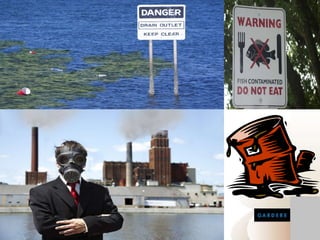
What Does Environmental Liability Mean to You?
 
 
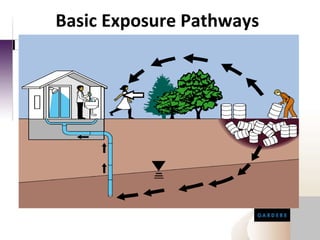
Basic Exposure Pathways
What’s Different Now? Increased Enforcement Increased Liability Increased Emphasis on Closure Obligations = Increased Due Diligence
Minimizing Liability During Due Diligence Preparing for Greenhouse Gas Regulation  Increased Due Diligence
All Appropriate Inquiry “ All appropriate inquiry” is the process of evaluating a property’s environmental conditions and assessing potential contamination liability prior to its acquisition. Possible Defense under CERCLA Requirement from Most Lenders before Purchase EPA and States regulate what constitutes “all appropriate inquiry.”  e.g., American Society for Testing and Materials (“ASTM”)  Phase I Environmental Site Assessment Standard  (E 1527)
Phase I Environmental Site Assessment (ESA) Interviews, Records Searches, Site Visit, Historical Research ASTM E-1527 Phase II ESA Collect soil, groundwater, sediment, surface water samples Environmental Due Diligence Elements
Not properly signed by Environmental Professional.   ‘‘ [I, We] declare that, to the best of [my, our] professional knowledge and belief, [I, we] meet the definition of Environmental Professional as defined in §312.10 of this part.’’ ‘‘[I, We] have the specific qualifications based on education, training, and experience to assess a property of the nature, history, and setting of the subject property. [I, We] have developed and performed the all appropriate inquiries in conformance with the standards and practices set forth in 40 CFR Part 312.’’ Acquiring Property The Due Diligence Standard Problem Area
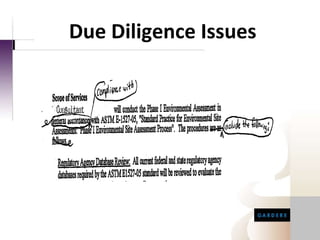
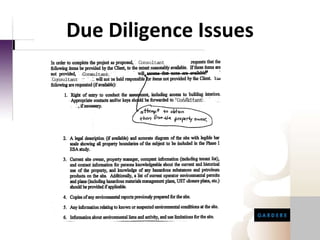
Due Diligence Issues
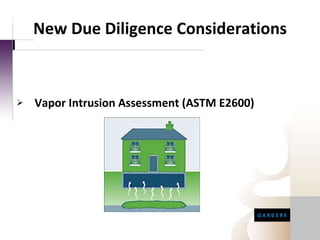
New Due Diligence Considerations Vapor Intrusion Assessment (ASTM E2600)
Increased Closure Obligations
What Changes Are Triggered? Transfer, sale, closure or abandonment of a “facility” Scaling back operations, consolidations and facility closures Changing production lines, raw materials, suppliers Materials reuse, repurposing, recycling Reducing air emissions or water usage and changing waste handling practices Changing material storage practices
Increased Closure Obligations Identify the effect on operations. Gather all permits, regulations, orders, citizen complaints, environmental compliance audits or assessments.  Evaluate the proposed operational change against the obligations. Timely communication to management and regulating authorities where applicable.
Closure/Slowdown  Effect on Permits Idle petroleum USTs update UST registration status or permanently remove and close USTs Significantly reduced wastewater volume advance notice to permitting authority (e.g., municipal wastewater treatment authority) may be required Changes in fuel or hazardous substance storage update plans, including SPCC (fuel), SWPPP (stormwater) Operational changes that impact environmental permits include:
Post Closure Post Closure Audits:  Purpose Required by some regulations Establish a baseline Marketing tool  Essential for redevelopment How to address concerns? Audit Privilege Voluntary disclosure to the government Disclosure in transactions (reps & warranties)
Climate Change “ Greenhouse Gases” Carbon Dioxide Methane Nitrous Oxide Hydrofluorocarbons Perflurorcarbons Sulfur hexafluoride
New Proposed Reporting Requirements Regulation of Greenhouse Gases New Air Permitting Requirements SEC disclosure obligations Litigation Climate Change
Climate Change March 10, 2009 – EPA proposed rule requiring reporting of GHG for certain sources April 17, 2009 – EPA submits issued proposed rule declaring that GHG are dangerous to human health and the environment What does that mean to me?
Climate Change Certain industrial facilities Vehicle manufacturers Facilities that emit 25,000 tons/yr CO 2 e Reporting proposed to begin in 2011 for calendar year 2010 Comments due by May 25, 2009 You  may  have to report your GHG emissions to EPA:
Climate Change GHG Regulation Cap & Trade SEC Disclosure Litigation
Summary More diligent due diligence Be aware of closure requirements Consider GHG emission impacts
Gardere Wynne Sewell LLP   Cindy Bishop 1601 Elm St., Suite 3000 Dallas, Texas  75201 Phone: 214.999.4506  Fax:  214.999.3506 [email_address]

Current Issues In Environmental Liability

  • 1.
    Navigating Environmental andClimate Change Policies: What You Need to Know to Protect Business Assets and Minimize Liability Cindy Bishop Gardere Wynne Sewell LLP Dallas, Texas www.gardere.com April 21, 2009
  • 2.
    What Does EnvironmentalLiability Mean to You?
  • 3.
  • 4.
  • 5.
  • 6.
    What’s Different Now?Increased Enforcement Increased Liability Increased Emphasis on Closure Obligations = Increased Due Diligence
  • 7.
    Minimizing Liability DuringDue Diligence Preparing for Greenhouse Gas Regulation Increased Due Diligence
  • 8.
    All Appropriate Inquiry“ All appropriate inquiry” is the process of evaluating a property’s environmental conditions and assessing potential contamination liability prior to its acquisition. Possible Defense under CERCLA Requirement from Most Lenders before Purchase EPA and States regulate what constitutes “all appropriate inquiry.” e.g., American Society for Testing and Materials (“ASTM”) Phase I Environmental Site Assessment Standard (E 1527)
  • 9.
    Phase I EnvironmentalSite Assessment (ESA) Interviews, Records Searches, Site Visit, Historical Research ASTM E-1527 Phase II ESA Collect soil, groundwater, sediment, surface water samples Environmental Due Diligence Elements
  • 10.
    Not properly signedby Environmental Professional. ‘‘ [I, We] declare that, to the best of [my, our] professional knowledge and belief, [I, we] meet the definition of Environmental Professional as defined in §312.10 of this part.’’ ‘‘[I, We] have the specific qualifications based on education, training, and experience to assess a property of the nature, history, and setting of the subject property. [I, We] have developed and performed the all appropriate inquiries in conformance with the standards and practices set forth in 40 CFR Part 312.’’ Acquiring Property The Due Diligence Standard Problem Area
  • 11.
  • 12.
  • 13.
    New Due DiligenceConsiderations Vapor Intrusion Assessment (ASTM E2600)
  • 14.
  • 15.
    What Changes AreTriggered? Transfer, sale, closure or abandonment of a “facility” Scaling back operations, consolidations and facility closures Changing production lines, raw materials, suppliers Materials reuse, repurposing, recycling Reducing air emissions or water usage and changing waste handling practices Changing material storage practices
  • 16.
    Increased Closure ObligationsIdentify the effect on operations. Gather all permits, regulations, orders, citizen complaints, environmental compliance audits or assessments. Evaluate the proposed operational change against the obligations. Timely communication to management and regulating authorities where applicable.
  • 17.
    Closure/Slowdown Effecton Permits Idle petroleum USTs update UST registration status or permanently remove and close USTs Significantly reduced wastewater volume advance notice to permitting authority (e.g., municipal wastewater treatment authority) may be required Changes in fuel or hazardous substance storage update plans, including SPCC (fuel), SWPPP (stormwater) Operational changes that impact environmental permits include:
  • 18.
    Post Closure PostClosure Audits: Purpose Required by some regulations Establish a baseline Marketing tool Essential for redevelopment How to address concerns? Audit Privilege Voluntary disclosure to the government Disclosure in transactions (reps & warranties)
  • 19.
    Climate Change “Greenhouse Gases” Carbon Dioxide Methane Nitrous Oxide Hydrofluorocarbons Perflurorcarbons Sulfur hexafluoride
  • 20.
    New Proposed ReportingRequirements Regulation of Greenhouse Gases New Air Permitting Requirements SEC disclosure obligations Litigation Climate Change
  • 21.
    Climate Change March10, 2009 – EPA proposed rule requiring reporting of GHG for certain sources April 17, 2009 – EPA submits issued proposed rule declaring that GHG are dangerous to human health and the environment What does that mean to me?
  • 22.
    Climate Change Certainindustrial facilities Vehicle manufacturers Facilities that emit 25,000 tons/yr CO 2 e Reporting proposed to begin in 2011 for calendar year 2010 Comments due by May 25, 2009 You may have to report your GHG emissions to EPA:
  • 23.
    Climate Change GHGRegulation Cap & Trade SEC Disclosure Litigation
  • 24.
    Summary More diligentdue diligence Be aware of closure requirements Consider GHG emission impacts
  • 25.
    Gardere Wynne SewellLLP Cindy Bishop 1601 Elm St., Suite 3000 Dallas, Texas 75201 Phone: 214.999.4506 Fax: 214.999.3506 [email_address]