Tested
activities in the
classroom
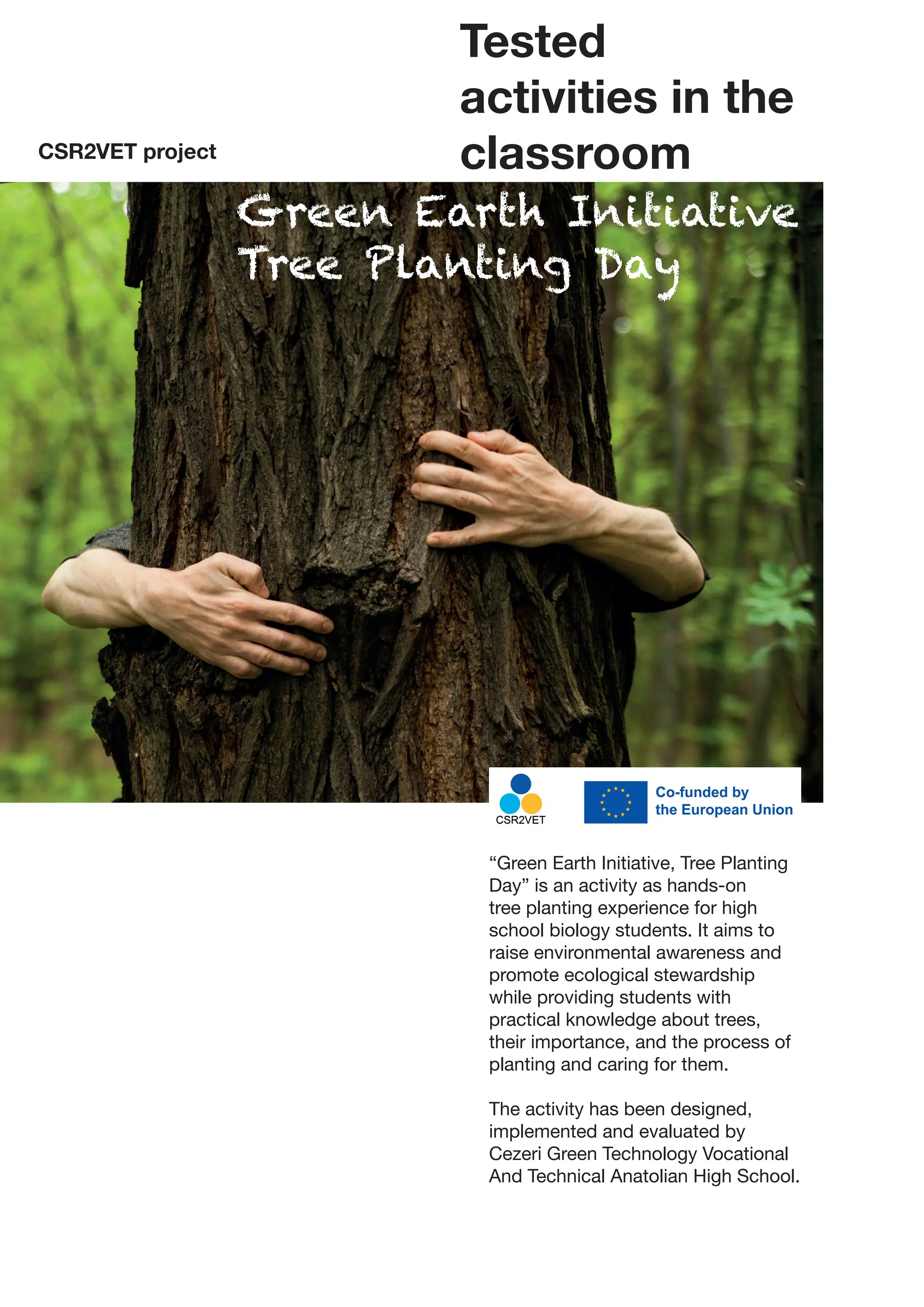
Green Earth Initiative
Tree Planting Day
CSR2VET project
“Green Earth Initiative, Tree Planting
Day” is an activity as hands-on
tree planting experience for high
school biology students. It aims to
raise environmental awareness and
promote ecological stewardship
while providing students with
practical knowledge about trees,
their importance, and the process of
planting and caring for them.
The activity has been designed,
implemented and evaluated by
Cezeri̇ Green Technology Vocational
And Technical Anatolian High School.
Objectives
2
• To instill an appreciation for the environment and the role of
trees in maintaining ecological balance.
• To teach students about the biology of trees, including their
anatomy and the process of photosynthesis.
• To provide a hands-on experience in planting and nurturing
trees.
• To foster teamwork, responsibility, and a sense of community
involvement.
Resources • Tree saplings (appropriate for the local climate and ecosystem)
• Shovels and gardening tools
• Gloves and safety equipment
• Watering cans or hoses
• Soil and compost
• Educational materials on tree biology and environmental
impact
Tipology
and duration
Learning
outcome
Typology
This is a hands-on, experiential learning
activity.
Duration
The activity can be completed in a single
day, but it’s advisable to have pre-activity
sessions on tree biology and post-activity
follow-ups for tree care. The entire project
can span a few weeks to a few months.
1. Knowledge of tree biology,
including parts of a tree,
photosynthesis, and the
role of trees in ecosystems.
2. Practical skills in tree
planting and care.
3. Awareness of
environmental issues and
the importance of tree
conservation.
4. Teamwork and leadership
skills.
5. A sense of responsibility
and connection to the
local community and
environment.
3
1. Pre-Activity Session: Conduct a classroom session on tree biology, emphasizing the
importance of trees in the environment and their role in carbon dioxide absorption and oxygen
production.
2. Selecting a Planting Site: Identify a suitable site within or near the school premises,
considering factors like soil type, sunlight, and local climate conditions.
3. Sourcing Saplings: Procure tree saplings that are native or well-suited to the local ecosystem.
4. Planting Day: On the designated day, students and teachers gather at the planting site. In
small groups, they dig holes, plant saplings, and add soil and compost. Proper planting
techniques should be demonstrated and supervised.
5. Aftercare: Teach students how to water, mulch, and care for the newly planted trees. Assign
responsibilities for ongoing care, such as watering schedules.
6. Follow-Up Sessions: Conduct post-activity sessions to monitor the growth of the trees and
reinforce the importance of tree care and environmental stewardship.
Tools to evaluate the activity
1. Observation and Participation Assess students’
active participation during the planting day, including
their ability to follow planting guidelines and work
collaboratively.
2. Quiz or Assessment Administer a quiz or written
assessment to evaluate students’ understanding of
tree biology and ecological concepts related to tree
planting.
3. Presentation or Report Have students create
presentations or reports on the activity, emphasizing
what they’ve learned, their contributions, and their
experiences.
4. Growth Monitoring Continuously monitor the growth
and health of the planted trees, and involve students
in this process. Assess their commitment to tree care.
5. Peer and Self-Evaluation Encourage students to
assess their own participation and that of their peers,
promoting self-reflection and teamwork.
By following this plan, students can actively engage
in a tree planting activity that not only enhances their
understanding of biology and ecology but also instills
a sense of environmental responsibility and community
involvement.
Methodology / Implementation
4
Strengths
Hands-On Learning
The activity provides students with a practical, experiential
way to learn about tree biology and environmental
conservation.
Environmental Impact
Planting trees contributes positively to the local environment
by enhancing air quality and promoting biodiversity.
Educational Integration
The activity aligns with the biology curriculum, reinforcing
classroom learning with real-world experience.
Weaknesses
Resource Limitations
The availability of resources
such as suitable planting
sites, tools, and saplings
can be limited.
Seasonal Limitations
The activity may be
constrained by seasonal
factors, as tree planting
is typically done during
specific times of the year.
Knowledge Gaps
Students may have limited
knowledge about tree
biology and environmental
concepts, which could
affect the effectiveness of
the learning experience.
Opportunities
Long-Term Impact
The activity can lead to a long-lasting positive
impact on the environment if students and
the school commit to ongoing tree care.
Community Partnerships
The project can foster partnerships with local
environmental organizations, businesses, or
government agencies for additional support
and resources.
Educational Outreach
Students can share their experiences and
knowledge with the broader community,
raising awareness of the importance of tree
planting.
Threats
Weather-Related Challenges
Unpredictable weather conditions, such
as droughts or heavy rain, can impact tree
survival and student participation.
Resource Shortages
The availability of saplings and resources
required for tree planting may be affected by
budget constraints or external factors.
The
SWOT
Analysis
The document is created to be used digitally. We encourage you to avoid
printing unless you feel it is absolutely necessary. In case you decide to
print we suggest choosing FSC 100% paper.
Funded by the European Union. Views and opinions expressed are
however those of the author(s) only and do not necessarily reflect those
of the European Union or the European Education and Culture Executive
Agency (EACEA). Neither the European Union nor EACEA can be held
responsible for them.

CSR_Module5_Green Earth Initiative, Tree Planting Day

  • 1.
    Tested activities in the classroom GreenEarth Initiative Tree Planting Day CSR2VET project “Green Earth Initiative, Tree Planting Day” is an activity as hands-on tree planting experience for high school biology students. It aims to raise environmental awareness and promote ecological stewardship while providing students with practical knowledge about trees, their importance, and the process of planting and caring for them. The activity has been designed, implemented and evaluated by Cezeri̇ Green Technology Vocational And Technical Anatolian High School.
  • 2.
    Objectives 2 • To instillan appreciation for the environment and the role of trees in maintaining ecological balance. • To teach students about the biology of trees, including their anatomy and the process of photosynthesis. • To provide a hands-on experience in planting and nurturing trees. • To foster teamwork, responsibility, and a sense of community involvement. Resources • Tree saplings (appropriate for the local climate and ecosystem) • Shovels and gardening tools • Gloves and safety equipment • Watering cans or hoses • Soil and compost • Educational materials on tree biology and environmental impact Tipology and duration Learning outcome Typology This is a hands-on, experiential learning activity. Duration The activity can be completed in a single day, but it’s advisable to have pre-activity sessions on tree biology and post-activity follow-ups for tree care. The entire project can span a few weeks to a few months. 1. Knowledge of tree biology, including parts of a tree, photosynthesis, and the role of trees in ecosystems. 2. Practical skills in tree planting and care. 3. Awareness of environmental issues and the importance of tree conservation. 4. Teamwork and leadership skills. 5. A sense of responsibility and connection to the local community and environment.
  • 3.
    3 1. Pre-Activity Session:Conduct a classroom session on tree biology, emphasizing the importance of trees in the environment and their role in carbon dioxide absorption and oxygen production. 2. Selecting a Planting Site: Identify a suitable site within or near the school premises, considering factors like soil type, sunlight, and local climate conditions. 3. Sourcing Saplings: Procure tree saplings that are native or well-suited to the local ecosystem. 4. Planting Day: On the designated day, students and teachers gather at the planting site. In small groups, they dig holes, plant saplings, and add soil and compost. Proper planting techniques should be demonstrated and supervised. 5. Aftercare: Teach students how to water, mulch, and care for the newly planted trees. Assign responsibilities for ongoing care, such as watering schedules. 6. Follow-Up Sessions: Conduct post-activity sessions to monitor the growth of the trees and reinforce the importance of tree care and environmental stewardship. Tools to evaluate the activity 1. Observation and Participation Assess students’ active participation during the planting day, including their ability to follow planting guidelines and work collaboratively. 2. Quiz or Assessment Administer a quiz or written assessment to evaluate students’ understanding of tree biology and ecological concepts related to tree planting. 3. Presentation or Report Have students create presentations or reports on the activity, emphasizing what they’ve learned, their contributions, and their experiences. 4. Growth Monitoring Continuously monitor the growth and health of the planted trees, and involve students in this process. Assess their commitment to tree care. 5. Peer and Self-Evaluation Encourage students to assess their own participation and that of their peers, promoting self-reflection and teamwork. By following this plan, students can actively engage in a tree planting activity that not only enhances their understanding of biology and ecology but also instills a sense of environmental responsibility and community involvement. Methodology / Implementation
  • 4.
    4 Strengths Hands-On Learning The activityprovides students with a practical, experiential way to learn about tree biology and environmental conservation. Environmental Impact Planting trees contributes positively to the local environment by enhancing air quality and promoting biodiversity. Educational Integration The activity aligns with the biology curriculum, reinforcing classroom learning with real-world experience. Weaknesses Resource Limitations The availability of resources such as suitable planting sites, tools, and saplings can be limited. Seasonal Limitations The activity may be constrained by seasonal factors, as tree planting is typically done during specific times of the year. Knowledge Gaps Students may have limited knowledge about tree biology and environmental concepts, which could affect the effectiveness of the learning experience. Opportunities Long-Term Impact The activity can lead to a long-lasting positive impact on the environment if students and the school commit to ongoing tree care. Community Partnerships The project can foster partnerships with local environmental organizations, businesses, or government agencies for additional support and resources. Educational Outreach Students can share their experiences and knowledge with the broader community, raising awareness of the importance of tree planting. Threats Weather-Related Challenges Unpredictable weather conditions, such as droughts or heavy rain, can impact tree survival and student participation. Resource Shortages The availability of saplings and resources required for tree planting may be affected by budget constraints or external factors. The SWOT Analysis
  • 5.
    The document iscreated to be used digitally. We encourage you to avoid printing unless you feel it is absolutely necessary. In case you decide to print we suggest choosing FSC 100% paper. Funded by the European Union. Views and opinions expressed are however those of the author(s) only and do not necessarily reflect those of the European Union or the European Education and Culture Executive Agency (EACEA). Neither the European Union nor EACEA can be held responsible for them.