Cryptocurrency
GUIDE FOR THE BEGINNER
Index
 How it begins
 What is cryptocurrency
 How it works
 Cryptocurrency features
 How would investing in cryptocurrency really works
 What is Blockchain
 What is ICO
Evolution of cryptocurrency
Although Bitcoin was the first established cryptocurrency, there had been previous attempts for
creating online currencies with ledgers secured by encryption, which were known as B-Money
and Bitgold, which were formulated but never fully developed.
Bitcoin became the world's first entirely virtual currency when it was introduced in January 2009
by Satoshi Nakamoto a pseudonymous name. Bitcoin uses p2p technology to operate with no
central authority or banks. Nobody owns or control Bitcoin and everyone take a part
As Bitcoin increases in popularity and the idea of decentralized and encrypted currencies catch
on, the first alternative crypto currencies appear. These are sometimes known as altcoin and
generally try to improve on the original Bitcoin design by offering greater speed, anonymity or
some other advantage. Among the first to emerge were Namecoin and Litecoin. Currently there
are over 1,000 crypto currencies in circulation with new ones frequently appearing
What is cryptocurrency
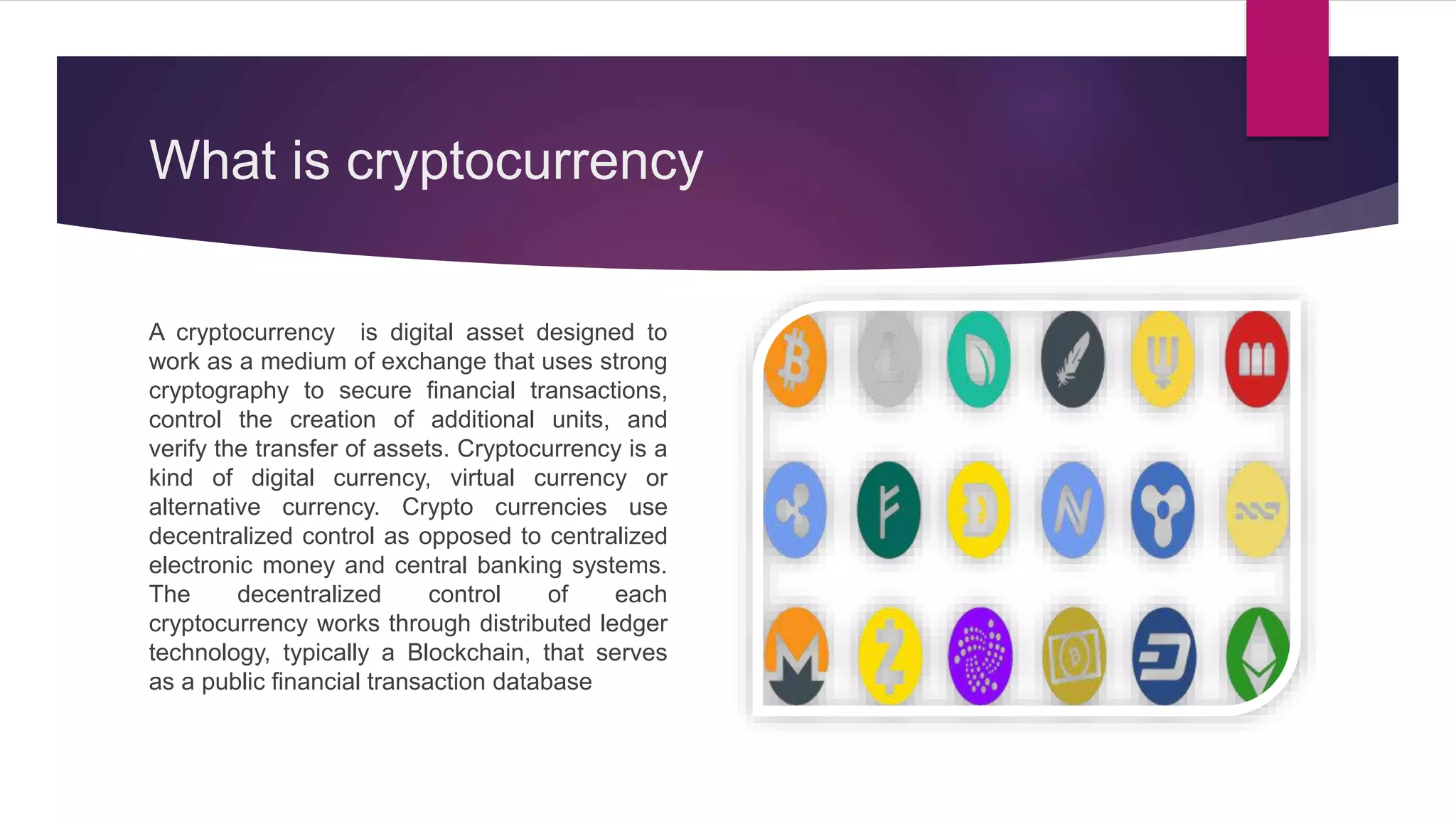
A cryptocurrency is digital asset designed to
work as a medium of exchange that uses strong
cryptography to secure financial transactions,
control the creation of additional units, and
verify the transfer of assets. Cryptocurrency is a
kind of digital currency, virtual currency or
alternative currency. Crypto currencies use
decentralized control as opposed to centralized
electronic money and central banking systems.
The decentralized control of each
cryptocurrency works through distributed ledger
technology, typically a Blockchain, that serves
as a public financial transaction database
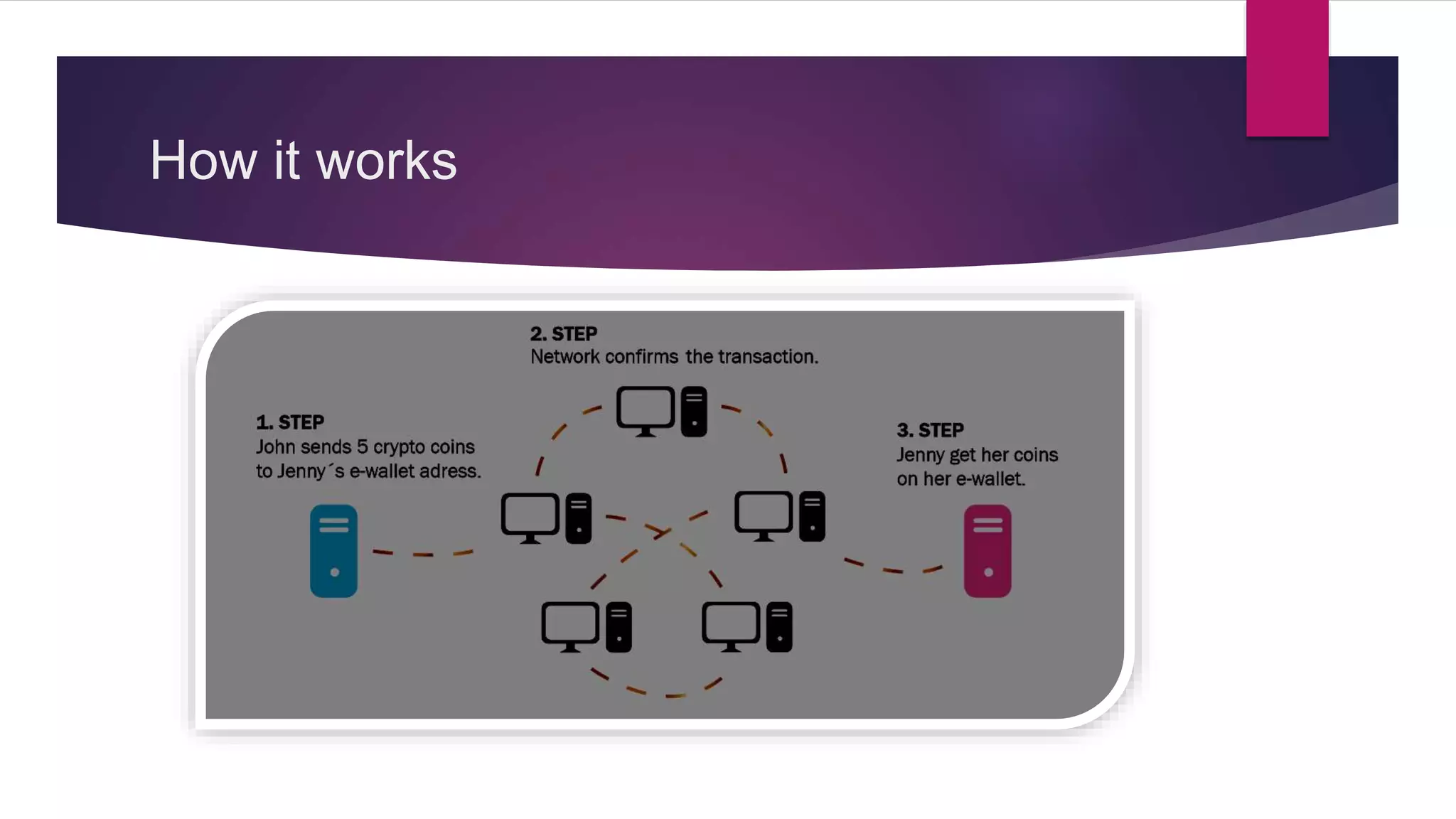
How it works
Cryptocurrency Features
 Trustless
 Immutable
 Decentralized
How would “investing” in cryptocurrency even really work?
 You find an exchange system which supports trading in one currency for another
 You pick a currency you want to trade in to the exchange
 You pick a digital currency that you want to receive in return
 The currency “pair” (USD / Bitcoin) have a certain “exchange rate”
 The exchange accepts your currency and then issues you the digital currency
 You take the digital currency that you were given and store that in a digital “wallet”
Now you’ve bought the digital currency from an exchange and you are holding that currency in a
wallet.
Exchange
The most common place where people buy and trade cryptocurrency is on the
exchanges. Exchanges are places where you may buy and sell your crypto, using fiat
(US dollars) or trading one cryptocurrency for another.
Some Common Exchanges are:
Coinbase
Coinmama
Bitpanda
Kraken
Cryptocurrency Wallets
 Simplified definition: It’s software program that stores your coin.
 Technical definition: It’s a software program that stores your private and public
keys (they come in pairs), enabling you to send and receive coins through the
Blockchain, as well as monitoring your balance.
First off, digital wallets are quite different as compared to your physical wallet. Instead
of storing money, digital wallets store private and public keys. Private keys are like
your PIN number to access your bank account, while public keys are similar to your
bank account number. When you send Bitcoin, you’re sending VALUE in the form of
a transaction, transferring the ownership of your coin to the recipient. In order for the
recipient to spend the newly-transferred Bitcoin, his private keys must match the
public address that you sent the Bitcoin to.
Types of wallets
 Online wallet: Accessed from the web.
 Software wallet: Application downloaded to mobile, computer or tablet.
 Hardware wallet: Physical device.
 Paper wallet: Private keys can be stores on a paper network
Risk Factors
 Loss or destruction of the private key
 Other cyber security risks including malicious activity
 Other risks related to trading platforms and exchanges
 Regulations preventing or restricting trading of digital currencies
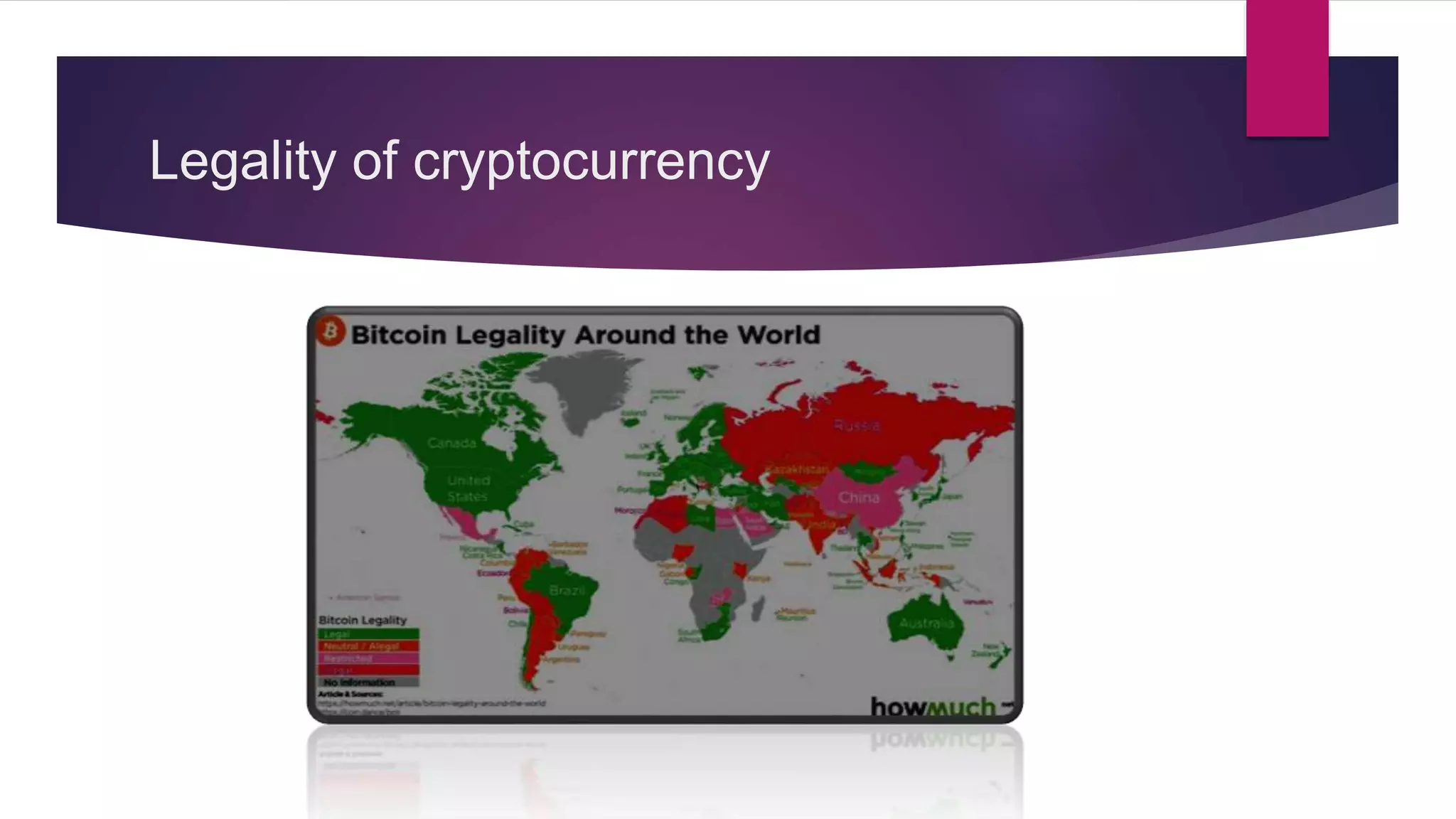
Legality of cryptocurrency
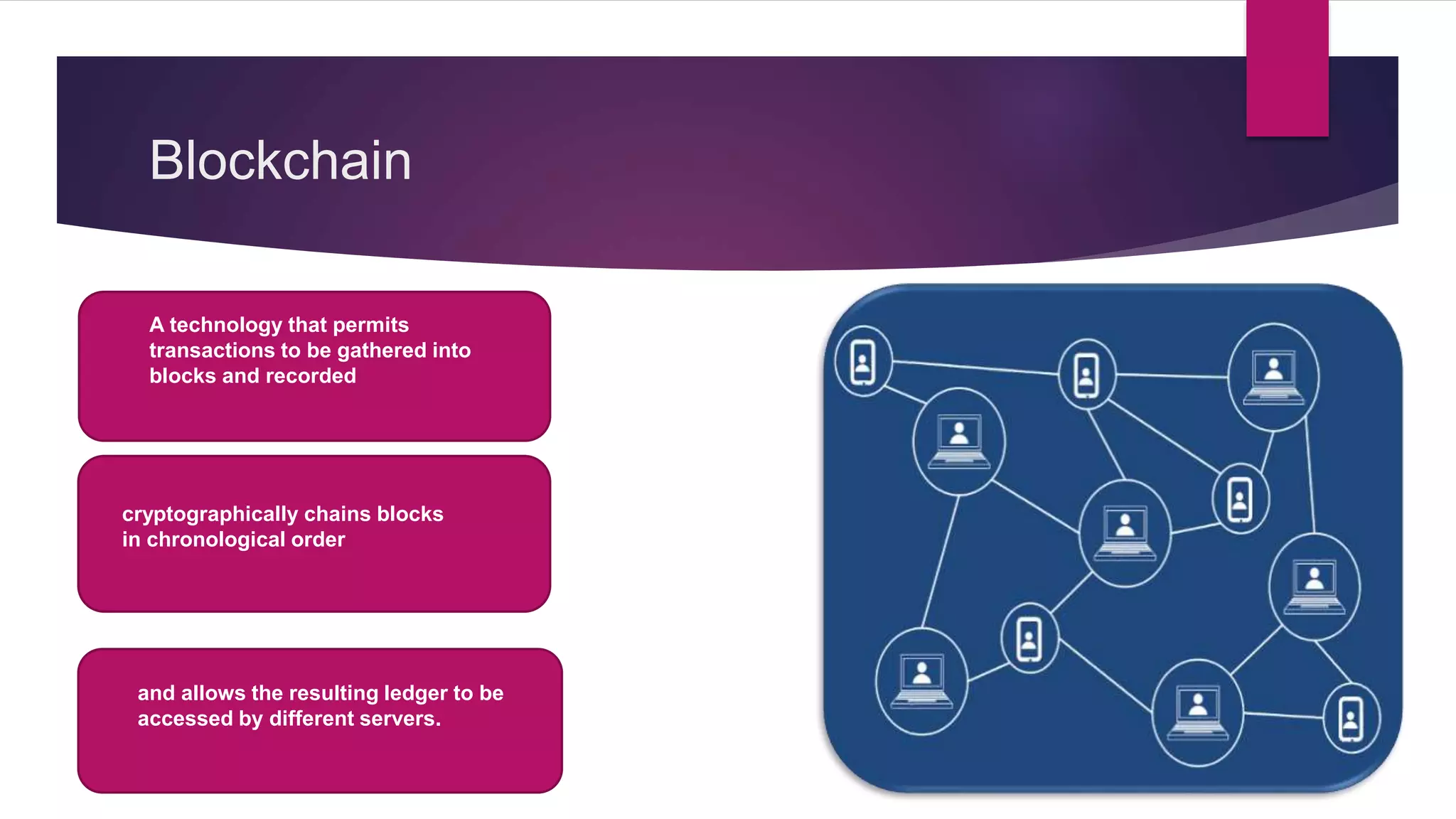
Blockchain
cryptographically chains blocks
in chronological order
and allows the resulting ledger to be
accessed by different servers.
A technology that permits
transactions to be gathered into
blocks and recorded
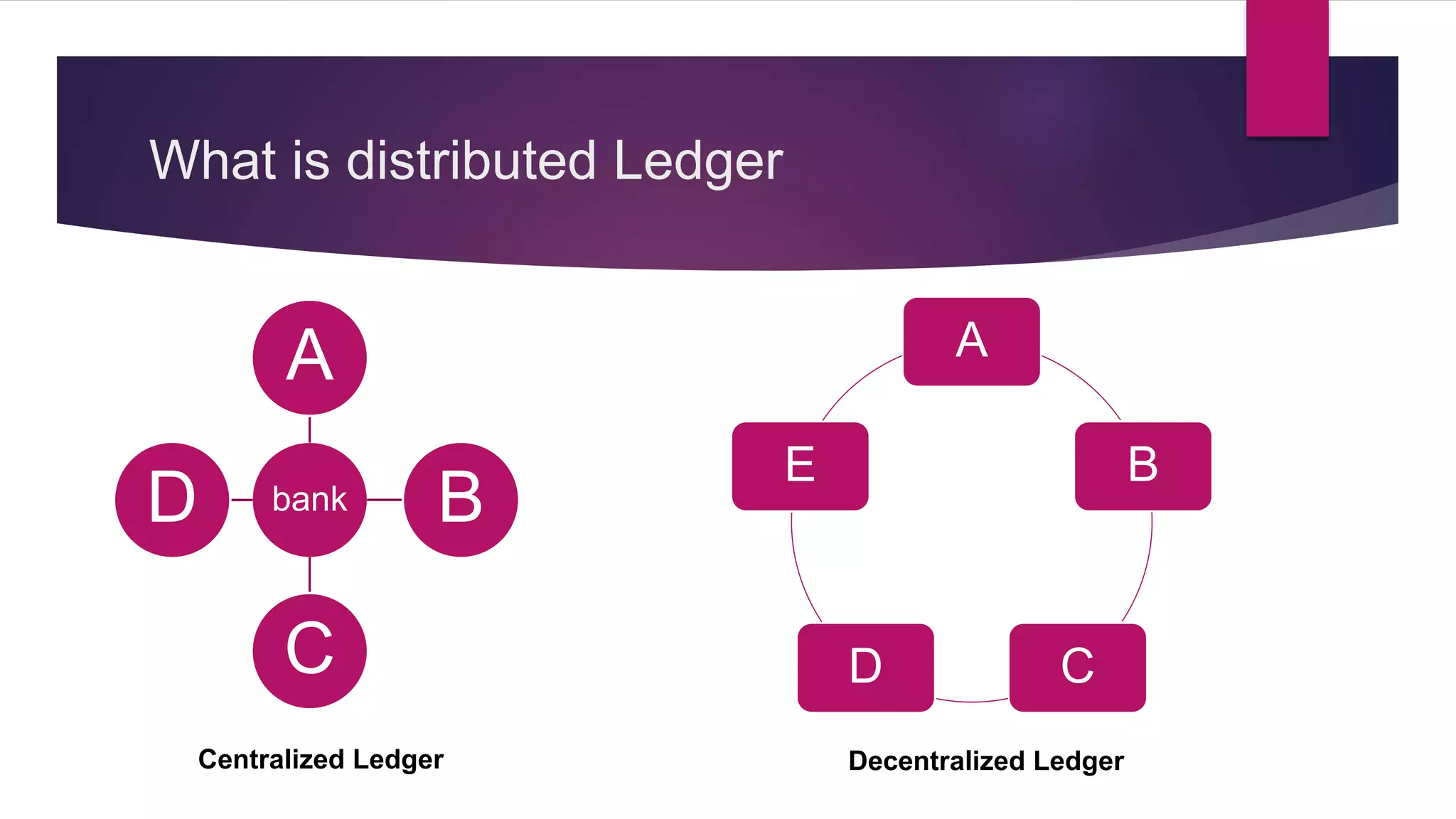
What is distributed Ledger
bank
A
B
C
D
A
B
CD
E
Centralized Ledger Decentralized Ledger
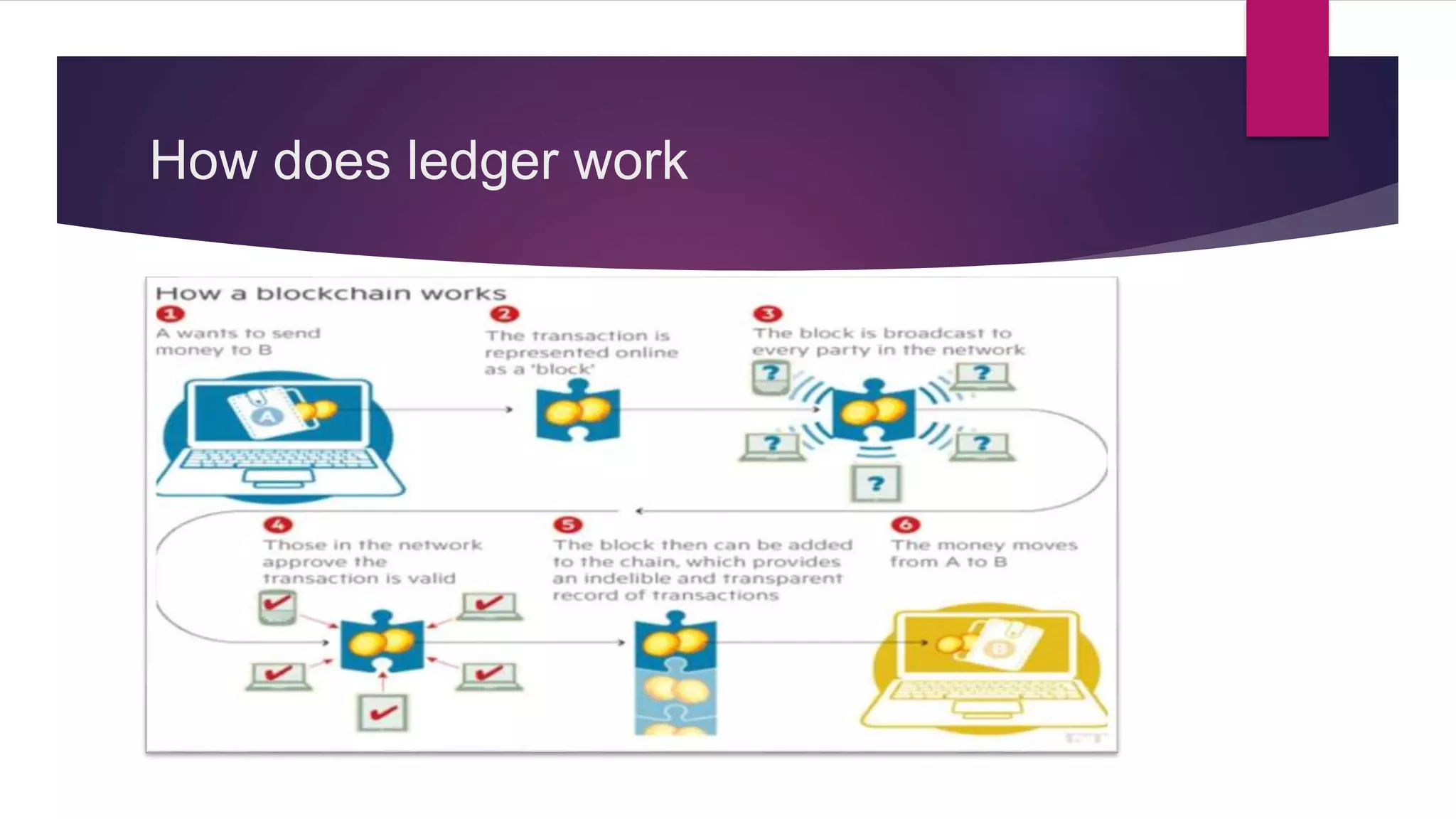
How does ledger work
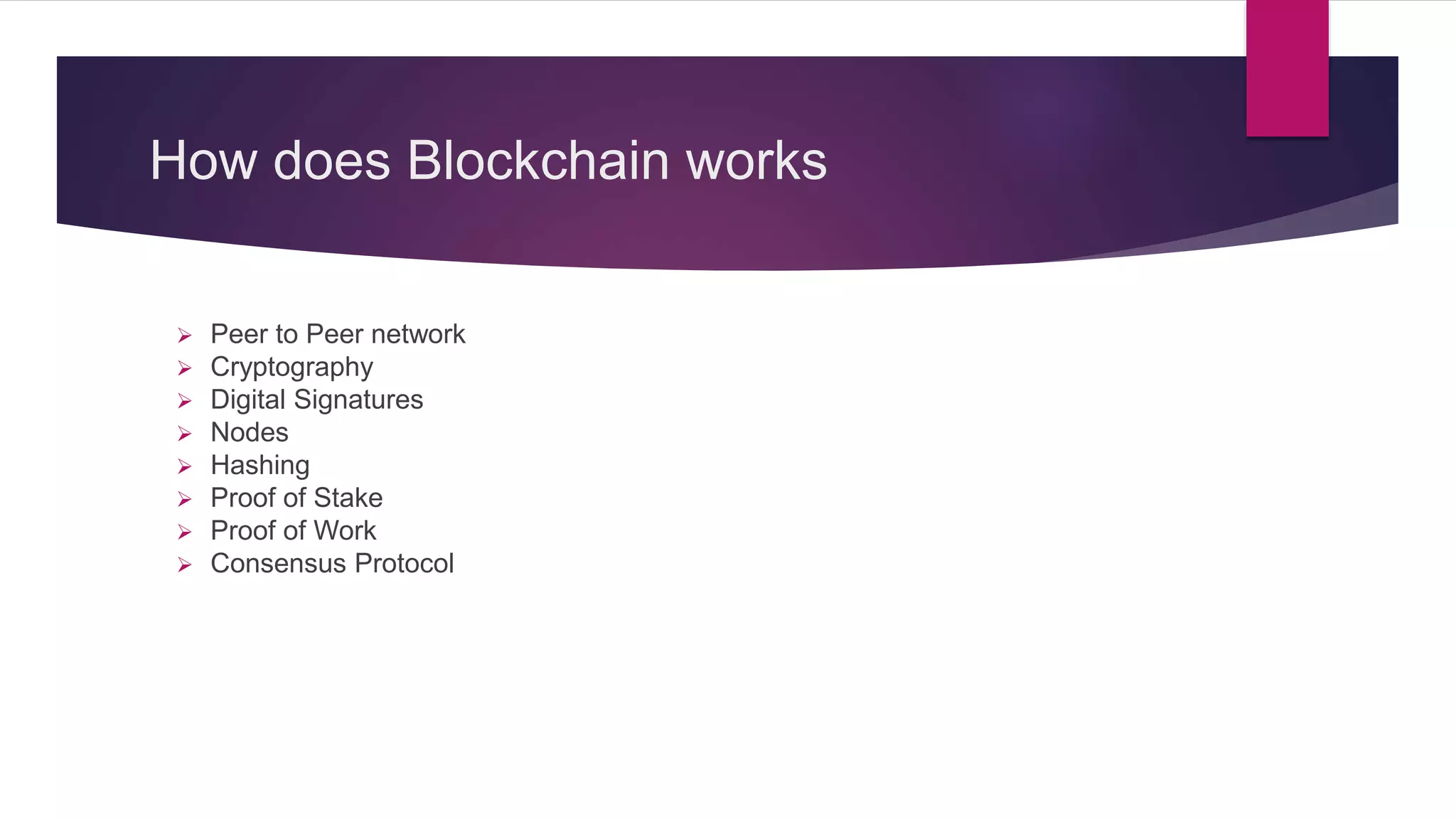
How does Blockchain works
 Peer to Peer network
 Cryptography
 Digital Signatures
 Nodes
 Hashing
 Proof of Stake
 Proof of Work
 Consensus Protocol
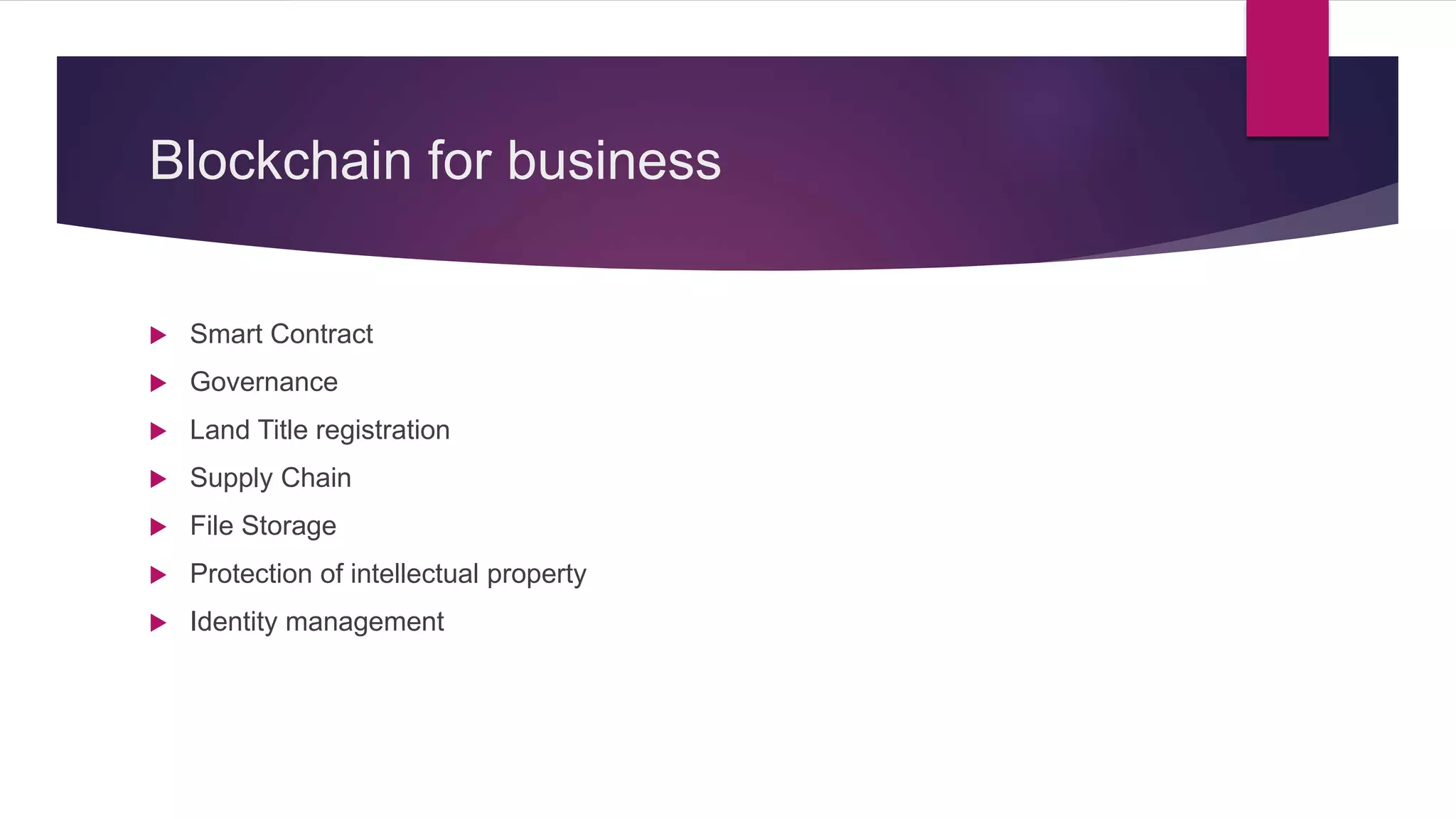
Blockchain for business
 Smart Contract
 Governance
 Land Title registration
 Supply Chain
 File Storage
 Protection of intellectual property
 Identity management
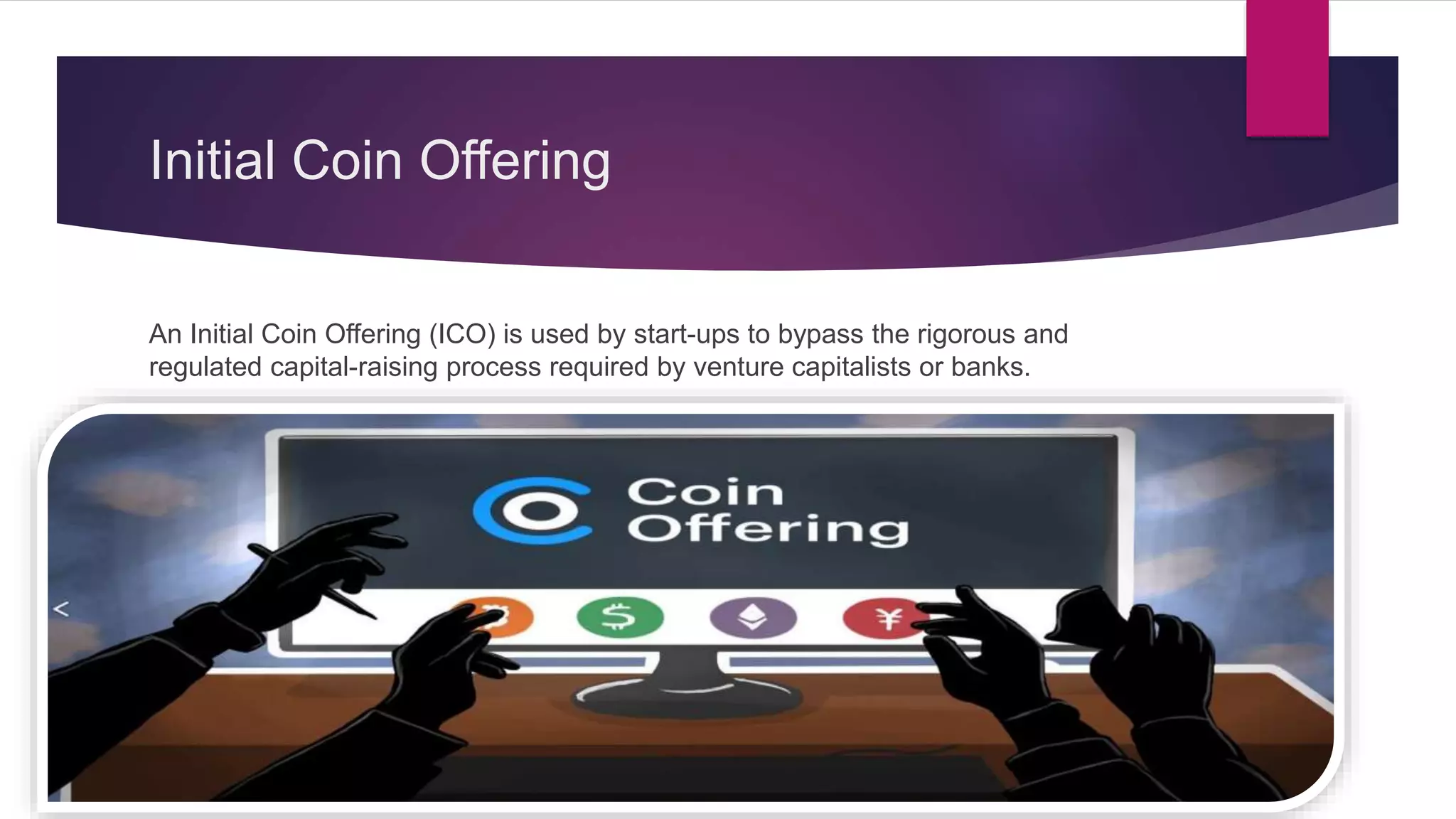
Initial Coin Offering
An Initial Coin Offering (ICO) is used by start-ups to bypass the rigorous and
regulated capital-raising process required by venture capitalists or banks.
What exactly is an ICO
 An ICO involves selling a new digital currency or token as a part of a way for a
company to raise funds for the new project
 If the project goes well, the value of token rises then investor made the profit
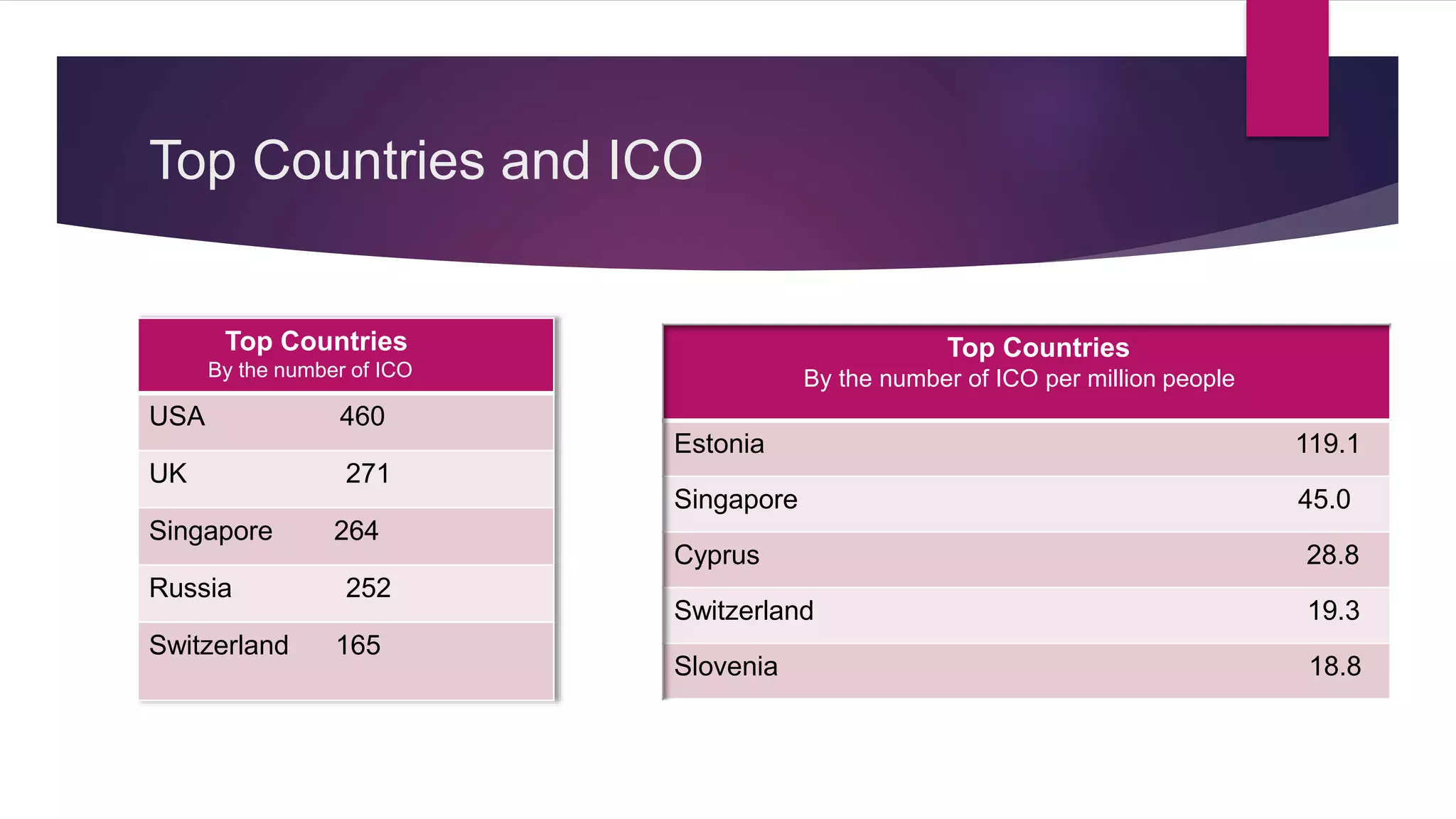
Top Countries and ICO
Top Countries
By the number of ICO
USA 460
UK 271
Singapore 264
Russia 252
Switzerland 165
Top Countries
By the number of ICO per million people
Estonia 119.1
Singapore 45.0
Cyprus 28.8
Switzerland 19.3
Slovenia 18.8
Know before you invest in ICO
 Research on upcoming ICO
 Perform your due diligence
 Open an exchange account
 Opening your own wallets to participate in ICO
 Follow the ICO instructions

Cryptocurrency: Guide for the beginner

  • 1.
  • 2.
    Index  How itbegins  What is cryptocurrency  How it works  Cryptocurrency features  How would investing in cryptocurrency really works  What is Blockchain  What is ICO
  • 3.
    Evolution of cryptocurrency AlthoughBitcoin was the first established cryptocurrency, there had been previous attempts for creating online currencies with ledgers secured by encryption, which were known as B-Money and Bitgold, which were formulated but never fully developed. Bitcoin became the world's first entirely virtual currency when it was introduced in January 2009 by Satoshi Nakamoto a pseudonymous name. Bitcoin uses p2p technology to operate with no central authority or banks. Nobody owns or control Bitcoin and everyone take a part As Bitcoin increases in popularity and the idea of decentralized and encrypted currencies catch on, the first alternative crypto currencies appear. These are sometimes known as altcoin and generally try to improve on the original Bitcoin design by offering greater speed, anonymity or some other advantage. Among the first to emerge were Namecoin and Litecoin. Currently there are over 1,000 crypto currencies in circulation with new ones frequently appearing
  • 4.
    What is cryptocurrency Acryptocurrency is digital asset designed to work as a medium of exchange that uses strong cryptography to secure financial transactions, control the creation of additional units, and verify the transfer of assets. Cryptocurrency is a kind of digital currency, virtual currency or alternative currency. Crypto currencies use decentralized control as opposed to centralized electronic money and central banking systems. The decentralized control of each cryptocurrency works through distributed ledger technology, typically a Blockchain, that serves as a public financial transaction database
  • 5.
  • 6.
    Cryptocurrency Features  Trustless Immutable  Decentralized
  • 7.
    How would “investing”in cryptocurrency even really work?  You find an exchange system which supports trading in one currency for another  You pick a currency you want to trade in to the exchange  You pick a digital currency that you want to receive in return  The currency “pair” (USD / Bitcoin) have a certain “exchange rate”  The exchange accepts your currency and then issues you the digital currency  You take the digital currency that you were given and store that in a digital “wallet” Now you’ve bought the digital currency from an exchange and you are holding that currency in a wallet.
  • 8.
    Exchange The most commonplace where people buy and trade cryptocurrency is on the exchanges. Exchanges are places where you may buy and sell your crypto, using fiat (US dollars) or trading one cryptocurrency for another. Some Common Exchanges are: Coinbase Coinmama Bitpanda Kraken
  • 9.
    Cryptocurrency Wallets  Simplifieddefinition: It’s software program that stores your coin.  Technical definition: It’s a software program that stores your private and public keys (they come in pairs), enabling you to send and receive coins through the Blockchain, as well as monitoring your balance. First off, digital wallets are quite different as compared to your physical wallet. Instead of storing money, digital wallets store private and public keys. Private keys are like your PIN number to access your bank account, while public keys are similar to your bank account number. When you send Bitcoin, you’re sending VALUE in the form of a transaction, transferring the ownership of your coin to the recipient. In order for the recipient to spend the newly-transferred Bitcoin, his private keys must match the public address that you sent the Bitcoin to.
  • 10.
    Types of wallets Online wallet: Accessed from the web.  Software wallet: Application downloaded to mobile, computer or tablet.  Hardware wallet: Physical device.  Paper wallet: Private keys can be stores on a paper network
  • 11.
    Risk Factors  Lossor destruction of the private key  Other cyber security risks including malicious activity  Other risks related to trading platforms and exchanges  Regulations preventing or restricting trading of digital currencies
  • 12.
  • 13.
    Blockchain cryptographically chains blocks inchronological order and allows the resulting ledger to be accessed by different servers. A technology that permits transactions to be gathered into blocks and recorded
  • 14.
    What is distributedLedger bank A B C D A B CD E Centralized Ledger Decentralized Ledger
  • 15.
  • 16.
    How does Blockchainworks  Peer to Peer network  Cryptography  Digital Signatures  Nodes  Hashing  Proof of Stake  Proof of Work  Consensus Protocol
  • 17.
    Blockchain for business Smart Contract  Governance  Land Title registration  Supply Chain  File Storage  Protection of intellectual property  Identity management
  • 18.
    Initial Coin Offering AnInitial Coin Offering (ICO) is used by start-ups to bypass the rigorous and regulated capital-raising process required by venture capitalists or banks.
  • 19.
    What exactly isan ICO  An ICO involves selling a new digital currency or token as a part of a way for a company to raise funds for the new project  If the project goes well, the value of token rises then investor made the profit
  • 20.
    Top Countries andICO Top Countries By the number of ICO USA 460 UK 271 Singapore 264 Russia 252 Switzerland 165 Top Countries By the number of ICO per million people Estonia 119.1 Singapore 45.0 Cyprus 28.8 Switzerland 19.3 Slovenia 18.8
  • 21.
    Know before youinvest in ICO  Research on upcoming ICO  Perform your due diligence  Open an exchange account  Opening your own wallets to participate in ICO  Follow the ICO instructions