3
 Customer Relationship Management
 Term applied to processes implemented by a company
to handle its contact with its customers
 It is process or methodology used to learn more about
customers' needs and behaviors in order to develop
stronger relationships with them.
 set of methodologies, software, and usually Internet
capabilities that help an enterprise manage customer
relationships in an organized way.
 CRM is a software-based approach to handling customer
relationships
 Relevant data for customer profile is captured with the help of
software.
 Necessary information is captured from prospective customers.
 CRM system stores data in common customer database.
 The database integrates customer account information and present
it in desirable format to the company.
 This database can be accessed on Internet, intranet and on other
network links.
 The data is used for sales, marketing, services and other
applications.
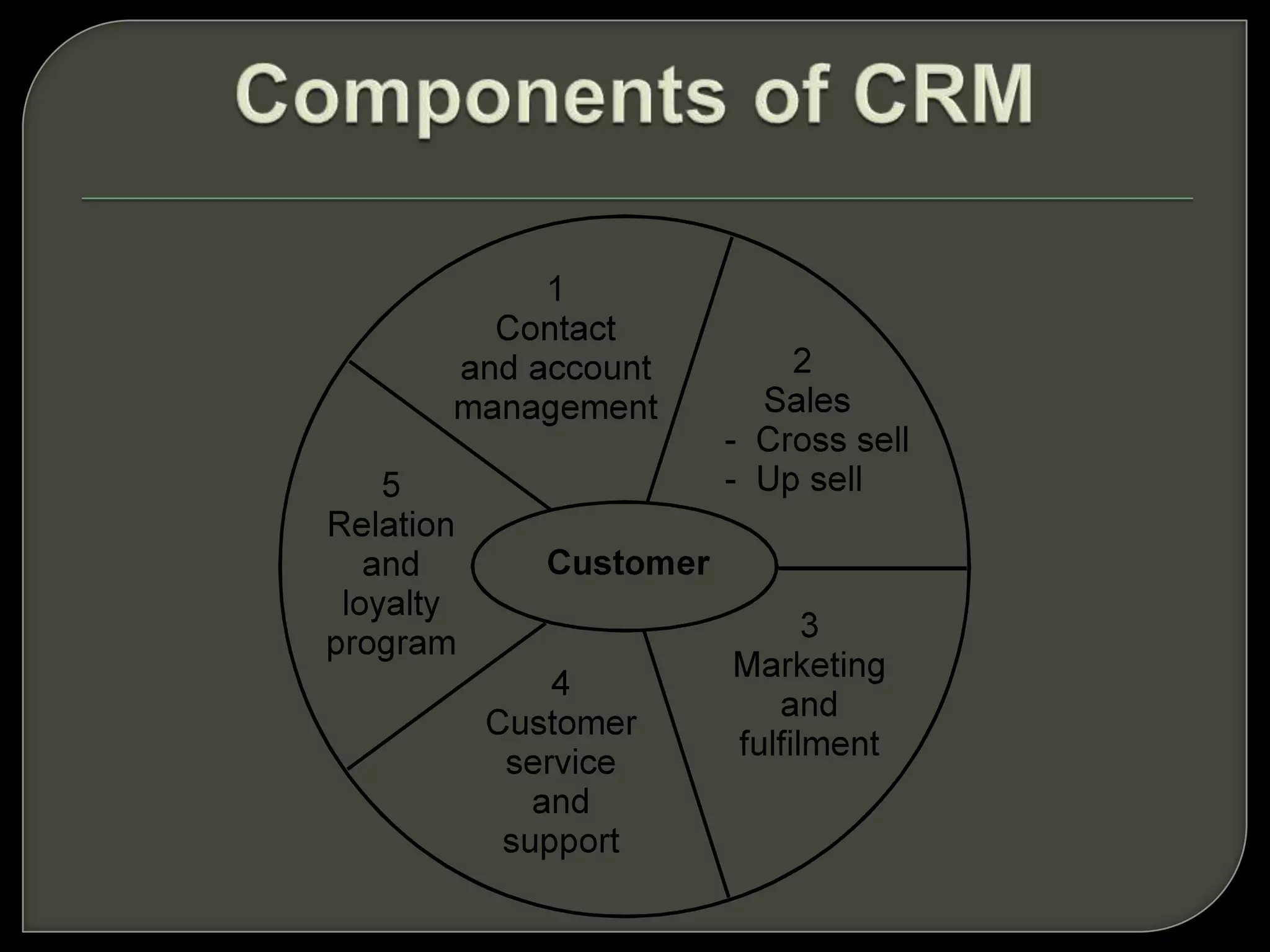
 The contact management software contains various modules of
databases, displays, charts, workflow programs.
 Sales process management follows a customized
sales methodology with specific sales policies and
procedures.
 Sales activities include - Product information,
product configuration, sales prospectus, sales quote
generation.
 CRM also provide the history of customer account
so that the sales call can be scheduled accordingly.
 CRM helps the professionals in product marketing,
target marketing, relationship marketing and
campaign management.
 By analyzing customer and business value of direct
marketing can be estimated.
 CRM also helps in customer retention, behavior
prediction, channel optimization, personalization.
 Customer response and requests can be quickly
scheduled and hence sales contacts.
 CRM system provides service representatives with adequate
software tools and access to customer database. It also helps to
create, assign and manage the service requests by customers.
 Call center software is designed to route customer calls to
respective attendants as per the skills and authority to handle
special cases.
 Help desk software is developed to help customer service
representative to help customers who face problems with product
or service to resolve it.
 Web-based Self Service means help customer to access
personalized information at company website.
 The primary objective of CRM is to enhance and
optimize customer retention and loyalty.
 CRM systems are also useful in determining most
loyal and profitable customers and reward.
 CRM analytical software includes determining tools
and analytical marketing software whereas CRM
databases consists of customer data ware house
and CRM data marts.
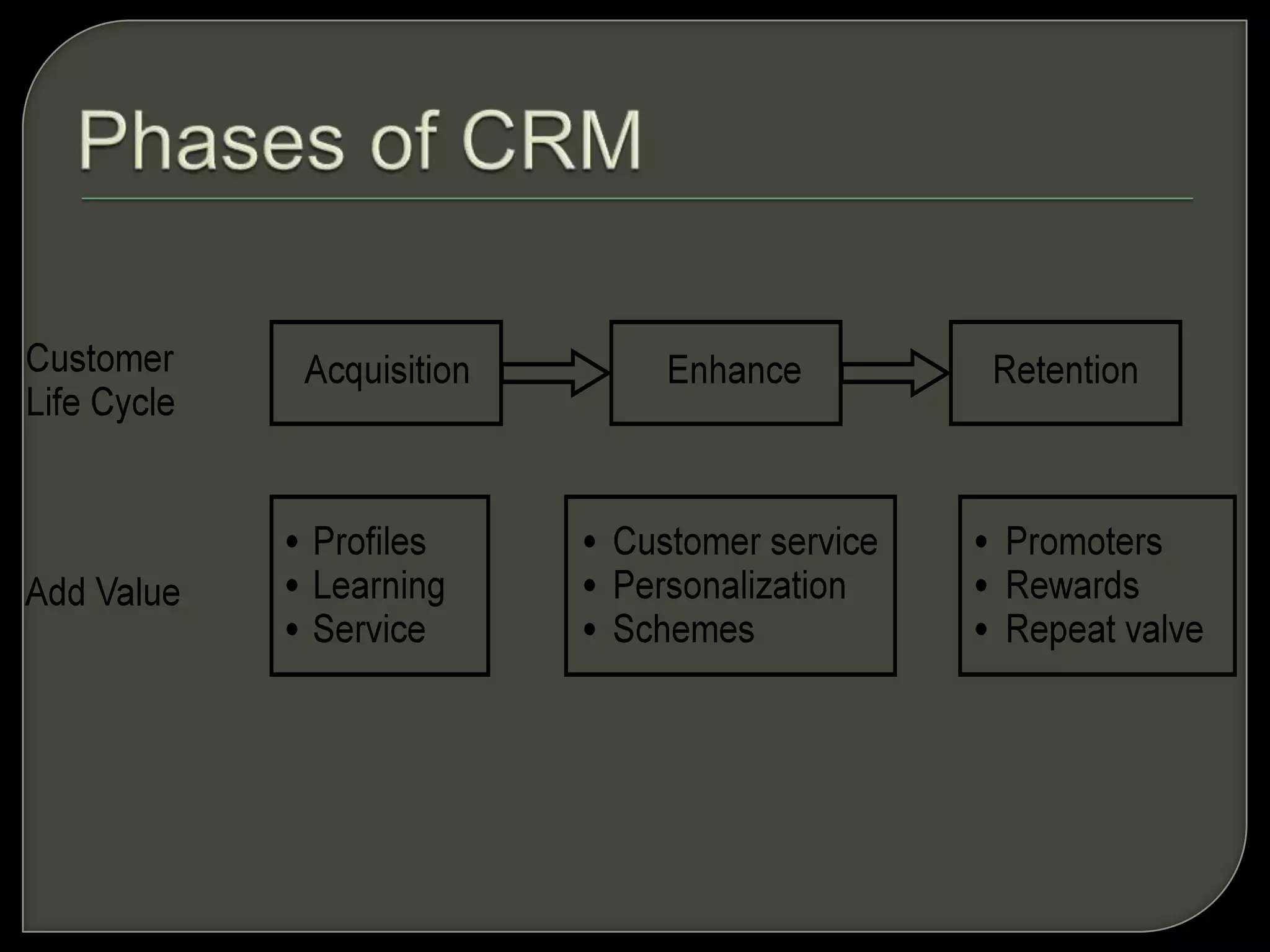
techniques used to form relationships with
new customers to achieve an online sale.
For achieving this special CRM software
tools and databases are used.
The main purpose of this CRM function is
to make aware the customer about the
superior product by a distinguished
company.
 to keep customer satisfied and happy to
offering superior service from specialists.
The profitability of the business is
increased by CRM sales for a automation
and direct marketing.
The customer experience the convenience
of one stop shopping at reasonable prices.
 Customer retention refers to the actions an
organization takes to retain existing customers i.e.
the techniques to maintain relationships with existing
customer.
 The customer retention has two distinct goals.
1. To retain customers of the organizations (repeat
customers).
2. To keep customers using online channel (repeat
visits).
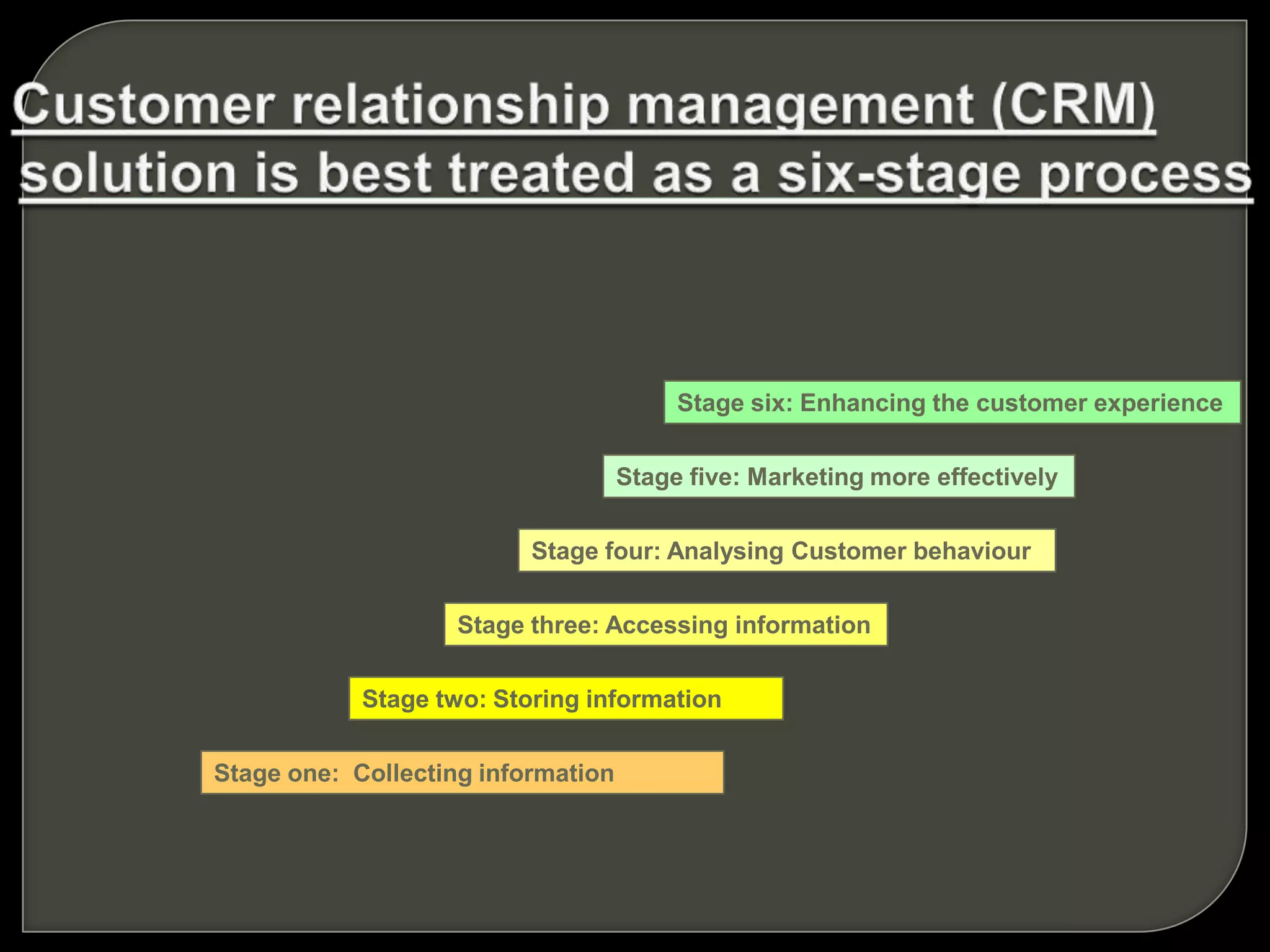
Stage one: Collecting information
Stage two: Storing information
Stage three: Accessing information
Stage four: Analysing Customer behaviour
Stage five: Marketing more effectively
Stage six: Enhancing the customer experience
There are following types of CRM
1.OPERATIONAL CRM
2. SFA
3.Analytical CRM
4.COLLABORATIVE CRM
5.GEOGRAPHIC CRM
Operational CRM processes customer
data for a variety of purposes:
'Managing Campaigns'
 Enterprise Marketing Automation
Sales Force Automation
Sales Management System
Sales Force Automation automates sales
force-related activities such as:
Activity Management: Scheduling sales
calls or mailings
Tracking responses
Generating reports
Opportunity Management and Assessment
Account Management and Target Account
Selling
 Analytical CRM analyzes customer data for a variety of
purposes:
 Designing and executing targeted marketing campaigns
 Designing and executing campaigns, e.g. customer
acquisition, cross-selling, up-selling
 Analysing customer behavior in order to make decisions
relating to products and services (e.g. pricing, product
development)
 Management information system (e.g. financial
forecasting and customer profitability analysis)
 Analytical CRM generally makes heavy use of data
mining.
 Collaborative CRM covers aspects of a company's
dealings with customers that are handled by various
departments within a company, such as sales, technical
support and marketing. Staff members from different
departments can share information collected when
interacting with customers. For example, feedback
received by customer support agents can provide other
staff members with information on the services and
features requested by customers. Collaborative CRM's
ultimate goal is to use information collected by all
departments to improve the quality of services provided
by the company.
Geographic CRM (GCRM) combines
geographic information system and traditional
CRM. Geographic data can be analyzed to
provide a snapshot of potential customers in a
region or to plan routes for customer visits.
Geographic CRM
23
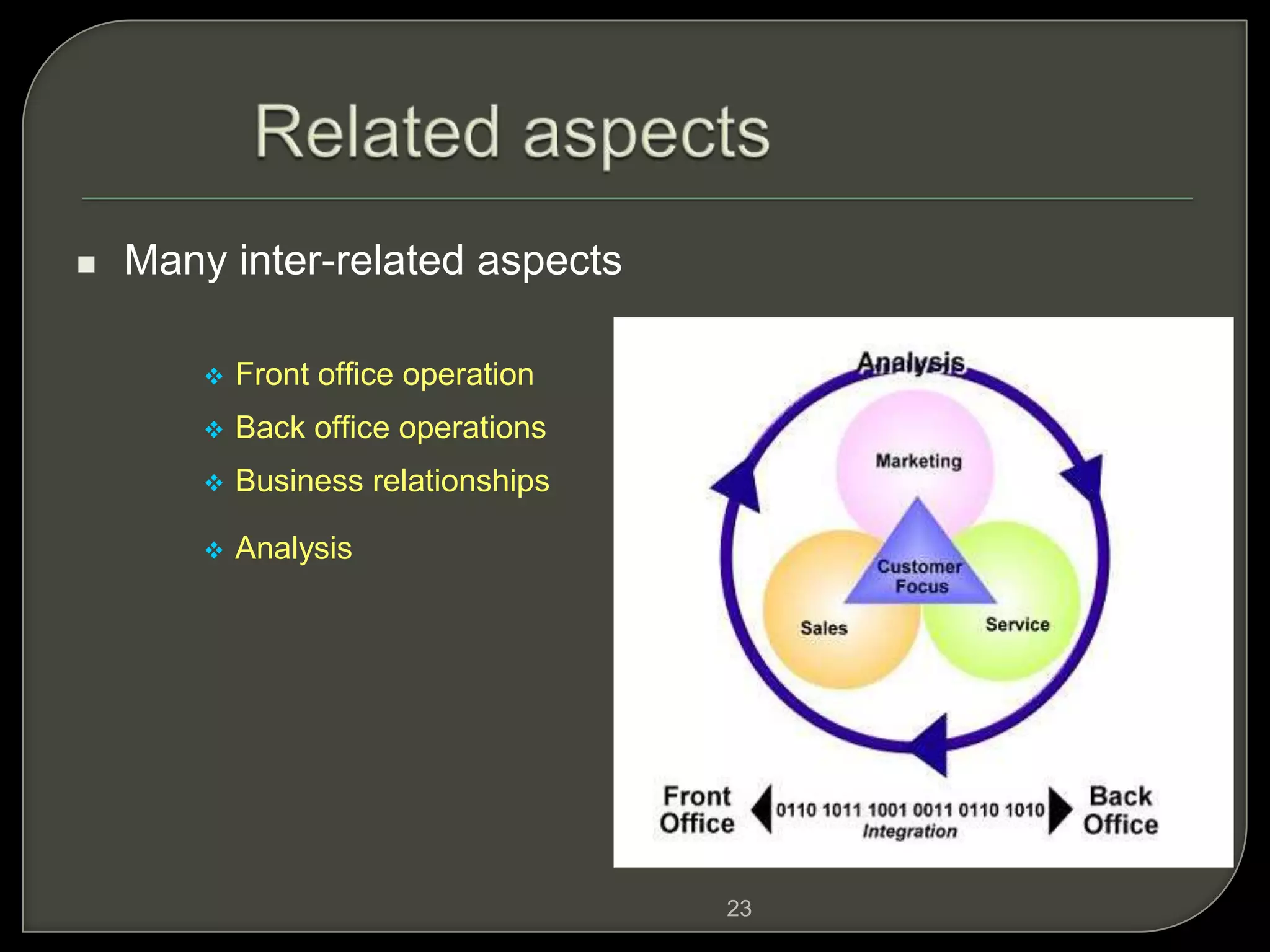
 Many inter-related aspects
 Front office operation
 Back office operations
 Business relationships
 Analysis
24
 Direct interaction with customers
 Face to face meetings
 Phone calls
 E-mail
 Online services etc
25
 Operations that ultimately affect the activities of the front
office
 Billing
 Maintenance
 Planning
 Marketing
 Advertising
 Finance
 Manufacturing
26
 Interaction with other companies and partners
Suppliers/vendors
Retail outlets/distributors
Industry networks
27
 Key CRM data can be analyzed in order to plan
 Target-marketing campaigns
 Conceive business strategies
 Judge the success of CRM activities (e.g., market share, number and
types of customers, revenue, profitability)
29
 1. Validation
 2. Discovery
 3. Action
30
 Correct data
 Ensuring that the data of the customers is correct
 Example:-Mobile number
31
 Use of data mining techniques
 To find relationships that you did not know existed
 Data mining is an important enabler for CRM
 Helps in the process of understanding a customer by
providing the necessary information
 Facilitates decision-making.
32
 Right communication
 Right messages communication
 This is done with a Campaign Management tool that can
automatically select the right targets and the right
messages via the right channels
 The responses are then fed back into the Validation
process for evaluation and refinement
 Indian companies were slow in adopting CRM. One of
the major reasons for this has been a lack of proper
understanding of CRM as a concept and how it could
benefit an organization. In the past, CRM was
identified with call centers. However, this has changed
in recent times with a better understanding of the
various components of CRM and increased
awareness levels of how it can drive efficiencies
across the board.
What is the status of CRM adoption in India?
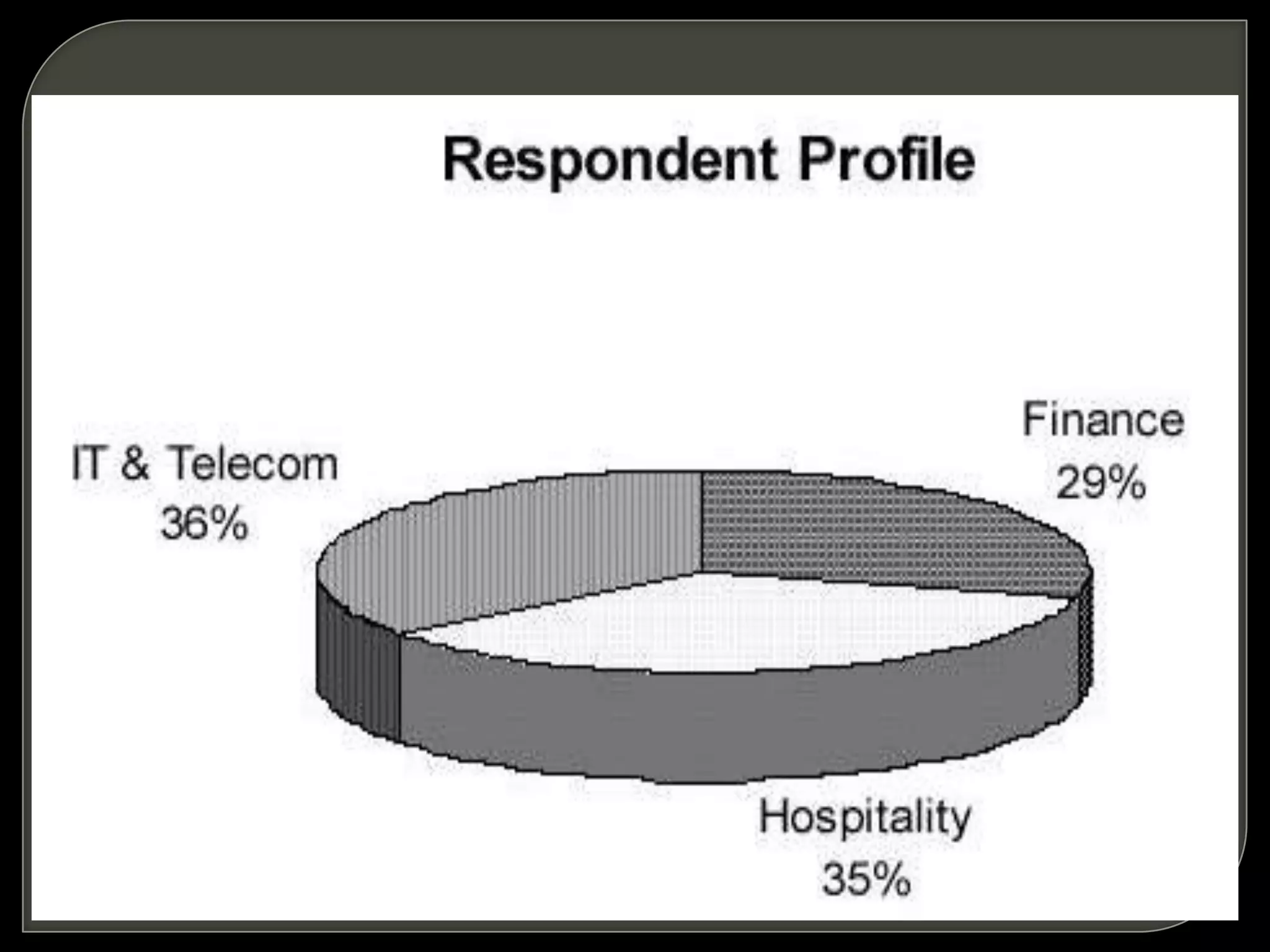
IT & TELECOM SECTOR
HOSPITALITY SECTOR
FINANCE SECTOR
RAILWAYS
TRAVELS AGENCIES
INSURANCE SECTOR
BANKING SECTOR
OTHERS
 Increased competition in the sector meant that
organisations had to think of more innovative ways to
acquire and retain customers. This sector has seen
more investments in IT infrastructure which is an
enabler for applications.
 Though back-end systems are always important for
smooth functioning of systems, for the service sector it
is also important to have a user-friendly interface.
Many companies in this sector have adopted CRM
before investing in ERP. Verticals in the services sector
include retail and commercial banks, brokerages,
insurance, mutual funds, IT services, BPO, hospitality,
travel, media and logistics.
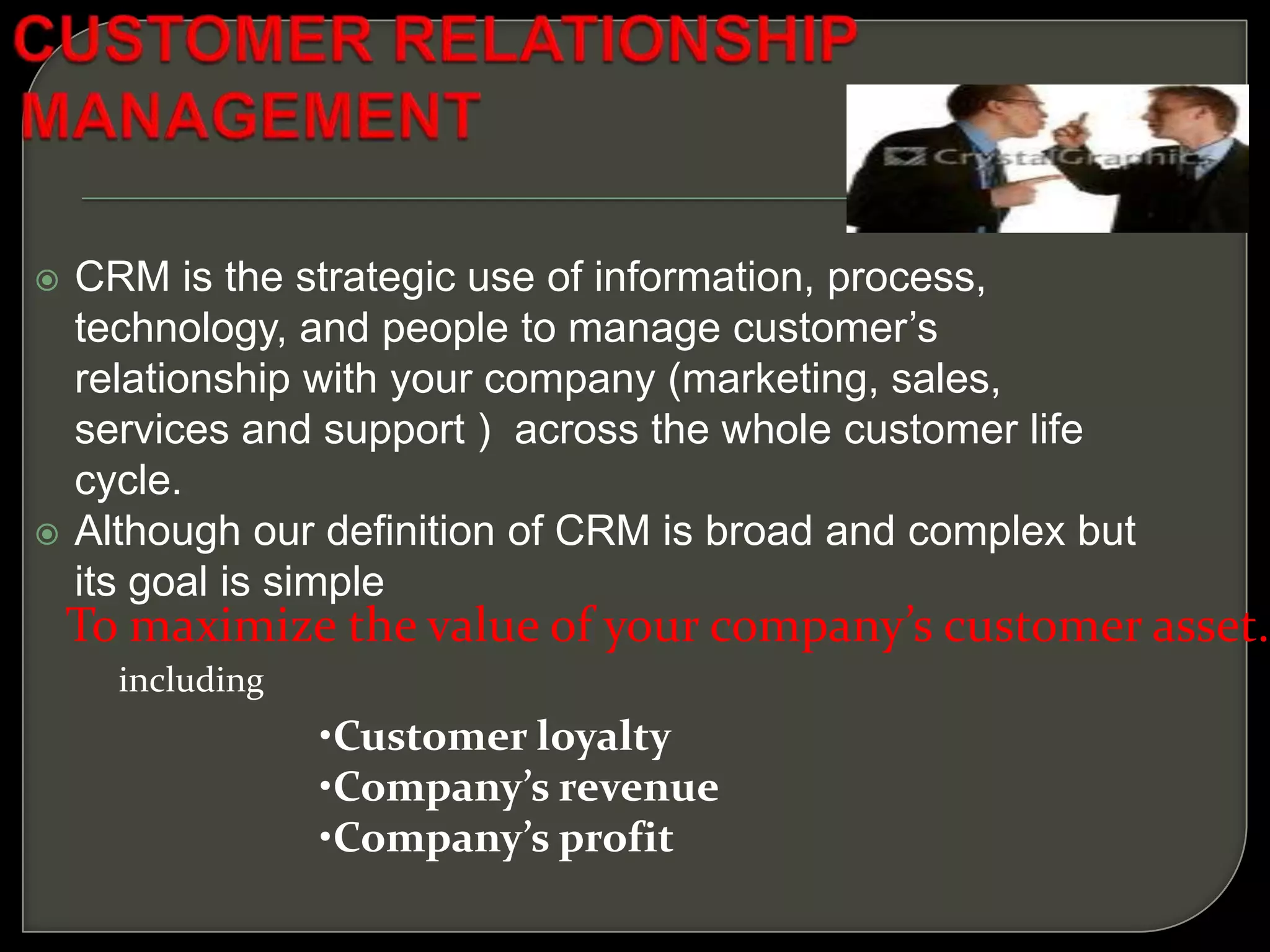
 CRM is the strategic use of information, process,
technology, and people to manage customer’s
relationship with your company (marketing, sales,
services and support ) across the whole customer life
cycle.
 Although our definition of CRM is broad and complex but
its goal is simple
To maximize the value of your company’s customer asset.
including
•Customer loyalty
•Company’s revenue
•Company’s profit
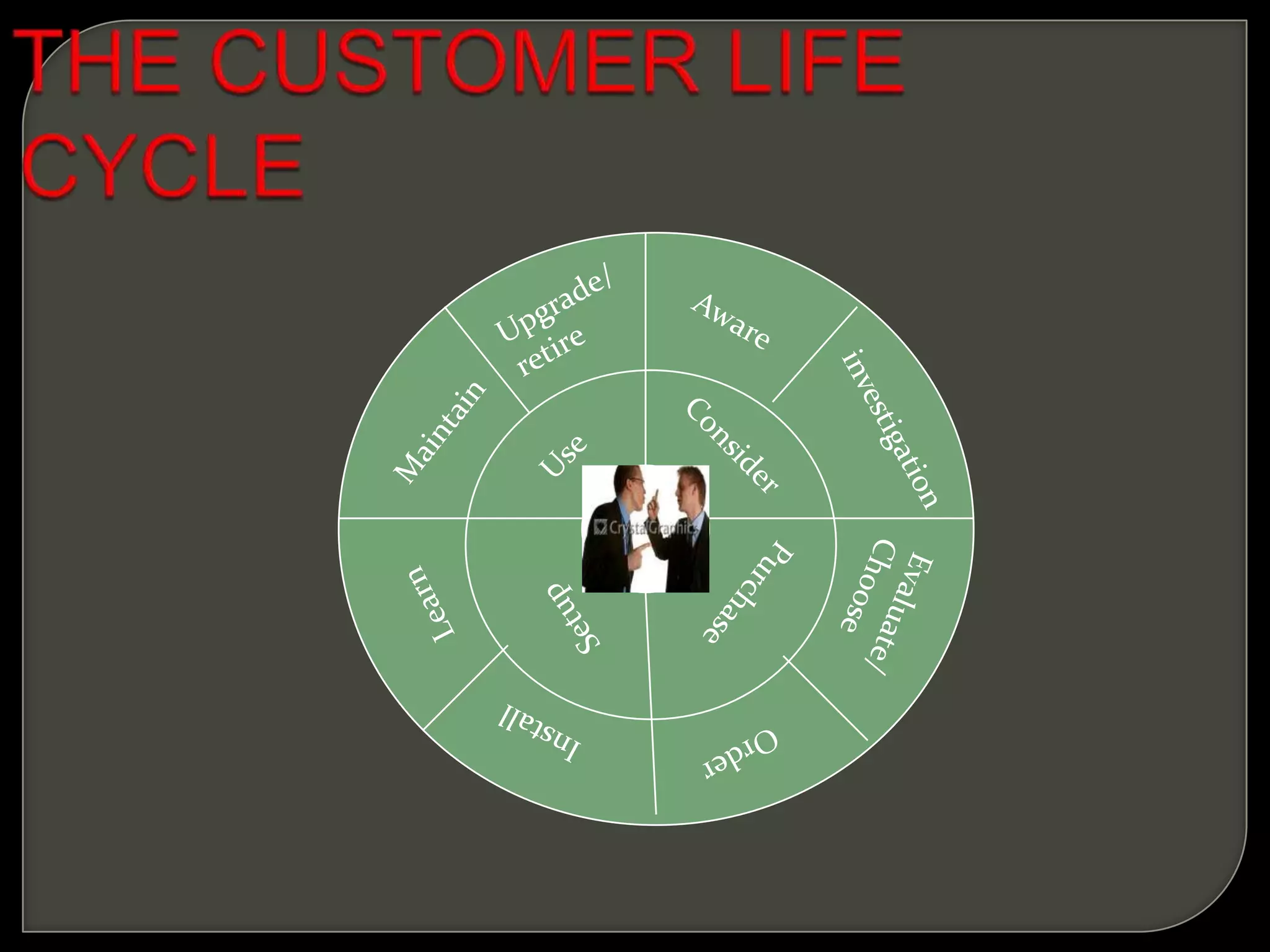
The customer life cycle is total time that a customer is engaged
with your company from the customer’s experience and
viewpoint.
There is high level of cycle that is consistent for
customers, no matter the product or services and no matter
how much how much the customer spend on each stage;
1. Consider: Customer becomes aware of need and investigates
alternative solution.
2.Purchase: Customer evaluates and chooses the best
alternatives and place an order.
3. Set up: Customer install the product and learn how to use it.
4. Use: Customer operates and maintain the product and finally
makes the decision to retire it or upgrade, which starts the
cycle all over again.
 A major shift in marketing thought:
 from mass marketing to individualized marketing
 From focus on acquiring lots of new customers to
retaining and building more business with fewer loyal
high-value customers
Goal: build long-term relationship, 1:1
 A firms ability to build and maintain relationships
with customers, suppliers, and partners may be
more important than the firms land, property,
and financial assets.
 The key: Treat customers like friends
 “Establishing, maintaining, enhancing, commercializing
customer relationships through promise fulfillment”
 Building long-term profitable relationships with mutual
benefit
 Tool: promise fulfillment => customer satisfaction
 Domino’s Pizza ads claim 30 minute delivery of
pizza’s.
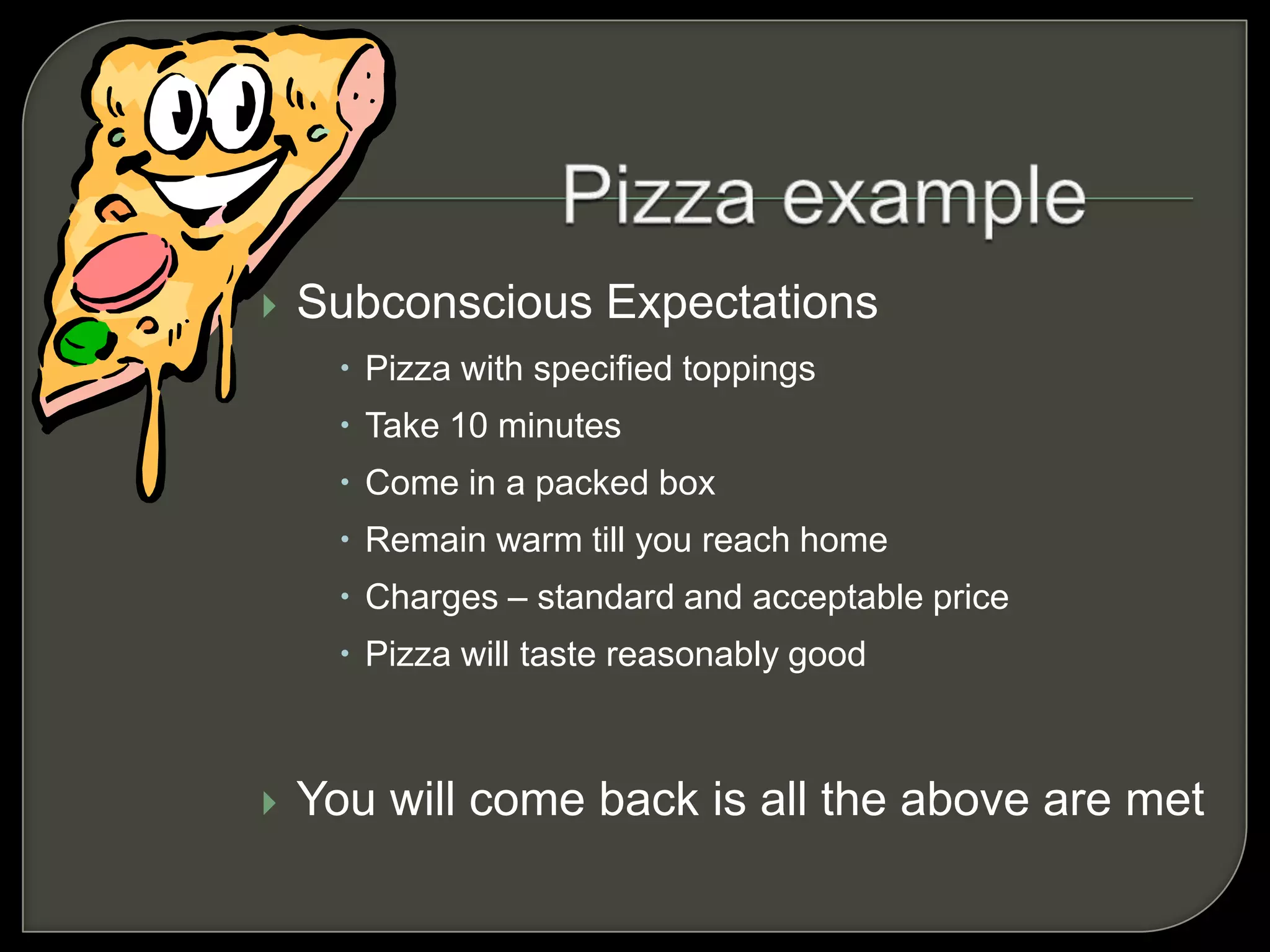
 Subconscious Expectations
 Pizza with specified toppings
 Take 10 minutes
 Come in a packed box
 Remain warm till you reach home
 Charges – standard and acceptable price
 Pizza will taste reasonably good
 You will come back is all the above are met
 If you go regularly
 Rapport with employees
 You forgive if they mess up with one or two
expectations
 Degree of confidence determines
tolerance
 If using first time, and even one expectation is
not met
 You will never go again
Exceeded expectations
 Deliver on all expectations
 Give you a garlic bread FREE !
You will tell everyone about it
46
47
 Important
 Business starts with the acquisition of customers
 However, any successful CRM initiative is highly
dependent on a solid understanding of customers
48
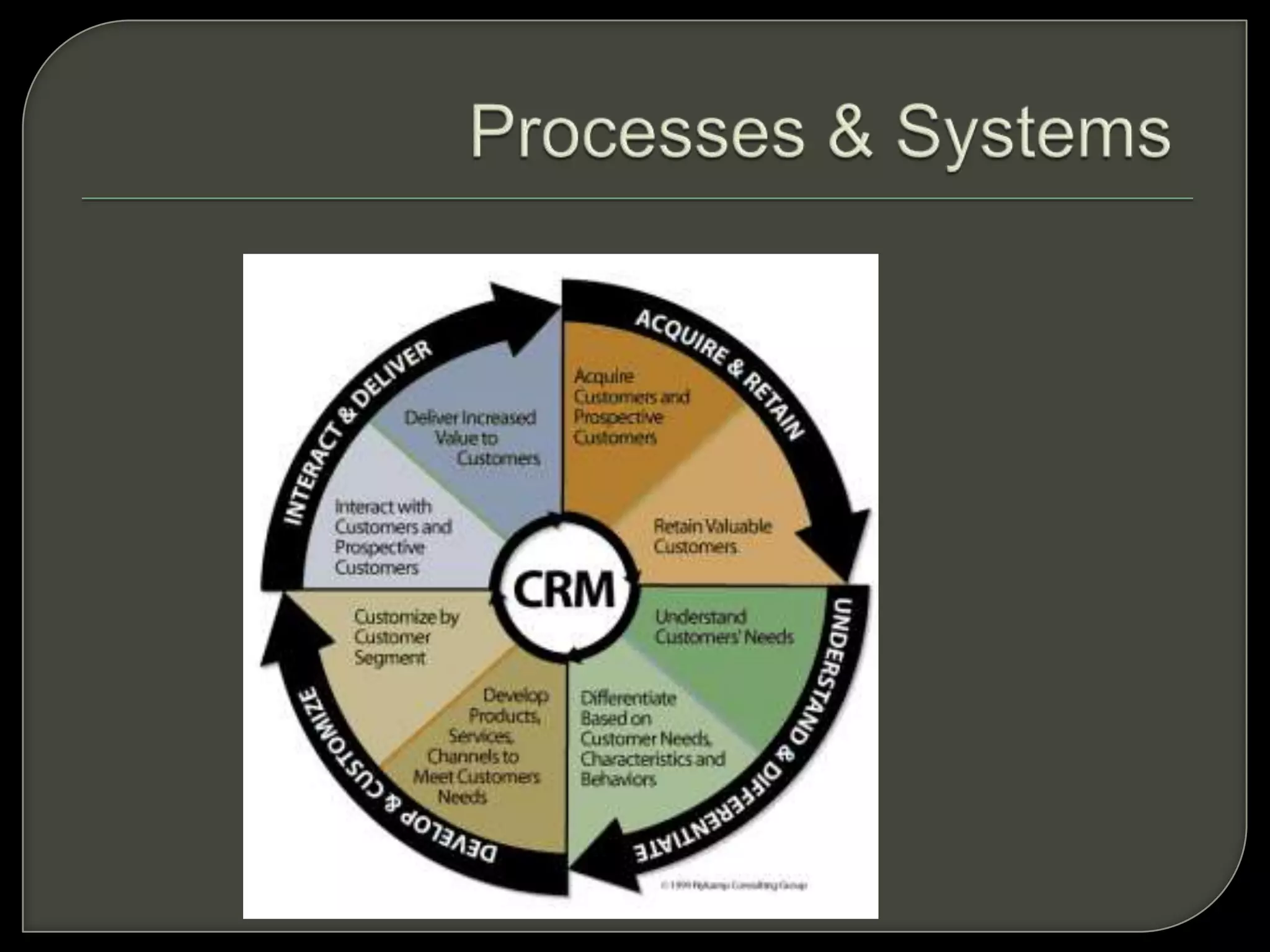
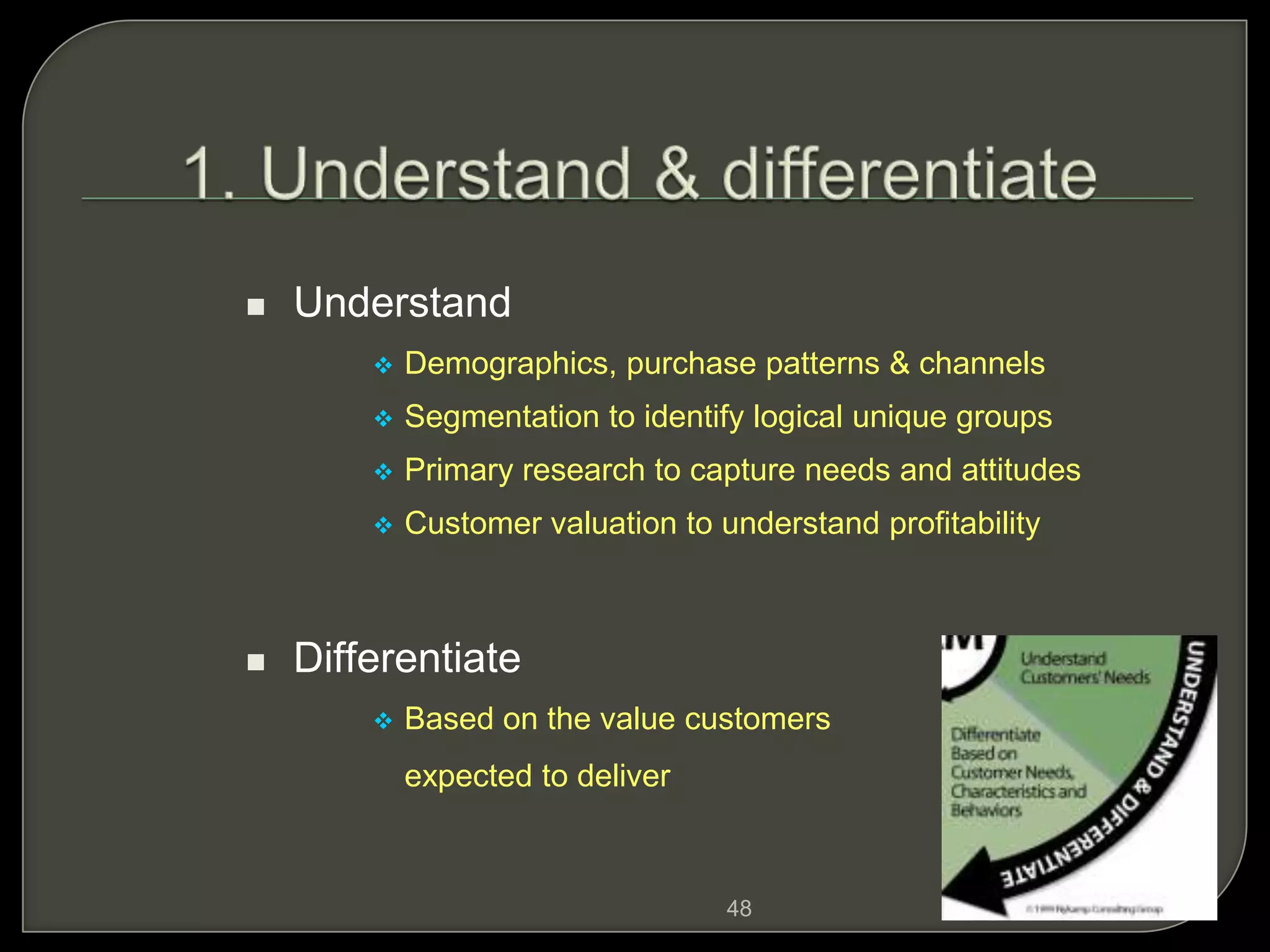
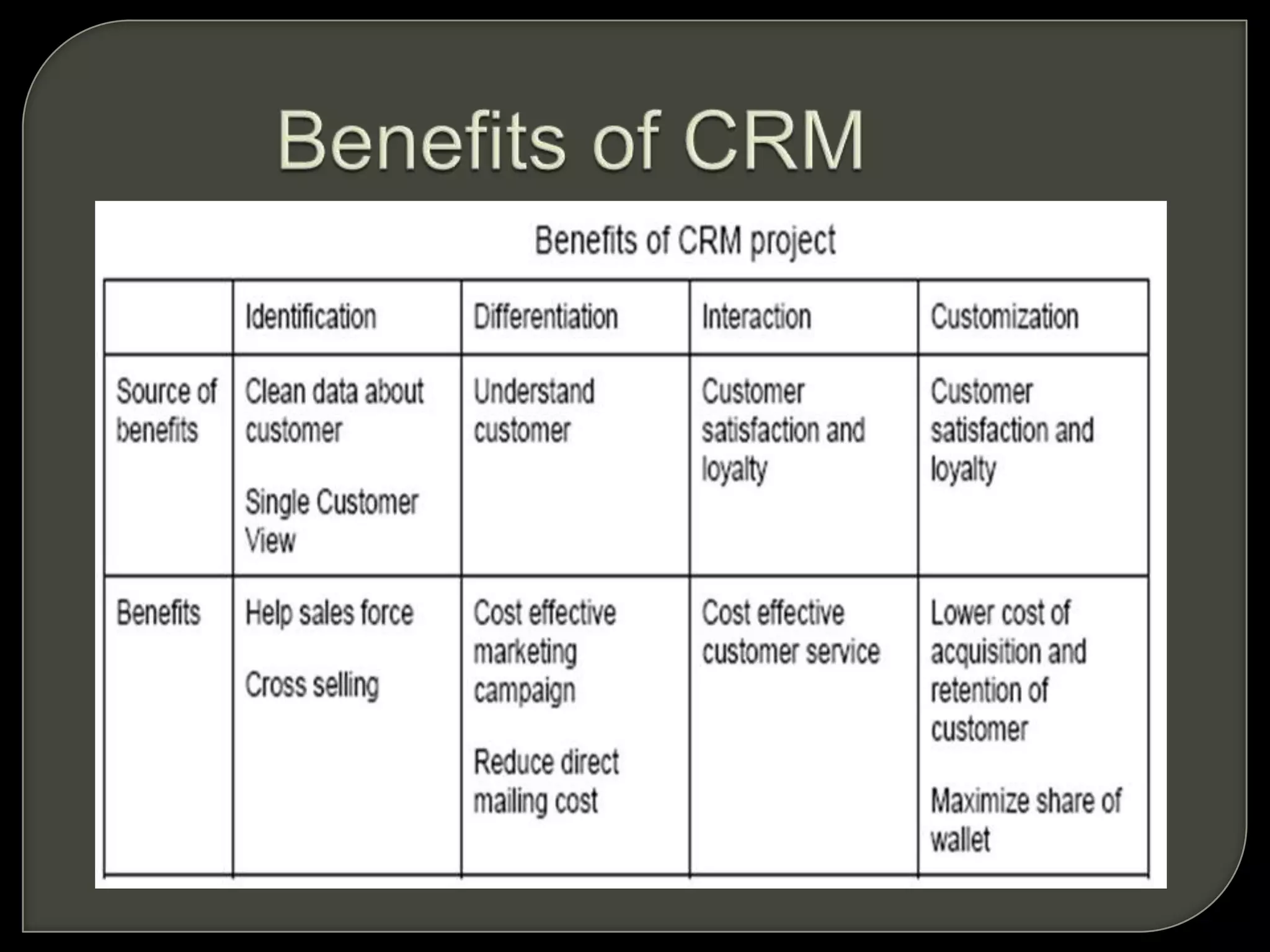
 Understand
 Demographics, purchase patterns & channels
 Segmentation to identify logical unique groups
 Primary research to capture needs and attitudes
 Customer valuation to understand profitability
 Differentiate
 Based on the value customers are
expected to deliver
49
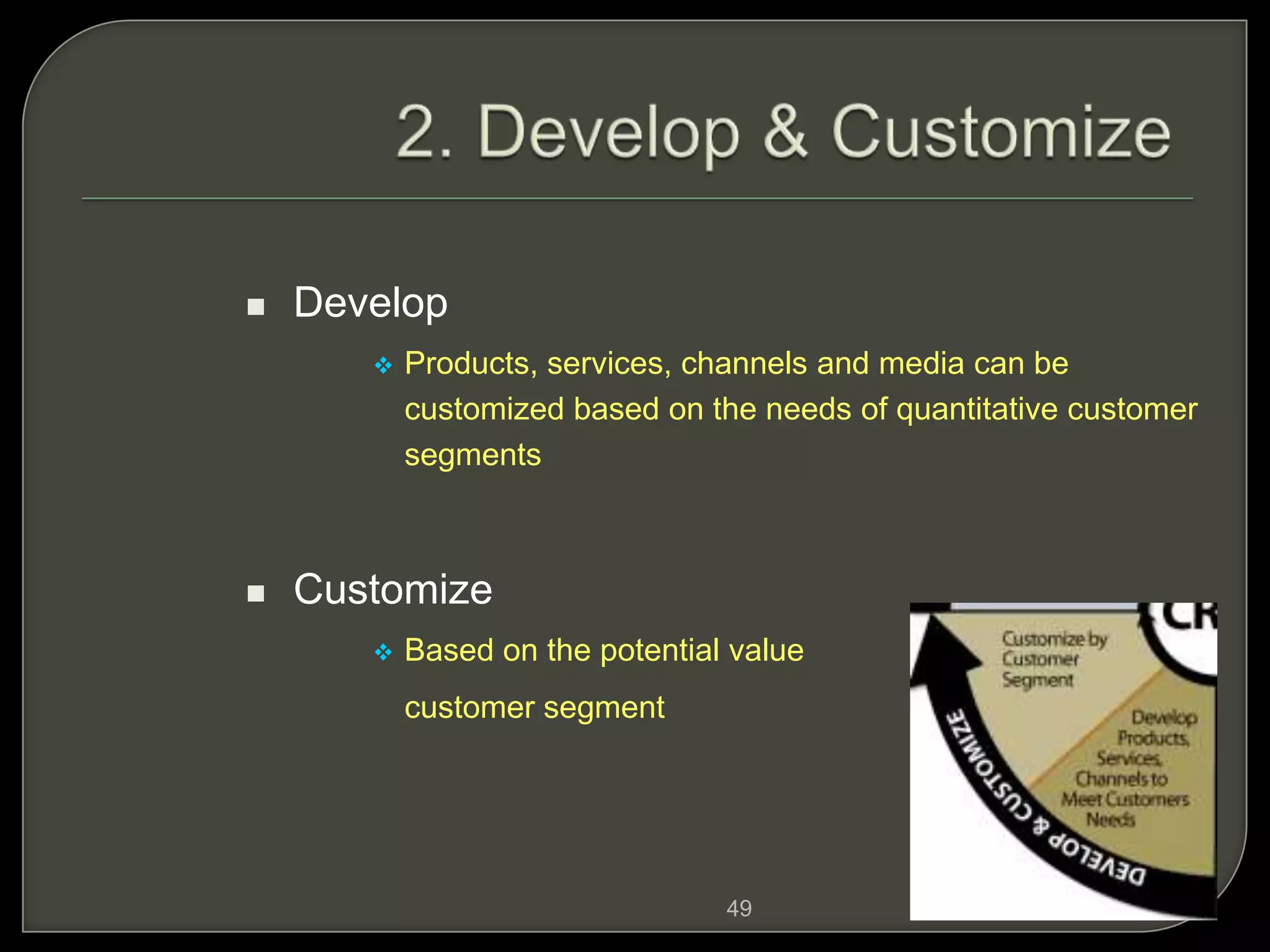
 Develop
 Products, services, channels and media can be
customized based on the needs of quantitative customer
segments
 Customize
 Based on the potential value delivered by
customer segment
50
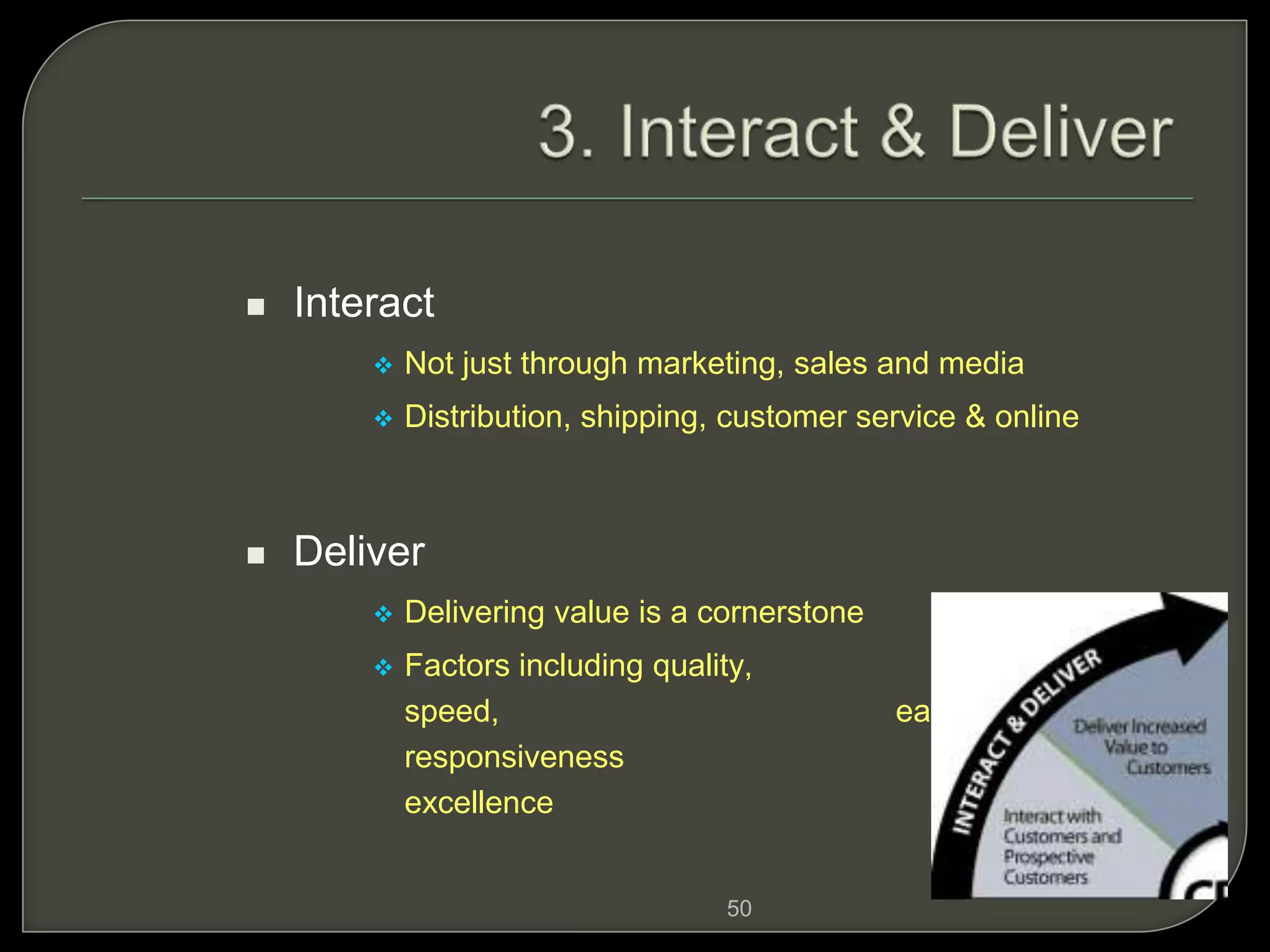
 Interact
 Not just through marketing, sales and media
 Distribution, shipping, customer service & online
 Deliver
 Delivering value is a cornerstone
 Factors including quality, convenience,
speed, ease of use,
responsiveness and service
excellence
51
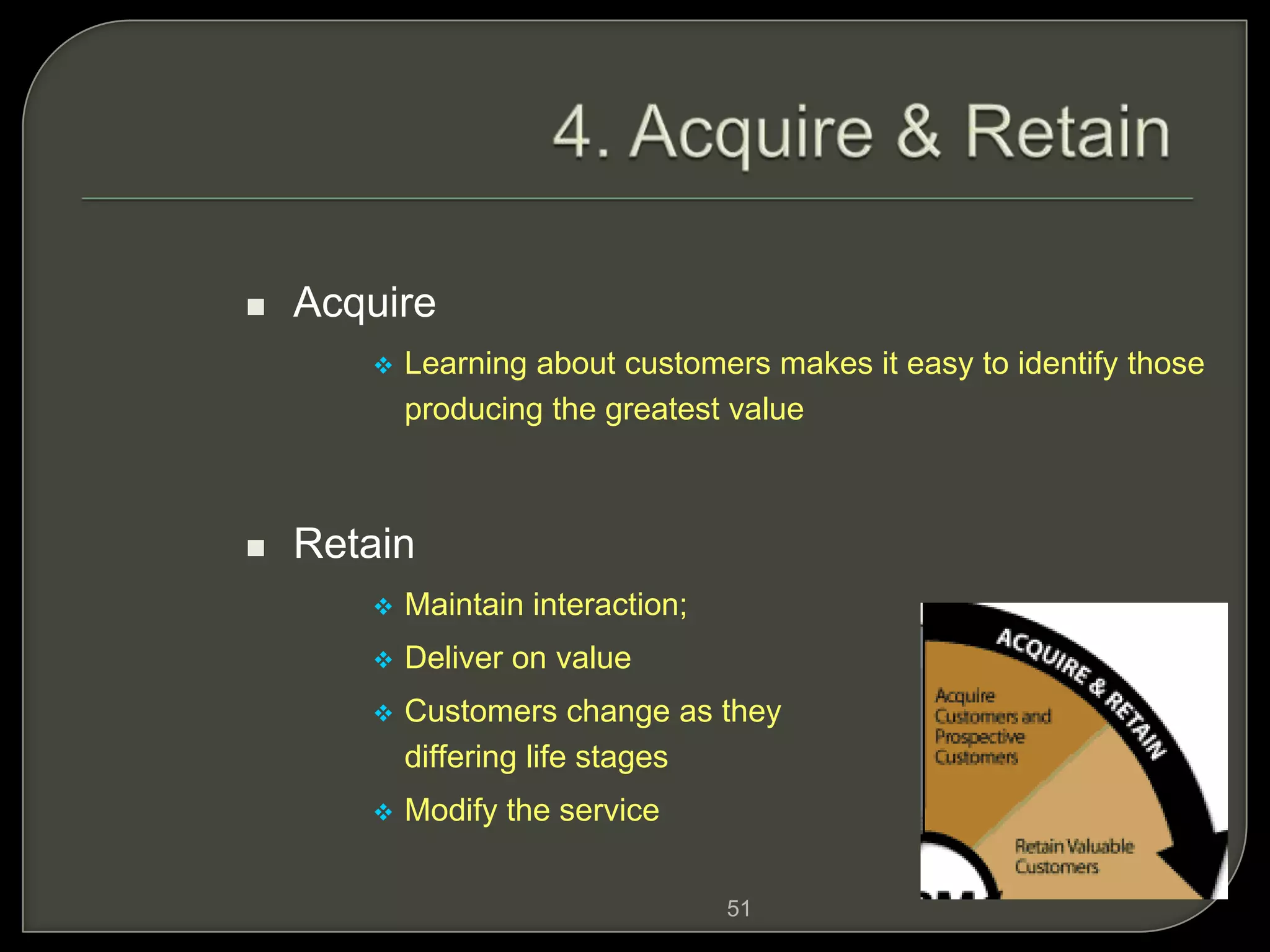
 Acquire
 Learning about customers makes it easy to identify those
producing the greatest value
 Retain
 Maintain interaction;
 Deliver on value
 Customers change as they move through
differing life stages
 Modify the service
 eCRM provides to companies a means to conduct
interactive, personalised and relevant communication
with customers across both electronic and traditional
channels.
 It utilises a complete view of the customer to make
decisions about messaging, offers, and channel
delivery.
eCRM v/s CRM: The Differences
 Being able to take care of your customer via the Internet,
or, customers being able to take care of
themselves online: That’s the difference between CRM
and eCRM.
 Companies need to take firm initiatives on the eCRM
frontier to Optimize the value of interactive
relationship.
 Enable the business to extend its personalized
messaging to the Web and e-mail.
 Co-ordinate marketing activities across all customer
channels.
 Leverage customer information for more effective
eMarketing and eBusiness.
 Focus business on improving customer relationship
and earning a greater share of each customer’s
business through consistent measurement,
assessment and “actionable” customer contact
strategies.
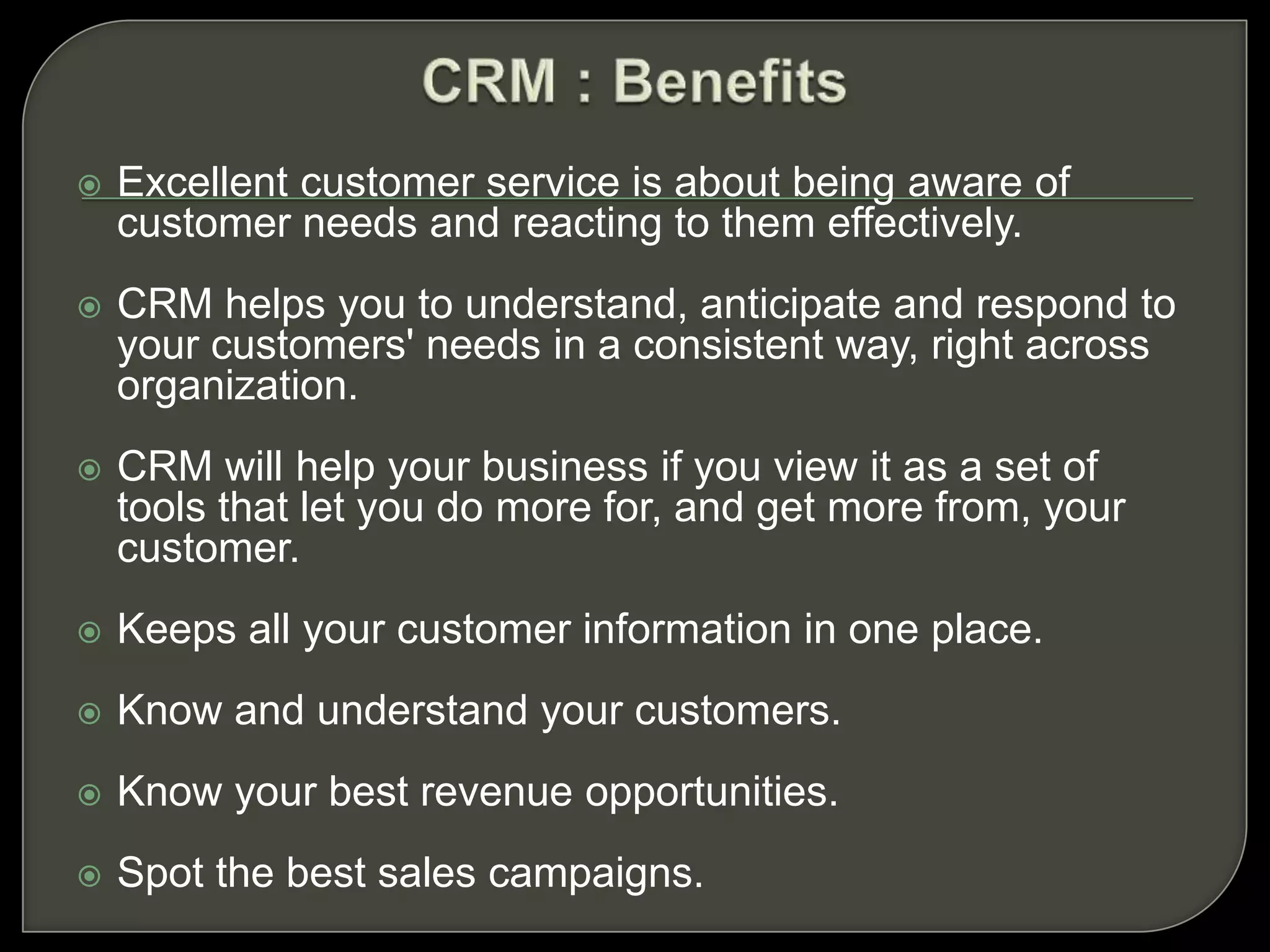
 Excellent customer service is about being aware of
customer needs and reacting to them effectively.
 CRM helps you to understand, anticipate and respond to
your customers' needs in a consistent way, right across
organization.
 CRM will help your business if you view it as a set of
tools that let you do more for, and get more from, your
customer.
 Keeps all your customer information in one place.
 Know and understand your customers.
 Know your best revenue opportunities.
 Spot the best sales campaigns.
Using CRM, a business can :
Provide better customer service
Increase customer revenues
Discover new customers
Help sales staff close deals faster
Make call centers more efficient
Simplify marketing and sales processes
 Problems of collecting and coordinating substantial data
can lead to privacy problems.
 Firms still need to be sensitive to customer wishes about
unsolicited contacts. Customer privacy request needs to
be a part of CRM.
 Privacy and data security
One of the primary functions of CRM software is to collect
information about customers. When gathering data as
part of a CRM solution, a company must consider the
desire for customer privacy and data security, as well as
the legislative and cultural norms. Some customers
prefer assurances that their data will not be shared with
third parties without their prior consent and that
safeguards are in place to prevent illegal access by third
parties.
CONCLUSION

crmfinal-090720123312-phpapp01.pdf

  • 3.
    3  Customer RelationshipManagement  Term applied to processes implemented by a company to handle its contact with its customers  It is process or methodology used to learn more about customers' needs and behaviors in order to develop stronger relationships with them.  set of methodologies, software, and usually Internet capabilities that help an enterprise manage customer relationships in an organized way.  CRM is a software-based approach to handling customer relationships
  • 5.
     Relevant datafor customer profile is captured with the help of software.  Necessary information is captured from prospective customers.  CRM system stores data in common customer database.  The database integrates customer account information and present it in desirable format to the company.  This database can be accessed on Internet, intranet and on other network links.  The data is used for sales, marketing, services and other applications.  The contact management software contains various modules of databases, displays, charts, workflow programs.
  • 6.
     Sales processmanagement follows a customized sales methodology with specific sales policies and procedures.  Sales activities include - Product information, product configuration, sales prospectus, sales quote generation.  CRM also provide the history of customer account so that the sales call can be scheduled accordingly.
  • 7.
     CRM helpsthe professionals in product marketing, target marketing, relationship marketing and campaign management.  By analyzing customer and business value of direct marketing can be estimated.  CRM also helps in customer retention, behavior prediction, channel optimization, personalization.  Customer response and requests can be quickly scheduled and hence sales contacts.
  • 8.
     CRM systemprovides service representatives with adequate software tools and access to customer database. It also helps to create, assign and manage the service requests by customers.  Call center software is designed to route customer calls to respective attendants as per the skills and authority to handle special cases.  Help desk software is developed to help customer service representative to help customers who face problems with product or service to resolve it.  Web-based Self Service means help customer to access personalized information at company website.
  • 9.
     The primaryobjective of CRM is to enhance and optimize customer retention and loyalty.  CRM systems are also useful in determining most loyal and profitable customers and reward.  CRM analytical software includes determining tools and analytical marketing software whereas CRM databases consists of customer data ware house and CRM data marts.
  • 11.
    techniques used toform relationships with new customers to achieve an online sale. For achieving this special CRM software tools and databases are used. The main purpose of this CRM function is to make aware the customer about the superior product by a distinguished company.
  • 12.
     to keepcustomer satisfied and happy to offering superior service from specialists. The profitability of the business is increased by CRM sales for a automation and direct marketing. The customer experience the convenience of one stop shopping at reasonable prices.
  • 13.
     Customer retentionrefers to the actions an organization takes to retain existing customers i.e. the techniques to maintain relationships with existing customer.  The customer retention has two distinct goals. 1. To retain customers of the organizations (repeat customers). 2. To keep customers using online channel (repeat visits).
  • 15.
    Stage one: Collectinginformation Stage two: Storing information Stage three: Accessing information Stage four: Analysing Customer behaviour Stage five: Marketing more effectively Stage six: Enhancing the customer experience
  • 17.
    There are followingtypes of CRM 1.OPERATIONAL CRM 2. SFA 3.Analytical CRM 4.COLLABORATIVE CRM 5.GEOGRAPHIC CRM
  • 18.
    Operational CRM processescustomer data for a variety of purposes: 'Managing Campaigns'  Enterprise Marketing Automation Sales Force Automation Sales Management System
  • 19.
    Sales Force Automationautomates sales force-related activities such as: Activity Management: Scheduling sales calls or mailings Tracking responses Generating reports Opportunity Management and Assessment Account Management and Target Account Selling
  • 20.
     Analytical CRManalyzes customer data for a variety of purposes:  Designing and executing targeted marketing campaigns  Designing and executing campaigns, e.g. customer acquisition, cross-selling, up-selling  Analysing customer behavior in order to make decisions relating to products and services (e.g. pricing, product development)  Management information system (e.g. financial forecasting and customer profitability analysis)  Analytical CRM generally makes heavy use of data mining.
  • 21.
     Collaborative CRMcovers aspects of a company's dealings with customers that are handled by various departments within a company, such as sales, technical support and marketing. Staff members from different departments can share information collected when interacting with customers. For example, feedback received by customer support agents can provide other staff members with information on the services and features requested by customers. Collaborative CRM's ultimate goal is to use information collected by all departments to improve the quality of services provided by the company.
  • 22.
    Geographic CRM (GCRM)combines geographic information system and traditional CRM. Geographic data can be analyzed to provide a snapshot of potential customers in a region or to plan routes for customer visits. Geographic CRM
  • 23.
    23  Many inter-relatedaspects  Front office operation  Back office operations  Business relationships  Analysis
  • 24.
    24  Direct interactionwith customers  Face to face meetings  Phone calls  E-mail  Online services etc
  • 25.
    25  Operations thatultimately affect the activities of the front office  Billing  Maintenance  Planning  Marketing  Advertising  Finance  Manufacturing
  • 26.
    26  Interaction withother companies and partners Suppliers/vendors Retail outlets/distributors Industry networks
  • 27.
    27  Key CRMdata can be analyzed in order to plan  Target-marketing campaigns  Conceive business strategies  Judge the success of CRM activities (e.g., market share, number and types of customers, revenue, profitability)
  • 29.
    29  1. Validation 2. Discovery  3. Action
  • 30.
    30  Correct data Ensuring that the data of the customers is correct  Example:-Mobile number
  • 31.
    31  Use ofdata mining techniques  To find relationships that you did not know existed  Data mining is an important enabler for CRM  Helps in the process of understanding a customer by providing the necessary information  Facilitates decision-making.
  • 32.
    32  Right communication Right messages communication  This is done with a Campaign Management tool that can automatically select the right targets and the right messages via the right channels  The responses are then fed back into the Validation process for evaluation and refinement
  • 33.
     Indian companieswere slow in adopting CRM. One of the major reasons for this has been a lack of proper understanding of CRM as a concept and how it could benefit an organization. In the past, CRM was identified with call centers. However, this has changed in recent times with a better understanding of the various components of CRM and increased awareness levels of how it can drive efficiencies across the board. What is the status of CRM adoption in India?
  • 34.
    IT & TELECOMSECTOR HOSPITALITY SECTOR FINANCE SECTOR RAILWAYS TRAVELS AGENCIES INSURANCE SECTOR BANKING SECTOR OTHERS
  • 36.
     Increased competitionin the sector meant that organisations had to think of more innovative ways to acquire and retain customers. This sector has seen more investments in IT infrastructure which is an enabler for applications.  Though back-end systems are always important for smooth functioning of systems, for the service sector it is also important to have a user-friendly interface. Many companies in this sector have adopted CRM before investing in ERP. Verticals in the services sector include retail and commercial banks, brokerages, insurance, mutual funds, IT services, BPO, hospitality, travel, media and logistics.
  • 37.
     CRM isthe strategic use of information, process, technology, and people to manage customer’s relationship with your company (marketing, sales, services and support ) across the whole customer life cycle.  Although our definition of CRM is broad and complex but its goal is simple To maximize the value of your company’s customer asset. including •Customer loyalty •Company’s revenue •Company’s profit
  • 39.
    The customer lifecycle is total time that a customer is engaged with your company from the customer’s experience and viewpoint. There is high level of cycle that is consistent for customers, no matter the product or services and no matter how much how much the customer spend on each stage; 1. Consider: Customer becomes aware of need and investigates alternative solution. 2.Purchase: Customer evaluates and chooses the best alternatives and place an order. 3. Set up: Customer install the product and learn how to use it. 4. Use: Customer operates and maintain the product and finally makes the decision to retire it or upgrade, which starts the cycle all over again.
  • 40.
     A majorshift in marketing thought:  from mass marketing to individualized marketing  From focus on acquiring lots of new customers to retaining and building more business with fewer loyal high-value customers Goal: build long-term relationship, 1:1  A firms ability to build and maintain relationships with customers, suppliers, and partners may be more important than the firms land, property, and financial assets.  The key: Treat customers like friends
  • 41.
     “Establishing, maintaining,enhancing, commercializing customer relationships through promise fulfillment”  Building long-term profitable relationships with mutual benefit  Tool: promise fulfillment => customer satisfaction  Domino’s Pizza ads claim 30 minute delivery of pizza’s.
  • 42.
     Subconscious Expectations Pizza with specified toppings  Take 10 minutes  Come in a packed box  Remain warm till you reach home  Charges – standard and acceptable price  Pizza will taste reasonably good  You will come back is all the above are met
  • 43.
     If yougo regularly  Rapport with employees  You forgive if they mess up with one or two expectations  Degree of confidence determines tolerance  If using first time, and even one expectation is not met  You will never go again
  • 44.
    Exceeded expectations  Deliveron all expectations  Give you a garlic bread FREE ! You will tell everyone about it
  • 46.
  • 47.
    47  Important  Businessstarts with the acquisition of customers  However, any successful CRM initiative is highly dependent on a solid understanding of customers
  • 48.
    48  Understand  Demographics,purchase patterns & channels  Segmentation to identify logical unique groups  Primary research to capture needs and attitudes  Customer valuation to understand profitability  Differentiate  Based on the value customers are expected to deliver
  • 49.
    49  Develop  Products,services, channels and media can be customized based on the needs of quantitative customer segments  Customize  Based on the potential value delivered by customer segment
  • 50.
    50  Interact  Notjust through marketing, sales and media  Distribution, shipping, customer service & online  Deliver  Delivering value is a cornerstone  Factors including quality, convenience, speed, ease of use, responsiveness and service excellence
  • 51.
    51  Acquire  Learningabout customers makes it easy to identify those producing the greatest value  Retain  Maintain interaction;  Deliver on value  Customers change as they move through differing life stages  Modify the service
  • 52.
     eCRM providesto companies a means to conduct interactive, personalised and relevant communication with customers across both electronic and traditional channels.  It utilises a complete view of the customer to make decisions about messaging, offers, and channel delivery. eCRM v/s CRM: The Differences  Being able to take care of your customer via the Internet, or, customers being able to take care of themselves online: That’s the difference between CRM and eCRM.
  • 53.
     Companies needto take firm initiatives on the eCRM frontier to Optimize the value of interactive relationship.  Enable the business to extend its personalized messaging to the Web and e-mail.  Co-ordinate marketing activities across all customer channels.  Leverage customer information for more effective eMarketing and eBusiness.  Focus business on improving customer relationship and earning a greater share of each customer’s business through consistent measurement, assessment and “actionable” customer contact strategies.
  • 55.
     Excellent customerservice is about being aware of customer needs and reacting to them effectively.  CRM helps you to understand, anticipate and respond to your customers' needs in a consistent way, right across organization.  CRM will help your business if you view it as a set of tools that let you do more for, and get more from, your customer.  Keeps all your customer information in one place.  Know and understand your customers.  Know your best revenue opportunities.  Spot the best sales campaigns.
  • 56.
    Using CRM, abusiness can : Provide better customer service Increase customer revenues Discover new customers Help sales staff close deals faster Make call centers more efficient Simplify marketing and sales processes
  • 57.
     Problems ofcollecting and coordinating substantial data can lead to privacy problems.  Firms still need to be sensitive to customer wishes about unsolicited contacts. Customer privacy request needs to be a part of CRM.  Privacy and data security One of the primary functions of CRM software is to collect information about customers. When gathering data as part of a CRM solution, a company must consider the desire for customer privacy and data security, as well as the legislative and cultural norms. Some customers prefer assurances that their data will not be shared with third parties without their prior consent and that safeguards are in place to prevent illegal access by third parties.
  • 58.