Chapter 9
Creative Strategy:
Implementation and evaluation
By
Emran Mohammad (Emd)
Mkt 337 (sections 3)
Advertising appeal
 Information/Rational approach
 Focuses on consumer’s practical, functional or
utilitarian need for the product/service and
emphasize features of a product/service and
/or the benefits or the reasons of owning a or
using a particular brand.
 Feature appeal
 Competitive advantage
 Favorable price appeal
 News appeal
 Product/service popularity
Advertising appeal
Advertising appeal
 Emotional appeals
 Relates to the consumer’s social and/or
psychological needs for purchasing a
product/service
 Ads often rely on emotional integration, whereby
they portray the characteristics in the ad as
experiencing an emotional benefit/outcome
Reasons for using emotional appeal
 Often used as a basis of their advertising
campaign
 JCPenney introduced ad that themed around
the tagline ‘Yours truly, JCP’
 Influence the consumer’s interpretation of
their product usage or experience
 Transformational advertisement
 Which associates the experience of using the
advertised brand with a unique set of
psychological characteristics which would not
typically be associated with the brand
experience
Additional appeal
 Reminder advertising
 Which has the objective of building brand
awareness and/or keeping the brand name
in front of the customer
 Teaser Advertising
 Which is designed to build curiosity,
interest and/or excitement about a product
or brand
 User generated content
 Ads are created by the customers rather
than the company and/or its agency
Ad execution
 Creative execution
 Numerous ways of execution
 Straight sell or factual message
 Scientific/technical evidence
 Demonstration
 Testimonial
 Slice of life
 Comparison
 Animation
 Personality symbol
 Imagery
 Dramatization
 Humor
 Combination
Ad execution
 Straight sell or factual message
 A straightforward information concerning the
product/service
 Rational appeal is used
 Commonly used in print ads
 They are also shown in TV with an announcer
generally delivering the sales message while the
product is shown in the screen
Ad execution
 Scientific/technical evidence
 Another variation of straight sell where scientific
or technical info is given in the ad
 Endorsement by scientific bodies or doctors etc.
Ad execution
 Demonstration
 Designed to illustrate the key benefits of the
product/service by showing actual use or staged
situation
 Used to convince customers regarding the
product’s utility or quality
Ad execution
 Testimonial
 A person praises the product with his/her
personal experience
 Can be ordinary satisfied customers
 Very effective if the target audience can
relate to the person giving the
testimonial or if the story is interesting
Ad execution
 Slice of life
 Used particularly for packaged
goods/products
 Based on problem/solution approach
 Often irritating as they remind people
about problems
 Sometimes used with fear appeal as a
‘slice of death’ ad to show negative
consequence in life for not using the right
product
FedEx Ads
Ad execution
 Comparison
 Compare the company’s products with the
competitor’s ones
 Some comparisons are more direct leading to
attack ads
Ad execution
 Animation
 Animated scenes are drawn by the artists or
generated in a computer
 Especially popular for children
Ad execution
 Personality symbol
 Involves developing a central character or
personality symbol that can deliver advertising
message
Ad execution
 Imagery
 Little or no information about the brand
and almost totally visual
 Uses imagery, illustrations and other
visual elements to convey the message
 Execution may be based on usage
imagery
Ad execution
 Dramatization
 Well suited to TVC
 Uses more excitement and suspense to tell the story
 The purpose is to draw the viewer in the action it
portrays
Exposition
Conflict
Middle drama
Climax
resolution
Ad execution
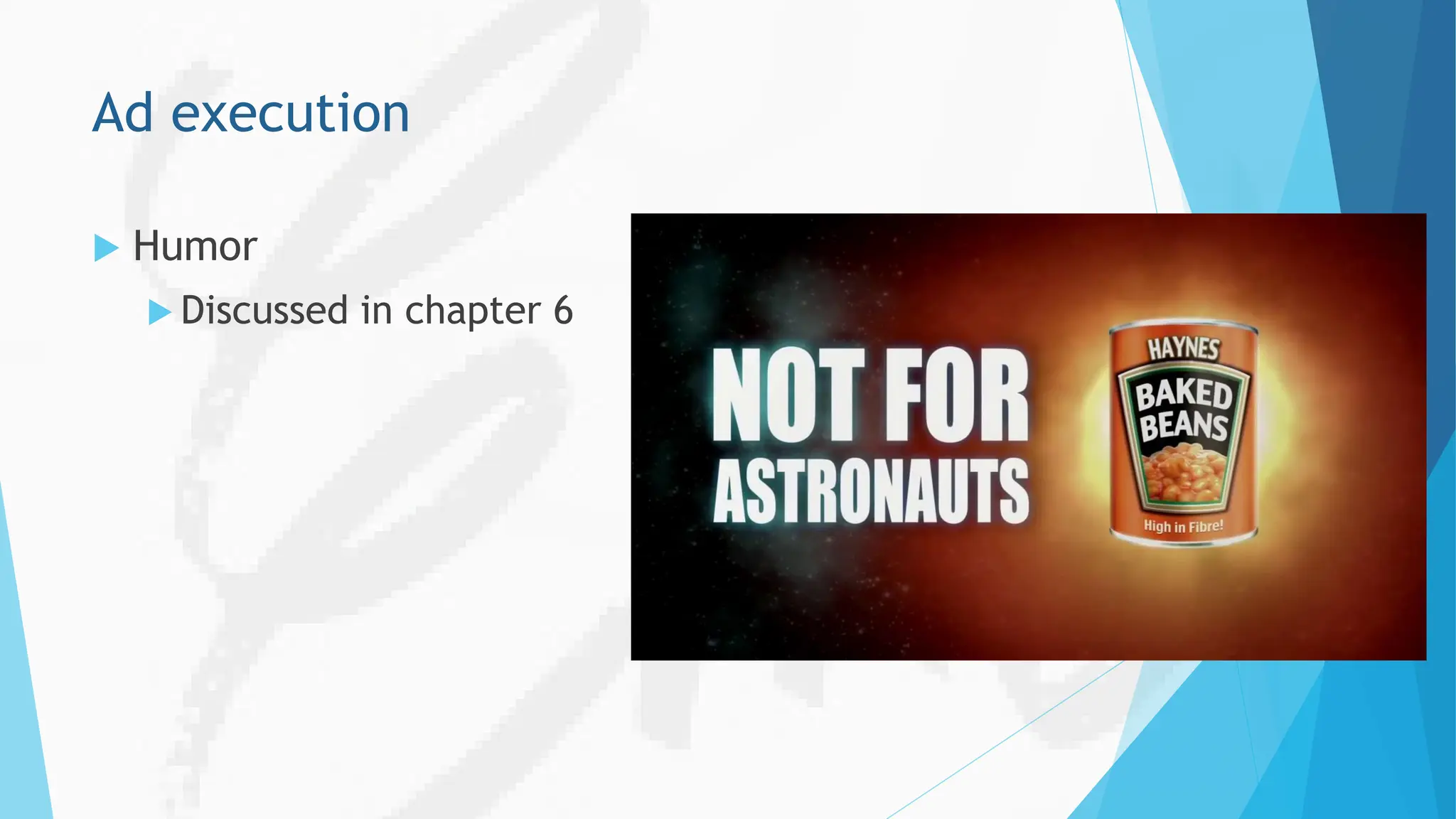
 Humor
 Discussed in chapter 6
Creative Tactics for print advertising
 Headlines
 Task is to attract reader’s attention and/or provide the primary
information
 Direct headlines
 Straightforward and informative such as specific benefits,
making a promise etc.
 Indirect headlines
 They sometimes provoke reader’s curiosity and lure readers
into the body copy
 Risky sometimes if the headline is not provocative
 Subheads
 Usually smaller than main headline but larger than body copy
Body Copy & Layout
 Usually the heart of the advertising message
 Often flows from the point made in the headline
 Layout
 Physical arrangement of the various part of the ad like
heading, subheads, message body, illustrations and any
identifying marks.
Guidelines for evaluating creative
output
 Is the creative approach consistent with the brand’s marketing
and advertising objectives?
 Is the creative approach consistent with the creative strategy
and objectives? Does it communicate what it is supposed to?
 Is the creative approach appropriate for the target market?
 Does the creative approach communicate a clear and
convincing message to the customer?
 Does the creative execution keep from overwhelming the
message?
 Is the creative approach appropriate for the media environment
in which it is likely to be seen?
 Is the ad truthful and tasteful?
Thank You

creative strategy implementation decisions styles

  • 1.
    Chapter 9 Creative Strategy: Implementationand evaluation By Emran Mohammad (Emd) Mkt 337 (sections 3)
  • 2.
    Advertising appeal  Information/Rationalapproach  Focuses on consumer’s practical, functional or utilitarian need for the product/service and emphasize features of a product/service and /or the benefits or the reasons of owning a or using a particular brand.  Feature appeal  Competitive advantage  Favorable price appeal  News appeal  Product/service popularity
  • 3.
  • 4.
    Advertising appeal  Emotionalappeals  Relates to the consumer’s social and/or psychological needs for purchasing a product/service  Ads often rely on emotional integration, whereby they portray the characteristics in the ad as experiencing an emotional benefit/outcome
  • 5.
    Reasons for usingemotional appeal  Often used as a basis of their advertising campaign  JCPenney introduced ad that themed around the tagline ‘Yours truly, JCP’  Influence the consumer’s interpretation of their product usage or experience  Transformational advertisement  Which associates the experience of using the advertised brand with a unique set of psychological characteristics which would not typically be associated with the brand experience
  • 6.
    Additional appeal  Reminderadvertising  Which has the objective of building brand awareness and/or keeping the brand name in front of the customer  Teaser Advertising  Which is designed to build curiosity, interest and/or excitement about a product or brand  User generated content  Ads are created by the customers rather than the company and/or its agency
  • 7.
    Ad execution  Creativeexecution  Numerous ways of execution  Straight sell or factual message  Scientific/technical evidence  Demonstration  Testimonial  Slice of life  Comparison  Animation  Personality symbol  Imagery  Dramatization  Humor  Combination
  • 8.
    Ad execution  Straightsell or factual message  A straightforward information concerning the product/service  Rational appeal is used  Commonly used in print ads  They are also shown in TV with an announcer generally delivering the sales message while the product is shown in the screen
  • 9.
    Ad execution  Scientific/technicalevidence  Another variation of straight sell where scientific or technical info is given in the ad  Endorsement by scientific bodies or doctors etc.
  • 10.
    Ad execution  Demonstration Designed to illustrate the key benefits of the product/service by showing actual use or staged situation  Used to convince customers regarding the product’s utility or quality
  • 11.
    Ad execution  Testimonial A person praises the product with his/her personal experience  Can be ordinary satisfied customers  Very effective if the target audience can relate to the person giving the testimonial or if the story is interesting
  • 12.
    Ad execution  Sliceof life  Used particularly for packaged goods/products  Based on problem/solution approach  Often irritating as they remind people about problems  Sometimes used with fear appeal as a ‘slice of death’ ad to show negative consequence in life for not using the right product FedEx Ads
  • 13.
    Ad execution  Comparison Compare the company’s products with the competitor’s ones  Some comparisons are more direct leading to attack ads
  • 14.
    Ad execution  Animation Animated scenes are drawn by the artists or generated in a computer  Especially popular for children
  • 15.
    Ad execution  Personalitysymbol  Involves developing a central character or personality symbol that can deliver advertising message
  • 16.
    Ad execution  Imagery Little or no information about the brand and almost totally visual  Uses imagery, illustrations and other visual elements to convey the message  Execution may be based on usage imagery
  • 17.
    Ad execution  Dramatization Well suited to TVC  Uses more excitement and suspense to tell the story  The purpose is to draw the viewer in the action it portrays Exposition Conflict Middle drama Climax resolution
  • 18.
    Ad execution  Humor Discussed in chapter 6
  • 19.
    Creative Tactics forprint advertising  Headlines  Task is to attract reader’s attention and/or provide the primary information  Direct headlines  Straightforward and informative such as specific benefits, making a promise etc.  Indirect headlines  They sometimes provoke reader’s curiosity and lure readers into the body copy  Risky sometimes if the headline is not provocative  Subheads  Usually smaller than main headline but larger than body copy
  • 20.
    Body Copy &Layout  Usually the heart of the advertising message  Often flows from the point made in the headline  Layout  Physical arrangement of the various part of the ad like heading, subheads, message body, illustrations and any identifying marks.
  • 21.
    Guidelines for evaluatingcreative output  Is the creative approach consistent with the brand’s marketing and advertising objectives?  Is the creative approach consistent with the creative strategy and objectives? Does it communicate what it is supposed to?  Is the creative approach appropriate for the target market?  Does the creative approach communicate a clear and convincing message to the customer?  Does the creative execution keep from overwhelming the message?  Is the creative approach appropriate for the media environment in which it is likely to be seen?  Is the ad truthful and tasteful?
  • 22.