CREATING AN APPAREL LINEMARKET ANALYSIS & TARGET MARKETTerm 1 / Product Development & Design / Robin Hall
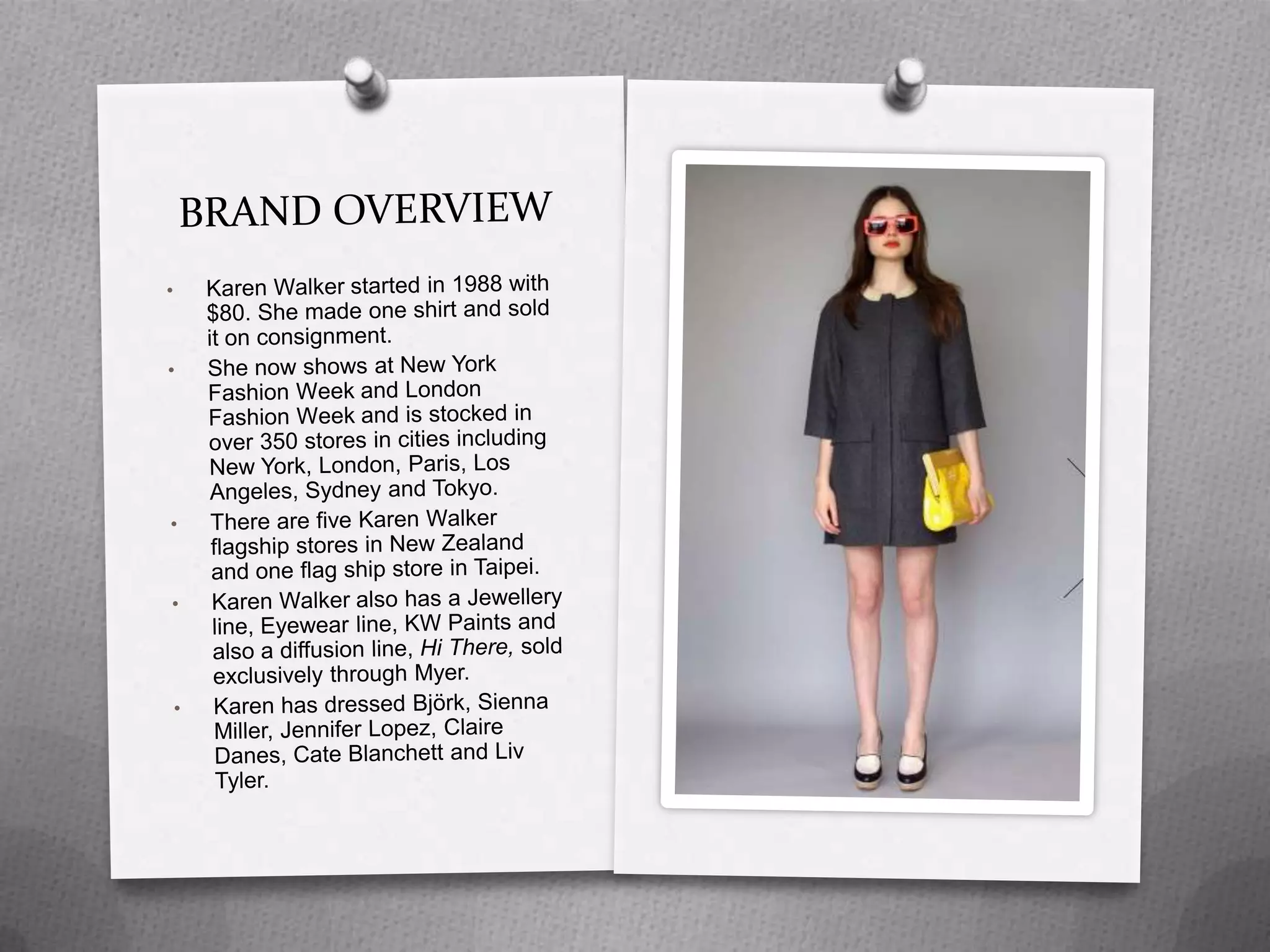
BRAND OVERVIEWKaren Walker started in 1988 with $80. She made one shirt and sold it on consignment. 
She now shows at New York Fashion Week and London Fashion Week and is stocked in over 350 stores in cities including New York, London, Paris, Los Angeles, Sydney and Tokyo.
There are five Karen Walker flagship stores in New Zealand and one flag ship store in Taipei.
Karen Walker also has a Jewellery line, Eyewear line, KW Paints and also a diffusion line, Hi There, sold exclusively through Myer.
Karen has dressed Björk, Sienna Miller, Jennifer Lopez, Claire Danes, Cate Blanchettand Liv Tyler.MARKET ANALYSISIdentify and document long-term and short-term social and economic trends that are relevant to your target market, and explain how they influence apparel purchasing behaviour.
SHORT TERM ECONOMIC TRENDSConsumer confidence in Australia is still low and there’s more saving and less spending.
Significant portion of fashion spending is going offshore. Consumers want access to a greater product range and fashion-forward pieces. Australian retailers need to not just serve the Australian market but expand to new markets via online sales.
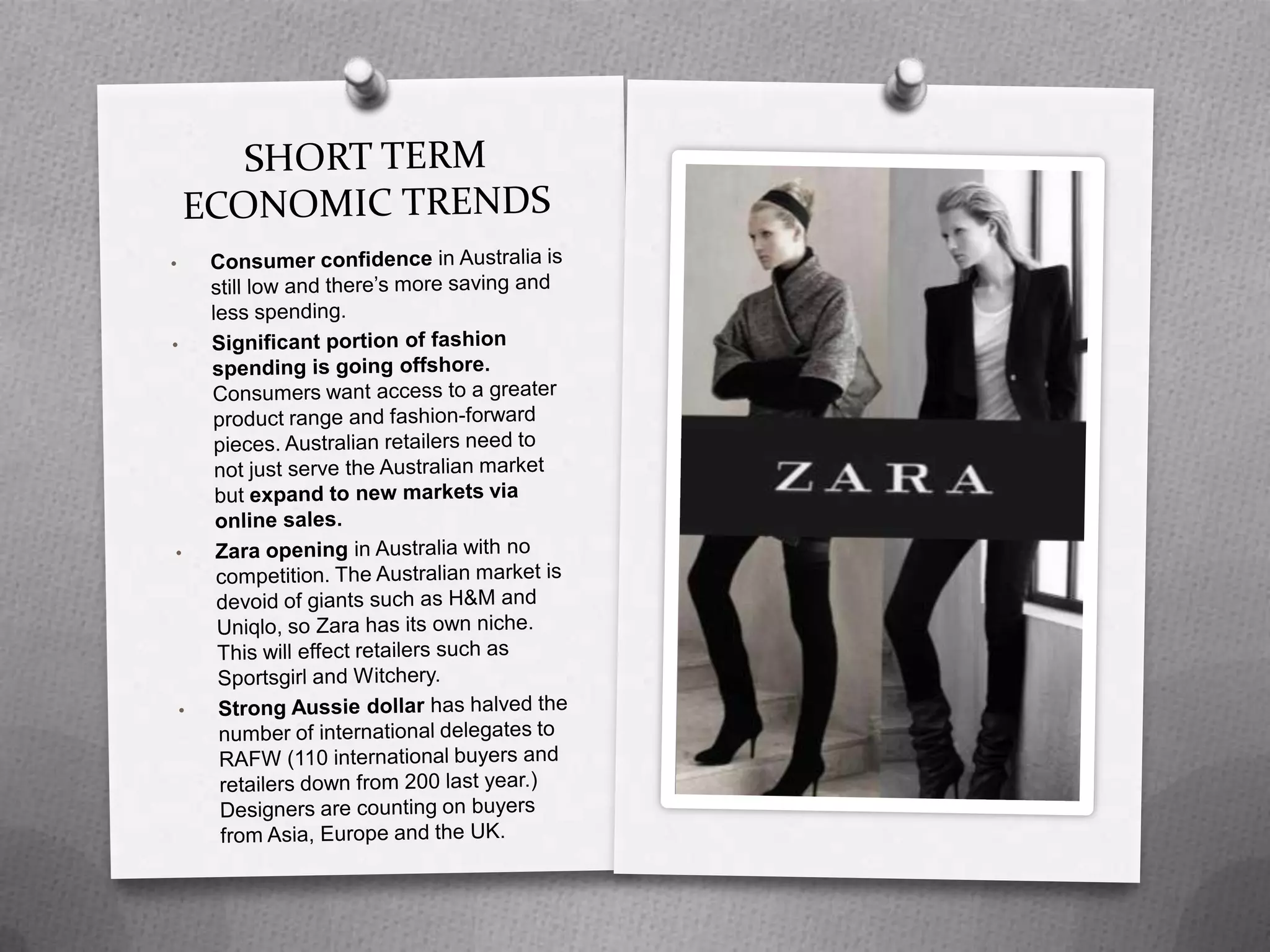
Zara opening in Australia with no competition. The Australian marketis devoid of giants such as H&M and Uniqlo, so Zara has its own niche. This will effect retailers such as Sportsgirl and Witchery.
Strong Aussie dollar has halved the number of international delegates to RAFW (110 international buyers and retailers down from 200 last year.) Designers are counting on buyers from Asia, Europe and the UK.LONG-TERM ECONOMIC TRENDSContinuing strong dollar (On the other hand if our relationship is not maintained China may start to look elsewhere (to Africa and Latin America) as a different source for commodities.)
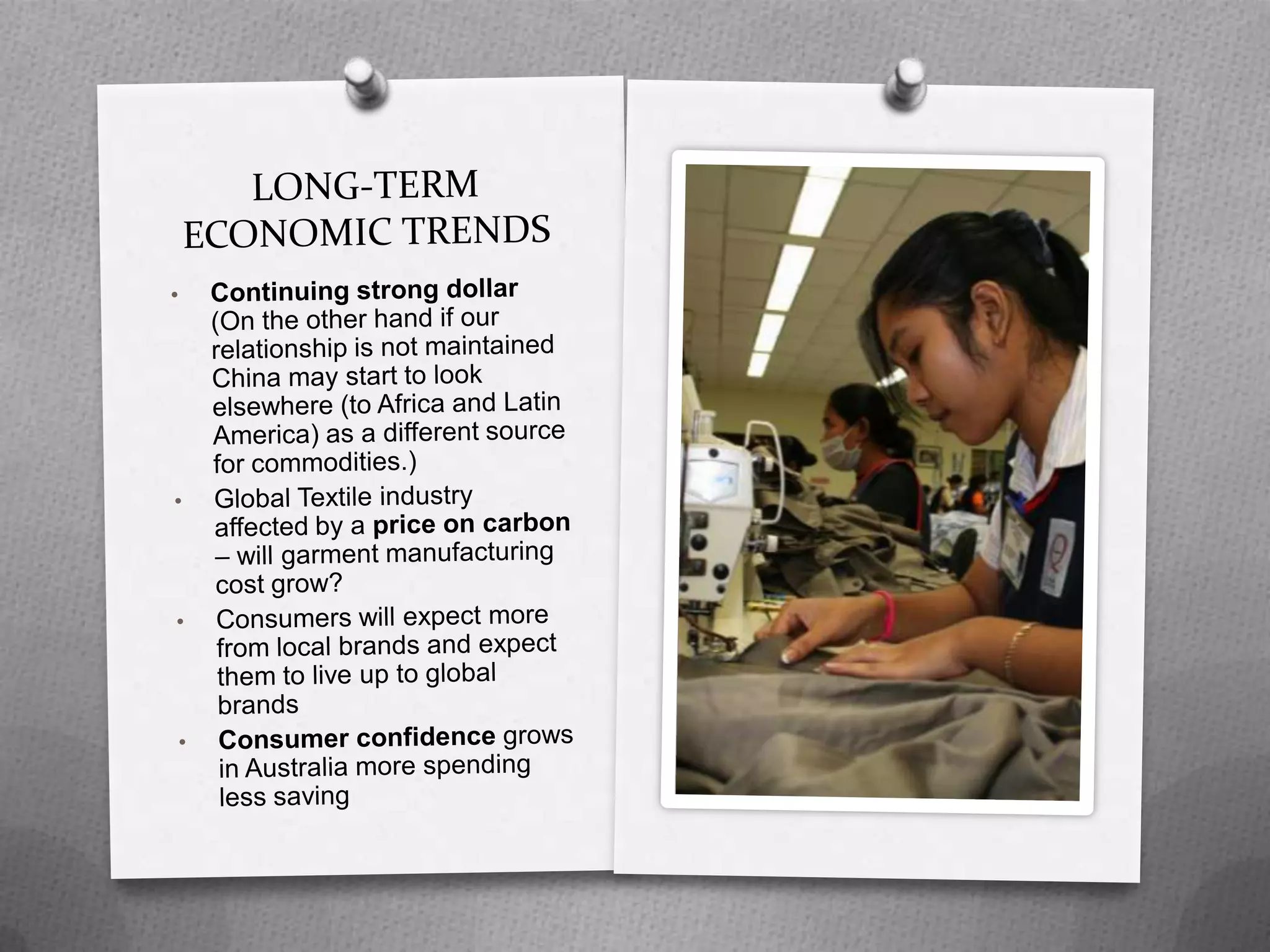
Global Textile industry affected by a price on carbon – will garment manufacturing cost grow?
Consumers will expect more from local brands and expect them to live up to global brands
Consumer confidence grows in Australia more spending less savingSHORT TERM SOCIAL TRENDSWith the death of Osama bin Laden and the eventual withdrawal of the US from Afghanistan, fashion will gradually become less somber and conservative and more joyful and experimental.
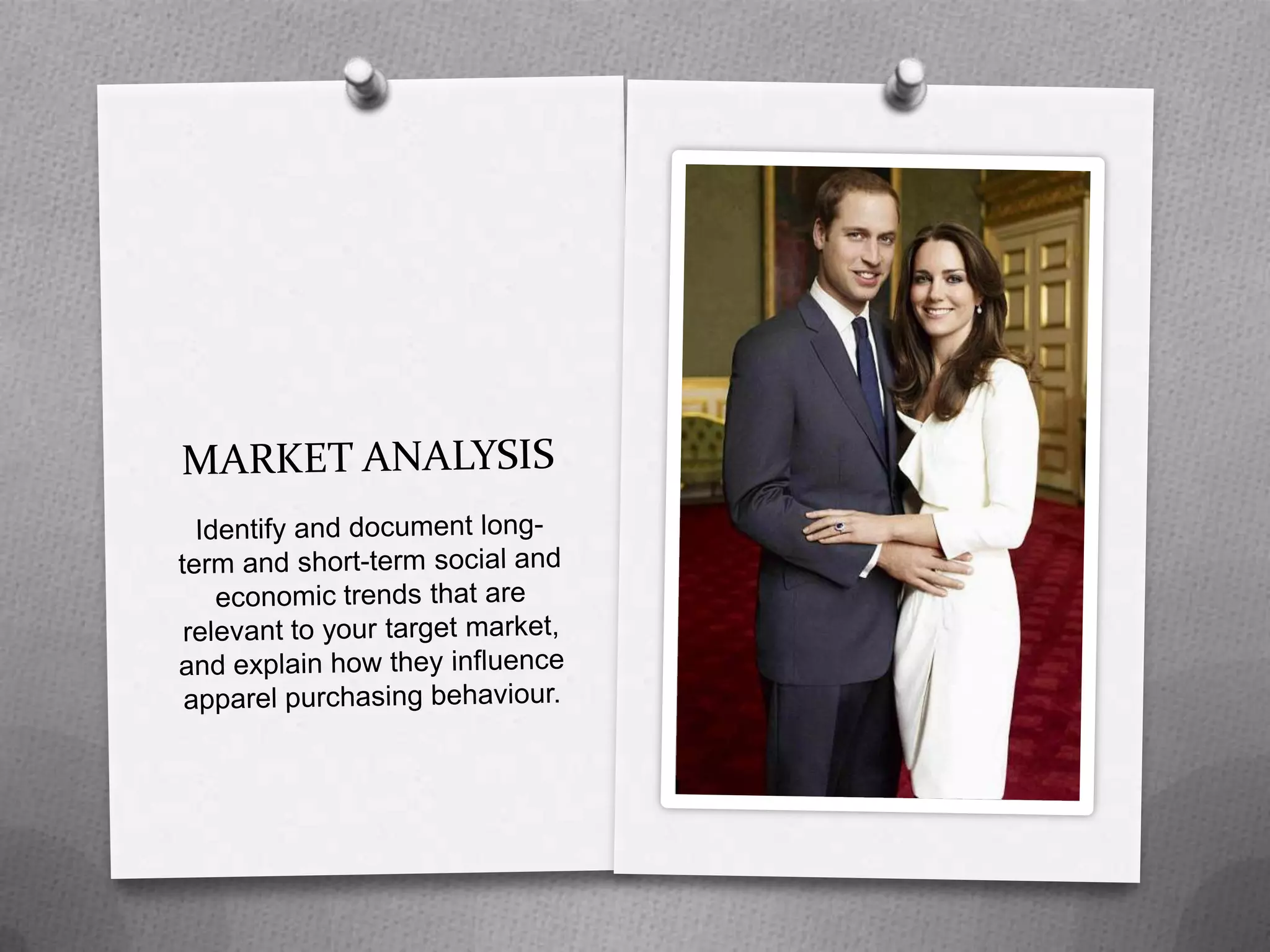
Brit-fever as William and Kate marry and London hosts the 2012 Olympics.
Boardwalk Empire hits Aussie screens – think drop waists and embellishment again.LONG-TERM SOCIAL TRENDSConsumers will increasingly (and automatically) receive targeted ratings, recommendations and reviews from their social networks.
Shopping will become increasingly social, even when consumers and their peers are not physically together
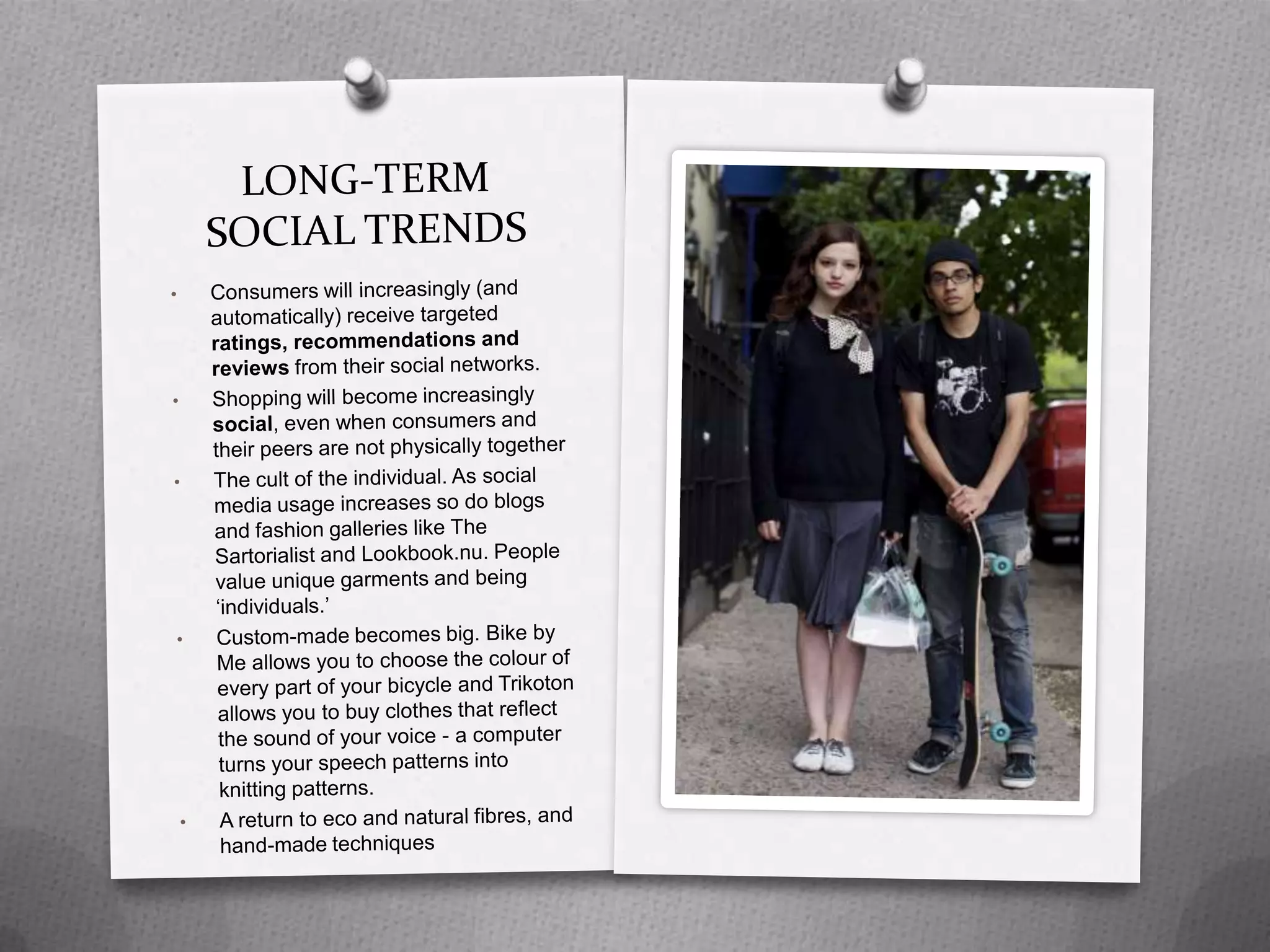
The cult of the individual. As social media usage increases so do blogs and fashion galleries like The Sartorialist and Lookbook.nu. People value unique garments and being ‘individuals.’
Custom-made becomes big. Bike by Meallows you to choose the colour of every part of your bicycle and Trikoton allows you to buy clothes that reflect the sound of your voice - a computer turns your speech patterns into knitting patterns.
A return to eco and natural fibres, and hand-made techniquesMARKET ANALYSISIdentify and analyse three competitors for your apparel line. Describe their strengths and weaknesses and how your apparel line will create a competitive advantage.
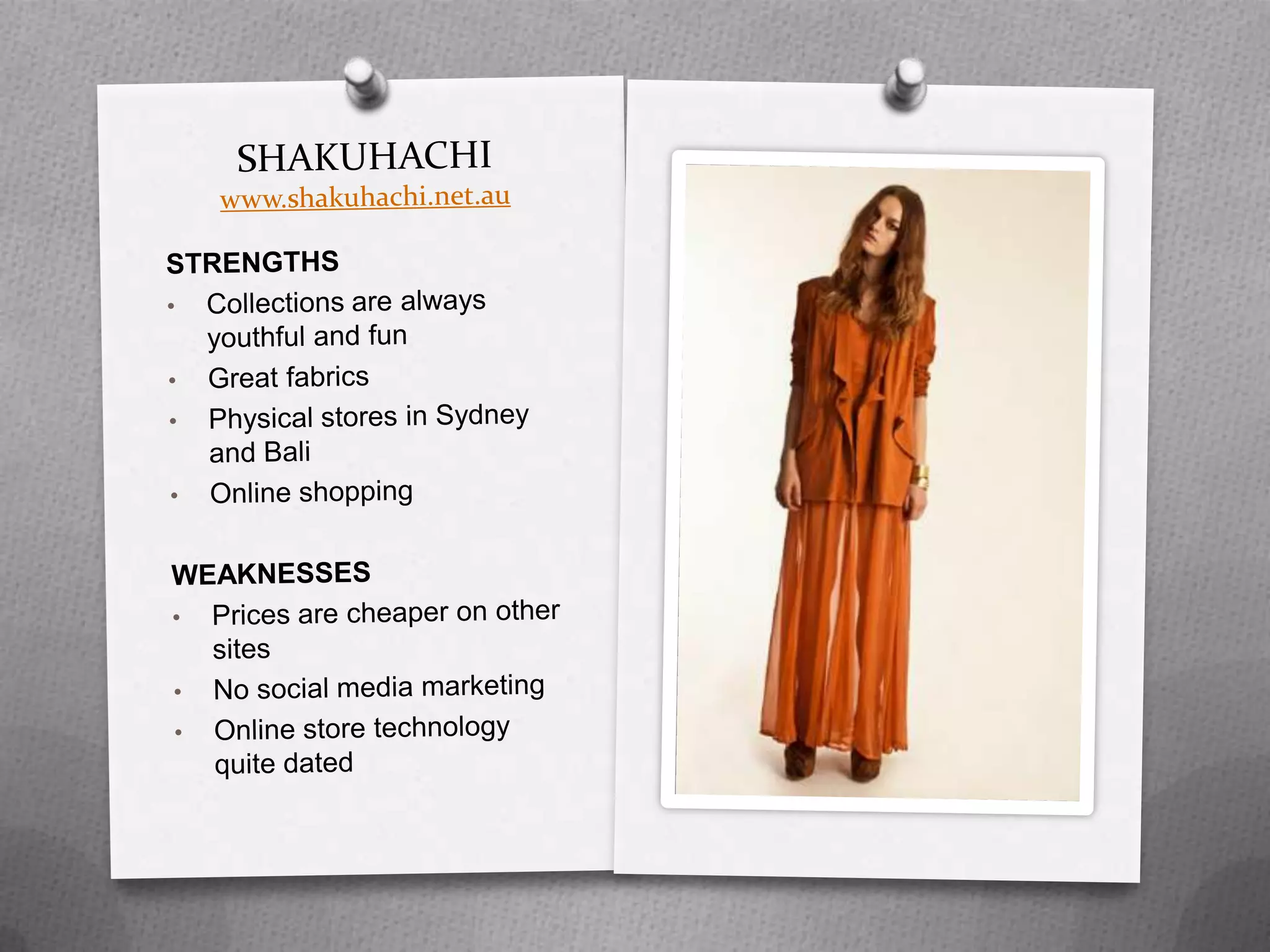
SHAKUHACHIwww.shakuhachi.net.auSTRENGTHSCollections are always youthful and fun
Great fabrics
Physical stores in Sydney and Bali
Online shoppingWEAKNESSESPrices are cheaper on other sites
No social media marketing
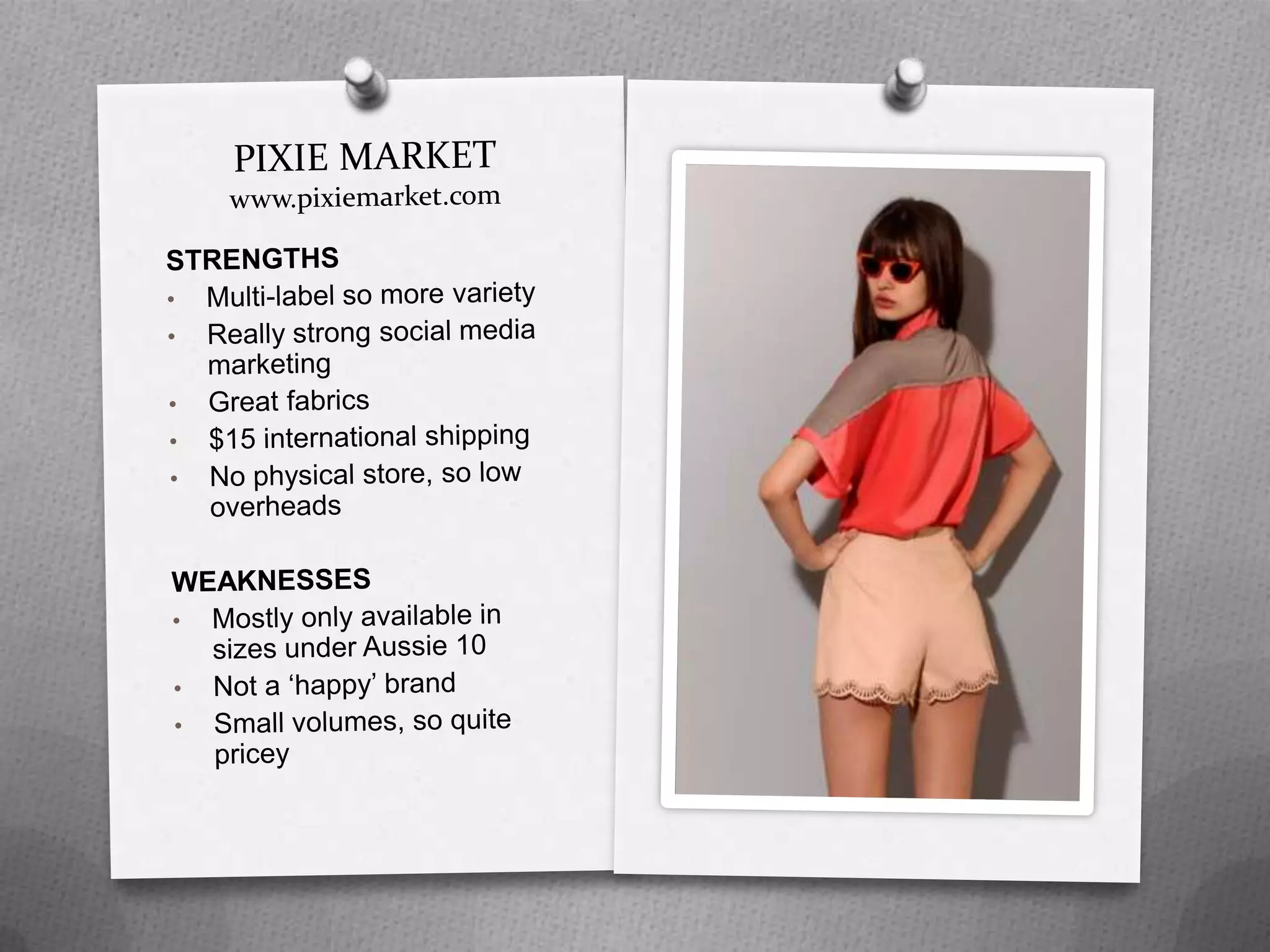
Online store technology quite datedPIXIE MARKETwww.pixiemarket.comSTRENGTHSMulti-label so more variety

Creating an Apparel Line

  • 1.
    CREATING AN APPARELLINEMARKET ANALYSIS & TARGET MARKETTerm 1 / Product Development & Design / Robin Hall
  • 2.
    BRAND OVERVIEWKaren Walkerstarted in 1988 with $80. She made one shirt and sold it on consignment. 
  • 3.
    She now showsat New York Fashion Week and London Fashion Week and is stocked in over 350 stores in cities including New York, London, Paris, Los Angeles, Sydney and Tokyo.
  • 4.
    There are fiveKaren Walker flagship stores in New Zealand and one flag ship store in Taipei.
  • 5.
    Karen Walker alsohas a Jewellery line, Eyewear line, KW Paints and also a diffusion line, Hi There, sold exclusively through Myer.
  • 6.
    Karen has dressedBjörk, Sienna Miller, Jennifer Lopez, Claire Danes, Cate Blanchettand Liv Tyler.MARKET ANALYSISIdentify and document long-term and short-term social and economic trends that are relevant to your target market, and explain how they influence apparel purchasing behaviour.
  • 7.
    SHORT TERM ECONOMICTRENDSConsumer confidence in Australia is still low and there’s more saving and less spending.
  • 8.
    Significant portion offashion spending is going offshore. Consumers want access to a greater product range and fashion-forward pieces. Australian retailers need to not just serve the Australian market but expand to new markets via online sales.
  • 9.
    Zara opening inAustralia with no competition. The Australian marketis devoid of giants such as H&M and Uniqlo, so Zara has its own niche. This will effect retailers such as Sportsgirl and Witchery.
  • 10.
    Strong Aussie dollarhas halved the number of international delegates to RAFW (110 international buyers and retailers down from 200 last year.) Designers are counting on buyers from Asia, Europe and the UK.LONG-TERM ECONOMIC TRENDSContinuing strong dollar (On the other hand if our relationship is not maintained China may start to look elsewhere (to Africa and Latin America) as a different source for commodities.)
  • 11.
    Global Textile industryaffected by a price on carbon – will garment manufacturing cost grow?
  • 12.
    Consumers will expectmore from local brands and expect them to live up to global brands
  • 13.
    Consumer confidence growsin Australia more spending less savingSHORT TERM SOCIAL TRENDSWith the death of Osama bin Laden and the eventual withdrawal of the US from Afghanistan, fashion will gradually become less somber and conservative and more joyful and experimental.
  • 14.
    Brit-fever as Williamand Kate marry and London hosts the 2012 Olympics.
  • 15.
    Boardwalk Empire hitsAussie screens – think drop waists and embellishment again.LONG-TERM SOCIAL TRENDSConsumers will increasingly (and automatically) receive targeted ratings, recommendations and reviews from their social networks.
  • 16.
    Shopping will becomeincreasingly social, even when consumers and their peers are not physically together
  • 17.
    The cult ofthe individual. As social media usage increases so do blogs and fashion galleries like The Sartorialist and Lookbook.nu. People value unique garments and being ‘individuals.’
  • 18.
    Custom-made becomes big.Bike by Meallows you to choose the colour of every part of your bicycle and Trikoton allows you to buy clothes that reflect the sound of your voice - a computer turns your speech patterns into knitting patterns.
  • 19.
    A return toeco and natural fibres, and hand-made techniquesMARKET ANALYSISIdentify and analyse three competitors for your apparel line. Describe their strengths and weaknesses and how your apparel line will create a competitive advantage.
  • 20.
  • 21.
  • 22.
    Physical stores inSydney and Bali
  • 23.
  • 24.
  • 25.
    Online store technologyquite datedPIXIE MARKETwww.pixiemarket.comSTRENGTHSMulti-label so more variety
  • 26.
    Really strong socialmedia marketing
  • 27.
  • 28.
  • 29.
    No physical store,so low overheadsWEAKNESSESMostly only available in sizes under Aussie 10
  • 30.
  • 31.
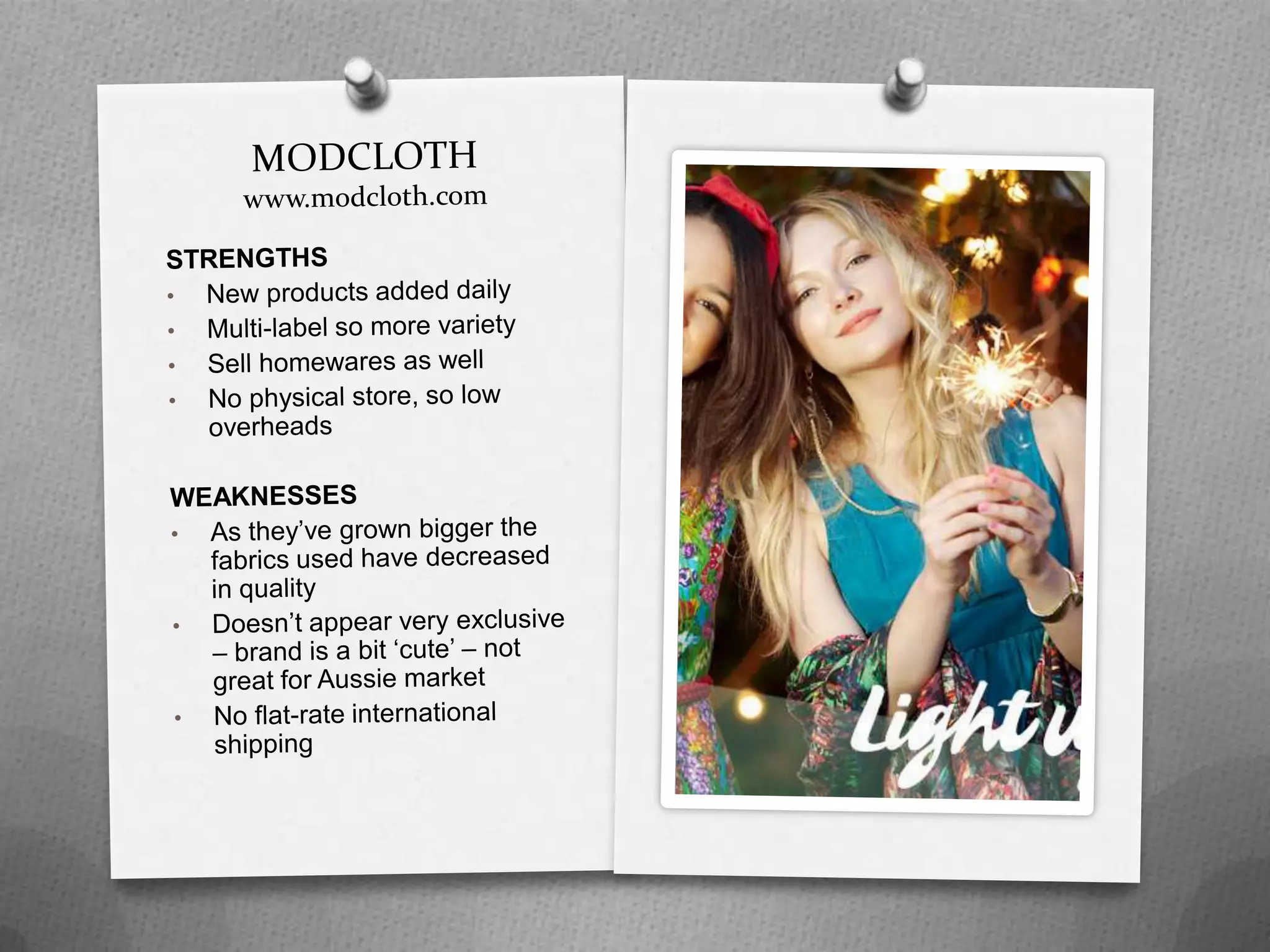
    Small volumes, soquite priceyMODCLOTHwww.modcloth.comSTRENGTHSNew products added daily
  • 32.
  • 33.
  • 34.
    No physical store,so low overheadsWEAKNESSESAs they’ve grown bigger the fabrics used have decreased in quality
  • 35.
    Doesn’t appear veryexclusive – brand is a bit ‘cute’ – not great for Aussie market
  • 36.
    No flat-rate internationalshippingMY BRANDSTRENGTHSThere aren’t a lot of Aussie online stores doing eCommerce well.
  • 37.
    Intend to marketto a worldwide audience, not just Australia.
  • 38.
    Have eCommerce, advertisingand Social Media marketing background
  • 39.
  • 40.
    Want to workwith only natural fibres (silk, cotton, linen, leather, wool)
  • 41.
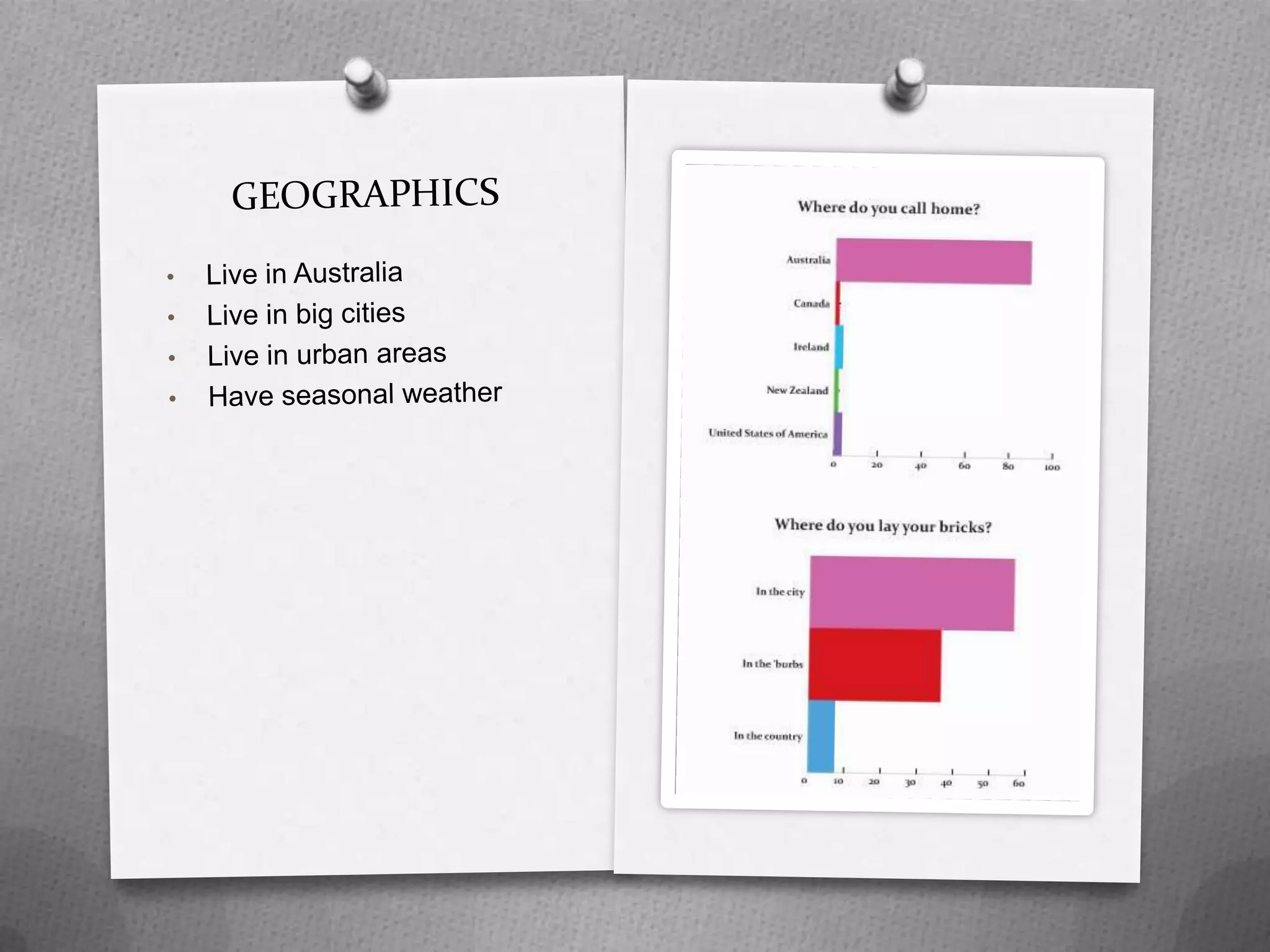
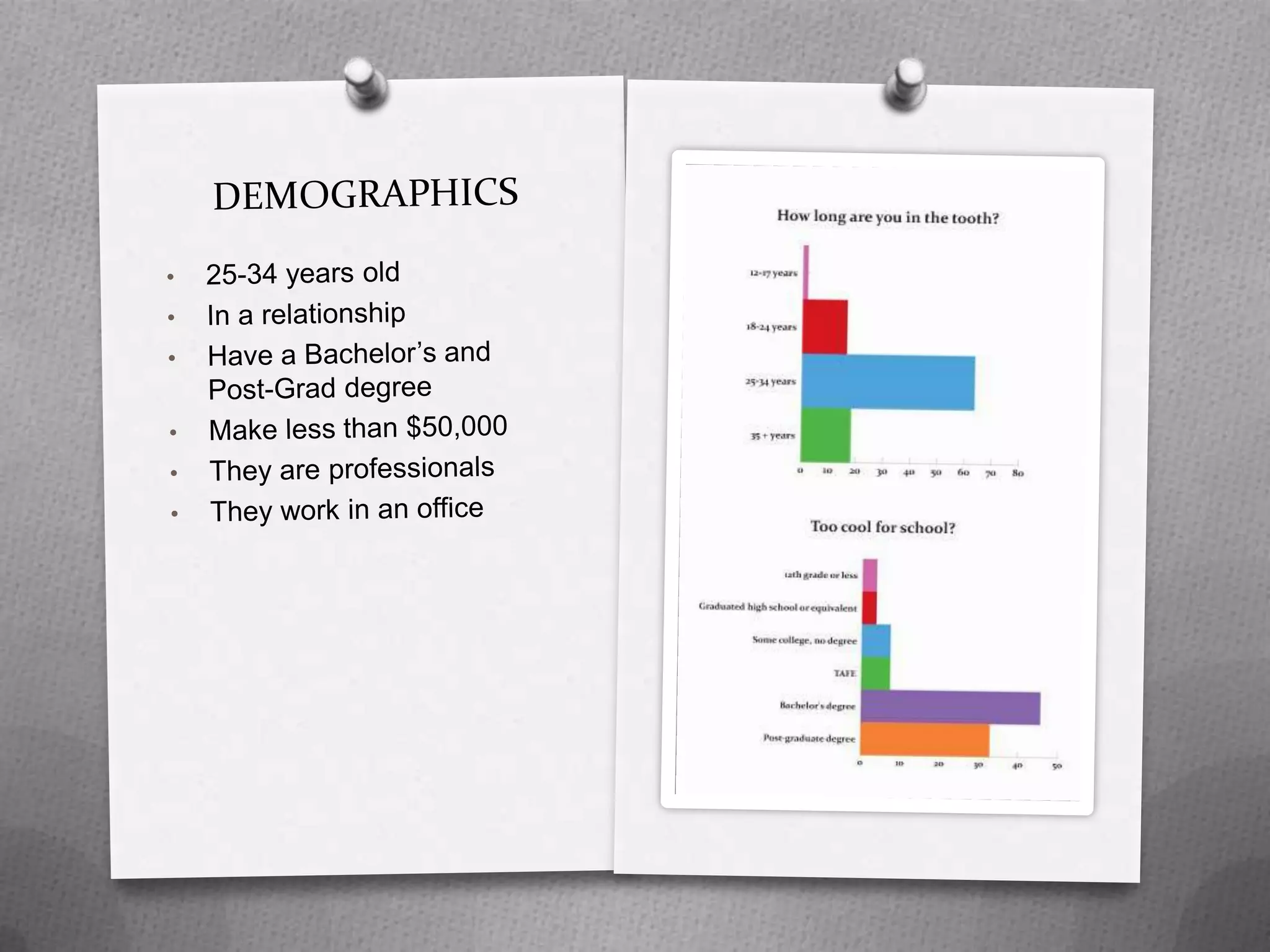
    Want to releasetwo main and 12 mini-collections per year to keep website fresh and current.TARGET MARKETDescribe the target market in terms of geographic/demographic/behavioural and psychographic characteristics.
  • 42.
  • 43.
  • 44.
  • 45.
  • 46.
  • 47.
    Have a Bachelor’sand Post-Grad degree
  • 48.
  • 49.
  • 50.
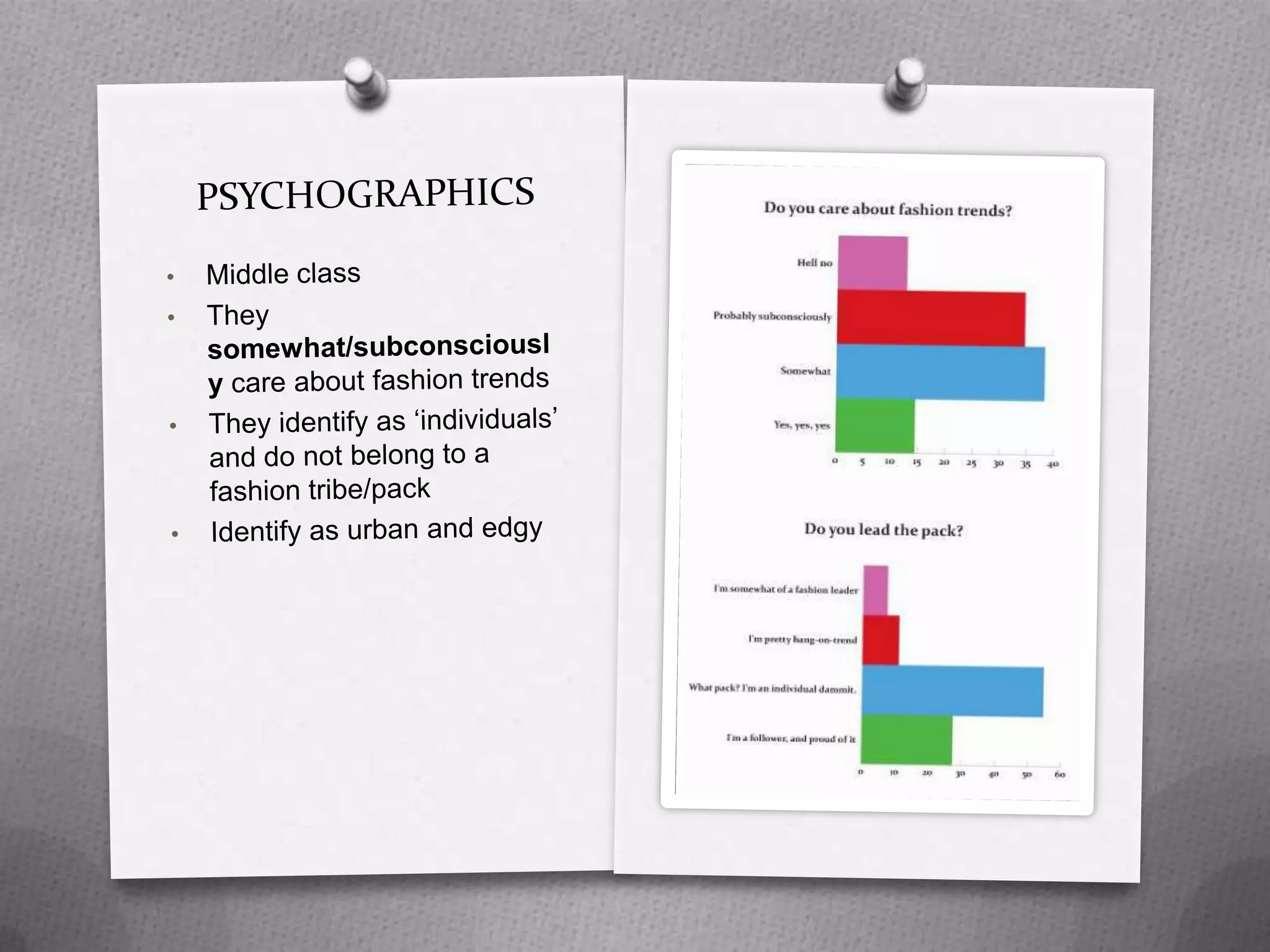
    They work inan officePSYCHOGRAPHICSMiddle class
  • 51.
  • 52.
    They identify as‘individuals’ and do not belong to a fashion tribe/pack
  • 53.
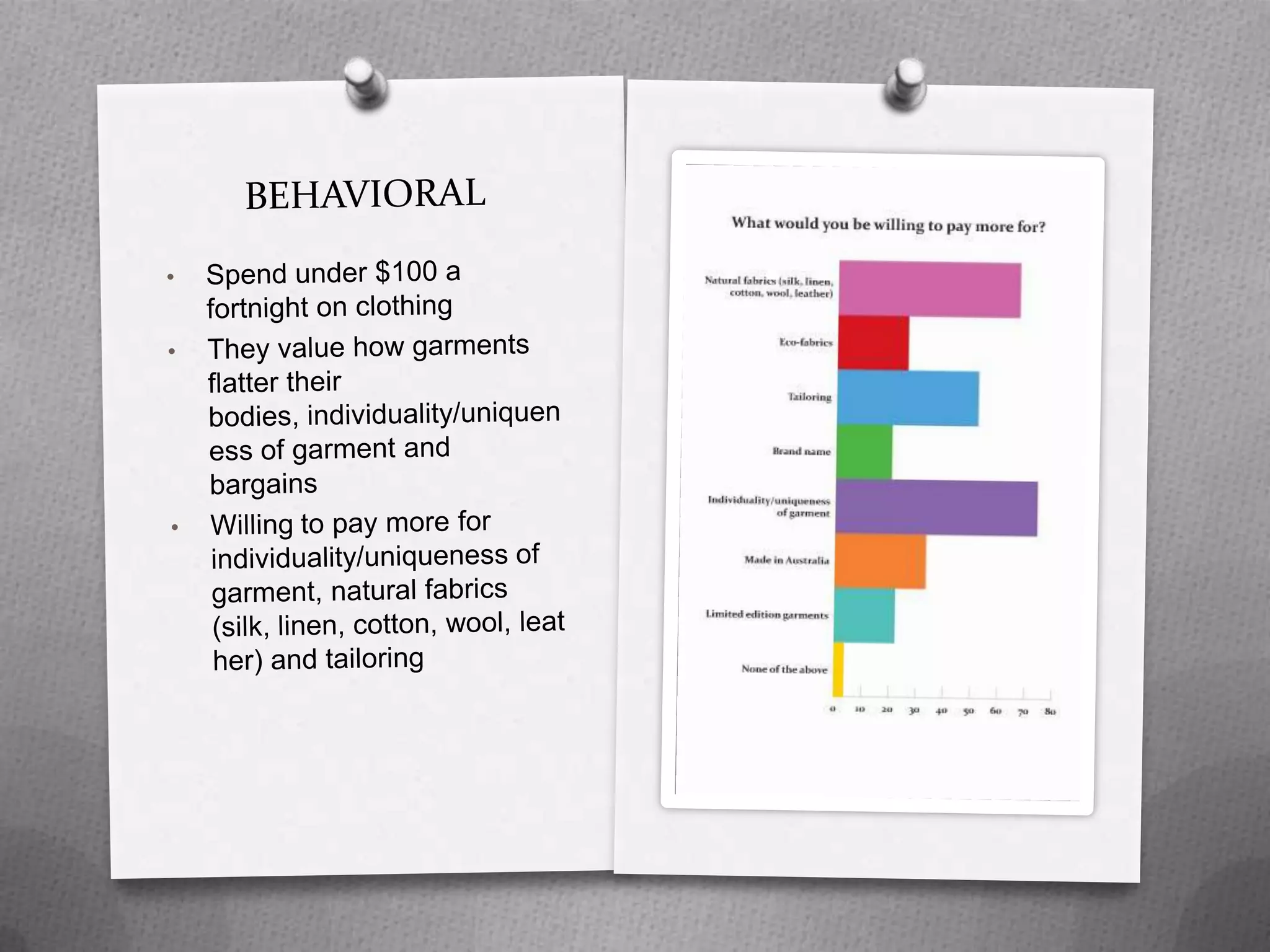
    Identify as urbanand edgyBEHAVIORALSpend under $100 a fortnight on clothing
  • 54.
    They value howgarments flatter their bodies, individuality/uniqueness of garment and bargains
  • 55.
    Willing to paymore for individuality/uniqueness of garment, natural fabrics (silk, linen, cotton, wool, leather) and tailoringTHEIR STYLEEclectic and urban
  • 56.
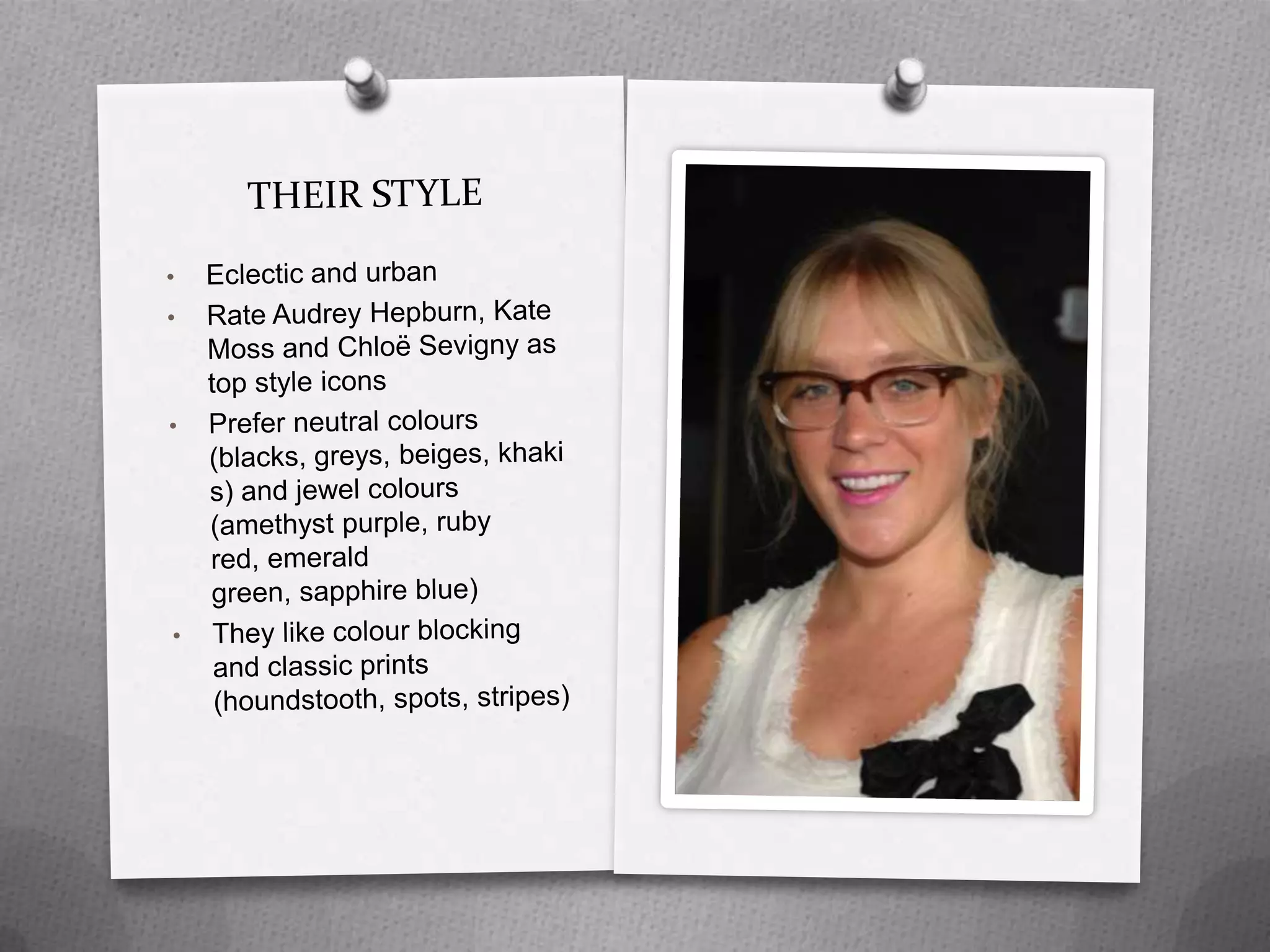
    Rate Audrey Hepburn,Kate Moss and Chloë Sevigny as top style icons
  • 57.
    Prefer neutral colours(blacks, greys, beiges, khakis) and jewel colours (amethyst purple, ruby red, emerald green, sapphire blue)
  • 58.
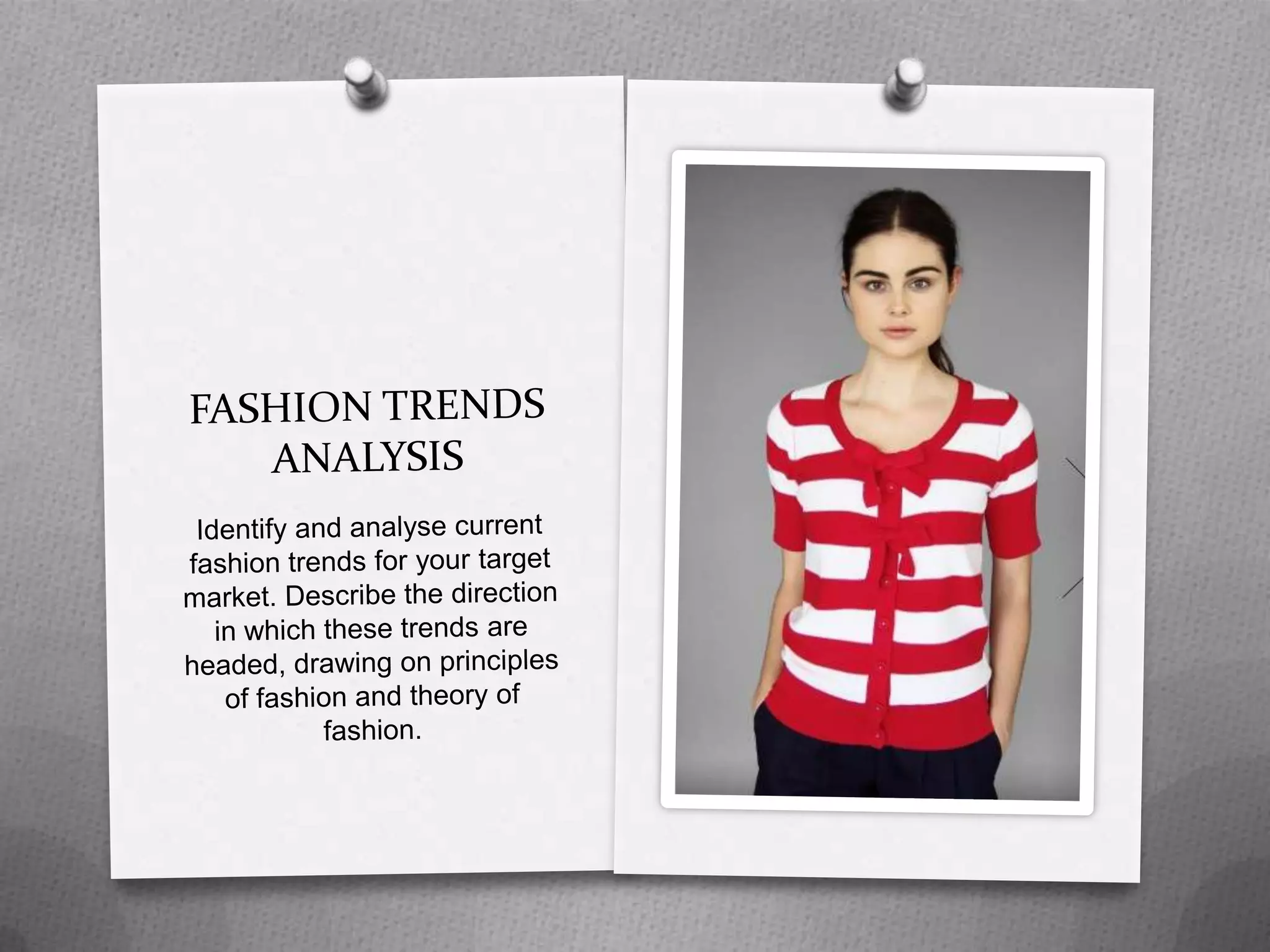
    They like colourblocking and classic prints (houndstooth, spots, stripes)THEIR SHOPPING HABITSThey shop online often–at least once a month
  • 59.
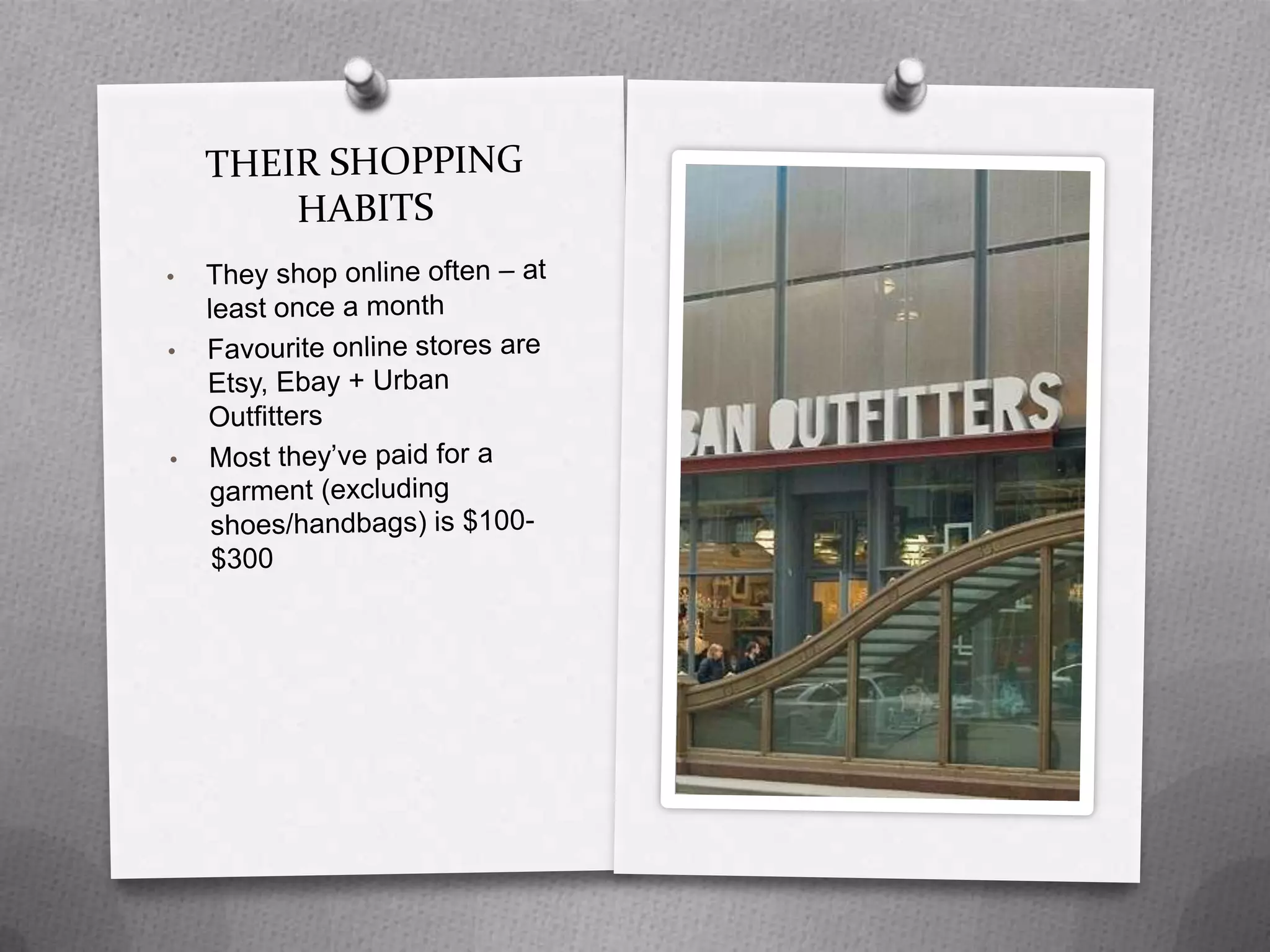
    Favourite online storesareEtsy,Ebay + Urban Outfitters
  • 60.
    Mostthey’vepaidfor a garment(excludingshoes/handbags) is $100-$300FASHION TRENDS ANALYSISIdentify and analyse current fashion trends for your target market. Describe the direction in which these trends are headed, drawing on principles of fashion and theory of fashion.
  • 61.
  • 62.
  • 63.
  • 64.
  • 65.
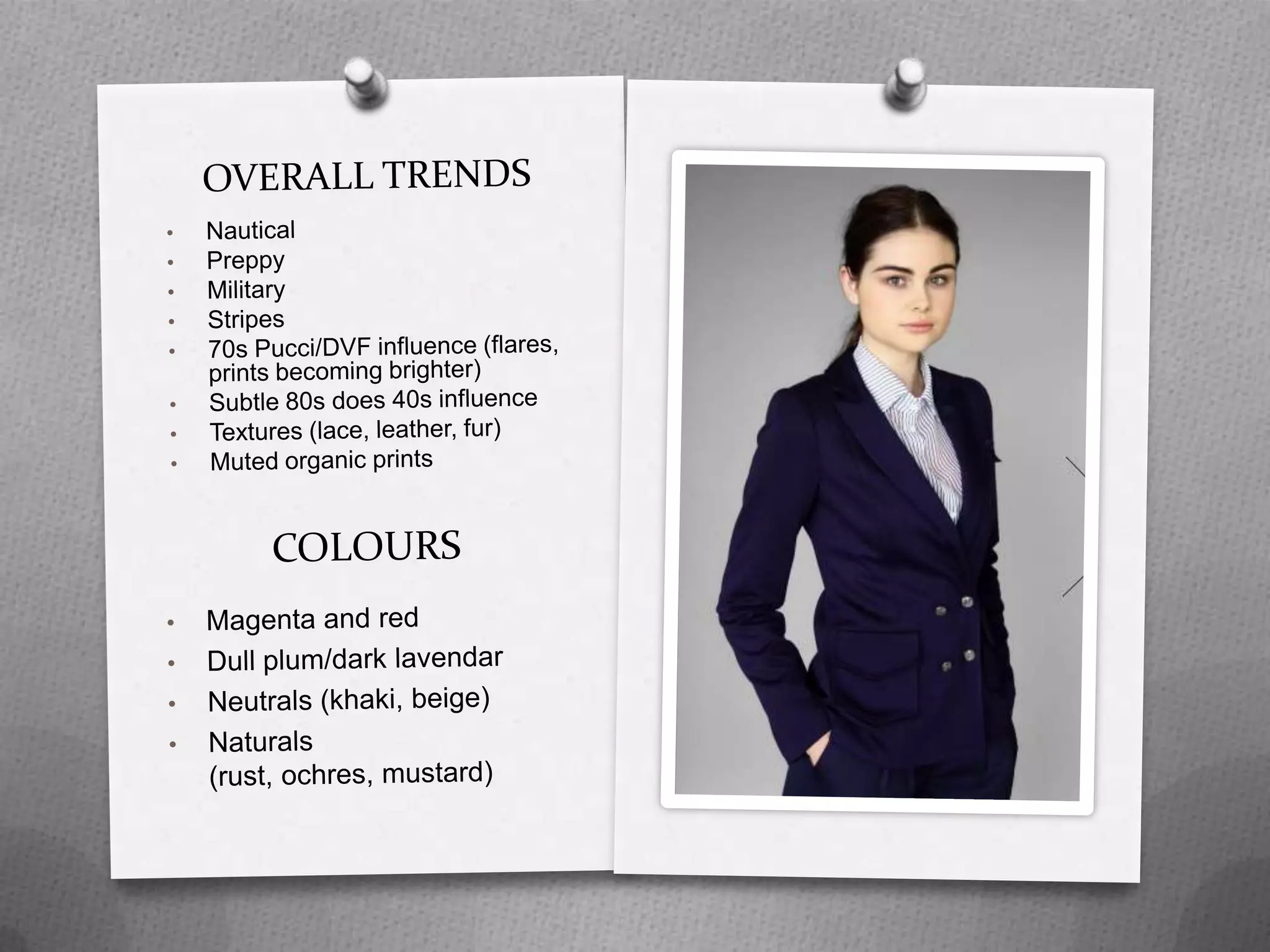
    70s Pucci/DVF influence(flares, prints becoming brighter)
  • 66.
    Subtle 80s does40s influence
  • 67.
  • 68.
  • 69.
  • 70.
  • 71.
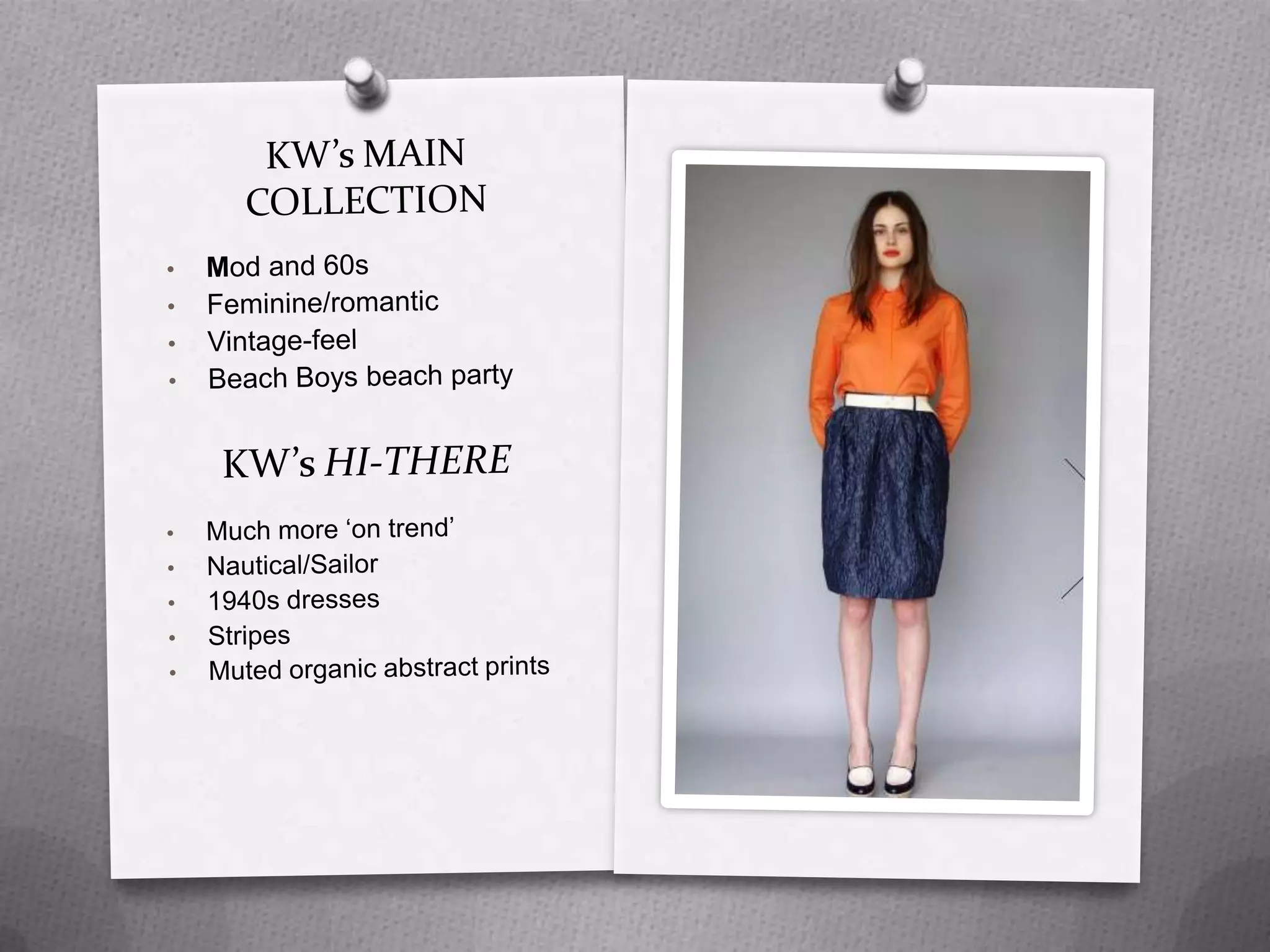
    Naturals (rust, ochres,mustard)KW’s MAIN COLLECTIONMod and 60s
  • 72.
  • 73.
  • 74.
    Beach Boys beachpartyKW’s HI-THEREMuch more ‘on trend’
  • 75.
  • 76.
  • 77.
  • 78.
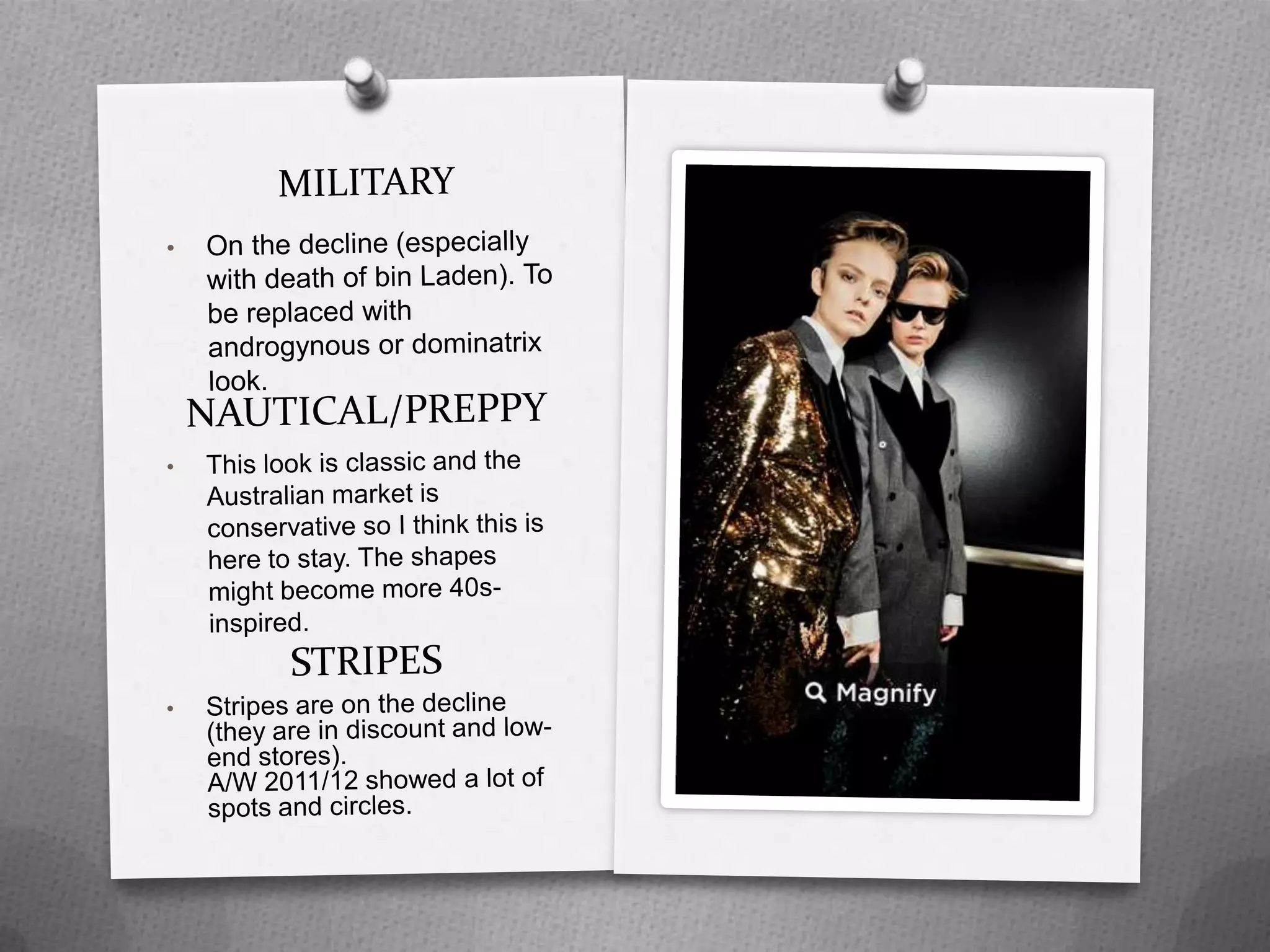
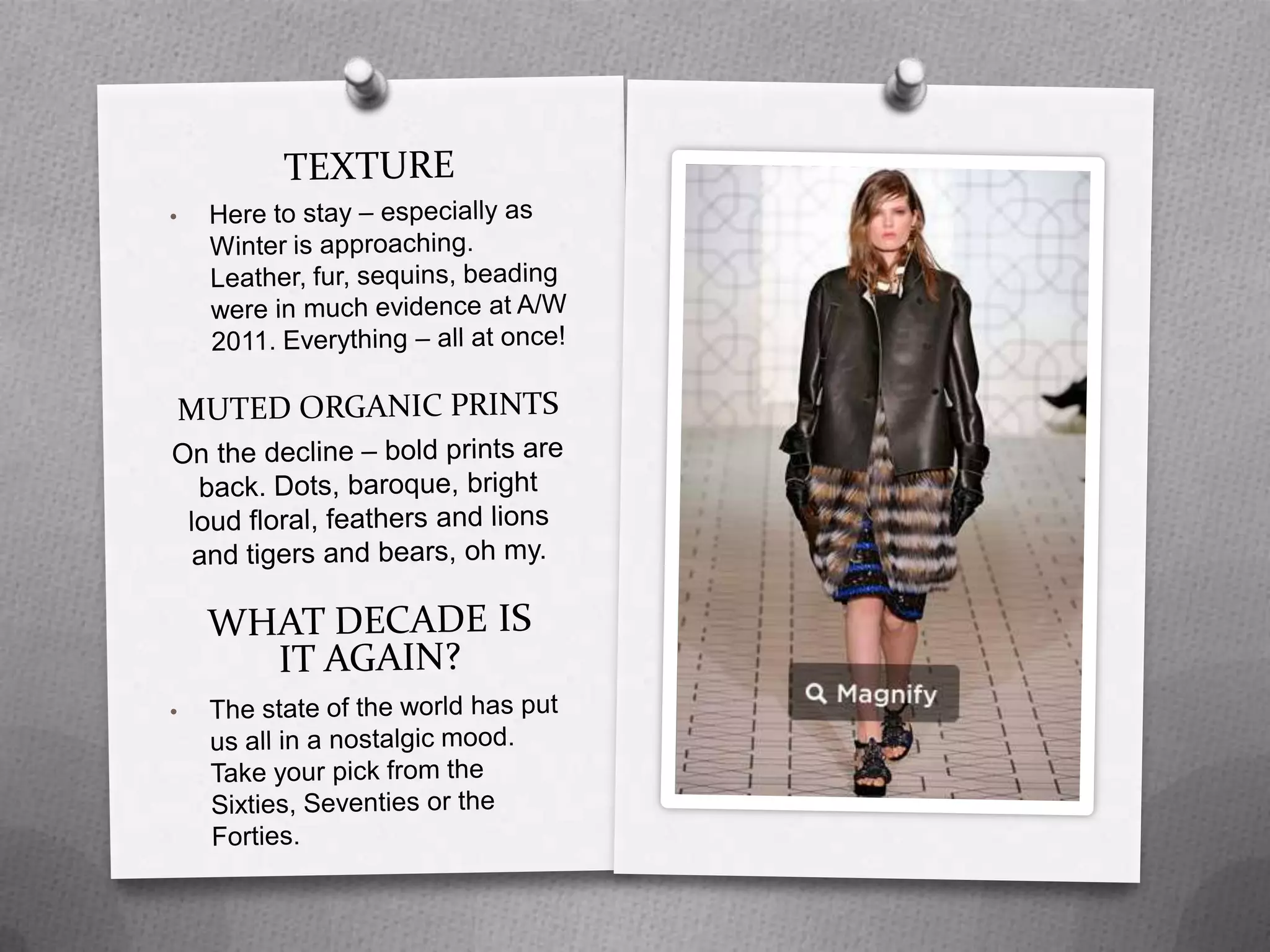
    Muted organic abstractprintsMILITARYOn the decline (especially with death of bin Laden). To be replaced with androgynous or dominatrix look.NAUTICAL/PREPPYThis look is classic and the Australian market is conservative so I think this is here to stay. The shapes might become more 40s-inspired.STRIPESStripes are on the decline (they are in discount and low-end stores). A/W 2011/12 showed a lot of spots and circles.TEXTUREHere to stay – especially as Winter is approaching. Leather, fur, sequins, beading were in much evidence at A/W 2011. Everything – all at once!MUTED ORGANIC PRINTSOn the decline – bold prints are back. Dots, baroque, bright loud floral, feathers and lions and tigers and bears, oh my.WHAT DECADE IS IT AGAIN?The state of the world has put us all in a nostalgic mood. Take your pick from the Sixties, Seventies or the Forties. BIBLIOGRAPHYTrendwatching May 2001 Updatewww.trendwatching.comThe ConversationZara’s Australian Entrance to Challenge Local Retailers www.theconversation.edu.auFashion AllureSpring Summer 2011 Trend Must Haveswww.fashion-allure.comThe EconomistThe status seekers, Global stretch: When will Zara hit its limits?, I've got you labelledwww.economist.comVogueA-Z Trend Reportwww.vogue.com.auCreative3 When you are in a creative world, inspiration can come from everywherewww. creative3.com.auKaren Walkerwww.karenwalker.com