Premek Brada
Department of Computer Science and Engineering
University of West Bohemia, Pilsen, CZ
                                                 Euromicro 2012, 5.-8.September, Cesme, Turkey
>   Motivation
     Issues, scenarios
>   Overall Approach
>   CRCE Repository
     Architecture, Extensible design
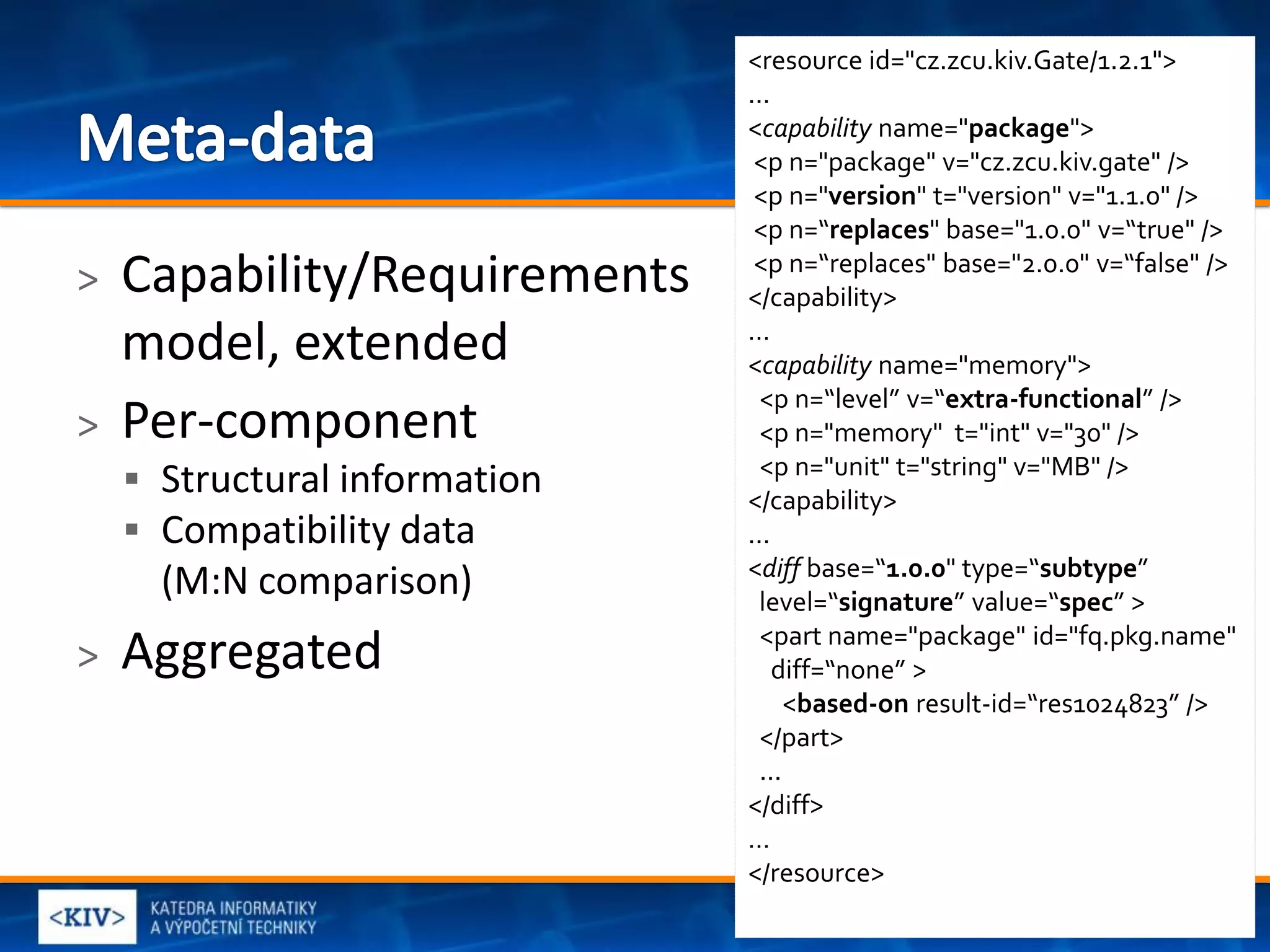
     Meta-data
     Use
>   Conclusion


                                        2
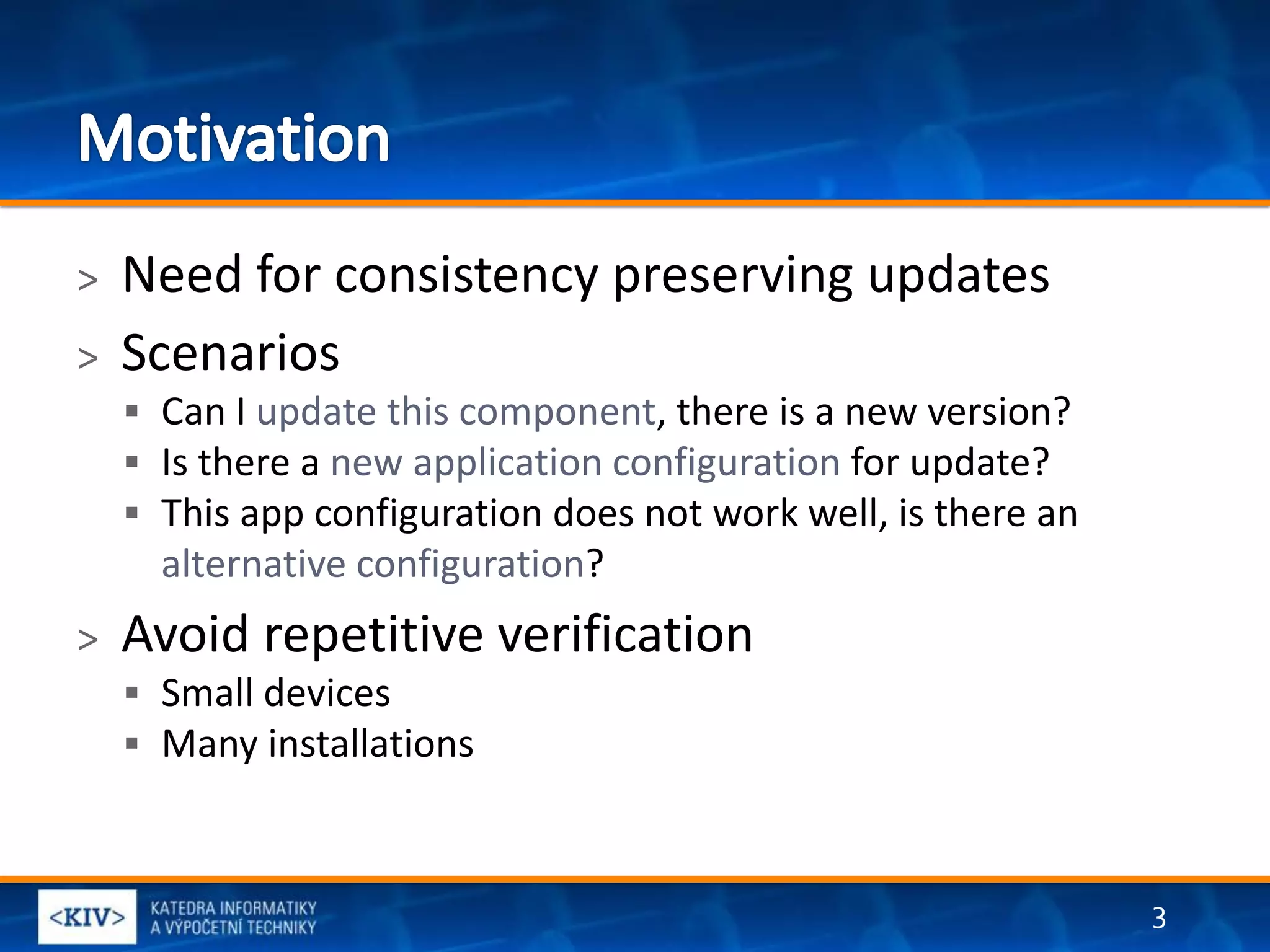
>   Need for consistency preserving updates
>   Scenarios
     Can I update this component, there is a new version?
     Is there a new application configuration for update?
     This app configuration does not work well, is there an
      alternative configuration?
>   Avoid repetitive verification
     Small devices
     Many installations


                                                               3
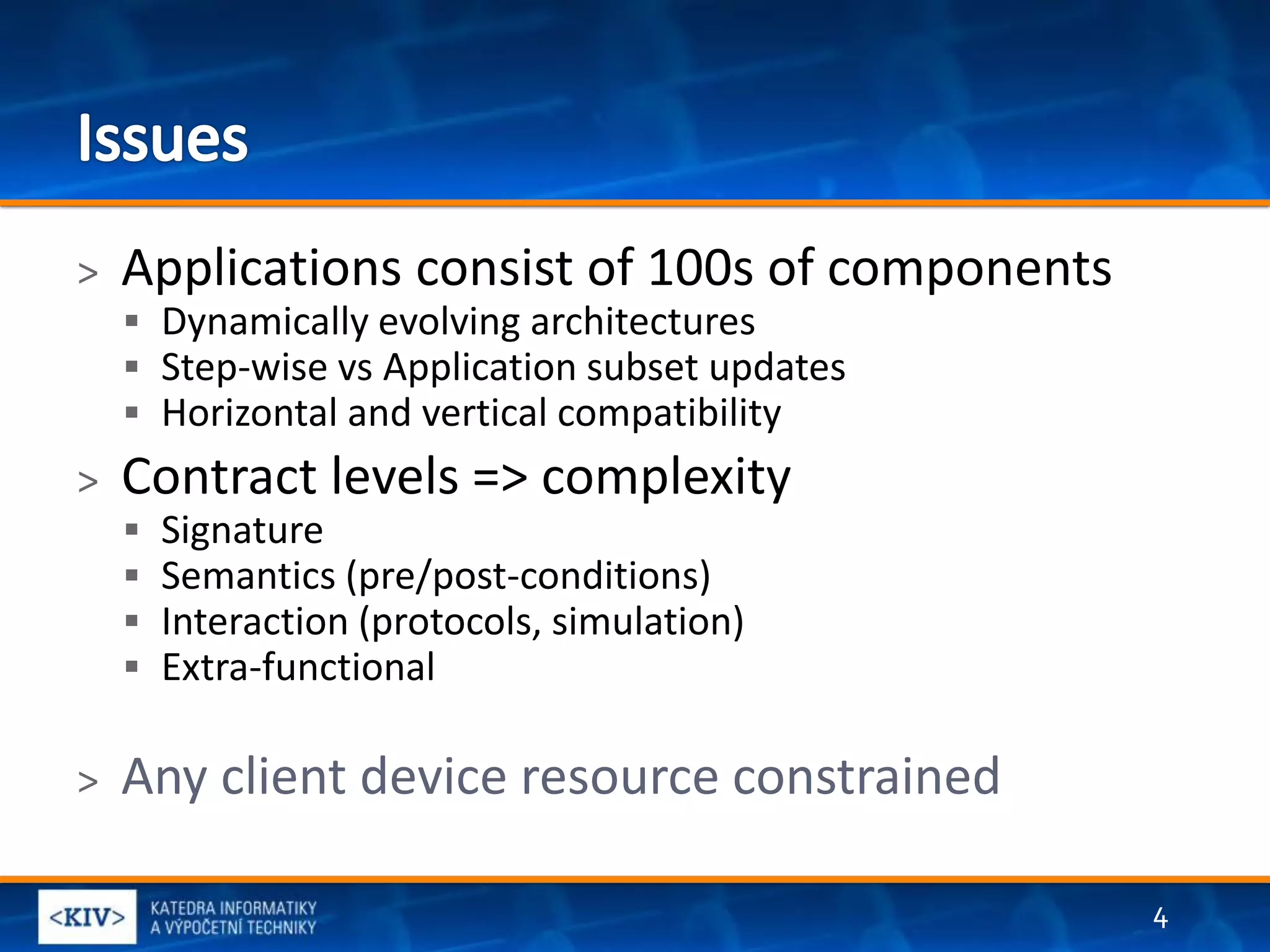
>   Applications consist of 100s of components
     Dynamically evolving architectures
     Step-wise vs Application subset updates
     Horizontal and vertical compatibility
>   Contract levels => complexity
       Signature
       Semantics (pre/post-conditions)
       Interaction (protocols, simulation)
       Extra-functional

>   Any client device resource constrained

                                                 4
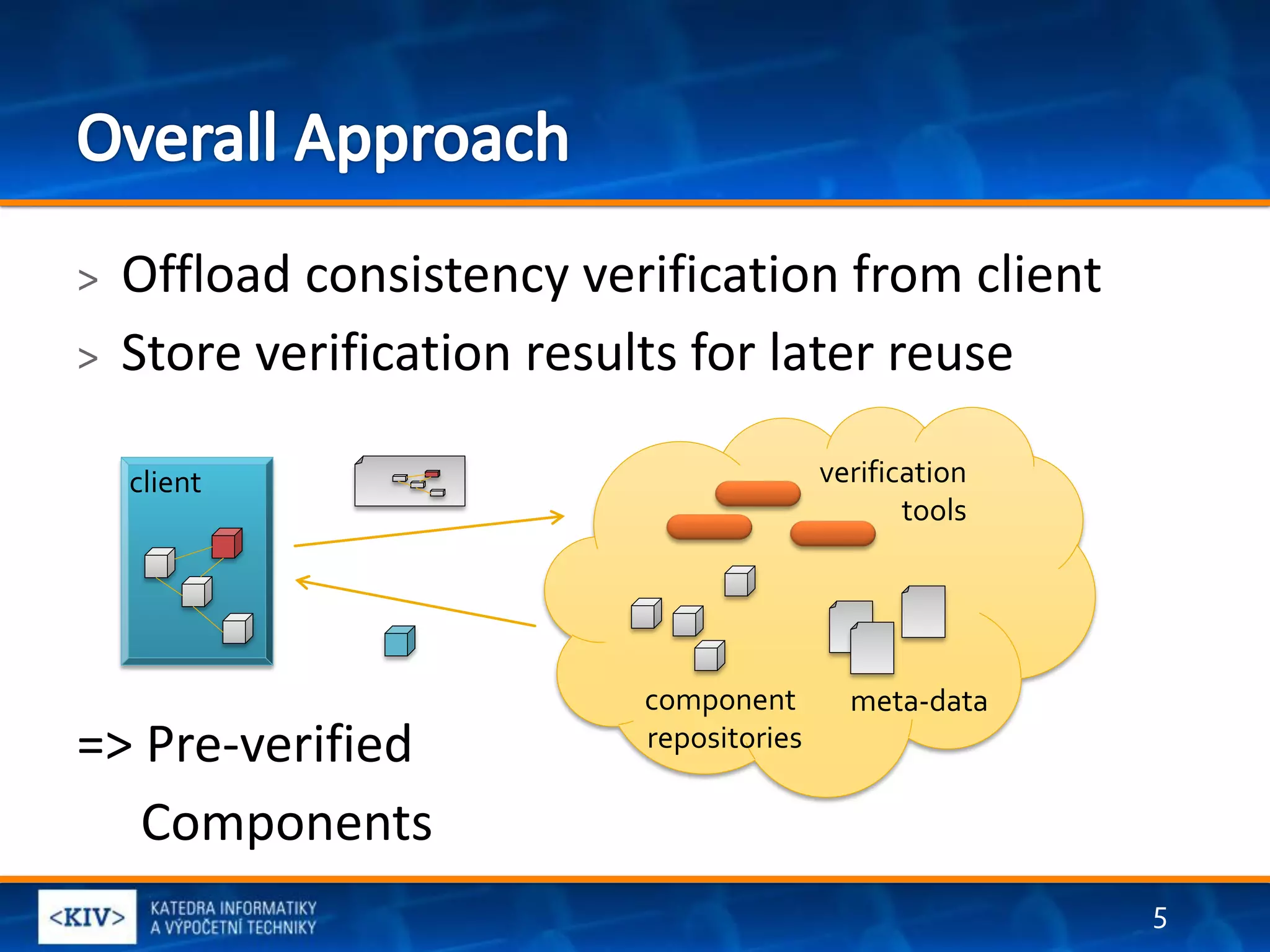
>   Offload consistency verification from client
>   Store verification results for later reuse

    client                                verification
                                                 tools


                           component        meta-data
=> Pre-verified            repositories

   Components
                                                         5
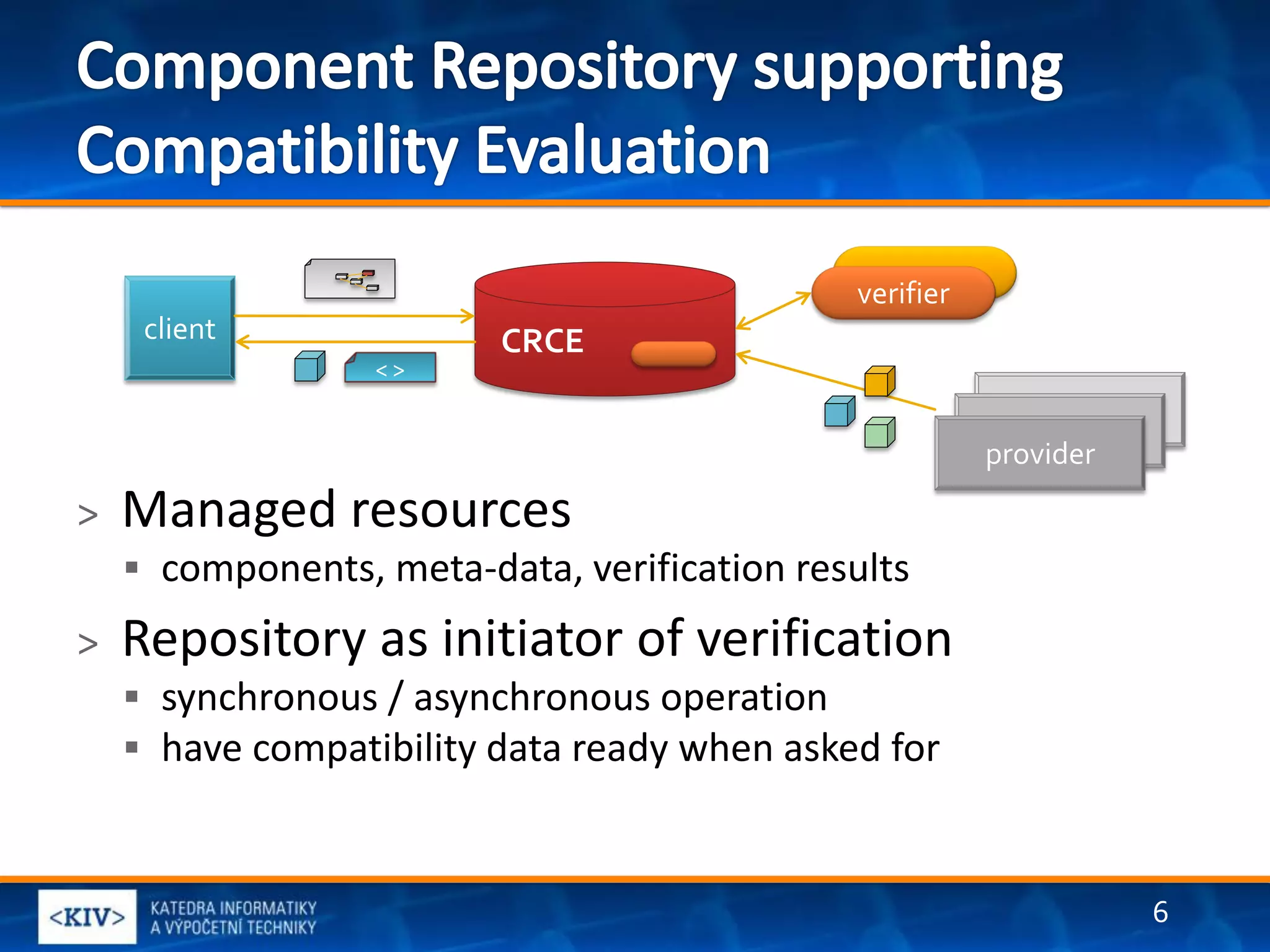
verifier
     client              CRCE
                  <>

                                                           provider
                                                         provider
                                                        provider
>   Managed resources
     components, meta-data, verification results
>   Repository as initiator of verification
     synchronous / asynchronous operation
     have compatibility data ready when asked for


                                                                      6
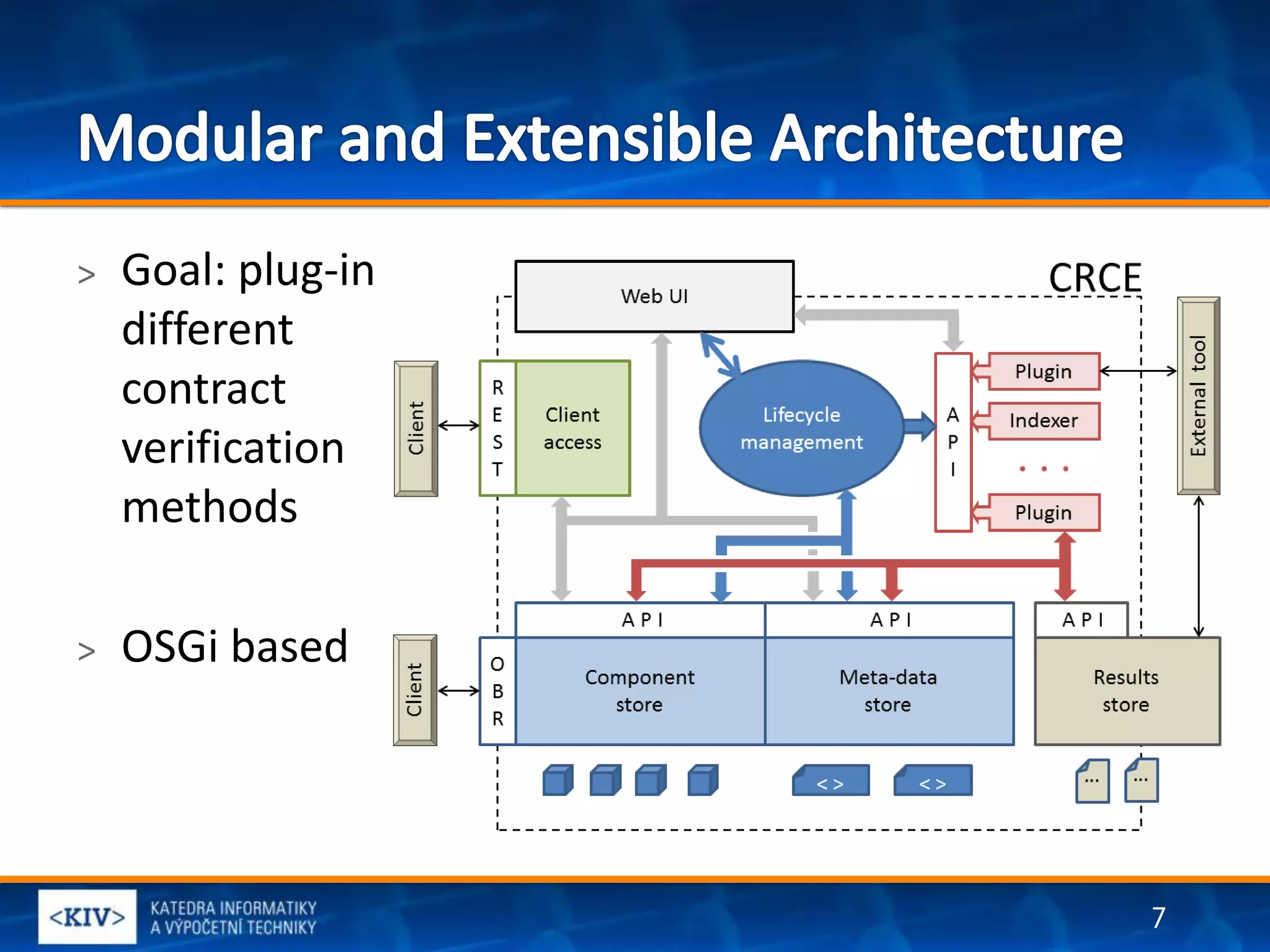
>   Goal: plug-in
    different
    contract
    verification
    methods

>   OSGi based


                    7
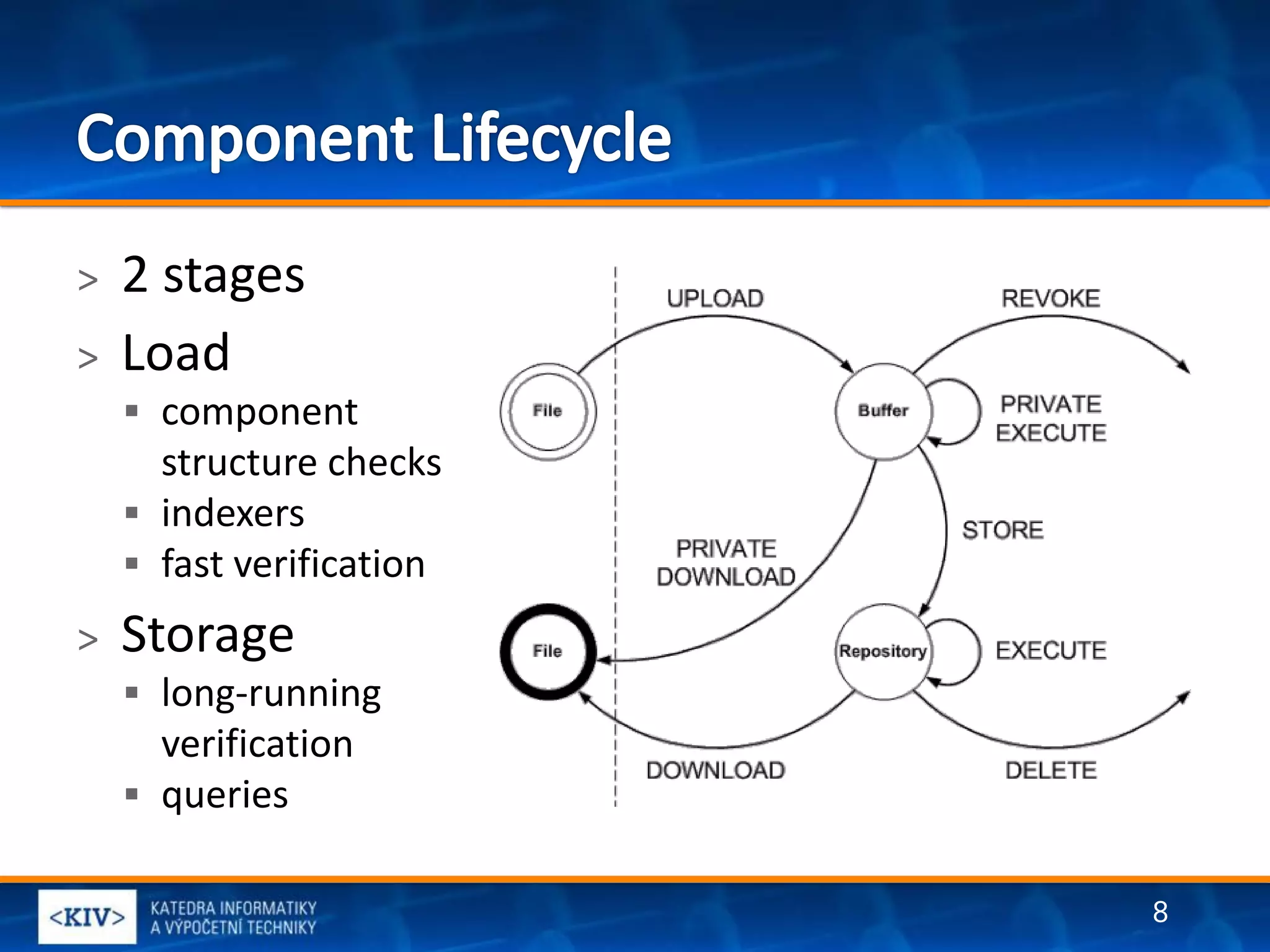
>   2 stages
>   Load
     component
      structure checks
     indexers
     fast verification
>   Storage
     long-running
      verification
     queries


                          8
<resource id="cz.zcu.kiv.Gate/1.2.1">
                               ...
                               <capability name="package">
                                <p n="package" v="cz.zcu.kiv.gate" />
                                <p n="version" t="version" v="1.1.0" />
                                <p n=“replaces" base="1.0.0" v=“true" />
>   Capability/Requirements     <p n=“replaces" base="2.0.0" v=“false" />
                               </capability>
    model, extended            …
                               <capability name="memory">
                                 <p n=“level” v=“extra-functional” />
>   Per-component                <p n="memory" t="int" v="30" />
                                 <p n="unit" t="string" v="MB" />
     Structural information   </capability>
     Compatibility data       ...
                               <diff base=“1.0.0" type=“subtype”
      (M:N comparison)           level=“signature” value=“spec” >
                                 <part name="package" id="fq.pkg.name"
>   Aggregated                     diff=“none” >
                                     <based-on result-id=“res1024823” />
                                 </part>
                                 ...
                               </diff>
                               …
                               </resource>
                                                                 9
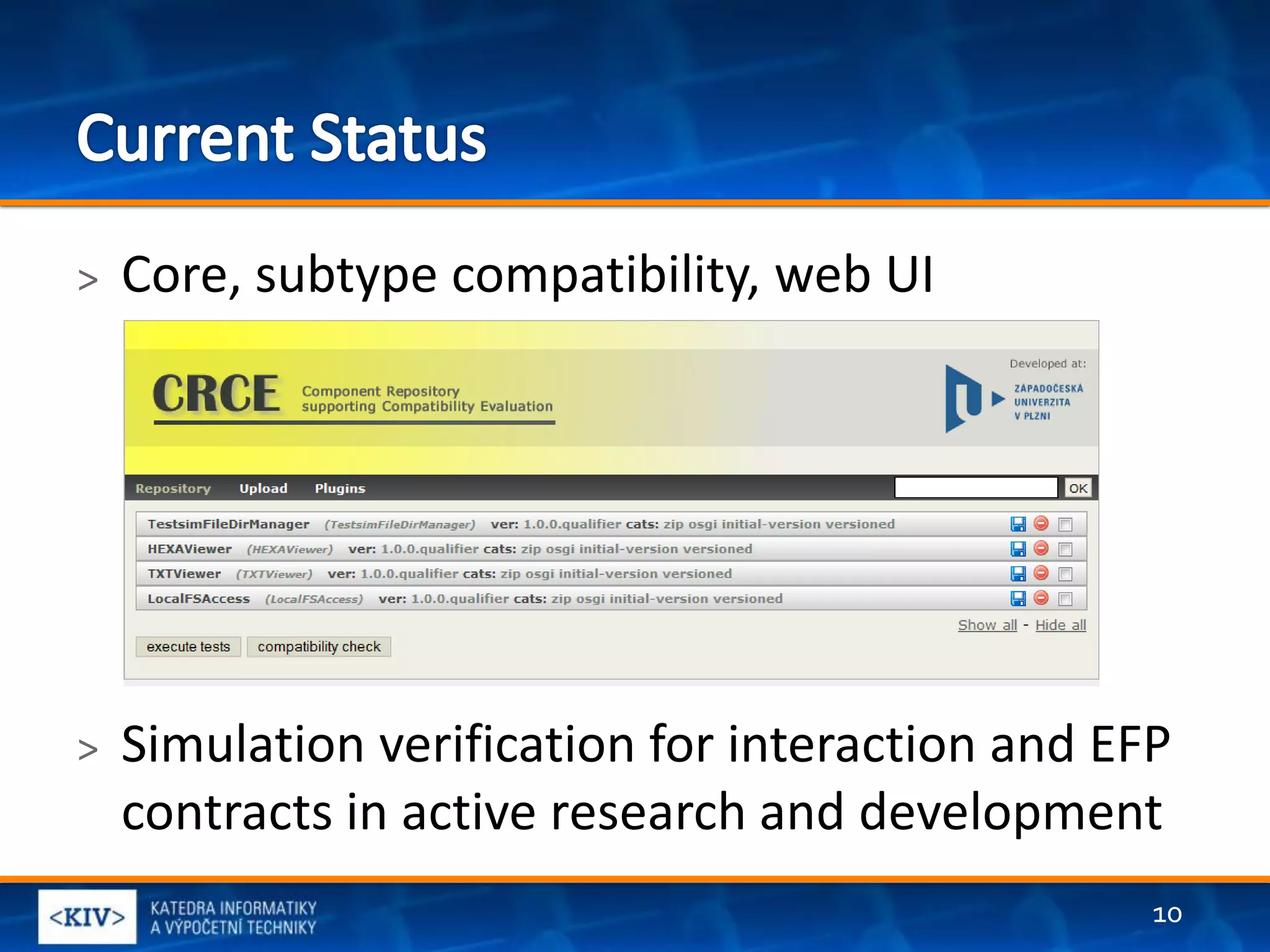
>   Core, subtype compatibility, web UI


>   Simulation verification for interaction and EFP
    contracts in active research and development
                                                  10
http://www.kiv.zcu.cz/research/groups/dss/


                                             11

CRCE Architecture Overview

  • 1.
    Premek Brada Department ofComputer Science and Engineering University of West Bohemia, Pilsen, CZ Euromicro 2012, 5.-8.September, Cesme, Turkey
  • 2.
    > Motivation  Issues, scenarios > Overall Approach > CRCE Repository  Architecture, Extensible design  Meta-data  Use > Conclusion 2
  • 3.
    > Need for consistency preserving updates > Scenarios  Can I update this component, there is a new version?  Is there a new application configuration for update?  This app configuration does not work well, is there an alternative configuration? > Avoid repetitive verification  Small devices  Many installations 3
  • 4.
    > Applications consist of 100s of components  Dynamically evolving architectures  Step-wise vs Application subset updates  Horizontal and vertical compatibility > Contract levels => complexity  Signature  Semantics (pre/post-conditions)  Interaction (protocols, simulation)  Extra-functional > Any client device resource constrained 4
  • 5.
    > Offload consistency verification from client > Store verification results for later reuse client verification tools component meta-data => Pre-verified repositories Components 5
  • 6.
    verifier client CRCE <> provider provider provider > Managed resources  components, meta-data, verification results > Repository as initiator of verification  synchronous / asynchronous operation  have compatibility data ready when asked for 6
  • 7.
    > Goal: plug-in different contract verification methods > OSGi based 7
  • 8.
    > 2 stages > Load  component structure checks  indexers  fast verification > Storage  long-running verification  queries 8
  • 9.
    <resource id="cz.zcu.kiv.Gate/1.2.1"> ... <capability name="package"> <p n="package" v="cz.zcu.kiv.gate" /> <p n="version" t="version" v="1.1.0" /> <p n=“replaces" base="1.0.0" v=“true" /> > Capability/Requirements <p n=“replaces" base="2.0.0" v=“false" /> </capability> model, extended … <capability name="memory"> <p n=“level” v=“extra-functional” /> > Per-component <p n="memory" t="int" v="30" /> <p n="unit" t="string" v="MB" />  Structural information </capability>  Compatibility data ... <diff base=“1.0.0" type=“subtype” (M:N comparison) level=“signature” value=“spec” > <part name="package" id="fq.pkg.name" > Aggregated diff=“none” > <based-on result-id=“res1024823” /> </part> ... </diff> … </resource> 9
  • 10.
    > Core, subtype compatibility, web UI > Simulation verification for interaction and EFP contracts in active research and development 10
  • 11.