Cracking
Effect of
Parboiling
A D E TA I L E D E X P L O R AT I O N
O F P A R B O I L I N G P R O C E S S
A N D I T S I M PA C T S
Presentation
Overview
What is Parboiling?
Parboiling is the process of partially boiling rice in the husk before
removing the husk and polishing the rice. This process improves the
nutritional value and texture of rice.
Reasons for Parboiling
Parboiling is used to improve the nutritional value, texture and taste
of rice. It also helps in reducing the cooking time and saves energy.
Potential Causes of Cracking
Cracking in rice occurs due to the sudden change in temperature
during the parboiling process. Temperature shock can cause
irreversible damage to the rice.
Ways to Minimize Cracking
To minimize cracking, it is important to control the temperature
during the parboiling process. The temperature should be gradually
increased and decreased to minimize temperature shock. The use of
high-quality rice and proper soaking can also help in reducing
cracking.
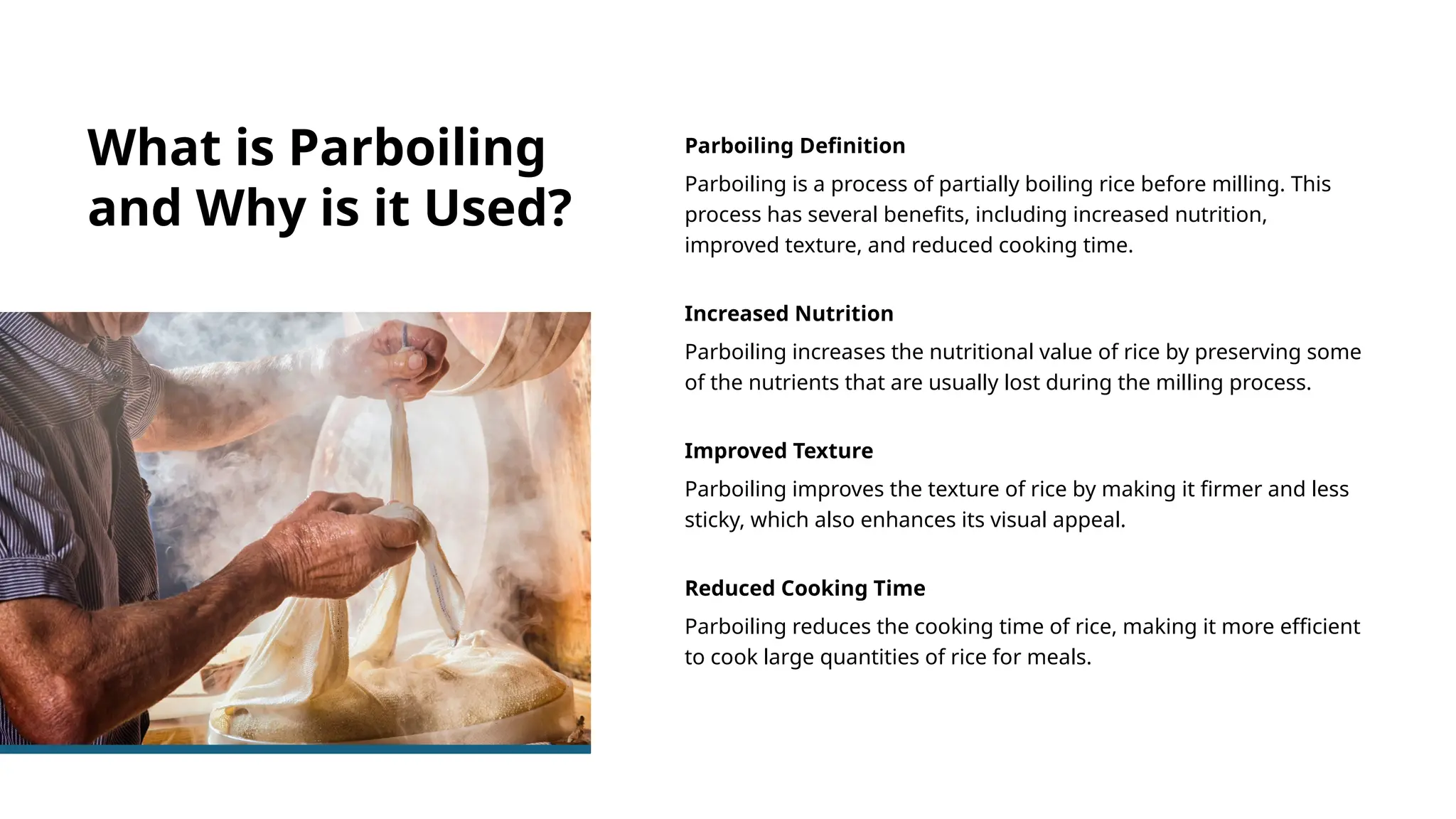
What is Parboiling
and Why is it Used?
Parboiling Definition
Parboiling is a process of partially boiling rice before milling. This
process has several benefits, including increased nutrition,
improved texture, and reduced cooking time.
Increased Nutrition
Parboiling increases the nutritional value of rice by preserving some
of the nutrients that are usually lost during the milling process.
Improved Texture
Parboiling improves the texture of rice by making it firmer and less
sticky, which also enhances its visual appeal.
Reduced Cooking Time
Parboiling reduces the cooking time of rice, making it more efficient
to cook large quantities of rice for meals.
Introduction
to Parboiling
Parboiling is a process of partially boiling rice before milling to remove
the husk and bran. This process helps to increase the nutritional value
of rice, improve its texture, and reduce cooking time.
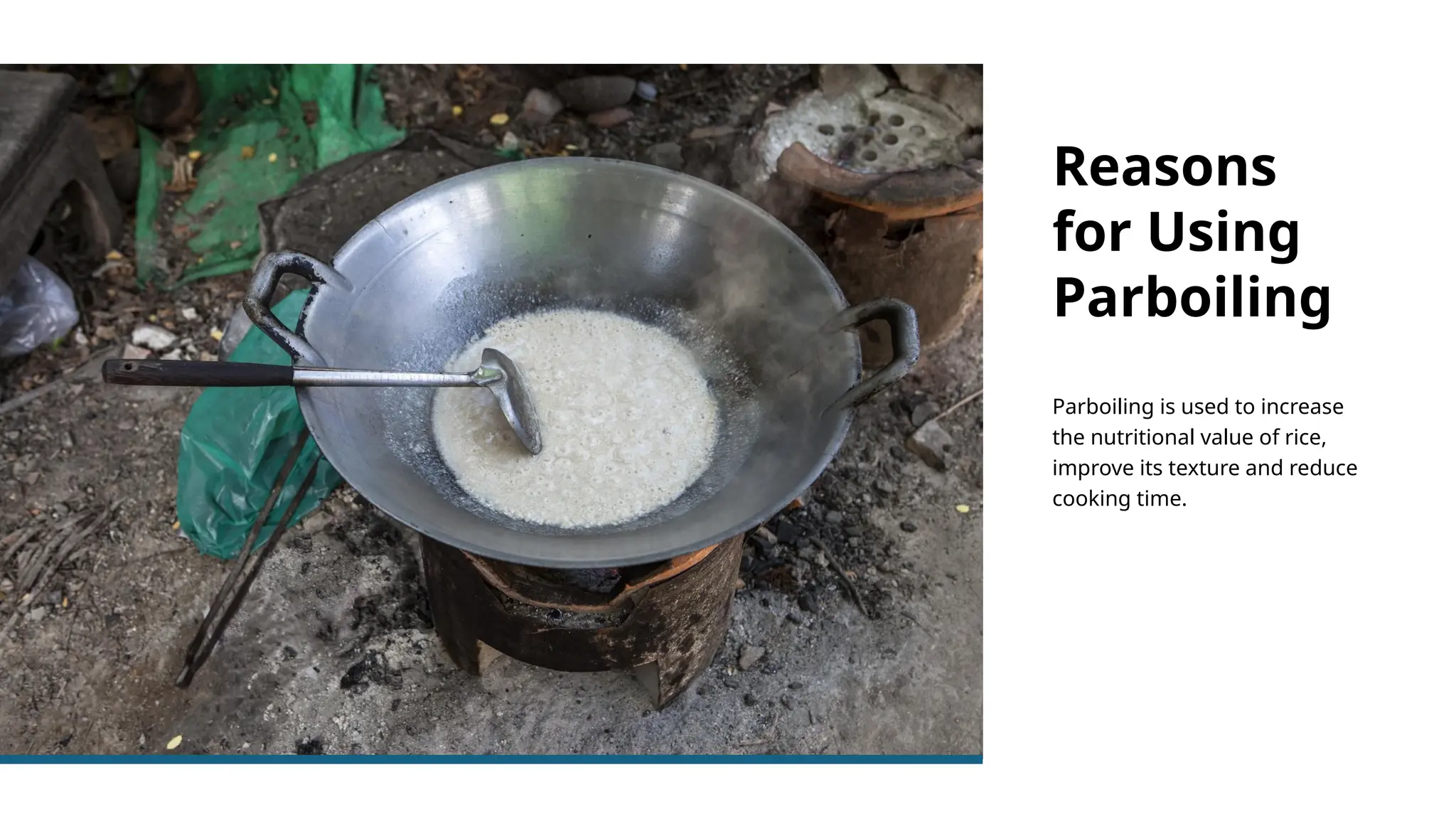
Reasons
for Using
Parboiling
Parboiling is used to increase
the nutritional value of rice,
improve its texture and reduce
cooking time.
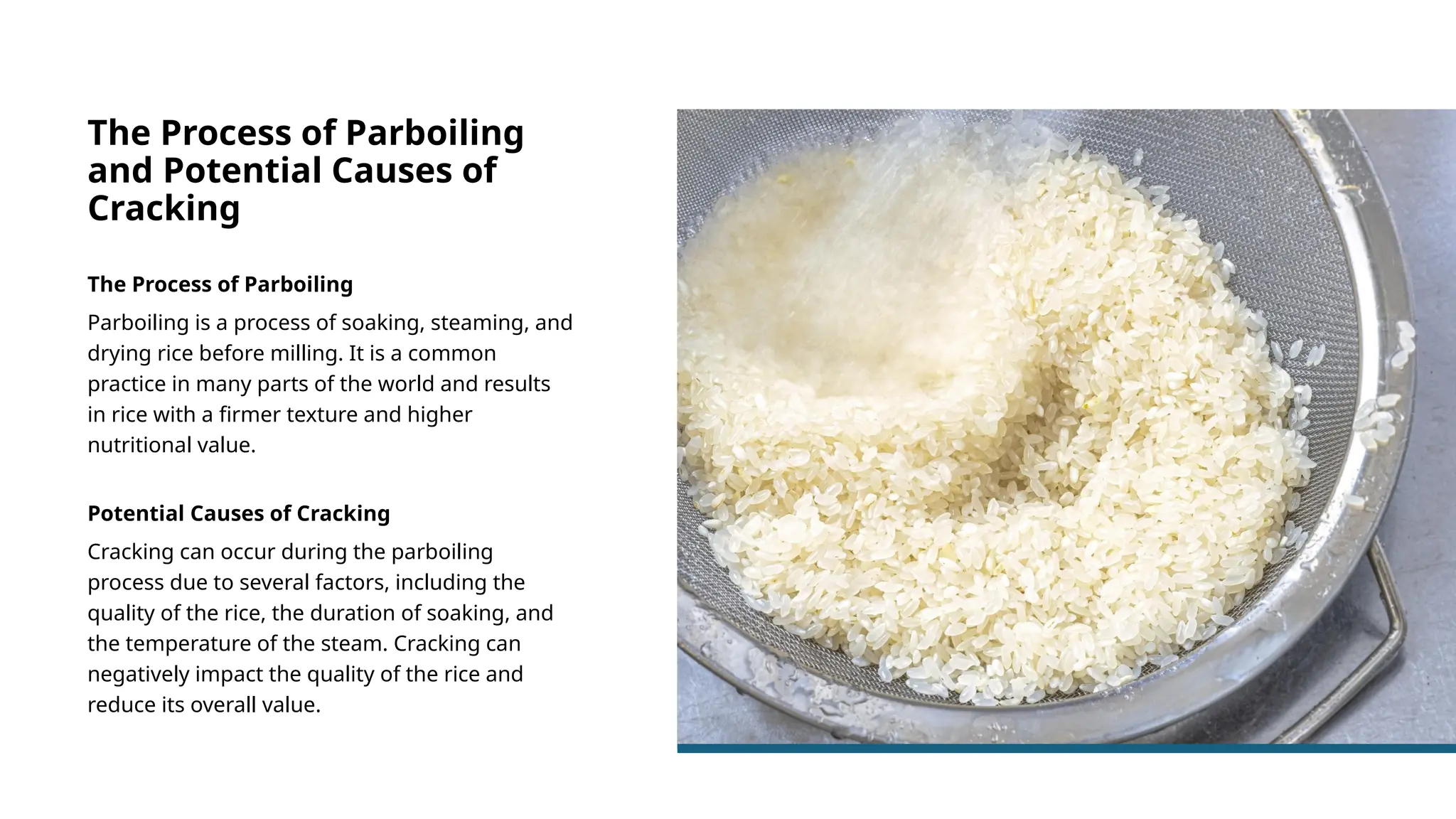
The Process of Parboiling
and Potential Causes of
Cracking
The Process of Parboiling
Parboiling is a process of soaking, steaming, and
drying rice before milling. It is a common
practice in many parts of the world and results
in rice with a firmer texture and higher
nutritional value.
Potential Causes of Cracking
Cracking can occur during the parboiling
process due to several factors, including the
quality of the rice, the duration of soaking, and
the temperature of the steam. Cracking can
negatively impact the quality of the rice and
reduce its overall value.
The Process of Parboiling
Soaking Rice
The parboiling process begins with soaking rice in water. This allows the
rice to absorb moisture and helps to activate enzymes that increase its
nutritional content.
Steaming Rice
After soaking, the rice is steamed to partially cook it. This process helps to
gelatinize the starch in the rice, which in turn, increases its nutritional
value, improves its texture, and reduces cooking time.
Drying Rice
Once the rice is steamed, it is dried to remove any excess moisture. This
helps to prevent the rice from spoiling during storage and milling. However,
the drying process can also cause cracking in the rice grains.
Potential Causes of Cracking
Over-soaking
Over-soaking of paddy grains can cause the outer layer of the grain to
soften, leading to cracking during the parboiling process.
Overheating
Overheating of paddy grains can cause the internal moisture content to
evaporate too quickly, leading to cracking during the parboiling process.
Rapid Cooling
Rapid cooling of the paddy grains after parboiling can cause the grains to
crack due to the sudden change in temperature.
Ways to Minimize
Cracking While Parboiling
Controlling Temperature
Controlling the temperature during the
parboiling process can help minimize cracking in
rice. The temperature should be kept within a
specific range to ensure that the rice is cooked
evenly and thoroughly.
Controlling Duration
Controlling the duration of each stage of the
parboiling process can help minimize cracking in
rice. The rice should be soaked for a specific
amount of time, and each stage of the process
should be timed carefully.
Techniques to Minimize
Cracking
Controlling Temperature
One of the most effective ways to minimize cracking during the parboiling
process is to control the temperature of each stage of the process. This can be
achieved by using a slow heating process and avoiding sudden changes in
temperature.
Controlling Duration
Another effective way to minimize cracking during the parboiling process is to
control the duration of each stage of the process. This can be achieved by
using a timer and following the recommended time for each stage.
Soaking Rice
Soaking rice in water before parboiling can help to minimize cracking by
softening the rice and reducing the risk of damage during the parboiling
process.
Effect of
Soaking on
Cracking
Soaking rice in water before
parboiling can help to reduce
the moisture content of the
rice, which can prevent
cracking during the parboiling
process.
Conclusion
Parboiling is a process of partially boiling rice
before milling that can help to increase
nutritional value, texture, and reduce cooking
time. Cracking is a potential issue in parboiling,
affecting rice quality. However, cracking can be
minimized by following the discussed
techniques.

Cracking Effect of Parboiling simple notes

  • 1.
    Cracking Effect of Parboiling A DE TA I L E D E X P L O R AT I O N O F P A R B O I L I N G P R O C E S S A N D I T S I M PA C T S
  • 2.
    Presentation Overview What is Parboiling? Parboilingis the process of partially boiling rice in the husk before removing the husk and polishing the rice. This process improves the nutritional value and texture of rice. Reasons for Parboiling Parboiling is used to improve the nutritional value, texture and taste of rice. It also helps in reducing the cooking time and saves energy. Potential Causes of Cracking Cracking in rice occurs due to the sudden change in temperature during the parboiling process. Temperature shock can cause irreversible damage to the rice. Ways to Minimize Cracking To minimize cracking, it is important to control the temperature during the parboiling process. The temperature should be gradually increased and decreased to minimize temperature shock. The use of high-quality rice and proper soaking can also help in reducing cracking.
  • 3.
    What is Parboiling andWhy is it Used? Parboiling Definition Parboiling is a process of partially boiling rice before milling. This process has several benefits, including increased nutrition, improved texture, and reduced cooking time. Increased Nutrition Parboiling increases the nutritional value of rice by preserving some of the nutrients that are usually lost during the milling process. Improved Texture Parboiling improves the texture of rice by making it firmer and less sticky, which also enhances its visual appeal. Reduced Cooking Time Parboiling reduces the cooking time of rice, making it more efficient to cook large quantities of rice for meals.
  • 4.
    Introduction to Parboiling Parboiling isa process of partially boiling rice before milling to remove the husk and bran. This process helps to increase the nutritional value of rice, improve its texture, and reduce cooking time.
  • 5.
    Reasons for Using Parboiling Parboiling isused to increase the nutritional value of rice, improve its texture and reduce cooking time.
  • 6.
    The Process ofParboiling and Potential Causes of Cracking The Process of Parboiling Parboiling is a process of soaking, steaming, and drying rice before milling. It is a common practice in many parts of the world and results in rice with a firmer texture and higher nutritional value. Potential Causes of Cracking Cracking can occur during the parboiling process due to several factors, including the quality of the rice, the duration of soaking, and the temperature of the steam. Cracking can negatively impact the quality of the rice and reduce its overall value.
  • 7.
    The Process ofParboiling Soaking Rice The parboiling process begins with soaking rice in water. This allows the rice to absorb moisture and helps to activate enzymes that increase its nutritional content. Steaming Rice After soaking, the rice is steamed to partially cook it. This process helps to gelatinize the starch in the rice, which in turn, increases its nutritional value, improves its texture, and reduces cooking time. Drying Rice Once the rice is steamed, it is dried to remove any excess moisture. This helps to prevent the rice from spoiling during storage and milling. However, the drying process can also cause cracking in the rice grains.
  • 8.
    Potential Causes ofCracking Over-soaking Over-soaking of paddy grains can cause the outer layer of the grain to soften, leading to cracking during the parboiling process. Overheating Overheating of paddy grains can cause the internal moisture content to evaporate too quickly, leading to cracking during the parboiling process. Rapid Cooling Rapid cooling of the paddy grains after parboiling can cause the grains to crack due to the sudden change in temperature.
  • 9.
    Ways to Minimize CrackingWhile Parboiling Controlling Temperature Controlling the temperature during the parboiling process can help minimize cracking in rice. The temperature should be kept within a specific range to ensure that the rice is cooked evenly and thoroughly. Controlling Duration Controlling the duration of each stage of the parboiling process can help minimize cracking in rice. The rice should be soaked for a specific amount of time, and each stage of the process should be timed carefully.
  • 10.
    Techniques to Minimize Cracking ControllingTemperature One of the most effective ways to minimize cracking during the parboiling process is to control the temperature of each stage of the process. This can be achieved by using a slow heating process and avoiding sudden changes in temperature. Controlling Duration Another effective way to minimize cracking during the parboiling process is to control the duration of each stage of the process. This can be achieved by using a timer and following the recommended time for each stage. Soaking Rice Soaking rice in water before parboiling can help to minimize cracking by softening the rice and reducing the risk of damage during the parboiling process.
  • 11.
    Effect of Soaking on Cracking Soakingrice in water before parboiling can help to reduce the moisture content of the rice, which can prevent cracking during the parboiling process.
  • 12.
    Conclusion Parboiling is aprocess of partially boiling rice before milling that can help to increase nutritional value, texture, and reduce cooking time. Cracking is a potential issue in parboiling, affecting rice quality. However, cracking can be minimized by following the discussed techniques.

Editor's Notes

  • #1 In this presentation, we will explore the cracking effect of parboiling, beginning with an overview of what parboiling is and why it is used. We will then delve into the process of parboiling, potential causes of cracking, and techniques to minimize cracking while parboiling.
  • #2 We will start by discussing what parboiling is and the reasons it is used. Then, we will explore the process of parboiling and the potential causes of cracking. Finally, we will explore ways to minimize cracking while parboiling.
  • #3 Parboiling is a process of partially boiling rice before milling. This process has several benefits, including increased nutrition, improved texture, and reduced cooking time. We will explore the reasons for using parboiling, including the benefits it provides.
  • #4 Parboiling is the process of partially boiling rice before milling. This process can help to increase the nutritional value of rice, improve its texture, and reduce cooking time. It is widely used in many parts of the world.
  • #5 There are several reasons why parboiling is used, including increasing the nutritional value of rice, improving its texture, and reducing cooking time. We will explore each of these reasons in detail.
  • #6 The process of parboiling involves soaking, steaming, and drying rice before milling. This process can cause cracking, which can negatively impact the quality of the rice. We will explore the process of parboiling and the potential causes of cracking in detail.
  • #7 Parboiling involves soaking rice in water, steaming it, and then drying it before milling. This process can help to increase the nutritional value of rice, improve its texture, and reduce cooking time. However, it can also cause cracking.
  • #8 There are several potential causes of cracking during the parboiling process, including over-soaking, overheating, and rapid cooling. We will explore each of these causes in detail.
  • #9 Cracking during the parboiling process can negatively impact the quality of rice. There are several techniques that can be used to minimize cracking, including controlling the temperature and duration of each stage of the parboiling process. We will explore these techniques in detail.
  • #10 There are several techniques that can be used to minimize cracking during the parboiling process, including controlling the temperature and duration of each stage of the process, and soaking rice in water before parboiling. We will explore these techniques in detail.
  • #11 Soaking rice in water before parboiling can help to minimize cracking. This process can help to reduce the moisture content of the rice, which can prevent cracking during the parboiling process. We will explore the effect of soaking on cracking in detail.
  • #12 Parboiling is a process of partially boiling rice before milling that can help to increase the nutritional value of rice, improve its texture, and reduce cooking time. However, it can also cause cracking, which can negatively impact the quality of rice. We have explored the process of parboiling, potential causes of cracking, and techniques to minimize cracking. By following these techniques, the nutrition and quality of rice can be improved while minimizing the negative effects of cracking.