CPSC Defect Recall Data
Carol Cave
Deputy Director, Office of Compliance and
Field Operations
July 25, 2017
This presentation was prepared by
CPSC staff, has not been reviewed or
approved by, and may not reflect the
views of the Commission
CPSC Recall Data Analysis
• Data analyzed for closed cases that have
a Corrective Action Plan date between FY
2013 and FY 2016.
• Total number of 865 closed cases
analyzed
• Correction rates were determined by
comparing the number of reported
corrections made to the number of
reported products distributed at the
manufacturer, distributor, retailer, and
consumer levels.
CPSC Recall Data
• Changes to recall data collection and
recordation
• Overall correction rate = 65%
• Focuses on all levels in the distribution
chain
• On average, 46% of cases reported to the
CPSC lead to a recall or recall alert.
Correction Rate Analysis
• Distribution Levels
• Price
• Product Category
• Correction type
• Recall type
5
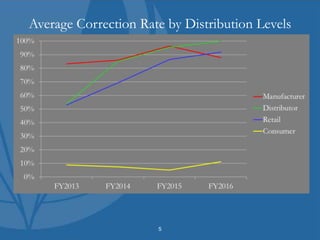
Average Correction Rate by Distribution Levels
6
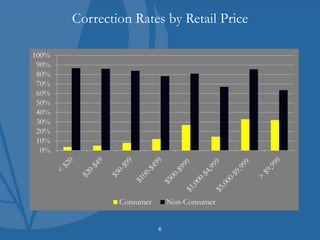
Correction Rates by Retail Price
7
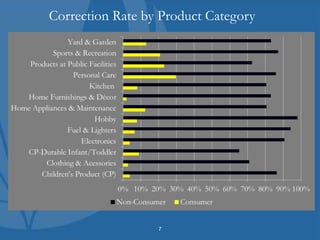
Correction Rate by Product Category
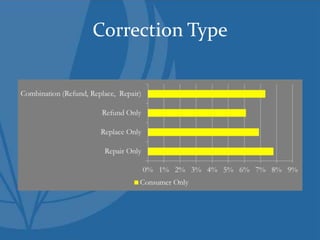
Correction Type
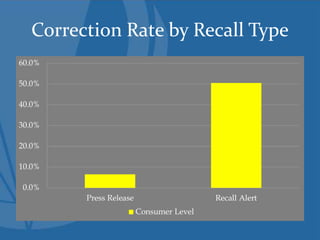
Correction Rate by Recall Type
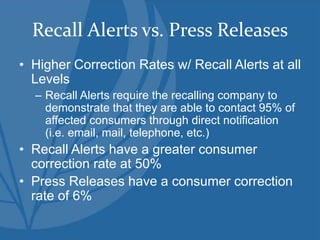
Recall Alerts vs. Press Releases
• Higher Correction Rates w/ Recall Alerts at all
Levels
– Recall Alerts require the recalling company to
demonstrate that they are able to contact 95% of
affected consumers through direct notification
(i.e. email, mail, telephone, etc.)
• Recall Alerts have a greater consumer
correction rate at 50%
• Press Releases have a consumer correction
rate of 6%
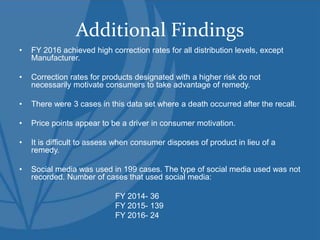
Additional Findings
• FY 2016 achieved high correction rates for all distribution levels, except
Manufacturer.
• Correction rates for products designated with a higher risk do not
necessarily motivate consumers to take advantage of remedy.
• There were 3 cases in this data set where a death occurred after the recall.
• Price points appear to be a driver in consumer motivation.
• It is difficult to assess when consumer disposes of product in lieu of a
remedy.
• Social media was used in 199 cases. The type of social media used was not
recorded. Number of cases that used social media:
FY 2014- 36
FY 2015- 139
FY 2016- 24
Conclusion
• CPSC recognizes the challenges with
consumer correction rates.
• CPSC wants to collaborate with all
stakeholders to find ways to provide direct
notice to consumers and improve recall
effectiveness.

CPSC Recall Effectiveness Workshop: Recall Data

  • 1.
    CPSC Defect RecallData Carol Cave Deputy Director, Office of Compliance and Field Operations July 25, 2017 This presentation was prepared by CPSC staff, has not been reviewed or approved by, and may not reflect the views of the Commission
  • 2.
    CPSC Recall DataAnalysis • Data analyzed for closed cases that have a Corrective Action Plan date between FY 2013 and FY 2016. • Total number of 865 closed cases analyzed • Correction rates were determined by comparing the number of reported corrections made to the number of reported products distributed at the manufacturer, distributor, retailer, and consumer levels.
  • 3.
    CPSC Recall Data •Changes to recall data collection and recordation • Overall correction rate = 65% • Focuses on all levels in the distribution chain • On average, 46% of cases reported to the CPSC lead to a recall or recall alert.
  • 4.
    Correction Rate Analysis •Distribution Levels • Price • Product Category • Correction type • Recall type
  • 5.
    5 Average Correction Rateby Distribution Levels
  • 6.
  • 7.
    7 Correction Rate byProduct Category
  • 8.
  • 9.
    Correction Rate byRecall Type
  • 10.
    Recall Alerts vs.Press Releases • Higher Correction Rates w/ Recall Alerts at all Levels – Recall Alerts require the recalling company to demonstrate that they are able to contact 95% of affected consumers through direct notification (i.e. email, mail, telephone, etc.) • Recall Alerts have a greater consumer correction rate at 50% • Press Releases have a consumer correction rate of 6%
  • 11.
    Additional Findings • FY2016 achieved high correction rates for all distribution levels, except Manufacturer. • Correction rates for products designated with a higher risk do not necessarily motivate consumers to take advantage of remedy. • There were 3 cases in this data set where a death occurred after the recall. • Price points appear to be a driver in consumer motivation. • It is difficult to assess when consumer disposes of product in lieu of a remedy. • Social media was used in 199 cases. The type of social media used was not recorded. Number of cases that used social media: FY 2014- 36 FY 2015- 139 FY 2016- 24
  • 12.
    Conclusion • CPSC recognizesthe challenges with consumer correction rates. • CPSC wants to collaborate with all stakeholders to find ways to provide direct notice to consumers and improve recall effectiveness.