Cork’d : Building a Social Network for Wine LoversAdvanced Social Media Marketing : NYU SCPSCork’d Case Study Jonathan JosephAdvanced Social Media Marketing#advsmnyu1
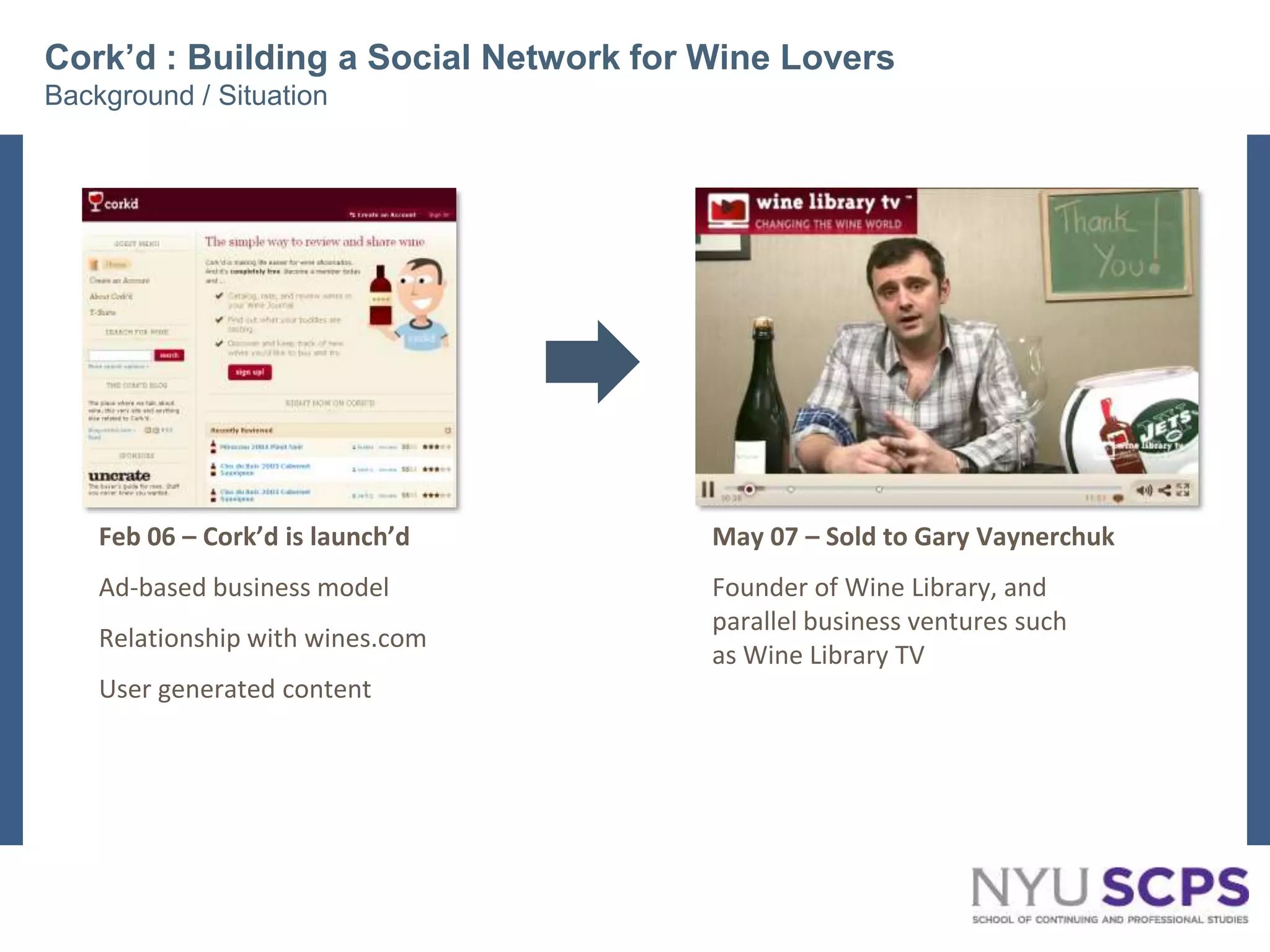
Cork’d : Building a Social Network for Wine LoversBackground / SituationFeb 06 – Cork’d is launch’dAd-based business modelRelationship with wines.comUser generated contentMay 07 – Sold to Gary VaynerchukFounder of Wine Library, and parallel business ventures such as Wine Library TV2
Cork’d : Building a Social Network for Wine LoversBackground / SituationMay 09 – Along came LindsayAs CEO, hired development resources, addressed duplicate wine listings and reinvented the Cork’d website making it ad-freeThe new site accommodated two types of users:IndividualsUsers could upload profiles, interactwith other users and choose “drinkingbuddies”. They could review and rate wines, maintain a “wine cellar”, create wine shopping lists and engage with wineries. To purchase wine, users were directed to an external, third-party site, and Cork’d received commissions for outbound clicks.WineriesWineries could maintain profile pages where they could post information, provide links to their  websites and maintain direct-to-consumer relationships. All for an annual fee of $9993
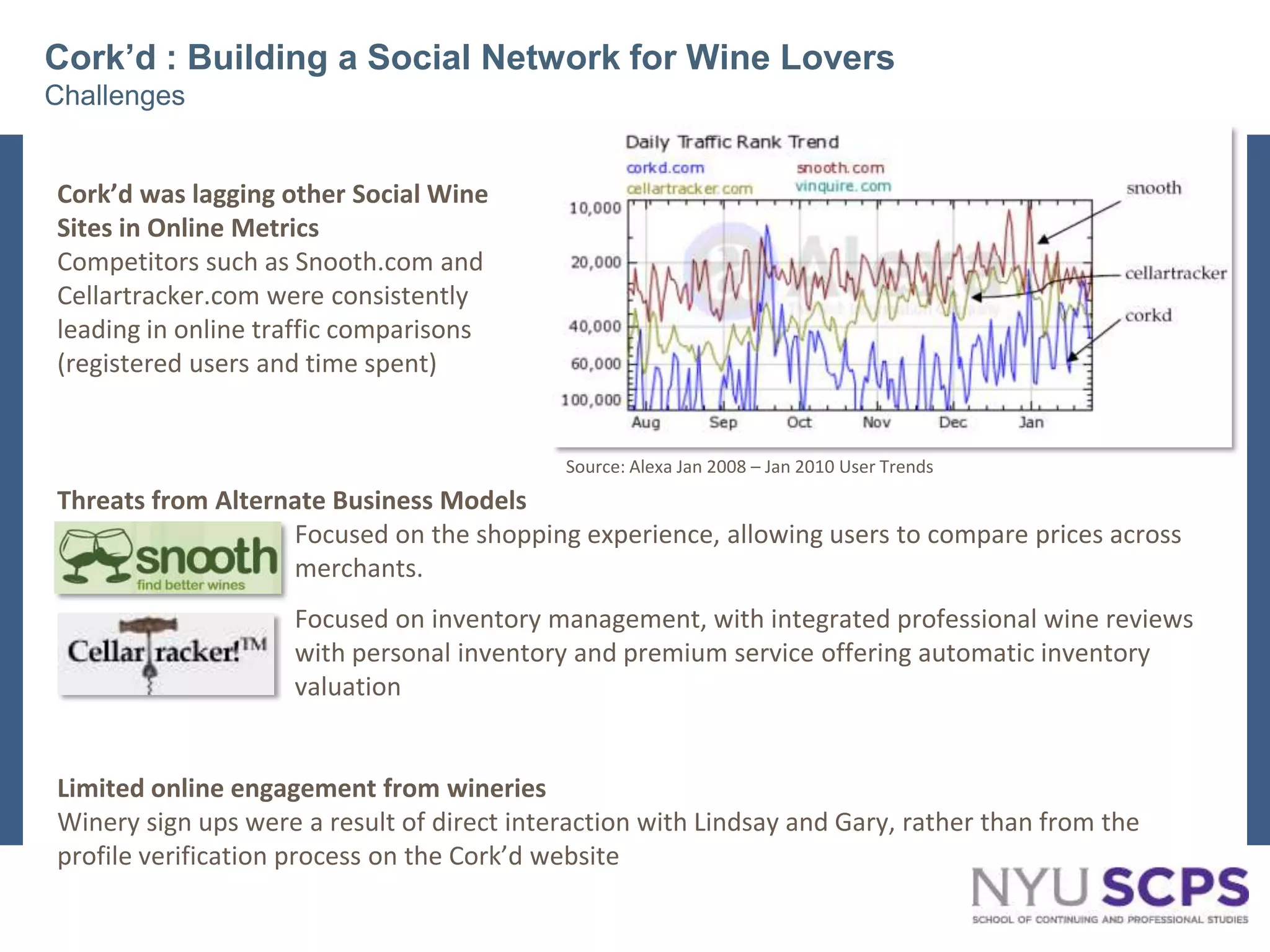
Cork’d : Building a Social Network for Wine Lovers ChallengesCork’d was lagging other Social Wine Sites in Online MetricsCompetitors such as Snooth.com and Cellartracker.com were consistently leading in online traffic comparisons (registered users and time spent)Source: AlexaJan 2008 – Jan 2010 User TrendsThreats from Alternate Business ModelsFocused on the shopping experience, allowing users to compare prices across 		merchants. 		Focused on inventory management, with integrated professional wine reviews 		with personal inventory and premium service offering automatic inventory 			valuationLimited online engagement from wineries Winery sign ups were a result of direct interaction with Lindsay and Gary, rather than from the profile verification process on the Cork’d website4
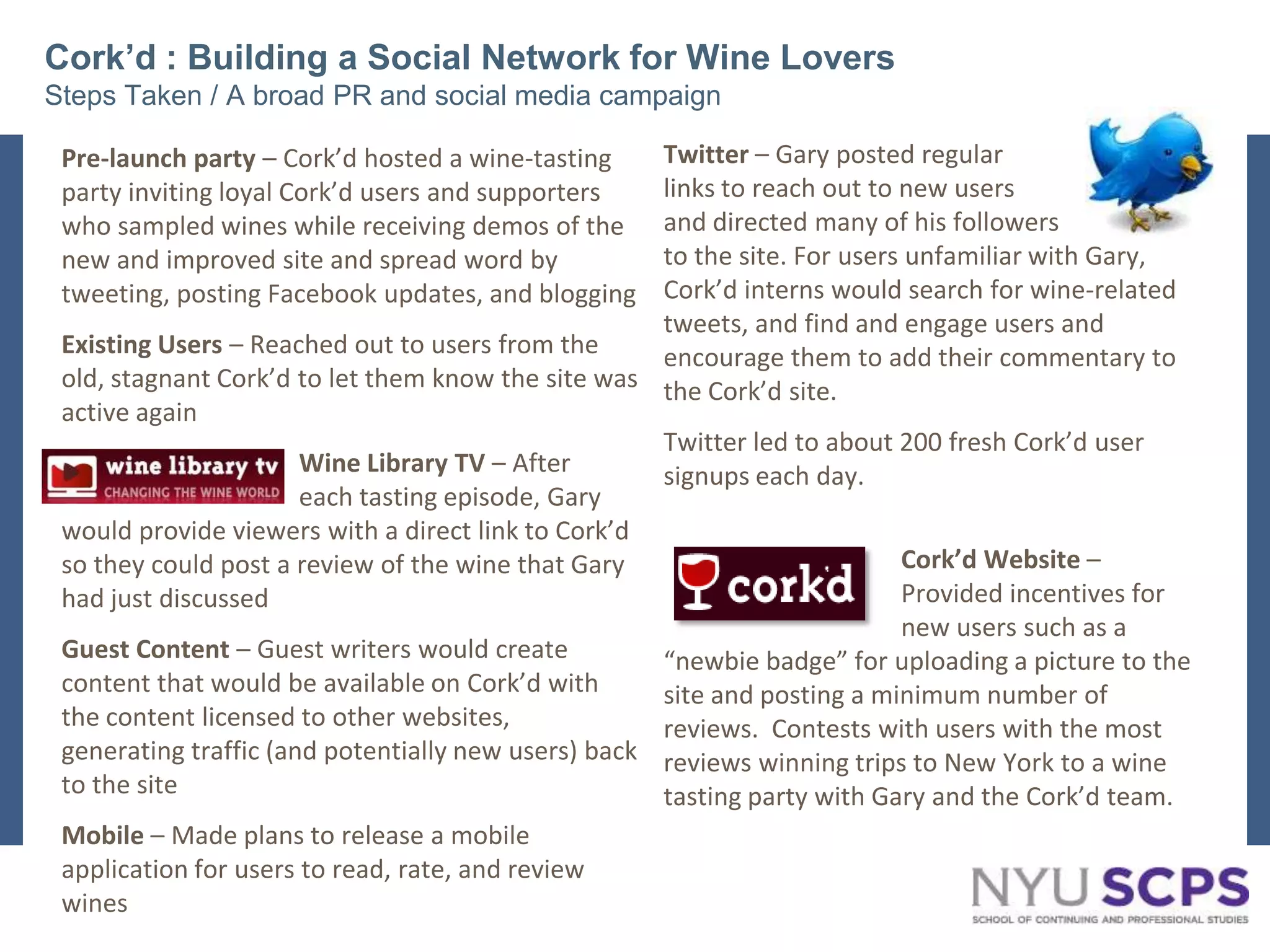
Cork’d : Building a Social Network for Wine Lovers Steps Taken / A broad PR and social media campaign Twitter – Gary posted regular links to reach out to new users and directed many of his followers to the site. For users unfamiliar with Gary, Cork’d interns would search for wine-related tweets, and find and engage users and encourage them to add their commentary to the Cork’d site. Twitter led to about 200 fresh Cork’d user signups each day. Pre-launch party – Cork’d hosted a wine-tasting party inviting loyal Cork’d users and supporters who sampled wines while receiving demos of the new and improved site and spread word by tweeting, posting Facebook updates, and bloggingExisting Users – Reached out to users from the old, stagnant Cork’d to let them know the site was active again		Wine Library TV – After 		each tasting episode, Gary would provide viewers with a direct link to Cork’d so they could post a review of the wine that Gary had just discussedGuest Content – Guest writers would create content that would be available on Cork’d with the content licensed to other websites, generating traffic (and potentially new users) back to the siteMobile – Made plans to release a mobile application for users to read, rate, and review wines		Cork’d Website – 			Provided incentives for 		new users such as a “newbie badge” for uploading a picture to the site and posting a minimum number of reviews.  Contests with users with the most reviews winning trips to New York to a wine tasting party with Gary and the Cork’d team. 5
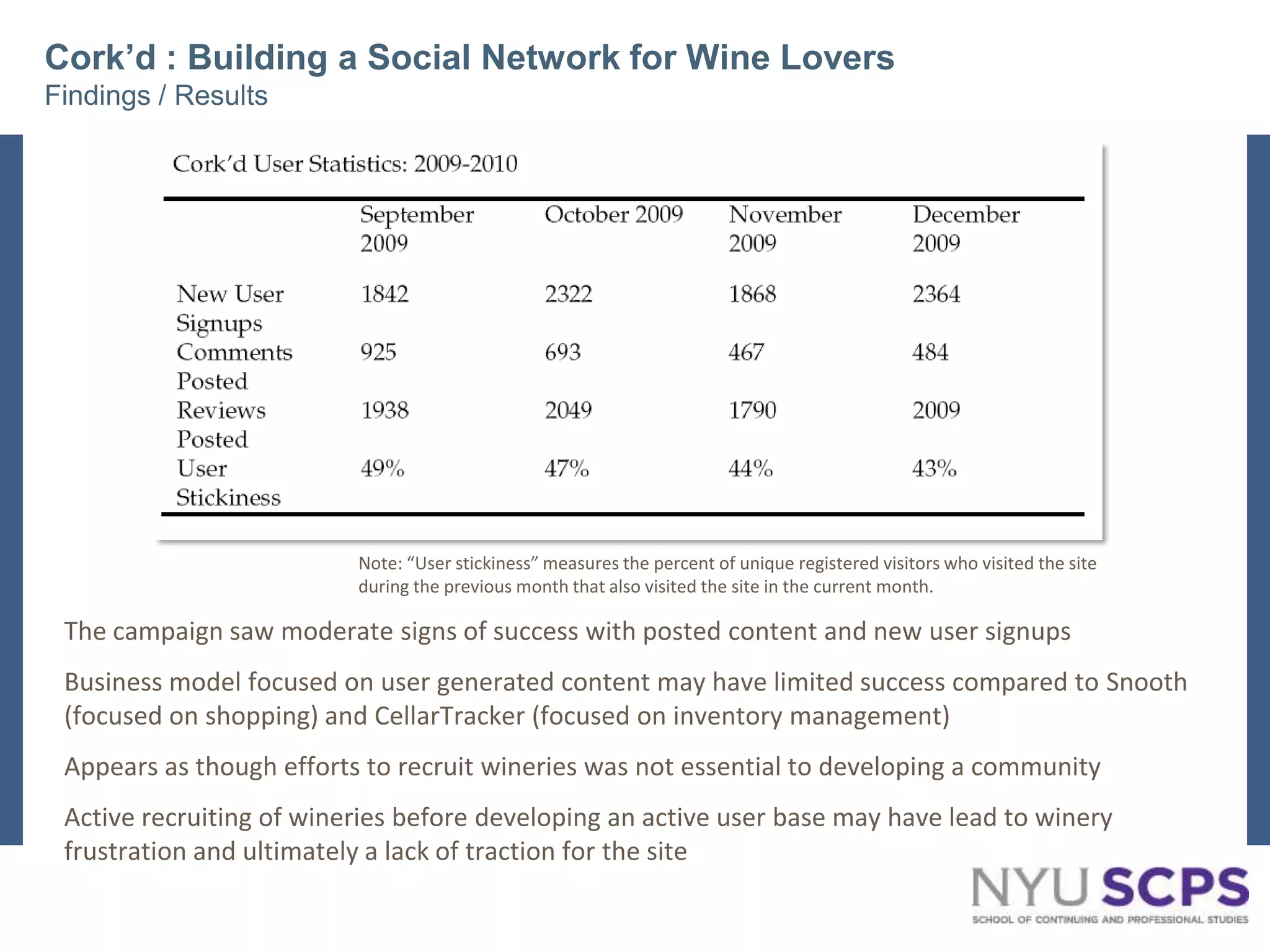
Cork’d : Building a Social Network for Wine Lovers Findings / ResultsNote: “User stickiness” measures the percent of unique registered visitors who visited the site during the previous month that also visited the site in the current month.The campaign saw moderate signs of success with posted content and new user signupsBusiness model focused on user generated content may have limited success compared to Snooth (focused on shopping) and CellarTracker (focused on inventory management)Appears as though efforts to recruit wineries was not essential to developing a communityActive recruiting of wineries before developing an active user base may have lead to winery frustration and ultimately a lack of traction for the site6

Cork'd case study

  • 1.
    Cork’d : Buildinga Social Network for Wine LoversAdvanced Social Media Marketing : NYU SCPSCork’d Case Study Jonathan JosephAdvanced Social Media Marketing#advsmnyu1
  • 2.
    Cork’d : Buildinga Social Network for Wine LoversBackground / SituationFeb 06 – Cork’d is launch’dAd-based business modelRelationship with wines.comUser generated contentMay 07 – Sold to Gary VaynerchukFounder of Wine Library, and parallel business ventures such as Wine Library TV2
  • 3.
    Cork’d : Buildinga Social Network for Wine LoversBackground / SituationMay 09 – Along came LindsayAs CEO, hired development resources, addressed duplicate wine listings and reinvented the Cork’d website making it ad-freeThe new site accommodated two types of users:IndividualsUsers could upload profiles, interactwith other users and choose “drinkingbuddies”. They could review and rate wines, maintain a “wine cellar”, create wine shopping lists and engage with wineries. To purchase wine, users were directed to an external, third-party site, and Cork’d received commissions for outbound clicks.WineriesWineries could maintain profile pages where they could post information, provide links to their websites and maintain direct-to-consumer relationships. All for an annual fee of $9993
  • 4.
    Cork’d : Buildinga Social Network for Wine Lovers ChallengesCork’d was lagging other Social Wine Sites in Online MetricsCompetitors such as Snooth.com and Cellartracker.com were consistently leading in online traffic comparisons (registered users and time spent)Source: AlexaJan 2008 – Jan 2010 User TrendsThreats from Alternate Business ModelsFocused on the shopping experience, allowing users to compare prices across merchants. Focused on inventory management, with integrated professional wine reviews with personal inventory and premium service offering automatic inventory valuationLimited online engagement from wineries Winery sign ups were a result of direct interaction with Lindsay and Gary, rather than from the profile verification process on the Cork’d website4
  • 5.
    Cork’d : Buildinga Social Network for Wine Lovers Steps Taken / A broad PR and social media campaign Twitter – Gary posted regular links to reach out to new users and directed many of his followers to the site. For users unfamiliar with Gary, Cork’d interns would search for wine-related tweets, and find and engage users and encourage them to add their commentary to the Cork’d site. Twitter led to about 200 fresh Cork’d user signups each day. Pre-launch party – Cork’d hosted a wine-tasting party inviting loyal Cork’d users and supporters who sampled wines while receiving demos of the new and improved site and spread word by tweeting, posting Facebook updates, and bloggingExisting Users – Reached out to users from the old, stagnant Cork’d to let them know the site was active again Wine Library TV – After each tasting episode, Gary would provide viewers with a direct link to Cork’d so they could post a review of the wine that Gary had just discussedGuest Content – Guest writers would create content that would be available on Cork’d with the content licensed to other websites, generating traffic (and potentially new users) back to the siteMobile – Made plans to release a mobile application for users to read, rate, and review wines Cork’d Website – Provided incentives for new users such as a “newbie badge” for uploading a picture to the site and posting a minimum number of reviews. Contests with users with the most reviews winning trips to New York to a wine tasting party with Gary and the Cork’d team. 5
  • 6.
    Cork’d : Buildinga Social Network for Wine Lovers Findings / ResultsNote: “User stickiness” measures the percent of unique registered visitors who visited the site during the previous month that also visited the site in the current month.The campaign saw moderate signs of success with posted content and new user signupsBusiness model focused on user generated content may have limited success compared to Snooth (focused on shopping) and CellarTracker (focused on inventory management)Appears as though efforts to recruit wineries was not essential to developing a communityActive recruiting of wineries before developing an active user base may have lead to winery frustration and ultimately a lack of traction for the site6