CORE PERIPHERY MODEL
A/51082
The Core-Periphery Model of Regional Development by John Friedmann (1963). He further
developed this concept in 1966 by underlining the role of spatial distances from the core.
American economist, John friedmann has given the concept of core Periphery in his book
“regional development policy :a case study of Venezuela” in 1966.
It is a model of the spatial organization of human activity based upon the equal
distribution of power in economy and society. The core dominates (although it may in
turn be dominated from outside) whilst the periphery is dependent. This dependence is
structured through the relation of exchange between core and periphery.
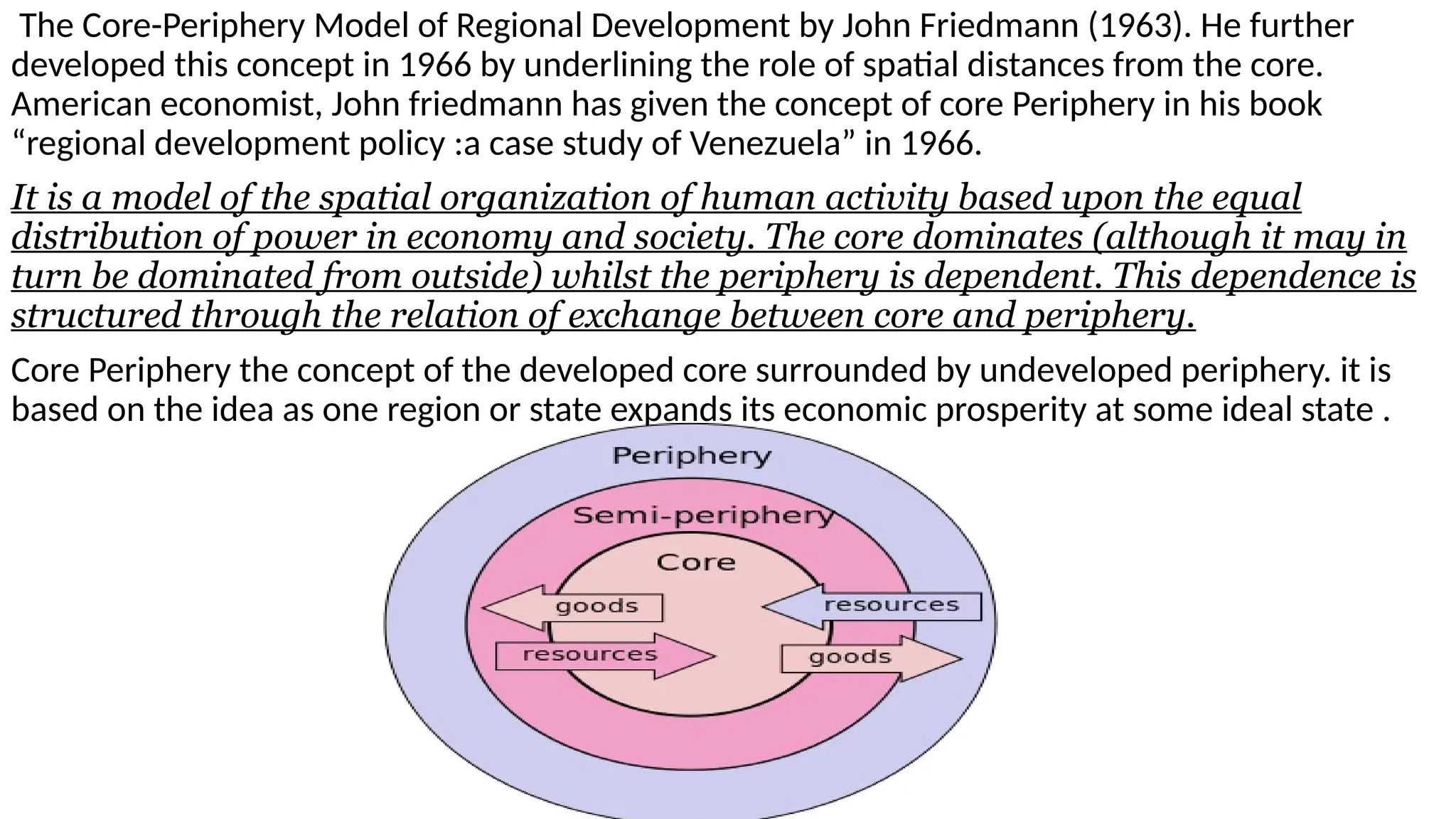
Core Periphery the concept of the developed core surrounded by undeveloped periphery. it is
based on the idea as one region or state expands its economic prosperity at some ideal state .
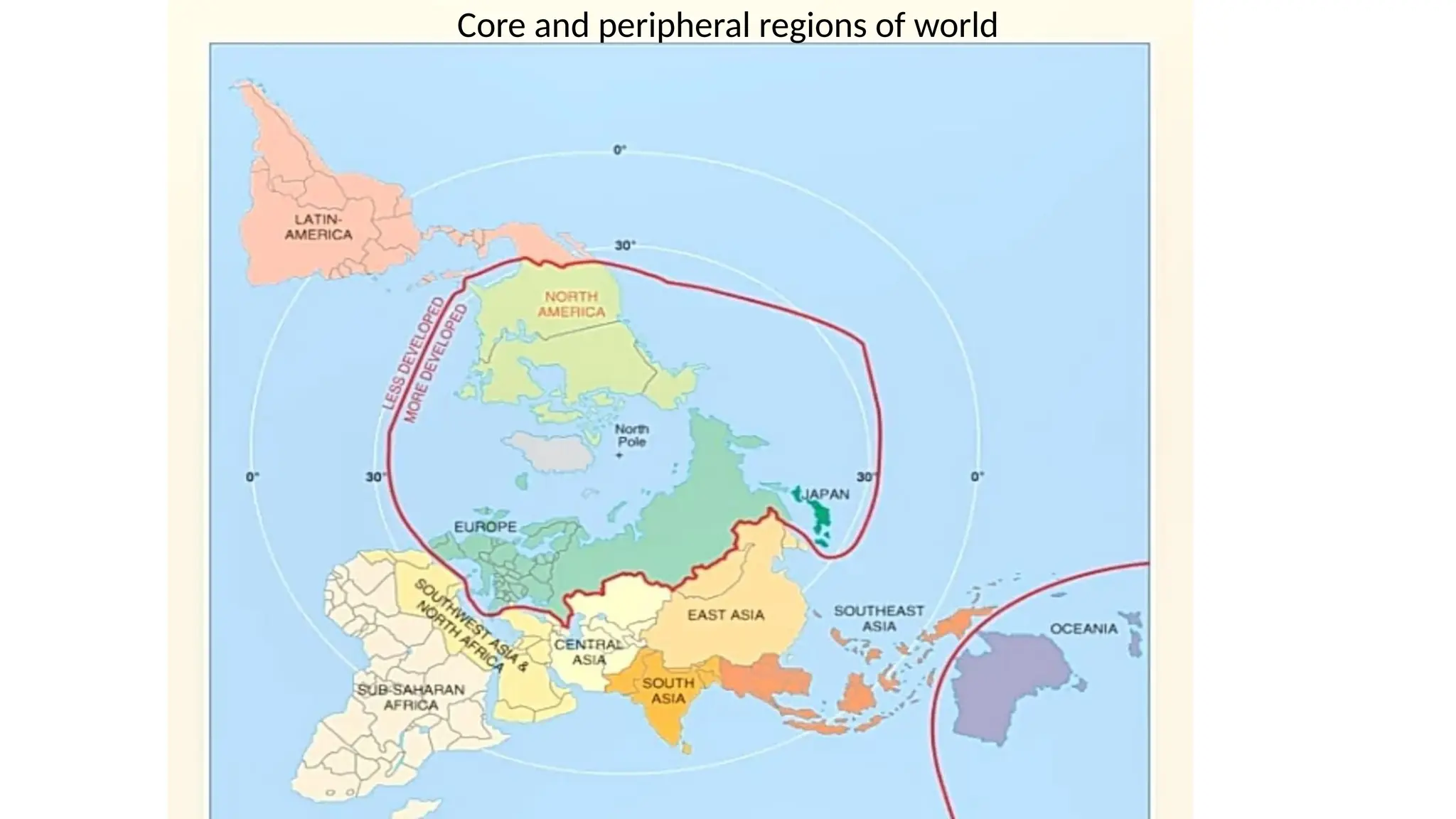
Core and peripheral regions of world
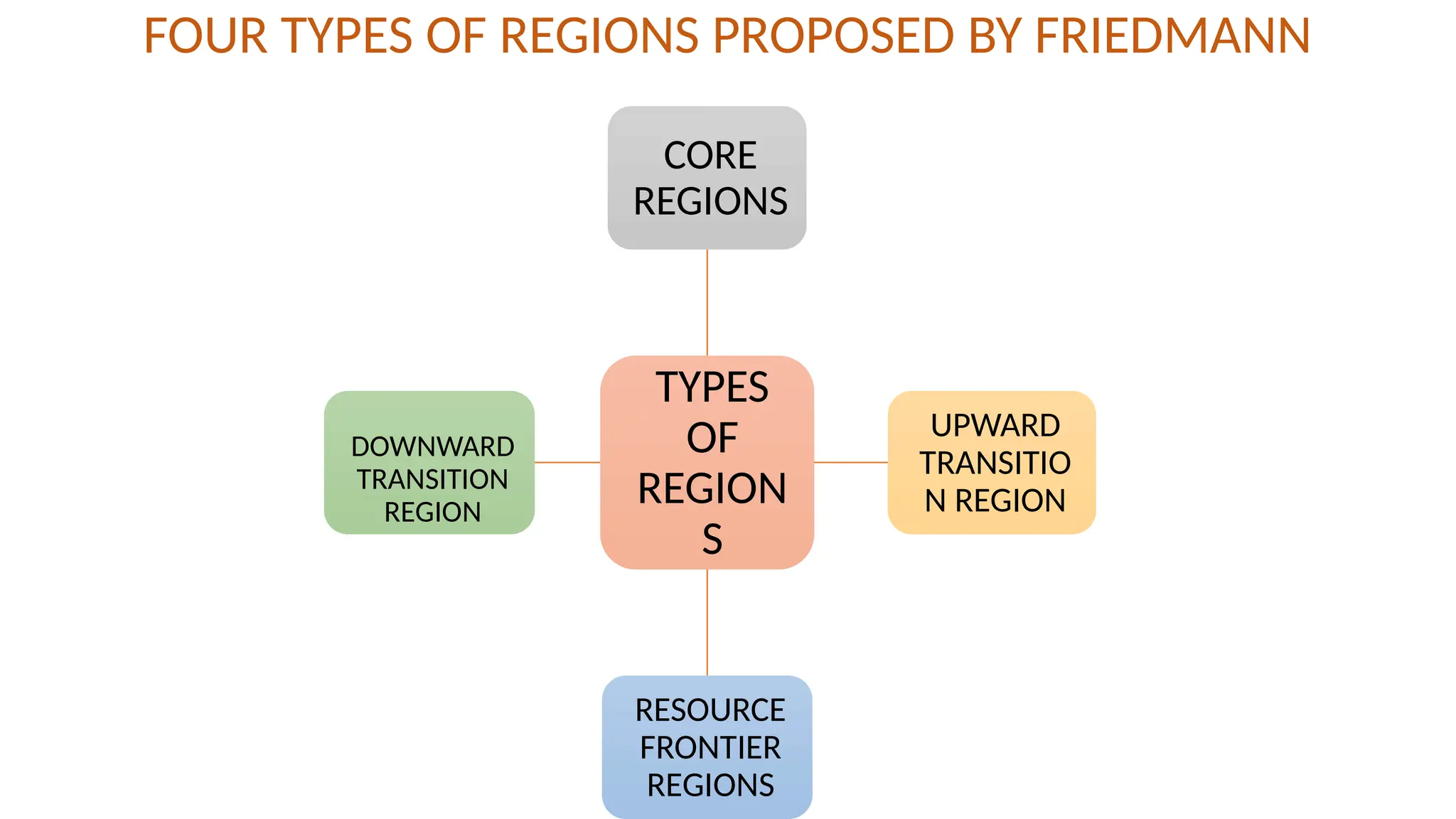
FOUR TYPES OF REGIONS PROPOSED BY FRIEDMANN
TYPES
OF
REGION
S
CORE
REGIONS
UPWARD
TRANSITIO
N REGION
RESOURCE
FRONTIER
REGIONS
DOWNWARD
TRANSITION
REGION
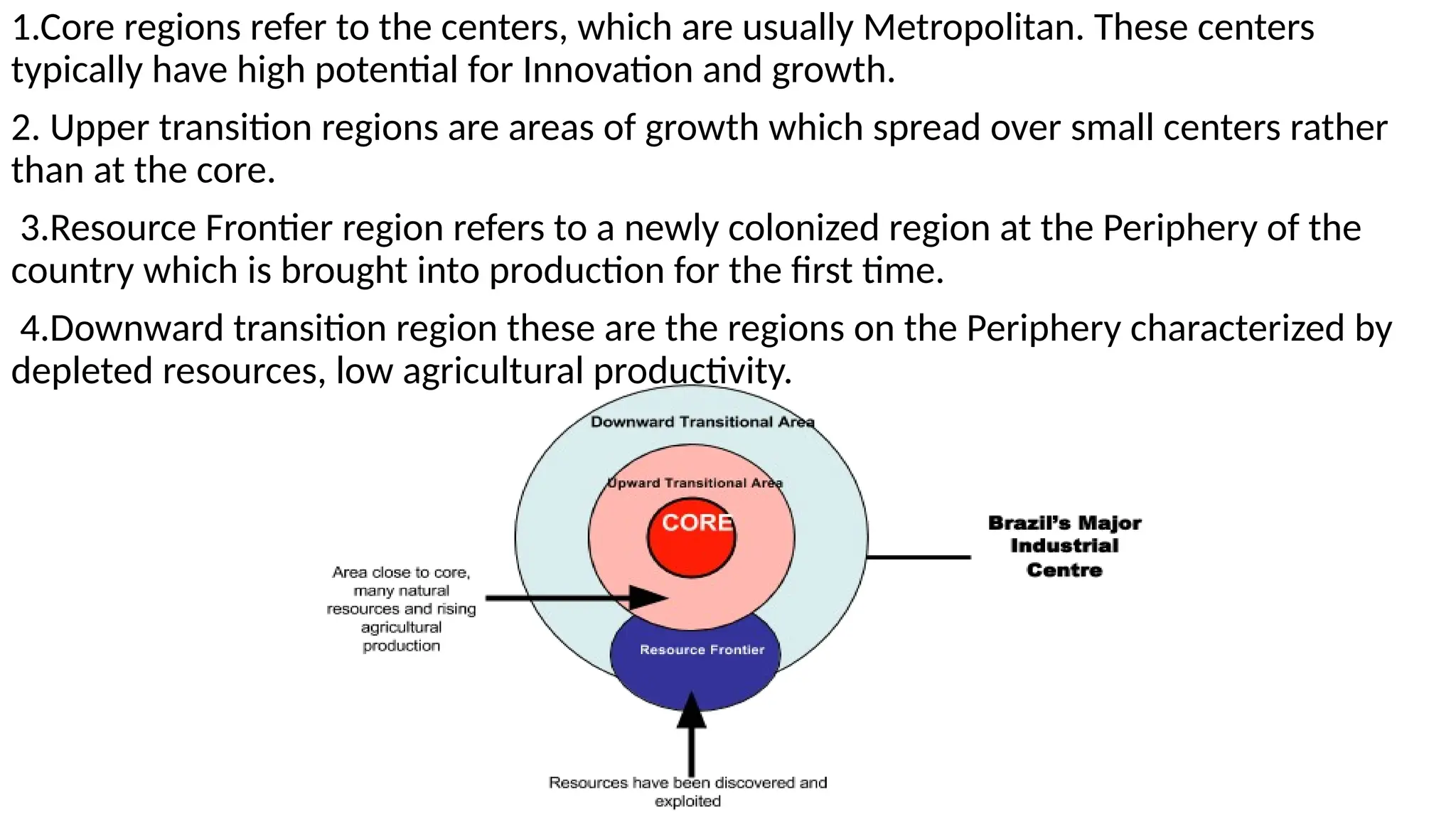
1.Core regions refer to the centers, which are usually Metropolitan. These centers
typically have high potential for Innovation and growth.
2. Upper transition regions are areas of growth which spread over small centers rather
than at the core.
3.Resource Frontier region refers to a newly colonized region at the Periphery of the
country which is brought into production for the first time.
4.Downward transition region these are the regions on the Periphery characterized by
depleted resources, low agricultural productivity.
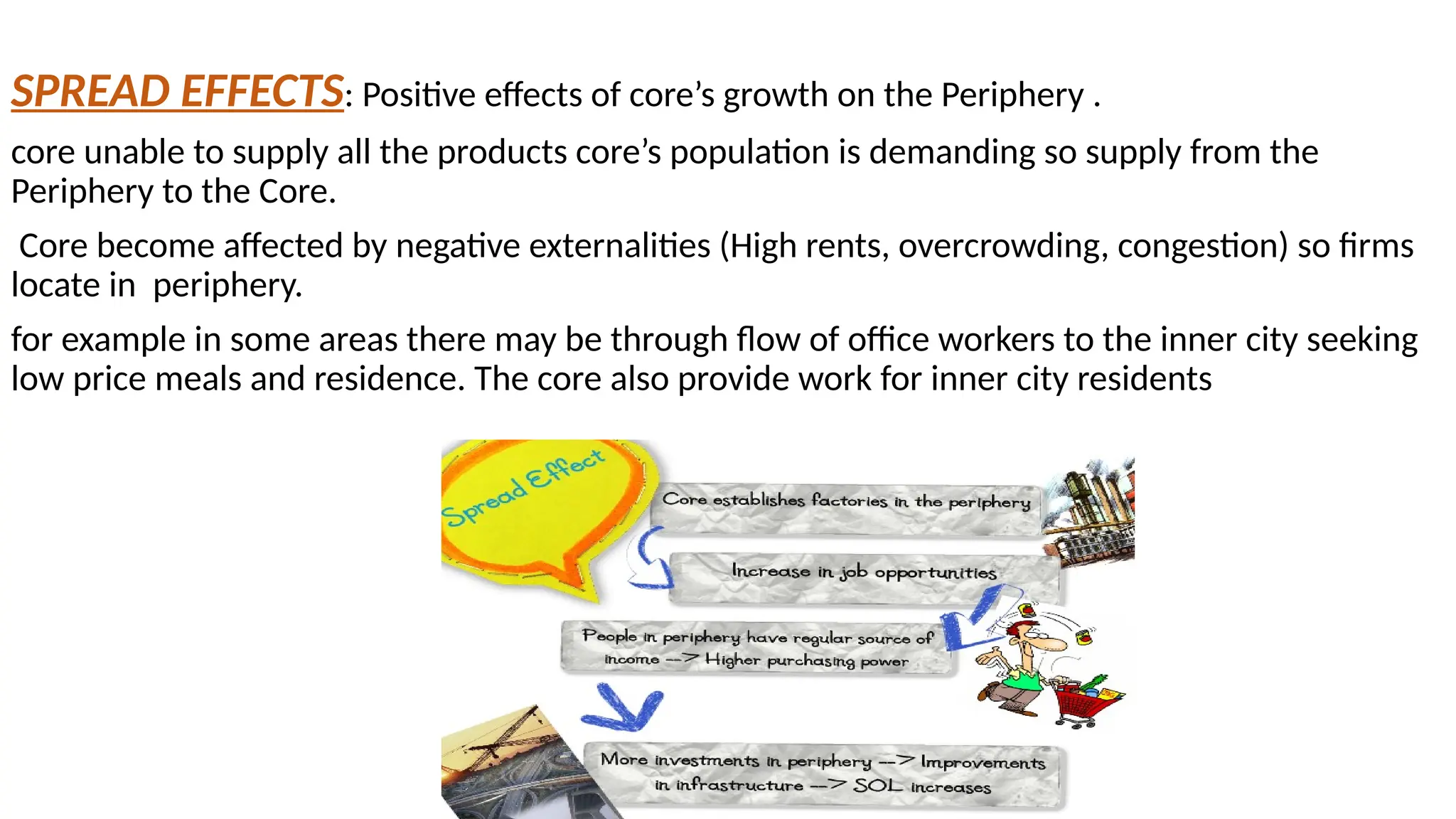
SPREAD EFFECTS: Positive effects of core’s growth on the Periphery .
core unable to supply all the products core’s population is demanding so supply from the
Periphery to the Core.
Core become affected by negative externalities (High rents, overcrowding, congestion) so firms
locate in periphery.
for example in some areas there may be through flow of office workers to the inner city seeking
low price meals and residence. The core also provide work for inner city residents
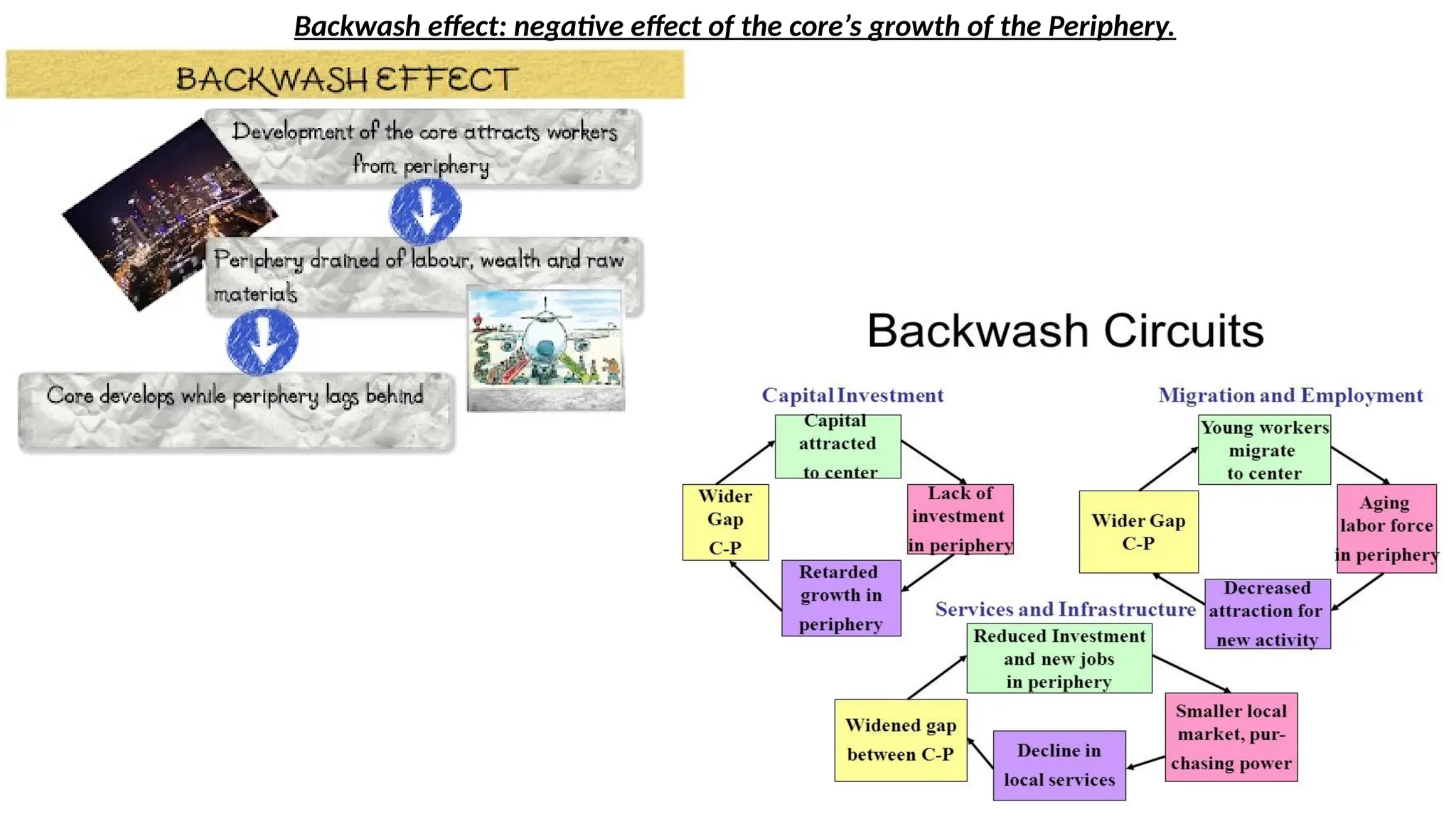
Backwash effect: negative effect of the core’s growth of the Periphery.
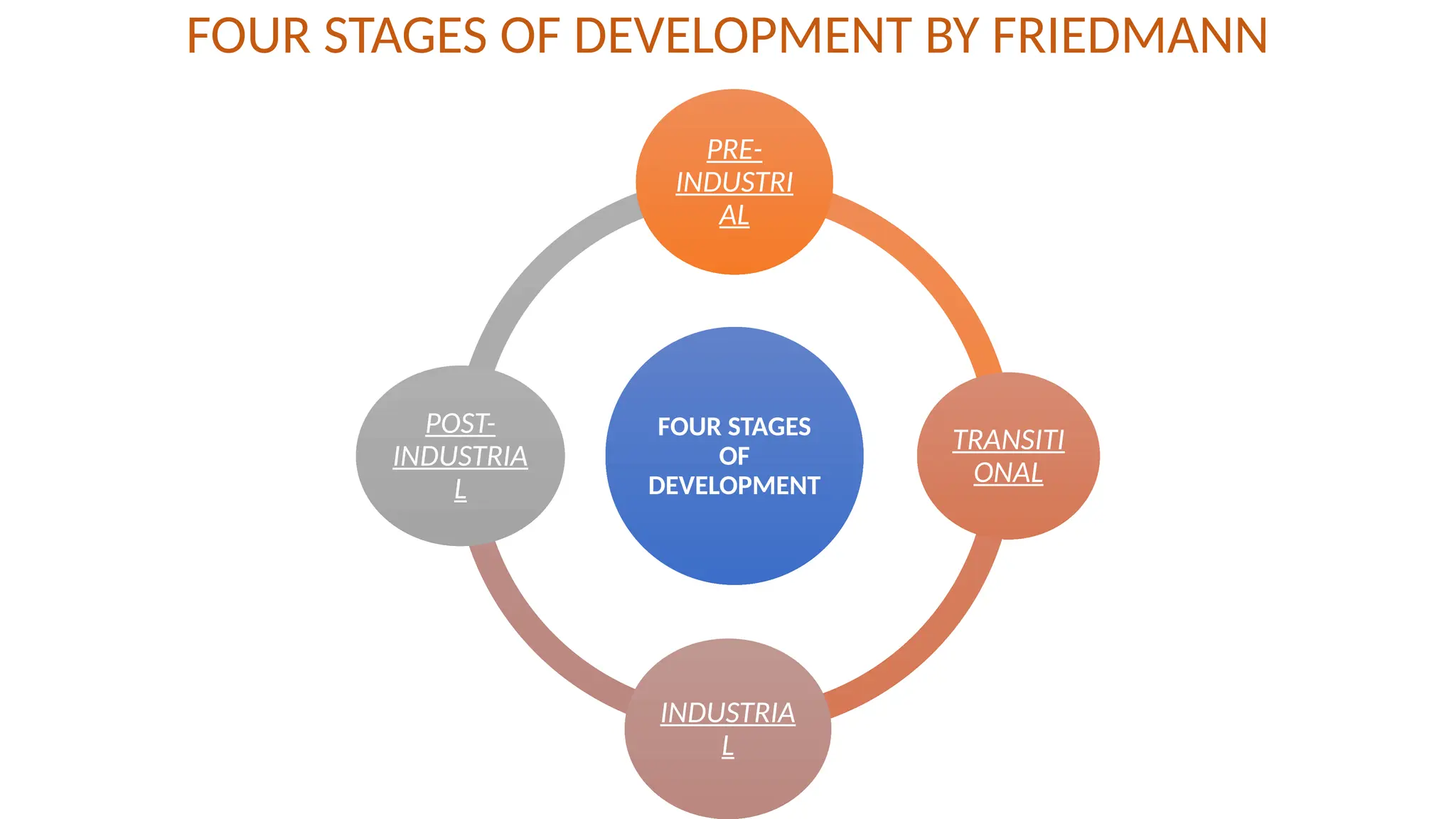
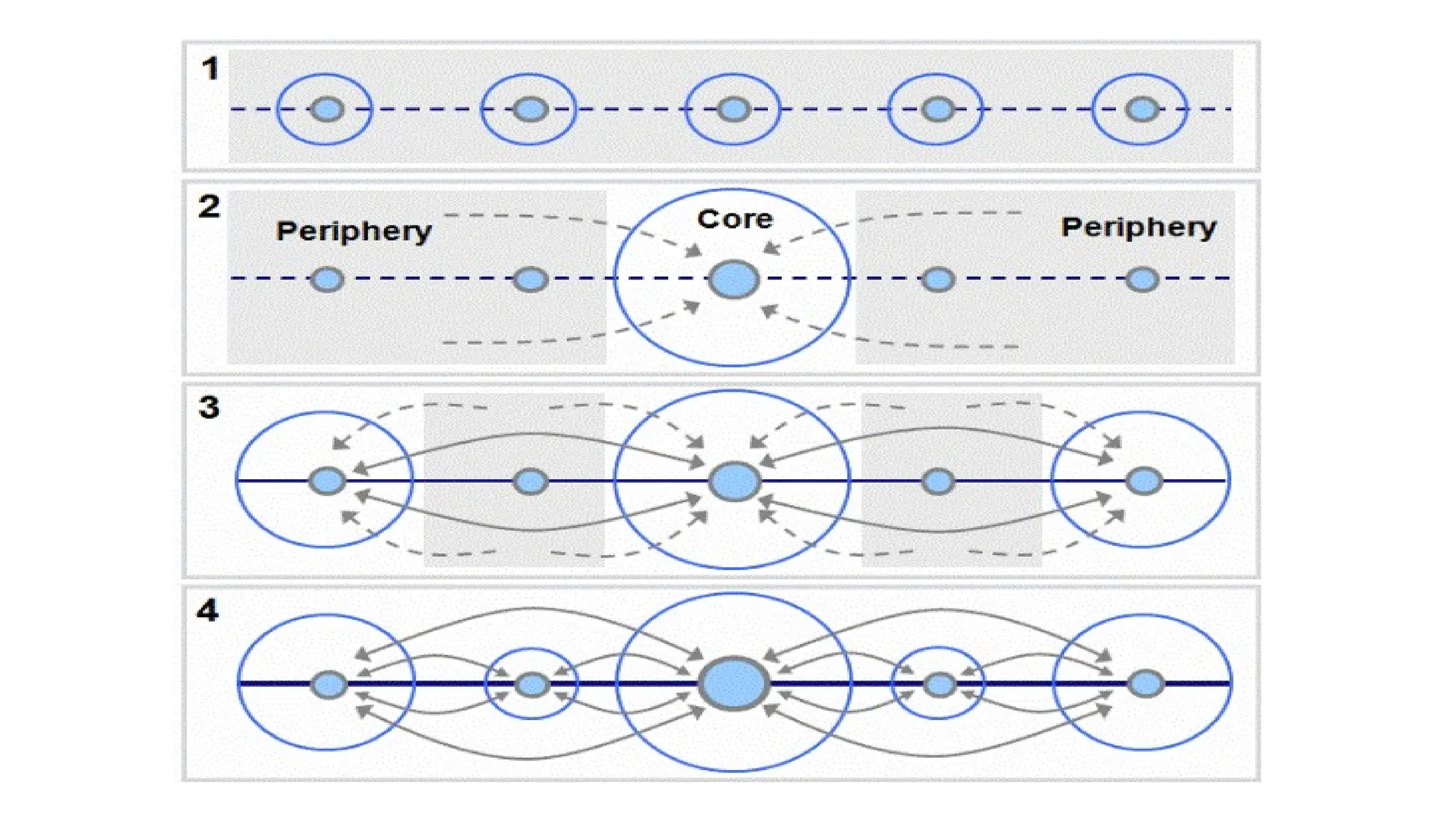
FOUR STAGES OF DEVELOPMENT BY FRIEDMANN
FOUR STAGES
OF
DEVELOPMENT
PRE-
INDUSTRI
AL
TRANSITI
ONAL
INDUSTRIA
L
POST-
INDUSTRIA
L
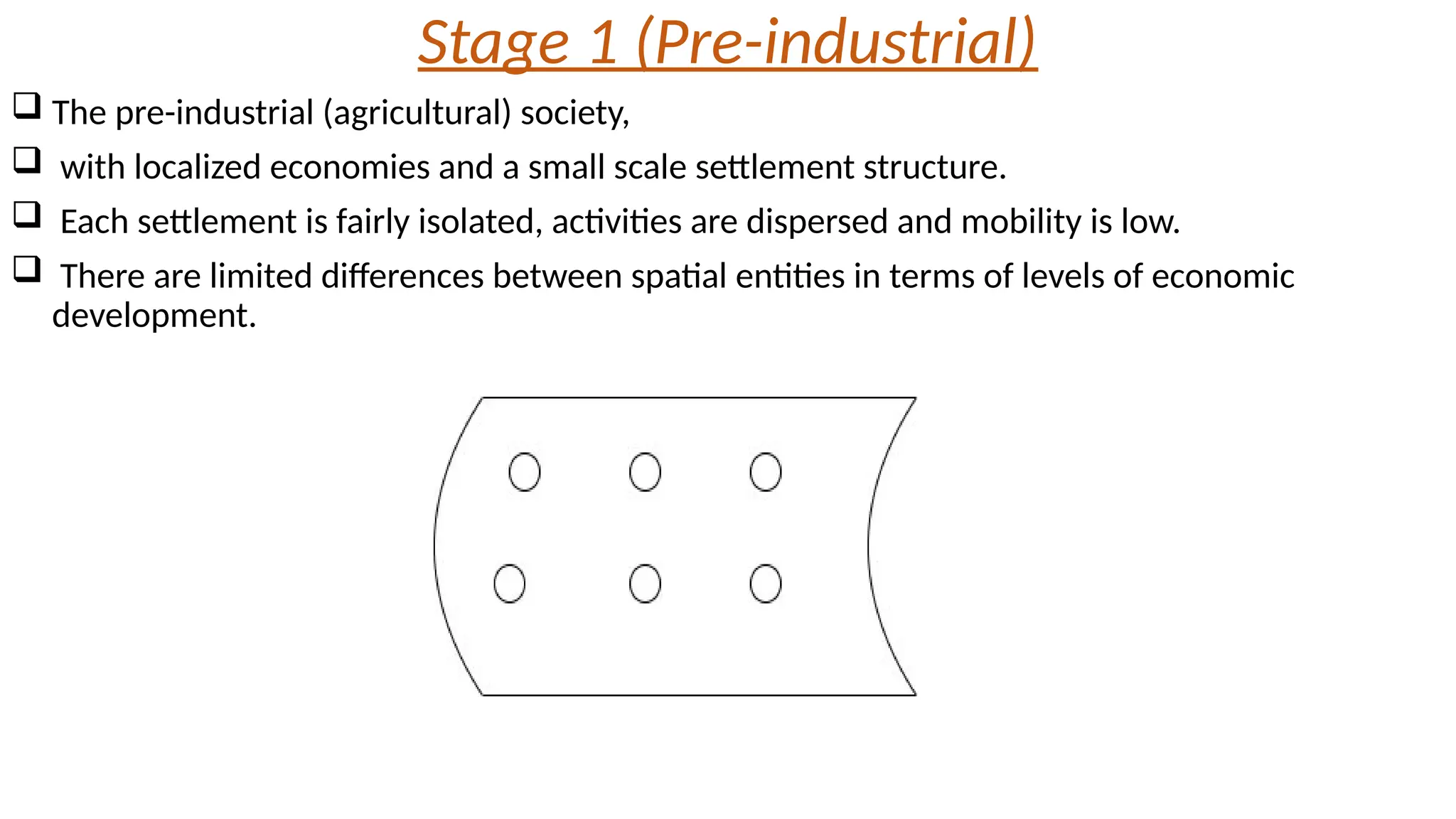
Stage 1 (Pre-industrial)
 The pre-industrial (agricultural) society,
 with localized economies and a small scale settlement structure.
 Each settlement is fairly isolated, activities are dispersed and mobility is low.
 There are limited differences between spatial entities in terms of levels of economic
development.
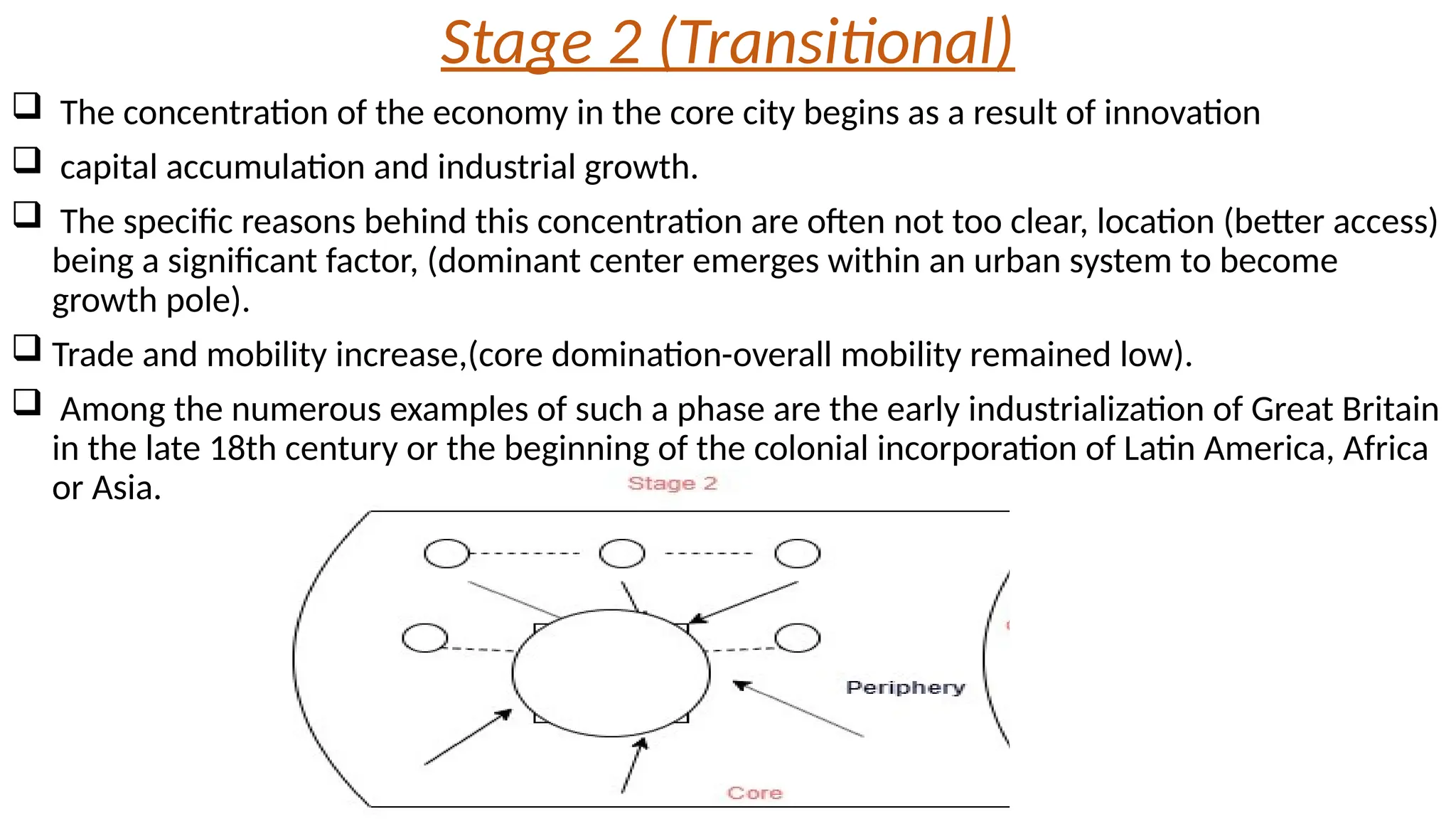
Stage 2 (Transitional)
 The concentration of the economy in the core city begins as a result of innovation
 capital accumulation and industrial growth.
 The specific reasons behind this concentration are often not too clear, location (better access)
being a significant factor, (dominant center emerges within an urban system to become
growth pole).
 Trade and mobility increase,(core domination-overall mobility remained low).
 Among the numerous examples of such a phase are the early industrialization of Great Britain
in the late 18th century or the beginning of the colonial incorporation of Latin America, Africa
or Asia.
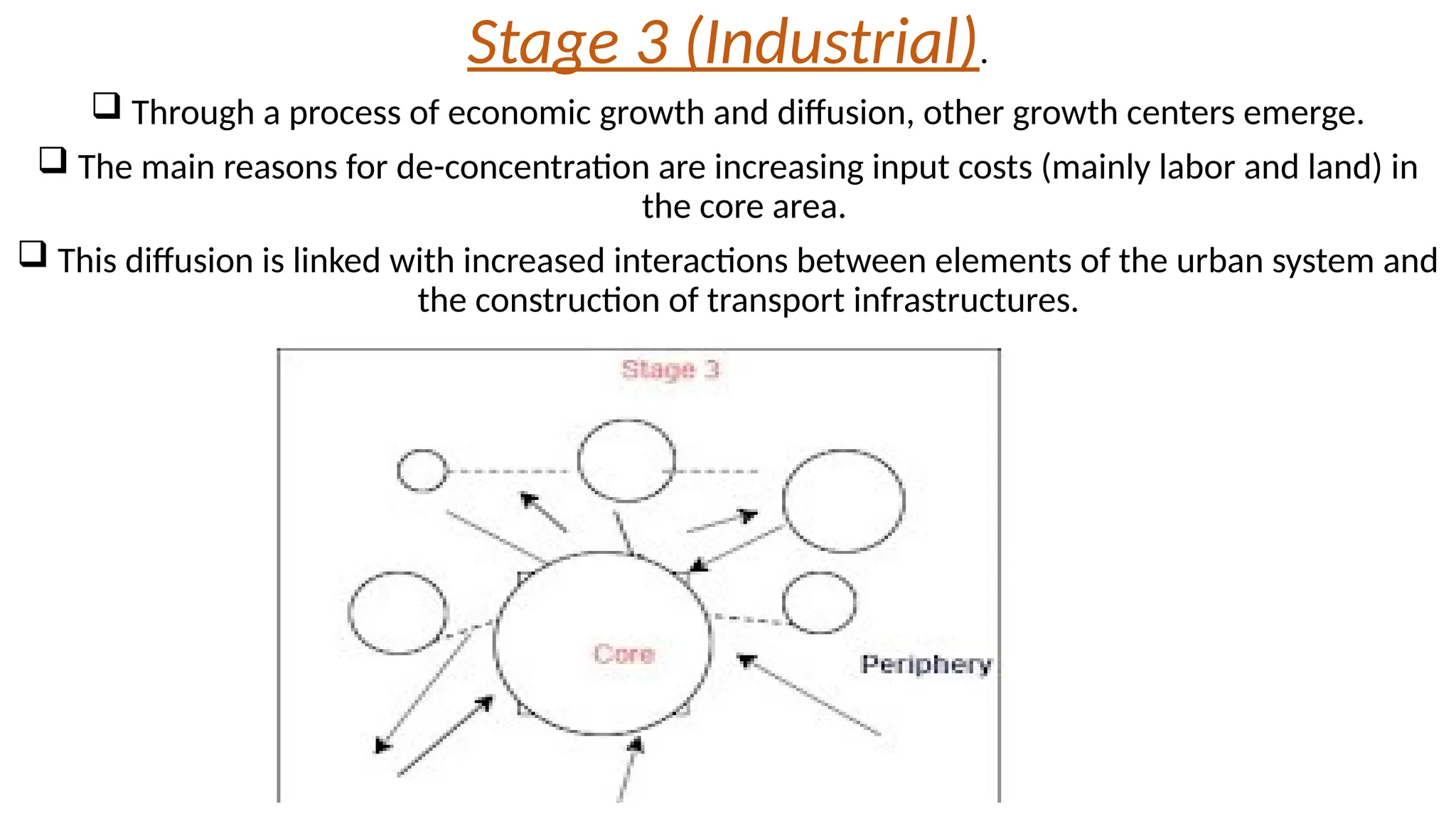
Stage 3 (Industrial).
 Through a process of economic growth and diffusion, other growth centers emerge.
 The main reasons for de-concentration are increasing input costs (mainly labor and land) in
the core area.
 This diffusion is linked with increased interactions between elements of the urban system and
the construction of transport infrastructures.
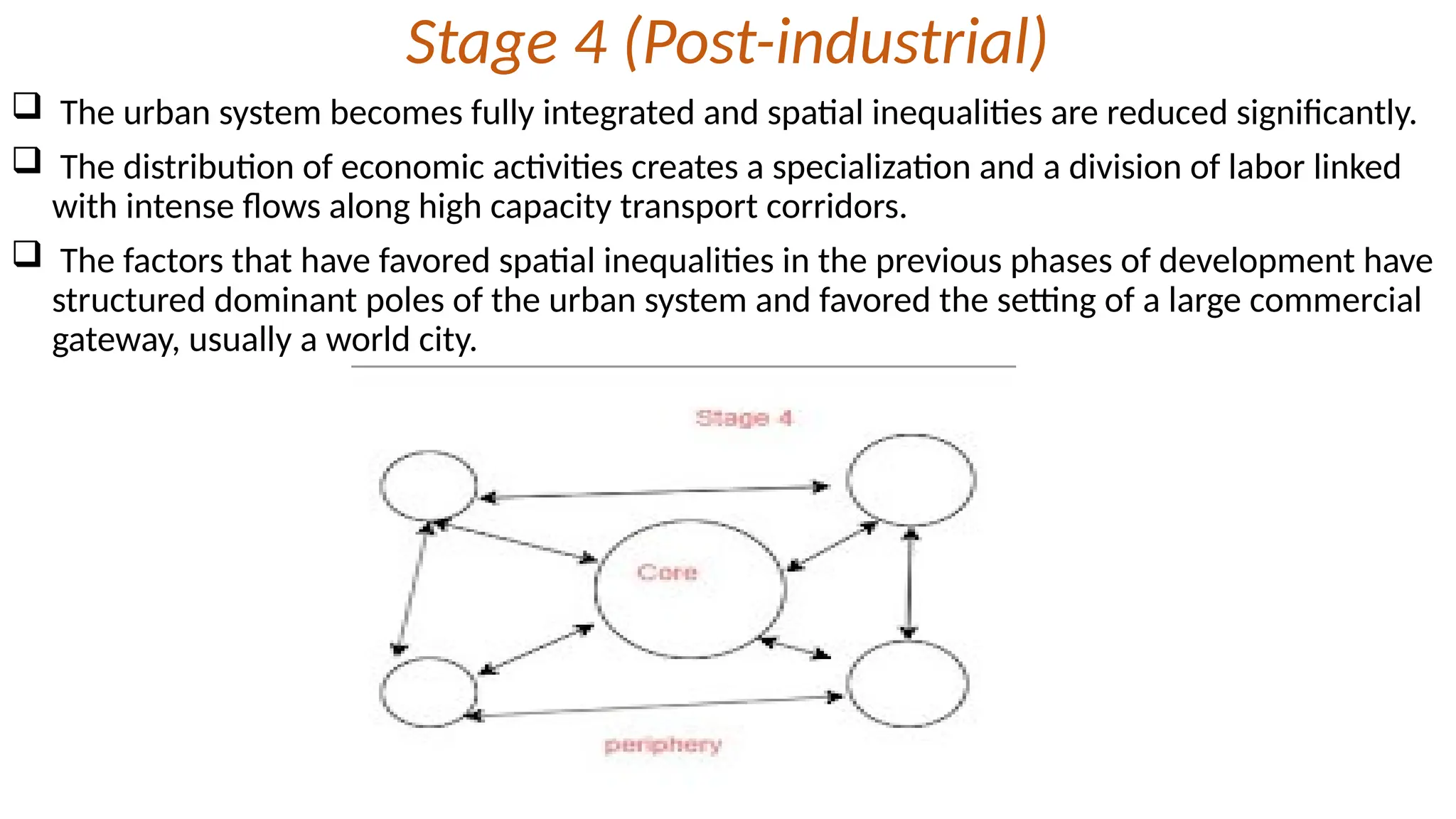
Stage 4 (Post-industrial)
 The urban system becomes fully integrated and spatial inequalities are reduced significantly.
 The distribution of economic activities creates a specialization and a division of labor linked
with intense flows along high capacity transport corridors.
 The factors that have favored spatial inequalities in the previous phases of development have
structured dominant poles of the urban system and favored the setting of a large commercial
gateway, usually a world city.
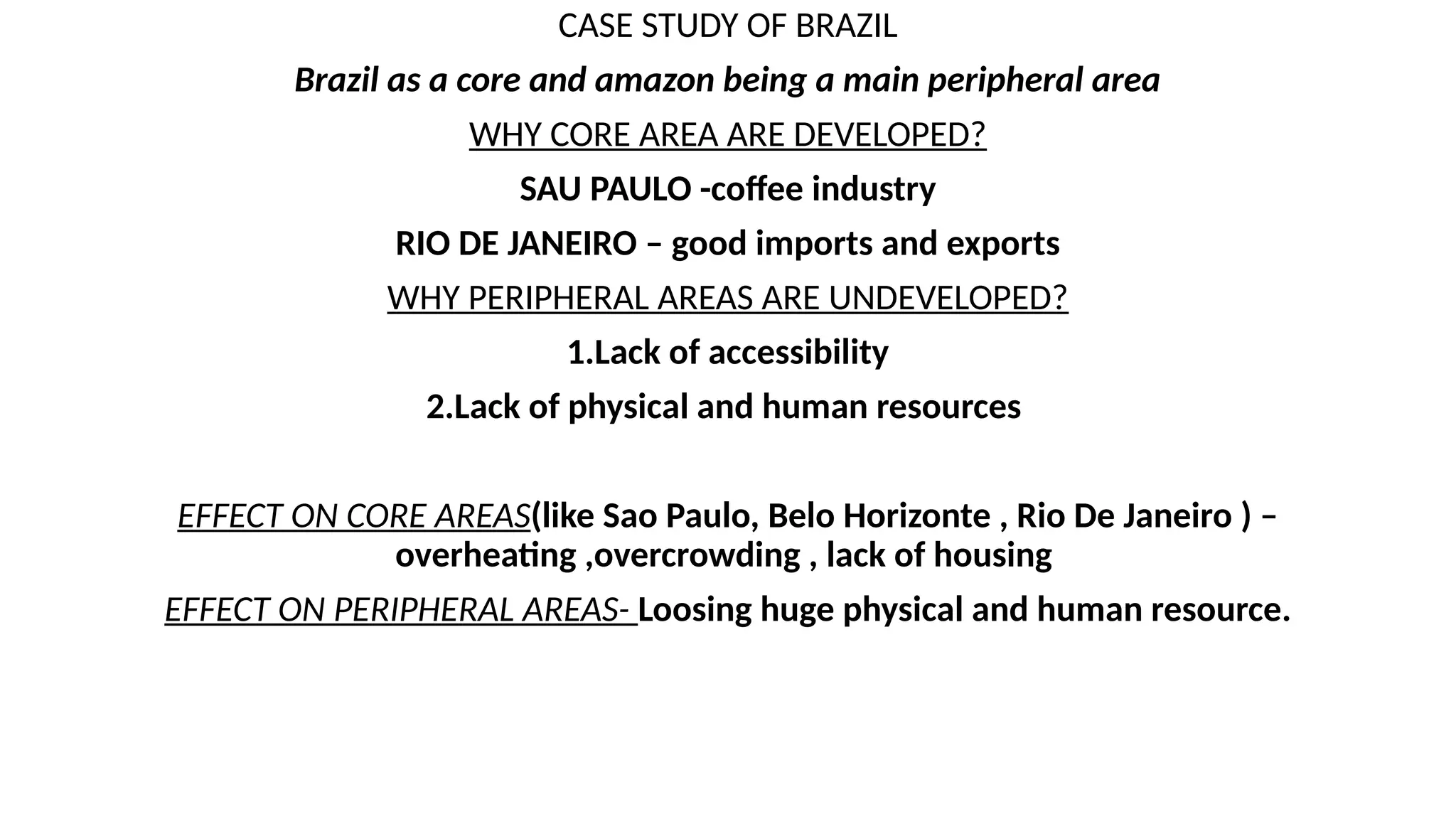
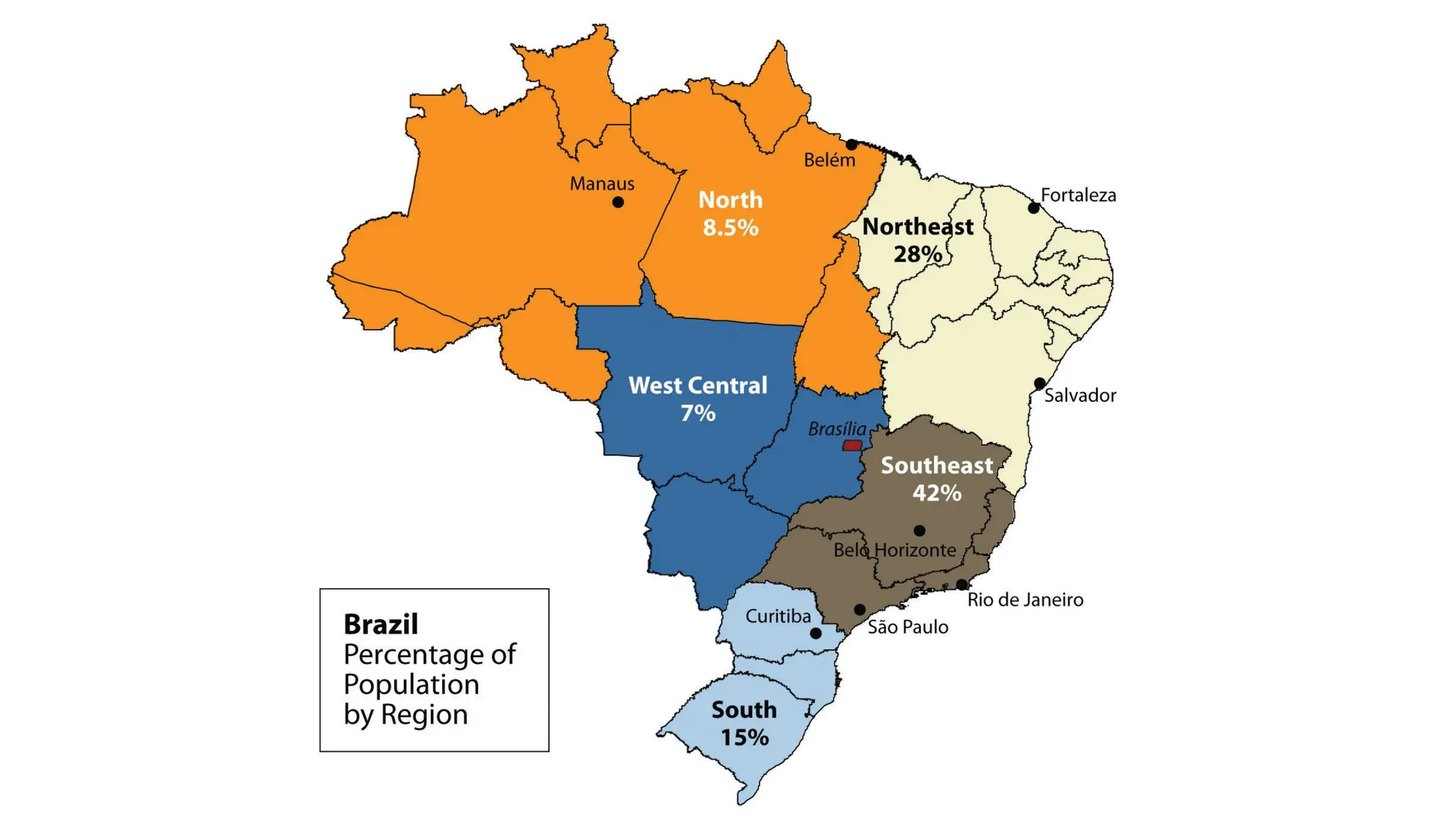
CASE STUDY OF BRAZIL
Brazil as a core and amazon being a main peripheral area
WHY CORE AREA ARE DEVELOPED?
SAU PAULO -coffee industry
RIO DE JANEIRO – good imports and exports
WHY PERIPHERAL AREAS ARE UNDEVELOPED?
1.Lack of accessibility
2.Lack of physical and human resources
EFFECT ON CORE AREAS(like Sao Paulo, Belo Horizonte , Rio De Janeiro ) –
overheating ,overcrowding , lack of housing
EFFECT ON PERIPHERAL AREAS- Loosing huge physical and human resource.
CRITICISM
 It mainly focuses on less developed country where we see major gap
between Core and peripheral region or biasness with some particular
region
 This may also lead to some core peripheral conflicts
 It is mainly based on of centralization

CORE PERIPHERY MODEL geography core.pptx

  • 1.
  • 2.
    The Core-Periphery Modelof Regional Development by John Friedmann (1963). He further developed this concept in 1966 by underlining the role of spatial distances from the core. American economist, John friedmann has given the concept of core Periphery in his book “regional development policy :a case study of Venezuela” in 1966. It is a model of the spatial organization of human activity based upon the equal distribution of power in economy and society. The core dominates (although it may in turn be dominated from outside) whilst the periphery is dependent. This dependence is structured through the relation of exchange between core and periphery. Core Periphery the concept of the developed core surrounded by undeveloped periphery. it is based on the idea as one region or state expands its economic prosperity at some ideal state .
  • 3.
    Core and peripheralregions of world
  • 4.
    FOUR TYPES OFREGIONS PROPOSED BY FRIEDMANN TYPES OF REGION S CORE REGIONS UPWARD TRANSITIO N REGION RESOURCE FRONTIER REGIONS DOWNWARD TRANSITION REGION
  • 5.
    1.Core regions referto the centers, which are usually Metropolitan. These centers typically have high potential for Innovation and growth. 2. Upper transition regions are areas of growth which spread over small centers rather than at the core. 3.Resource Frontier region refers to a newly colonized region at the Periphery of the country which is brought into production for the first time. 4.Downward transition region these are the regions on the Periphery characterized by depleted resources, low agricultural productivity.
  • 6.
    SPREAD EFFECTS: Positiveeffects of core’s growth on the Periphery . core unable to supply all the products core’s population is demanding so supply from the Periphery to the Core. Core become affected by negative externalities (High rents, overcrowding, congestion) so firms locate in periphery. for example in some areas there may be through flow of office workers to the inner city seeking low price meals and residence. The core also provide work for inner city residents
  • 7.
    Backwash effect: negativeeffect of the core’s growth of the Periphery.
  • 8.
    FOUR STAGES OFDEVELOPMENT BY FRIEDMANN FOUR STAGES OF DEVELOPMENT PRE- INDUSTRI AL TRANSITI ONAL INDUSTRIA L POST- INDUSTRIA L
  • 9.
    Stage 1 (Pre-industrial) The pre-industrial (agricultural) society,  with localized economies and a small scale settlement structure.  Each settlement is fairly isolated, activities are dispersed and mobility is low.  There are limited differences between spatial entities in terms of levels of economic development.
  • 10.
    Stage 2 (Transitional) The concentration of the economy in the core city begins as a result of innovation  capital accumulation and industrial growth.  The specific reasons behind this concentration are often not too clear, location (better access) being a significant factor, (dominant center emerges within an urban system to become growth pole).  Trade and mobility increase,(core domination-overall mobility remained low).  Among the numerous examples of such a phase are the early industrialization of Great Britain in the late 18th century or the beginning of the colonial incorporation of Latin America, Africa or Asia.
  • 11.
    Stage 3 (Industrial). Through a process of economic growth and diffusion, other growth centers emerge.  The main reasons for de-concentration are increasing input costs (mainly labor and land) in the core area.  This diffusion is linked with increased interactions between elements of the urban system and the construction of transport infrastructures.
  • 12.
    Stage 4 (Post-industrial) The urban system becomes fully integrated and spatial inequalities are reduced significantly.  The distribution of economic activities creates a specialization and a division of labor linked with intense flows along high capacity transport corridors.  The factors that have favored spatial inequalities in the previous phases of development have structured dominant poles of the urban system and favored the setting of a large commercial gateway, usually a world city.
  • 14.
    CASE STUDY OFBRAZIL Brazil as a core and amazon being a main peripheral area WHY CORE AREA ARE DEVELOPED? SAU PAULO -coffee industry RIO DE JANEIRO – good imports and exports WHY PERIPHERAL AREAS ARE UNDEVELOPED? 1.Lack of accessibility 2.Lack of physical and human resources EFFECT ON CORE AREAS(like Sao Paulo, Belo Horizonte , Rio De Janeiro ) – overheating ,overcrowding , lack of housing EFFECT ON PERIPHERAL AREAS- Loosing huge physical and human resource.
  • 16.
    CRITICISM  It mainlyfocuses on less developed country where we see major gap between Core and peripheral region or biasness with some particular region  This may also lead to some core peripheral conflicts  It is mainly based on of centralization