MEASURE Evaluation
July 2016
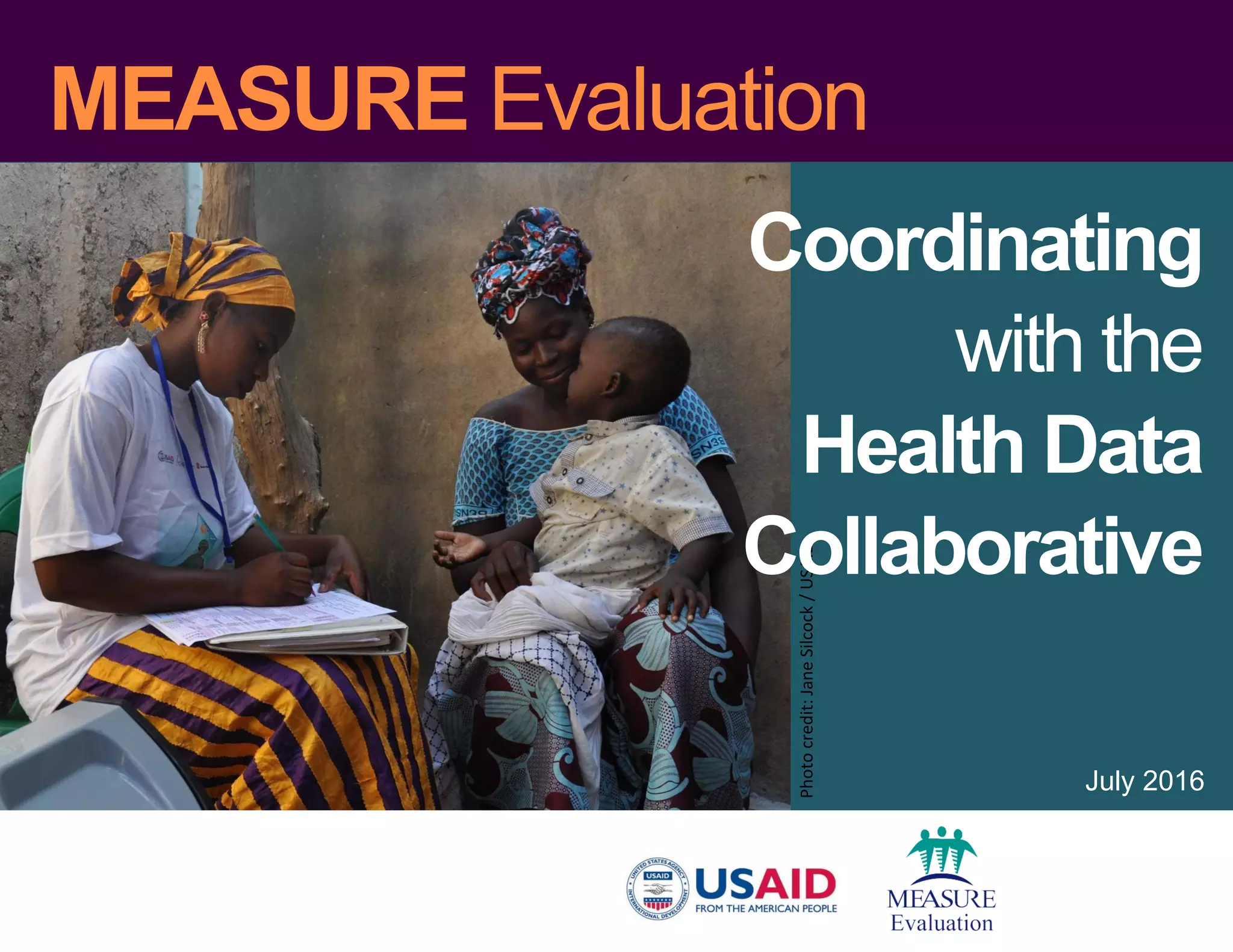
Photocredit:JaneSilcock/USAID
Coordinating
with the
Health Data
Collaborative
What we’ll cover
1. What is MEASURE Evaluation?
2. How our mandate overlaps with the HDC
3. How we coordinate with the HDC
$180M LWA cooperative agreement
July 2014 – June 2019
Strategic objective:
To strengthen health information systems – the capacity to gather,
interpret, and use data – so countries can make better decisions and
sustain good health outcomes over time.
MEASURE Evaluation Phase IV
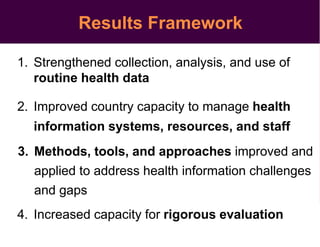
2. Improved country capacity to manage health
information systems, resources, and staff
1. Strengthened collection, analysis, and use of
routine health data
3. Methods, tools, and approaches improved and
applied to address health information challenges
and gaps
4. Increased capacity for rigorous evaluation
Results Framework
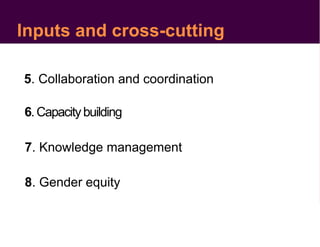
7. Knowledge management
5. Collaboration and coordination
6. Capacitybuilding
8. Gender equity
Inputs and cross-cutting
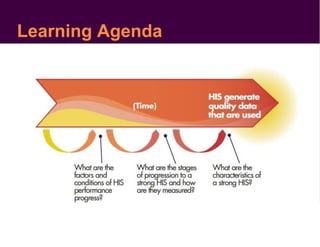
Learning Agenda
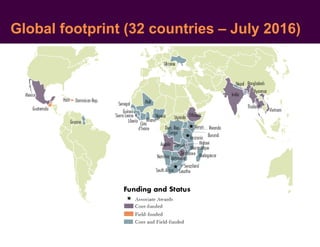
Global footprint (32 countries – July 2016)
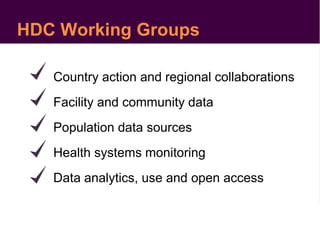
Country action and regional collaborations
Facility and community data
Population data sources
Health systems monitoring
Data analytics, use and open access
HDC Working Groups
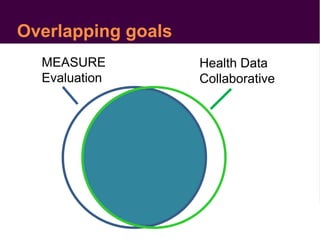
Overlapping goals
MEASURE
Evaluation
Health Data
Collaborative
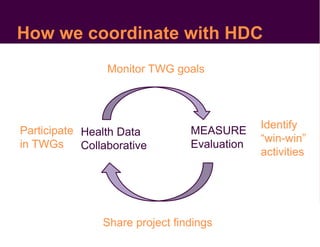
How we coordinate with HDC
MEASURE
Evaluation
Health Data
Collaborative
Monitor TWG goals
Share project findings
Identify
“win-win”
activities
Participate
in TWGs
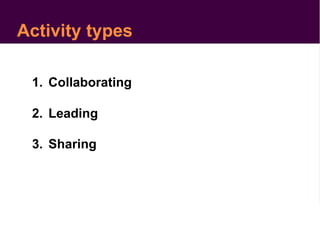
Activity types
1. Collaborating
2. Leading
3. Sharing
Activity types: Collaborating
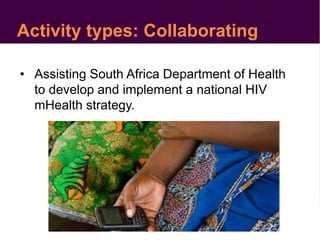
• Assisting South Africa Department of Health
to develop and implement a national HIV
mHealth strategy.
Activity types: Collaborating
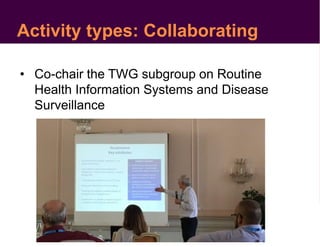
• Co-chair the TWG subgroup on Routine
Health Information Systems and Disease
Surveillance
Activity types: Leading
Data quality review* - Moving from ad hoc,
disease-specific data quality assessments to
ongoing, sector-wide systematic reviews of
data quality.
*Collaborative leadership, or co-creation, with WHO, the Global Fund, GAVI, and JSI
Activity types: Leading
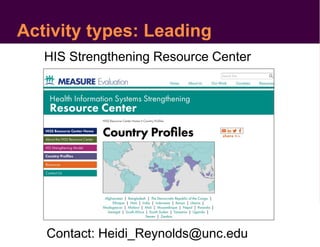
HIS Strengthening Resource Center
Contact: Heidi_Reynolds@unc.edu
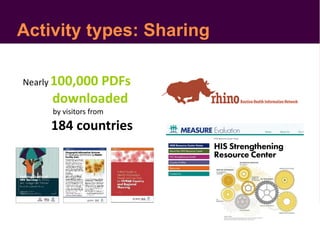
Activity types: Sharing
Nearly 100,000 PDFs
downloaded
by visitors from
184 countries
Next steps
• Continue strengthening country HIS
at national and subnational levels
• Lead through learning and creating
• Share lessons learned
• Participate in HDC TWGs
• Identify win-win activities
This presentation was produced with the support of the United States Agency
for International Development (USAID) under the terms of MEASURE
Evaluation cooperative agreement AID-OAA-L-14-00004. MEASURE Evaluation
is implemented by the Carolina Population Center, University of North Carolina
at Chapel Hill in partnership with ICF International; John Snow, Inc.;
Management Sciences for Health; Palladium; and Tulane University. Views
expressed are not necessarily those of USAID or the United States government.
www.measureevaluation.org

Coordinating with the Health Data Collaborative

  • 1.
  • 2.
    What we’ll cover 1.What is MEASURE Evaluation? 2. How our mandate overlaps with the HDC 3. How we coordinate with the HDC
  • 3.
    $180M LWA cooperativeagreement July 2014 – June 2019 Strategic objective: To strengthen health information systems – the capacity to gather, interpret, and use data – so countries can make better decisions and sustain good health outcomes over time. MEASURE Evaluation Phase IV
  • 4.
    2. Improved countrycapacity to manage health information systems, resources, and staff 1. Strengthened collection, analysis, and use of routine health data 3. Methods, tools, and approaches improved and applied to address health information challenges and gaps 4. Increased capacity for rigorous evaluation Results Framework
  • 5.
    7. Knowledge management 5.Collaboration and coordination 6. Capacitybuilding 8. Gender equity Inputs and cross-cutting
  • 6.
  • 7.
    Global footprint (32countries – July 2016)
  • 8.
    Country action andregional collaborations Facility and community data Population data sources Health systems monitoring Data analytics, use and open access HDC Working Groups
  • 9.
  • 10.
    How we coordinatewith HDC MEASURE Evaluation Health Data Collaborative Monitor TWG goals Share project findings Identify “win-win” activities Participate in TWGs
  • 11.
  • 12.
    Activity types: Collaborating •Assisting South Africa Department of Health to develop and implement a national HIV mHealth strategy.
  • 13.
    Activity types: Collaborating •Co-chair the TWG subgroup on Routine Health Information Systems and Disease Surveillance
  • 14.
    Activity types: Leading Dataquality review* - Moving from ad hoc, disease-specific data quality assessments to ongoing, sector-wide systematic reviews of data quality. *Collaborative leadership, or co-creation, with WHO, the Global Fund, GAVI, and JSI
  • 15.
    Activity types: Leading HISStrengthening Resource Center Contact: Heidi_Reynolds@unc.edu
  • 16.
    Activity types: Sharing Nearly100,000 PDFs downloaded by visitors from 184 countries
  • 17.
    Next steps • Continuestrengthening country HIS at national and subnational levels • Lead through learning and creating • Share lessons learned • Participate in HDC TWGs • Identify win-win activities
  • 18.
    This presentation wasproduced with the support of the United States Agency for International Development (USAID) under the terms of MEASURE Evaluation cooperative agreement AID-OAA-L-14-00004. MEASURE Evaluation is implemented by the Carolina Population Center, University of North Carolina at Chapel Hill in partnership with ICF International; John Snow, Inc.; Management Sciences for Health; Palladium; and Tulane University. Views expressed are not necessarily those of USAID or the United States government. www.measureevaluation.org