




COOPERATIVE PRINCIPLE
7 PRINCIPLES FROM THE
COOPERATIVE CODE OF THE
PHILIPPINES OF 2008 (RA 9520)
VOLUNTARY AND
OPEN MEMBERSHIP
Cooperatives are voluntary organizations,
open to all persons able to use their
services and willing to accept the
responsibilities of membership, without
gender, social, racial, cultural, political or
religious discrimination
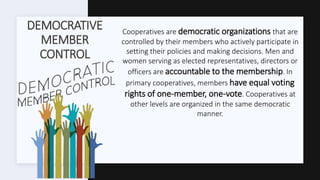
DEMOCRATIVE
MEMBER
CONTROL
Cooperatives are democratic organizations that are
controlled by their members who actively participate in
setting their policies and making decisions. Men and
women serving as elected representatives, directors or
officers are accountable to the membership. In
primary cooperatives, members have equal voting
rights of one-member, one-vote. Cooperatives at
other levels are organized in the same democratic
manner.
MEMBER
ECONOMIC
PARTICIPATION
Members contribute equitably to, and democratically
control, the capital of their cooperatives. At least part of that
capital is the common property of the cooperative. They
shall receive limited compensation or limited interest, if any,
on capital subscribed and paid as a condition of
membership. Members allocate surpluses for any or all of
the following purposes: developing the cooperative by
setting up reserves, part of which should at least be
indivisible; benefitting members in proportion to their
patronage of the cooperative’s business; and, supporting
other activities approved by the membership.
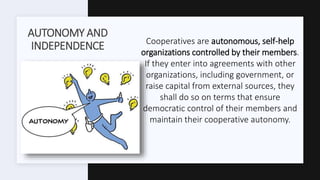
AUTONOMY AND
INDEPENDENCE Cooperatives are autonomous, self-help
organizations controlled by their members.
If they enter into agreements with other
organizations, including government, or
raise capital from external sources, they
shall do so on terms that ensure
democratic control of their members and
maintain their cooperative autonomy.
EDUCATION,
TRAINING AND
INFORMATION
Cooperatives shall provide education
and training for their members,
elected and appointed
representatives, managers, and
employees, so that they can contribute
effectively and efficiently to the
development of their cooperatives.
COOPERATION
AMONG
COOPERATIVES
Cooperatives serve their members
most effectively and strengthen the
cooperative movement by working
together through local, national,
regional and international structures.
CONCERN FOR
COMMUNITY
Cooperatives work for the
sustainable development of
their communities through
policies approved by their
members.

Cooperative Principles.pptx

  • 1.
    COOPERATIVE PRINCIPLE 7 PRINCIPLESFROM THE COOPERATIVE CODE OF THE PHILIPPINES OF 2008 (RA 9520)
  • 2.
    VOLUNTARY AND OPEN MEMBERSHIP Cooperativesare voluntary organizations, open to all persons able to use their services and willing to accept the responsibilities of membership, without gender, social, racial, cultural, political or religious discrimination
  • 3.
    DEMOCRATIVE MEMBER CONTROL Cooperatives are democraticorganizations that are controlled by their members who actively participate in setting their policies and making decisions. Men and women serving as elected representatives, directors or officers are accountable to the membership. In primary cooperatives, members have equal voting rights of one-member, one-vote. Cooperatives at other levels are organized in the same democratic manner.
  • 4.
    MEMBER ECONOMIC PARTICIPATION Members contribute equitablyto, and democratically control, the capital of their cooperatives. At least part of that capital is the common property of the cooperative. They shall receive limited compensation or limited interest, if any, on capital subscribed and paid as a condition of membership. Members allocate surpluses for any or all of the following purposes: developing the cooperative by setting up reserves, part of which should at least be indivisible; benefitting members in proportion to their patronage of the cooperative’s business; and, supporting other activities approved by the membership.
  • 5.
    AUTONOMY AND INDEPENDENCE Cooperativesare autonomous, self-help organizations controlled by their members. If they enter into agreements with other organizations, including government, or raise capital from external sources, they shall do so on terms that ensure democratic control of their members and maintain their cooperative autonomy.
  • 6.
    EDUCATION, TRAINING AND INFORMATION Cooperatives shallprovide education and training for their members, elected and appointed representatives, managers, and employees, so that they can contribute effectively and efficiently to the development of their cooperatives.
  • 7.
    COOPERATION AMONG COOPERATIVES Cooperatives serve theirmembers most effectively and strengthen the cooperative movement by working together through local, national, regional and international structures.
  • 8.
    CONCERN FOR COMMUNITY Cooperatives workfor the sustainable development of their communities through policies approved by their members.