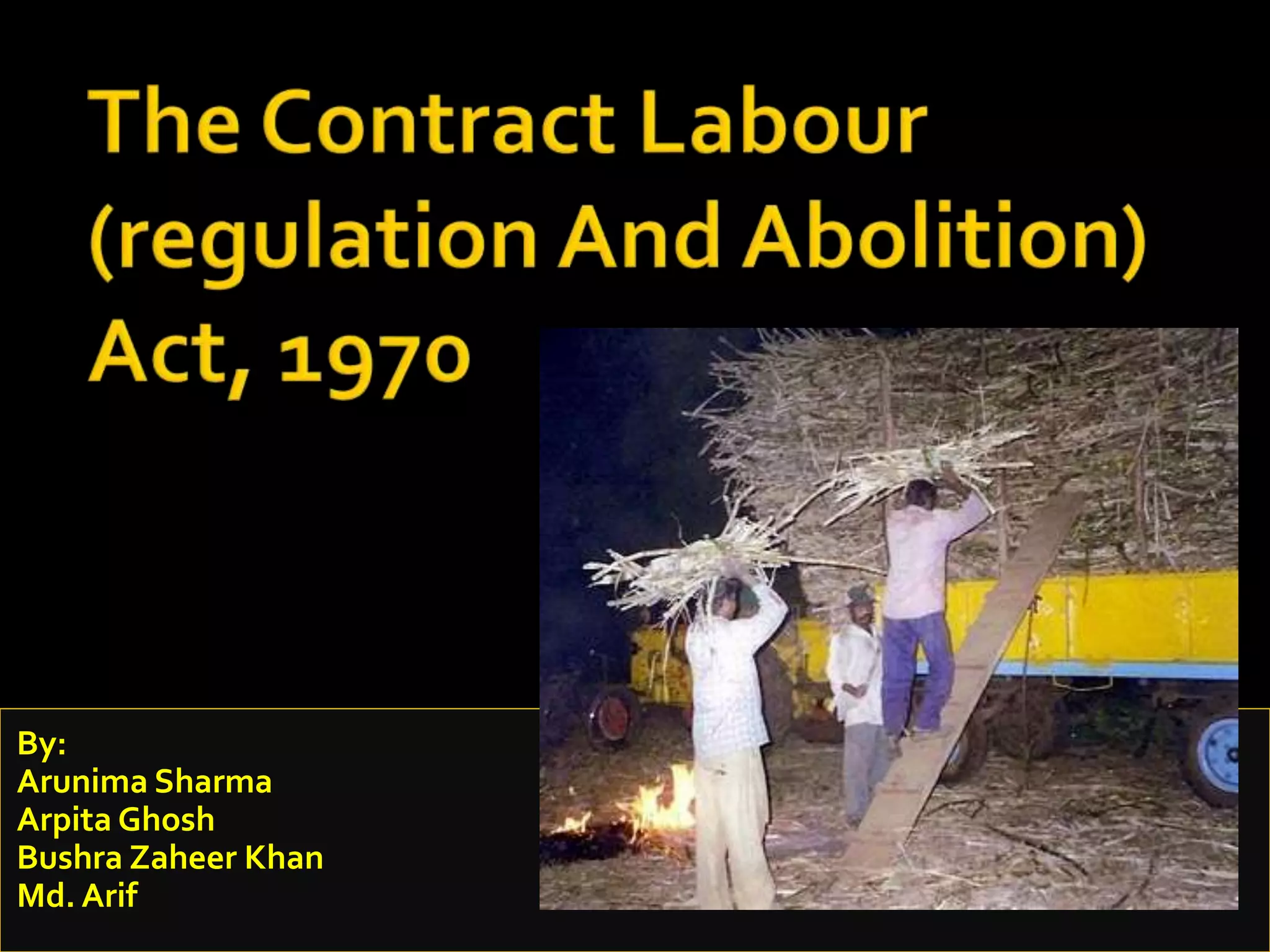


By:
Arunima Sharma
Arpita Ghosh
Bushra Zaheer Khan
Md. Arif
 Object
 Applicability
 History
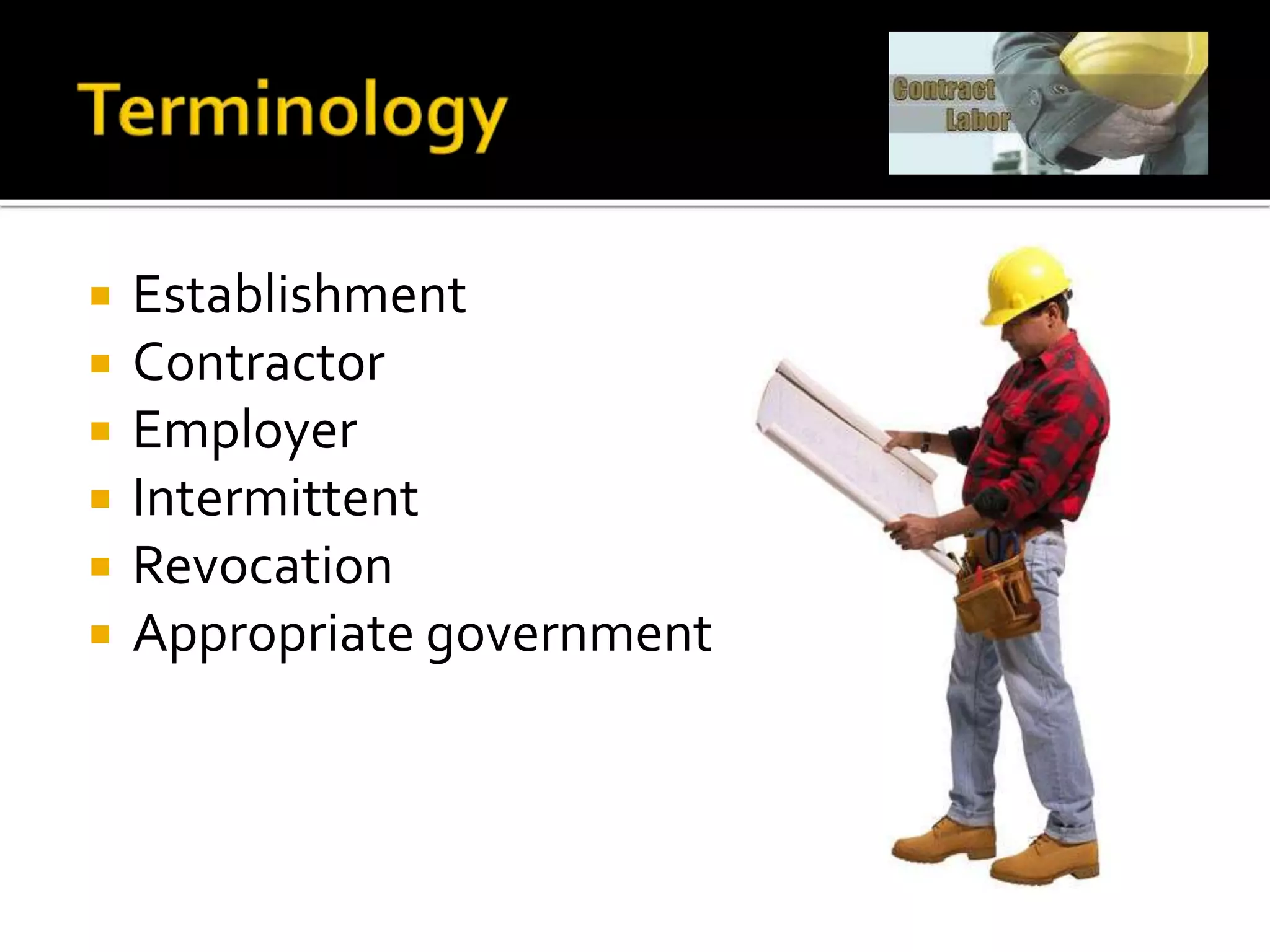
 Terminology
 Registration & Licensing
 Important sections
 Latest amendments
 Linkage with other acts
 Case studies
 Conclusion (Pros & cons)
 Objective: An Act to regulate the employment of contract
labour in certain establishments and to provide for its
abolition in certain circumstances and for matters connected
therewith.
 Applicability :
20 or more workmen
employed on any day in the
preceding 12months
Employer Contractor
1956- Service conditions of labourers, a topic of
concern
1960-Vaccum Refining Co. case
1961- Indian labour conference
1962-Recommendation to the bill
1967- Bill moved to lok Sabha
1968- Reference to Joint committee
1970- Bill passed
1971- Enforcement of Act
 Establishment
 Contractor
 Employer
 Intermittent
 Revocation
 Appropriate government
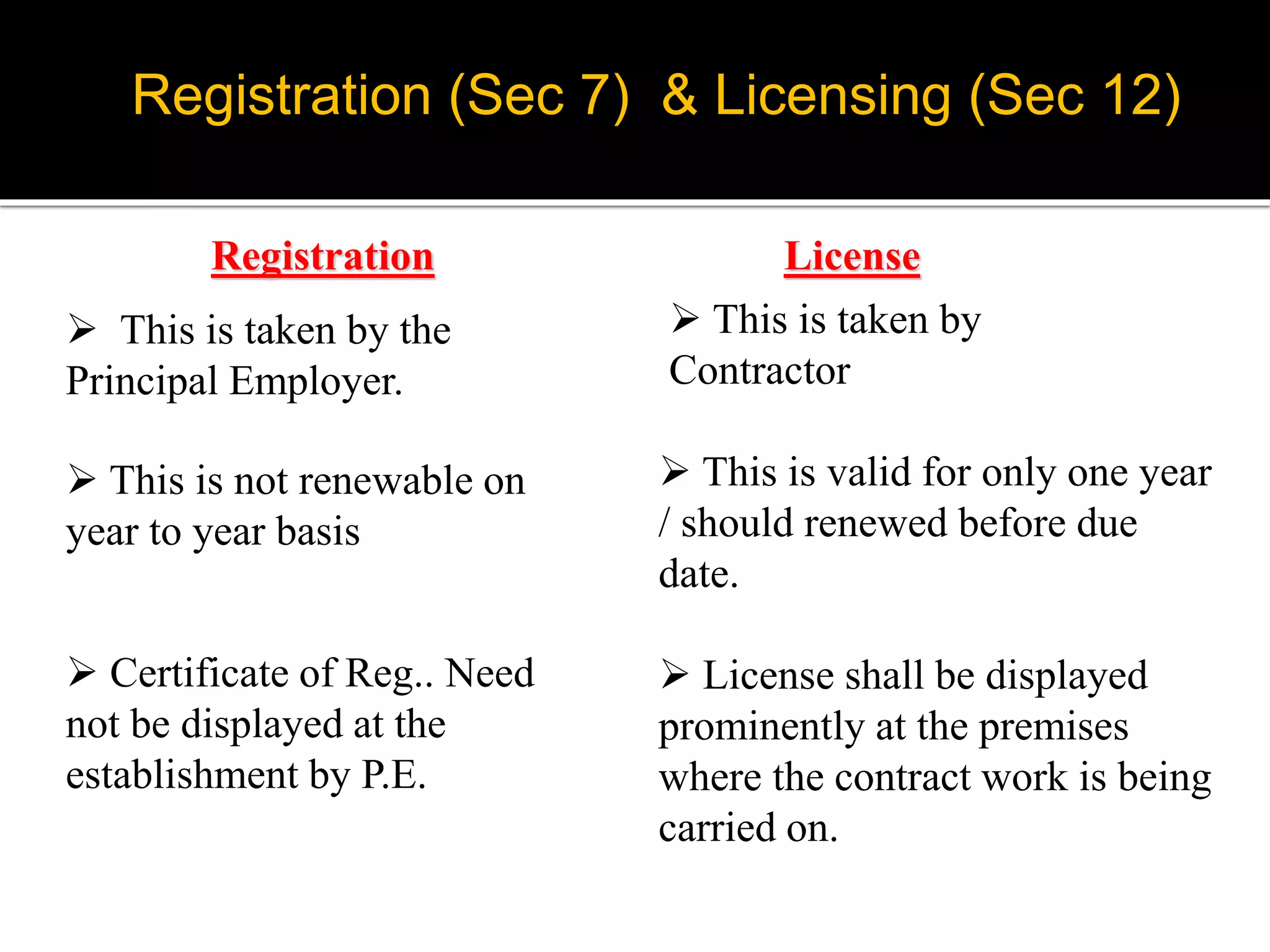
 This is taken by the
Principal Employer.
 This is taken by
Contractor
Registration License
 This is not renewable on
year to year basis
 This is valid for only one year
/ should renewed before due
date.
 Certificate of Reg.. Need
not be displayed at the
establishment by P.E.
 License shall be displayed
prominently at the premises
where the contract work is being
carried on.
Registration (Sec 7) & Licensing (Sec 12)
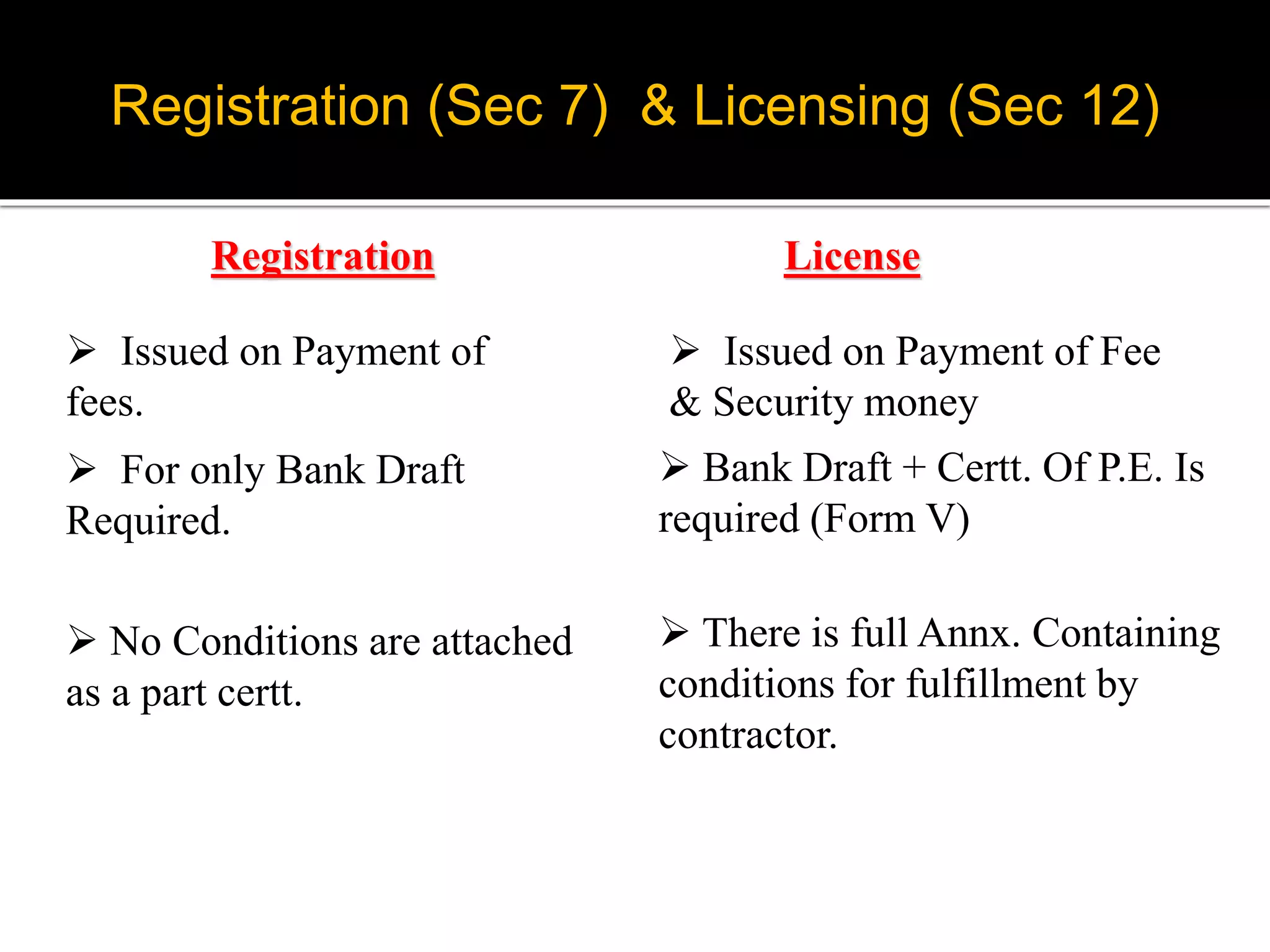
Registration License
Registration (Sec 7) & Licensing (Sec 12)
 Issued on Payment of
fees.
 Issued on Payment of Fee
& Security money
 For only Bank Draft
Required.
 Bank Draft + Certt. Of P.E. Is
required (Form V)
 No Conditions are attached
as a part certt.
 There is full Annx. Containing
conditions for fulfillment by
contractor.
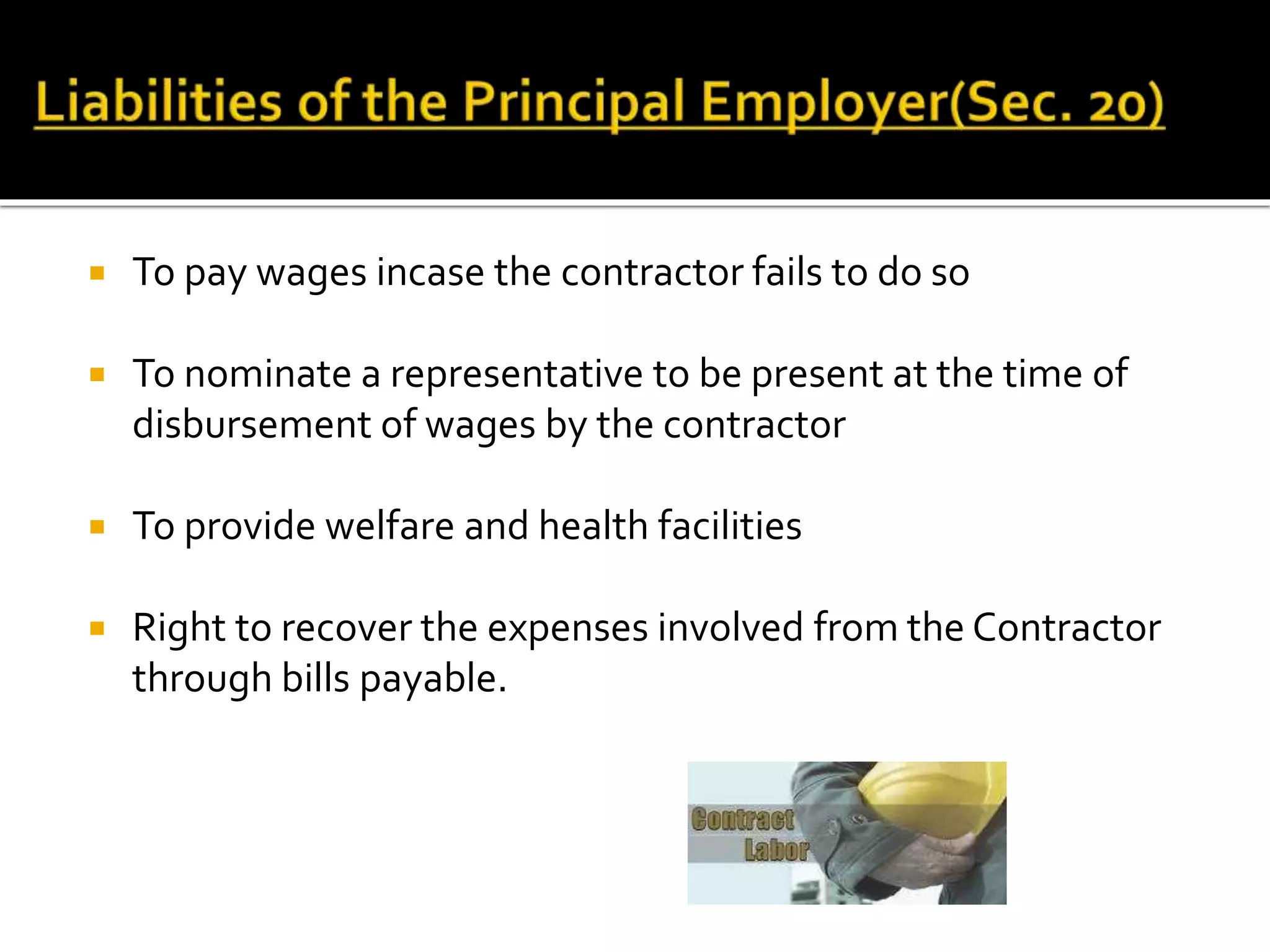
 To pay wages incase the contractor fails to do so
 To nominate a representative to be present at the time of
disbursement of wages by the contractor
 To provide welfare and health facilities
 Right to recover the expenses involved from the Contractor
through bills payable.
 Maintain a register and records in form XII giving
particulars like
▪ No of Contractors and contract labour employed.
▪ Nature of work.
▪ Rate of wages.
 Display Notice at a conspicuous place in English and
Local Language containing information like
▪ Rate of wages.
▪ Hour of work.
▪ Wage period.
▪ Date of payment of wages.
▪ Name and address of the Inspectors.
 Submission of yearly return to Licensing Officer in Form
XXV.
 Maintain a register in form XIII containing information
like
▪ Muster Roll
▪ Wages
▪ Deductions.
▪ Over time
▪ Fines
▪ Advance
▪ Wage slips
 Issue an employment card in form XIV to each worker
and to issue a service certificate on termination of
employment in form XV
 Submission of half yearly return to Licensing Officer
in Form XXIV.
 (Sec. 10) Prohibition of employment of contract labour.
 (Sec. 9) Effect of non-registration.
 (Sec. 14) Revocation, suspension and amendment of
licences.
 (Sec. 16) Canteens.
 (Sec. 17) Rest-rooms.
 (Sec. 30) Effect of laws and agreements inconsistent
with this Act. Sec 20
 (Sec. 21) Responsibility for payment of wages.
 (Sec. 22) Obstructions.
 (Sec. 23) Contravention of provisions regarding
employment of contract labour.
 The Contract Labour (Regulation and
Abolition) (Amendment)Act, 1986.
 The Delegated Legislation Provisions
(Amendment)Act, 2004.
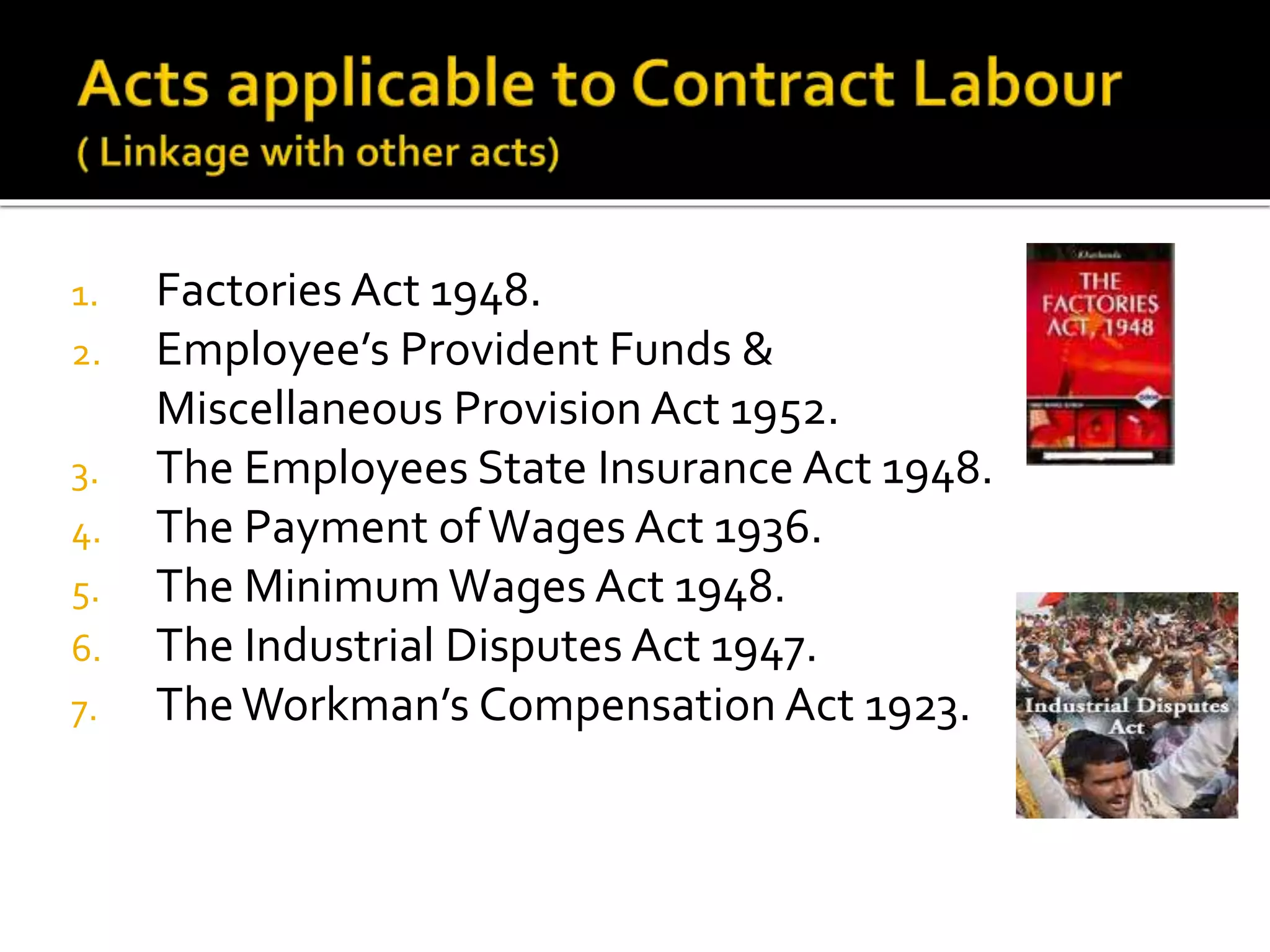
1. Factories Act 1948.
2. Employee’s Provident Funds &
Miscellaneous Provision Act 1952.
3. The Employees State Insurance Act 1948.
4. The Payment ofWages Act 1936.
5. The Minimum Wages Act 1948.
6. The Industrial Disputes Act 1947.
7. TheWorkman’s Compensation Act 1923.
 R.K. Panda v. SteelAuthority of India
 Air India Statutory Corp. v. United Labour
Union.
 SteelAuthority of India Ltd. v. National Union
Water FrontWorkers
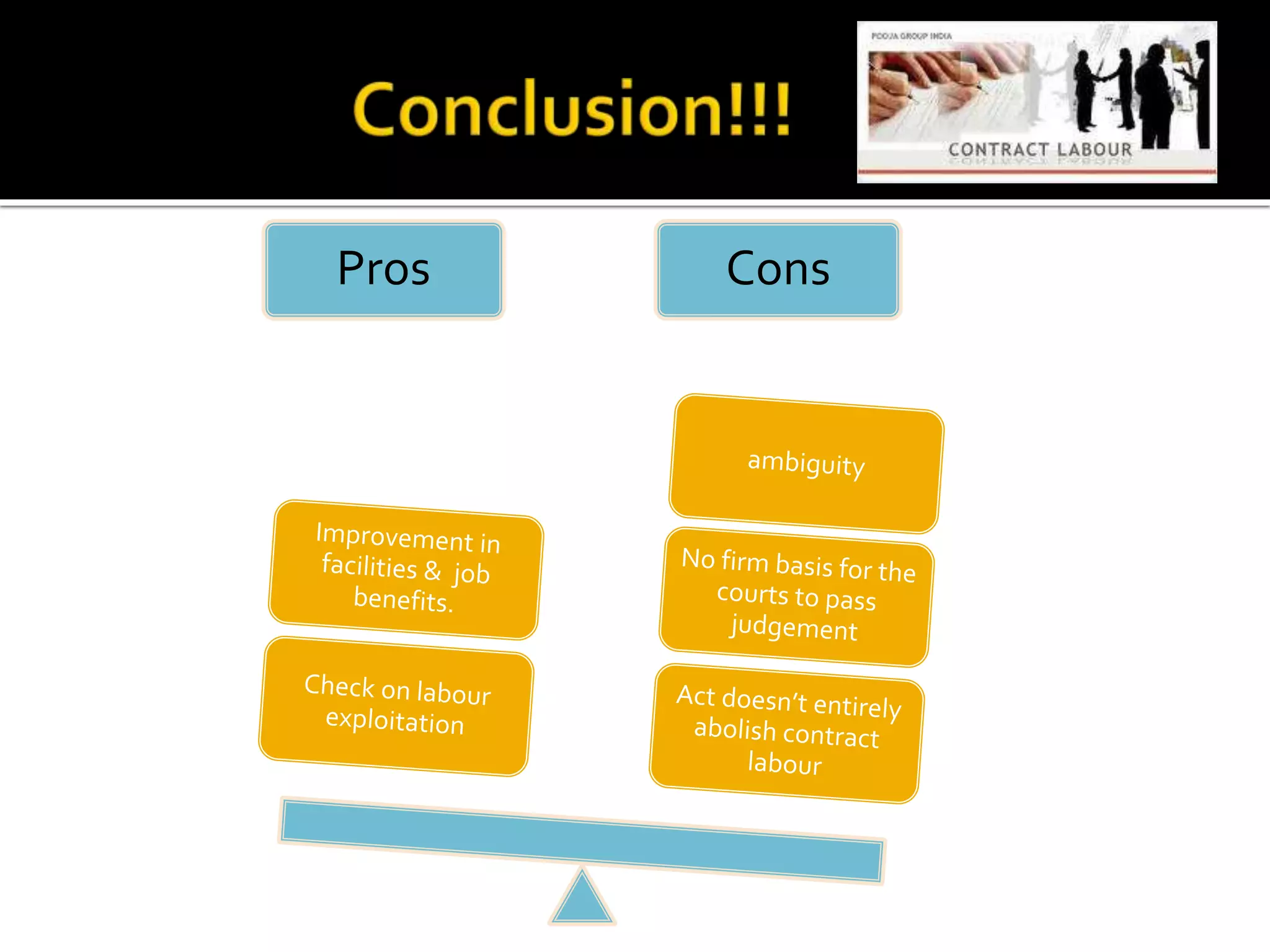
Pros Cons
“Thank you”

contract-labour -1970

  • 1.
  • 2.
     Object  Applicability History  Terminology  Registration & Licensing  Important sections  Latest amendments  Linkage with other acts  Case studies  Conclusion (Pros & cons)
  • 3.
     Objective: AnAct to regulate the employment of contract labour in certain establishments and to provide for its abolition in certain circumstances and for matters connected therewith.  Applicability : 20 or more workmen employed on any day in the preceding 12months Employer Contractor
  • 4.
    1956- Service conditionsof labourers, a topic of concern 1960-Vaccum Refining Co. case 1961- Indian labour conference 1962-Recommendation to the bill 1967- Bill moved to lok Sabha 1968- Reference to Joint committee 1970- Bill passed 1971- Enforcement of Act
  • 5.
     Establishment  Contractor Employer  Intermittent  Revocation  Appropriate government
  • 6.
     This istaken by the Principal Employer.  This is taken by Contractor Registration License  This is not renewable on year to year basis  This is valid for only one year / should renewed before due date.  Certificate of Reg.. Need not be displayed at the establishment by P.E.  License shall be displayed prominently at the premises where the contract work is being carried on. Registration (Sec 7) & Licensing (Sec 12)
  • 7.
    Registration License Registration (Sec7) & Licensing (Sec 12)  Issued on Payment of fees.  Issued on Payment of Fee & Security money  For only Bank Draft Required.  Bank Draft + Certt. Of P.E. Is required (Form V)  No Conditions are attached as a part certt.  There is full Annx. Containing conditions for fulfillment by contractor.
  • 8.
     To paywages incase the contractor fails to do so  To nominate a representative to be present at the time of disbursement of wages by the contractor  To provide welfare and health facilities  Right to recover the expenses involved from the Contractor through bills payable.
  • 9.
     Maintain aregister and records in form XII giving particulars like ▪ No of Contractors and contract labour employed. ▪ Nature of work. ▪ Rate of wages.  Display Notice at a conspicuous place in English and Local Language containing information like ▪ Rate of wages. ▪ Hour of work. ▪ Wage period. ▪ Date of payment of wages. ▪ Name and address of the Inspectors.  Submission of yearly return to Licensing Officer in Form XXV.
  • 10.
     Maintain aregister in form XIII containing information like ▪ Muster Roll ▪ Wages ▪ Deductions. ▪ Over time ▪ Fines ▪ Advance ▪ Wage slips  Issue an employment card in form XIV to each worker and to issue a service certificate on termination of employment in form XV  Submission of half yearly return to Licensing Officer in Form XXIV.
  • 11.
     (Sec. 10)Prohibition of employment of contract labour.  (Sec. 9) Effect of non-registration.  (Sec. 14) Revocation, suspension and amendment of licences.  (Sec. 16) Canteens.  (Sec. 17) Rest-rooms.  (Sec. 30) Effect of laws and agreements inconsistent with this Act. Sec 20  (Sec. 21) Responsibility for payment of wages.  (Sec. 22) Obstructions.  (Sec. 23) Contravention of provisions regarding employment of contract labour.
  • 12.
     The ContractLabour (Regulation and Abolition) (Amendment)Act, 1986.  The Delegated Legislation Provisions (Amendment)Act, 2004.
  • 13.
    1. Factories Act1948. 2. Employee’s Provident Funds & Miscellaneous Provision Act 1952. 3. The Employees State Insurance Act 1948. 4. The Payment ofWages Act 1936. 5. The Minimum Wages Act 1948. 6. The Industrial Disputes Act 1947. 7. TheWorkman’s Compensation Act 1923.
  • 14.
     R.K. Pandav. SteelAuthority of India  Air India Statutory Corp. v. United Labour Union.  SteelAuthority of India Ltd. v. National Union Water FrontWorkers
  • 15.
  • 17.