Contracting For Engineering And Construction Projects 5 Sub Peter D V Marsh
Contracting For Engineering And Construction Projects 5 Sub Peter D V Marsh
Contracting For Engineering And Construction Projects 5 Sub Peter D V Marsh
Contracting For Engineering And Construction Projects 5 Sub Peter D V Marsh
Contracting For Engineering And Construction Projects 5 Sub Peter D V Marsh
1.
Contracting For EngineeringAnd Construction
Projects 5 Sub Peter D V Marsh download
https://ebookbell.com/product/contracting-for-engineering-and-
construction-projects-5-sub-peter-d-v-marsh-1851268
Explore and download more ebooks at ebookbell.com
2.
Here are somerecommended products that we believe you will be
interested in. You can click the link to download.
Methods For Constructing Exact Solutions Of Partial Differential
Equations Mathematical And Analytical Techniques With Applications To
Engineering 1st Edition Sergey V Meleshko
https://ebookbell.com/product/methods-for-constructing-exact-
solutions-of-partial-differential-equations-mathematical-and-
analytical-techniques-with-applications-to-engineering-1st-edition-
sergey-v-meleshko-884896
Contracting For Services In State And Local Government Agencies Best
Practices For Public Procurement 3rd Edition William Sims Curry
https://ebookbell.com/product/contracting-for-services-in-state-and-
local-government-agencies-best-practices-for-public-procurement-3rd-
edition-william-sims-curry-49133486
Contracting For Design And Construction Services In The Public Sector
John O Adler
https://ebookbell.com/product/contracting-for-design-and-construction-
services-in-the-public-sector-john-o-adler-50795868
Contracting For Public Services Routledge Masters In Public Management
1st Edition Carsten Greve
https://ebookbell.com/product/contracting-for-public-services-
routledge-masters-in-public-management-1st-edition-carsten-
greve-2005742
3.
Contracting For BetterPlaces A Relational Analysis Of Development
Agreements In Urban Development Projects Volume 26 Sustainable Urban
Areas M Van Der Veen
https://ebookbell.com/product/contracting-for-better-places-a-
relational-analysis-of-development-agreements-in-urban-development-
projects-volume-26-sustainable-urban-areas-m-van-der-veen-2471484
Contracting For Cloud Services Ron Scruggs Thomas Trappler Don
Philpott
https://ebookbell.com/product/contracting-for-cloud-services-ron-
scruggs-thomas-trappler-don-philpott-2498954
Contracting For Services In State And Local Government Agencies Harcdr
William Sims Curry
https://ebookbell.com/product/contracting-for-services-in-state-and-
local-government-agencies-harcdr-william-sims-curry-2583408
Contracting For Sustainability An Analysis Of The Lake Victoryeu Nile
Perch Chain Emma Verah Kambewa
https://ebookbell.com/product/contracting-for-sustainability-an-
analysis-of-the-lake-victoryeu-nile-perch-chain-emma-verah-
kambewa-4638404
Contracting For Space Contract Practice In The European Space Sector
1st Edition Lesley Jane Smith Editor
https://ebookbell.com/product/contracting-for-space-contract-practice-
in-the-european-space-sector-1st-edition-lesley-jane-smith-
editor-12332686
OPeterMarsh1969,1981,1988,1995,2000
All rights reserved.No part of this publication may be reproduced,stored in a retrieval system, or
transmittedin anyformor byany means, electronic,mechanical,photocopying,recordingor other-
wise,withoutthe permissionof the publisher.
No responsibilityforanylosswhatsoeveroccasionedtoanypersonactingor refrainingfromactionas
a resultof the materialcontainedin this publicationcan beacceptedbytheauthor or publisher.
First published1969
Secondedition1981
Third edition1988
Fourthedition1995
Thiseditionpublishedby
Gower PublishingLimited
GowerHouse
CroftRoad
Aldershot
HampshireGull3HR
England
GowerPublishingCompany
131MainStreet
Burlington,VT05401-5600USA
P.D.V. Marshhasassertedhisright undertheCopyright,Designsand PatentsAct1988to beidentified
astheauthor of thiswork.
British LibraryCataloguingin PublicationData
Marsh,P. D.V. (PeterDavidVictor),1926-
Contractingforengineeringand constructionprojects.-
5thed.
1. Constructioncontracts
I.Title
624l.068
ISBN0566082829
Libraryof CongressCataloging-in-PublicationData
MarshP. D.V
.
Contractingforengineeringand constructionprojects1P.D.V. Marsh.-5thed.
p. cm.
ISBN0-566-08282-9(hardback)
1. Engineeringcontracts.2. Constructioncontracts.I.Title.
TypesetinGreat BritainbyIMLTypographers,Birkenheadand printedinGreat Britainby
MPGBooksLtd,Bodmin.
vi C ON T E N T S
5 Singletender negotiation 45
Methodsof pricenegotiation 45
Discussionof costsand prices 47
Head officecharges 48
Termsof payment 49
Equalityof information 49
Proprietaryequipment 50
6 Planningthe tender 51
Studyof theinquirydocuments 51
Planningthe tender 53
Tenderpricelevel 54
7 Jointventuresand consortia ,56
Approvalbythe purchaserto the jointventurebid 56
Jointventurecharacteristics 56
Specialconsiderationsapplyingtolocalpartners 58
8 Tender preparation 60
Tenderdocuments 61
9 Tenderappraisal 67
Organizationof tenderappraisal 67
Awardcriteria 68
Methodology 70
10 Placingthecontract 77
Contractwork 80
Purchaser's obligations 81
Contract price 82
ProgrammeITimefor completion 82
Performanceguarantees 83
Conditionsof contract 83
Appointmentof engineerorarchitect 83
11.
I C ON T E N T S
PARTTHREE TERMSANDCONDITIONSOF
I
CONTRACT 85
11 Standard termsof contract:I 87
Interrelationshipof conditionsof contract 87
Generalformsof contract 87
NewEngineeringContract (NEC) 94
I
1 12 Standard termsof contract: I1 97
13 Contractprice 113
Lumpsum 113
Scheduleof ratesor billof approximatequantities 115
Cost reimbursement 116
Managementoverheadsand profit 118
Priceto beagreed 119
14 Termsof payment 120
Policyconsiderations 120
Contractualsafeguards 124
Retentionmoney 126
Set-off 127
15 Timeforcompletion 128
Contractas meansof communication 128
Limit tovalueof undertaking 131
Criticalpathanalysis 133
Contractasmeansof providinganincentive 133
Methodortermsof payment 133
Bonusand penalty 134
Liquidateddamagesfor delay 135
16 Sub-contracting 139
Employer's rightto restrictsub-contracting 139
Safeguardsfor employers 140
Responsibilitiesof maincontractorforsub-contractors 140
Nominatedsub-contractors 144
Review 148
12.
viii C ON T E N T S
17 Delivery 150
Responsibilityduringinstallation 150
Accesstosite 151
Responsibilityduringstorageand defectsliability
period 152
18 Defects:guaranteesand remedies 156
Guaranteesfor materials,workmanshipand design 156
Remediesavailable 160
UnfairContractTermsAct 1977 163
Performanceguarantees 167
19 Insuranceand indemnity 170
Defectsinplantand equipmentsuppliedorwork
executed 170
Injuryor damagearisingout of workexecutedon the
purchaser'ssite 171
20 Functionsof architectlengineerlprojectmanager
and the purchaser 178
Dutiesof architect/engineer 178
Positionof employer/purchaser 182
Projectmanagers 183
21 Variationsin priceand time 185
22 Claimsand their negotiation 193
Typesof claim 193
Claimspresentationand management 198
23 Disputeresolution 199
24 Particularformsof contract 206
Contractsforcomputersystems 206
Facilitiesmanagementcontracts 211
13.
C O NT E N T S ix
APPENDICES 217
Appendix1 Draftinstructionsto tenderersfora plant
contract 219
Appendix2 Bid desirabilityquestionnaire 222
Appendix3 Questionnaireforsitevisits 223
Index 229
Preface
Sincethelasteditionwas published in1995 both
the legislature and the courts have been busy
making changes to the law affecting the con-
struction industry. The main change has been
the passingof the HousingGrants,Construction
and RegenerationAct 1996, usuallyreferredtoas
the Construction Act, and the StatutoryScheme
which followed it. This Act and the Scheme
implemented three of the reforms recom-
mended by Sir Michael Latham in his report
'Constructing the Team': the introduction of a
method of compulsoryadjudicationintoallcon-
struction contracts other than those for the
building of a residential property; the require-
ment in all construction contracts other than
those lasting less than 45 days for periodic pay-
ments accordingto a defined timetable;and the
outlawingof the notorious pay-when-paid pro-
visionsother than wherethe third-partypayeris
insolvent.
Other legislation affecting contracting has
been the new Arbitration Act 1996, the Late
Payment of Commercial Debts (Interest) Act
1998 and the Contracts (Rightsof Third Parties)
Act 1999.
The most significant of these has been the
introduction of a right for either party to a con-
tract to refer a dispute to adjudication. After a
slow start adjudication has taken off and it is
reported that in the period April to August 1999
the number of adjudications taking place
totalled 259. The courts haveshown strongsup-
portforadjudicationand haveadopteda purpo-
sive approach to the interpretation of the
legislation especially in the area of the enforce-
ment of adjudicator's awards where it is at its
weakest.So far the legislation is clearlyworking
and the industryis becoming more confident in
the use of adjudication as the method of resolv-
ingdisputes.
Important rulings of the courts have
included the Trafalgar House decisions in the
House of Lords which not surprisingly over-
turned the ruling in the Court of Appeal on the
enforcementof a performancebondinthetradi-
tionalform.Whilethishascaused thewordingof
conditionalbondsto bemodernizedandsimpli-
fied it alsomeans that such a bond is of little use
to an employer when he most needs it, that is
when the contractor becomes insolvent. Other
decisions of the Court of Appeal have clarified
the meaning of 'consequential damages' and
confirmed the validity of the entire agreement
clausein the MFI1conditionsof contract.
Inthe publicsectorfield theGovernmenthas
issued new guidance notes on the procurement
of constructionworks and radically changed its
mind on the preferred method of contracting,
whichisnowdesignand constructor primecon-
tracting.Arecent HighCourtdecision,Harmon v
The Corporate Oficerof the House of Commons,
has emphasized the need to follow strictly the
rules of the Public Works Regulations and to
treat all tenderers fairly when awarding con-
tracts or face the consequencesof having to pay
substantialdamages.
In revisingthetexttocoverthesechangesthe
opportunity has been taken to widen the cover-
age to deal more extensively with contracts
placedon the NewEngineeringContractand the
Red Bookof the Institute of Chemical Engineers
and also to look brieflyat contractsfor facilities
management and for computer systems. As a
consequencesome parts of the earlier text have
been reduced and the chapter on fixed prices
and priceescalationhas beendeleted.
It is hoped that with these changesthe book
will continue to provide a basic guide to the
main commercial issues as they currently affect
theconstructionindustry.
xiii
19.
TableofCases
lOOF Australian TrusteesvSEAS Sapfor Forests
(1995),202
Alfred McAlpine Construction Ltd v Unex
CorporationLtd (1994),107
AmecBuildingLtd vCadmusInvestmentCo. Ltd
(1996),198
Aughton vMFKent (199157B
L
R l),203
B & S Contracts & Design v Victor Green Publi-
cations(1984),138
Bacal Construction (Midlands) Ltd v North-
ampton Development Corporation (1975 8
B
L
R 88),27
Balfour Beatty Civil Engineering v Docklands
LightRailway (1996))
183
BarclaysBank plc vFairclough BuildingLtd (The
Times11May 1994),25
Beaufort Developments (NI) Ltd v Gilbert Ash
(NI)Ltd (1998AUE
R 778),204,205
Belcher FoodsLtd vMiller and Blackand Others
(1998),159
Bellefield Computer Services Ltd and Unigate v
Turner and Sons Ltd (2 July 1999) (BLISS
ConstructionLawDigest2000,page 127),22
Black Country Development Corporation vKier
ConstructionLtd (1996),203,204
BouygesU
K Ltd vDahlJensenU
KLtd (1999),202
BritishSteelCorporationvClevelandBridgeand
EngineeringCo. Ltd (19841A
l
lE
R 504),3
1
British Sugar plc v NEI Power Plant ProjectsLtd
(199887B
L
R 42),29
Bryant & Son Ltd v Birmingham Hospital
SaturdayFund (1938AllER50321),28
Burden v Swansea Corporation (19573 All E
R
243),180
Butler Machine Tool Co. Ltd v Ex-Cell-0-
Corporation (England) Ltd (1979 1 All E
R
965),79
Caparo Industries plc v Dickrnan and Others
(19902AC605),22
Carr v J.A. Berrirnan Property Ltd (1953 ALJR
273),196
Centro-Provincial Estate v Merchants Investors
AssuranceCo. (1983CA),80
Chester Grosvenor Hotel Co. Ltd v Alfred
McAlpine Management Ltd (1991 56 B
L
R
115),166
Clonard Developments Ltd v Humberts (19991,
205
CMTCToolks vYuesaWarwickMachinery,197
ConcordevColgan (1984HongKong),127
Conway v Crowe Kelsey and Partners (1994 39
CONLR l),33
Courtney & Fairbairn Ltd v Talaini Brothers
(Hotels)Ltd (19752B
L
R 97),119
CroudaceConstructionLtd vCawoodsConcrete
ProductsLtd (19788B
L
R 20),29
CrownEstatesCommissionersvJohnMowlem&
Co.Ltd (19941,159
CynatProductsLtd vLandbuild(Investmentand
Property)Ltd (19843AER 513),172
D & F Estates Ltd v Church Commissioners for
England (1989AC177),22,24,31,173
DavisContractorsLtd vFarehamUDC (1956A
C
696),62
Deepak Fertilisers and Petrochemicals v Davy
McKee (London) Ltd and Another (1998 2
LloydsRep 139),99
Dunlop Pneumatic Tyre Co. Ltd v New Garage
MotorCo. Ltd (1915AC79),135
Edgeworth Construction vND Lea & Associates
and Others (199366 BLR),27
Edmund Murray Ltd v BSP International
FoundationsLtd (1992),162,164
Ens vDerwent(19981,107
EssoPetroleumCo. vMardon(1976Q
B801),31
F.G. Minter Ltd v Welsh Health Authority
Technical Services Organisation (1980 13
BLR,198113BLR I),28,198
Fairclough Building Ltd v Rhuddland Borough
Council(5Oct 1983),144,147
Ferguson vWelsh and Others (19873 A
E
R 7771,
172
GLC vClevelandBridgeand EngineeringCo. Ltd
(19868CONLR 30),103
GMTC Tools v Yuasa Warwick Machinery (The
Times3Jan19951,197
20.
xvi T AB L E O F C A S E S
General Buildingand Maintenance vGreenwich
Borough Council (The Times 3 March 1993),
38,39
George Hawkins v Chrysler and Bume (198638
BLR 36),24
GlenlionConstruction Ltd vThe Guinness Trust
(198711CONLR 127),103
GloucesterCC ~Richardson
(19691AC480),20
GreaterLondonCouncil vRyarshBrickCo. (1985
4CON L
R 85),20
Greater Nottingham Co-operative Society v
Cementation Piling and Foundations Ltd
(1989QB71),23
Greaves vBaynharnMeikle(19753 AllE
R 99),24
GrinakarvTransvaalAuthority(1982SACA),195
Hadley vBaxendale(18549 Exch341),29,194
HalkiShippingCorpn vSopexOilsLtd (19982All
E
R 23),204
Harmon CFEM Facades (UK) Ltd v The
Corporate Officer of the House of Commons
(28Oct 1999),xiii,39,67
HedleyByrne &Co. vHellerand Partners (19632
AllER),22,27,33,113,175
Henderson vMerrettSyndicatesLtd (19943WLR
761),22,29,163
Henry Boot Construction v Alsthom Combined
CyclesLtd (199964CONL
R 32),188
Hickman vRoberts (1913AC229),181
Hoenig vIsaacs(1952CA2All E
R 176),113
Howard Marine & Dredging Co. v A Ogden &
Sons (Excavations)Ltd (19779 BLR34),27
IBA vBICC (198014BLR l),31
IBA v EM1ElectronicsLtd & BICC (197811 BLR
29),24
ICI vBovisConstruction Ltd and Others (199232
CON LR90),196
Interfoto Picture Library v Stiletto Visual
Programmes Ltd (The Times 14 Nov
1987),42
J.Crosby &SonsLtd vPortland UDC (19675 BLR
121),196
JMJContractors Ltd vMarplesRidgway (198531
BLR loo),110,111
Jacobs vMorton and Partners (199472 BLR 92),
22
John Jarvis v Rockdale Housing Association
(198610CON L
R 51),194
Jones vsherwood Computer Servicesplc (19921
WLR 277),202
Junior Books vVeitchi(1983AC520),21,22
Koufos vC. Czarnikow (TheHeron 11) (1969AC
350),25
Linden Gardens Trust Ltd v Lenesta Sludge
DisposalsLtd (19941AC85),90
Lubenham Fidelities vSouth Pembrokeshire DC
(19866CONL
R 85),30,180
Macob Civil Engineering v Morrison Con-
structionLtd (199964CONL
R I),202
MathewHall OrtechLtd vTarmacRoadstoneLtd
(199887BLR96),159
MiIlar's Machinery Co. Ltd v David Way & Son
(1934),29
Mitsui Construction Co. Ltd vA
G of Hong Kong
(198610CONL
R 1).115,195
Muirhead v Industrial Tank Specialities (1986 3
AllE
R 705),80
Murphy vBrentwoodDistrictCouncil (19911AC
378),21,22,24,31
NationalCoalBoard vWilliam Neil &Son (19841
AllER 555),99
North West Metropolitan Hospital Board v
TA. Bickerton & Son Ltd (19701 WLR 607),
147
Norwich Union Life Insurance Society v P&O
Properties Holding Ltd and Others (1993EG
108),202
Outwing Construction Ltd v Randell & Son Ltd
(1999TCC loo),202
Oval (717) Ltd vAegon Insurance Co. (UK) Ltd
(199654CONL
R 74),106
Pacific Associates v Baxter (1990 1 QB 993). 30,
178
Paddington Churches Housing Association v
Technical and General Guarantee Company
Co. Ltd (1999BLR244),104
Peak Construction (Liverpool) Ltd v McKinney
Foundations Ltd (19701 BLR11I),28
Pearson Ltd vDublin Corporation (1907AC 351),
27,99
PercyBilton vGLC(198220BLR I),138
PeriniCorporation vCommonwealthofAustralia
(196912BLR 82),180
Phillips Hong Kong Ltd v Attorney General of
HongKong (199361BLR 41),136
Rees and Kirby v Swansea City Council (1985
CILL188 56,5CONL
R 34),29,30,198
Ruxley Electronics vForsyth (19961 AC 344),25,
160
21.
T A BL E O F C A S E S xvii
Saphena Computing Ltd v Allied Collection
Agencies (3May 1989),215
Scott Lithgow vSecretaryof Defence (1989),143,
144
ShanklinPier Ltd vDetelProductsLtd (19512All
E
R 471),20,22
Simaan General Contracting Co. v Pilkington
GlassLtd (19881QB758),23
Sir LindsayParkinson &Co. Ltd vCommissioner
of Works (1950AUER208),196
Southern Water Authority v Lewis & Duvivier
and Others(19841CONL
R 40),164
St AlbansCity and District Council vICL (1996),
169,210,215
Steel Company of Canada Ltd v Willand
ManagementLtd (1966Canadiancase),81
Strachan and Henshaw v Stein Industrie (UK)
Ltd and GEC Alsthom Ltd (December 1997
CAI,80,98,99,185
SutcliffevThakrahand Others (1974AC727),178
Tate & Lyle Food & DistributionLtd vGLC (1982
1WLR 149),28,197
The Heron I1 (1969 A
C 350 - Koufos v C.
CzarnikowLtd),25
The Queen in Right of Canada v Walter Cabott
ConstructionCo. (197521B
L
R 42),107
TheSalvageAssociation vCAPFinancialServices
Ltd (1995FSR 654),166,209
ThemehelpLtd vWestand Others (19954All E
R
215),107
Thomas Bates vThurrock Borough Council (CA
22 Oct 1975),26
Trafalgar House Construction (Regions) Ltd v
GeneralSuretyand GuaranteeCo. (1995),xiii,
104
Turiff Construction Ltd and Turiff Ltd vRegalia
KnittingMillsLtd (19719BLR20),31
United TradingCorporationand Others vAllied
Arab Bank Ltd and Others (FT Commercial
LawReports17July1984),106
Victoria LaundriesvNewman (1949),29
Viking Grain Storage Ltd v T.H. White
Installations(19853CONLR 52),24
Walford and Others v Miles and Another (The
Times27Jan 1992),119
West Faulkner Associates v Newharn London
Borough Council (The Times 18 Nov 1994),
103
Wharf Properties Ltd and Another v Eric
CumminsandAssociates (1991),196,197
WimpeyConstructionU
K Ltd vPoole(TheTimes
3May 1984),24
Wraight Ltd vP.H. & T. (Holdings) Ltd (196813
B
L
R 26),28
Young & Marten Ltd v McManus Childs Ltd
(19699 BLR 77),146
CHAPTER ONE
Planning process
PROCUREMENTOF WORKS OR
SERVICES
With any project the client's first step should be
the development of a procurement strategy
which will best satisfy that client's business
objective. This strategy need not necessarily
involve the client in undertaking construction.
On examiningthe alternativesopen to theclient
it may be found that selecting a construction
project is not the optimum way of meeting the
aimsof the businessand obtainingbestvaluefor
money. Ratherthan constructinga newfacilityit
may be more cost effective to contract out the
serviceswhich the facilitywas intended to pro-
vide. In some circumstances the provision of
those services by the service provider may
necessitatethe constructionof particular works.
But the contract which is then entered into by
the client is essentiallyone for the supply of the
servicesand not for the designand construction
of thoseworks;that then becomes the responsi-
bility of the service provider. This is an import-
ant issue when entering into public private
partnerships, particularly private finance
initiative schemes (PFIs),which are considered
furtherin Chapter2 (seep.17).
Before therefore the firm or authoritydecide
to procure construction works on their own
account they should satisfy themselves that
doing so is the most efficient and cost effective
means of fulfilling the business aims over the
projected life of the facility concerned. In order
to do this the client needs to appoint a senior
personwithinits own organization to take over-
all chargeof the project-sometimesreferred to
as'the projectsponsor'.The projectsponsorwill
require professional advice regarding the
options open to the client and their associated
costs, benefits and risk. Preferably this advice
should be obtained in-house from the client's
functional departments. Only if there are no
appropriateskillsavailable in the client's organ-
izationshould an outsideconsultantbeengaged
and then his engagement should be strictly
limited to the planning stage with no ongoing
commitment.Every precautionshould be taken
to ensure that the persons providing advice to
the project sponsor, whether from in-house or
an outside consultant, do not have a vested
interest in which option is selected. A person
hopingto obtain designworkif the construction
option is chosen may not be the best person to
actasan unbiasedadviser.
BUSINESS CASE
If afterappraisalof thealternativestheconstruc-
tion procurement route is selected as the pre-
ferred option then the client can proceed with
the next stage of planning the project. This is
whereany mistakesmadewill bedifficultto cor-
rect later and where time and money can most
easilybelost orsaved. Plan beforeyou construct
-thefirstlawof contracting.
The planning should be undertaken by a
team under the leadership of the project spon-
sor. The team will includerepresentatives of the
user, technical, commercial and financial func-
tions with any professional adviser who has
already been appointed. The initial task of the
teamisthepreparationof a businesscaseincon-
firmation of the decision to proceed with con-
struction procurement and to provide the basis
for the development of the project's strategic
plan. The following information should be
included in the business case, much of which
should already be available from the work done
by the team in making the comparison between
thealternativeprocurementstrategies:
the outline capital and operating budgetsfor
the projectoveritsexpectedlifetime
the quantified benefitsto the clientwhich the
projectisexpectedtodeliver
howthe projectisto befinanced
26.
4 C ON T R A C T P L A N N I N G
a risk assessment in terms of cost, time and
performancegivingtheextentof the risks and
the probabilityof theiroccurring-thisshould
also show how the risk is to be managed and
the extent to which these risks are to be sup-
ported by contractors and consultants or
covered by insuranceand those which will be
lefttobe bornebytheclient
theoutlineprogrammeforthe project
the procurementsystemto beused
the resourceswhich the client will requirefor
the managementof the projectand howthese
are to be provided either in-house or by the
engagementof consultants.
Many of these issues are inter-related. The
apportionment of riskas between the client and
others will depend upon the procurement sys-
tem to be used as will the management
resources. The budget and the programme are
inter-relatedwiththe benefitswhich theclientis
expecting the project to produce. The issues
need therefore to be considered as a whole to
ensure theirconsistencyand trade-offswillhave
to be made as necessary between one issue and
another.
CLIENT'S OBJECTIVE
Any purchase is almost of necessity a compro-
mise. There are few occasions when any
employer can afford to have the best of every-
thing,even if thiswereobtainable.Shorterdeliv-
ery may only be achieved at the expense of
higher prices. What one can afford may deter-
mine the quality of what one can buy. Shortage
of capital may cause the purchaseof equipment
withhighmaintenancecosts.Shortageoflabour,
or the need to reduce dependence on labour,
maynecessitatethe purchaseof equipmentwith
a substantialdegree of built-inautomation.The
absolute need from the safety angle to ensure
complete reliability and conformity with rigor-
ous specifications may limit the choice of sup-
pliers to those possessingthe highest standards
of qualitycontrol.
The process of defining the objective starts
therefore with the selection of those factors
which are regarded as being of the maximum
importance to the transaction in question.
Sometimes from even a cursory examination
onefactorwillstandoutasof vitalsignificance.It
may be time of delivery. Once this has been
established, then all subsequent actions will
need to be subordinated to its achievement:the
selection of the supplier,the formulation of the
specification, the placing and wording of the
contract, the action on progressing; all must be
compatiblewiththedefinedobjective.
More often no single factor stands out so
clearly that others can be ignored. Certainly
delivery on time may be important, but so too
may be quality and price. Some sacrifice
may be necessary in the interest of speed, but
there are limits beyond which the pursuit of
speed may become largely a self-defeatingexer-
cise.
Thelist belowsetsoutthemainfactorswhich
are commonly comprised within the client's
objective:
Time How soon must the project be com-
pleted? How valuable to the client is each
week bywhichcompletion isearlierand what
financialdetriment would the client sufferfor
eachweekof delay?
Cost Howseriouswould a cost over-runbe?
How important is it to the client to know the
finalcostat thetimeof placingthe contract(s1
forthe project?
Performance What guaranteed level of per-
formance must the projectachieve?What are
the consequences to the client if this level is
not achieved?
Quality What level of quality is required?
Whatisthe requiredlifeof the project?
Technical complexityIState of the art How
complexisthe projectrequired to beand how
near to the state of the art? Has a project
already been successfully completed to the
sameorsimilarspecification?
nexibility Does the client expect to have to
make significant changes to the project dur-
ingconstructioninorderto meet the business
objectives?Should the project be capable of
expansion to meet a future increase in
demand?
Risk What are the main risks to which the
27.
P L AN N I N G P R O C E S S 5
projectisexposed?Towhatextentistheclient
personallywillingandableto beartheserisks?
Involvement To what extent does the client
wish and have the capabilityto beinvolvedin
thedesignand managementof the project?
Thesefactorsare alsosignificantlyinter-related.
If the projectisrequiredto beof a highquality,to
meet stringent guaranteesand is complex then
there are technical risks which may impact on
the achievement of the completion date. To the
extent that the client foresees the need to make
modifications then both the completion date
and the final cost will be affected. A client who
wishes to be involved closelyin the designof the
project must accept the responsibility which
goes with that involvementand the riskagain to
both the programme and cost. On the other
handif theclientiswillingtostand backfrom the
designand managementthen thoserisksmay be
passedwhollyon to thecontractor.Howeverthis
will be reflected in the contract price and the
client will need to ensure that the contractor is
capableof absorbingthe risks.
Time, cost and capacity, using that term to
refer not just to the size but also to the design
and technical qualities of the project, have
largely a fixed relationship. If one has a certain
value then so do the other two; alter one and
you alter at least one of the others. This may
bedescribed as the secondlawof contracting. If,
for example, it is once established that the logic
of asituationisthatthecapacityrequiredcannot
be met within the price limit set by manage-
ment, or only if the time is extended, then man-
agement must be informed at the earliest
possible moment so that they have the oppor-
tunity to reconsider and, as necessary, redefine
the objective. It is no use hoping that somehow
the pricewillcomeoutall rightonthedayorthat
savings in time can be achieved by shutting
one's eyes to reality. It just does not work that
way.
The projectsponsoris responsiblefor distill-
ing the answers to these questions into a set of
objectives which will be used to decide on the
procurementsystemtobeusedandwillformthe
basisof the criteriauponwhich tenderswilllater
beassessed.
EXAMPLE
An example of a set of objectivesfor the design
and constructionof a processingplant is set out
below
Thecapitalbudgetforthe projectisE5 million
whichincludesa 10percent contingency.The
annual operating budget covering staff,
labour,consumablesandsparesisEl million.
The project is required to be in commercial
operationwithin24months of the decisionto
goahead.
The profitabilityof the project is sensitive to
an increase in the capital costs over 10 per
cent or the operating costs over 15 per cent.
Any delayin completionwould cost the com-
panyaround£40000a weekinlostincome.
The company is only interested in a proven
processwhichisalreadyin useelsewhere.Any
contractorwouldhavetodemonstratea refer-
ence plant for which he was responsible for
the design and construction and which had
been in successfuloperation for a minimum
of 12months.
The plantis to beof highqualitywithan oper-
ating life of 25 years. The plant will operate
continuously other than for a two-week
annual shut-down. Key items of the plant (to
be identified) must be guaranteed for ten
yearsagainst any defect which would cause a
plantstoppage.
The plant must be capable of processing 50
tons per hour of raw material.The processed
material should have a purity level of at least
97 per cent with a yield of 90 per cent. At any
puritylevel below95 percent or a yield of less
than 80 per cent the plantwould not be com-
merciallyviable.
Theclientwillpersonallyfinancethe project.
The chosen site is within an industrial com-
plexowned by the company. The main risk is
the non-achievementof the purity and yield
levels which is to be solely the contractor's.
Theclientwillaccept no responsibilityforthe
designof the plant.
The plant is to be designed so that an
additional production line capable of
handling25 tons of material an hour could be
installedwith the minimum of interruptionto
28.
6 C ON T R A C T P L A N N I N G
production. Provision is to be made for this is neversufficienttosaythatcertaingoodsare to
addition in the sizing of the power and other be supplied, plant manufactured or works con-
suppliesto the plant and any common facili- structed by a defined date without at the same
ties-
time thinking of what might be called 'the three
, Ws'. This then is the third law of contracting:
METHOD AND RESPONSIBILITY
'that for each contractlproject there must be
stated:what-bywhom-and bywhen'.
From the definition of the objective in time The most commonly used systems of
and a study of the resources both available procurement, the allocation of responsibilities
and required the team can proceed to the plan- within each, their respective advantages and
ningof the method to be used and the responsi- disadvantages and the key decision criteria are
bilitiesto beallocatedtoachievetheobjective.It examinedinthenextchapter.
29.
CHAPTER TWO
Thecontract plan
Followingthedecisiontoprocurea construction
project a contract plan needs to be prepared for
the total project, not just for the letting of the
principal contracts, but for every activity which
has to be carried out to bring the project to its
conclusion,includingthosewhichare to be per-
formed by the employerhimself. Nor in its total-
ity is it concerned solely with engineering and
construction. It should cover the provision of
funding and all those associated activitiessuch
as purchase of land, obtaining of wayleaves,
planning permissions and the like and even
recruitmentof staffllabourand agreementswith
the unions for workingat newlocations or with
different operating procedures. With a new
process plant or other productionfacilityit may
need to cover the conclusion of offtake agree-
ments with future purchasers of the product
since these may be a vital part of the financing
arrangements for the construction works.
Indeed with a project which is to be financed
primarily on the security of the profits to be
expected from its operation,such as a new gas-
field, the Channel Tunnel or new motonvay
construction,the lenderswill be concernedwith
ensuring that every item which can possibly
affect the level of profitability has been taken
into account in the planning process.The same
approach should be adopted by any employer
concerned with a new project, large or small,
since too many projects have failed to produce
their intended benefits because of a failure to
anticipate,planforand implementthoseassoci-
ated activities.
Having drawn attention to that issue it is
intended within the scope of this work to con-
centrate on just those actions which are related
directlytoengineeringand constructionworks.
The contract plan selects the procurement
route to be used for the executionof the project.
Since the publication of the Construction Task
Force Report Rethinking Construction in July
1998and theadoptionofmanyof itsrecommen-
dations by the Government, the emphasis in
planninghas been placedfirmlyontwoareas:
the integrationof the key players in the con-
struction supply chain, particularly the
designersand main contractors,and
the selectionof a procurementmethodwhich
will provide overall value for money over the
wholelifeof thefacilitybeingconstructed.
PROCUREMENTROUTES
Four main procurement routes can be followed
in addition to PFIs, which were referred to in
Chapter 1 and which are considered in more
detailat theend of thischapter.Theseare:
fullturnkey
partialturnkey
traditionalclientco-ordinated
managementcontracting.
These are not terins of art and within each
method there are, in practice, variations. The
methods will now be briefly described and the
advantages and disadvantages of each dis-
cussed. Some decision criteria will then guide
theclientastowhichtoadopt.
FULLTURNKEY
The term 'turnkey' is used in its originalsense to
mean a contract where the contractor under-
takes the total responsibility for the design,
engineering, procurement, construction, com-
missioningand testingof the works and training
of the client's staff. That is, everything which
necessaryfor theclientwho onlyhas to 'turn tk
key' in order to commence production or othc
use of the facility. The client's resp
are limited to the definition of the
ments, making the site available, I
progress of the work, payment and'taking over
the project when it has passed its guarantee
tests.Allother obligationsrelatingdirectlyto the
onsibilitit
!ir requirc
monitorir
30.
8 C ON T R A C T P L A N N I N G
designandexecutionof theprojectare underthe accordancewith theContractandfitforthe pur-
sole responsibilityof the turnkeycontractor and pose for which they are intended as defined in
withoutinterferenceorapprovalbytheclient. the Contract'. The NEC form is intended to
It follows that the terms of contract must be impose the liability upon the contractor to
substantially more onerous on the contractor design strictly in compliance with the works
than those normally found in most standard information, unless Option M, which provides
formsof contract.Forexample: that thecontractor'sliabilityislimited to the use
the design obligation of the contractor is
strict, that is that the project isfit for the pur-
poseasdefinedin theclient's requirements
a restricted list of named events entitling the
contractortoan extensionof time
takeover of the project bythe clientonlyafter
theguaranteetests have been passed or liqui-
dateddamagespaidforlowperformance
extended defects liability period - minimum
five years -with liquidated damages for any
period the project is out of operation due to
defects
on-demand performance bond and, if appro-
priate, parent company guarantee on an on-
demand basis.
Thereare certainindustryformsunderwhich the
contractor has a design responsibilitybut which,
unless heavily modified, are not 'turnkey' con-
tracts. ICE and JCT forms for design and con-
structor design and build contracts do not place
thewholedesignresponsibilityonthecontractor.
The design is often undertaken bythe contractor
on the basis of a design concept prepared by
designersengaged by the client. Furthermorethe
contractor's designobligationisfrequentlystated
in such contracts to be only one of exercising
reasonableskill and care and not that the works
as constructed will be fit for the purpose laid
down in the client's statement of requirements
uponwhichthecontractor'stenderwasbased.
Similarlyfor plant contracts the contractor's
design obligation in form MFI1 is not a strict
obligationof fitnessfor purpose.Moreovernone
of thesestandard formsincludesthe more oner-
ousobligationsreferredto aboveas beingneces-
sarywithatrue turnkeycontract.
The only standard form to state the more
onerous design obligation clearly is the FIDIC
Conditions of Contract for Design and Build -
Turnkey, which provides that 'The Works as
complete by the Contractor shall be wholly in
of reasonable skill and care, is included in the
contract. However, even the FIDIC form has its
limitations. For example, the defects liability
period is 12 months and there is provision for
testsaftercompletion.
The pointsare not academic.If the projectis
beingfinanced on a projectfinancebasisthen it
is very probable that the lenders to the project
will require the contractor to accept a turnkey
form which imposes strict liability on design,
despite the difficultywhich the contractor may
have in obtainingprofessionalindemnityinsur-
anceonthisbasis (seefurtherChapter19,p.175)
and also the other onerous obligations referred
toearlier.
There can be added to the contract obliga-
tions on the contractor to maintain and even
operate the facility after its construction. It has
been suggested by the Government - Pro-
curementStrategyno.5-thataddingthisoption
will provide the contractor with an increased
opportunity for adopting innovative solutions
that provide better valuefor money. Certainlyif
the contractor is to be responsible for future
maintenanceon a firm price basisthen it will be
in the contractor's interest to ensure that the
facilityis designed with the objective of reduced
maintenance costs and ease of carrying out
maintenancework.
Prime contracting referred to in Pro-
curement Strategy no. 5 is another form of
turnkey, yet to be proven in practice, in which
the prime contractor is responsible for bringing
together all the parties in the supply chain and
providing the client with a single point of
responsibilityover the life of the project. It will
includethereforefacilitiesmanagement.
PARTIALTURNKEY
With anyform of partial turnkeycontractingthe
division of work and responsibilitiesas between
the employer, the consultants and the turnkey
31.
T H EC O N T R A C T P L A N 9
contractor is necessarilyless clearcut and sub-
ject tovariationsto suit the wishesof the parties.
To the extent that the employernow undertakes
certain work either directly or through consul-
tants or other contractors independentlyof the
turnkey contractor, the employer's level of
responsibility will increase, both for the work
itself and the co-ordination of that work with
that for which the turnkey contractor remains
responsible. Perhapsthe most common form of
arrangement is that in which the turnkey con-
tractor undertakesresponsibilityforworkwithin
what is often referred to as 'battery limits', i.e.
the main process or production plant itself,
whilst the employer contracts separatelyfor the
supporting facilities. The employer may also
wishtohaveacloseinvolvementinthedesignof,
and supply of equipment for, the production
plant. But in so doinghe must balancewhatever
advantage he believes he gains, against the
resultantdiminutionin the turnkeycontractor's
contractual responsibilities. What he cannot
do - although many make the attempt - is to
dictate to the turnkeycontractor how he should
perform the work, whilst seeking to hold him
wholly responsible for the results. In my view
the only sensible division of activities, and
therefore of responsibilities, as between the
employer and the turnkey contractor is that
the employer's involvement is limited to those
activities which do not impact directly on the
production plant, for example, a separate
contractforthelandscaping,the perimeterfenc-
ing and lighting, the office block and the gate-
house.
TRADITIONALCLIENTCO-ORDINATED
With this method design is the responsibilityof
the client, usually through the engagement of a
consulting engineer or architect, and the main
contractor'sresponsibilityislimitedtoconstruc-
tioninaccordancewiththedesignandspecifica-
tions produced by the engineerlarchitect.
Furtherthe projectmay be divided intoseparate
packages with one contractor being responsible
for each and the client, again through the
engineerlarchitect, being responsible for the
co-ordinationof theseparatecontracts.
Traditionally this method has been used by
the Government and the major public utilities.
Nowthe Governmenthas changed its mind and
its Procurement Strategy Document no. 5 has
comeoutstronglyinfavourof
publicprivatepartnerships
design and construction with, where appro-
priate,maintainand operate
primecontracting(referredtoabove)
frameworkagreements.
The document goes on to state that traditional
forms of construction procurement, where the
detailed design is largely completed before the
main contractor,sub-contractors and specialist
suppliersbecome involved,limit the opportuni-
ties for eliminating wasteful activities and
achievingvaluefor money. Theyshould only be
used where there is a very clear case that they
will deliver better value for money than other
procurement routes in terms of whole life costs
and overallperformance.
Since they became privatized and discarded
their in-house technical capabilities, the major
utilities, especially in the power industry, also
now favour turnkey contracting. A recent esti-
mate in the European Construction Institute's
ECI News is that over 50 per cent of the world
marketfor powerplantsis turnkeyand the trend
isupward.
It is too early to assess the full impact of the
Government'schangeof approachto publicpro-
curementand toknowwhetheror not thiswillbe
followed bylocalauthorities. What is clear is the
Government's intention to focus on the total
process of design, construction, operation and
maintenance over the life of the facilityand that
specificationsshould be outcomebased and not
prescriptiveof the detailsof howthe outcomeis
to beachieved.
MANAGEMENTCONTRACTING
The management of a project, both as a whole
and its component activities,such as designand
construction, has long been recognized in the
USas a separatediscipline,and thisconcepthas
nowbecomewidelyacceptedwithinthe UK.The
issueis then howthe projectshould be managed
for the benefit of the employer and three differ-
ingapproachescan bedistinguished:
32.
C O NT R A C T P L A N N I N G
1 Project management. The employerappoints
a professional project manager to act on his
behalfin the managementof the project.
2 Construction management. Under this form
the construction manager enters into a direct
contract with the employer for the manage-
ment of the construction of the project and
may undertake a responsibilityin relation to
time and cost. All other consultantsand con-
tractors also enter into direct contracts with
theemployer.
3 Management contracting. Generally under
thisform the employerappointsonecontrac-
tor who cames out none of the work himself
butsub-contractsallof ittoworkscontractors
responsible directlyto himself but under the
control of the employer, through his project
manager. The design and other consultants
are appointed by, and responsible to, the
employer.
The appointment of professional project man-
agershas become much morewidespreadin UK
practice and is specifically provided for in the
New EngineeringContract (seep. 94).The main
problem with such appointments lies in the
degree of responsibilitywhich the project man-
ager owes to the employer and possibly also to
the contractors. This issue is discussed further
later (seenext column).Their contract does not
affect the contractual relationship between the
employerandothersandsowillnot bediscussed
further.
Construction management in its usual form
does,however,affecttheemployer'scontractual
relationships with others. The employer is
placed in direct contractwith the varioustrades
contractors who may well include some whom
under the traditional client co-ordinated
method would have been nominated sub-con-
tractors to the main contractor. The employer
also being in direct contract with the other pro-
fessionals, such as the architect and structural
engineer,mayfindhimself facedwithsignificant
tasks of co-ordinationand administrationwhich
maynecessitatetheappointment additionallyof
a project manager unless his contract with the
constructionmanagerisextendedto encompass
those tasks. This is quite contraryto the original
conceptof constructionmanagement. Itwasthe
construction manager who was supposed to
manage both design and construction and be
responsibleforthedesignprogramme,monitor-
ingthedesignprogressandforthe buildabilityof
the design. In the US, where the concept origi-
nated, the constructionmanager is the leaderof
the team both for the managementof thedesign
and for construction. This is not the usual
position in the UK where the leader appears to
betheemployer.
Twootherissuesarise. First,thatof theliabil-
ity of the construction manager for the work of
the various trades contractors. It can be argued
that theconstructionmanagershould havea lia-
bilityfor them,sinceotherwisethe employer,by
having a multitudeof separate contractorseach
working to him and each likely to blame the
others if anything goes wrong, would be left in
practicewithoutan effectiveremedy. (Elizabeth
Jones in the International Construction Law
Review1993, at p. 353, arguesthis way.) Against
this it is suggestedthat making the construction
manager responsible for the trades contractors
removeshimfrombeinga partof theemployer's
team and recreatestheclimateof adversarialism
a reduction in which it was intended that this
methodof contractingshouldachieve.
Thesecond issue is that of the liabilityof the
construction manager himself. He will clearly
be responsible to the employer for exercising
reasonableskill and care in the performance of
his dutiesand may,dependingon the definition
of hisscope of responsibility,be under a greater
duty(seep. 184).
Further it is considered that the contractual
duty of the construction manager to the
employer to supenrisethe work of construction
or installation would include the responsibility
of being familiar with any particular methodsof
work to be employed and knowledge of any
manufacturer's instructions to be applied. In
this respect and depending on the terms of the
particular contract it seems that the construc-
tion manager's responsibilities for supe~sion
could be greater than those of an architect or
consultingengineer.
Thethird method,managementcontracting,
haslostsomethingof itsone-timeappeal. Under
33.
T H EC O N T R A C T P L A N 11
this method it is normal for the management little part and most contracts are developed by
contractor to be responsible to the employerfor individual clients or contractors. In practice
the workof the works contractorswith whom he therefore the responsibilitiesmayvaryfrom one
is now in direct contractual relationship, but contracttoanother.
ultimatelyhisliabilityfora breach of contract by
a works contractor is generally limited to thk
amounts which he is able to recover from that
ADVANTAGESAND DISADVANTAGES
works contractorin arbitrationllitigation.In the
OF DIFFERENTMETHODSOF
absence of such a limitation his liability would
CONTRACTING
hardly be differentfrom that of a normal main
contractor. That his liability should extend to
beingfully responsiblefor failuresin time, price
or standards of work of his sub-contractorsis a
view which has often been expressed by tradi-
tionallyminded quantitysurveyors. Such a view
retains the time-honoured adversarial relation-
shipand withitthe roleof theprofessionalquan-
titysurveyoractingfor hisclientin oppositionto
the contractor,and negates the very purpose of
the managementcontractingsystem.
The difficultywith managementcontracting
is that it does not place the management con-
tractor firmly on either the employer's or the
contractor's side of the table and bitter experi-
encehastaughttheauthor thatyoucannotsit on
both. The greater the degree of responsibility
which the employer seeks to place on the man-
agement contractor in terms of completion to
time and to a predetermined cost, the more
closelyhis role resemblesthat of a conventional
main contractor and the more strongly is re-
created the adversarial contractual relationship
between employer and contractor which it
was one of the objectives of the management
contracting system to remove. Again the
management contractor under a standard form
such as that produced by the JCT, although
required to co-operate with the employer's pro-
fessionalteam responsible for the design,is not
himself responsible for the management of the
design process. This is clearly a great weakness
in that it dilutes his responsibility for the pro-
gramme.
The respectiveresponsibilitiesof the project
manager, construction manager and manage-
ment contractoras theyare commonlyfound in
contracts in current use are illustrated in the
charts in Figure 2.1 but it must be remembered
that this is an area in which standard forms play
The sum of the risks and responsibilities
involved in the executionof the planned project
do not change because of the method of con-
tractingwhich is adopted. Theyare a functionof
the nature of the project itself and its location
relatedtothetechnologyto beemployedand the
physical and political conditions under which
the work is to be executed. What the particular
method of contractingchosen will do is to allo-
cate the risks as between the parties involved
and in so doing affect the likely outcome of the
projectintermsof cost,timeand performance.
Considering the four methods which have
been discussed the advantages and disadvan-
tagesof eachare nowsummarized:
FULLTURNKEY
Advantages
1 Places maximumresponsibilityforthe project
in the hands of one organization and mini-
mizesthe needfortheemployertoemployhis
own resources or engage consultants. It has
been the experience of the Department of
Transport that the use of design and build
contractsfor roads has substantially reduced
the staff on site, especially from the consult-
ants, with resultant economies in cost. (See
the paper given by Tony Holland of the
Department at the Conference on the ICE
Conditionsof Contract Design and Construct
organized by IBC Legal Studies and S e ~ c e s
Ltd heldon7December1992.)
2 It should bring about the completion of the
project within the shortest possible period of
time.
3 By makingthe design part of the competitive
tender it encourages innovation and econv-
mies and should result in lower projel
costs.
34.
C O NT R A C T P L A N N I N G
1 PROJECT MANAGER
2 CONSTRUCTIONMANAGER
Employer
I - - - - - - - - - -
v A
I
Designers - - - - - - - - I r _ _ _ _ - - - _ Contractors
- - - - - - - - - - - - - - - - - ,
I
Employer
3 MANAGEMENT CONTRACTOR
- - - - - - - - - - - - -
I
I
Employer 1
I - - - - - - - - - - -
C
Figure2.1 Managementcontracting forms of responsibility
Project
manager
I
I
I
I
I
I
I
v I
I
I
I
Designers
Designers
Management
Contractors
- - - - - - - - - - - contractor
Works sub-contractors
35.
T H EC O N T R A C T P L A N 13
4 It should enable economies of cost to be
secured by the synchronization of design,
procurement and construction so avoiding
the delays and diseconomies inherent when
designers,purchasingagenciesand construc-
tion contractors belongto differentorganiza-
tions.
5 It should reducetoa minimum claimsagainst
the employer for extras since it is up to the
turnkeycontractorto dealwith claimsarising
from the delay or bad performance of one
sub-contractor on the work of another. This
means that the out-turn costs should be very
close to the original contract price. However
these advantages will only be secured if the
employer:
Hasselectedthe right turnkeycontractorin
the first instance and 'right' here is usually
not the apparent cheapest. The technical,
managerial and financial resources which
the turnkey contractor possesses and is
both able and willing to devote to the con-
tractareof greaterimportancethan theini-
tialprice.
Was able at the time of tenderingto define
his requirements in sufficient detail to
enablethe turnkeycontractorto givea firm
price.
After contract award does not make sub-
stantial and/or recurring changes in his
requirements and leaves the turnkey con-
tractor to get on with the work without
interference either from his own staff or
consultants. Of course the employer would
be rightlyconcernedto see that the project
is monitored to ensure that the work is
being carried out in accordance with the
contractterms,but he must not start trying
to 'second guess' the contractorin terms of
design, procurement or construction.This
is a temptation which it is often hard for
either the employer's own engineers or
consultantsto resist.
Disadvantages
1 Once the selection of the turnkey contractor
has been made there is little opportunity for
the employer to correct any mistake in the
choice of firm concerned. Accordingly the
contract must contain stringent guarantees
and penaltiesand theemployer must besatis-
fied that he has sufficient financial security
from the turnkey contractor to enforce these
should the need arise. Such guarantees must
coverfitnessfor purpose,withoutthe needfor
the employerto establish negligence,and run
for a periodlongenough to establish that this
requirement has been satisfied- a minimum
of fiveyearsfromcompletion.
2 Depending on the size and complexity of the
project the employermayfind that his choice
of firms to compete for the work is very
limiteddueto theincreasedcostsof tendering
and the scale of engineering, managerialand
financialresourcesneeded.
3 Thecontractpriceisbound toreflect thescale
of the risks which the turnkey contractor is
accepting, of the resources which he is
required to employ and the relative lack of
competition.
4 Against the advantages of the 'turnkey' form
thereistheundoubted riskthatthecontractor
will be influencedin his decisionson detailed
design,selection of vendorsand construction
methodsprimarilybycommercialfactorsand
that the eventual project, while meeting
specification, will not incorporate factors of
safety or of long-term life of the type upon
which a professional consulting engineer
would probably insist. This risk will be
reduced to the extent that the contractor's
obligationscoverthe maintenanceand where
appropriate the operation of the facility so
that the contractorhasa long-terminterestin
thequality,safetyand reliabilityof thefacility,
including its impact on the environmentand
onthe healthof thoseworkingthere. Thecon-
tractor should then be motivated to build
these factors into the design of the facility in
the first instance. If it is not practical to give
the contractor these additional obligations
then the employer must require the con-
tractor as part of the tender to demonstrate
how the contractor's design will take these
factorsinto accountover thelife of thefacility
and make this an essential element in the
tenderassessment.
36.
I 14 CO N T R A C T P L A N N I N G
Designand build
Although as indicated above design and build is
notstrictlyaturnkeycontractit doeshavecertain
oftheadvantagesfortheemployerwhichturnkey
contracting possesses. It should reduce the time
for completion and produce economies in cost
through the involvementof the contractor in the
design and the inclusion of at least the detailed
designwithinthecompetitivetenderingprocess.
PARTIALTURNKEY
~ Advantages
1 For the workwhich is the responsibilityof the
turnkeycontractorthen the same advantages
applyasfortotalturnkey.
2 Theemployerisgiven theopportunityof con-
tracting separately and probably more
cheaply for the ancillary work, which is out
with the scope of the turnkey contract. This
can allow him the chance to give work to
smallerlocal firms.
~ Disadvantage
1 The employer must resist the temptation to
undertake ancillary works which are neces-
sary for the proper functioning of the works
being undertaken by the turnkey contractor.
If he fails to do this, or is prevented from so
doing by local regulations or the method of
financing,and the ancillarywork is late, then
the employer will have paid in the turnkey
'
contract priceforthespeed of constructionof
that element but withoutachievingany over-
all economic advantages. A typical situation
inwhich thisoccursiswherethe turnkeycon-
tractisfinancedbybankfinancebut theancil-
lary works have to be paid for out of the
employer'sown budget and either the money
is not available when required or the bureau-
craticproceduresinvolvedare such that con-
tractscannot beawardedatthe right time.
TRADITIONALCLIENTCO-ORDINATED
Advantages
1 Theemployerobtainsthe benefitof indepen-
dent professional design and supervision of
theconstructionof theworks.
2 Each work-package will be tendered for on a
basiswhich will ensure the most competitive
prices. If the work can be executed under a
single main contractthe co-ordinationislim-
ited to that between design and construction
and between the contractwork and any other
associatedactivities.
3 The employer through his consultant or own
engineering department retains control over
the project and changes can be accommo-
datedwithinthecontractualprocedures.
Disadvantages
1 Thereisnocompetitionforthedesign.
2 The design will not be complete at tender
stage because design input is required from
specialist sub-contractors who will only be
appointed at a later date under the nomina-
tionsystem(seep.144).
3 Thedesign will not incorporateanyconstruc-
tion'know-how' fromcontractors.
4 Assuming the use of a traditional form of
contract the stage will be set for a display of
adversarialism.
5 The contractor will build as instructed but in
no sense will own the design or feel any
responsibility for it or be concerned as to
whether or not it meets the client's require-
ments,evenif awareof these.
6 Thereisadiscontinuityinthesupplychain.
7 If there are two or more main contractors
involved in the project who are dependent
upon one another for information,it must all
be channelled through the employer or the
employer's consultant thus causing delays
and claims.
MANAGEMENTCONTRACTING
Advantages
Savings in time can be achieved in compari-
son with the client co-ordinated method
without the employer having to commit
himself to a turnkey contractor. This can be
especiallyvaluablewhere time is short and it
is necessary to start construction on one
work-package prior to the completion of
design on others and 'leap-frog' design and
construction while handling the changes
37.
T H EC O N T R A C T P L A N 15
which this will necessarily involve - what is
often referredtoas'fast-tracking'.
2 With constructionmanagement there can be
savingsin cost to the employer because of the
'hard-nosed' commercial attitude which the
construction manager will bring to the
engagement and control of the works con-
tractors. This will be accentuated if the con-
struction manager is on a bonus for bringing
in the project under budget.
Disadvantages
1 In the same way as in the client co-ordinated
method the employer hasto accept the risk of
claims from one contractor by reason of the
default of any of the others. His hope is that
the managementcontractorwillhaveactedto
minimizetheimpactof these.
2 Theemployerwill not knowthe out-turn cost
of the project at the start, although he will
expectthat the budgetfrom the management
contractorshouldbereasonablyaccurate.
DECISION CRITERIA
This section sets out the factors which can be
relevant to the employer's decision as to which
methodof contractingtoadopt.
METHODOF FUNDING
1 If theclientisabletofund the projectfromhis
own resources then, unless otherwise
restrained, he is free to adopt whichever
method he considers is best suited to provide
him with valuefor money over the whole life
of thefacility.
2 If the client wishes to obtain finance against
thesecurityof the projectitself and the profits
which it is expected to generate, then the
lenders are likely to insist that it is executed
under a turnkey form of contract. This will
provide them with the best form of security
and can beexpectedtoensurethat the project
is completed to time, specification and
budget.
PROJECTSIZE, COMPLEXITYAND CLIENT
RESOURCES
1 If the projectis basicallysimple andlor small-
scale relative to the client's resources then
there maybeanargumentinfavourof the tra-
ditional client co-ordinated method. There
will be less scope for innovative design, a
lesser advantage to be obtained from design
and constructionintegration and the turnkey
option would be likely to be more expensive.
Against this, however, if there are substantial
savings to be made from earlier completion
then these may outweigh the other factors
and showthat the best overalladvantageis to
be obtained either by turnkey or possibly
someformof managementcontracting.
2 Inthe oppositecase,where the projectislarge
and/or complex relative to the client's
resources, the turnkey method will almost
certainlybethe most advantageous.
TIMEFOR COMPLETION
1 With revenueor cost-savingprojectstheextra
value to be obtained from early completion
will favour the use of the turnkey or manage-
ment contractingmethodsinceeitheris likely
to lead to a more rapid completion than the
clientco-ordinated.
2 Considerationmust be given, however,to the
time taken in the pre-qualificationof bidders
and theanalysisof tenderswhichwillbelikely
to take longer with the use of the turnkey
method.
ECONOMY OF DESIGN AND
MAINTENANCE1OPERATINGCOSTS
1 The Government appears from Procurement
Strategy no. 5 to have made up its mind that
design and construct together with, where
appropriate,maintain and operate should be
the normforcompetitivetenderingasthiswill
result in the client getting better value for
money over the life of the facility. Com-
petitionin design on its own,withoutoperat-
ing and maintenance costs being taken into
account in tender assessment, would not
seem likely to achieve the Government's
objective. The contractors when bidding will
simply design down to the lowest initial
capitalcost which will have an adverse effect
onfutureoperatingand maintenancecosts.
38.
16 C ON T R A C T P L A N N I N G
2 If this is to be avoided realisticsteps must be
taken at the time when tenders are invited to
make it clear to the tenderers that operating
and maintenance costs over the project's life
will be assessed and taken into consideration
when making the appraisal. Sadly firms are
only likely to believe this when they see it
being done in practice. This is permitted
under the Public Procurement and Utilities
Directives provided that in the tender notice
in the Official Journal it is stated that the
awardwill be made to the most economically
advantageousofferand the criteriaforassess-
ment are stated in the notice or in the invita-
tiontotender.
CERTAINTY OF OUT-TURNCOSTS
1 Provided that the client has made a decision
and does not change it later on a lump sum
turnkeycontract is the best method of avoid-
ing additional costs. It provides the least
opportunityforthemakingof variationsorfor
interference by the client or the client's con-
sultantswiththecontractor'swork.
2 With anyother method, particularlymanage-
ment contracting,changesare relativelyeasy
to handle and costs have an alarming ten-
dency to escalate over original budgets. A
management contract which utilizes 'fast-
tracking'islikelyto savetime but thecost can
be high and if the client's budget is limited
and additional funds would be hard to find,
then the price needs to be definitivelysettled
in advanceof constructionand severe restric-
tions placed on the making of changes. This
means of course that the design must be
settled andfrozenat theoutset.
There are management contracting
methods in which the price and design are
refined in an iterativeprocess of negotiations
between the employer and the management
contractorand a maximum price established
before constructionstarts, but it is difficultto
see - other than perhaps quality - what
advantagetheyofferoverconventional meth-
ods. Certainly it cannot be time and if it is
claimed that the employer gains in terms of
costfrom thecollaborationbetweenhisarchi-
tects and the management contractor then
equallyhe loses the price benefit of competi-
tivebiddingfrom maincontractors.
SUMMARY AND CONCLUSIONS-
CONVENTIONAL METHODS
1 Thepreparationof acontractplanisanessen-
tial step in the execution of any project no
matter howsimple.
2 Thereisnosingleor perfectanswer. Eachplan
represents a trade-off between conflicting
interests: shorter time against lower capital
cost; unified responsibility resting with the
contractor against retention of control by the
employer; design competition against Rolls
Royce standards; employment of local
resources against optimum costlcompletion
time.
3 The preparation of the plan, because of the
trade-offsinvolved,cannot be the workof one
department or function. Each must be repre-
sented on the planning team and manage-
ment are only interested ultimately in the
whole;theyare not concernedwiththe bitsor
who does them. Unfortunatelyover the years
the professions associated with construction
wouldseem at timesto haveforgottenthis,so
that not only have activities been portioned
out between different people when more
properly they belonged together, but each
portion has acquired merit for its individual
worth and not necessarilyfor its contribution
to thewhole.
4 Howevermuch he maydelegateto hisconsul-
tants or turnkey contractor the ultimate
responsibilityforthe projectalwaysrestswith
the employer. It is essential therefore that he
appoints at the commencement of the plan-
ning process and retains throughout the pro-
ject an individualto act asthe projectsponsor
who has the authority to represent him with
all external organizations and to co-ordinate
theactivitiesof hisowninternaldepartments.
PRIVATEFINANCE INITIATIVE
SCHEMES (PFls)
Inadditiontothefourmethodsreferredtoabove
there is also public private partnerships includ-
39.
T H EC O N T R A C T P L A N 17
ing PFIs which were referred to earlier. To the
extentthat the provision of the services necessi-
tates the construction of works, the service
provider will finance, design,construct,operate
and maintain the works over the period of the
contract. The fee for this service is intended to
recoup total costs including those of financing
and earn the providera profit.Suchschemesare
similar to those known as BOOT (build, own,
operateand transfer)underwhich a concession-
aire is granted a concession, say for a highway,
which he finances, constructs, owns and oper-
ates and at the end of the concession period
transfers the facility back to the principal who
granted the concession. During the concession
period the revenuesare collectedfrom the facil-
ity in order to repay investment and main-
tenancecostsand earna profit.
Some of the most significant points to be
considered in respect of such schemes and the
waysinwhichtheydifferfromconventionalpro-
curementroutesareasfollows:
The party who is contractingwith the public
sector is a special purpose organization with
sub-contractors undertaking the actual per-
formanceof the necessaryworksandservices.
The project involves a development or con-
struction phase after which the services will
be provided.
The project is wholly or partly financed by
limitedrecoursedebt.
The design, construction, testing, commis-
sioning, operation, maintenance and perfor-
manceof anyasset required for the provision
of the service is the responsibilityof the con-
tractor. The authority's role prior to contract
signature is limited to defining the output
requirements,reviewingthecontractor'sfinal
proposalsand negotiatingthecontractterms.
After contract signature and prior to service
commencement the authority's role is
reviewing and commenting upon the con-
tractor's design and maintenancelopera-
tional procedures, observing tests and
administering the contract. Specifically the
authoritydoesnot approveoracceptdesigns.
The contractor is remunerated by a unitary
chargefor theservicewhich is paid according
to the extent to which the service is available
and conformsto the authority's requirements
asspecifiedin thecontract. Paymentwillusu-
allybein proportiontothe numberof unitsor
placeswhich are available. Paymentwill only
commence when the service is available.
Alternatively payment may be linked to the
usage or volume but only in cases where the
usage or volume can be predicted bythe con-
tractor.
The contract must contain a clear definition
of what is meant byavailabilitybecausethisis
criticalto payment.There must be keyobjec-
tive criteria for determining non-availability
and the period involved, for example for an
accommodation building a failure in the
powersupplylastingmorethan halfa day.
The authorityshould define the performance
whichit requiresfrom the contractorthrough
output requirementsand not in termsof how
the output is to be achieved, which should
be left to the initiative of the contractor.
There has to be provision for the authorityto
monitor the contractor's performance,
although most of the monitoring should be
done by the contractor with the authority
auditing and periodically checking the con-
tractor'sperformance.
Any failure by the contractor to meet the ser-
vice commencement date can be dealt with
through the payment mechanism; there is
usuallynoneedforliquidateddamages.
Prior to the service commencement date
there must be the appropriate tests and
inspections, details of which, and who is to
assess whether or not the tests have been sat-
isfactory,mustbeincluded inthecontract.
Therewillbe provisionsforextensionsof time
for the service commencement date which
are due to the default of the authority. For
other events often included in the extension
of time clause in conventional contracts, for
examplestrikes,there will be no extension of
timeoradditionalcostpayabletothecontrac-
tor,but hewillberelievedfromtheexerciseby
the authority of its right to terminate for the
delayintheservicecommencementdate.The
risk of such events is otherwise that of the
contractortomanageit orinsureagainstit.
40.
18 C ON T R A C T P L A N N I N G
Force majeureeventsare limited to those of a
catastrophicnature,forexamplewar.Thereis
a provisionforcompensationto be payableto
thecontractorif thecontractisterminatedfor
forcemajeure.
At the end of the service period the contract
must deal with the issueof the transferof the
assets. These will often have no alternative
use, for example a prison. The contractor
will not therefore accept any residual value
risk. The authority may wish simply to take
over the assets or to re-tender the service.
The contract must then provide for the
authority's rights in relation to the condition
of theassets.
Theissueof compensationtothecontractorif
the authorityterminatesthe contractforcon-
tractor default. This is necessary with a PFI
contract as opposed to a normal service
contract otherwise the authority could be
acquiring a valuable asset for nothing. The
contractual provisions are complex Broadly
they distinguish between three cases. First
where the authority re-tenders the contract
and pays to the contractor the proceeds of
sale less the authority's costs. Second where
the authority chooses not to re-tender, in
whicheventtheauthoritypaystothecontrac-
tor an assessed value of the amount it would
have receivedfrom re-tendering. Thirdwhere
theseniorlendersto the projectexercisetheir
rights to 'step in' and take over the contract
from the contractor.If this can be achieved it
isoftenthe bestsolutionfortheauthority.The
rightsof theseniorlenderswill becoveredin a
direct agreement between them and the
authority.
In addition to the points specifically
referred to above there will be a number of
other terms of a type normallyto be found in
largeprocurementcontractsbut with modifi-
cations necessary to retain the general prin-
ciple that it is the contractor's responsibility
to manage and operate the contract and the
authorityshouldnot interferewiththis.
The above is necessarily a brief summary of
some of the more significant issues in what is
a complex form of contract involving the
authority, the contractorand the senior lenders.
For further detailed information see HM
Treasurypublicationentitled Standardisationof
PFI Contracts1999 available from Butterworths,
35ChanceryLane,LondonWC2A 1EL.
41.
CHAPTERTHREE
Legal issuesarisingfrorn the
contractplan
The legal consequences which arise from the contractualrelationshipsas betweenemployer-
contract plan can be considered under four main contractor-sub-contractor may act so as
broadheadings: to create a duty of care on the part of the sub-
1 The establishmentof the persons (a)against
whom the employer has a right of action in
contract and (b)who owe to the employer a
dutyof care.
2 The measure of damageswhich the employer
may be able to recover against them either in
contractor negligence.
3 The nature and extent of the liabilities which
the employer may have to other persons
either in contractor negligence and the mea-
sureof damagesforwhichhe maybeliable.
4 Theeffectof pre-contractualdiscussions.
contractor towards the employer in negligence,
or to provide the sub-contractor with a defence
against a claim by the employer in negligence,
but contractually the obligations of the sub-
contractor are owed to the main contractor and
not to the employer. By his action therefore in
deciding to place a single main contract the
employer has made his choice as to the party
againstwhomhewillhavecontractualrights.
However, in practice such rights may well
prove to be illusory at the time when the
employer wishes to enforce them since by then
the main contractor may have gone out of busi-
ness. Further, the obligations of the main con-
PERSONS AGAINST WHOM THE tractor to the employer may not be such as to
EMPLOYERHAS A RIGHT OF ACTION; cover the issue in question. The general rule is
AND WHO OWE THE EMPLOYER A clear that a main contractor is liable to the
DUTY OF CARE employer for the materials supplied and
workmanship performed by a sub-contractor,
MA'N CoNTRACToWSUB-CoNTRACToR whether nominated or not, unless such liability
The general and historic rule of English law is
that a contract only creates rights and obliga-
tions enforceable by the contracting parties as
against each other. This is now subject to the
provisions of the Contracts (Rights of Third
Parties) Act 1999 which will be considered in
more detail later. It is important to note here
however that the new law giving third parties
rightsispermissive,inthatitallowsthepartiesto
givethem rightsbutalsoallowsthe partiesnot to
doso. Forthis reasonit isstillimportantto know
the old law. Theold rulehasgiven riseto a num-
ber of difficulties in sub-contracting,especially
in relation to nominated sub-contractors and
suppliers.Theemployer,havingon theadviceof
his architect or engineer, selected a particular
sub-contractoror supplier,is neverthelessnot a
party to the sub-contract between them. The
isexpresslylimited bythetermsof themaincon-
tract itself. The principle behind the rule is that
onlythroughhiscontractwith themaincontrac-
tor can the employerhave a contractualremedy
for the deficienciesin the sub-contractor'swork
or materials and it is for the main contractor to
protecthimselfinthewarrantiesheobtainsfrom
the sub-contractor or supplier. However where
the employer has taken it upon himself to inves-
tigate the suitability for his particular purposes
of a specialist material - which under its trade
name and from a specific supplier he then
requires the contractor to incorporate into the
works,withoutthecontractorhavinganyrightto
object - then the main contractor will not be
liableif that material proves to be unsuitablefor
its purpose. As to whetheror not the main con-
tractor would be liable if the materials supplied
42.
20 C ON T R A C T P L A N N I N G
were not of a merchantablequalitywould seem
to depend on what limitations, if any, were
imposed on the main contractoras to the extent
of his ability to protect himself against the
defaultof the nominatedsupplier. If not onlythe
choice of supplier, but also the terms and con-
ditions of supply were established by the
employer, and these were restrictive of what
otherwise would have been the main con-
tractor's freedom of commercial action, then it
could well be held that any liability on the main
contractor for quality was excluded - see the
House of Lords decision in Gloucester County
Council vRichardson [I96911A
C480.
The way in which the employermay be pro-
tected contractually in the abovecircumstances
isif thereis acollateralcontractbetweenhimself
and the supplier. Such a contract may be estab-
lished expressly in the manner provided for in
the JCT80 BuildingContract proceduresby the
architectobtainingfrom the nominatedsupplier
thedirectwarrantyunderTenderForm TNSl2in
favour of the employer. Alternatively where a
suppliermakesspecificstatementstoa prospec-
tive purchaser about the quality and suitability
of his goods,and in relianceon thesestatements
the purchaser instructs the contractor to buy
them, then a collateral contract may arise
between the supplierand the purchaser.Should
the goods then prove to be unsuitable the pur-
chaser may be entitled to sue the supplier
directlyin contract.See ShanklinPier Ltd ~ e t e l
Products Ltd [I9511 2 All E
R 471, where the
employer asked a paint manufacturer whether
his paint was suitable below water level and in
relianceon hisstatement that it was,specifiedit
to the main contractor.In fact the paint was not
suitableand it washeld that the paintsupplierin
considerationof his product beingspecifiedhad
guaranteed its suitability for the job and was
therefore liable under this collateral contract
with the employer in damages for its breach.
This case was cited with approval in Greater
London Council v Ryarsh Brick Co. 119851CON
L
R 85, but in that case the evidencewas such as
to showthat theGLCdid not relyon anyspecific
statements made by the supplier as to the suit-
ability for the use of his particularbricks in the
manner in which the GLC architectintended to
use them in his design. As a result Ryarsh were
held not to be liable to the GLC. The case illus-
tratesthedegreeof precisionand reliancewhich
must be proved bytheemployerto existin order
foraclaimona collateralcontracttosucceed.
The Contracts (Rights of Third Parties) Act
hasnowprovided the means,if the partiesto the
contractsowish,to provide the benefitto a third
partyto take advantageof obligationsexpressed
in the contract as being owed either to the
employer or the main contractor. The Act has
fivemainprovisions:
l(1)providesthat athird partymayin hisown
right enforcea term of thecontractif the con-
tractexpresslyprovidesthat he maydoso
l(2) provides that the third party may also
enforce a term in his own right if the term
purportstoconfera benefiton him
l(3) states that the third party must be
expresslyidentified by name, as a member of
a classor asansweringto a particulardescrip-
tion but need not be in existence when the
contractisformed
l(6) provides that the third party can take
advantage of any exclusion or limitation
clausein thecontractasif he wereenforcinga
right
2 protectsthe right of the third partyonce the
third party has accepted the benefitor can be
showntohaverelied uponit.
It is alsoclearfrom theAct that the parties to the
contract can expressly provide in the contract
that the third partyshall obtain no rights under
the contract. This has been done in the 7th
edition of the ICE Conditions of Contract and
although the JCThas appointed a working party
to considerthe matterit hasagreedin the mean-
time that all its formsshould contract out of the
Act.
It clearly would be possible to provide in
many contracts,such as those with the builder,
nominated sub-contractors or architects, that
third partiessuch as future tenants of buildings
or financiers to the development would be en-
titled to the benefitof the obligationsintowhich
such partieshave entered.This would avoid the
necessity for a raft of collateral warranties. It
remains to be seen whether or not the building
43.
L E GA L I S S U E S A R I S I N G F R O M T H E C O N T R A C T P L A N 21
industrywillbewillingtodothisandat presentit
appearssomewhatdoubtful.
It is however to be expected that third par-
ties, such as sub-contractors,will be interested
in using the Act as a defence to a claim against
themwhenthemaincontractpurportstoextend
to them the protection which it affords to the
main contractor. Atypical clause of this type is
clause36 of MFll which restricts the right of the
purchaser to claim damages attributable to
defectsand purportstoextendthat protectionto
sub-contractors.UndertheActtherecan nowbe
no doubt as to the effectiveness of that protec-
tion assuming always the validity of the clause
underthe UnfairContractTermsAct 1977.
Italsoseemsclearthat intheordinarycaseof
an employer, main contractor and domestic
sub-contracto'ror supplier, the employer would
not beabletoenforceagainstthesub-contractor
orsupplieranyof theobligationswhichthatfirm
owestothemaincontractorunless,whichseems
most unlikely, there was something expressly
writteninto the contract. The mere fact that the
employer would gain from the sub-contractor's
orsupplier's workwouldnotbesufficientto pur-
port to confer a benefit upon the employer. In
the same way a sub-contractor would have no
right against the employer to obtain payment
in the event of the main contractor going into
liquidation.
So far the discussion has been limited to the
position of those involved in the construction
operationsas it arisesin contract. At the time of
writing the third edition of this book it was
generally recognized, following the House of
Lords decision in Junior Books v Veitchi [1983]
A
C 520, that under certain circumstances an
employer could have a remedy in negligence
against a nominated sub-contractor. Although
that decision has not been formally over-ruled
effectively,it can no longer be regarded as good
law after the landmark decision of the House of
Lords in Murphy v Brentwood District Council
[1991]1A
C378.
In essence Murphy's case decided that as
regardsdefective goodsand buildingsthere was
a clear distinction between liability in contract
and liabilityin the tort of negligence.In contract
a builder is liable to the employer, or the sub-
contractorto the main contractor,for his defec-
tive work accordingto the terms of his contract.
He is, however, only liable to a third party, for
exampleasub-contractortotheemployer,inthe
tort of negligence for injury to persons or dam-
age to other property of the employer.He is not
liable to the employer for the defectsin his work
itself, no matter the seriousnessof such defects.
Defective work which causes the building to be
worthlessthan itwould beotherwiseisclassified
as economic loss which is only exceptionally
recoverableintort.
The liability in negligence for injury to per-
sons from defective work is reasonably clear. It
will extend to cover those persons whom the
builder should have had in contemplation as
being likely to suffer injury if he does not take
propercarein the performanceof hiswork.
Liability for damage to 'other property' is
more difficult.First, in this context what consti-
tutes 'other property'? It seems clear that it
would coveritemssuch as computerswhich the
employer has installed in the building under a
separate contract and which are damaged, say
by the fall of a defective ceilingconstructedby a
sub-contractor.However, consider the case of a
boiler installed by a sub-contractor which
explodes and damages other parts of the build-
ing. The cost of the replacementof the defective
boiler itself is a loss recoverable only in contract
and therefore only from the main contractor. If,
therefore,the main contractoris not availableto
be sued, the employer, or his insurance com-
pany, will be left without a remedy. But in those
circumstancescan the employer recoverat least
thedamagecaused bytheexplosionof the boiler
to the remainderof the buildingfrom the boiler
manufacturerin tort as being damage to 'other
property'? In Murphy's case it was suggested in
judgementsgiven by three of the LawLordsthat
he could do so providedhe could prove that the
explosion was indeed due to the negligence of
the boilermanufacturer.
The difficulty with this approach, what is
knownas 'the complexstructurestheory',is how
faritshould betaken.Forthe purposeof defining
'damage tootherproperty' thestructurewillnor-
mally be regarded as one unit. So defects in the
work of a structural steel sub-contractor which
44.
22 C ON T R A C T P L A N N I N G
weakentheframeof thebuildingand causedam-
age to thefloorsorwallsconstructed bythe main
contractor or other sub-contractors will not be
regardedascausingdamageto'other property'.
The loss occasioned by all such defects is
classifiedinlawas'economic loss', i.e. the build-
ing is simplyworth less than it would have been
had it been properlyconstructed,and economic
lossisonlyexceptionallyrecoverablein tort.
Whatwould bedamagetoother propertyhas
been much debated. It would appear that an
electrical sub-contractor whose defective work
positively malfunctioned and caused a fire
which damagedother partsof the buildingcould
beheldliablein negligenceforsuchdamage.
There are differingdecisions on the applica-
tion of thecomplexstructurestheory. InJacobsv
Morton and Partners [I9941 72 B
L
R 92, it was
decidedthatif the part:
The only possible exception to the rule, that
an employer cannot bring an action in negli-
gence against a sub-contractor for economic
loss, would be if the employer could rely on a
negligent misstatement by the sub-contractor
under the ruleestablished bythe Houseof Lords
in the case of Hedley Byrne & Co. v Heller and
Partners1963 and their later decision in Caparo
Industriesplc vDickman and Others1990.
In orderto bringsuchan actiontheemployer
would have to show that there was 'a special
relationship of proximity' between himself and
the sub-contractor; that the sub-contractor
knew that his advice was likely to be relied and
acted upon by the employer without indepen-
dent enquiry and it was so acted upon by the
employer to his detriment. The factual basis
upon which a nominatedsub-contractoror sup-
plierisappointedwillnot normallysupportsuch
afinding.ThepositionwasstatedclearlybyLord
had been constructed by a separate contrac-
torfrom the maincontractor
Goff in Hendersonv MerrettSyndicatesLtd in the
followingterms:
had retaineditsseparateidentity,forexample
a boiler,and If thesub-contracted work or materials
had positively malfunctioned inflicting the do not in the result conform to the
damage,forexamplethe boilerhad exploded, required standard it will not ordinarily
then the theory could apply. On the other hand
in Bellefield Computer ServicesLtd and Unigate v
Turner and Sons Ltd [2 July 19991 - see BLISS
Construction Law Digest 2000, page 127 - the
correctnessof the attempt in the Jacobscase to
keep the theory alive was doubted. There a fire
stop which had been improperly constructed
when the buildinghad been built12 yearsprevi-
ously failed and the dairy was damaged by fire.
Therewas no contractualor special relationship
of proximity between the parties. The claim in
negligence was allowed only for items of plant,
office equipment and stocks but not for the
buildingitself orforlossof profits.
Effectively, however, the decisions in D & F
Estates (seep. 173) and Murphyhave largely put
an end totheexpansionof thescopeof thelawof
negligenceas regardsthe ability of employers to
claim damagesfromsub-contractorsforthecon-
sequencesof theirdefectivework. If not formally
over-ruled, the decision in Junior Books is no
longeran authorityon whichany reliancecan be
placed.
beopen to thebuilding owner tosuethe
sub-contractor or supplier direct under
the Hedley Byrne principle claiming
damagesfrom him on the basis that he
has been negligent in relation to the
pelfonnance of his functions.For there
is generally no assumption of responsi-
bility by the sub-contractor or supplier
direct to thebuildingowner, the parties
having so structured their relationship
that it is inconsistent with any such
assumptionof responsibility.
It is indeed more likely that, if the nominated
sub-contractor in order to secure his nomina-
tion has madeexpressrepresentationsabout the
qualityor performance of the product that he is
supplying,which might possibly justify a Hedley
Byrne liability in negligence, the same facts
would support a claim in contract for breach of
an implied collateral warranty on the principle
of the Shanklin Pier case,which would be easier
to establish. The obvious solution in practice is
for the employer to obtain from a nominated
45.
L E GA L I S S U E S A R I S I N G F R O M T H E C O N T R A C T P L A N 23
sub-contractor or supplier an express collateral
warranty(seefurther p.31).
Englishlaw proceedson the basis of a chain
of contracts running from the employer to the
main contractor, from the main contractor to a
sub-contractor and on again to sub-sub-
contractors or suppliers. It is assumed that each
in the chain will be able to recover for the eco-
nomiclosssufferedbyhisco-contractant so that
this loss will ultimately fall on the genuinely
defaulting party. So in the Young and Marten
caseit wassaid that 'If the employercan recover
damages the contractor will generally not have
to bear the loss since he will have bought from a
seller who will be liable...and if that seller had
in turn bought from someone else there will
again bea liabilityso that there will bea chain of
liability from the employer who suffers the
damagebacktothe author of thedefect'.
Unfortunately life in the real world is not so
simple. It is often the case that the chain has a
weak link - the overseas firm with no assets
within the court's jurisdiction or the contrac-
torlsub-contractor with no funds. As a result of
the recent reversal of the trend of allowing
actions in negligence for the recovery of eco-
nomic loss where proximity and reliance could
beestablished,a breakin the chainwill normally
mean that the party suffering the loss will
have no opportunity of recovering it from
the true defaulter, unless he has protected
himself by an appropriately drafted collateral
warranty.
This is even more the case when the parties
have constructed their contractual relationships
in such a wayas to showtheir exclusivereliance
on contractual remedies. In Greater Nottingham
Co-operative Society v Cementation Piling and
FoundationsLtd [I9891Q B 71,it was decided by
the Courtof Appealthat wherethe employerhad
taken a collateral warrantyfrom a sub-contrac-
tor which was limited to design and selection of
materials, but did not extend to workmanship,
the employer could not recover financial losses
whichwereduetothewayinwhichthesub-con-
tractor had negligently executed the works. The
direct contract in the form of the collateral
warranty was considered as being inconsistent
with any assumption of responsibility by
the sub-contractor, certainly for economic
loss, beyond that which he had expressly under-
taken.
In Simaan General Contracting Co. v
Pilkington Glass Ltd [I98811 QB 758,specialist
glass window units had been supplied by
Pilkingtons to the installation contractor Fed
who were sub-contractors to the main contrac-
tors Simaan Contracting for a new building in
Abu Dhabi.Thecolouringof the unitswasdefec-
tive and ultimately they were rejected. Simaan
then brought an action in negligence against
Pilkingtonsinstead of suing the sub-contractors
Fed for breach of contract.TheCourt of Appeal,
in rejectingthe claim,tookthe viewthat the par-
ties having deliberately formed a chain of con-
tracts, main contractor with the installation
contractor and installationcontractor with sup-
plier, must be assumed to have contemplated
that any claims would be made down the con-
tractual chain and not short-circuited by an
action in tort. There was no evidence that
Pilkingtonshad everassumedanydirectrespon-
sibilitytowardsSimaan.
It followsfrom these cases that in establish-
ing his contractual arrangements the employer,
if hewishesto haveany rightsto recoverfor eco-
nomic loss against a party with whom he would
not normallyhave any contractual relationship,
for example a sub-contractor, must do so
expressly in contract. He may do this either by
requiringthat thesub-contract expresslyentitles
him to do so under the Contracts (Rightof Third
Parties)Actor bywayof a collateralwarrantyand
that he must ensure that the terms of the collat-
eral warranty cover all the obligations of the
partyconcerned.
PROFESSIONALADVISERS
English law has long drawn a distinction
betweenthe obligationsin contract of a contrac-
tor or supplier and the obligations of a profes-
sional man. In general the obligations of a
contractor or supplier are strict; that is to say
they are not based on fault and it is no defence
that all reasonable care was taken. If in a con-
struction contract the contractor is responsible
for design then, unless the contract provides
otherwise, the contractor is strictly liable for
46.
24 C ON T R A C T P L A N N I N G
designand the works must be fitfor the purpose
for which theywereintended.Theobligationsof
the professional man however,in the absenceof
anyexpressterm in the contractto the contrary,
or a warranty which the courts are prepared to
implyasa matterof fact,areonlyto'carry outthe
service with reasonable skill and care' (s. 13 of
theSupplyof Goodsand S e ~ c e s
Act 1982)or as
it has been describedin thecourtsto bringto the
task 'the standard of the ordinary skilled man
exercising and professing to have that special
skill'.The question whether reasonable skill has
been exercised or not is a questionof fact which
in practice largely rests upon whether or not
other people in the same profession being per-
sonsof skilland experiencewould have behaved
in the samewayor not havingregard to thestate
of knowledge existing at the time. This is not,
however,in anywaya rule and if,exceptionally,
what is common practice in the profession is
judged to be negligent then the professionalwill
as it has been put 'pay for the sins of his profes-
sion'.
The normal obligationthen of a professional
man does not extend to guaranteeinga result. If
there is to be such a guaranteethen there has to
be an express term in the contract to that effect,
or the court must find on the evidence that the
contract includes a term implied as a matter
of fact that the professional man is responsible
that the works are fit for the purpose intended.
Suchatermwillnot beimpliedasa matterof law
where the contracting party is a professional
man providingonly advice or designs, i.e. with-
out supplying any product (George Hawkins v
Chrysler and Burne [I9861 38 BLR 36). Nor,
somewhat more strangely, does it appear that
even if the professional person in question
actually possesses a higher than normal degree
of skillis he to be judged bythat higherstandard.
There is apparently no stricter liability than
that of 'ordinary' negligence (see Wimpey
Construction UK Ltd v Poole, The Times 3 May
1984).
However where the design is linked to con-
struction, as in a packaged deal contract, the
obligationsas to design and constructionwill be
considered as an integral whole and since the
object of such a contract is normally to provide
the employer with an entire installation capable
of achieving a specified result, the liability for
design will be based on fitness for purpose
regardless of negligence or fault and if such a
term is not expressly included within the con-
tract it will be implied (seeViking Grain Storage
Ltd v T.H.White Installations 3 CON LR 52, fol-
lowingthe decisionof theCourtof Appealin IBA
v EMI ElectronicsLtd & BICC [I9781 11 BLR 29).
While the House of Lords did not expressly
decide the point when that case came before
them, since reversing the Court of Appeal they
found the design to have been negligent, their
speeches indicate general agreement with the
Court of Appeal on that issue. As regards the
position of a consulting engineer employed by
the main contractor in such a case to perform
the design, if he is provided with all necessary
information as to the purpose for which the
installation is required, then in the absence of
anyexpressprovision to thecontraryaterm may
be implied in fact in the contract between the
packagedealcontractorand theconsultant,that
theconsultant'sdesignwillsimilarlybefitforthe
purpose intended without proof of negligence
(seeGreaves v Baynham Meikle [I9751 3 All ER
99). It is to be noted that in the Greaves case the
term was implied in fact based on the evidence
of theintentionof the parties.
THE MEASUREOF DAMAGES
The measure of damages which the employer
may be able to recover from the defaulting
party will differ according to whether the claim
is against the main contractor in contract or
against the sub-contractor in negligence, to
the extent that the employer is still entitled to
make any such a claim having regard to the
decisionsin MurphyandD&FEstatesreferredto
earlier.
DAMAGESIN CONTRACT
Thebasicprinciplesmaybestated asfollows:
1 Damagesare compensatoryand theobjective
is to put the injured party, so far as money
can,in thesamepositionasif thecontracthad
been performed. It follows from this that
47.
L E GA L I S S U E S A R I S I N G F R O M T H E C O N T R A C T P L A N 25
damages can be recovered for the loss of
expectations arising out of or created by the
contract. It is on this basis that an employer
can -in principle and provided they are not
too remote- recover damages for his loss of
profits arising from works which do not per-
form according to specification and not
merelyforthecostsof puttingthem right.
2 Thereare two alternative basesof assessment
which may be applied in contracts for engi-
neeringworks. The one has been referred to
as the 'difference in value' and the other 'the
costof cure'. Ingeneralitwouldappearthat in
the event of the contractorfailing to perform
the work correctly in accordance with the
specification the assessment will be on the
basis of 'the cost of cure' and this maystill be
so even if it resultsin theemployereventually
being placed in a better position than he
would have been had the original contract
been properly performed. So when a factory
wasburnt down becauseof the breach of con-
tract by the contractor the employer recov-
ered the full costs of rebuildingeven though
that gave him a new factory. However if the
loss sustained does not extend to the need to
reinstate then it would be unreasonable to
award the costs of reinstatement since the
award of damages is to compensate for the
loss. This was decided by the House of Lords
in RuxleyElectronicsvForsyth [I99611A
C344,
where a swimming pool had been con-
structed with a maximum depth less than
what the defendant must be presumed as a
reasonableman to have known at the time
of entering into the contract. In making
that assessment it is appropriate to take
into account the capacity in which the
defendant contracted. So an experienced
contractor erecting a block of flats for a
property developer must be presumed to
know that the employer intended to let
them at a profit. Accordingly,if he islate in
completion he would be liable to compen-
satethedeveloperforsuchlossof profitsas
werereasonablyforeseeable.
.anyactualknowledgewhich the defendant
possessed at the time of entering into the
contractand on the basisof which he must
be presumed to have contracted. This is
obviously reasonable in that such know-
ledgewould haveallowed himtheopportu-
nity of protecting himself against the risk
by, say, taking special measures to ensure
completion on time,or coveringhimself by
insurance against the consequences of
defectivedesign. So if the contractorin the
example above was specificallyadvised by
the developerat the time of tenderingthat
the building was for occupation by, for
example, foreign embassystaff who would
be payingexceptionallyhigh rents,then he
would be liable to pay damages based on
those rents were he to fail to have the flats
ready for occupation by the contractual
date.
specified. The cost of rebuilding was esti-
mated at £21 650.Therewas howeverno need 4 Contributory is a defenceto a
to reinstate.Itwasa perfectlyserviceablepool for damages founded On a breach of a
into which it was safe to dive, although its strict contractualobligation. So where a con-
depth was not according to specification. tractor had amongst other obligationsunder-
Held, that the award of damages should be
taken that Itheir materialsand workmanship
based on the loss of amenitywhich the wouldbethe bestof theirrespectivekinds' the
judgehaddecidedwas£2500. damages suffered by the employer could not
3 The damagesmust not be 'too remote'. Since be reduced because of alleged
the decision of the House of Lords in The the employer to disregard his own interests
H~~~~ 11 [1969] AC 350 (under the name (BarclaysBank plc v Fairclough Building Ltd,
Koufos v C. CzarnikowLtd),theloss must be a TheTimesl1Maylgg4).
'serious possibility',and it isonthat basisthat
incontractthewords'reasonablyforeseeable' DAMAGES IN NEGLIGENCE
must be interpreted.What is a 'serious possi- The general rules may be stated briefly as fol-
bility' willdepend upon: lows:
48.
26 C ON T R A C T P L A N N I N G
1 Once negligence has been established then
the person responsible will be liable for the
damages which are of a type which were rea-
sonably foreseeable or a probable con-
sequenceof hisact. It isnot necessarythat the
actual detailed circumstances should have
been reasonably foreseeable provided that
thegeneralcategorywasso.
2 Provided the damages were of a type which
was reasonably foreseeable then it is irrele-
vant that the actual extent of the damage or
loss which occurred was reasonablyforesee-
able. Compensation is payable in respect of
theharmwhichwasactuallysuffered.
3 In principle the person who has suffered as a
result of the negligent action is entitled to be
putintothesame position-sofarasanaward
of damages can - as he would have been had
the negligentact notoccurred.
DISTINCTIONBETWEENCONTRACT AND
NEGLIGENCE
Themain pointsof distinctionare:
1 The 'foreseeability' test in contract is stricter
than it is in negligence. In contract it is not a
question of 'reasonable foreseeability' as it is
in negligence but as 'not unlikely' or 'serious
possibility' in the contemplation of the par-
ties. It is the subjective element of the con-
templation of the parties in contract which
makes the difference. The strictertest in con-
tract is justified because it is always open to
the one party to bring to the attention of the
other at the time when the contract is made
the special risk against which he wishesto be
protected. No such opportunity occurs in
negligence.
2 Contributory negligence can operate as at
least a partial defence where the cause of
actionisfoundedin negligenceorcouldbe.
3 In contract the award of damagesis intended
to put the partyin the same position,so far as
it can, and within the rules as to remoteness,
as if the contract had been performed. The
award of damages in negligence is intended
to puttheinjured partyinthesamepositionas
if the negligent act had not happened. So
in an action for negligent misrepresentation
thedamageswould bebasedonwhatthe posi-
tion would have been had the misrepresenta-
tion not been made. In an action in contract
for misrepresentation the damages would be
based on what the position would have been
hadthemisrepresentationbeentrue.
NATURE AND EXTENTOF THE
EMPLOYER'S LIABILITIES
The obligationsof the employer in contract will
ingeneralbeset out expresslyin thetermsof the
particular contracts into which he enters.
Howeverthereare certainobligationswhich asa
matter of lawwill be implied and are of particu-
lar significanceto the state of contract planning.
Theseare:
1 It is an implied term of any construction con-
tract that if the performance of the contract
requires the co-operation or action of the
employer then the necessary degree of co-
operation or action will be forthcoming. It
seems doubtful if this particular implication
can be negated by the express terms of the
contract.
2 Followingon from (1)if the employer under-
takes to supply drawings, instructions or
approvalsthen there is an implied obligation
that such will be given in a reasonable time
and so as to enable the contractor to comply
with hiscontractualobligations.
3 Again following on from (1)if the employer
undertakes to supply components to a con-
tractorfor incorporationinto the works there
is an implied obligationtheywill be supplied
intimetoavoid disruptionand delay(Thomas
Bates v Thurrock Borough Council Court of
Appeal 22 October 1975). It was admitted in
thisbytheCouncilthat therewasadditionally
an implied term that the components would
be of good quality and fit for their intended
purpose.
4 Thereis normallyno impliedwarranty by the
employeras totheaccuracyof thedocuments
forming part of the invitation to tender or
even as to the feasibility of constructing the
works as designed. The facts of the case may
show, however, that instructions by an
49.
L E GA L I S S U E S A R I S I N G F R O M T H E C O N T R A C T P L A N
employer to design the works on a certain
hypothesisamounted to a warrantythat such
hypothesis accorded with the actual ground
conditions (Bacal Construction (Midlands)
Ltd v Northampton DevelopmentCorporation
[I97518 BLR88).
The attempt is very often made by
employers,andindeedbymaincontractorsin
dealing with sub-contractors, to limit the
I scope of application of any such implied
~ obligation by providing that any information
given is not guaranteedand it is the responsi-
bility of the recipient to check it for himself.
The following comments are made as to the
legaleffectsofsuchattempts:
If the facts of the case show that the ten-
derer~
were intended to rely on the infor-
mation provided as regards the soil
conditions, and did so rely and thereby
suffered loss because the information had
been negligently prepared, then the con-
sulting engineerswho prepared such data
may be liable to the contractor under the
principle established by the Hedley Byme
case. This may be so even if there is a dis-
claimer in the bidding documents which
protects the employer but not specifically
the consultants, i.e. any disclaimer clause
will be construed strictly against the party
imposing it. In deciding upon whether or
not it would be reasonableto imposesuch
a duty in tort, the court may take into
~ account the practicalitiesof the tenderer's
ability to undertake any investigations
for himself. In the Canadian case of
I Edgeworth Construction v ND Lea &
Associates and Others [I9931 66 BLR, the
Canadian Supreme Court took into
account, in finding that a duty of care
existed on the part of the consultants, the
fact that the bidders had about two weeks
in which to file their tenders and the con-
sultants had spent two years on the prepa-
ration of the engineering design and
information.
Although there was no disclaimer pro-
tecting the consultants in that case it is
thought that, if on the same facts an
English court reached the same con-
clusion on the existence of a duty of care,
then it seems unlikely that they would
uphold the validity of any such disclaimer
underthe UnfairContractTermsAct.
If the misrepresentation is made fraudu-
lently,which meanseither (a)knowingit to
befalse, or (b)without belief in its truth, or
(c)recklesslynot caringwhetheritistrueor
false, then no disclaimer clause will act to
protect the person making the misrepre-
sentation and thisapplieswhetherthe mis-
representationwas made by the employer
or his agent. For this purpose the House of
Lordshavesaid principalandagentare one
(PearsonLtd v Dublin Corporation [I9071
AC351).
If the information given amounts to a mis-
representation then under the Mis-
representation Act 1967, as amended by
the Unfair Contract Terms Act 1977, the
employer will be liable to the contractor
indamagesunlesshecanshowthat'he had
reasonable grounds to believe and did
believeup to the time that the contractwas
made that the facts representedwere true',
and further that the disclaimer clause in
the contract satisfies the requirements of
reasonableness as stated under s. ll(1) of
the Unfair Contract Terms Act. The
important point is that in each instance
the burden of proof is on the employer
bothasregardsestablishinghisbelief inthe
factors and showing that the clause was
reasonable.
TheemployerwillbeheldliableundertheActfor
a misrepresentation made by his agent, which
would cover the case where it was made by his
consultants.It would not therefore appear to be
a defence for the employer to argue that he had
employed and relied on professionaladvice. Nor
would it be a defence for him to argue that it
would have cost too much time and money to
establish the truth (Court of Appeal in Howard
Marine and Dredging Co. v A Ogden & Sons
(Excavations)Ltd [I97719 BLR34):'In thecourse
of negotiations leading to a contract the statute
imposesan absoluteobligationnot to state facts
50.
C O NT R A C T P L A N N I N G
which the representor cannot prove he had
reasonablegroundsto believe.'
As regards establishing that the disclaimer
clauseisreasonablethenitisconsideredthatthe
court would take into account the complexity,
time and cost of investigating and verifying the
data provided,withinthe periodallowedfor ten-
dering,together with the significanceof the data
to the tenderer and would be likelyto hold that,
unless the investigations needed were of the
simplest,a clauseseekingtoestablisha totaldis-
claimer did not satisfy the test. Thus on a case
decided before the Act it was held to be
unreasonable to require a tenderer who had
seen two trial holes to search an overgrownsite
to find three others of which they were not
aware! (Bryant& Son Ltd v Birmingham Hospital
SaturdayFund [I93811A
l
lER503at p. 21).
It is recognized that a contractor who has
under-priced a job for reasons unconnected
with the data supplied may neverthelessseek to
useanyinaccuracyinsuchdataasa meansupon
which to found a claim. However the fact that
such a possibilityexists provides in the author's
view no justification for seeking to imposeupon
tenderersobligationswithwhichin practicethey
clearly cannot comply. Furtherit must be to the
employer'sadvantagethat the contractstarts off
with the contract price based assecurelyas pos-
sible upon the conditionswhich will actually be
met when the work is performed. Whilst it is in
the nature of soils investigationwork that there
can be no guarantee that this will be the case
thereissurelyeverythingto besaidforsuchwork
beingcarriedout with the maximum of care and
to an extent sufficient to reduce so far as prac-
ticable the possibilityof unpleasant and expen-
sivesurprises.
EMPLOYER'S LIABILITYFOR DAMAGES
clause 28.2, then this will be interpreted as
equivalent to the damages which would fol-
low directly from a breach of contract and
would include therefore the contractor's loss
of profit Wraight Ltd v P. H. & T. (Holdings)
Ltd 13 BLR 26). The court in fact allowed 10
per cent for establishmentcharges and profit
which the contractor would have earned on
the contract had it not been determined and
12%
per cent for a proportionof his overhead
costsattributabletothecontract.
2 Head office overheads in terms of additional
managerial expenses required in attending
to the problems caused by the employer's
default can be recovered in a claim for
damages provided they are properly quanti-
fied. It is not sufficient merely to add a
percentage to the direct costs gate & Lyle
Food & Distribution Ltd v GLC [I98211 WLR
149).
3 If under thetermsof thecontract,forexample
JCT80 clause 26, as a result of the actions of
the employer the contractor is prevented
from utilizing his resources on other work,
and can prove that he could have done so,
then the anticipated loss of profit on such
other work is recoverablefor the periodwhen
he was so prevented (Peak Construction
Iliverpool) Ltd v McKinney Foundations Ltd
[I9701 1 BLR 111). Under the 6th and 7th
editionsof the ICE conditionsthe term 'costs'
is defined as 'all expenditure properly
incurred or to be incurred whether on or off
theSiteincludingoverheadfinanceand other
charges properly allocable thereto but does
not include any allowance for profit'.
Howeverunder a changefrom the5th edition
the contractor under clause 42 (delayby the
employer in giving possession of the site) is
entitled to his additional costs together with
Thegeneralissuesrelatingtodamagesdiscussed
an'additionforprofit'.
4 The term 'direct loss and/or expense' under
earlier in respect of the contractor apply with
the JCTform of contract includes interest or
equaleffectto theemployerbut therearecertain
specificissueswhich mayariseout of a breach of
financing charges and these will be assessed
on the same basis as the bank assessed such
contract by the employer which need noting.
Theseare:
chargeson the contractor,i.e. with periodical
'rests' at which point the interest outstanding
1 Wherethe contractusesthe term 'direct loss/ was added to the principal (F.G.Minter Ltd v
expense' or 'direct lossldamage' as in JCT80 Welsh Health Authority Technical Services
51.
L E GA L I S S U E S A R I S I N G F R O M T H E C O N T R A C T P L A N 29
Organisation [1980113 BLR: Rees and Kirby v
SwanseaCityCouncil [I9851CILL188).
5 The useof the expression'consequential loss'
in a clause seeking to limit liability will not
prevent the recoveryof those damageswhich
flow directly and naturally from the breach
and these will include loss of profit (Millar's
MachineryCo. Ltd v David Way & Son [I9341
confirmedbytheCourt of AppealinCroudace
ConstructionLtd v CawoodsConcreteProducts
Ltd [I97818 BLR 20).Theterm'consequential'
means 'merely consequential' and 'some-
thing not the direct and natural result of the
breach'. The meaningof 'consequential loss'
wasfurtherconsidered bytheCourt ofAppeal
in British Sugar plc v NEZPowerPlant Projects
Ltd [I9981 87 BLR 42. There the contract
included the words 'the seller's liability for
consequential loss is limited to the value of
the contracts'. It was held by the court that
following the two cases mentioned above the
termdoesnot applytodamageswhichflowed
naturally and directly from the breach of
contract. What it did refer to were damages
whichwouldflowfromspecialcircumstances
known to both partiesand wouldcome there-
fore within the second limb of Hadley v
Baxendale.Thedistinctionisshownclearlyby
Victoria Laundries v Newman 1949 where it
was held that the contractors who were late
must be taken to have known that in the
ordinarycourseof eventssomeloss of normal
profitswouldfollowfromtheirlate deliveryof
a boiler requiredfor productionpurposesand
sowereliablefor thatloss.Howevertheywere
notliableforanexceptionallossof profitssuf-
fered by the laundry as a result of their not
securingcertainextremelylucrativecontracts
becauseof the delay,sincetheyhad noknowl-
edge of these contracts. The normal loss of
profits were assessed by the laundryat £16 a
week and the exceptional profits at £262 per
week.
LIABILITYOFTHE EMPLOYER IN
NEGLIGENCE
As between the employer and the main contrac-
tor the question of liability in negligence is not
one which should often arise. Although it was
stated by Lord Goff in Henderson v Merrett
Syndicates Ltd that an assumption of responsi-
bility coupled with the concomitant reliance
may give rise to a duty of care in tort, so that the
claimant maychoose that remedywhich is most
advantageous to him, it seems that the duty of
care in tort will not be greater than that under-
taken contractually. The only advantage there-
fore to the claimantby bringingan actionin tort
is to take advantage of the longer limitation
period which may apply in tort as opposed to
contract.' In so far as the parties have set out in
some detail their respective rights and obliga-
tionswithinthecontract betweenthem then it is
tothecontractualtermsthat referenceshouldbe
madewhenanydisputearises.
Itwouldseemthatanemployerwould not be
liable in tort for the acts of his architector engi-
neerif,asa professionalman,hewasactingasan
independent consultant. He would then be in
the same position as any independent contrac-
tor. However in an action under the Mis-
representation Act 1967 it is thought that an
employer would be liable if the independent
architector engineerlacked reasonablegrounds
for his belief. Hewouldalsobeliableat common
law for fraudulent misrepresentation by the
independent professional. In many instances
architectsorengineersarenotindependentcon-
sultants but employees of the employer and in
these circumstances the employer could be
vicariously liable for their negligence. Further,
even when the architect or engineer is an in-
dependent consultant, the influence increas-
ingly exercised by administrative and financial
departments in the employer's organization
mayresultinithappeningthat:
the exercise (by the architectlengi-
neer) of his professionalduties is suf-
ficiently linked to the conduct and
attitude of the employer that he
becomestheagentof theemployersso
as to make them liablefor his default.
In the instant case the employers
through the behaviour of the council
and the advice and interventionof the
town clerk were to a
l
l intents control-
ling the architect's exercise of what
52.
30 C ON T R A C T P L A N N I N G
should have been his purely profes- representationis any statement of fact made by
sional duty. In my judgement this was one party to the other before the contract is
the clearest possible instance of made and which inducesthe person to whom it
responsibilityfor the breach attaching is madeto enter into the contract. The represen-
totheemployers. tation must be as to a matter of fact and not just
(Reesand KirbyvSwanseaCityCouncil an assertionof opinion. However if the opinion
inthe HighCourt) is expressed by someone having or claiming
Although at one time it was thought that an
architect or engineer owed a duty of care to a
contractor who would be affected if the archi-
tectlengineer were negligently to under-certify
the value of his work, this now seems doubtful
following the decision of the Court of Appeal in
Pacijic Associates v Baxter [1990]QB 993. The
contract in that case contained an arbitration
clauseand a disclaimerof the defendant'sliabil-
ity. In essencethe decisionseemsto haveturned
on the structure of the contractualrelationships
between the parties and the fact that the con-
tractorcouldclaim againstthe employer in arbi-
tration.
Assuming the contract contains an arbitra-
tion clause, then it would seem that a claim by
the contractoragainstthearchitectlengineerfor
under-certification would only be likely to suc-
ceed if thearchitectlengineerwereto haveacted
deliberately in contravention of the contract
with the intent to deprive the contractor of
moneyto which he knewthat thecontractorwas
I
entitled.Thiswastheviewof the Court of Appeal
in Lubenham Fidelities v South Pembrokeshire
DC (see6 Con LR at page114).
PRE-CONTRACTUAL DISCUSSIONS
These may affect the relationships between the
partiesbecauseof:
1 Representations.
2 Collateralwarranties.
3 Theissueof Lettersof Intent.
REPRESENTATION
The problem of misrepresentation has already
been discussed in relation to one of the areas in
which it is most likelyto arise, namelythe giving
of data relating to site and soil conditions, and
the principlesset out there are of generalappli-
cation. However it is worth emphasizing that a
special knowledgeor skillin relation to the mat-
ter in question,or if by implication it is founded
on facts,then it willstill betreatedasa represen-
tation. In practice therefore, when inviting ten-
ders an employershould be extremelycareful as
to the data which he provides to the tenderers.
Unlessthe mattersare oneswhich it is impracti-
cal to expect the tenderers to find out for them-
selves, it is far better simply to make it clear
that it is their business to find out the infor-
mation they require in order to bid. It is also a
point which needs watching when conducting
bidders' conferences, or answering bidders'
questions.
Thegeneralpositionastoliabilityfor misrep-
resentation can be summarized briefly as fol-
lows:
If the representation is fraudulent (for the
meaning of this see p. 27),then the remedyis
damagesand recission.
If the representation is made negligently, i.e.
carelesslyand in breachof a dutyof care,then
the remedyisdamages.If the employer,or his
architectlengineer, professes to have special
knowledge or to have made particular en-
quiries, say about the soil conditions, and
fromthe wordingof the enquiryit isclearthat
the contractor was intended to rely on such
information and doesso rely,and it proves to
be inaccurate so that the contractor suffers
damage,then the contractormayhave a rem-
edy for negligent misrepresentation.This lia-
bility may be negated by wording in the
enquiryto the effectthat the contractoris not
to relyon anyinformation given for which no
liability is accepted but is to make his own
enquiries as to the site conditions. It is
thoughtunlikelyin commercialcontractsthat
sucha clausewould beregardedas unreason-
able under the Unfair Contract Terms Act
1977. It may,however,arise out of a commer-
53.
L E GA L I S S U E S A R I S I N G F R O M T H E C O N T R A C T P L A N 31
cial relationship if one party acts on the
special knowledge and expertise of the other
and it should have been foreseen that he
would do so. Thus when a sales manager on
his employer's behalf provided a tenant of a
petrolstation with a statement as to potential
turnover on which the tenant relied, it was
heldthat thecompanyowed thetenant aduty
of care (Esso Petroleum Co. v Mardon [I9761
QB801).
3 The statutory liability as already discussed
under the MisrepresentationAct1967.
COLLATERALWARRANTIES
A collateral warranty normally arises when an
undertakingisgivenduringcontractualnegotia-
tions as to some matter, which is intended to
have contractual effect, but which is not
included within the contract terms, and indeed
may even be in contradiction to them. In the
usual course of negotiations betweenthe parties
statements will be made and requestsfor infor-
mation answered and it is a matter of fact to be
determinedin each case, whether or not looked
at objectively there was a clear intention on the
part of the parties that such statements or
responsesshould constitute contractualobliga-
tions. Theattitude of thecourtsin generalis that
the existence of a collateral warranty is to be
the subject of strict proof (see the comments
of Viscount Dilhorne in IBA v BICC [I9801 14
B
L
R1).
In the Esso Petroleum v Mardon case the
CourtofAppealalsoheldthattherewasa breach
of a contractualcollateralwarrantythat the esti-
mate of turnover had been prepared with due
care.
Following the Murphy and D & FEstatesde-
cisions,collateralwarranties have nowassumed
a far greater importance. Since effectively the
employer has no remedy in tort against a
defaultingsub-contractorfordefectivework,the
LETTERSOF INTENT
The best advice which can be given to any
employer contemplatingthe issue of a Letter of
Intent is 'don't, or if there are compellingcom-
mercial reasons then exercise the greatest of
care'. In so far as the Letter merely expressesan
intention to award a contract and nothing more
is either said, written or done, then since the
Letter on its own creates no contractualobliga-
tions on either party, and is of no binding effect,
it can be argued that the employer had done
himself no harm except to weaken his negotiat-
ing position when it comes to the contract.
However, the purpose of issuing the Letter of
Intent is almost always that something is to be
done for which the contractor wants the assur-
ance of payment and once the Letter has been
written furtheractionsand correspondencewill
follow. Wherethis is the case and the contractor
actually performs preliminary work for the
employerthenthe employerwill beliableto pay
for it even if the project never actually proceeds
(TuriffConstruction Ltd and Turiff Ltd v Regalia
KnittingMilk Ltd [I97119 BLR20).
The alternative situation can, from the
employer's viewpoint, be even worse: where at
the employer's requestwork is started and com-
pleted on the basis only of a Letter of Intent
because the parties never finally agreed a con-
tract. The contractwork having been performed
at his requestthe employeris bound to payforit
on a quantum meruit basis but no contract ever
having been concluded the contractor is under
none of the normal obligations for quality of
work, delivery on time and so on, which would
either be implied by law or form part of the
expresscontractterms (BritishSteelCorporation
v Cleveland Bridge and Engineering Co. Ltd
[I98411All ER504).
CONCLUSIONS
only way in which he can protect himself is
From this brief survey of certainlegal issues the
eithertoobtainfromthesub-contractora collat-
followingconclusions relevant to the subject of
eral warranty or to ensure that he obtains the
contractplanningcan bedrawn:
benefit of the warranties given by the sub-con-
tractor to the main contractor under the 1 The employer is in the best legal position as
Contracts(Rightsof Third Parties)Act 1999 (see regardsminimizing his own risks and placing
Chapter16, pp. 144-1481. the maximum liabilitieson the contractor by
54.
32 C ON T R A C T
the placingof a turnkeycontract. Howeverhe
must be sure that the turnkeycontractor has
the necessary financial resources to support
the responsibilities he is accepting;that he is
worth 'powder and shot' if it should ever
cometolegalactionoreventhethreat of it.
2 That if the employer wishes to separate out
design from construction or manufacture,
then he should seek from the designersguar-
antees that their designs will produce the
results intended, if constructionlmanufac-
ture is properly executed, and give to the
designer the responsibilityfor supervision of
constructionlrnanufacture.He should not be
content to relyon the traditionalobligationof
the consultant to use reasonable skill and
care.
3 The methods of contracting referred to in
Chapter 2 as 'client co-ordinate# and 'man-
agement contracting' impose on the
employer the liability towards each contrac-
tor of the consequencesof the default of any
other. In separating out the contracts the
employer should seek to minimize the num-
ber into which the project is divided and
should considercarefully the extent to which
he can obtain indemnities enforceable in
practice, at least from firms responsible for
keyareasof thework.
I
4 If the employer either directly or through
another designerlcontractorlsupplier has
accepted the responsibilityfor the supply of
drawings, data, components or other ser-
viceslfacilities, then he should select either
the company supplying the itemlservice in
questionor the one receivingit,to be respon-
sible for its suitability,quality and deliveryto
time. Clearly if the employer is supplying the
itemlservice directly himself then, if at all
practicable,he should place that responsibil-
itywiththe recipient.
The employer must identify and place
responsibility for positively managing the
interfaceon thef
i
r
mmost appropriateforthe
task and be sure again theyhavethe financial
backingshouldthingsgowrong.Howeverit is
to the employer's legal advantage to seek to
reduce to a minimum the provision of such
itemslservices. Some will be unavoidable,as
P L A N N I N G
for instance soil investigation reports when
invitingcompetitivetendersforconstruction,
but supply of free-issue items rarely is - and
should beavoided.
5 It is to the employer's legaladvantageto place
the responsibilityforsub-contractorsfirmlyin
the hands of the main contractor and to play
no part in their selection or to know of the
termson whichtheyhavebeenemployed.It is
recognized that with the complexity of mod-
em contracts, and the extent of sub-contract-
ing which takes place, there may be technical
orcommercialreasonswhytheemployerdoes
wishto get involved,but he must beverycare-
fulnottodilutethe responsibilitiesof themain
contractor while at the same time ensuring
that he has an effective remedy against an
importantsub-contractorthroughthe useof a
collateralwarrantyor the use of the Contracts
(Rightsof ThirdParties)Act1999.
6 If for commercial reasons the employer
wishes to make use of the nominated sub-
contractorlsupplier system then he should
ensure that he has direct contractual rights
against the nominated firm in the event of
their failure to perform, and not rely on the
possibilityof beingable to prove either negli-
gence or breach of an implied collateralwar-
ranty. The JCThave to their credit recognized
and sought to tackle most of the problems of
nomination (except re-nomination see post
p. 145) buta studyof theirrecommendedpro-
cedures and forms shows the complexities
intowhich the supposedadvantagesof nomi-
nationlead.Againtheemployershouldsatisfy
himself on the financial resources of the firm
in questionand if necessaryinsist on the pro-
visionof a bond.
7 Theemployer must beconsciousof theliabili-
ties which he is accepting towards his con-
tractors either in contract or negligence and
whether due to his own default or that of his
consultants. While as suggested above he
shouldseek to lay theseoff asfar as he can on
others who possess the requisite financial
resources, he should assess the residual risks
and liabilities which remain with him, and
what provision he needs to make in his
financingtocoverthem.
“Yes, and Idid warn you, lad. It is the talk of every set I’ve
been into lately. There is nothing against her, but her
position with that miserable hound, Dellatoria, is well-
known. He insults her with his mistresses time after time.
Her beauty renders her open to scandal, and they say what
I feared is true.”
“What? Speak out.”
“That she is madly taken with our handsome young artist.”
“They say that?”
“Yes, and I gave them the lie. Last night I had it, though
more definitely. I was at the Van Hagues—all artistic London
goes there, and a spiteful, vindictive woman contrived, by
hints and innuendoes, as she knew I was your friend, to let
me know the state of affairs.”
“Lady Grayson?”
“The same.”
“The Jezebel!”
“And worse, lad. But, Armstrong, my lad—I have come then
too late?”
Pride and resentment kept Dale silent for a few moments,
and then he said huskily—
“It is false.”
“But it is the talk of London, my lad, and it means when it
comes to Dellatoria’s ears—Bah! a miserable organ-grinder
by rights—endless trouble. Perhaps a challenge. Brutes who
57.
have no rightto name the word honour yell most about
their own, as they call it.”
“It is not true—or—there, I tell you it is not true.”
“Not true?”
For answer Armstrong walked to the side of the studio, took
a large canvas from where it stood face to the wall, and
turned it to show the Contessa’s face half painted.
“Good,” said Pacey involuntarily, “but—”
“Don’t ask me any more, Joe,” said Dale. “Be satisfied that
history is not going to repeat itself. I have declined to go on
with the commission.”
“Armstrong, lad,” cried Pacey, springing from his seat, and
clapping his hands on the young man’s shoulders to look
him intently in the eyes. “Bah!” he literally roared, “and I
spoiled my night’s rest, and—Here: got any whisky, old
man? ’Bacco? Oh, here we are;” and he dragged a large
black briar-root, well burned, from his breast and began to
fill it. Then, taking a common box of matches from his
pocket—a box he had bought an hour before from a beggar
in the street, he threw himself back in the big chair, lifted
one leg, and gave the match a sharp rub on his trousers, lit
up, sending forth volumes of cloud, and in an entirely
different tone of voice, said quite blusteringly—
“Now then, about that goddess canvas; let’s have a smell at
it. Hah! yes, you want a Juno—a living, breathing divinity,
all beauty, scorn, passion, hatred. No, my lad, there are
plenty of flesh subjects who would do as well as one of
Titian’s, and you could beat an Etty into fits; but there isn’t
a model in London who could sit for the divine face you
58.
want. Your onlychance is to evolve it from your mind as
you paint another head.”
“Yes; perhaps you are right,” said Dale dreamily. “Sure I
am. There, go in and win, my lad. You’ll do it.—Hah! that’s
good whisky.—My dear old fellow, I might have known. I
ought to have trusted you.”
“Don’t say any more about it.”
“But I must, to ease my mind. I ought to have known that
my young Samson would not yield to any Delilah, and be
shorn of his manly locks.—Yes, that’s capital whisky. I
haven’t had a drop since yesterday afternoon. A toast:
‘Confound the wrong woman.’ Hang them,” he continued
after a long draught, “they’re always coming to you with
rosy apples in their hands or cheeks, and saying, ‘Have a
bite,’ You don’t want to paint portraits. You can paint angels
from clay to bring you cash and fame. Aha, my goddess of
beauty and brightness, I salute thee, Bella Donna, in
Hippocrene!”
“Oh, do adone, Mr Pacey,” said the lady addressed to wit,
Keren-Happuch. “I never do know what you mean, I
declare,”—(sniff)—“I wouldn’t come into the studio when
you’re here if I wasn’t obliged. Please, Mr Dale, sir, here’s
that French Mossoo gentleman. He says, his compliments,
and are you too busy to see him?”
“No, Hebe the fair, he is not,” cried Pacey. “Tell him there is
a symposium on the way, and he is to ascend.”
“A which, sir? Sym—sym—”
“Sym—whisky, Bella Donna.”
59.
The girl glancedat Dale, who nodded his head, and she
hurried out. The door opened the next minute to admit a
slight little man, most carefully dressed, and whose keen,
refined features, essentially French, were full of animation.
“Ah, you smoke, and are at rest,” he said. “Then I am
welcome. Dear boys, both of you. And the picture?”
He stood, cigarette in teeth, gazing at the large canvas for a
few moments.
“Excellent! So good!” he cried. “Ah, Dale, my friend, you
would be great, but you do so paint backwards.”
“Eh?” cried Pacey.
“I mean, my faith, he was much more in advance a month
ago. There was a goddess here. Where is she now?”
“Behind the clouds,” said Pacey, forming one of a goodly
size; and the others helped in a more modest way, as an
animated conversation ensued upon art, Pacey giving his
opinions loudly, and with the decision of a judge, while the
young Frenchman listened to his criticism, much of it being
directed at a flower-painting he had in progress.
The debate was at its height, when the little maid again
appeared with a note in her hand.
“Aha!” cried Pacey, who was in the highest spirits—“maid of
honour to the duchess—the flower of her sex again. Hah!
how sweet the perfume of her presence wafted to my sense
of smell.”
“Oh, do adone, please, Mr Pacey, sir. You’re always making
game of me. I’ll tell missus you call her the duchess—see if
I don’t. It ain’t me as smells: it’s this here letter, quite
60.
strong. Please, MrDale, sir, it was left by that lady in her
carriage.”
“Keren-Happuch!” came from below stairs as the girl
handed Dale the note; and his countenance changed as he
involuntarily turned his eyes to his friend.
“Keren-Happuch!” came again.
“Comin’, mum,” shouted the girl, thrusting her head for a
moment through the ajar door, and turning back again.
“Said there wasn’t no answer, sir.”
“Keren-Happuch!”
“A call from the Duchess of Fitzroy Square,” said Pacey
merrily.
“No, sir, it was that Hightalian lady, her as is painted there,”
said the girl innocently, and pointing to the canvas leaning
against the wall, as she ran out.
“Confound her!” roared Pacey, springing to his feet, and
turning upon his friend, with his eyes flashing beneath his
shaggy brows; “is there no such thing as truth in this
cursed world?”
“What do you mean?” cried Dale hotly, as he crushed the
scented note in his hand.
“Samson and Delilah,” said Pacey, with savage mockery in
his tones. “Here, Leronde, lad,” he continued, taking up his
glass, “a toast for you—Vive la gallantry. Bah!”
He lifted the glass high above his head, but did not drink.
He gave Armstrong a fierce, contemptuous look, and
Chapter Seven.
The ScentedNote.
Leronde stood for a moment watching his friends excitedly;
and then, as Pacey moved towards the door, he sprang
before it.
“No, no!” he cried; “you two shall not quarrel. I will not see
it. You, my two artist friends who took pity on me when I fly
—I, a communard—for my life from Paris. You, Pacie, who
say I am brother of the crayon, and help me to sell to the
dealaire; you, Dale, dear friend, who say, ‘Come, ole boy,
and here is papaire and tobacco for cigarette,’ and at times
the dinner and the bock of bière, and sometimes wine—you
shake hands, both of you. I, Alexis Leronde, say you muss.”
“Silence!” roared Pacey. “Whoever heard of good coming of
French mediation?”
“Be quiet, Leronde,” cried Armstrong firmly. “Joe, old fellow,
let me—a word—explain.”
“Explain?” growled Pacey, as the young Parisian shrugged
his shoulders and stood aside to begin rolling up a cigarette
with his thin deft fingers.
“Stop, Joe!” cried Armstrong, “you shall not go. The letter is
some request about the picture—for another artist to finish
it. Here, read it, and satisfy yourself.”
He tore open the scented missive, glanced at it, and was
about to hand it over to his friend; but a few words caught
his eye, and he crushed the paper in his hand, to stand
flushed and frowning before his friend.
63.
“All right: Isee,” said the latter, with a bitter, contemptuous
laugh. “We’re a paltry, weak lot, we men. Poor little
daughter of the stars and stripes across the herring-pond!
I’m sorry, for I did think I could believe your word.”
“Dear boys—ole men!” cried Leronde, advancing once more
to play mediator.
“Shut up!” roared Pacey, so fiercely that the young
Frenchman frowned, folded his arms across his chest, and
puffed out a cloud of smoke in defiance.
“Joe, I swear—”
“Thank you,” said Pacey ironically. “I can do enough of that
as I go home;” and, swinging open the door, he strode out
and went downstairs, whistling loudly the last popular
music-hall air.
“Aha! he flies,” cried Leronde, biting through his cigarette,
the lighted end falling to the floor, while he ground up the
other between his teeth. “I go down. He insult me—he
insult you, my dear friend. I pull his nose on ze door mat,
and say damn.”
“Be quiet, lad!” cried Armstrong fiercely. “It is nothing to do
with you. It is my affair.”
“Yes, I understand, dear ole man,” said Leronde, placing his
fingers to his lips, and nodding his head a great deal, while
Armstrong stood dreamy and thoughtful, frowning, as if
undecided what to do. “I know I am French—man of the
whole world, my friend. I love the big Pacie. So good, so
noble, but he is not young and handsome. The lady, she
prefaire my other good friend. What marvel? And the good
Pacie is jealous.”
64.
“No, no; youdo not understand.”
“But, yes. Cherchez la femme! It is so always. They make
all the mischief in the great world, but we love them always
the same.”
“I tell you that you do not understand,” cried Armstrong
angrily.
“Well, no; but enough, my friend. Ah, there is so much in a
lettaire that is perfumed. I do not like it; you two are such
good friends—my best friends; you, the American, he, the
big honest Jean Bull. I do not like you to fight, but there,
what is it?—a meeting for the honour in Hyde Park, a few
minutes wiz the small sword, a scratch, and then you
embrace, and we go to the déjeûner better friends than
before. You are silent. I will make another cigarette.”
“I was thinking,” said Dale slowly.
“What—you fear to ask me to be your second? Be of good
courage, my friend. I will bear your cartel of defiance, and
ask him who is his friend.”
“Bah!” ejaculated Dale, so roughly that Leronde frowned.
“There, don’t take any notice of me, old fellow,” he cried.
“Sit down and smoke. You will excuse me.”
Leronde bowed, and Armstrong hurried into his inner room,
where he smoothed out the note, and read half aloud and in
a disconnected way:—
“How can you stay away—those long weary weeks—my
unhappy state—force me to write humbly—appealingly—my
wretched thoughts—Lady Grayson—her double looks of
triumph over me—will not believe it of you—could not be so
base for such a heartless woman as that—heartbroken—my
65.
first and onlylove—won from me my shameless avowal—
not shameless—a love as true as ever given—for you so
good and noble. In despair—no rest but in the grave—
forgive your coldness. Come back to me or I shall die—die
now when hope, love, and joy are before me. You must—
you shall—I pray by all that is true and manly in your
nature—or in my mad recklessness and despair I shall cast
consequences to the winds and come to you.”
Dale crushed up the letter once again, and as he stood
frowning and thoughtful, he struck a match, lit the paper,
and held it in his hand till it had completely burned out,
scorching his hand the while. Then, going to the window, he
blew the tinder out and saw it fall.
“The ashes of a dead love,” he muttered; and then quickly,
“No, it was not love. The mad fancy of the moment. There,
it is all over. Poor woman! if all she says is honest truth, she
must fight it down, and forgive me if I have been to blame.
Yes; some day I can tell her. She will not forgive me, for
there is nothing to forgive. Poor little woman! Ah, if the one
who loves us could see and know all—the life, the thoughts
of the wisest and best man who ever breathed! Nature, you
are a hard mistress. Well, that is over; but poor old Joe! He
will find out the truth, though, and ask my pardon.
Everything comes to the man who waits.”
He crossed to a desk lying on a table by his bed, opened it,
took out a photograph, and gazed at it for a few moments
before replacing it with a sigh.
“You can be at rest, little one. Surely I am strong enough to
keep my word.”
Then he started and bit his lip, for a hot flush came to his
temples as the last words in the letter he had burned rose
66.
before him: “castconsequences to the winds and come to
you.”
He shivered at the idea, as for the moment he saw the
beautiful, passionate woman standing before him with her
pleading eyes and outstretched hands.
“No!” he cried aloud, “she would not go to the man who
treats her with silence and—”
“Did you call me, mon ami?” said a voice at the door.
“No, old fellow; I’m coming,” cried Dale; and then to
himself, as one who has mastered self. “That is all past and
gone—in ashes to the winds. Now for work.”
67.
Chapter Eight.
In theScales.
“Nothing like hard work. I’ve conquered,” said Dale to
himself one morning, as he sat toiling away at his big
picture, whose minor portions were standing out definitely
round the principal figure, which had been painted in again
and again, but always to be cleaned off in disgust, and was
now merely sketched in charcoal.
He was waiting patiently for the model who was to attend to
stand for that figure—the figure only—for Pacey’s idea had
taken hold, and, though he could not dwell upon it without
a nervous feeling of dread, and asking himself whether it
was not dangerous ground to take, he had determined, as
he thought, to prove his strength, to endeavour to idealise
the Contessa’s features for his Juno. It was the very
countenance he wished to produce, and if he could have
caught her expression and fixed it upon canvas that day
when the Conte entered, so evidently by preconcerted
arrangement with Lady Grayson, the picture would have
been perfect.
“It need not be like her,” he argued; “it is the expression I
want.”
He knew that in very few hours he could produce that face
with its scornful eyes, but he always put it off.
After a time, when the trouble there was not so fresh, it
would be more easy—“and the power to paint it as I saw it
then have grown faint,” he added in despair, with the
consequence that between the desire to paint a
masterpiece, and the temptation to which he had been
68.
exposed, the faceof Lady Dellatoria was always before him,
sleeping and waking; though had he made a strong effort to
cast out the recollection of those passionate, yearning eyes,
the letters he received from time to time would have kept
the memory fresh.
“At last!” he cried that morning, as steps were heard upon
the stairs. “But she has not a light foot. I remember,
though: they told me that she was a fine, majestic-looking
woman.”
There was a tap at the door.
“Come in.”
Jupiter himself, in the person of Daniel Jaggs, thrust in his
noble head.
“All right, Emperor, come in,” said Dale, going on painting,
giving touches to the background of his Olympian scene,
with its group of glowing beauties, who were to be
surpassed by the majesty of the principal figure still to
come. “What is it? Don’t want you to-day.”
“No, sir. I knowed it was a lady day, but I’ve come with a
message from one.”
“Not from Lady—”
He ceased speaking, and his heart beat heavily. Jaggs had
been to and from Portland Place with the canvas. Had she
made him her messenger?
“Yes, sir; from Lady Somers Town.”
“What?” cried Dale, with a sigh of relief, though, to his
agony, he felt that he longed to hear from the Contessa
69.
again.
“Lady Somers Town,sir; that’s what Mr Pacey used to call
her. Miss Vere Montesquieu of the Kaiserinn.”
“Miss Vere Montesquieu!” said Dale contemptuously.
“Well, that’s what she calls herself, sir. Did you say what
was her real name, sir?”
“No, I didn’t, but I thought it. Oh, by the way, Jaggs, I must
have another sitting or two from you. We haven’t quite
caught the expression of Jupiter’s lips.”
“No, sir, we haven’t, sir,” said the model, looking at the
canvas wistfully. “I know azactly what you want, but it’s so
hard to put it on.”
“It is, Jaggs.”
“You want him to be looking as he would if he was afraid of
his missus, and she’d just found him out at one of his
games.”
“That’s it.”
“Well, sir, I’ll try again. Perhaps I can manage it next time. I
was a bit on the other night, and I did get it pretty warm
when I went home. I’ll try and feel like I did then, next time
I’m a settin’.”
“Yes, do,” said Dale, who kept on with his work. “Ah, that’s
better. Well, you were going to say something. Is anything
wrong?”
“Well, sir, I’m only a poor model, and it ain’t for me to
presoom.”
70.
“Lookers-on see mostof the game, Jaggs. What is it?”
“Well, sir, I was looking at Jupiter’s corpus.”
“Eh? See something out of drawing?”
“No, sir; your nattomy’s all right, of course. Never see it
wrong. You’re splendid on ’ticulation, muskle, and flesh. But
that’s Sam Spraggs as sat for the body, wasn’t it?”
“Yes; I’ve fitted it to your head.”
“Well, sir, not to presoom, do you feel sure as it wouldn’t be
more god-like, more Jupitery as you may say, if you let me
set, painted that out, and give the head the proper body. Be
more nat’ral like, wouldn’t it?”
“No. What’s the matter with that?—the composition of a
more muscular man with your head is, I think, excellent.”
“But it ain’t nat’ral like, sir. You see, Sam’s too fat.”
“Oh no, Jaggs. He only looks as if Hebe and Ganymede had
poured him out good potions of a prime vintage, and as if
the honey of Hybla often melted in his mouth.”
“Well, sir, you knows best. Maria Budd says—”
“Who?”
“Miss Montesquieu, sir. She’s old Budd’s—the Somers Town
greengrocer’s—gal.”
“Humph! Idiot! Well, what message has she sent? Not
coming again?”
“No, sir. She’s very sorry, sir; but she’s got an engagement
to early dinner at Brighton to-day, and won’t only be back in
71.
time to takeher place in the chorus to-night.”
“Confound the woman! I shall never get the figure done. Do
you know of any one else, Jaggs?”
“No, sir; and I’m afraid that you won’t after all be satisfied
with her.”
“All, well, you needn’t wait. Seen Mr Pacey lately?”
“Yes, sir. Looks very ill, he do. Good morning, sir.”
“Good morning.”
“Beg pardon, sir; but my missus—”
“There, there, I don’t want to hear a long string of your
inventions, Jaggs. How much do you want?”
“Oh, thankye, sir. If you could manage to let me have five
shillings on account.—Thankye, sir. You are a gentleman.”
“The Emperor” departed, winking to himself as if he had
something on his mind; and Dale threw down brushes and
palette, sat back with his hands clasped behind his head,
gazing at the blank place in his great canvas, till by slow
degrees it was filled, and in all her majestic angry beauty
Juno stood there, with her attendants shrinking and looking
on, while she seemed to be flashing at her lord lightnings
more terrible than those he held in his hand.
The face, the wondrous figure, in all its glow of mature
womanhood, were there; and then the eyes seemed to turn
upon Dale a look of love and appeal to him to think upon
her piteous state, vowed to love and honour such a man as
that.
72.
Armstrong shuddered andwrenched his eyes away,
wondering at the power of his vivid imagination, which had
conjured up before him the Contessa in all the pride of her
womanly beauty; and strive how he might to think of her
only in connection with his picture, as he felt that he could
produce her exactly there, and make the group a triumph of
his work, he knew that his thoughts were of another cast,
and that, in spite of all, this woman had inspired him with a
passion that enthralled his very soul.
He started up, for the maid entered with a letter, and he
fancied that she seemed to read his thoughts, as he took it
and threw it carelessly on the table.
He did not look at the address. There was the Conte’s florid
crest, face upward, and it lay there ready to be burned as
soon as he left his seat, for the matches were over the
fireless grate.
Keren-Happuch had reached the door.
“’Tain’t scented up like some on ’em,” she said to herself;
and then she turned to look wistfully at the artist, whose
eyes were fixed upon vacancy, for he was reading the letter
in imagination. He knew every word of sorrowful reproach it
would contain, for the letters were little varied. She would
tell him of her solitary state, beg him to reconsider his
decision, and ask him whether, in spite of the world and its
laws, it was not a man’s duty to take compassion upon the
woman who loved him with all her heart. Yes: he could read
it all.
“Must get away,” he said to himself. “Why not go back
home, and seek for safety behind the armour of her
innocency? My poor darling, I want to be true to you, but I
am sorely tempted now. It cannot be love; only a vile,
73.
degrading passion fromwhich I must flee, for I am—Heaven
knows, how weak.”
“Ain’t yer well, sir?” said Keren-Happuch, in commiserating
tones.
He started, not knowing that the girl was there.
“Well? Oh yes, Miranda, quite well.”
“No, you ain’t, sir, I know; and it ain’t because you smokes
too much, nor comes home all tipsy like some artisses does,
for I never let you in when you wasn’t just what you are
now, the nicest gent we ever had here.”
“Why, you wicked little flatterer, what does this mean?”
cried Dale merrily.
“No, sir, and that won’t do,” said the girl. “I’m little, but I’m
precious old, and I’ve seen and knows a deal. You ain’t well,
sir!”
“Nonsense, girl! I’m quite well. There, run away.”
“No, sir, there ain’t no need; she’s out. There’s no one at
home but me and puss. I can talk to you to-day without her
knowing and shouting after me. She ’ates me talking to the
lodgers.—I knows you ain’t well.”
“What rubbish, my girl! I’m well enough.”
“Oh no; you ain’t, sir. I don’t mean poorly, and wants
physic, but ill with wherritin’, same as I feels sometimes
when I gets it extry from missus. I know what’s the matter;
you’ve got what Mr Branton had when he spent six months
over his ’cademy picture as was lovely, and they sent it
back. He said it was the blues. That’s what you’ve got,
74.
because you can’tget on with yours, which is too lovely to
be sent back. I know what a bother you’ve had to get a
model for the middle there, and it worries you.”
“Well, yes, Miranda, my girl, I’ll confess it does.”
“I knowed it,” she cried, clapping her hands; “and just
because you’re bothered, none of the gents don’t seem to
come and see you now. Mr Leerondee ain’t been, and Mr
Pacey don’t seem to come anigh you. Sometimes I feel
glad, because he teases me so, and allus says things I don’t
understand. But I don’t mind: I wish he’d come now and
cheer you up.”
“Oh, I shall be all right, Mirandy, my little lassie, as soon—”
“Yes, that you will, sir, because you must get it done, you
know. It is lovely.”
“Think so?” said Dale, who felt amused by the poor, thin,
smutty little object’s interest in his welfare.
“Think so! Oh, there ain’t no thinking about it. I heard Mr
Pacey tell Mr Leerondee that it was the best thing he ever
see o’ yours. I do want you to get it done, sir. It seems such
a pity for that big bit in the middle not to be painted.”
“Yes, girl; but it must wait.”
“Mr Dale, sir, you won’t think anything, will you?”
“Eh? What about?”
“’Cause of what I’m going to say, sir,” she said bashfully. “I
do want you to get that picture well hung, sir, and make
your fortune, and get to be a R.A.”
75.
“Thank you. Whatwere you going to say?”
“Only, sir, as I wouldn’t for any one else; no, not if it was for
the Prince o’ Wales, or the Dook o’ Edinburgh hisself, but I
would for you.”
“I don’t understand you,” said Dale, wondering at the girl’s
manner.
“I meant, sir, as sooner—sooner—than you shouldn’t get
that picture done and painted proper, I’d come and stand
for that there figure myself.” Dale wanted to burst out
laughing at the idea of the poor, ill-nurtured, grubby little
creature becoming his model for the mature, graceful Juno;
but there was so much genuine desire to help him, so much
naïve innocency in the poor little drudge’s words, that he
contained himself, and before he could think of how to
refuse without hurting her feelings, there was a resonant
double knock and ring at the front door.
“Why, if it ain’t the postman again,” cried the girl. “He was
here just now. I know: it’s one o’ them mail letters, as they
calls ’em, from foreign abroad.”
Keren-Happuch was right, for she came panting up directly
with a thin paper envelope in her hand, branded “Boston,
U.S.A.”
“For you, sir,” she said; and she looked at him wistfully, as
in an emotional way he snatched the letter from her hand
and pressed it to his lips.
“Salvation!” he muttered, as he turned away to go to the
inner room. “God bless you, darling! You are with me once
again. I never wanted you worse.”
76.
“It’s from hissweetheart over acrost the seas,” said Keren-
Happuch, as she spread her dirty apron on the balustrade,
so as not to soil the mahogany with her hand as she leaned
upon it to go down, sadly. “And he’s in love, too; that’s
what’s the matter with him. Puss, puss, puss!”
There was a soft mew, and a dirty-white cat trotted up to
meet her, and leaped up to climb to her thin shoulders, and
then rub its head affectionately against her head, to the
disarrangement of her dirty cap.
“Ah! don’t stick your claws through my thin clothes.—Yes,”
she mused, “he’s in love. Wonder what people feel like who
are in love, and whether anybody ’ll ever love me. Don’t
suppose any one ever will: I’m such a poor-looking sort o’
thing. But it don’t matter. You like me, don’t you, puss? And
them as is in love don’t seem to be very happy after all.”
77.
Chapter Nine.
The Model.
ArmstrongDale did not hear the door close. Picture—the
Contessa—everything was forgotten, and for the time he
was back in Boston. For he had thrown himself into a chair,
and torn open the envelope. But he could not rest like that.
He wanted room, and he came back to begin striding about
his studio, reading as he walked.
But it did not seem to him like reading, for the words he
scanned took life and light and tone as he grasped the pure,
sweet, trusting words of the writer, breathing her intense
love for the man to whom she had plighted her troth. And
as in imagination he listened to the sweet breathings of her
affection, and revelled in her homely prattle about those he
knew, and her hopeful talk of the future, when he would
have grown famous and returned home to the honours
which would be showered upon him by his people—to the
welcome for him in that one true throbbing heart, his own
throbbed, too, heavily, and his eyes grew moist and dim.
“God bless you, darling!” he cried passionately; “you have
saved me when I was tottering on the brink and ready to
fall. The touch of your dear hand has drawn me back when
all was over, as I thought. I will keep faith with you, Cornel.
Forgive me, love! Heaven help me; how could I be so mad!”
There was a brightness directly after in his eyes, as he
carefully bestowed the letter in his pocket-book and placed
it in his breast.
“And they say the day of miracles is past, and that there is
no magic in the world,” he cried proudly. “Poor fools! they
78.
don’t know. Liethere, little talisman. You are only a scrap of
paper stained with ink, but you are a charm of the strongest
magic. Bah! It was all a passing madness, and I have won.
What a silly, weak, morbid state I was in,” he continued, as
he stood in front of his picture, and snatched up palette and
brushes. “Why, Cornel darling, you have burned up all the
clouds with the bright sun of your dear love. And I can
finish you now, my good old daub. Jupiter can easily have
that hang-dog, cowardly, found-out look imported into his
phiz. I feel as if I can see, and do it now. The nymphs are
as good as anything I have done. I don’t always satisfy
myself, but that background is jolly. I’ve got so much light
and sunshine into it, such a dreamy, golden atmosphere
effect, that it brightens the whole thing, and what a
nuisance it is that old Turner ever lived! If he had never
been born, my background would have been grand. As it is
—well, it’s only an imitation. No, no; come, old fellow: say,
a good bit of work by an honest student of old Turner’s
style. Yes,” he continued, drawing back, “I think it will do.
Even dear old Joe praised that; he said it wasn’t so bad.
Poor old chap! I wish we were friends again. And as for my
Juno, I think I can manage her. Montesquieu shall come—
esquieu—askew—no, not askew; I’ll get her into a noble,
dignified position somehow. I hope she has a good figure.
While her face—why, Cornel, my darling, it shall be yours.”
He paused to stand thoughtfully before the great canvas,
drawn out upon its easel into the best light cast down from
the sky panes above, and let his mahlstick rest upon the
picture just above the blank, paint-stained portion left for
the principal figure.
“Queer way of working,” he said with a laugh, “finishing the
surroundings before putting in the mainspring of my theme.
That’s hardly fair, though, for I painted my Juno first—ah!
how many times, and rubbed her out. Never mind; she
79.
must come strongnow to stand out well in front of these
figures. She must—she shall.”
He stood there motionless for a few minutes; and then,
quite eagerly—
“Why not?” he said. “Too soft, sweet, and gentle-looking?
Cornel, darling, it shall be an expiation of a fault, and some
day in the future you shall stand before it and gaze in your
own true face as I have painted you—made grand, crushing,
majestic, full of scorn and contempt, as it would have been,
had you stood face to face with me, awaking to the fact that
I was utterly lost, unworthy of your love. I can—I will—paint
that face, and that day, darling, when you turn to me with
those questioning eyes, and tell me you could not have
looked like this, you shall know the truth.”
The inspiration was there, and with wonderful skill and
rapidity he began to sketch in the face glowing before him
in his imagination. No model could have given him the
power to paint in so swiftly those lineaments, which began
to live upon the canvas as the hours went on. For he was
lost to everything but the task before him, and he grew
flushed and excited as the noble frowning brow threatened,
and then by a few deft touches those wonderful liquid eyes
began to blaze with passionate scorn. The ruddy, beautifully
curved lips were parted, revealing the glistening teeth; and
at last, how long after he could not tell, he shrank away
from the great canvas, to gaze at the features he had
limned, trembling, awe-stricken, knowing that his work was
masterly, but asking himself whether the painting was his,
or some occult spiritual deed of which he had been the
mere animal mechanism, worked by the powers of evil to
blast him for ever.
80.
His lips wereparched, his tongue and throat felt dry with
the fever which burned within him, as he stood trying to
gather the courage to seize a cloth and wipe out the face
that gazed at him and made him shrink in his despair.
He dragged his eyes from the canvas, and looked wildly
round the great studio, where all was silent as the grave.
The bright light had passed away; and he knew that it must
be about sunset, for all was cold and grey, save the
shadows in the corners of the room, and they were black.
Everything was growing dim and misty, save the face upon
his canvas, and that stood out with its scornful, fierce anger,
though, through it all, so wonderful had been the inspiration
beneath whose influence he had worked, there was an
intense look of passionate love and forgiveness; the eyes,
while scornfully condemning and upbraiding, seemed to say,
“I love you still, for you are and always will be mine.”
“Cornel!” he groaned. “Heaven help me! and I have fought
so hard. Ah!” he cried, with a sigh of relief, for there were
hurried footsteps on the stairs, and the fancied dimness of
the studio seemed to pass away as little, meagre Keren-
Happuch gave one sharp tap on the door, and then ran in,
to stop short, looking wonderingly at the artist’s ghastly,
troubled face.
“Oh, Mr Dale, sir, you do work too hard,” she cried
reproachfully. Then, in an eager whisper, “It’s all right, sir.
The model’s come. I told her she was too late for to-day,
but she said she’d see you all the same.”
“Where is she?” said Armstrong, in a voice which startled
him.
“In the ’all, sir. I made her wait while I come to know if
you’d see her. She’s got on a thick wail, but sech a figger,
81.
sir. She’ll do.”
“Sendher up,” said Dale, “but tell her I cannot be trifled
with like this.”
“Yes, sir. I’ll tell her you’re in a horful rage ’cause she didn’t
come this morning.”
Dale hardly heard the words, but turned away as the girl
left the room, to stand gazing at the face which had so
magically sprung from the end of his brush; and he still
stood gazing dreamily at the canvas when the door was
once more opened, there was the rustling of a dress, and
Keren-Happuch’s voice was heard, saying snappishly—
“There’s Mr Dale.”
Then the door was shut, and muttering, “Stuck-up, orty
minx,” the girl went down to her own region.
Dale did not stir, but still stood gazing at the canvas,
fascinated by his work. But his lips moved, and he spoke
half-angrily, but in a weary voice.
“I had given you up, Miss Montesquieu. I want you for this
figure, but if you cannot keep faith with me—yes,” he said,
as his visitor stepped toward him, drawing off her veil—“for
this.”
He turned sharply then, as if influenced in some
unaccountable way, and started back in horror and despair.
“Valentina!”
“Armstrong!” came in a low, passionate moan, as she flung
herself upon his breast—“at last, at last!”
82.
The palette andbrushes dropped from his hands—he was
but man—and she uttered a low sigh of content as his arms
closed round her soft yielding form, and his lips joined hers
in a long, passionate, clinging kiss.
Then reason mastered once more, and he thrust her from
him.
“No, no,” he gasped; “for God’s sake, go! Why have you
come?”
“A cold welcome,” she said, smiling. “I come to beg that you
will grant his prayer.”
“I do not understand you.”
“My husband wrote begging you to reconsider your
determination, and come to finish my portrait.”
“Impossible! He did not write.”
She pointed to the unopened letter lying upon a table, with
the florid crest plainly showing.
“I had not opened it,” he said. “I thought—”
“That it was from me. How cruel men can be! He asks you
to come back.”
“At your persuasion?” cried Dale fiercely.
“Yes, at my persuasion, and you will come. You must—you
shall.” She clung closer to him. “Armstrong,” she whispered,
“I cannot live without you. You have drawn me to you; I
could bear it no longer;” and she held to him once more in
spite of his repellent hands.
83.
“It is madness—yourhusband—your—your title—your fair
fame as a woman.”
“Empty words to me now,” she said in a low, thrilling
whisper. “I could not stay. You are my world—everything to
me now.”
“Woman, I tell you again, this is madness—your husband?”
“With Lady Grayson, I believe. What does it matter? I am
here—with you. Armstrong, am I to go on my knees to you?
I will—you have humbled me so. Why are you so cruel,
when you love me too?”
“I—love you—no!”
She laughed softly as, in spite of his shrinking, her arms
enfolded him once more, and her words came in a low
sweet murmur to his ear.
“Yes; you love me—as wildly and passionately as I love you.
I knew it—I could feel it, though you would not answer my
appeals. Look,” she whispered, “it is as I felt; you are
always thinking of me. I am ever in your thoughts. But am I
as beautiful as that? Yes: to you. But look from the picture
to my eyes. They could not gaze so fiercely and scornfully
as that. Now, tell me that you do not love me, and I was
not in your thoughts.”
She pointed to the features, glowing—almost speaking,
from the canvas—her faithful portrait, full of the angry
majesty he had sought to convey.
Alas! poor Cornel. Not a lineament was hers.
Armstrong groaned.
84.
“Heaven help me!”he muttered. “Is it fate?”
His hands repulsed her no longer, and he stood holding her
at arm’s length, gazing into the eyes which fascinated, lost
to everything but her influence over him, till with a hasty
gesture, full of anger, she shrank away and sought her veil
from the floor.
“Some one!” she whispered fiercely, for there was a step
upon the stair.
“The Conte,” cried Dale, startled at the interruption.
“Hide me, quick! That room,” cried the Contessa; and she
took a step toward it as she veiled her face. “No,” she cried,
turning proudly, and resisting an inclination to step behind
the great canvas close to which she stood, “Let him see me.
His faithlessness has divorced us, and given me to the man
I love. You will protect me. Kill him if you wish. I am not
afraid.”
This in a hasty whisper as the steps came nearer, and
Valentina’s eyes glistened through her veil as she saw the
artist draw himself up, and take a step forward to meet the
intruder.
“Better that it should be so at once,” she whispered. “Let
him come.”
The door was thrown quickly open as she spoke.
85.
Welcome to ourwebsite – the perfect destination for book lovers and
knowledge seekers. We believe that every book holds a new world,
offering opportunities for learning, discovery, and personal growth.
That’s why we are dedicated to bringing you a diverse collection of
books, ranging from classic literature and specialized publications to
self-development guides and children's books.
More than just a book-buying platform, we strive to be a bridge
connecting you with timeless cultural and intellectual values. With an
elegant, user-friendly interface and a smart search system, you can
quickly find the books that best suit your interests. Additionally,
our special promotions and home delivery services help you save time
and fully enjoy the joy of reading.
Join us on a journey of knowledge exploration, passion nurturing, and
personal growth every day!
ebookbell.com




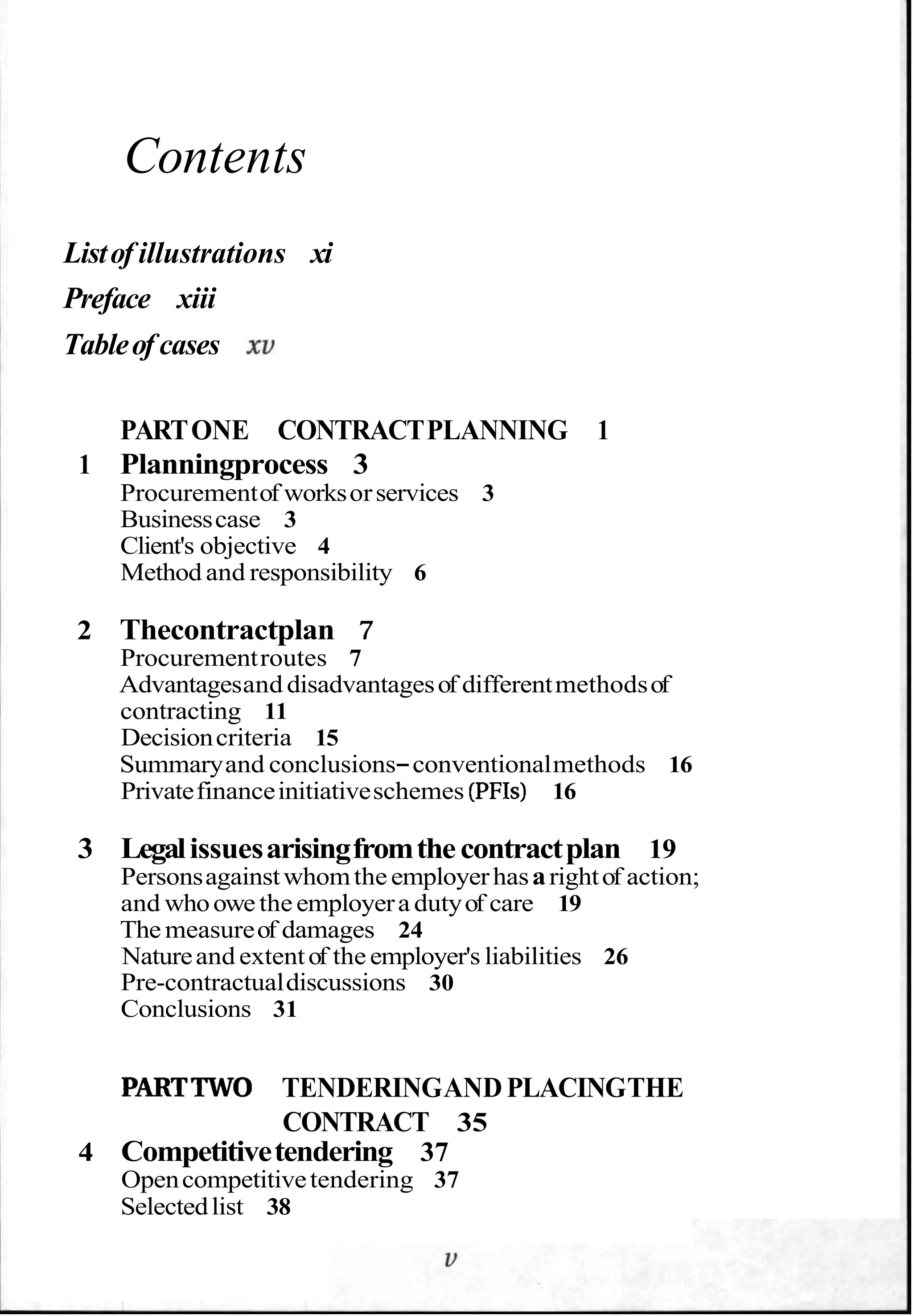
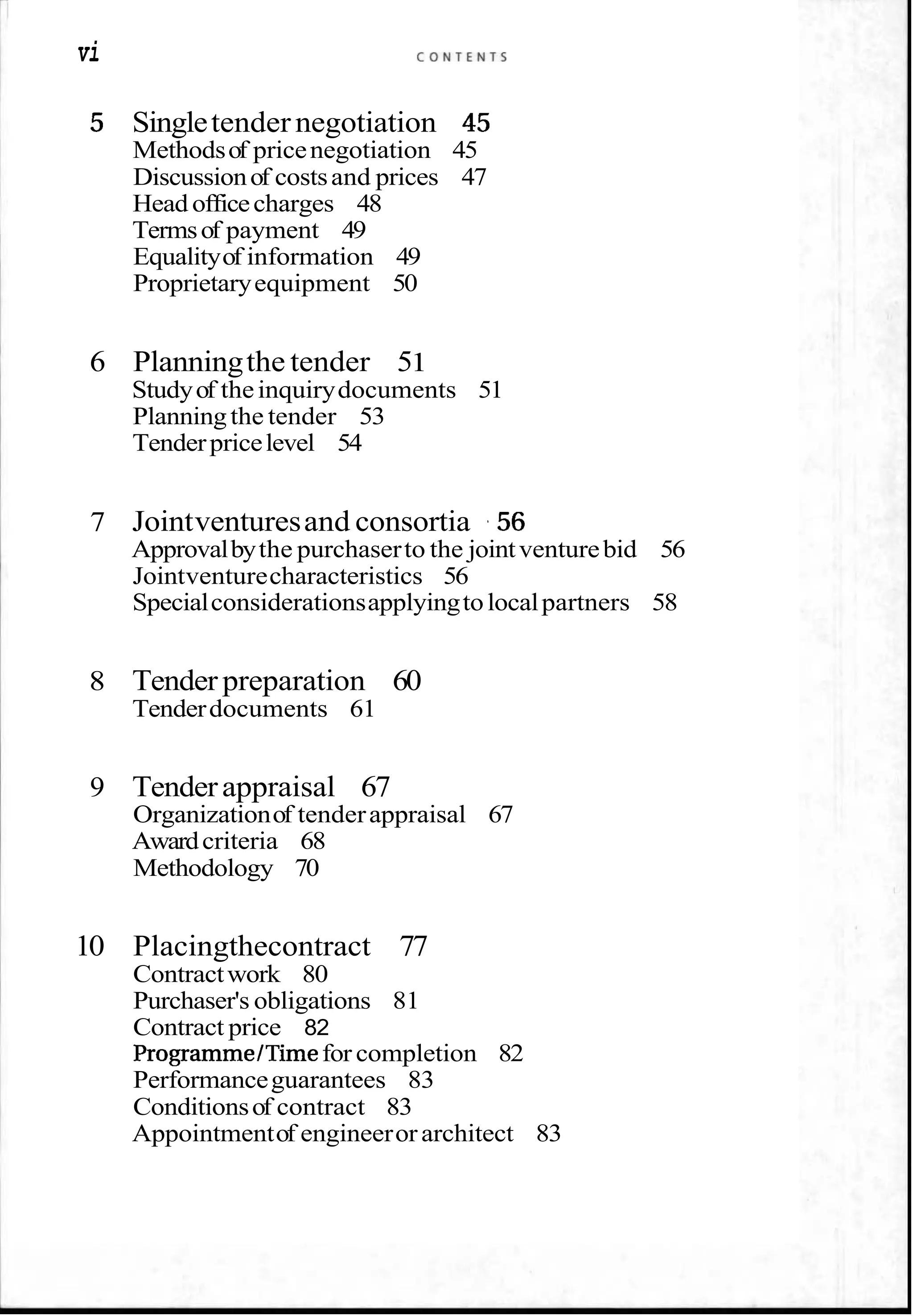
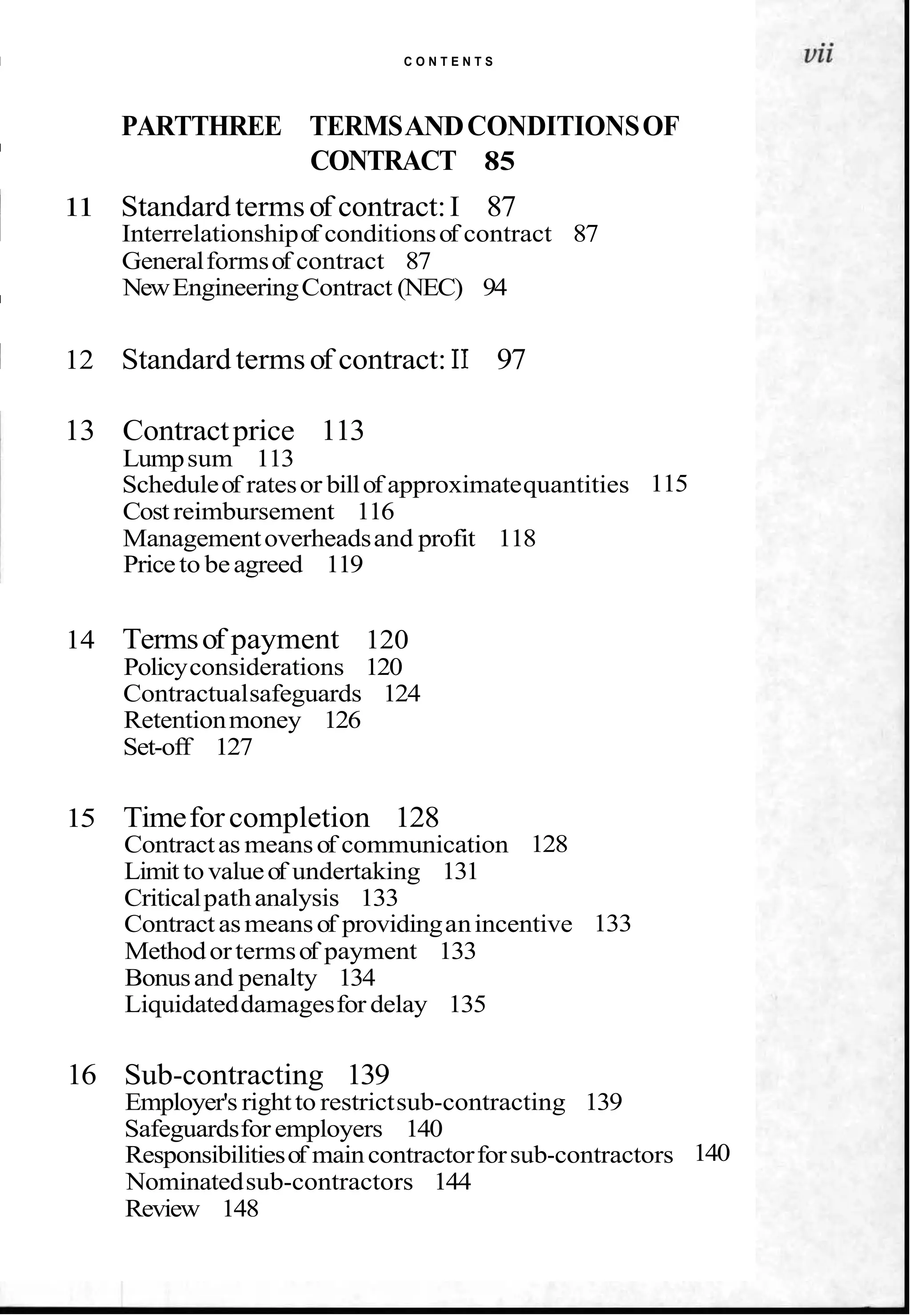
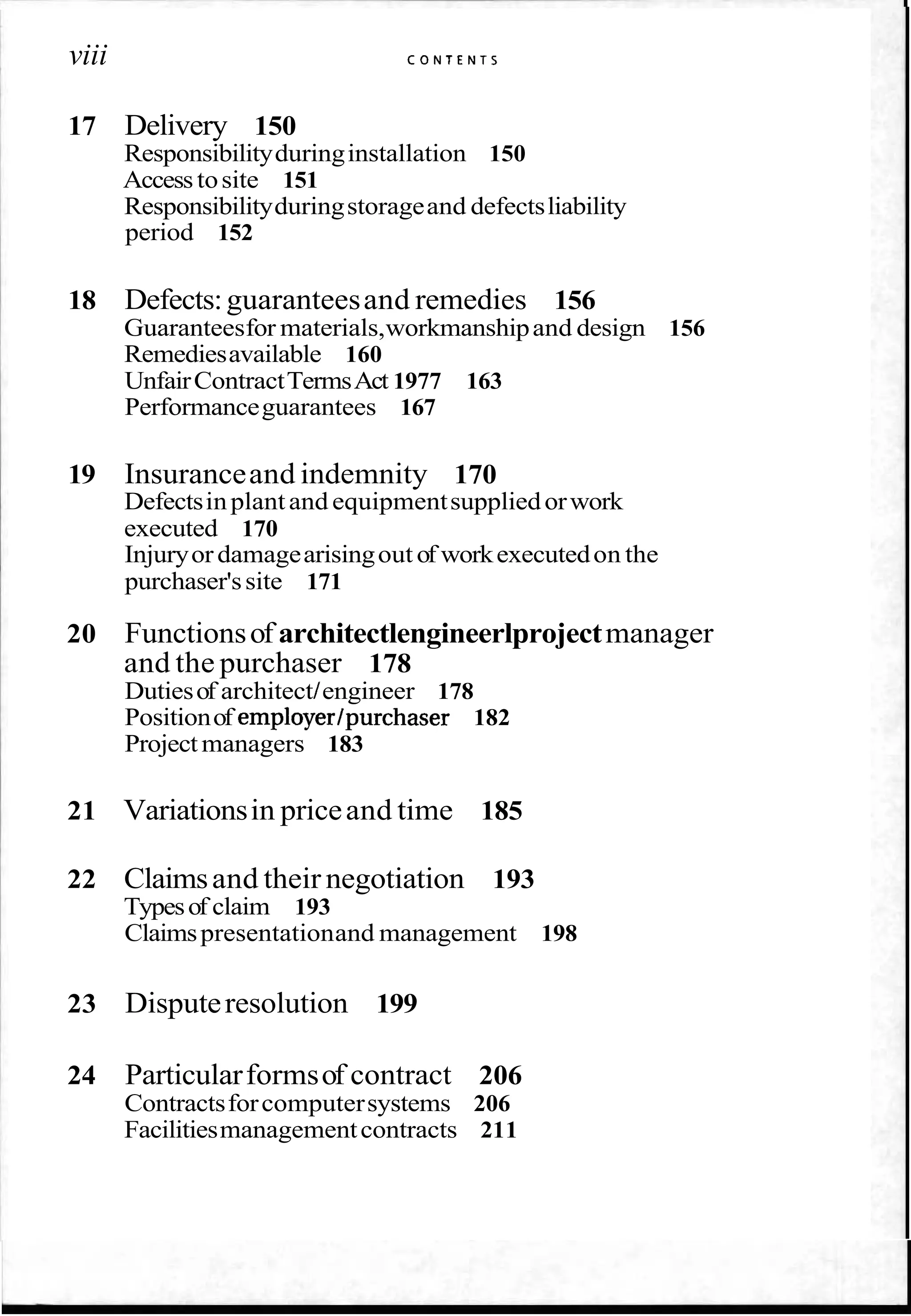
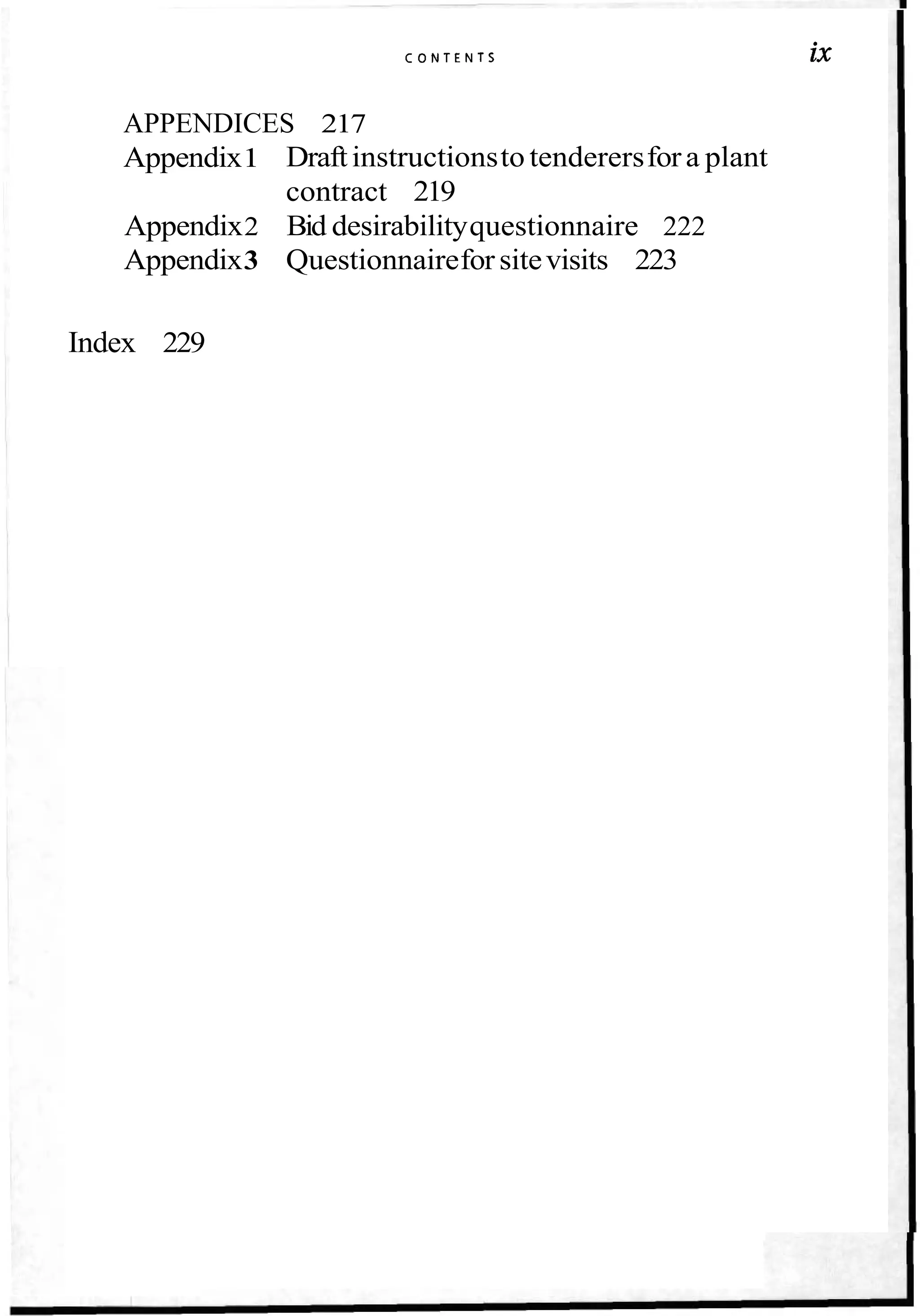

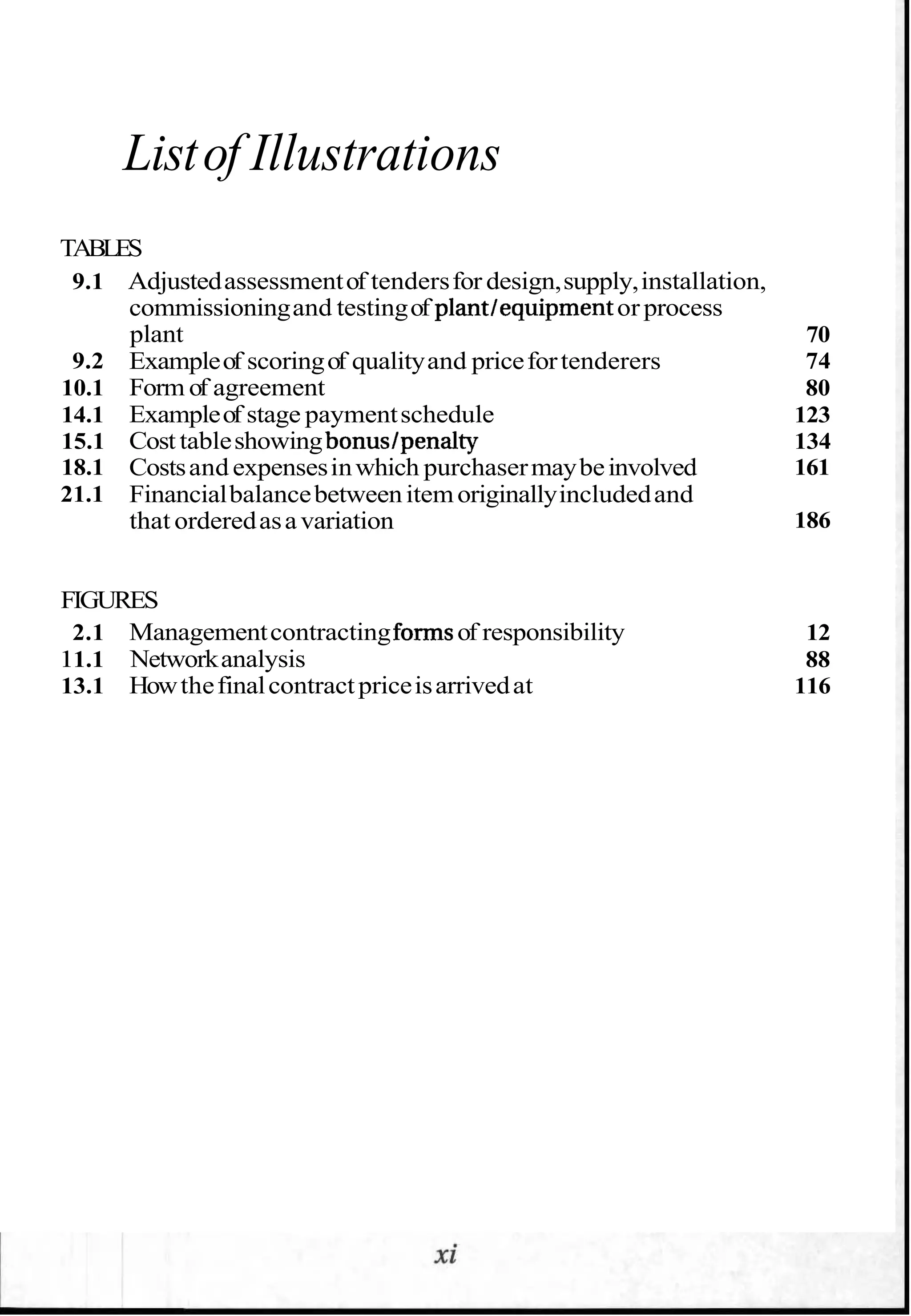

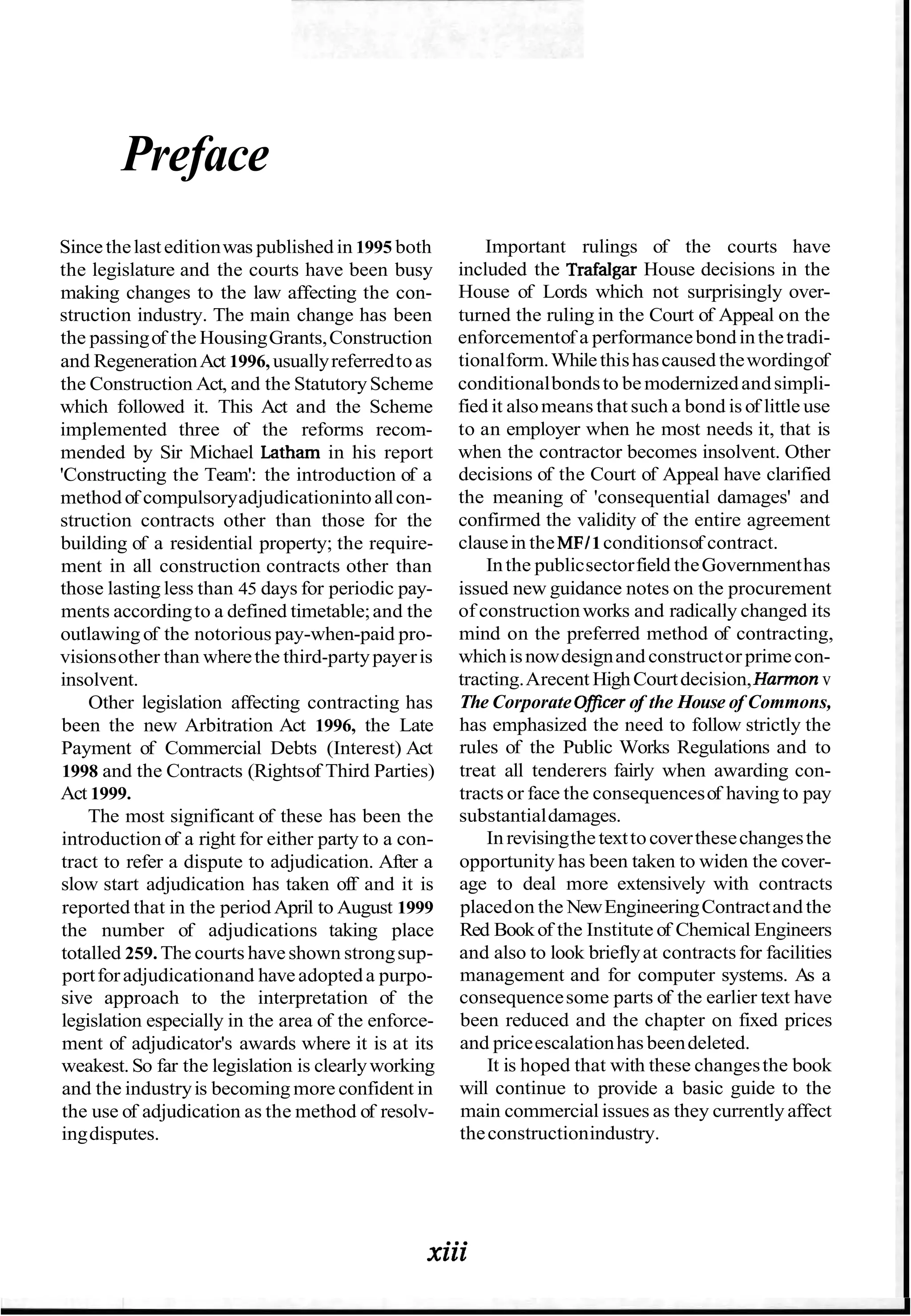

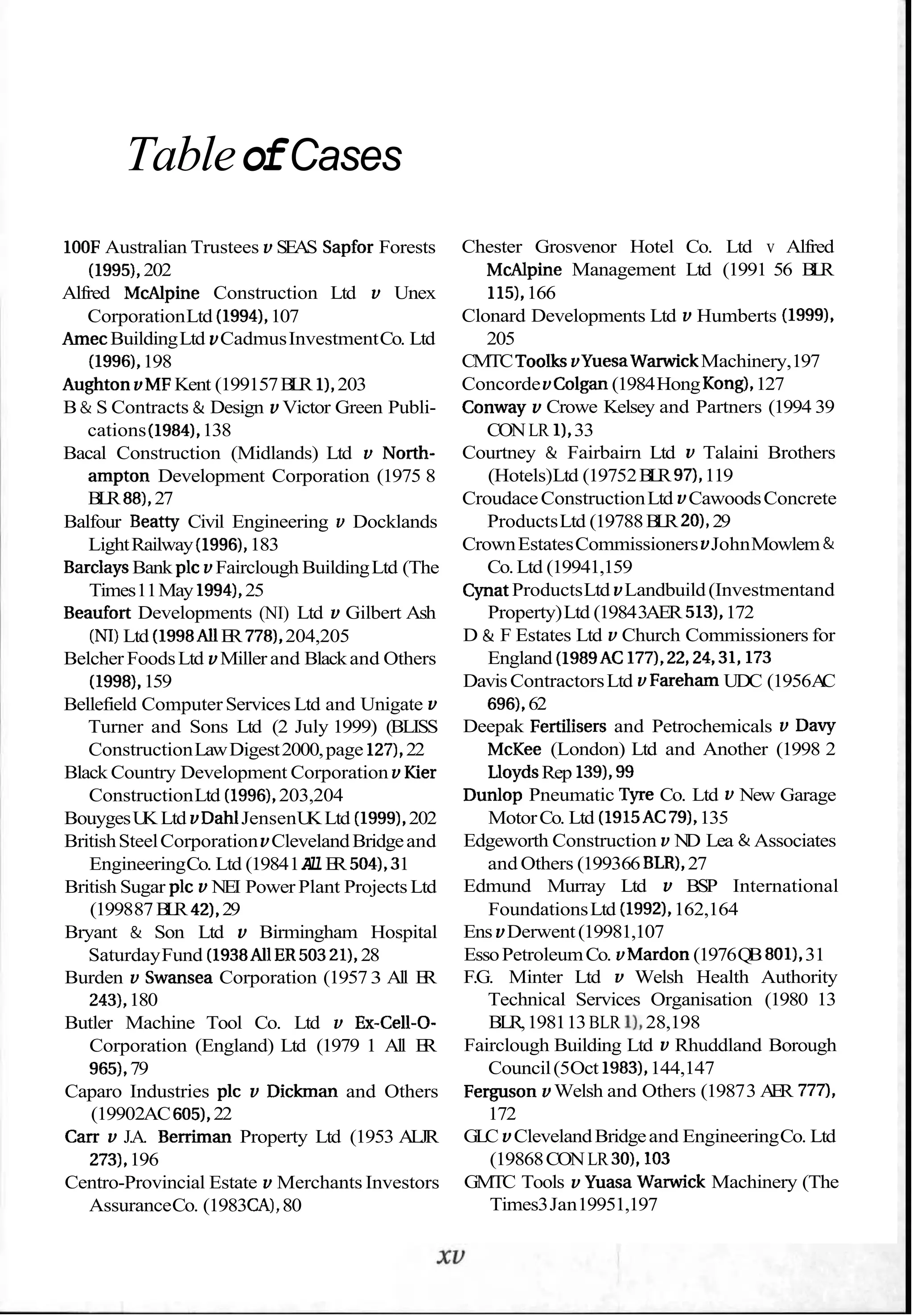



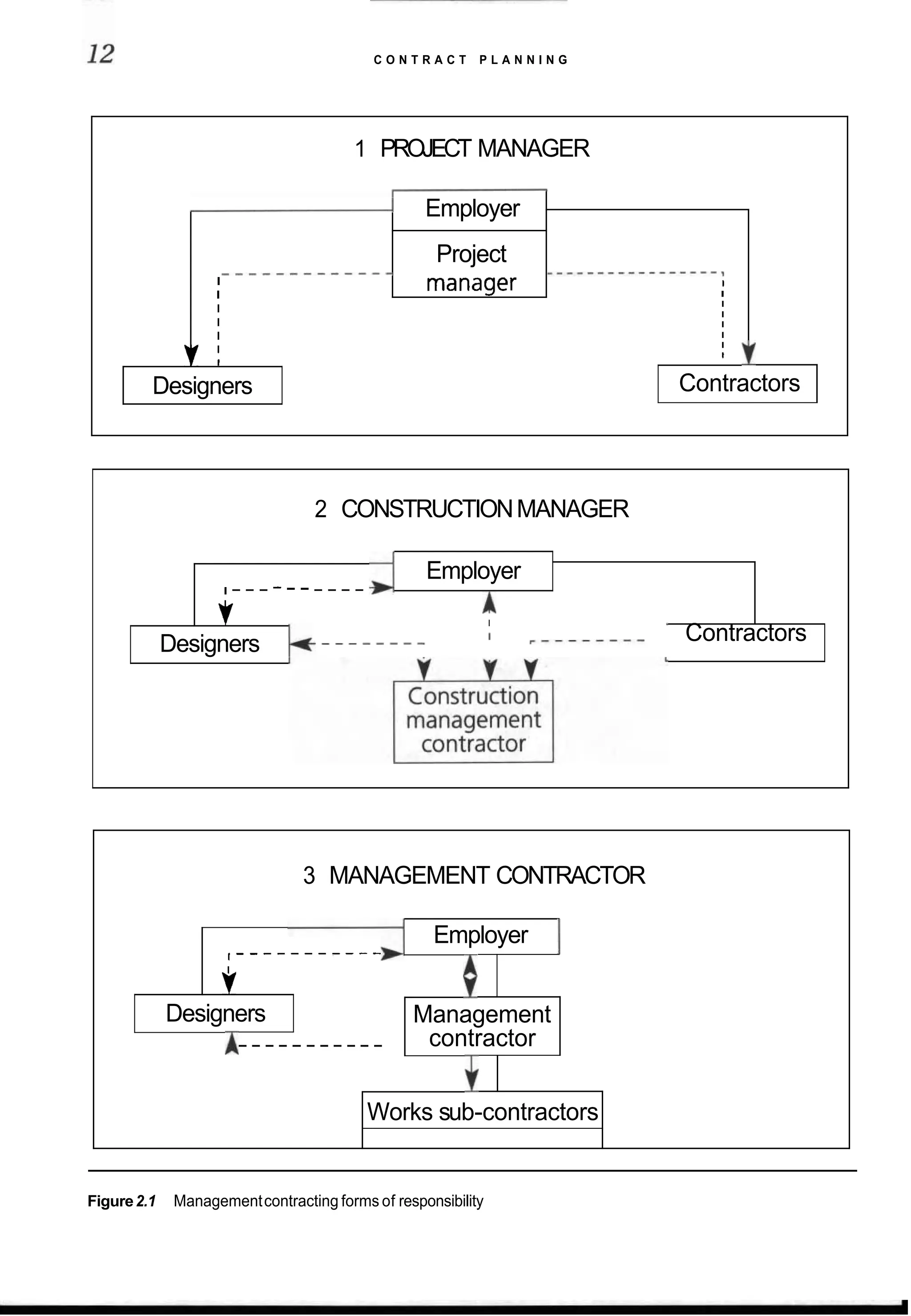
![L E G A L I S S U E S A R I S I N G F R O M T H E C O N T R A C T P L A N 21
industrywillbewillingtodothisandat presentit
appearssomewhatdoubtful.
It is however to be expected that third par-
ties, such as sub-contractors,will be interested
in using the Act as a defence to a claim against
themwhenthemaincontractpurportstoextend
to them the protection which it affords to the
main contractor. Atypical clause of this type is
clause36 of MFll which restricts the right of the
purchaser to claim damages attributable to
defectsand purportstoextendthat protectionto
sub-contractors.UndertheActtherecan nowbe
no doubt as to the effectiveness of that protec-
tion assuming always the validity of the clause
underthe UnfairContractTermsAct 1977.
Italsoseemsclearthat intheordinarycaseof
an employer, main contractor and domestic
sub-contracto'ror supplier, the employer would
not beabletoenforceagainstthesub-contractor
orsupplieranyof theobligationswhichthatfirm
owestothemaincontractorunless,whichseems
most unlikely, there was something expressly
writteninto the contract. The mere fact that the
employer would gain from the sub-contractor's
orsupplier's workwouldnotbesufficientto pur-
port to confer a benefit upon the employer. In
the same way a sub-contractor would have no
right against the employer to obtain payment
in the event of the main contractor going into
liquidation.
So far the discussion has been limited to the
position of those involved in the construction
operationsas it arisesin contract. At the time of
writing the third edition of this book it was
generally recognized, following the House of
Lords decision in Junior Books v Veitchi [1983]
A
C 520, that under certain circumstances an
employer could have a remedy in negligence
against a nominated sub-contractor. Although
that decision has not been formally over-ruled
effectively,it can no longer be regarded as good
law after the landmark decision of the House of
Lords in Murphy v Brentwood District Council
[1991]1A
C378.
In essence Murphy's case decided that as
regardsdefective goodsand buildingsthere was
a clear distinction between liability in contract
and liabilityin the tort of negligence.In contract
a builder is liable to the employer, or the sub-
contractorto the main contractor,for his defec-
tive work accordingto the terms of his contract.
He is, however, only liable to a third party, for
exampleasub-contractortotheemployer,inthe
tort of negligence for injury to persons or dam-
age to other property of the employer.He is not
liable to the employer for the defectsin his work
itself, no matter the seriousnessof such defects.
Defective work which causes the building to be
worthlessthan itwould beotherwiseisclassified
as economic loss which is only exceptionally
recoverableintort.
The liability in negligence for injury to per-
sons from defective work is reasonably clear. It
will extend to cover those persons whom the
builder should have had in contemplation as
being likely to suffer injury if he does not take
propercarein the performanceof hiswork.
Liability for damage to 'other property' is
more difficult.First, in this context what consti-
tutes 'other property'? It seems clear that it
would coveritemssuch as computerswhich the
employer has installed in the building under a
separate contract and which are damaged, say
by the fall of a defective ceilingconstructedby a
sub-contractor.However, consider the case of a
boiler installed by a sub-contractor which
explodes and damages other parts of the build-
ing. The cost of the replacementof the defective
boiler itself is a loss recoverable only in contract
and therefore only from the main contractor. If,
therefore,the main contractoris not availableto
be sued, the employer, or his insurance com-
pany, will be left without a remedy. But in those
circumstancescan the employer recoverat least
thedamagecaused bytheexplosionof the boiler
to the remainderof the buildingfrom the boiler
manufacturerin tort as being damage to 'other
property'? In Murphy's case it was suggested in
judgementsgiven by three of the LawLordsthat
he could do so providedhe could prove that the
explosion was indeed due to the negligence of
the boilermanufacturer.
The difficulty with this approach, what is
knownas 'the complexstructurestheory',is how
faritshould betaken.Forthe purposeof defining
'damage tootherproperty' thestructurewillnor-
mally be regarded as one unit. So defects in the
work of a structural steel sub-contractor which](https://image.slidesharecdn.com/925634-250618141756-0d070cea/75/Contracting-For-Engineering-And-Construction-Projects-5-Sub-Peter-D-V-Marsh-43-2048.jpg)
![L E G A L I S S U E S A R I S I N G F R O M T H E C O N T R A C T P L A N 25
damages can be recovered for the loss of
expectations arising out of or created by the
contract. It is on this basis that an employer
can -in principle and provided they are not
too remote- recover damages for his loss of
profits arising from works which do not per-
form according to specification and not
merelyforthecostsof puttingthem right.
2 Thereare two alternative basesof assessment
which may be applied in contracts for engi-
neeringworks. The one has been referred to
as the 'difference in value' and the other 'the
costof cure'. Ingeneralitwouldappearthat in
the event of the contractorfailing to perform
the work correctly in accordance with the
specification the assessment will be on the
basis of 'the cost of cure' and this maystill be
so even if it resultsin theemployereventually
being placed in a better position than he
would have been had the original contract
been properly performed. So when a factory
wasburnt down becauseof the breach of con-
tract by the contractor the employer recov-
ered the full costs of rebuildingeven though
that gave him a new factory. However if the
loss sustained does not extend to the need to
reinstate then it would be unreasonable to
award the costs of reinstatement since the
award of damages is to compensate for the
loss. This was decided by the House of Lords
in RuxleyElectronicsvForsyth [I99611A
C344,
where a swimming pool had been con-
structed with a maximum depth less than
what the defendant must be presumed as a
reasonableman to have known at the time
of entering into the contract. In making
that assessment it is appropriate to take
into account the capacity in which the
defendant contracted. So an experienced
contractor erecting a block of flats for a
property developer must be presumed to
know that the employer intended to let
them at a profit. Accordingly,if he islate in
completion he would be liable to compen-
satethedeveloperforsuchlossof profitsas
werereasonablyforeseeable.
.anyactualknowledgewhich the defendant
possessed at the time of entering into the
contractand on the basisof which he must
be presumed to have contracted. This is
obviously reasonable in that such know-
ledgewould haveallowed himtheopportu-
nity of protecting himself against the risk
by, say, taking special measures to ensure
completion on time,or coveringhimself by
insurance against the consequences of
defectivedesign. So if the contractorin the
example above was specificallyadvised by
the developerat the time of tenderingthat
the building was for occupation by, for
example, foreign embassystaff who would
be payingexceptionallyhigh rents,then he
would be liable to pay damages based on
those rents were he to fail to have the flats
ready for occupation by the contractual
date.
specified. The cost of rebuilding was esti-
mated at £21 650.Therewas howeverno need 4 Contributory is a defenceto a
to reinstate.Itwasa perfectlyserviceablepool for damages founded On a breach of a
into which it was safe to dive, although its strict contractualobligation. So where a con-
depth was not according to specification. tractor had amongst other obligationsunder-
Held, that the award of damages should be
taken that Itheir materialsand workmanship
based on the loss of amenitywhich the wouldbethe bestof theirrespectivekinds' the
judgehaddecidedwas£2500. damages suffered by the employer could not
3 The damagesmust not be 'too remote'. Since be reduced because of alleged
the decision of the House of Lords in The the employer to disregard his own interests
H~~~~ 11 [1969] AC 350 (under the name (BarclaysBank plc v Fairclough Building Ltd,
Koufos v C. CzarnikowLtd),theloss must be a TheTimesl1Maylgg4).
'serious possibility',and it isonthat basisthat
incontractthewords'reasonablyforeseeable' DAMAGES IN NEGLIGENCE
must be interpreted.What is a 'serious possi- The general rules may be stated briefly as fol-
bility' willdepend upon: lows:](https://image.slidesharecdn.com/925634-250618141756-0d070cea/75/Contracting-For-Engineering-And-Construction-Projects-5-Sub-Peter-D-V-Marsh-47-2048.jpg)
![30 C O N T R A C T P L A N N I N G
should have been his purely profes- representationis any statement of fact made by
sional duty. In my judgement this was one party to the other before the contract is
the clearest possible instance of made and which inducesthe person to whom it
responsibilityfor the breach attaching is madeto enter into the contract. The represen-
totheemployers. tation must be as to a matter of fact and not just
(Reesand KirbyvSwanseaCityCouncil an assertionof opinion. However if the opinion
inthe HighCourt) is expressed by someone having or claiming
Although at one time it was thought that an
architect or engineer owed a duty of care to a
contractor who would be affected if the archi-
tectlengineer were negligently to under-certify
the value of his work, this now seems doubtful
following the decision of the Court of Appeal in
Pacijic Associates v Baxter [1990]QB 993. The
contract in that case contained an arbitration
clauseand a disclaimerof the defendant'sliabil-
ity. In essencethe decisionseemsto haveturned
on the structure of the contractualrelationships
between the parties and the fact that the con-
tractorcouldclaim againstthe employer in arbi-
tration.
Assuming the contract contains an arbitra-
tion clause, then it would seem that a claim by
the contractoragainstthearchitectlengineerfor
under-certification would only be likely to suc-
ceed if thearchitectlengineerwereto haveacted
deliberately in contravention of the contract
with the intent to deprive the contractor of
moneyto which he knewthat thecontractorwas
I
entitled.Thiswastheviewof the Court of Appeal
in Lubenham Fidelities v South Pembrokeshire
DC (see6 Con LR at page114).
PRE-CONTRACTUAL DISCUSSIONS
These may affect the relationships between the
partiesbecauseof:
1 Representations.
2 Collateralwarranties.
3 Theissueof Lettersof Intent.
REPRESENTATION
The problem of misrepresentation has already
been discussed in relation to one of the areas in
which it is most likelyto arise, namelythe giving
of data relating to site and soil conditions, and
the principlesset out there are of generalappli-
cation. However it is worth emphasizing that a
special knowledgeor skillin relation to the mat-
ter in question,or if by implication it is founded
on facts,then it willstill betreatedasa represen-
tation. In practice therefore, when inviting ten-
ders an employershould be extremelycareful as
to the data which he provides to the tenderers.
Unlessthe mattersare oneswhich it is impracti-
cal to expect the tenderers to find out for them-
selves, it is far better simply to make it clear
that it is their business to find out the infor-
mation they require in order to bid. It is also a
point which needs watching when conducting
bidders' conferences, or answering bidders'
questions.
Thegeneralpositionastoliabilityfor misrep-
resentation can be summarized briefly as fol-
lows:
If the representation is fraudulent (for the
meaning of this see p. 27),then the remedyis
damagesand recission.
If the representation is made negligently, i.e.
carelesslyand in breachof a dutyof care,then
the remedyisdamages.If the employer,or his
architectlengineer, professes to have special
knowledge or to have made particular en-
quiries, say about the soil conditions, and
fromthe wordingof the enquiryit isclearthat
the contractor was intended to rely on such
information and doesso rely,and it proves to
be inaccurate so that the contractor suffers
damage,then the contractormayhave a rem-
edy for negligent misrepresentation.This lia-
bility may be negated by wording in the
enquiryto the effectthat the contractoris not
to relyon anyinformation given for which no
liability is accepted but is to make his own
enquiries as to the site conditions. It is
thoughtunlikelyin commercialcontractsthat
sucha clausewould beregardedas unreason-
able under the Unfair Contract Terms Act
1977. It may,however,arise out of a commer-](https://image.slidesharecdn.com/925634-250618141756-0d070cea/75/Contracting-For-Engineering-And-Construction-Projects-5-Sub-Peter-D-V-Marsh-52-2048.jpg)














![Presentation on QSV 507 [Autosaved] Michael.pptx](https://cdn.slidesharecdn.com/ss_thumbnails/presentationonqsv507autosavedmichael-250411170329-ded6e429-thumbnail.jpg?width=640&height=640&fit=bounds)


