Contractual terms, Express terms
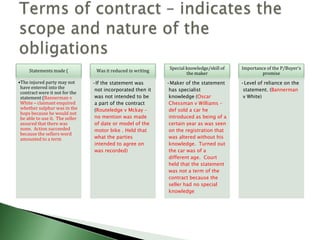
Special knowledge/skill of   Importance of the P/Buyer’s
     Statements made (            Was it reduced in writing
                                                                       the maker                     promise
•The injured party may not       •If the statement was        •Maker of the statement       •Level of reliance on the
 have entered into the            not incorporated then it     has specialist                statement. (Bannerman
 contract were it not for the
 statement (Bannerman v           was not intended to be       knowledge (Oscar              v White)
 White – claimant enquired        a part of the contract       Chessman v Williams –
 whether sulphur was in the       (Routeledge v Mckay –        def sold a car he
 hops because he would not
 be able to use it. The seller    no mention was made          introduced as being of a
 assured that there was           of date or model of the      certain year as was seen
 none. Action succeeded           motor bike . Held that       on the registration that
 because the sellers word
 amounted to a term               what the parties             was altered without his
                                  intended to agree on         knowledge. Turned out
                                  was recorded)                the car was of a
                                                               different age. Court
                                                               held that the statement
                                                               was not a term of the
                                                               contract because the
                                                               seller had no special
                                                               knowledge
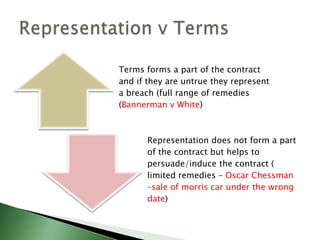
Terms forms a part of the contract
and if they are untrue they represent
a breach (full range of remedies
(Bannerman v White)


       Representation does not form a part
       of the contract but helps to
       persuade/induce the contract (
       limited remedies – Oscar Chessman
       –sale of morris car under the wrong
       date)
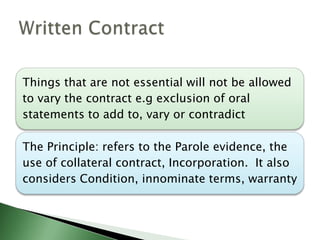
Things that are not essential will not be allowed
to vary the contract e.g exclusion of oral
statements to add to, vary or contradict

The Principle: refers to the Parole evidence, the
use of collateral contract, Incorporation. It also
considers Condition, innominate terms, warranty
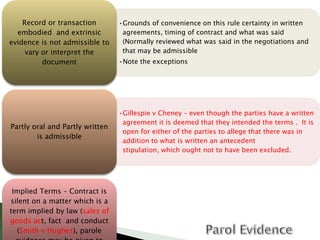
Record or transaction        •Grounds of convenience on this rule certainty in written
  embodied and extrinsic          agreements, timing of contract and what was said
evidence is not admissible to     (Normally reviewed what was said in the negotiations and
     vary or interpret the        that may be admissible
          document               •Note the exceptions


                                 •Gillespie v Cheney – even though the parties have a written
                                  agreement it is deemed that they intended the terms . It is
Partly oral and Partly written
                                  open for either of the parties to allege that there was in
        is admissible
                                  addition to what is written an antecedent
                                  stipulation, which ought not to have been excluded.


 Implied Terms – Contract is
silent on a matter which is a
term implied by law (sales of
goods act, fact and conduct
  (Smith v Hughes), parole
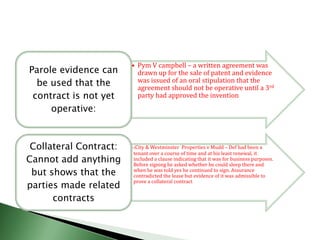
• Pym V campbell – a written agreement was
Parole evidence can       drawn up for the sale of patent and evidence
  be used that the        was issued of an oral stipulation that the
                          agreement should not be operative until a 3rd
 contract is not yet      party had approved the invention
     operative:


 Collateral Contract:   •(City & Westminster  Properties v Mudd – Def had been a
                        tenant over a course of time and at his least renewal, it
Cannot add anything     included a clause indicating that it was for business purposes.
                        Before signing he asked whether he could sleep there and
 but shows that the     when he was told yes he continued to sign. Assurance
                        contradicted the lease but evidence of it was admissible to
parties made related
                        prove a collateral contract


      contracts
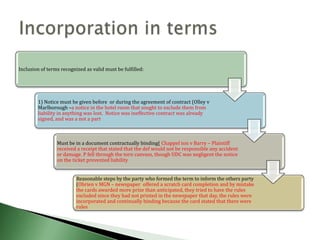
Inclusion of terms recognized as valid must be fulfilled:


        1) Notice must be given before or during the agreement of contract (Olley v
        Marlborough –a notice in the hotel room that sought to exclude them from
        liability in anything was lost. Notice was ineffective contract was already
        signed, and was a not a part


                 Must be in a document contractually binding( Chappel ton v Barry – Plaintiff
                 received a receipt that stated that the def would not be responsible any accident
                 or damage. P fell through the torn canvass, though UDC was negligent the notice
                 on the ticket prevented liability


                          Reasonable steps by the party who formed the term to inform the others party
                          (Obrien v MGN – newspaper offered a scratch card completion and by mistake
                          the cards awarded more prize than anticipated, they tried to have the rules
                          excluded since they had not printed in the newspaper that day, the rules were
                          incorporated and continually binding because the card stated that there were
                          rules
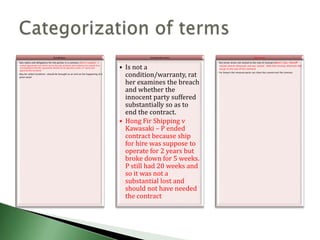
Conditions –                                                 Innominate terms                                     Warranties

• Sets rights and obligations for the parties in a contract, (Pym V campbell – a                                     • Are minor terms not central to the root of contract (Betini v Gye –Plaintiff
  written agreement was drawn up for the sale of patent and evidence was issued of an
  oral stipulation that the agreement should not be operative until a 3rd party had
  approved the invention
                                                                                        • Is not a                     missed several rehearsals and was sacked. Held that missing rehearsals did
                                                                                                                       not go to the root of the contract)


                                                                                          condition/warranty, rat
                                                                                                                     • For breach the innocent party can claim but cannot end the contract
• May be called Condition –should be brought to an end on the happening of a
  given event

                                                                                          her examines the breach
                                                                                          and whether the
                                                                                          innocent party suffered
                                                                                          substantially so as to
                                                                                          end the contract.
                                                                                        • Hong Fir Shipping v
                                                                                          Kawasaki – P ended
                                                                                          contract because ship
                                                                                          for hire was suppose to
                                                                                          operate for 2 years but
                                                                                          broke down for 5 weeks.
                                                                                          P still had 20 weeks and
                                                                                          so it was not a
                                                                                          substantial lost and
                                                                                          should not have needed
                                                                                          the contract

Contract 1. contractual terms pptx

  • 1.
  • 2.
    Special knowledge/skill of Importance of the P/Buyer’s Statements made ( Was it reduced in writing the maker promise •The injured party may not •If the statement was •Maker of the statement •Level of reliance on the have entered into the not incorporated then it has specialist statement. (Bannerman contract were it not for the statement (Bannerman v was not intended to be knowledge (Oscar v White) White – claimant enquired a part of the contract Chessman v Williams – whether sulphur was in the (Routeledge v Mckay – def sold a car he hops because he would not be able to use it. The seller no mention was made introduced as being of a assured that there was of date or model of the certain year as was seen none. Action succeeded motor bike . Held that on the registration that because the sellers word amounted to a term what the parties was altered without his intended to agree on knowledge. Turned out was recorded) the car was of a different age. Court held that the statement was not a term of the contract because the seller had no special knowledge
  • 3.
    Terms forms apart of the contract and if they are untrue they represent a breach (full range of remedies (Bannerman v White) Representation does not form a part of the contract but helps to persuade/induce the contract ( limited remedies – Oscar Chessman –sale of morris car under the wrong date)
  • 4.
    Things that arenot essential will not be allowed to vary the contract e.g exclusion of oral statements to add to, vary or contradict The Principle: refers to the Parole evidence, the use of collateral contract, Incorporation. It also considers Condition, innominate terms, warranty
  • 5.
    Record or transaction •Grounds of convenience on this rule certainty in written embodied and extrinsic agreements, timing of contract and what was said evidence is not admissible to (Normally reviewed what was said in the negotiations and vary or interpret the that may be admissible document •Note the exceptions •Gillespie v Cheney – even though the parties have a written agreement it is deemed that they intended the terms . It is Partly oral and Partly written open for either of the parties to allege that there was in is admissible addition to what is written an antecedent stipulation, which ought not to have been excluded. Implied Terms – Contract is silent on a matter which is a term implied by law (sales of goods act, fact and conduct (Smith v Hughes), parole
  • 6.
    • Pym Vcampbell – a written agreement was Parole evidence can drawn up for the sale of patent and evidence be used that the was issued of an oral stipulation that the agreement should not be operative until a 3rd contract is not yet party had approved the invention operative: Collateral Contract: •(City & Westminster Properties v Mudd – Def had been a tenant over a course of time and at his least renewal, it Cannot add anything included a clause indicating that it was for business purposes. Before signing he asked whether he could sleep there and but shows that the when he was told yes he continued to sign. Assurance contradicted the lease but evidence of it was admissible to parties made related prove a collateral contract contracts
  • 7.
    Inclusion of termsrecognized as valid must be fulfilled: 1) Notice must be given before or during the agreement of contract (Olley v Marlborough –a notice in the hotel room that sought to exclude them from liability in anything was lost. Notice was ineffective contract was already signed, and was a not a part Must be in a document contractually binding( Chappel ton v Barry – Plaintiff received a receipt that stated that the def would not be responsible any accident or damage. P fell through the torn canvass, though UDC was negligent the notice on the ticket prevented liability Reasonable steps by the party who formed the term to inform the others party (Obrien v MGN – newspaper offered a scratch card completion and by mistake the cards awarded more prize than anticipated, they tried to have the rules excluded since they had not printed in the newspaper that day, the rules were incorporated and continually binding because the card stated that there were rules
  • 8.
    Conditions – Innominate terms Warranties • Sets rights and obligations for the parties in a contract, (Pym V campbell – a • Are minor terms not central to the root of contract (Betini v Gye –Plaintiff written agreement was drawn up for the sale of patent and evidence was issued of an oral stipulation that the agreement should not be operative until a 3rd party had approved the invention • Is not a missed several rehearsals and was sacked. Held that missing rehearsals did not go to the root of the contract) condition/warranty, rat • For breach the innocent party can claim but cannot end the contract • May be called Condition –should be brought to an end on the happening of a given event her examines the breach and whether the innocent party suffered substantially so as to end the contract. • Hong Fir Shipping v Kawasaki – P ended contract because ship for hire was suppose to operate for 2 years but broke down for 5 weeks. P still had 20 weeks and so it was not a substantial lost and should not have needed the contract