Read Anytime Anywhere Easy Ebook Downloads at ebookmeta.com
Continuous API Management: Making the Right
Decisions in an Evolving Landscape, 2nd Edition
Mehdi Medjaoui
https://ebookmeta.com/product/continuous-api-management-
making-the-right-decisions-in-an-evolving-landscape-2nd-
edition-mehdi-medjaoui/
OR CLICK HERE
DOWLOAD EBOOK
Visit and Get More Ebook Downloads Instantly at https://ebookmeta.com
NGINX
Praise for Continuous API Management
Impressively, the authors have managed to make this a book
about APIs in general, as opposed to being about specific
technologies. Regardless of your API technology of choice, you’ll
definitely get valuable guidance from this book.
—Stefan Tilkov, CEO and principal consultant at
INNOQ
APIs are the fabric of the modern enterprise. This book will be
your guide to implementing and managing a pervasive API
landscape, covering architecture, team structure, and evolution.
—Gregor Hohpe, author of The Software Architect
Elevator
Continuous API Management offers an excellent guide for those
responsible for establishing and scaling their API program. From
practical advice to deep dives into all aspects of delivering an API
program, this is an essential resource for everyone from
executives to API practitioners.
—James Higginbotham, executive API consultant
and author of Principles of Web API Design
Copious print details the intimates of web API creation. However,
the CAM book stands alone as a holistic guide through the API
creation landscape. This reference is mandatory insight for
technology leaders (and leaders-in-training).
—Matthew Reinbold, author of the Net API Notes
newsletter and director of API ecosystems and digital
transformation at Postman
Mike, Mehdi, Ronnie, and Erik created a far-reaching, insightful
book that captures what is needed to create, evolve, and manage
complex API systems that thrive in the connected world.
—Hibri Marzook, principal consultant at Contino
Continuous API Management is the most comprehensive book out
there when it comes to managing API products. It is full of practical
guidance, and I have seen numerous organizations use its lessons
to help advance their digital strategies using APIs.
—Matt McLarty, global leader for API strategy at
MuleSoft, a Salesforce company
Continuous API Management
SECOND EDITION
Making the Right Decisions in an Evolving
Landscape
Mehdi Medjaoui, Erik Wilde, Ronnie Mitra, and
Mike Amundsen
Continuous API Management
by Mehdi Medjaoui, Erik Wilde, Ronnie Mitra, and Mike Amundsen
Copyright © 2022 Mehdi Medjaoui, Build Digital GmbH, Kudo & Leap
Ltd., and Amundsen.com, Inc. All rights reserved.
Printed in the United States of America.
Published by O’Reilly Media, Inc., 1005 Gravenstein Highway North,
Sebastopol, CA 95472.
O’Reilly books may be purchased for educational, business, or sales
promotional use. Online editions are also available for most titles
(http://oreilly.com). For more information, contact our
corporate/institutional sales department: 800-998-9938 or
corporate@oreilly.com.
Acquisitions Editor: Melissa Duffield
Development Editor: Gary O’Brien
Production Editor: Kate Galloway
Copyeditor: Kim Wimpsett
Proofreader: Piper Editorial Consulting, LLC
Indexer: Judith McConville
Interior Designer: David Futato
Cover Designer: Karen Montgomery
Illustrator: Kate Dullea
November 2018: First Edition
October 2021: Second Edition
Revision History for the Second Edition
2021-10-18: First Release
See http://oreilly.com/catalog/errata.csp?isbn=9781098103521 for
release details.
The O’Reilly logo is a registered trademark of O’Reilly Media, Inc.
Continuous API Management, the cover image, and related trade
dress are trademarks of O’Reilly Media, Inc.
The views expressed in this work are those of the authors, and do
not represent the publisher’s views. While the publisher and the
authors have used good faith efforts to ensure that the information
and instructions contained in this work are accurate, the publisher
and the authors disclaim all responsibility for errors or omissions,
including without limitation responsibility for damages resulting from
the use of or reliance on this work. Use of the information and
instructions contained in this work is at your own risk. If any code
samples or other technology this work contains or describes is
subject to open source licenses or the intellectual property rights of
others, it is your responsibility to ensure that your use thereof
complies with such licenses and/or rights.
This work is part of a collaboration between O’Reilly and NGINX.
See our statement of editorial independence.
978-1-098-10353-8
[LSI]
Dedication
To those who coached me during the book writing, to my fellow
partners who helped me to be useful in the industry, to Kin Lane who
shared with me his passion for APIs, and to all the API practitioners
who shared their API practices with me that inspired this book. To my
parents.
—Mehdi Medjaoui
To all the people in my life who made this book possible. It’s been
quite a ride!
—Erik Wilde
To Kairav, for helping me write this dedication.
—Ronnie Mitra
To all the companies that invited us to come share what we’ve
learned and, in the process, taught us so much that we had to try to
capture it in this book.
—Mike Amundsen
Foreword from NGINX
The API is now the connective tissue of the world’s technology
fabric. There are tens of thousands of public and open APIs that
deliver a huge range of functionality to web and mobile applications,
from weather data to betting odds to flight arrival times to voice
connectivity. The total API universe is many times that size when you
factor in closed APIs used for gated services. Microservices and
Kubernetes are contributing to the explosion of the API economy, as
well; APIs are the default communication modality for cloud native
applications.
As organizations expand, they create and consume more APIs. This
requires some thinking and planning for a future where almost
everything is connected via API. In this future, what kind of
guidelines should you provide for designing, implementing, and
deploying APIs in your organization? And how can you design
systems of governance and development to constantly scale the
technology, people, processes, and policies for APIs? Continuous
API Management provides insights into these critical questions. This
book is a detailed yet accessible manual of best practices for
technical practitioners, DevOps leaders, and any other professionals
working on API business strategy. With rich examples and a clear
point of view, the book provides guidance on all the critical business
elements of planning, provisioning, delivering, and maintaining APIs
—from inception to the evolution of API strategies as enterprises
scale up quickly.
The authors—Mehdi Medjaoui, Erik Wilde, Ronnie Mitra, and Mike
Amundsen—give you access to insights gleaned from decades of
experience in the real world. Their writing and ideas provide a rich
guide to the holistic development of your API program, from ideation
to realization to maturation. The authors are also practitioners, giving
readers insights into both the technical and business aspects of the
process. You will learn from their experience with a front-row seat,
observing and discussing common approaches to API management
adopted by dozens of enterprises across multiple industries.
NGINX is used to power numerous API management solutions,
including Axway, Kong, MuleSoft, Red Hat 3scale, and Torry Harris.
NGINX is also used as the technology foundation for branded API
management product of several public clouds. Not surprisingly,
NGINX is also the most popular solution for API management, with
40% of the market according to NGINX surveys. NGINX Controller’s
API Management Module is a full API lifecycle management solution
that is both lightweight and high performance. With a true distributed
control plane / data plane architecture designed for low latency and
nearly infinite scale, NGINX can handle the API needs of enterprises
running both monolithic applications and modern distributed
applications built with microservices.
Whether you are just beginning your API journey for your enterprise
or need to overhaul an existing API strategy, we hope this book will
help you move along the path toward a stable and successful API
program.
Karthik Krishnaswamy
Director, Product Marketing
NGINX, Inc.
Foreword to the First Edition
APIs are a journey for any company, organization, institution, or
government agency learning to properly manage their digital
resources across an ever-expanding and evolving competitive digital
landscape. This digital transformation, which has been building over
the last five years, is beginning to result in a shift across the API
landscape, where companies are beginning to stop asking if they
should be doing APIs and have begun seeking more knowledge on
how to do APIs properly. Organizations are realizing that there’s
more to APIs than just creating them; a lot goes into delivering APIs
throughout the entire API lifecycle. The authors behind Continuous
API Management possess a unique understanding of what it takes to
move an API from ideation to realization consistently, at scale, and in
a repeatable way—providing the makings for a pretty unique learning
opportunity.
Most API practitioners operate with a view of the API landscape
spanning a single set of APIs. Medjaoui, Wilde, Mitra, and
Amundsen, the authors of this book, possess a unique view of the
API landscape at a 250,000-foot level, spanning thousands of APIs,
multiple industries, and some of the largest enterprise organizations
out there today. I can count the top-tier API talent that exists around
the globe on both my hands, and Medjaoui, Wilde, Mitra, and
Amundsen are always first to be counted on my right hand. These
authors bring a wealth of experience to the table when it comes to
understanding what you need to move APIs from inception to design,
from development to production, and back again. There just isn’t
another team of API experts out there who have the scope and the
breadth of API knowledge that this team possesses, making this
book destined to become that tattered O’Reilly tome that lives within
reach on the corner of your desk—something you read again and
again.
I’ve read numerous books on the technical aspects of creating APIs,
including books about hypermedia and everything you need to know
about REST and how to deliver on this vision in a variety of
programming languages and platforms. This is the first API book that
I’ve read that holistically approaches the delivery of APIs from start
to finish, addressing not only the technological details but also the
critical business elements of operating APIs—which also includes
the critical human side of API education, realization, and activation
across large enterprise organizations. The book methodically lays
out the essential building blocks any enterprise API architect will
need to deliver reliable, secure, and consistent APIs at scale; it will
help any API team quantify their operations and think more critically
about how APIs can be improved upon and evolved, while also
establishing and refining a structured yet agile approach to delivering
APIs in a standardized way across teams.
After putting down this book, I felt I had a refreshed look at the
modern API lifecycle—but more importantly, I was left with a wealth
of ideas about how I actually quantify and measure my API
operations, and the API lifecycle strategy I am using to manage my
operations. Even with my knowledge of the space, this book forced
me to look at the landscape in some important new ways. I walked
away saturated with information that reinforced some of what I
already knew, but also shifted and moved around some of what I
thought I knew, forcing me to evolve in some of my existing
practices. For me, this is what the API journey is all about:
continually being challenged, learning, planning, executing,
measuring, and repeating until you find the desired results.
Continuous API Management reflects this reality of delivering APIs,
providing us with a reusable guide to the technology, business, and
politics of doing APIs at scale within the enterprise.
Don’t just read this book once. Read it; then go out and execute on
your vision. Evolve your API strategy, and define a version of the API
lifecycle that is all your own, taking what you’ve learned from
Medjaoui, Wilde, Mitra, and Amundsen and putting it to work.
However, every once in a while, pick this book up again and give it
another read. I guarantee there will be little nuggets throughout the
book that you’ll rediscover and see in a new light each time you work
through it—something that will build and improve your understanding
of what is happening across the API landscape and help you more
confidently participate (or lead) when it comes to doing business with
APIs across the expanding online economy.
Kin Lane, The API Evangelist
Preface
Welcome to the second edition of Continuous API Management. The
opening paragraph for the previous edition, released in 2018, stated:
As society and business have grown increasingly digital in nature,
the demand for connected software has exploded. In turn, the
application programming interface (API) has emerged as an
important resource for modern organizations because it facilitates
software connections. But managing these APIs effectively has
proven to be a new challenge. Getting the best value from your
APIs means learning how to manage their design, development,
deployment, growth, quality, and security while dealing with the
complicating factors of context, time, and scale.
And, in the intervening years, not much has changed when it comes
to the growth and challenges of API management. The good news is
that, in the years since our first edition, more tooling, more training,
and more experience has help grow and mature the API
management space. The not-so-good news is that the authors still
see lots of organizations struggling to meet the demands of
connecting people, services, and companies using APIs. This new
edition is our chance to provide updates on how companies are
progressing, share some new success stories, and refine some of
the material we first introduced in 2018.
While we’ve added new examples and updated existing ones, we’ve
still retained the same basic approach and outline for this new
release. Hopefully these changes will help you extend your own
journey on the road to continuous API management.
Who Should Read This Book
If you are just starting to build an API program and want to
understand the work ahead of you, or if you already have APIs but
want to learn how to manage them better, then this is the book for
you.
In this book, we’ve tried to build an API management framework that
can be applied to more than one context. In these pages you’ll find
guidance that will help you to manage a single API that you want to
share with developers around the world, as well as advice for
building a complex set of APIs in a microservice architecture
designed only for internal developers—and everything in between.
We’ve also written this book to be as technologically neutral as
possible. The advice and analysis we provide is applicable to any
API-based architecture, including HyperText Transfer Protocol
(HTTP), Create/Read/Update/Delete (CRUD), REpresentational
State Transfer (REST), GraphQL, and event-driven styles of
interaction. This is a book for anyone who wants to improve the
decisions being made about their APIs.
What’s in This Book
This book contains our collective knowledge from many years spent
designing, developing, and improving APIs—both our own and
others’. We’ve distilled all that experience into this book. We’ve
identified two core factors for effective API development: adopting a
product perspective and implementing the right kind of team. We’ve
also identified three essential factors for managing that work:
governance, product maturity, and landscape design.
These five elements of API management form a foundation on which
you can build a successful API management program. In this book,
we introduce each of these topics and provide you with guidance on
how to shape them to fit your own organizational context.
The Outline
We’ve organized the book so that the scope of management
concerns grows as you progress through the chapters. We start by
introducing the foundational concepts of decision-based governance
and the API as a product. This is followed by a tour of all the work
that must be managed when building an API product.
From this simple view of a single API, we then add the aspect of time
as we dive into what it means to change an API and how the
maturity of the API impacts those change decisions. This is followed
by an exploration of the teams and people who do that change work.
Finally, in the last half of the book, we tackle the complexities of
scale and the challenges of managing a landscape of API products.
Here is a short summary of what you’ll find in each chapter:
Chapter 1, “The Challenge and Promise of API
Management” introduces the API management domain and
explains why it’s so difficult to manage APIs effectively.
Chapter 2, “API Governance” explores governance from the
perspective of decision-based work—a foundational concept
for API management.
Chapter 3, “The API as a Product” establishes the API-as-a-
product perspective and why it’s an essential part of any API
strategy.
Chapter 4, “The Pillars of an API Product” outlines the ten
essential pillars of work in the API product domain. These
pillars form a set of decision-making tasks that must be
managed.
Chapter 5, “Continuous API Improvement” provides insight
into what it means to change an API continuously. It
introduces the need to adopt a continuous change mentality
and provides an understanding of the different types of API
changes (and their impacts) that you’ll encounter.
Chapter 6, “API Styles” is a new chapter for this edition. It
explores the five most common API styles we see as we visit
with companies around the world and digs into the strengths
and drawbacks of each style to help you select the ones
appropriate for each use case you encounter.
Chapter 7, “The API Product Lifecycle” introduces the API
product lifecycle, a framework that will help you manage API
work across the ten pillars over the life of an API product.
Chapter 8, “API Teams” addresses the people element of an
API management system by exploring the typical roles,
responsibilities, and design patterns for an API team over the
life of an API product.
Chapter 9, “API Landscapes” adds the perspective of scale
to the problem of managing APIs. It introduces the eight Vs
—variety, vocabulary, volume, velocity, vulnerability, visibility,
versioning, and volatility—that must be addressed when
multiple APIs are changing at the same time.
Chapter 10, “API Landscape Journey” outlines a continuous
landscape design approach for managing API changes
continuously and at scale.
Chapter 11, “Managing the API Lifecycle in an Evolving
Landscape” maps the landscape perspective back to the
API-as-a-product perspective and identifies how API work
changes when the landscape evolves around it.
Chapter 12, “Continuing the Journey” ties together the story
of API management that has emerged and provides advice
on preparing for the future and starting your journey today.
What’s Not in This Book
The scope of API management is big, and there is a massive
amount of variation in contexts, platforms, and protocols. Given the
constraints of time and space when writing a book, it was impossible
for us to address all the specific implementation practices of API
work. This book isn’t a guide for designing a REST API or for picking
a security gateway product. If you are looking for a prescriptive guide
to writing API code or designing an HTTP API, this isn’t the right
book for you.
While we do have examples that talk about specific practices, this
isn’t an API implementation–focused book (the good news is there
are plenty of books, blogs, and videos available already to help you
fill that need). Instead, this book tackles a problem that is rarely
addressed: how to effectively manage the work of building APIs
within a complex, continuously changing organizational system.
Conventions Used in This Book
The following typographical conventions are used in this book:
Italic
Indicates new terms, URLs, email addresses, filenames, and file
extensions.
Constant width
Indicates program elements such as variable or function names,
data types, statements, and keywords.
Constant width italic
Shows text that should be replaced with user-supplied values or
by values determined by context.
TIP
This element signifies a tip or suggestion.
NOTE
This element signifies a general note.
WARNING
This element indicates a warning or caution.
O’Reilly Online Learning
NOTE
For more than 40 years, O’Reilly Media has provided technology and
business training, knowledge, and insight to help companies succeed.
Our unique network of experts and innovators share their knowledge
and expertise through books, articles, and our online learning
platform. O’Reilly’s online learning platform gives you on-demand
access to live training courses, in-depth learning paths, interactive
coding environments, and a vast collection of text and video from
O’Reilly and 200+ other publishers. For more information, visit
http://oreilly.com.
How to Contact Us
Please address comments and questions concerning this book to the
publisher:
O’Reilly Media, Inc.
1005 Gravenstein Highway North
Sebastopol, CA 95472
800-998-9938 (in the United States or Canada)
707-829-0515 (international or local)
707-829-0104 (fax)
We have a web page for this book, where we list errata, examples,
and any additional information. You can access this page at
https://oreil.ly/cam-2e.
Email bookquestions@oreilly.com to comment or ask technical
questions about this book.
For news and information about our books and courses, visit
http://oreilly.com.
Find us on Facebook: http://facebook.com/oreilly
Follow us on Twitter: http://twitter.com/oreillymedia
Watch us on YouTube: http://youtube.com/oreillymedia
Acknowledgments
Once again, we have many people to thank for all the help and
support we received as we pulled together new material for this
second edition. As usual, our first thanks goes to all the people we
consulted with and had the privilege to interview, and all those who
attended our workshops and online webinars. The feedback was
great, and we learned something new with every encounter.
Additional thanks goes to the folks at NGINX who encouraged us to
revise this book and who helped sponsor the work. Special thanks
goes to all those who read early drafts and helped us shape the final
book you see before you. We’d also like to thank James
Higginbotham, Hibri Marzook, Marjukka Niinioja, and Matthew
Reinbold for all the time they took to read and review our work and
point out ways we could make it better. And, of course, none of this
would be possible without the support of the folks at O’Reilly Media.
Our thanks go to Melissa Duffield, Gary O’Brien, Kate Galloway, Kim
Wimpsett, and many others who devoted their time and talent to
helping us pull everything together.
Chapter 1. The Challenge and
Promise of API Management
Management is, above all, a practice where art, science, and craft
meet.
—Henry Mintzberg
According to an IDC report from 2019, 75% of the companies
surveyed expected to be “digitally transformed” in the next decade
and expected that 90% of all new apps would feature microservice
architecture powered by APIs. It was also noted that, for API-
focused organizations, up to 30% of revenue was generated via
digital channels. At the same time, these companies identified key
barriers to API adoption as “complexity,” “security,” and
“governance.”
Finally, this was one of the key summary findings: “Defining the right
app architecture requires a deep understanding of the challenges
related to governing, managing and orchestrating these foundational
technology components.” This survey, like the one from Coleman
Parkes we cited in the first edition of this book, contains a mix of
encouragement and caution.
An interesting trend we have seen in the last few years is a widening
gap between the “API haves” and “API have-nots.” For example,
when asked the question “Does your company have an API
management platform?” 72% of media and services companies
answered “yes,” while only 46% of companies in the manufacturing
sector replied in the affirmative. All indications are that APIs will
continue to drive business growth going forward, and it is imperative
that companies from all segments of the economy step up to the
challenge of digital transformation.
1
2
3
The good news is there are many companies out there successfully
managing their API programs. The not-so-good news is that their
experience and expertise is not easily shared or commonly available.
There are several reasons for this. Most of the time, organizations
that are doing well in their API management programs are simply too
busy to share their experiences with others. In a few cases, we’ve
talked to companies that are very careful about how much of their
API management expertise they share with the outside world; they
are convinced API skills are a competitive advantage and are slow to
make their findings public. Finally, even when companies share their
experience at public conferences and through articles and blog
posts, the information they share is usually company-specific and
difficult to translate to a wide range of organizations’ API programs.
This book is an attempt to tackle that last problem—translating
company-specific examples into shared experience all organizations
can use. To that end, we have visited with dozens of companies,
interviewed many API technologists, and tried to find the common
threads between the examples companies have shared with us and
with the public. There are a small handful of themes that run through
this book that we’ll share here in this introductory chapter.
A key challenge to identify right up front is sorting out just what
people mean when they talk about APIs. First, the term API can be
applied to just the interface (e.g., an HTTP request URL and JSON
response). It can also refer to the code and deployment elements
needed to place an accessible service into production (e.g., the
customerOnBoarding API). Finally, we sometimes use API to
refer to a single instance of a running API (e.g., the
customerOnBoarding API running in the AWS cloud versus the
customerOnBoarding API running on the Azure cloud).
Another important challenge in managing APIs is the difference
between the work of designing, building, and releasing a single API
and supporting and managing many APIs—what we call an API
landscape. We will spend a good deal of time in this book on both
ends of this spectrum. Concepts like API as a product (AaaP) and
the skills needed to create and maintain APIs (what we call API
pillars) are examples of dealing with the challenges of a single API.
We will also talk about the role of API maturity models and the work
of dealing with change over time as important aspects of managing
an API.
The other end of that spectrum is the work of managing the API
landscape. Your landscape is the collection of APIs from all business
domains, running on all platforms, managed by all the API teams in
your company. There are several aspects to this landscape
challenges, including how scale and scope change the way APIs are
designed and implemented as well as how large ecosystems can
introduce added volatility and vulnerability just because of their size.
Finally, we touch on the process of decision making when managing
your API ecosystem. In our experience, this is the key to creating a
successful governance plan for your API programs. It turns out that
the way you make decisions needs to change along with your
landscape; holding on to old governance models can limit your API
program’s success and even introduce more risk into your existing
APIs.
Before we dive into the details on how you can learn to deal with
both challenges—your individual APIs and your API landscape—let’s
take a look at two important questions: what is API management,
and why is it so hard?
What Is API Management?
As mentioned, API management involves more than just governing
the design, implementation, and release of APIs. It also includes the
management of an API ecosystem, the distribution of decisions
within your organization, and even the process of migrating existing
APIs into your growing API landscape. In this section, we’ll spend
time on each of these concepts—but first it is important to talk about
the ultimate reason for APIs, the business of APIs.
The Business of APIs
Beyond the details of creating APIs and managing them, it is
important to keep in mind that all this work is meant to support
business goals and objectives. APIs are more than the technical
details of JSON or XML, synchronous or asynchronous, etc. They
are a way to connect business units together to expose important
functionality and knowledge in a way that helps the company be
effective. APIs are often a way to unlock value that is already there
in the organization, for example, through creating new applications,
enabling new revenue streams, and initiating new business.
This kind of thinking focuses more on the needs of API consumers
instead of those producing and publishing the APIs. This consumer-
centric approach is commonly referred to as “Jobs to Be Done,” or
JTBD. It was introduced by Harvard Business School’s Clayton
Christensen, whose books The Innovator’s Dilemma and The
Innovator’s Solution (Harvard Business Review Press) explore the
power of this approach in depth. For the purposes of launching and
managing a successful API program, it serves as a clear reminder
that APIs exist to solve business problems. In our experience,
companies that are good at applying APIs to business problems treat
their APIs as products that are meant to “get a job done” in the same
sense that Christensen’s JTBD framework solves consumer
problems.
Access to data
One way APIs can contribute to the business is by making it easy
to access important customer or market data that can be
correlated to emerging trends or unique behaviors in new
customer segments. By making this data safely and easily
available (properly anonymized and filtered), APIs may enable
your business to discover new opportunities, realize new
products/services, or even start new initiatives at a reduced cost
and faster time to market.
Access to products
Another way an API program can help the business is by creating
a flexible set of “tools” (the APIs) to build new solutions without
incurring a high cost. For example, if you have an OnlineSales
API that allows key partners to manage and track their sales
activity and a MarketingPromotions API that allows the
marketing team to design and track product promotional
campaigns, you have an opportunity to create a new partner
solution: the SalesAndPromotions tracking application.
Access to innovation
In our experience, many companies have internal processes,
practices, and production pipelines that—while effective—are
less than efficient. Some have been around for quite a while (in
some cases, decades), and we’ve even found cases where no
one can remember when (or why) the organization put a certain
process in place. Changing existing processes is not easy. It can
also be costly. By creating an infrastructure of APIs within your
company, you can unleash the creativity within your organization
and, in some cases, bypass gatekeeping mechanisms and
enable improvements and efficiencies within your company.
We cover these important aspects of AaaP in Chapter 3. But, first,
let’s explore a short explanation of what we mean by the term API.
What Is an API?
Sometimes when people use the term API, they are talking about not
only the interface but also the functionality—the code behind the
interface. For example, someone might say, “We need to release the
updated Customer API soon so that other teams can start using the
new search functionality we implemented.” Other times, people may
use the term to refer only to the details of the interface itself. For
example, someone on your team might say, “What I’d like to do is
design a new JSON API for the existing SOAP services that support
our customer onboarding workflow.” Both are correct, of course—
and it seems pretty clear what is meant in both cases—but it can be
confusing at times.
To try to clear up the distinction and make it easier for us to talk
about both the interface and the functionality, we are going to
introduce some additional terms: interface, implementation, and
instance.
Interface, implementation, and instance
The acronym API stands for application programming interface. We
use interfaces to gain access to something running “behind” the API.
For example, you may have an API that exposes tasks for managing
user accounts. This interface might allow developers to:
Onboard a new account.
Edit an existing account profile.
Change the status of (suspend or activate) an account.
This interface is usually expressed using shared protocols such as
HTTP, Message Queuing Telemetry Transport (MQTT), Thrift,
Transfer Control Protocol/Internet Protocol (TCP/IP), etc., and relies
on standardized formats like JSON, XML, YAML, or HTML.
But that’s just the interface. Something else actually needs to
perform the requested tasks. That something else is what we’ll be
referring to as the implementation. The implementation is the part
that provides the actual functionality. Often this implementation is
written in a programming language such as Java, C#, Ruby, Python,
or some other language. Continuing with the example of the user
account, a UserManagement implementation could contain the
ability to create, add, edit, and remove users. This functionality could
then be exposed using the interface mentioned previously.
DECOUPLING THE INTERFACE FROM THE
IMPLEMENTATION
Note that the functionality of the implementation described is a simple
set of actions using the Create, Read, Update, Delete (CRUD) pattern,
but the interface we described has three actions (OnboardAccount,
EditAccount, and ChangeAccountStatus). This seeming
“mismatch” between the implementation and the interface is common
and can be powerful; it decouples the exact implementation of each
service from the interface used to access that service, making it easier
to change over time without disruption.
The third term in our list is instance. An API instance is a
combination of the interface and the implementation. This is a handy
way to talk about the actual running API that has been released into
production. We manage instances using metrics to make sure they
are healthy. We register and document instances in order to make it
easy for developers to find and use the API to solve real-world
problems. And we secure the instance to make sure that only
authorized users are able to execute the actions and read/write the
data needed to make those actions possible.
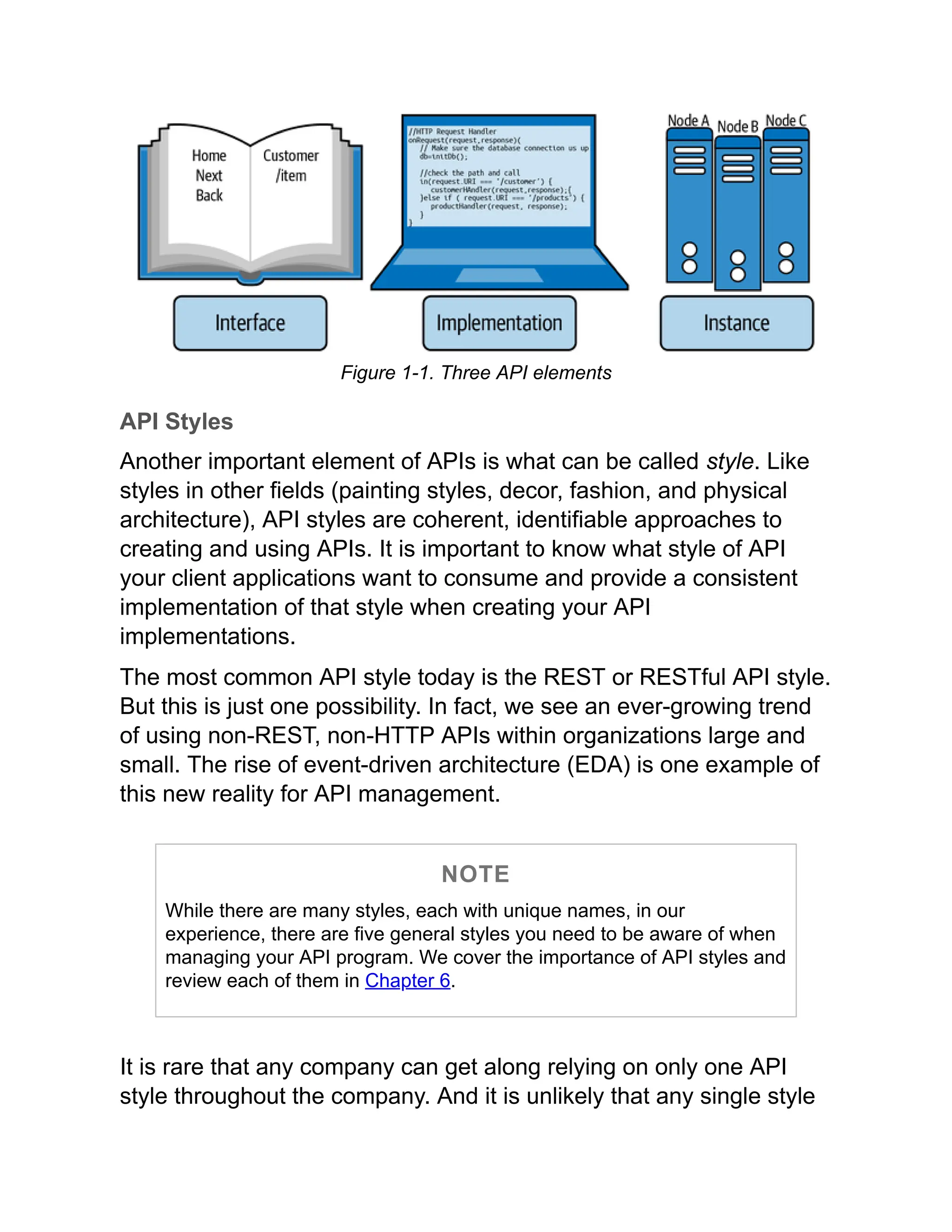
Figure 1-1 clarifies the relationship between the three elements.
Often in this book, when we write API, we’re talking about the
instance of the API: a fully operational combination of interface and
implementation. In cases where we want to highlight just the
interface or only the implementation, we’ll call that out in the text.
Figure 1-1. Three API elements
API Styles
Another important element of APIs is what can be called style. Like
styles in other fields (painting styles, decor, fashion, and physical
architecture), API styles are coherent, identifiable approaches to
creating and using APIs. It is important to know what style of API
your client applications want to consume and provide a consistent
implementation of that style when creating your API
implementations.
The most common API style today is the REST or RESTful API style.
But this is just one possibility. In fact, we see an ever-growing trend
of using non-REST, non-HTTP APIs within organizations large and
small. The rise of event-driven architecture (EDA) is one example of
this new reality for API management.
NOTE
While there are many styles, each with unique names, in our
experience, there are five general styles you need to be aware of when
managing your API program. We cover the importance of API styles and
review each of them in Chapter 6.
It is rare that any company can get along relying on only one API
style throughout the company. And it is unlikely that any single style
you implement will last forever. Taking style into account when
designing, implementing, and managing your API ecosystem is a
critical element in establishing the success and stability of your API
program.
This multistyle API reality leads to another important aspect of
successful API management programs: the ability to govern many
APIs in a coherent and consistent way.
More Than Just the API
The API itself—the technical details of interface and implementation
—is just part of the story. The traditional elements of design-build-
deploy are, of course, critical to the life of your APIs. But actually
managing APIs also means testing them, documenting them, and
publishing them to a portal so that the right audience (internal
developers, partners, third-party anonymous app developers, etc.)
can find and learn how to use them properly. You also need to
secure your APIs, monitor them at runtime, and maintain them
(including handling changes) over their lifetime. All these additional
elements of an API are what we call API pillars: elements that all
APIs need and all API program managers need to deal with. We’ll
dig into pillars in Chapter 4, where we walk through the list of ten key
practices vital to creating and maintaining healthy APIs.
The good news about these practice areas is that they transcend
any single API. For example, the skill of documenting APIs well is
transferable from one API team to the next. The same goes for
learning proper testing skills, security patterns, and so forth. That
also means that even when you have separate teams for each API
domain (sales team, product team, back-office team, etc.), you also
have “cross-cutting” interests that bind people within teams to other
people in other teams.
Another important aspect of managing APIs is enabling and
engineering the teams that build them. We talk more about how this
4
works in different organizations in Chapter 8.
API Maturity Stages
Understanding the API pillars is not the entire picture. Each API in
your program goes through its own “lifecycle”—a series of
predictable and useful stages. Knowing where you are in the API
journey can help you determine how much time and resources to
invest in the API at the moment. Understanding how APIs mature
allows you to recognize the same stages for a wide range of APIs
and helps you prepare for and respond to the varying requirements
of time and energy at each stage.
On the surface, it makes sense to consider that all of the API pillars
need to be dealt with when designing, building, and releasing your
APIs. But reality is different. Often, for early-stage APIs it is most
important to focus on the design and build aspects and reduce
efforts on documentation, for example. At other stages (e.g., once a
prototype is in the hands of beta testers), spending more time on
monitoring the use of the API and securing it against misuse is more
important. Understanding maturity stages will help you determine
how to allocate limited resources for maximum effect. We’ll walk you
through this process in Chapter 7.
More Than a Single API
As many readers may already know, things change when you start
managing a lot of APIs. We have customers with thousands of APIs
that they need to build, monitor, and manage over time. In this
situation, you focus less on the details of how a single API is
implemented and more on the details of how these APIs coexist in
an ever-growing, dynamic ecosystem. As mentioned earlier, we call
this ecosystem the API landscape, and we devote several chapters
to this concept in the second half of the book.
Much of the challenge here is how to assure some level of
consistency without causing bottlenecks and slowdowns due to
centralized management and review of all the API details. This is
usually accomplished by extending responsibility for those details to
the individual API teams and focusing central
management/governance efforts on normalizing the way APIs
interact with one another, ensuring that there is a core set of shared
services or infrastructure (security, monitoring, etc.) in place and
available for all API teams, and generally providing guidance and
coaching to more autonomous teams. That is, it’s often necessary to
move away from the usual centralized command-and-control model.
One of the challenges when working toward distributing decision
making and autonomy deeper in the organization is that it can be
easy for those higher up in the organization to lose visibility into
important activities happening at the team level. Whereas in the past
a team might have had to ask permission to take an action,
companies that extend additional autonomy to the individual teams
will encourage them to act without waiting for upper-level review and
permission.
Most of the challenges of managing a landscape of APIs have to do
with scale and scope. It turns out that as your API program grows, it
doesn’t just get bigger; it also changes in shape. And that’s what
we’ll discuss next.
Why Is API Management Difficult?
As we mentioned at the beginning of this chapter, while most
companies have already launched an API program, some sectors of
the economy are more advanced in their APIs than others. What’s
going on here? Why is it that some companies are better at this than
others? What are the common challenges, and how can you help
your company overcome them?
As we visit with companies all over the world, talking about API
lifecycle management, a few basic themes emerge:
Scope
Just what is it that central software architecture teams should be
focusing upon when governing APIs over time?
Scale
Often, what works when companies are just starting out on their
API journey doesn’t scale as the program grows from a few small
teams to a global initiative.
Standards
As programs mature, management and governance efforts need
to move from detailed advice on API design and implementation
to more general standardization of the API landscape, freeing
teams to make more of their own decisions at a detailed level.
Essentially, it is the continued balance of these three elements—
scope, scale, and standards—that powers a healthy, growing API
management program. For this reason, it is worth digging into these
a bit more.
Scope
One of the big challenges of operating a healthy API management
program is achieving the proper level of central control and, to make
it even more challenging, the proper level of changes as the program
matures.
Early in the program, it makes sense to focus on the details of
designing the API directly. In cases where APIs are in their infancy,
these design details might come directly from the team creating the
API—they look at existing programs “in the wild,” adopt tooling and
libraries that make sense for the style of API they plan to create, and
go ahead and implement that API.
It is at this “first stage” in the life of APIs within your company that
detailed recommendations and clear roles can lead to early success.
Chapters 3 and 4 list much of the material we find helpful for
companies just starting out on their API journeys.
In this “early-stage” API program, everything is new; all problems are
encountered (and solved) for the first time. These initial experiences
often end up being chronicled as the company’s “API best practices”
or company guidelines, etc. And they make sense for a small team
working on a few APIs for the very first time. However, those initial
guidelines may turn out to be incomplete.
As the number of teams working on APIs at the company grows, so
does the variety of styles, experiences, and points of view. It gets
more difficult to maintain consistency across all the teams—and not
just because some teams are not adhering to the published
company guidelines. It may be that a new team is working with a
different set of off-the-shelf products that constrain their ability to
follow the initial guidelines. Maybe they don’t work in an event-
streaming environment and are supporting XML-based call-and-
response-style APIs. They need guidance, of course, but it needs to
fit their domain and fit their customers’ needs.
At this “middle stage” of your API management program, the
leadership and guidelines need to shift from specific guidance on
how to design and implement APIs to a more general guidance on
the lifecycle of your APIs and the ways in which they need to interact
with one another. Chapters 6 and 7 contain the kinds of things we
see successful organizations doing for middle-stage API programs.
There are certainly some guidelines that all teams need to share, but
that guidance needs to fit their problem domains as well as their API
customers’ needs. As your community widens, your diversity
increases, and it is essential that you don’t make the mistake of
trying to eliminate that diversity. This is where your lever of control
needs to move from giving orders (e.g., “All APIs must use the
following URL patterns…”) to giving guidance (e.g., “APIs running
over HTTP should use one of the following URL templates…”).
In this “later-stage” API management, the perspective of governance
telescopes out even further to focus on how APIs interact over time
and how your APIs interact with the APIs of other companies in your
market space and industry sector. Chapters 9, 10, and 11 all reflect
the kind of “big-picture” thinking needed to maintain a healthy and
stable API ecosystem well into the future.
As you can see, as your program’s scope expands, your collection of
guidelines needs to expand appropriately. This is especially
important for global enterprises where local culture, language, and
history play an important role in the way teams think, create, and
solve problems.
And that leads us to the next key element: scale.
Scale
Another big challenge for creating and maintaining a healthy API
management program is dealing with changes in scale over time. As
we discussed in the previous section, growing the number of teams
and the number of APIs created by those teams can be a challenge.
The processes needed to monitor and manage the APIs at runtime
will also change as the system matures. The tooling needed to keep
track of a handful of APIs all built by the same team in a single
physical location is very different from the tooling needed to keep
track of hundreds or thousands of API entry points scattered across
multiple time zones and countries.
In this book we talk about this aspect of API management as the
“landscape.” As your program scales up, you need to be able to
keep an eye on lots of processes by lots of teams in lots of locations.
You’ll rely more on monitoring runtime behavior to get a sense of
how healthy your system is at any one moment. In the second part of
this book (starting with Chapter 9) we’ll explore how the notion of
managing the API landscape can help you figure out which elements
deserve your focus and what tools and processes can help you keep
a handle on your growing API platform.
API landscapes pose a new set of challenges. The processes you
use to design, implement, and maintain a single API are not always
the same when you need to scale your ecosystem. This is basically
a game of numbers: the more APIs you have in your system, the
more likely it is that they will interact with one another, and that
increases the likelihood that some of those interactions will result in
unexpected behavior (or “errors”). This is the way large systems
work—there are more interactions and more unexpected results.
Trying to remove these unexpected results gets you only part of the
way. You can’t eliminate all the bugs.
And that leads to the third challenge most growing API programs
encounter: how can you reduce unexpected changes by applying the
appropriate level of standards within your API program?
Standards
One of the key shifts that happen when you begin managing at the
landscape level instead of the API level is in the power of standards
in providing consistent guidance for teams designing, implementing,
and deploying APIs in your organization.
As groups grow larger—including the group of teams responsible for
your organization’s APIs—there is a coordination cost that is
incurred (see “Decisions”). The growing scale requires a change in
scope. And a key way to deal with this challenge is to rely more on
general standards instead of specific design constraints.
For example, one of the reasons the World Wide Web has been able
to continue to function well since its inception in 1990 is that its
designers decided early on to rely on general standards that apply to
all types of software platforms and languages instead of creating
tightly focused implementation guidance based on any single
language or framework. This allows creative teams to invent new
languages, architecture patterns, and even runtime frameworks
without breaking any existing implementations.
A common thread that runs through the long-lived standards that
have helped the web continue to be successful is the focus on
standardizing the interaction between components and systems.
Instead of standardizing the way components are implemented
internally (e.g., use this library, this data model, etc.), web standards
aim to make it easy for parties to understand one another over the
wire. Similarly, as your API program grows to a more mature level,
the guidance you provide to your API community needs to focus
more on general interaction standards instead of specific
implementation details.
This can be a tough transition to make, but it is essential to moving
up the ladder to a healthy API landscape where it is possible for
teams to build APIs that can easily interact with both the existing and
the future APIs in your system.
Managing the API Landscape
As mentioned at the start of this chapter, there are two key
challenges in the API management space: managing the life of a
single API and managing the landscape of all the APIs. In our visits
to many companies and our research into API management in
general, we find many versions of the “managing a single API” story.
There are lots of “lifecycles” and “maturity models” out there that
provide solid advice on identifying and mitigating the challenges of
designing, building, and deploying an API. But we have not found
much in the way of guidance when it comes to an ecosystem (we
call it a landscape) of APIs.
Landscapes have their own challenges and their own behaviors and
tendencies. What you need to take into account when you design a
single API is not the same as what you must consider when you
have to support tens, hundreds, or even thousands of APIs. There
are new challenges at scale that happen in an ecosystem—things
that don’t happen for a single instance or implementation of an API.
We dive deep into the API landscape later in the book, but we want
to point out three ways in which API landscapes present unique
challenges for API management here at the start of the book:
Scaling technology
Scaling teams
Scaling governance
Let’s take a moment to review each of these aspects of API
management with regard to landscapes.
Technology
When you are first starting your API program, there are a series of
technical decisions to make that will affect all your APIs. The fact
that “all” your APIs is just a small set at this point is not important.
What is important is that you have a consistent set of tools and
technologies that you can rely upon as you build out your initial API
program. As you’ll see when we get into the details of the API
lifecycle (Chapter 7) and API maturity, API programs are not cheap,
and you need to carefully monitor your investments of time and
energy into activities that will have a high impact on your API’s
success without risking lots of capital too early in the process. This
usually means selecting and supporting a small set of tools and
providing a clear, often detailed set of guidance documents to help
your API teams design and build APIs that both solve your business
problems and work well together. In other words, you can gain early
wins by limiting your technical scope.
This works well at the start, for all the reasons we’ve mentioned.
However, as your program scales up in volume (see “Volume”) and
its scope widens (e.g., more teams building more APIs to serve more
business domains in more locations, etc.), the challenges also
change. As you grow your API program, relying on a limited set of
tools and technologies can become one of the key things that slow
you down. While at the beginning, when you had a small set of
teams, limiting choices made things move faster, placing limits on a
large set of teams is a costly and risky enterprise. This is especially
true if you start to add teams in geographically distant locations
and/or when you embrace new business units or acquire new
companies to add to your API landscape. At this point, variety (see
“Variety”) becomes a much more important success driver for your
ecosystem.
So, an important part of managing technology for API landscapes is
identifying when the landscape has grown large enough to start
increasing the variety of technologies instead of restricting them.
Some of this has to do with the realities of existing implementations.
If your API landscape needs to support your organization’s existing
SOAP-over-TCP/IP services, you can’t require all these services to
use the same URL guidance you created for your greenfield CRUD-
over-HTTP APIs. The same goes for creating services for new
event-driven Angular implementations or the legacy remote
procedure call (RPC) implementations.
A wider scope means more technological variety in your landscape.
Teams
Technology is not the only aspect of API management that surfaces
a new set of challenges as the program grows. The makeup of the
teams themselves needs to adjust as the landscape changes, too.
Again, at the start of your API program, you can operate with just a
few committed individuals doing—for the most part—everything. This
Exploring the Variety of Random
Documents with Different Content
*** END OF THE PROJECT GUTENBERG EBOOK CASSELL'S HISTORY
OF ENGLAND, VOL. 3 (OF 8) ***
Updated editions will replace the previous one—the old editions
will be renamed.
Creating the works from print editions not protected by U.S.
copyright law means that no one owns a United States
copyright in these works, so the Foundation (and you!) can copy
and distribute it in the United States without permission and
without paying copyright royalties. Special rules, set forth in the
General Terms of Use part of this license, apply to copying and
distributing Project Gutenberg™ electronic works to protect the
PROJECT GUTENBERG™ concept and trademark. Project
Gutenberg is a registered trademark, and may not be used if
you charge for an eBook, except by following the terms of the
trademark license, including paying royalties for use of the
Project Gutenberg trademark. If you do not charge anything for
copies of this eBook, complying with the trademark license is
very easy. You may use this eBook for nearly any purpose such
as creation of derivative works, reports, performances and
research. Project Gutenberg eBooks may be modified and
printed and given away—you may do practically ANYTHING in
the United States with eBooks not protected by U.S. copyright
law. Redistribution is subject to the trademark license, especially
commercial redistribution.
START: FULL LICENSE
THE FULL PROJECT GUTENBERG LICENSE
PLEASE READ THIS BEFORE YOU DISTRIBUTE OR USE THIS WORK
To protect the Project Gutenberg™ mission of promoting the
free distribution of electronic works, by using or distributing this
work (or any other work associated in any way with the phrase
“Project Gutenberg”), you agree to comply with all the terms of
the Full Project Gutenberg™ License available with this file or
online at www.gutenberg.org/license.
Section 1. General Terms of Use and
Redistributing Project Gutenberg™
electronic works
1.A. By reading or using any part of this Project Gutenberg™
electronic work, you indicate that you have read, understand,
agree to and accept all the terms of this license and intellectual
property (trademark/copyright) agreement. If you do not agree
to abide by all the terms of this agreement, you must cease
using and return or destroy all copies of Project Gutenberg™
electronic works in your possession. If you paid a fee for
obtaining a copy of or access to a Project Gutenberg™
electronic work and you do not agree to be bound by the terms
of this agreement, you may obtain a refund from the person or
entity to whom you paid the fee as set forth in paragraph 1.E.8.
1.B. “Project Gutenberg” is a registered trademark. It may only
be used on or associated in any way with an electronic work by
people who agree to be bound by the terms of this agreement.
There are a few things that you can do with most Project
Gutenberg™ electronic works even without complying with the
full terms of this agreement. See paragraph 1.C below. There
are a lot of things you can do with Project Gutenberg™
electronic works if you follow the terms of this agreement and
help preserve free future access to Project Gutenberg™
electronic works. See paragraph 1.E below.
1.C. The Project Gutenberg Literary Archive Foundation (“the
Foundation” or PGLAF), owns a compilation copyright in the
collection of Project Gutenberg™ electronic works. Nearly all the
individual works in the collection are in the public domain in the
United States. If an individual work is unprotected by copyright
law in the United States and you are located in the United
States, we do not claim a right to prevent you from copying,
distributing, performing, displaying or creating derivative works
based on the work as long as all references to Project
Gutenberg are removed. Of course, we hope that you will
support the Project Gutenberg™ mission of promoting free
access to electronic works by freely sharing Project Gutenberg™
works in compliance with the terms of this agreement for
keeping the Project Gutenberg™ name associated with the
work. You can easily comply with the terms of this agreement
by keeping this work in the same format with its attached full
Project Gutenberg™ License when you share it without charge
with others.
1.D. The copyright laws of the place where you are located also
govern what you can do with this work. Copyright laws in most
countries are in a constant state of change. If you are outside
the United States, check the laws of your country in addition to
the terms of this agreement before downloading, copying,
displaying, performing, distributing or creating derivative works
based on this work or any other Project Gutenberg™ work. The
Foundation makes no representations concerning the copyright
status of any work in any country other than the United States.
1.E. Unless you have removed all references to Project
Gutenberg:
1.E.1. The following sentence, with active links to, or other
immediate access to, the full Project Gutenberg™ License must
appear prominently whenever any copy of a Project
Gutenberg™ work (any work on which the phrase “Project
Gutenberg” appears, or with which the phrase “Project
Gutenberg” is associated) is accessed, displayed, performed,
viewed, copied or distributed:
This eBook is for the use of anyone anywhere in the United
States and most other parts of the world at no cost and
with almost no restrictions whatsoever. You may copy it,
give it away or re-use it under the terms of the Project
Gutenberg License included with this eBook or online at
www.gutenberg.org. If you are not located in the United
States, you will have to check the laws of the country
where you are located before using this eBook.
1.E.2. If an individual Project Gutenberg™ electronic work is
derived from texts not protected by U.S. copyright law (does not
contain a notice indicating that it is posted with permission of
the copyright holder), the work can be copied and distributed to
anyone in the United States without paying any fees or charges.
If you are redistributing or providing access to a work with the
phrase “Project Gutenberg” associated with or appearing on the
work, you must comply either with the requirements of
paragraphs 1.E.1 through 1.E.7 or obtain permission for the use
of the work and the Project Gutenberg™ trademark as set forth
in paragraphs 1.E.8 or 1.E.9.
1.E.3. If an individual Project Gutenberg™ electronic work is
posted with the permission of the copyright holder, your use and
distribution must comply with both paragraphs 1.E.1 through
1.E.7 and any additional terms imposed by the copyright holder.
Additional terms will be linked to the Project Gutenberg™
License for all works posted with the permission of the copyright
holder found at the beginning of this work.
1.E.4. Do not unlink or detach or remove the full Project
Gutenberg™ License terms from this work, or any files
containing a part of this work or any other work associated with
Project Gutenberg™.
1.E.5. Do not copy, display, perform, distribute or redistribute
this electronic work, or any part of this electronic work, without
prominently displaying the sentence set forth in paragraph 1.E.1
with active links or immediate access to the full terms of the
Project Gutenberg™ License.
1.E.6. You may convert to and distribute this work in any binary,
compressed, marked up, nonproprietary or proprietary form,
including any word processing or hypertext form. However, if
you provide access to or distribute copies of a Project
Gutenberg™ work in a format other than “Plain Vanilla ASCII” or
other format used in the official version posted on the official
Project Gutenberg™ website (www.gutenberg.org), you must,
at no additional cost, fee or expense to the user, provide a copy,
a means of exporting a copy, or a means of obtaining a copy
upon request, of the work in its original “Plain Vanilla ASCII” or
other form. Any alternate format must include the full Project
Gutenberg™ License as specified in paragraph 1.E.1.
1.E.7. Do not charge a fee for access to, viewing, displaying,
performing, copying or distributing any Project Gutenberg™
works unless you comply with paragraph 1.E.8 or 1.E.9.
1.E.8. You may charge a reasonable fee for copies of or
providing access to or distributing Project Gutenberg™
electronic works provided that:
• You pay a royalty fee of 20% of the gross profits you derive
from the use of Project Gutenberg™ works calculated using the
method you already use to calculate your applicable taxes. The
fee is owed to the owner of the Project Gutenberg™ trademark,
but he has agreed to donate royalties under this paragraph to
the Project Gutenberg Literary Archive Foundation. Royalty
payments must be paid within 60 days following each date on
which you prepare (or are legally required to prepare) your
periodic tax returns. Royalty payments should be clearly marked
as such and sent to the Project Gutenberg Literary Archive
Foundation at the address specified in Section 4, “Information
about donations to the Project Gutenberg Literary Archive
Foundation.”
• You provide a full refund of any money paid by a user who
notifies you in writing (or by e-mail) within 30 days of receipt
that s/he does not agree to the terms of the full Project
Gutenberg™ License. You must require such a user to return or
destroy all copies of the works possessed in a physical medium
and discontinue all use of and all access to other copies of
Project Gutenberg™ works.
• You provide, in accordance with paragraph 1.F.3, a full refund of
any money paid for a work or a replacement copy, if a defect in
the electronic work is discovered and reported to you within 90
days of receipt of the work.
• You comply with all other terms of this agreement for free
distribution of Project Gutenberg™ works.
1.E.9. If you wish to charge a fee or distribute a Project
Gutenberg™ electronic work or group of works on different
terms than are set forth in this agreement, you must obtain
permission in writing from the Project Gutenberg Literary
Archive Foundation, the manager of the Project Gutenberg™
trademark. Contact the Foundation as set forth in Section 3
below.
1.F.
1.F.1. Project Gutenberg volunteers and employees expend
considerable effort to identify, do copyright research on,
transcribe and proofread works not protected by U.S. copyright
law in creating the Project Gutenberg™ collection. Despite these
efforts, Project Gutenberg™ electronic works, and the medium
on which they may be stored, may contain “Defects,” such as,
but not limited to, incomplete, inaccurate or corrupt data,
transcription errors, a copyright or other intellectual property
infringement, a defective or damaged disk or other medium, a
computer virus, or computer codes that damage or cannot be
read by your equipment.
1.F.2. LIMITED WARRANTY, DISCLAIMER OF DAMAGES - Except
for the “Right of Replacement or Refund” described in
paragraph 1.F.3, the Project Gutenberg Literary Archive
Foundation, the owner of the Project Gutenberg™ trademark,
and any other party distributing a Project Gutenberg™ electronic
work under this agreement, disclaim all liability to you for
damages, costs and expenses, including legal fees. YOU AGREE
THAT YOU HAVE NO REMEDIES FOR NEGLIGENCE, STRICT
LIABILITY, BREACH OF WARRANTY OR BREACH OF CONTRACT
EXCEPT THOSE PROVIDED IN PARAGRAPH 1.F.3. YOU AGREE
THAT THE FOUNDATION, THE TRADEMARK OWNER, AND ANY
DISTRIBUTOR UNDER THIS AGREEMENT WILL NOT BE LIABLE
TO YOU FOR ACTUAL, DIRECT, INDIRECT, CONSEQUENTIAL,
PUNITIVE OR INCIDENTAL DAMAGES EVEN IF YOU GIVE
NOTICE OF THE POSSIBILITY OF SUCH DAMAGE.
1.F.3. LIMITED RIGHT OF REPLACEMENT OR REFUND - If you
discover a defect in this electronic work within 90 days of
receiving it, you can receive a refund of the money (if any) you
paid for it by sending a written explanation to the person you
received the work from. If you received the work on a physical
medium, you must return the medium with your written
explanation. The person or entity that provided you with the
defective work may elect to provide a replacement copy in lieu
of a refund. If you received the work electronically, the person
or entity providing it to you may choose to give you a second
opportunity to receive the work electronically in lieu of a refund.
If the second copy is also defective, you may demand a refund
in writing without further opportunities to fix the problem.
1.F.4. Except for the limited right of replacement or refund set
forth in paragraph 1.F.3, this work is provided to you ‘AS-IS’,
WITH NO OTHER WARRANTIES OF ANY KIND, EXPRESS OR
IMPLIED, INCLUDING BUT NOT LIMITED TO WARRANTIES OF
MERCHANTABILITY OR FITNESS FOR ANY PURPOSE.
1.F.5. Some states do not allow disclaimers of certain implied
warranties or the exclusion or limitation of certain types of
damages. If any disclaimer or limitation set forth in this
agreement violates the law of the state applicable to this
agreement, the agreement shall be interpreted to make the
maximum disclaimer or limitation permitted by the applicable
state law. The invalidity or unenforceability of any provision of
this agreement shall not void the remaining provisions.
1.F.6. INDEMNITY - You agree to indemnify and hold the
Foundation, the trademark owner, any agent or employee of the
Foundation, anyone providing copies of Project Gutenberg™
electronic works in accordance with this agreement, and any
volunteers associated with the production, promotion and
distribution of Project Gutenberg™ electronic works, harmless
from all liability, costs and expenses, including legal fees, that
arise directly or indirectly from any of the following which you
do or cause to occur: (a) distribution of this or any Project
Gutenberg™ work, (b) alteration, modification, or additions or
deletions to any Project Gutenberg™ work, and (c) any Defect
you cause.
Section 2. Information about the Mission
of Project Gutenberg™
Project Gutenberg™ is synonymous with the free distribution of
electronic works in formats readable by the widest variety of
computers including obsolete, old, middle-aged and new
computers. It exists because of the efforts of hundreds of
volunteers and donations from people in all walks of life.
Volunteers and financial support to provide volunteers with the
assistance they need are critical to reaching Project
Gutenberg™’s goals and ensuring that the Project Gutenberg™
collection will remain freely available for generations to come. In
2001, the Project Gutenberg Literary Archive Foundation was
created to provide a secure and permanent future for Project
Gutenberg™ and future generations. To learn more about the
Project Gutenberg Literary Archive Foundation and how your
efforts and donations can help, see Sections 3 and 4 and the
Foundation information page at www.gutenberg.org.
Section 3. Information about the Project
Gutenberg Literary Archive Foundation
The Project Gutenberg Literary Archive Foundation is a non-
profit 501(c)(3) educational corporation organized under the
laws of the state of Mississippi and granted tax exempt status
by the Internal Revenue Service. The Foundation’s EIN or
federal tax identification number is 64-6221541. Contributions
to the Project Gutenberg Literary Archive Foundation are tax
deductible to the full extent permitted by U.S. federal laws and
your state’s laws.
The Foundation’s business office is located at 809 North 1500
West, Salt Lake City, UT 84116, (801) 596-1887. Email contact
links and up to date contact information can be found at the
Foundation’s website and official page at
www.gutenberg.org/contact
Section 4. Information about Donations to
the Project Gutenberg Literary Archive
Foundation
Project Gutenberg™ depends upon and cannot survive without
widespread public support and donations to carry out its mission
of increasing the number of public domain and licensed works
that can be freely distributed in machine-readable form
accessible by the widest array of equipment including outdated
equipment. Many small donations ($1 to $5,000) are particularly
important to maintaining tax exempt status with the IRS.
The Foundation is committed to complying with the laws
regulating charities and charitable donations in all 50 states of
the United States. Compliance requirements are not uniform
and it takes a considerable effort, much paperwork and many
fees to meet and keep up with these requirements. We do not
solicit donations in locations where we have not received written
confirmation of compliance. To SEND DONATIONS or determine
the status of compliance for any particular state visit
www.gutenberg.org/donate.
While we cannot and do not solicit contributions from states
where we have not met the solicitation requirements, we know
of no prohibition against accepting unsolicited donations from
donors in such states who approach us with offers to donate.
International donations are gratefully accepted, but we cannot
make any statements concerning tax treatment of donations
received from outside the United States. U.S. laws alone swamp
our small staff.
Please check the Project Gutenberg web pages for current
donation methods and addresses. Donations are accepted in a
number of other ways including checks, online payments and
credit card donations. To donate, please visit:
www.gutenberg.org/donate.
Section 5. General Information About
Project Gutenberg™ electronic works
Professor Michael S. Hart was the originator of the Project
Gutenberg™ concept of a library of electronic works that could
be freely shared with anyone. For forty years, he produced and
distributed Project Gutenberg™ eBooks with only a loose
network of volunteer support.
Project Gutenberg™ eBooks are often created from several
printed editions, all of which are confirmed as not protected by
copyright in the U.S. unless a copyright notice is included. Thus,
we do not necessarily keep eBooks in compliance with any
particular paper edition.
Most people start at our website which has the main PG search
facility: www.gutenberg.org.
This website includes information about Project Gutenberg™,
including how to make donations to the Project Gutenberg
Literary Archive Foundation, how to help produce our new
eBooks, and how to subscribe to our email newsletter to hear
about new eBooks.
back
back
back
back
back
back
back
back
back
back
back
back
Continuous API Management: Making the Right Decisions in an Evolving Landscape, 2nd Edition Mehdi Medjaoui
Continuous API Management: Making the Right Decisions in an Evolving Landscape, 2nd Edition Mehdi Medjaoui

  • 1.
    Read Anytime AnywhereEasy Ebook Downloads at ebookmeta.com Continuous API Management: Making the Right Decisions in an Evolving Landscape, 2nd Edition Mehdi Medjaoui https://ebookmeta.com/product/continuous-api-management- making-the-right-decisions-in-an-evolving-landscape-2nd- edition-mehdi-medjaoui/ OR CLICK HERE DOWLOAD EBOOK Visit and Get More Ebook Downloads Instantly at https://ebookmeta.com
  • 3.
  • 5.
    Praise for ContinuousAPI Management Impressively, the authors have managed to make this a book about APIs in general, as opposed to being about specific technologies. Regardless of your API technology of choice, you’ll definitely get valuable guidance from this book. —Stefan Tilkov, CEO and principal consultant at INNOQ APIs are the fabric of the modern enterprise. This book will be your guide to implementing and managing a pervasive API landscape, covering architecture, team structure, and evolution. —Gregor Hohpe, author of The Software Architect Elevator Continuous API Management offers an excellent guide for those responsible for establishing and scaling their API program. From practical advice to deep dives into all aspects of delivering an API program, this is an essential resource for everyone from executives to API practitioners. —James Higginbotham, executive API consultant and author of Principles of Web API Design Copious print details the intimates of web API creation. However, the CAM book stands alone as a holistic guide through the API creation landscape. This reference is mandatory insight for technology leaders (and leaders-in-training). —Matthew Reinbold, author of the Net API Notes newsletter and director of API ecosystems and digital transformation at Postman Mike, Mehdi, Ronnie, and Erik created a far-reaching, insightful book that captures what is needed to create, evolve, and manage complex API systems that thrive in the connected world. —Hibri Marzook, principal consultant at Contino
  • 6.
    Continuous API Managementis the most comprehensive book out there when it comes to managing API products. It is full of practical guidance, and I have seen numerous organizations use its lessons to help advance their digital strategies using APIs. —Matt McLarty, global leader for API strategy at MuleSoft, a Salesforce company
  • 7.
    Continuous API Management SECONDEDITION Making the Right Decisions in an Evolving Landscape Mehdi Medjaoui, Erik Wilde, Ronnie Mitra, and Mike Amundsen
  • 8.
    Continuous API Management byMehdi Medjaoui, Erik Wilde, Ronnie Mitra, and Mike Amundsen Copyright © 2022 Mehdi Medjaoui, Build Digital GmbH, Kudo & Leap Ltd., and Amundsen.com, Inc. All rights reserved. Printed in the United States of America. Published by O’Reilly Media, Inc., 1005 Gravenstein Highway North, Sebastopol, CA 95472. O’Reilly books may be purchased for educational, business, or sales promotional use. Online editions are also available for most titles (http://oreilly.com). For more information, contact our corporate/institutional sales department: 800-998-9938 or corporate@oreilly.com. Acquisitions Editor: Melissa Duffield Development Editor: Gary O’Brien Production Editor: Kate Galloway Copyeditor: Kim Wimpsett Proofreader: Piper Editorial Consulting, LLC Indexer: Judith McConville Interior Designer: David Futato Cover Designer: Karen Montgomery Illustrator: Kate Dullea November 2018: First Edition October 2021: Second Edition
  • 9.
    Revision History forthe Second Edition 2021-10-18: First Release See http://oreilly.com/catalog/errata.csp?isbn=9781098103521 for release details. The O’Reilly logo is a registered trademark of O’Reilly Media, Inc. Continuous API Management, the cover image, and related trade dress are trademarks of O’Reilly Media, Inc. The views expressed in this work are those of the authors, and do not represent the publisher’s views. While the publisher and the authors have used good faith efforts to ensure that the information and instructions contained in this work are accurate, the publisher and the authors disclaim all responsibility for errors or omissions, including without limitation responsibility for damages resulting from the use of or reliance on this work. Use of the information and instructions contained in this work is at your own risk. If any code samples or other technology this work contains or describes is subject to open source licenses or the intellectual property rights of others, it is your responsibility to ensure that your use thereof complies with such licenses and/or rights. This work is part of a collaboration between O’Reilly and NGINX. See our statement of editorial independence. 978-1-098-10353-8 [LSI]
  • 10.
    Dedication To those whocoached me during the book writing, to my fellow partners who helped me to be useful in the industry, to Kin Lane who shared with me his passion for APIs, and to all the API practitioners who shared their API practices with me that inspired this book. To my parents. —Mehdi Medjaoui To all the people in my life who made this book possible. It’s been quite a ride! —Erik Wilde To Kairav, for helping me write this dedication. —Ronnie Mitra To all the companies that invited us to come share what we’ve learned and, in the process, taught us so much that we had to try to capture it in this book. —Mike Amundsen
  • 11.
    Foreword from NGINX TheAPI is now the connective tissue of the world’s technology fabric. There are tens of thousands of public and open APIs that deliver a huge range of functionality to web and mobile applications, from weather data to betting odds to flight arrival times to voice connectivity. The total API universe is many times that size when you factor in closed APIs used for gated services. Microservices and Kubernetes are contributing to the explosion of the API economy, as well; APIs are the default communication modality for cloud native applications. As organizations expand, they create and consume more APIs. This requires some thinking and planning for a future where almost everything is connected via API. In this future, what kind of guidelines should you provide for designing, implementing, and deploying APIs in your organization? And how can you design systems of governance and development to constantly scale the technology, people, processes, and policies for APIs? Continuous API Management provides insights into these critical questions. This book is a detailed yet accessible manual of best practices for technical practitioners, DevOps leaders, and any other professionals working on API business strategy. With rich examples and a clear point of view, the book provides guidance on all the critical business elements of planning, provisioning, delivering, and maintaining APIs —from inception to the evolution of API strategies as enterprises scale up quickly. The authors—Mehdi Medjaoui, Erik Wilde, Ronnie Mitra, and Mike Amundsen—give you access to insights gleaned from decades of experience in the real world. Their writing and ideas provide a rich guide to the holistic development of your API program, from ideation to realization to maturation. The authors are also practitioners, giving
  • 12.
    readers insights intoboth the technical and business aspects of the process. You will learn from their experience with a front-row seat, observing and discussing common approaches to API management adopted by dozens of enterprises across multiple industries. NGINX is used to power numerous API management solutions, including Axway, Kong, MuleSoft, Red Hat 3scale, and Torry Harris. NGINX is also used as the technology foundation for branded API management product of several public clouds. Not surprisingly, NGINX is also the most popular solution for API management, with 40% of the market according to NGINX surveys. NGINX Controller’s API Management Module is a full API lifecycle management solution that is both lightweight and high performance. With a true distributed control plane / data plane architecture designed for low latency and nearly infinite scale, NGINX can handle the API needs of enterprises running both monolithic applications and modern distributed applications built with microservices. Whether you are just beginning your API journey for your enterprise or need to overhaul an existing API strategy, we hope this book will help you move along the path toward a stable and successful API program. Karthik Krishnaswamy Director, Product Marketing NGINX, Inc.
  • 13.
    Foreword to theFirst Edition APIs are a journey for any company, organization, institution, or government agency learning to properly manage their digital resources across an ever-expanding and evolving competitive digital landscape. This digital transformation, which has been building over the last five years, is beginning to result in a shift across the API landscape, where companies are beginning to stop asking if they should be doing APIs and have begun seeking more knowledge on how to do APIs properly. Organizations are realizing that there’s more to APIs than just creating them; a lot goes into delivering APIs throughout the entire API lifecycle. The authors behind Continuous API Management possess a unique understanding of what it takes to move an API from ideation to realization consistently, at scale, and in a repeatable way—providing the makings for a pretty unique learning opportunity. Most API practitioners operate with a view of the API landscape spanning a single set of APIs. Medjaoui, Wilde, Mitra, and Amundsen, the authors of this book, possess a unique view of the API landscape at a 250,000-foot level, spanning thousands of APIs, multiple industries, and some of the largest enterprise organizations out there today. I can count the top-tier API talent that exists around the globe on both my hands, and Medjaoui, Wilde, Mitra, and Amundsen are always first to be counted on my right hand. These authors bring a wealth of experience to the table when it comes to understanding what you need to move APIs from inception to design, from development to production, and back again. There just isn’t another team of API experts out there who have the scope and the breadth of API knowledge that this team possesses, making this book destined to become that tattered O’Reilly tome that lives within reach on the corner of your desk—something you read again and again. I’ve read numerous books on the technical aspects of creating APIs, including books about hypermedia and everything you need to know
  • 14.
    about REST andhow to deliver on this vision in a variety of programming languages and platforms. This is the first API book that I’ve read that holistically approaches the delivery of APIs from start to finish, addressing not only the technological details but also the critical business elements of operating APIs—which also includes the critical human side of API education, realization, and activation across large enterprise organizations. The book methodically lays out the essential building blocks any enterprise API architect will need to deliver reliable, secure, and consistent APIs at scale; it will help any API team quantify their operations and think more critically about how APIs can be improved upon and evolved, while also establishing and refining a structured yet agile approach to delivering APIs in a standardized way across teams. After putting down this book, I felt I had a refreshed look at the modern API lifecycle—but more importantly, I was left with a wealth of ideas about how I actually quantify and measure my API operations, and the API lifecycle strategy I am using to manage my operations. Even with my knowledge of the space, this book forced me to look at the landscape in some important new ways. I walked away saturated with information that reinforced some of what I already knew, but also shifted and moved around some of what I thought I knew, forcing me to evolve in some of my existing practices. For me, this is what the API journey is all about: continually being challenged, learning, planning, executing, measuring, and repeating until you find the desired results. Continuous API Management reflects this reality of delivering APIs, providing us with a reusable guide to the technology, business, and politics of doing APIs at scale within the enterprise. Don’t just read this book once. Read it; then go out and execute on your vision. Evolve your API strategy, and define a version of the API lifecycle that is all your own, taking what you’ve learned from Medjaoui, Wilde, Mitra, and Amundsen and putting it to work. However, every once in a while, pick this book up again and give it
  • 15.
    another read. Iguarantee there will be little nuggets throughout the book that you’ll rediscover and see in a new light each time you work through it—something that will build and improve your understanding of what is happening across the API landscape and help you more confidently participate (or lead) when it comes to doing business with APIs across the expanding online economy. Kin Lane, The API Evangelist
  • 16.
    Preface Welcome to thesecond edition of Continuous API Management. The opening paragraph for the previous edition, released in 2018, stated: As society and business have grown increasingly digital in nature, the demand for connected software has exploded. In turn, the application programming interface (API) has emerged as an important resource for modern organizations because it facilitates software connections. But managing these APIs effectively has proven to be a new challenge. Getting the best value from your APIs means learning how to manage their design, development, deployment, growth, quality, and security while dealing with the complicating factors of context, time, and scale. And, in the intervening years, not much has changed when it comes to the growth and challenges of API management. The good news is that, in the years since our first edition, more tooling, more training, and more experience has help grow and mature the API management space. The not-so-good news is that the authors still see lots of organizations struggling to meet the demands of connecting people, services, and companies using APIs. This new edition is our chance to provide updates on how companies are progressing, share some new success stories, and refine some of the material we first introduced in 2018. While we’ve added new examples and updated existing ones, we’ve still retained the same basic approach and outline for this new release. Hopefully these changes will help you extend your own journey on the road to continuous API management. Who Should Read This Book
  • 17.
    If you arejust starting to build an API program and want to understand the work ahead of you, or if you already have APIs but want to learn how to manage them better, then this is the book for you. In this book, we’ve tried to build an API management framework that can be applied to more than one context. In these pages you’ll find guidance that will help you to manage a single API that you want to share with developers around the world, as well as advice for building a complex set of APIs in a microservice architecture designed only for internal developers—and everything in between. We’ve also written this book to be as technologically neutral as possible. The advice and analysis we provide is applicable to any API-based architecture, including HyperText Transfer Protocol (HTTP), Create/Read/Update/Delete (CRUD), REpresentational State Transfer (REST), GraphQL, and event-driven styles of interaction. This is a book for anyone who wants to improve the decisions being made about their APIs. What’s in This Book This book contains our collective knowledge from many years spent designing, developing, and improving APIs—both our own and others’. We’ve distilled all that experience into this book. We’ve identified two core factors for effective API development: adopting a product perspective and implementing the right kind of team. We’ve also identified three essential factors for managing that work: governance, product maturity, and landscape design. These five elements of API management form a foundation on which you can build a successful API management program. In this book, we introduce each of these topics and provide you with guidance on how to shape them to fit your own organizational context.
  • 18.
    The Outline We’ve organizedthe book so that the scope of management concerns grows as you progress through the chapters. We start by introducing the foundational concepts of decision-based governance and the API as a product. This is followed by a tour of all the work that must be managed when building an API product. From this simple view of a single API, we then add the aspect of time as we dive into what it means to change an API and how the maturity of the API impacts those change decisions. This is followed by an exploration of the teams and people who do that change work. Finally, in the last half of the book, we tackle the complexities of scale and the challenges of managing a landscape of API products. Here is a short summary of what you’ll find in each chapter: Chapter 1, “The Challenge and Promise of API Management” introduces the API management domain and explains why it’s so difficult to manage APIs effectively. Chapter 2, “API Governance” explores governance from the perspective of decision-based work—a foundational concept for API management. Chapter 3, “The API as a Product” establishes the API-as-a- product perspective and why it’s an essential part of any API strategy. Chapter 4, “The Pillars of an API Product” outlines the ten essential pillars of work in the API product domain. These pillars form a set of decision-making tasks that must be managed. Chapter 5, “Continuous API Improvement” provides insight into what it means to change an API continuously. It introduces the need to adopt a continuous change mentality
  • 19.
    and provides anunderstanding of the different types of API changes (and their impacts) that you’ll encounter. Chapter 6, “API Styles” is a new chapter for this edition. It explores the five most common API styles we see as we visit with companies around the world and digs into the strengths and drawbacks of each style to help you select the ones appropriate for each use case you encounter. Chapter 7, “The API Product Lifecycle” introduces the API product lifecycle, a framework that will help you manage API work across the ten pillars over the life of an API product. Chapter 8, “API Teams” addresses the people element of an API management system by exploring the typical roles, responsibilities, and design patterns for an API team over the life of an API product. Chapter 9, “API Landscapes” adds the perspective of scale to the problem of managing APIs. It introduces the eight Vs —variety, vocabulary, volume, velocity, vulnerability, visibility, versioning, and volatility—that must be addressed when multiple APIs are changing at the same time. Chapter 10, “API Landscape Journey” outlines a continuous landscape design approach for managing API changes continuously and at scale. Chapter 11, “Managing the API Lifecycle in an Evolving Landscape” maps the landscape perspective back to the API-as-a-product perspective and identifies how API work changes when the landscape evolves around it. Chapter 12, “Continuing the Journey” ties together the story of API management that has emerged and provides advice on preparing for the future and starting your journey today.
  • 20.
    What’s Not inThis Book The scope of API management is big, and there is a massive amount of variation in contexts, platforms, and protocols. Given the constraints of time and space when writing a book, it was impossible for us to address all the specific implementation practices of API work. This book isn’t a guide for designing a REST API or for picking a security gateway product. If you are looking for a prescriptive guide to writing API code or designing an HTTP API, this isn’t the right book for you. While we do have examples that talk about specific practices, this isn’t an API implementation–focused book (the good news is there are plenty of books, blogs, and videos available already to help you fill that need). Instead, this book tackles a problem that is rarely addressed: how to effectively manage the work of building APIs within a complex, continuously changing organizational system. Conventions Used in This Book The following typographical conventions are used in this book: Italic Indicates new terms, URLs, email addresses, filenames, and file extensions. Constant width Indicates program elements such as variable or function names, data types, statements, and keywords. Constant width italic Shows text that should be replaced with user-supplied values or by values determined by context.
  • 21.
    TIP This element signifiesa tip or suggestion. NOTE This element signifies a general note. WARNING This element indicates a warning or caution. O’Reilly Online Learning NOTE For more than 40 years, O’Reilly Media has provided technology and business training, knowledge, and insight to help companies succeed. Our unique network of experts and innovators share their knowledge and expertise through books, articles, and our online learning platform. O’Reilly’s online learning platform gives you on-demand access to live training courses, in-depth learning paths, interactive coding environments, and a vast collection of text and video from O’Reilly and 200+ other publishers. For more information, visit http://oreilly.com. How to Contact Us
  • 22.
    Please address commentsand questions concerning this book to the publisher: O’Reilly Media, Inc. 1005 Gravenstein Highway North Sebastopol, CA 95472 800-998-9938 (in the United States or Canada) 707-829-0515 (international or local) 707-829-0104 (fax) We have a web page for this book, where we list errata, examples, and any additional information. You can access this page at https://oreil.ly/cam-2e. Email bookquestions@oreilly.com to comment or ask technical questions about this book. For news and information about our books and courses, visit http://oreilly.com. Find us on Facebook: http://facebook.com/oreilly Follow us on Twitter: http://twitter.com/oreillymedia Watch us on YouTube: http://youtube.com/oreillymedia Acknowledgments Once again, we have many people to thank for all the help and support we received as we pulled together new material for this second edition. As usual, our first thanks goes to all the people we consulted with and had the privilege to interview, and all those who attended our workshops and online webinars. The feedback was
  • 23.
    great, and welearned something new with every encounter. Additional thanks goes to the folks at NGINX who encouraged us to revise this book and who helped sponsor the work. Special thanks goes to all those who read early drafts and helped us shape the final book you see before you. We’d also like to thank James Higginbotham, Hibri Marzook, Marjukka Niinioja, and Matthew Reinbold for all the time they took to read and review our work and point out ways we could make it better. And, of course, none of this would be possible without the support of the folks at O’Reilly Media. Our thanks go to Melissa Duffield, Gary O’Brien, Kate Galloway, Kim Wimpsett, and many others who devoted their time and talent to helping us pull everything together.
  • 24.
    Chapter 1. TheChallenge and Promise of API Management Management is, above all, a practice where art, science, and craft meet. —Henry Mintzberg According to an IDC report from 2019, 75% of the companies surveyed expected to be “digitally transformed” in the next decade and expected that 90% of all new apps would feature microservice architecture powered by APIs. It was also noted that, for API- focused organizations, up to 30% of revenue was generated via digital channels. At the same time, these companies identified key barriers to API adoption as “complexity,” “security,” and “governance.” Finally, this was one of the key summary findings: “Defining the right app architecture requires a deep understanding of the challenges related to governing, managing and orchestrating these foundational technology components.” This survey, like the one from Coleman Parkes we cited in the first edition of this book, contains a mix of encouragement and caution. An interesting trend we have seen in the last few years is a widening gap between the “API haves” and “API have-nots.” For example, when asked the question “Does your company have an API management platform?” 72% of media and services companies answered “yes,” while only 46% of companies in the manufacturing sector replied in the affirmative. All indications are that APIs will continue to drive business growth going forward, and it is imperative that companies from all segments of the economy step up to the challenge of digital transformation. 1 2 3
  • 25.
    The good newsis there are many companies out there successfully managing their API programs. The not-so-good news is that their experience and expertise is not easily shared or commonly available. There are several reasons for this. Most of the time, organizations that are doing well in their API management programs are simply too busy to share their experiences with others. In a few cases, we’ve talked to companies that are very careful about how much of their API management expertise they share with the outside world; they are convinced API skills are a competitive advantage and are slow to make their findings public. Finally, even when companies share their experience at public conferences and through articles and blog posts, the information they share is usually company-specific and difficult to translate to a wide range of organizations’ API programs. This book is an attempt to tackle that last problem—translating company-specific examples into shared experience all organizations can use. To that end, we have visited with dozens of companies, interviewed many API technologists, and tried to find the common threads between the examples companies have shared with us and with the public. There are a small handful of themes that run through this book that we’ll share here in this introductory chapter. A key challenge to identify right up front is sorting out just what people mean when they talk about APIs. First, the term API can be applied to just the interface (e.g., an HTTP request URL and JSON response). It can also refer to the code and deployment elements needed to place an accessible service into production (e.g., the customerOnBoarding API). Finally, we sometimes use API to refer to a single instance of a running API (e.g., the customerOnBoarding API running in the AWS cloud versus the customerOnBoarding API running on the Azure cloud). Another important challenge in managing APIs is the difference between the work of designing, building, and releasing a single API and supporting and managing many APIs—what we call an API landscape. We will spend a good deal of time in this book on both
  • 26.
    ends of thisspectrum. Concepts like API as a product (AaaP) and the skills needed to create and maintain APIs (what we call API pillars) are examples of dealing with the challenges of a single API. We will also talk about the role of API maturity models and the work of dealing with change over time as important aspects of managing an API. The other end of that spectrum is the work of managing the API landscape. Your landscape is the collection of APIs from all business domains, running on all platforms, managed by all the API teams in your company. There are several aspects to this landscape challenges, including how scale and scope change the way APIs are designed and implemented as well as how large ecosystems can introduce added volatility and vulnerability just because of their size. Finally, we touch on the process of decision making when managing your API ecosystem. In our experience, this is the key to creating a successful governance plan for your API programs. It turns out that the way you make decisions needs to change along with your landscape; holding on to old governance models can limit your API program’s success and even introduce more risk into your existing APIs. Before we dive into the details on how you can learn to deal with both challenges—your individual APIs and your API landscape—let’s take a look at two important questions: what is API management, and why is it so hard? What Is API Management? As mentioned, API management involves more than just governing the design, implementation, and release of APIs. It also includes the management of an API ecosystem, the distribution of decisions within your organization, and even the process of migrating existing APIs into your growing API landscape. In this section, we’ll spend
  • 27.
    time on eachof these concepts—but first it is important to talk about the ultimate reason for APIs, the business of APIs. The Business of APIs Beyond the details of creating APIs and managing them, it is important to keep in mind that all this work is meant to support business goals and objectives. APIs are more than the technical details of JSON or XML, synchronous or asynchronous, etc. They are a way to connect business units together to expose important functionality and knowledge in a way that helps the company be effective. APIs are often a way to unlock value that is already there in the organization, for example, through creating new applications, enabling new revenue streams, and initiating new business. This kind of thinking focuses more on the needs of API consumers instead of those producing and publishing the APIs. This consumer- centric approach is commonly referred to as “Jobs to Be Done,” or JTBD. It was introduced by Harvard Business School’s Clayton Christensen, whose books The Innovator’s Dilemma and The Innovator’s Solution (Harvard Business Review Press) explore the power of this approach in depth. For the purposes of launching and managing a successful API program, it serves as a clear reminder that APIs exist to solve business problems. In our experience, companies that are good at applying APIs to business problems treat their APIs as products that are meant to “get a job done” in the same sense that Christensen’s JTBD framework solves consumer problems. Access to data One way APIs can contribute to the business is by making it easy to access important customer or market data that can be correlated to emerging trends or unique behaviors in new customer segments. By making this data safely and easily available (properly anonymized and filtered), APIs may enable
  • 28.
    your business todiscover new opportunities, realize new products/services, or even start new initiatives at a reduced cost and faster time to market. Access to products Another way an API program can help the business is by creating a flexible set of “tools” (the APIs) to build new solutions without incurring a high cost. For example, if you have an OnlineSales API that allows key partners to manage and track their sales activity and a MarketingPromotions API that allows the marketing team to design and track product promotional campaigns, you have an opportunity to create a new partner solution: the SalesAndPromotions tracking application. Access to innovation In our experience, many companies have internal processes, practices, and production pipelines that—while effective—are less than efficient. Some have been around for quite a while (in some cases, decades), and we’ve even found cases where no one can remember when (or why) the organization put a certain process in place. Changing existing processes is not easy. It can also be costly. By creating an infrastructure of APIs within your company, you can unleash the creativity within your organization and, in some cases, bypass gatekeeping mechanisms and enable improvements and efficiencies within your company. We cover these important aspects of AaaP in Chapter 3. But, first, let’s explore a short explanation of what we mean by the term API. What Is an API? Sometimes when people use the term API, they are talking about not only the interface but also the functionality—the code behind the interface. For example, someone might say, “We need to release the
  • 29.
    updated Customer APIsoon so that other teams can start using the new search functionality we implemented.” Other times, people may use the term to refer only to the details of the interface itself. For example, someone on your team might say, “What I’d like to do is design a new JSON API for the existing SOAP services that support our customer onboarding workflow.” Both are correct, of course— and it seems pretty clear what is meant in both cases—but it can be confusing at times. To try to clear up the distinction and make it easier for us to talk about both the interface and the functionality, we are going to introduce some additional terms: interface, implementation, and instance. Interface, implementation, and instance The acronym API stands for application programming interface. We use interfaces to gain access to something running “behind” the API. For example, you may have an API that exposes tasks for managing user accounts. This interface might allow developers to: Onboard a new account. Edit an existing account profile. Change the status of (suspend or activate) an account. This interface is usually expressed using shared protocols such as HTTP, Message Queuing Telemetry Transport (MQTT), Thrift, Transfer Control Protocol/Internet Protocol (TCP/IP), etc., and relies on standardized formats like JSON, XML, YAML, or HTML. But that’s just the interface. Something else actually needs to perform the requested tasks. That something else is what we’ll be referring to as the implementation. The implementation is the part that provides the actual functionality. Often this implementation is written in a programming language such as Java, C#, Ruby, Python, or some other language. Continuing with the example of the user
  • 30.
    account, a UserManagementimplementation could contain the ability to create, add, edit, and remove users. This functionality could then be exposed using the interface mentioned previously. DECOUPLING THE INTERFACE FROM THE IMPLEMENTATION Note that the functionality of the implementation described is a simple set of actions using the Create, Read, Update, Delete (CRUD) pattern, but the interface we described has three actions (OnboardAccount, EditAccount, and ChangeAccountStatus). This seeming “mismatch” between the implementation and the interface is common and can be powerful; it decouples the exact implementation of each service from the interface used to access that service, making it easier to change over time without disruption. The third term in our list is instance. An API instance is a combination of the interface and the implementation. This is a handy way to talk about the actual running API that has been released into production. We manage instances using metrics to make sure they are healthy. We register and document instances in order to make it easy for developers to find and use the API to solve real-world problems. And we secure the instance to make sure that only authorized users are able to execute the actions and read/write the data needed to make those actions possible. Figure 1-1 clarifies the relationship between the three elements. Often in this book, when we write API, we’re talking about the instance of the API: a fully operational combination of interface and implementation. In cases where we want to highlight just the interface or only the implementation, we’ll call that out in the text.
  • 31.
    Figure 1-1. ThreeAPI elements API Styles Another important element of APIs is what can be called style. Like styles in other fields (painting styles, decor, fashion, and physical architecture), API styles are coherent, identifiable approaches to creating and using APIs. It is important to know what style of API your client applications want to consume and provide a consistent implementation of that style when creating your API implementations. The most common API style today is the REST or RESTful API style. But this is just one possibility. In fact, we see an ever-growing trend of using non-REST, non-HTTP APIs within organizations large and small. The rise of event-driven architecture (EDA) is one example of this new reality for API management. NOTE While there are many styles, each with unique names, in our experience, there are five general styles you need to be aware of when managing your API program. We cover the importance of API styles and review each of them in Chapter 6. It is rare that any company can get along relying on only one API style throughout the company. And it is unlikely that any single style
  • 32.
    you implement willlast forever. Taking style into account when designing, implementing, and managing your API ecosystem is a critical element in establishing the success and stability of your API program. This multistyle API reality leads to another important aspect of successful API management programs: the ability to govern many APIs in a coherent and consistent way. More Than Just the API The API itself—the technical details of interface and implementation —is just part of the story. The traditional elements of design-build- deploy are, of course, critical to the life of your APIs. But actually managing APIs also means testing them, documenting them, and publishing them to a portal so that the right audience (internal developers, partners, third-party anonymous app developers, etc.) can find and learn how to use them properly. You also need to secure your APIs, monitor them at runtime, and maintain them (including handling changes) over their lifetime. All these additional elements of an API are what we call API pillars: elements that all APIs need and all API program managers need to deal with. We’ll dig into pillars in Chapter 4, where we walk through the list of ten key practices vital to creating and maintaining healthy APIs. The good news about these practice areas is that they transcend any single API. For example, the skill of documenting APIs well is transferable from one API team to the next. The same goes for learning proper testing skills, security patterns, and so forth. That also means that even when you have separate teams for each API domain (sales team, product team, back-office team, etc.), you also have “cross-cutting” interests that bind people within teams to other people in other teams. Another important aspect of managing APIs is enabling and engineering the teams that build them. We talk more about how this 4
  • 33.
    works in differentorganizations in Chapter 8. API Maturity Stages Understanding the API pillars is not the entire picture. Each API in your program goes through its own “lifecycle”—a series of predictable and useful stages. Knowing where you are in the API journey can help you determine how much time and resources to invest in the API at the moment. Understanding how APIs mature allows you to recognize the same stages for a wide range of APIs and helps you prepare for and respond to the varying requirements of time and energy at each stage. On the surface, it makes sense to consider that all of the API pillars need to be dealt with when designing, building, and releasing your APIs. But reality is different. Often, for early-stage APIs it is most important to focus on the design and build aspects and reduce efforts on documentation, for example. At other stages (e.g., once a prototype is in the hands of beta testers), spending more time on monitoring the use of the API and securing it against misuse is more important. Understanding maturity stages will help you determine how to allocate limited resources for maximum effect. We’ll walk you through this process in Chapter 7. More Than a Single API As many readers may already know, things change when you start managing a lot of APIs. We have customers with thousands of APIs that they need to build, monitor, and manage over time. In this situation, you focus less on the details of how a single API is implemented and more on the details of how these APIs coexist in an ever-growing, dynamic ecosystem. As mentioned earlier, we call this ecosystem the API landscape, and we devote several chapters to this concept in the second half of the book.
  • 34.
    Much of thechallenge here is how to assure some level of consistency without causing bottlenecks and slowdowns due to centralized management and review of all the API details. This is usually accomplished by extending responsibility for those details to the individual API teams and focusing central management/governance efforts on normalizing the way APIs interact with one another, ensuring that there is a core set of shared services or infrastructure (security, monitoring, etc.) in place and available for all API teams, and generally providing guidance and coaching to more autonomous teams. That is, it’s often necessary to move away from the usual centralized command-and-control model. One of the challenges when working toward distributing decision making and autonomy deeper in the organization is that it can be easy for those higher up in the organization to lose visibility into important activities happening at the team level. Whereas in the past a team might have had to ask permission to take an action, companies that extend additional autonomy to the individual teams will encourage them to act without waiting for upper-level review and permission. Most of the challenges of managing a landscape of APIs have to do with scale and scope. It turns out that as your API program grows, it doesn’t just get bigger; it also changes in shape. And that’s what we’ll discuss next. Why Is API Management Difficult? As we mentioned at the beginning of this chapter, while most companies have already launched an API program, some sectors of the economy are more advanced in their APIs than others. What’s going on here? Why is it that some companies are better at this than others? What are the common challenges, and how can you help your company overcome them?
  • 35.
    As we visitwith companies all over the world, talking about API lifecycle management, a few basic themes emerge: Scope Just what is it that central software architecture teams should be focusing upon when governing APIs over time? Scale Often, what works when companies are just starting out on their API journey doesn’t scale as the program grows from a few small teams to a global initiative. Standards As programs mature, management and governance efforts need to move from detailed advice on API design and implementation to more general standardization of the API landscape, freeing teams to make more of their own decisions at a detailed level. Essentially, it is the continued balance of these three elements— scope, scale, and standards—that powers a healthy, growing API management program. For this reason, it is worth digging into these a bit more. Scope One of the big challenges of operating a healthy API management program is achieving the proper level of central control and, to make it even more challenging, the proper level of changes as the program matures. Early in the program, it makes sense to focus on the details of designing the API directly. In cases where APIs are in their infancy, these design details might come directly from the team creating the API—they look at existing programs “in the wild,” adopt tooling and
  • 36.
    libraries that makesense for the style of API they plan to create, and go ahead and implement that API. It is at this “first stage” in the life of APIs within your company that detailed recommendations and clear roles can lead to early success. Chapters 3 and 4 list much of the material we find helpful for companies just starting out on their API journeys. In this “early-stage” API program, everything is new; all problems are encountered (and solved) for the first time. These initial experiences often end up being chronicled as the company’s “API best practices” or company guidelines, etc. And they make sense for a small team working on a few APIs for the very first time. However, those initial guidelines may turn out to be incomplete. As the number of teams working on APIs at the company grows, so does the variety of styles, experiences, and points of view. It gets more difficult to maintain consistency across all the teams—and not just because some teams are not adhering to the published company guidelines. It may be that a new team is working with a different set of off-the-shelf products that constrain their ability to follow the initial guidelines. Maybe they don’t work in an event- streaming environment and are supporting XML-based call-and- response-style APIs. They need guidance, of course, but it needs to fit their domain and fit their customers’ needs. At this “middle stage” of your API management program, the leadership and guidelines need to shift from specific guidance on how to design and implement APIs to a more general guidance on the lifecycle of your APIs and the ways in which they need to interact with one another. Chapters 6 and 7 contain the kinds of things we see successful organizations doing for middle-stage API programs. There are certainly some guidelines that all teams need to share, but that guidance needs to fit their problem domains as well as their API customers’ needs. As your community widens, your diversity increases, and it is essential that you don’t make the mistake of
  • 37.
    trying to eliminatethat diversity. This is where your lever of control needs to move from giving orders (e.g., “All APIs must use the following URL patterns…”) to giving guidance (e.g., “APIs running over HTTP should use one of the following URL templates…”). In this “later-stage” API management, the perspective of governance telescopes out even further to focus on how APIs interact over time and how your APIs interact with the APIs of other companies in your market space and industry sector. Chapters 9, 10, and 11 all reflect the kind of “big-picture” thinking needed to maintain a healthy and stable API ecosystem well into the future. As you can see, as your program’s scope expands, your collection of guidelines needs to expand appropriately. This is especially important for global enterprises where local culture, language, and history play an important role in the way teams think, create, and solve problems. And that leads us to the next key element: scale. Scale Another big challenge for creating and maintaining a healthy API management program is dealing with changes in scale over time. As we discussed in the previous section, growing the number of teams and the number of APIs created by those teams can be a challenge. The processes needed to monitor and manage the APIs at runtime will also change as the system matures. The tooling needed to keep track of a handful of APIs all built by the same team in a single physical location is very different from the tooling needed to keep track of hundreds or thousands of API entry points scattered across multiple time zones and countries. In this book we talk about this aspect of API management as the “landscape.” As your program scales up, you need to be able to keep an eye on lots of processes by lots of teams in lots of locations. You’ll rely more on monitoring runtime behavior to get a sense of
  • 38.
    how healthy yoursystem is at any one moment. In the second part of this book (starting with Chapter 9) we’ll explore how the notion of managing the API landscape can help you figure out which elements deserve your focus and what tools and processes can help you keep a handle on your growing API platform. API landscapes pose a new set of challenges. The processes you use to design, implement, and maintain a single API are not always the same when you need to scale your ecosystem. This is basically a game of numbers: the more APIs you have in your system, the more likely it is that they will interact with one another, and that increases the likelihood that some of those interactions will result in unexpected behavior (or “errors”). This is the way large systems work—there are more interactions and more unexpected results. Trying to remove these unexpected results gets you only part of the way. You can’t eliminate all the bugs. And that leads to the third challenge most growing API programs encounter: how can you reduce unexpected changes by applying the appropriate level of standards within your API program? Standards One of the key shifts that happen when you begin managing at the landscape level instead of the API level is in the power of standards in providing consistent guidance for teams designing, implementing, and deploying APIs in your organization. As groups grow larger—including the group of teams responsible for your organization’s APIs—there is a coordination cost that is incurred (see “Decisions”). The growing scale requires a change in scope. And a key way to deal with this challenge is to rely more on general standards instead of specific design constraints. For example, one of the reasons the World Wide Web has been able to continue to function well since its inception in 1990 is that its designers decided early on to rely on general standards that apply to
  • 39.
    all types ofsoftware platforms and languages instead of creating tightly focused implementation guidance based on any single language or framework. This allows creative teams to invent new languages, architecture patterns, and even runtime frameworks without breaking any existing implementations. A common thread that runs through the long-lived standards that have helped the web continue to be successful is the focus on standardizing the interaction between components and systems. Instead of standardizing the way components are implemented internally (e.g., use this library, this data model, etc.), web standards aim to make it easy for parties to understand one another over the wire. Similarly, as your API program grows to a more mature level, the guidance you provide to your API community needs to focus more on general interaction standards instead of specific implementation details. This can be a tough transition to make, but it is essential to moving up the ladder to a healthy API landscape where it is possible for teams to build APIs that can easily interact with both the existing and the future APIs in your system. Managing the API Landscape As mentioned at the start of this chapter, there are two key challenges in the API management space: managing the life of a single API and managing the landscape of all the APIs. In our visits to many companies and our research into API management in general, we find many versions of the “managing a single API” story. There are lots of “lifecycles” and “maturity models” out there that provide solid advice on identifying and mitigating the challenges of designing, building, and deploying an API. But we have not found much in the way of guidance when it comes to an ecosystem (we call it a landscape) of APIs.
  • 40.
    Landscapes have theirown challenges and their own behaviors and tendencies. What you need to take into account when you design a single API is not the same as what you must consider when you have to support tens, hundreds, or even thousands of APIs. There are new challenges at scale that happen in an ecosystem—things that don’t happen for a single instance or implementation of an API. We dive deep into the API landscape later in the book, but we want to point out three ways in which API landscapes present unique challenges for API management here at the start of the book: Scaling technology Scaling teams Scaling governance Let’s take a moment to review each of these aspects of API management with regard to landscapes. Technology When you are first starting your API program, there are a series of technical decisions to make that will affect all your APIs. The fact that “all” your APIs is just a small set at this point is not important. What is important is that you have a consistent set of tools and technologies that you can rely upon as you build out your initial API program. As you’ll see when we get into the details of the API lifecycle (Chapter 7) and API maturity, API programs are not cheap, and you need to carefully monitor your investments of time and energy into activities that will have a high impact on your API’s success without risking lots of capital too early in the process. This usually means selecting and supporting a small set of tools and providing a clear, often detailed set of guidance documents to help your API teams design and build APIs that both solve your business problems and work well together. In other words, you can gain early wins by limiting your technical scope.
  • 41.
    This works wellat the start, for all the reasons we’ve mentioned. However, as your program scales up in volume (see “Volume”) and its scope widens (e.g., more teams building more APIs to serve more business domains in more locations, etc.), the challenges also change. As you grow your API program, relying on a limited set of tools and technologies can become one of the key things that slow you down. While at the beginning, when you had a small set of teams, limiting choices made things move faster, placing limits on a large set of teams is a costly and risky enterprise. This is especially true if you start to add teams in geographically distant locations and/or when you embrace new business units or acquire new companies to add to your API landscape. At this point, variety (see “Variety”) becomes a much more important success driver for your ecosystem. So, an important part of managing technology for API landscapes is identifying when the landscape has grown large enough to start increasing the variety of technologies instead of restricting them. Some of this has to do with the realities of existing implementations. If your API landscape needs to support your organization’s existing SOAP-over-TCP/IP services, you can’t require all these services to use the same URL guidance you created for your greenfield CRUD- over-HTTP APIs. The same goes for creating services for new event-driven Angular implementations or the legacy remote procedure call (RPC) implementations. A wider scope means more technological variety in your landscape. Teams Technology is not the only aspect of API management that surfaces a new set of challenges as the program grows. The makeup of the teams themselves needs to adjust as the landscape changes, too. Again, at the start of your API program, you can operate with just a few committed individuals doing—for the most part—everything. This
  • 42.
    Exploring the Varietyof Random Documents with Different Content
  • 43.
    *** END OFTHE PROJECT GUTENBERG EBOOK CASSELL'S HISTORY OF ENGLAND, VOL. 3 (OF 8) *** Updated editions will replace the previous one—the old editions will be renamed. Creating the works from print editions not protected by U.S. copyright law means that no one owns a United States copyright in these works, so the Foundation (and you!) can copy and distribute it in the United States without permission and without paying copyright royalties. Special rules, set forth in the General Terms of Use part of this license, apply to copying and distributing Project Gutenberg™ electronic works to protect the PROJECT GUTENBERG™ concept and trademark. Project Gutenberg is a registered trademark, and may not be used if you charge for an eBook, except by following the terms of the trademark license, including paying royalties for use of the Project Gutenberg trademark. If you do not charge anything for copies of this eBook, complying with the trademark license is very easy. You may use this eBook for nearly any purpose such as creation of derivative works, reports, performances and research. Project Gutenberg eBooks may be modified and printed and given away—you may do practically ANYTHING in the United States with eBooks not protected by U.S. copyright law. Redistribution is subject to the trademark license, especially commercial redistribution. START: FULL LICENSE
  • 44.
    THE FULL PROJECTGUTENBERG LICENSE
  • 45.
    PLEASE READ THISBEFORE YOU DISTRIBUTE OR USE THIS WORK To protect the Project Gutenberg™ mission of promoting the free distribution of electronic works, by using or distributing this work (or any other work associated in any way with the phrase “Project Gutenberg”), you agree to comply with all the terms of the Full Project Gutenberg™ License available with this file or online at www.gutenberg.org/license. Section 1. General Terms of Use and Redistributing Project Gutenberg™ electronic works 1.A. By reading or using any part of this Project Gutenberg™ electronic work, you indicate that you have read, understand, agree to and accept all the terms of this license and intellectual property (trademark/copyright) agreement. If you do not agree to abide by all the terms of this agreement, you must cease using and return or destroy all copies of Project Gutenberg™ electronic works in your possession. If you paid a fee for obtaining a copy of or access to a Project Gutenberg™ electronic work and you do not agree to be bound by the terms of this agreement, you may obtain a refund from the person or entity to whom you paid the fee as set forth in paragraph 1.E.8. 1.B. “Project Gutenberg” is a registered trademark. It may only be used on or associated in any way with an electronic work by people who agree to be bound by the terms of this agreement. There are a few things that you can do with most Project Gutenberg™ electronic works even without complying with the full terms of this agreement. See paragraph 1.C below. There are a lot of things you can do with Project Gutenberg™ electronic works if you follow the terms of this agreement and help preserve free future access to Project Gutenberg™ electronic works. See paragraph 1.E below.
  • 46.
    1.C. The ProjectGutenberg Literary Archive Foundation (“the Foundation” or PGLAF), owns a compilation copyright in the collection of Project Gutenberg™ electronic works. Nearly all the individual works in the collection are in the public domain in the United States. If an individual work is unprotected by copyright law in the United States and you are located in the United States, we do not claim a right to prevent you from copying, distributing, performing, displaying or creating derivative works based on the work as long as all references to Project Gutenberg are removed. Of course, we hope that you will support the Project Gutenberg™ mission of promoting free access to electronic works by freely sharing Project Gutenberg™ works in compliance with the terms of this agreement for keeping the Project Gutenberg™ name associated with the work. You can easily comply with the terms of this agreement by keeping this work in the same format with its attached full Project Gutenberg™ License when you share it without charge with others. 1.D. The copyright laws of the place where you are located also govern what you can do with this work. Copyright laws in most countries are in a constant state of change. If you are outside the United States, check the laws of your country in addition to the terms of this agreement before downloading, copying, displaying, performing, distributing or creating derivative works based on this work or any other Project Gutenberg™ work. The Foundation makes no representations concerning the copyright status of any work in any country other than the United States. 1.E. Unless you have removed all references to Project Gutenberg: 1.E.1. The following sentence, with active links to, or other immediate access to, the full Project Gutenberg™ License must appear prominently whenever any copy of a Project Gutenberg™ work (any work on which the phrase “Project
  • 47.
    Gutenberg” appears, orwith which the phrase “Project Gutenberg” is associated) is accessed, displayed, performed, viewed, copied or distributed: This eBook is for the use of anyone anywhere in the United States and most other parts of the world at no cost and with almost no restrictions whatsoever. You may copy it, give it away or re-use it under the terms of the Project Gutenberg License included with this eBook or online at www.gutenberg.org. If you are not located in the United States, you will have to check the laws of the country where you are located before using this eBook. 1.E.2. If an individual Project Gutenberg™ electronic work is derived from texts not protected by U.S. copyright law (does not contain a notice indicating that it is posted with permission of the copyright holder), the work can be copied and distributed to anyone in the United States without paying any fees or charges. If you are redistributing or providing access to a work with the phrase “Project Gutenberg” associated with or appearing on the work, you must comply either with the requirements of paragraphs 1.E.1 through 1.E.7 or obtain permission for the use of the work and the Project Gutenberg™ trademark as set forth in paragraphs 1.E.8 or 1.E.9. 1.E.3. If an individual Project Gutenberg™ electronic work is posted with the permission of the copyright holder, your use and distribution must comply with both paragraphs 1.E.1 through 1.E.7 and any additional terms imposed by the copyright holder. Additional terms will be linked to the Project Gutenberg™ License for all works posted with the permission of the copyright holder found at the beginning of this work. 1.E.4. Do not unlink or detach or remove the full Project Gutenberg™ License terms from this work, or any files
  • 48.
    containing a partof this work or any other work associated with Project Gutenberg™. 1.E.5. Do not copy, display, perform, distribute or redistribute this electronic work, or any part of this electronic work, without prominently displaying the sentence set forth in paragraph 1.E.1 with active links or immediate access to the full terms of the Project Gutenberg™ License. 1.E.6. You may convert to and distribute this work in any binary, compressed, marked up, nonproprietary or proprietary form, including any word processing or hypertext form. However, if you provide access to or distribute copies of a Project Gutenberg™ work in a format other than “Plain Vanilla ASCII” or other format used in the official version posted on the official Project Gutenberg™ website (www.gutenberg.org), you must, at no additional cost, fee or expense to the user, provide a copy, a means of exporting a copy, or a means of obtaining a copy upon request, of the work in its original “Plain Vanilla ASCII” or other form. Any alternate format must include the full Project Gutenberg™ License as specified in paragraph 1.E.1. 1.E.7. Do not charge a fee for access to, viewing, displaying, performing, copying or distributing any Project Gutenberg™ works unless you comply with paragraph 1.E.8 or 1.E.9. 1.E.8. You may charge a reasonable fee for copies of or providing access to or distributing Project Gutenberg™ electronic works provided that: • You pay a royalty fee of 20% of the gross profits you derive from the use of Project Gutenberg™ works calculated using the method you already use to calculate your applicable taxes. The fee is owed to the owner of the Project Gutenberg™ trademark, but he has agreed to donate royalties under this paragraph to the Project Gutenberg Literary Archive Foundation. Royalty
  • 49.
    payments must bepaid within 60 days following each date on which you prepare (or are legally required to prepare) your periodic tax returns. Royalty payments should be clearly marked as such and sent to the Project Gutenberg Literary Archive Foundation at the address specified in Section 4, “Information about donations to the Project Gutenberg Literary Archive Foundation.” • You provide a full refund of any money paid by a user who notifies you in writing (or by e-mail) within 30 days of receipt that s/he does not agree to the terms of the full Project Gutenberg™ License. You must require such a user to return or destroy all copies of the works possessed in a physical medium and discontinue all use of and all access to other copies of Project Gutenberg™ works. • You provide, in accordance with paragraph 1.F.3, a full refund of any money paid for a work or a replacement copy, if a defect in the electronic work is discovered and reported to you within 90 days of receipt of the work. • You comply with all other terms of this agreement for free distribution of Project Gutenberg™ works. 1.E.9. If you wish to charge a fee or distribute a Project Gutenberg™ electronic work or group of works on different terms than are set forth in this agreement, you must obtain permission in writing from the Project Gutenberg Literary Archive Foundation, the manager of the Project Gutenberg™ trademark. Contact the Foundation as set forth in Section 3 below. 1.F. 1.F.1. Project Gutenberg volunteers and employees expend considerable effort to identify, do copyright research on, transcribe and proofread works not protected by U.S. copyright
  • 50.
    law in creatingthe Project Gutenberg™ collection. Despite these efforts, Project Gutenberg™ electronic works, and the medium on which they may be stored, may contain “Defects,” such as, but not limited to, incomplete, inaccurate or corrupt data, transcription errors, a copyright or other intellectual property infringement, a defective or damaged disk or other medium, a computer virus, or computer codes that damage or cannot be read by your equipment. 1.F.2. LIMITED WARRANTY, DISCLAIMER OF DAMAGES - Except for the “Right of Replacement or Refund” described in paragraph 1.F.3, the Project Gutenberg Literary Archive Foundation, the owner of the Project Gutenberg™ trademark, and any other party distributing a Project Gutenberg™ electronic work under this agreement, disclaim all liability to you for damages, costs and expenses, including legal fees. YOU AGREE THAT YOU HAVE NO REMEDIES FOR NEGLIGENCE, STRICT LIABILITY, BREACH OF WARRANTY OR BREACH OF CONTRACT EXCEPT THOSE PROVIDED IN PARAGRAPH 1.F.3. YOU AGREE THAT THE FOUNDATION, THE TRADEMARK OWNER, AND ANY DISTRIBUTOR UNDER THIS AGREEMENT WILL NOT BE LIABLE TO YOU FOR ACTUAL, DIRECT, INDIRECT, CONSEQUENTIAL, PUNITIVE OR INCIDENTAL DAMAGES EVEN IF YOU GIVE NOTICE OF THE POSSIBILITY OF SUCH DAMAGE. 1.F.3. LIMITED RIGHT OF REPLACEMENT OR REFUND - If you discover a defect in this electronic work within 90 days of receiving it, you can receive a refund of the money (if any) you paid for it by sending a written explanation to the person you received the work from. If you received the work on a physical medium, you must return the medium with your written explanation. The person or entity that provided you with the defective work may elect to provide a replacement copy in lieu of a refund. If you received the work electronically, the person or entity providing it to you may choose to give you a second opportunity to receive the work electronically in lieu of a refund.
  • 51.
    If the secondcopy is also defective, you may demand a refund in writing without further opportunities to fix the problem. 1.F.4. Except for the limited right of replacement or refund set forth in paragraph 1.F.3, this work is provided to you ‘AS-IS’, WITH NO OTHER WARRANTIES OF ANY KIND, EXPRESS OR IMPLIED, INCLUDING BUT NOT LIMITED TO WARRANTIES OF MERCHANTABILITY OR FITNESS FOR ANY PURPOSE. 1.F.5. Some states do not allow disclaimers of certain implied warranties or the exclusion or limitation of certain types of damages. If any disclaimer or limitation set forth in this agreement violates the law of the state applicable to this agreement, the agreement shall be interpreted to make the maximum disclaimer or limitation permitted by the applicable state law. The invalidity or unenforceability of any provision of this agreement shall not void the remaining provisions. 1.F.6. INDEMNITY - You agree to indemnify and hold the Foundation, the trademark owner, any agent or employee of the Foundation, anyone providing copies of Project Gutenberg™ electronic works in accordance with this agreement, and any volunteers associated with the production, promotion and distribution of Project Gutenberg™ electronic works, harmless from all liability, costs and expenses, including legal fees, that arise directly or indirectly from any of the following which you do or cause to occur: (a) distribution of this or any Project Gutenberg™ work, (b) alteration, modification, or additions or deletions to any Project Gutenberg™ work, and (c) any Defect you cause. Section 2. Information about the Mission of Project Gutenberg™
  • 52.
    Project Gutenberg™ issynonymous with the free distribution of electronic works in formats readable by the widest variety of computers including obsolete, old, middle-aged and new computers. It exists because of the efforts of hundreds of volunteers and donations from people in all walks of life. Volunteers and financial support to provide volunteers with the assistance they need are critical to reaching Project Gutenberg™’s goals and ensuring that the Project Gutenberg™ collection will remain freely available for generations to come. In 2001, the Project Gutenberg Literary Archive Foundation was created to provide a secure and permanent future for Project Gutenberg™ and future generations. To learn more about the Project Gutenberg Literary Archive Foundation and how your efforts and donations can help, see Sections 3 and 4 and the Foundation information page at www.gutenberg.org. Section 3. Information about the Project Gutenberg Literary Archive Foundation The Project Gutenberg Literary Archive Foundation is a non- profit 501(c)(3) educational corporation organized under the laws of the state of Mississippi and granted tax exempt status by the Internal Revenue Service. The Foundation’s EIN or federal tax identification number is 64-6221541. Contributions to the Project Gutenberg Literary Archive Foundation are tax deductible to the full extent permitted by U.S. federal laws and your state’s laws. The Foundation’s business office is located at 809 North 1500 West, Salt Lake City, UT 84116, (801) 596-1887. Email contact links and up to date contact information can be found at the Foundation’s website and official page at www.gutenberg.org/contact
  • 53.
    Section 4. Informationabout Donations to the Project Gutenberg Literary Archive Foundation Project Gutenberg™ depends upon and cannot survive without widespread public support and donations to carry out its mission of increasing the number of public domain and licensed works that can be freely distributed in machine-readable form accessible by the widest array of equipment including outdated equipment. Many small donations ($1 to $5,000) are particularly important to maintaining tax exempt status with the IRS. The Foundation is committed to complying with the laws regulating charities and charitable donations in all 50 states of the United States. Compliance requirements are not uniform and it takes a considerable effort, much paperwork and many fees to meet and keep up with these requirements. We do not solicit donations in locations where we have not received written confirmation of compliance. To SEND DONATIONS or determine the status of compliance for any particular state visit www.gutenberg.org/donate. While we cannot and do not solicit contributions from states where we have not met the solicitation requirements, we know of no prohibition against accepting unsolicited donations from donors in such states who approach us with offers to donate. International donations are gratefully accepted, but we cannot make any statements concerning tax treatment of donations received from outside the United States. U.S. laws alone swamp our small staff. Please check the Project Gutenberg web pages for current donation methods and addresses. Donations are accepted in a number of other ways including checks, online payments and
  • 54.
    credit card donations.To donate, please visit: www.gutenberg.org/donate. Section 5. General Information About Project Gutenberg™ electronic works Professor Michael S. Hart was the originator of the Project Gutenberg™ concept of a library of electronic works that could be freely shared with anyone. For forty years, he produced and distributed Project Gutenberg™ eBooks with only a loose network of volunteer support. Project Gutenberg™ eBooks are often created from several printed editions, all of which are confirmed as not protected by copyright in the U.S. unless a copyright notice is included. Thus, we do not necessarily keep eBooks in compliance with any particular paper edition. Most people start at our website which has the main PG search facility: www.gutenberg.org. This website includes information about Project Gutenberg™, including how to make donations to the Project Gutenberg Literary Archive Foundation, how to help produce our new eBooks, and how to subscribe to our email newsletter to hear about new eBooks.
  • 55.
  • 56.
  • 57.
  • 59.
  • 60.
  • 61.
  • 63.
  • 64.
  • 65.
  • 66.
  • 67.
  • 68.