Download as PDF, PPTX




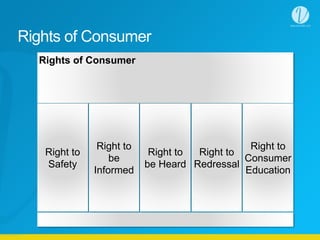


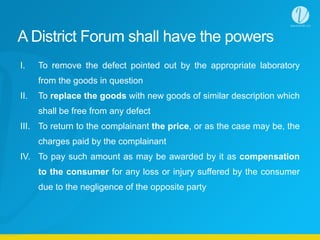


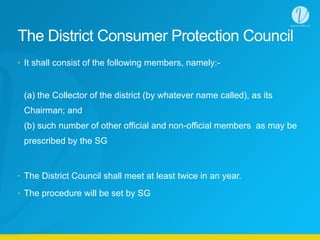


The Consumer Protection Act was introduced in 1986 to better protect consumer interests and provide simple and speedy redressal for consumer disputes. It aims to protect consumers from exploitation. Under the Act, anyone who purchases goods or services for consideration is considered a consumer. Consumers have rights to safety, information, being heard, redressal, and education. Redressal is provided through district, state, and national consumer protection councils and forums. Three case studies are summarized where the forums ruled in favor of consumers, directing compensation in disputes over college admission refund, underfilled chip packets, and denied health insurance reimbursement.


