About Broking Industry 
 A brokerage firm is a financial institution that facilitates the 
buying and selling of financial securities between buyer and 
seller. 
 The staff of brokerage firm is entrusted with the responsibility of 
researching the markets to provide appropriate 
recommendations. 
 These firms also offer margin loans for certain approved clients 
to purchase investments on credit, subject to agreed term & 
condition. 
 Traditional brokerage firms have also become a source of up-to-date 
stock prices & quotes.
 Established in December,1996 by M/S. Sureshchand S. 
Jain. 
 Sectors: 
 SSJ Finance & Securities (P) Ltd. (BSE, NSE, CSE, 
and CDSL) 
 SSJ Commodities (P) Ltd. (MCX, NCDEX) 
 Company is known for it’s service & perfect guideline. 
 Their business is built upon three important 
cornerstones… Their Client, Business Associates and 
Employees.
Literature Review 
 Kumar, R. and Chandra, A. (2000), had studied 
that Individuals often invest in securities based on 
approximate rule of thumb, not strictly in tune 
with market conditions. 
 Sen Shankar Som and Ghosh Santanu Kumar 
(2006) studied the relationship between stock 
market liquidity and volatility and risk.
Problem Statement & objective 
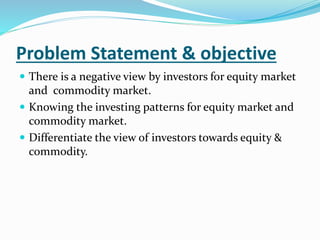
 There is a negative view by investors for equity market 
and commodity market. 
 Knowing the investing patterns for equity market and 
commodity market. 
 Differentiate the view of investors towards equity & 
commodity.
Research Methodology 
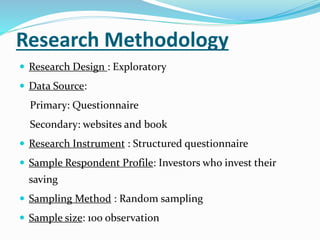
 Research Design : Exploratory 
 Data Source: 
Primary: Questionnaire 
Secondary: websites and book 
 Research Instrument : Structured questionnaire 
 Sample Respondent Profile: Investors who invest their 
saving 
 Sampling Method : Random sampling 
 Sample size: 100 observation
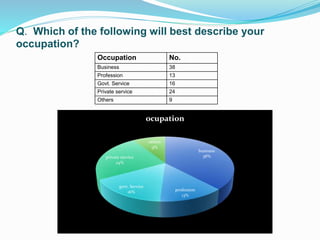
Q. Which of the following will best describe your 
occupation? 
business 
38% 
Occupation No. 
Business 38 
Profession 13 
Govt. Service 16 
Private service 24 
Others 9 
ocupation 
profession 
13% 
private service 
govt. Service 
16% 
24% 
others 
9%
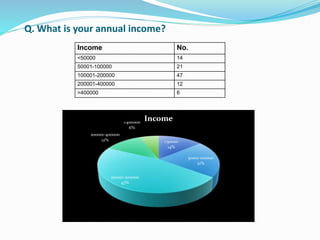
Q. What is your annual income? 
Income No. 
<50000 14 
50001-100000 21 
100001-200000 47 
200001-400000 12 
>400000 6 
<50000 
14% 
50001-100000 
21% 
100001-200000 
47% 
200001-400000 
12% 
>400000 
6% 
Income
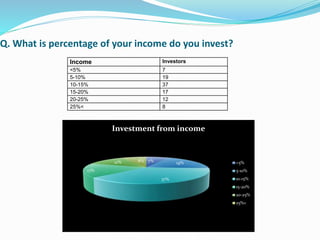
Q. What is percentage of your income do you invest? 
Income Investors 
<5% 7 
5-10% 19 
10-15% 37 
15-20% 17 
20-25% 12 
25%< 8 
Investment from income 
7% 19% 
37% 
17% 
12% 8% 
<5% 
5-10% 
10-15% 
15-20% 
20-25% 
25%<
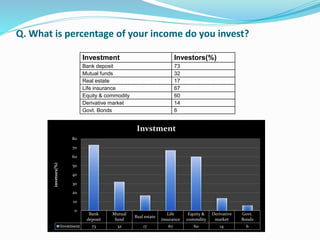
Q. What is percentage of your income do you invest? 
Investment Investors(%) 
Bank deposit 73 
Mutual funds 32 
Real estate 17 
Life insurance 67 
Equity & commodity 60 
Derivative market 14 
Govt. Bonds 6 
Bank 
deposit 
Mutual 
fund 
Real estate 
Life 
insurance 
Equity & 
commdity 
Derivative 
market 
Govt. 
Bonds 
80 
70 
60 
50 
40 
30 
20 
10 
0 
Invstment 73 32 17 67 60 14 6 
invetors(%) 
Invstment
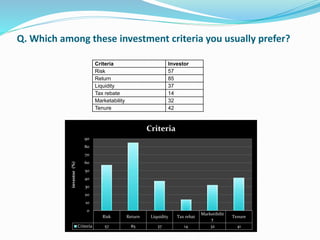
Q. Which among these investment criteria you usually prefer? 
Criteria Investor 
Risk 57 
Return 85 
Liquidity 37 
Tax rebate 14 
Marketability 32 
Tenure 42 
Risk Return Liquidity Tax rebat 
Marketibilit 
y 
Tenure 
90 
80 
70 
60 
50 
40 
30 
20 
10 
0 
Criteria 57 85 37 14 32 41 
investor (%) 
Criteria
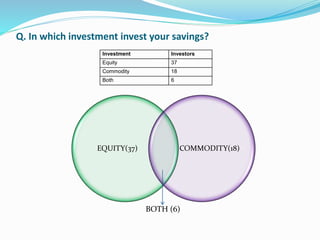
Q. In which investment invest your savings? 
Investment Investors 
Equity 37 
Commodity 18 
Both 6 
EQUITY(37) COMMODITY(18) 
BOTH (6)
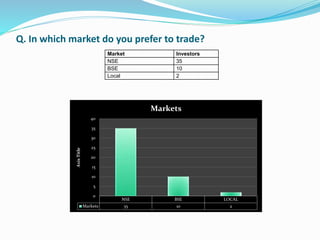
Q. In which market do you prefer to trade? 
Market Investors 
NSE 35 
BSE 10 
Local 2 
NSE BSE LOCAL 
40 
35 
30 
25 
20 
15 
10 
5 
0 
Markets 35 10 2 
Axis Title 
Markets
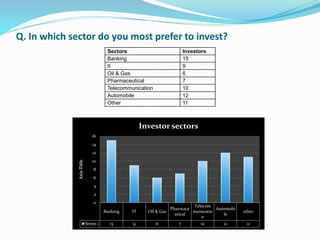
Q. In which sector do you most prefer to invest? 
Sectors Investors 
Banking 15 
It 9 
Oil & Gas 6 
Pharmaceutical 7 
Telecommunication 10 
Automobile 12 
Other 11 
Banking IT Oil & Gas 
Pharmace 
utical 
Telecom 
municatio 
n 
Automobi 
le 
other 
16 
14 
12 
10 
8 
6 
4 
2 
0 
Series 1 15 9 6 7 10 12 11 
Axis Title 
Investor sectors
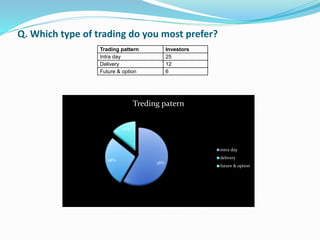
Q. Which type of trading do you most prefer? 
Trading pattern Investors 
Intra day 25 
Delivery 12 
Future & option 6 
58% 
28% 
14% 
Treding patern 
intra day 
delivery 
future & option
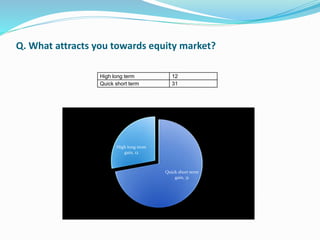
Q. What attracts you towards equity market? 
High long term 12 
Quick short term 31 
Quick short term 
gain, 31 
High long term 
gain, 12
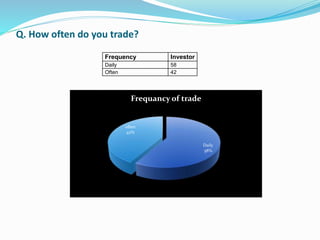
Q. How often do you trade? 
Frequency Investor 
Daily 58 
Often 42 
Daily 
58% 
Frequancy of trade 
often 
42%
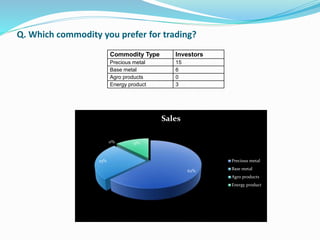
Q. Which commodity you prefer for trading? 
Commodity Type Investors 
Precious metal 15 
Base metal 6 
Agro products 0 
Energy product 3 
62% 
25% 
0% 13% 
Sales 
Precious metal 
Base metal 
Agro products 
Energy product
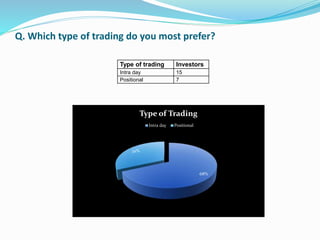
Q. Which type of trading do you most prefer? 
Type of trading Investors 
Intra day 15 
Positional 7 
68% 
Type of Trading 
32% 
Intra day Positional
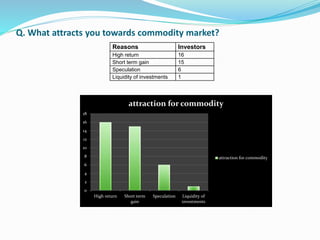
Q. What attracts you towards commodity market? 
Reasons Investors 
High return 16 
Short term gain 15 
Speculation 6 
Liquidity of investments 1 
18 
16 
14 
12 
10 
8 
6 
4 
2 
0 
attraction for commodity 
High return Short term 
gain 
Speculation Liquidity of 
investments 
attraction for commodity
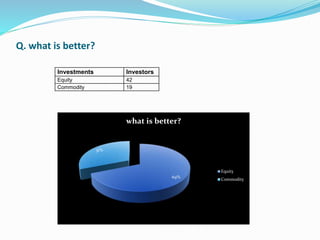
Q. what is better? 
Investments Investors 
Equity 42 
Commodity 19 
69% 
31% 
what is better? 
Equity 
Commodity
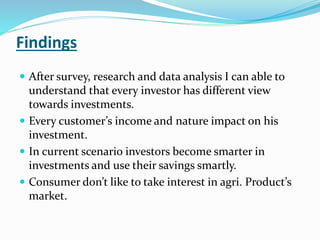
Findings 
 After survey, research and data analysis I can able to 
understand that every investor has different view 
towards investments. 
 Every customer’s income and nature impact on his 
investment. 
 In current scenario investors become smarter in 
investments and use their savings smartly. 
 Consumer don’t like to take interest in agri. Product’s 
market.
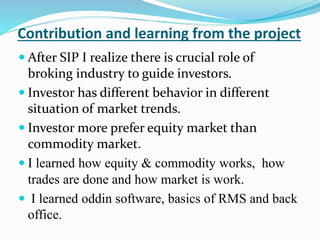
Contribution and learning from the project 
 After SIP I realize there is crucial role of 
broking industry to guide investors. 
 Investor has different behavior in different 
situation of market trends. 
 Investor more prefer equity market than 
commodity market. 
 I learned how equity & commodity works, how 
trades are done and how market is work. 
 I learned oddin software, basics of RMS and back 
office.
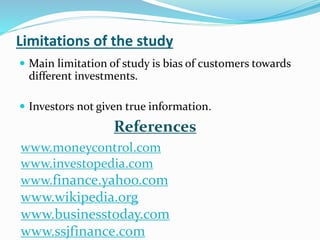
Limitations of the study 
 Main limitation of study is bias of customers towards 
different investments. 
 Investors not given true information. 
References 
www.moneycontrol.com 
www.investopedia.com 
www.finance.yahoo.com 
www.wikipedia.org 
www.businesstoday.com 
www.ssjfinance.com
consumer preferance to equity market & commodity market

consumer preferance to equity market & commodity market

  • 2.
    About Broking Industry  A brokerage firm is a financial institution that facilitates the buying and selling of financial securities between buyer and seller.  The staff of brokerage firm is entrusted with the responsibility of researching the markets to provide appropriate recommendations.  These firms also offer margin loans for certain approved clients to purchase investments on credit, subject to agreed term & condition.  Traditional brokerage firms have also become a source of up-to-date stock prices & quotes.
  • 3.
     Established inDecember,1996 by M/S. Sureshchand S. Jain.  Sectors:  SSJ Finance & Securities (P) Ltd. (BSE, NSE, CSE, and CDSL)  SSJ Commodities (P) Ltd. (MCX, NCDEX)  Company is known for it’s service & perfect guideline.  Their business is built upon three important cornerstones… Their Client, Business Associates and Employees.
  • 4.
    Literature Review Kumar, R. and Chandra, A. (2000), had studied that Individuals often invest in securities based on approximate rule of thumb, not strictly in tune with market conditions.  Sen Shankar Som and Ghosh Santanu Kumar (2006) studied the relationship between stock market liquidity and volatility and risk.
  • 5.
    Problem Statement &objective  There is a negative view by investors for equity market and commodity market.  Knowing the investing patterns for equity market and commodity market.  Differentiate the view of investors towards equity & commodity.
  • 6.
    Research Methodology Research Design : Exploratory  Data Source: Primary: Questionnaire Secondary: websites and book  Research Instrument : Structured questionnaire  Sample Respondent Profile: Investors who invest their saving  Sampling Method : Random sampling  Sample size: 100 observation
  • 7.
    Q. Which ofthe following will best describe your occupation? business 38% Occupation No. Business 38 Profession 13 Govt. Service 16 Private service 24 Others 9 ocupation profession 13% private service govt. Service 16% 24% others 9%
  • 8.
    Q. What isyour annual income? Income No. <50000 14 50001-100000 21 100001-200000 47 200001-400000 12 >400000 6 <50000 14% 50001-100000 21% 100001-200000 47% 200001-400000 12% >400000 6% Income
  • 9.
    Q. What ispercentage of your income do you invest? Income Investors <5% 7 5-10% 19 10-15% 37 15-20% 17 20-25% 12 25%< 8 Investment from income 7% 19% 37% 17% 12% 8% <5% 5-10% 10-15% 15-20% 20-25% 25%<
  • 10.
    Q. What ispercentage of your income do you invest? Investment Investors(%) Bank deposit 73 Mutual funds 32 Real estate 17 Life insurance 67 Equity & commodity 60 Derivative market 14 Govt. Bonds 6 Bank deposit Mutual fund Real estate Life insurance Equity & commdity Derivative market Govt. Bonds 80 70 60 50 40 30 20 10 0 Invstment 73 32 17 67 60 14 6 invetors(%) Invstment
  • 11.
    Q. Which amongthese investment criteria you usually prefer? Criteria Investor Risk 57 Return 85 Liquidity 37 Tax rebate 14 Marketability 32 Tenure 42 Risk Return Liquidity Tax rebat Marketibilit y Tenure 90 80 70 60 50 40 30 20 10 0 Criteria 57 85 37 14 32 41 investor (%) Criteria
  • 12.
    Q. In whichinvestment invest your savings? Investment Investors Equity 37 Commodity 18 Both 6 EQUITY(37) COMMODITY(18) BOTH (6)
  • 13.
    Q. In whichmarket do you prefer to trade? Market Investors NSE 35 BSE 10 Local 2 NSE BSE LOCAL 40 35 30 25 20 15 10 5 0 Markets 35 10 2 Axis Title Markets
  • 14.
    Q. In whichsector do you most prefer to invest? Sectors Investors Banking 15 It 9 Oil & Gas 6 Pharmaceutical 7 Telecommunication 10 Automobile 12 Other 11 Banking IT Oil & Gas Pharmace utical Telecom municatio n Automobi le other 16 14 12 10 8 6 4 2 0 Series 1 15 9 6 7 10 12 11 Axis Title Investor sectors
  • 15.
    Q. Which typeof trading do you most prefer? Trading pattern Investors Intra day 25 Delivery 12 Future & option 6 58% 28% 14% Treding patern intra day delivery future & option
  • 16.
    Q. What attractsyou towards equity market? High long term 12 Quick short term 31 Quick short term gain, 31 High long term gain, 12
  • 17.
    Q. How oftendo you trade? Frequency Investor Daily 58 Often 42 Daily 58% Frequancy of trade often 42%
  • 18.
    Q. Which commodityyou prefer for trading? Commodity Type Investors Precious metal 15 Base metal 6 Agro products 0 Energy product 3 62% 25% 0% 13% Sales Precious metal Base metal Agro products Energy product
  • 19.
    Q. Which typeof trading do you most prefer? Type of trading Investors Intra day 15 Positional 7 68% Type of Trading 32% Intra day Positional
  • 20.
    Q. What attractsyou towards commodity market? Reasons Investors High return 16 Short term gain 15 Speculation 6 Liquidity of investments 1 18 16 14 12 10 8 6 4 2 0 attraction for commodity High return Short term gain Speculation Liquidity of investments attraction for commodity
  • 21.
    Q. what isbetter? Investments Investors Equity 42 Commodity 19 69% 31% what is better? Equity Commodity
  • 22.
    Findings  Aftersurvey, research and data analysis I can able to understand that every investor has different view towards investments.  Every customer’s income and nature impact on his investment.  In current scenario investors become smarter in investments and use their savings smartly.  Consumer don’t like to take interest in agri. Product’s market.
  • 23.
    Contribution and learningfrom the project  After SIP I realize there is crucial role of broking industry to guide investors.  Investor has different behavior in different situation of market trends.  Investor more prefer equity market than commodity market.  I learned how equity & commodity works, how trades are done and how market is work.  I learned oddin software, basics of RMS and back office.
  • 24.
    Limitations of thestudy  Main limitation of study is bias of customers towards different investments.  Investors not given true information. References www.moneycontrol.com www.investopedia.com www.finance.yahoo.com www.wikipedia.org www.businesstoday.com www.ssjfinance.com